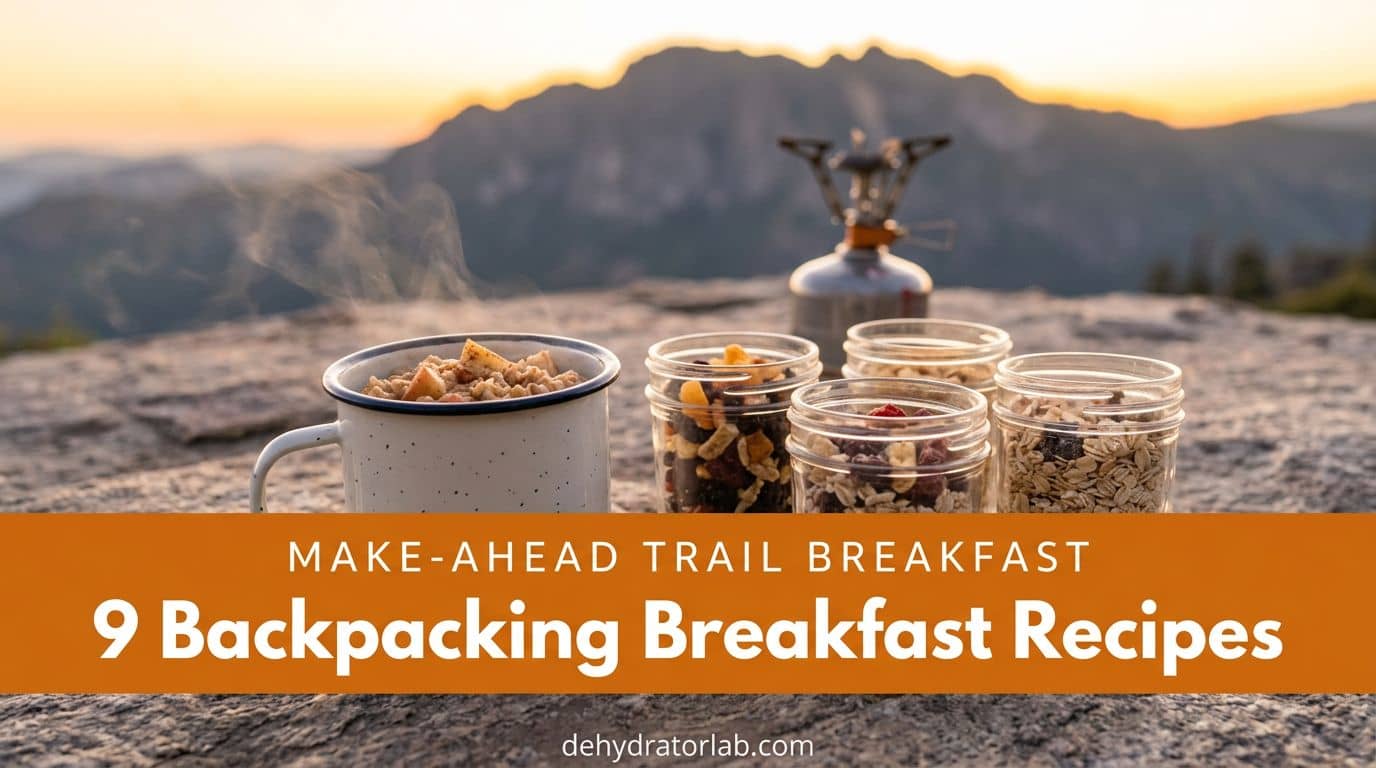
Ever stood at a cold campsite at sunrise, holding a bar that tastes like sweetened cardboard?
A good trail breakfast takes about five minutes at camp, and almost all the work happens in your kitchen. You dry the fruit and veggies, bag the mix, and add water when you’re ready to eat. Here are nine make-ahead breakfasts to pack for your next trip.
As an Amazon Associate, I earn from qualifying purchases. If you make a purchase after clicking on a link I may earn a small commission at no extra cost to you if items are purchased.
In this article:
TL;DR: Key Takeaways
- 🥣 Nine breakfasts: three oat bowls, a cold-soak muesli, three grain and chia puddings, and two savory mixes, all packed dry.
- 💧 Treat your water first. CDC says to boil clear water for 1 minute, or 3 minutes above 6,500 feet (about 2,000 m).
- ⏱️ My water amounts and wait times are starting points, since no official source gives ratios for these mixes. Clemson says veggies usually rehydrate in 1 to 2 hours, and boiling water speeds it up.
- 🍚 Cool cooked rice fast in shallow containers before drying, and I treat quinoa the same way. HealthyWA says reheating doesn’t destroy toxins that already formed.
- 🌡️ Dry fruit until pliable, berries until they rattle, and veggies until brittle, per Clemson.
- 📦 Clemson says dried fruit keeps about a year at 60°F (16°C) and vegetables about six months, so plan shorter for mixes with veggies.
Every recipe below is one serving, so multiply by the number of mouths. Dry everything first, cool it completely, then bag each breakfast on its own. I dry fruit at 135°F (57°C) and vegetables at 135–140°F (57–60°C), my usual settings, and the drying times come from Clemson Extension and Clemson Extension (vegetables). The amounts, the water, and the wait times are mine. My backpacking dinners and one-pot trail meals cover the evening shift, and this list covers the morning.
One bag per breakfast keeps flavors from mixing, and it lets you write the water amount right on the bag. A sealed bag also keeps moisture out, and the box below is the kind of sealer I use for that.

- 【Clear Vacuum Bags】Our sealable vacuum bags are made of high quality materials can withstand high temperature, food save…
- 【Suit For Most Vacuum Sealer Machines】These clear bags can Suit for all clip vacuum bag sealing machines directly, the b…
- 【Popular Size Bags for Food Storage】With pre-cut Vacuum Sealer Bags,Heavy Duty Pre-Cut Design Commercial Grade Food Seal…
Water, Soak Times, and Safe Storage
Water comes first, because every breakfast here depends on it. CDC says to bring clear water to a rolling boil for 1 minute, and for 3 minutes at elevations above 6,500 feet (about 2,000 m). Let it cool before you pour it on a cold-soak mix. Boil it again for the hot recipes, since boiling water also works faster.
Clemson says dried vegetables usually rehydrate within one to two hours, and that boiling liquid speeds up soaking. It also says anything soaked longer than two hours, or overnight, should be refrigerated. So I cut veggies small, use water at a full boil, and eat cold-soak mixes the same morning. I don’t leave a soaked bag in a warm pack overnight.
Rice and quinoa need one extra rule. HealthyWA says cooked rice cooled slowly can grow Bacillus cereus, and that reheating doesn’t kill the spores or toxins that already formed. Its fix is to cool rice quickly in shallow containers less than 4 inches (10 cm) deep, kept apart and not stacked, then dry it soon after. I do the same with quinoa, which is my own call. Cool, dry, and sealed is the whole game.
Let’s get into it.
1. Apple Cinnamon Oatmeal
This is the one I’d put in a skeptic’s pack. Apple and cinnamon do most of the work, and the oats just carry them.
Bag 1/2 cup of quick oats, 1/4 cup of chopped dried apples, 1 tablespoon of milk powder, 1 tablespoon of brown sugar, and 1/4 teaspoon of cinnamon. Slice the apples about 1/8 inch thick, and Clemson lists 6 to 12 hours in a dehydrator. Dry them until pliable, then chop. At camp, stir in 3/4 cup of boiling water, cover, and wait 3 to 5 minutes, which is my starting point. Add a splash more if it’s stiff.
- Chop the apples small so they soften fast.
- Cover the mug so the heat stays in.
- Stir once before eating to even out the cinnamon.
My apple recipes have more ways to dry the fruit. Easy to love.

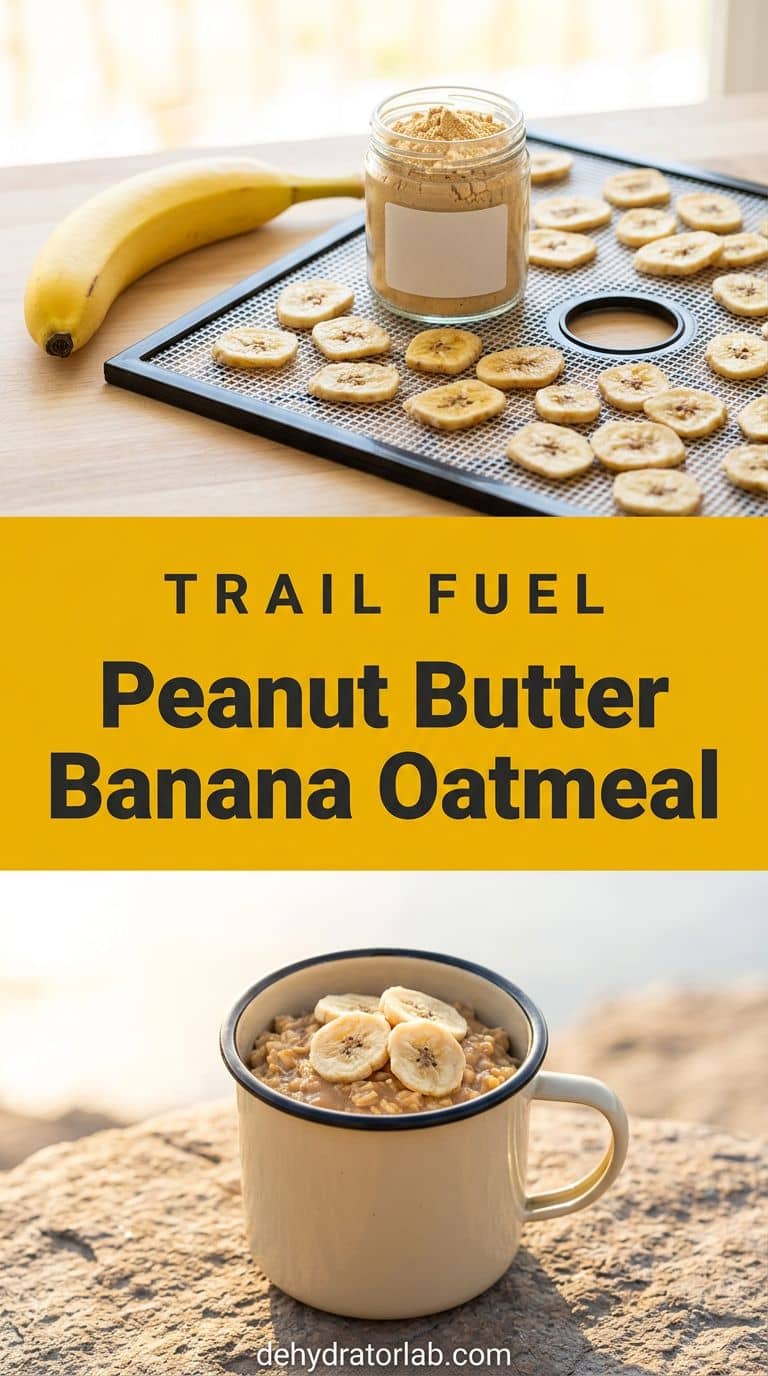
2. Peanut Butter Banana Oatmeal
Peanut butter powder keeps the weight down and skips the oily jar, so it packs better on the trail. Banana makes it taste like dessert for breakfast.
Bag 1/2 cup of quick oats, 1/4 cup of dried banana slices, 3 tablespoons of peanut butter powder, 1 tablespoon of milk powder, and a pinch of salt. Slice bananas 1/4 to 3/8 inch thick, and Clemson lists 8 to 10 hours. For oatmeal I stop at leathery instead of crisp, which is my own preference, since leathery slices plump back up. At camp, add 3/4 cup of boiling water, stir, and wait 3 to 5 minutes. My banana guide covers the drying.
This mix has peanuts, so skip it if anyone in your group has a peanut allergy. Fuel that tastes like dessert.
3. Pumpkin Spice Porridge
This is the cozy pick for a cold morning at a high camp. Pumpkin powder turns plain oats into something that feels like a bakery order.
Bag 1/2 cup of quick oats, 2 tablespoons of pumpkin powder, 1 tablespoon of brown sugar, 1 tablespoon of milk powder, and 1/2 teaspoon of pumpkin pie spice. Clemson says to peel pumpkin, cut it into 1/8 inch pieces, steam-blanch it 2 1/2 to 3 minutes, and dry it 10 to 16 hours. Grind the dry pieces to a powder. My pumpkin powder guide has more uses for the jar. Pumpkin powder is thirsty, so at camp I add a full 1 cup of boiling water and wait about 5 minutes. That ratio is my own.
Stir well, because the powder likes to clump at the bottom of a mug. Fall, in a camp mug.

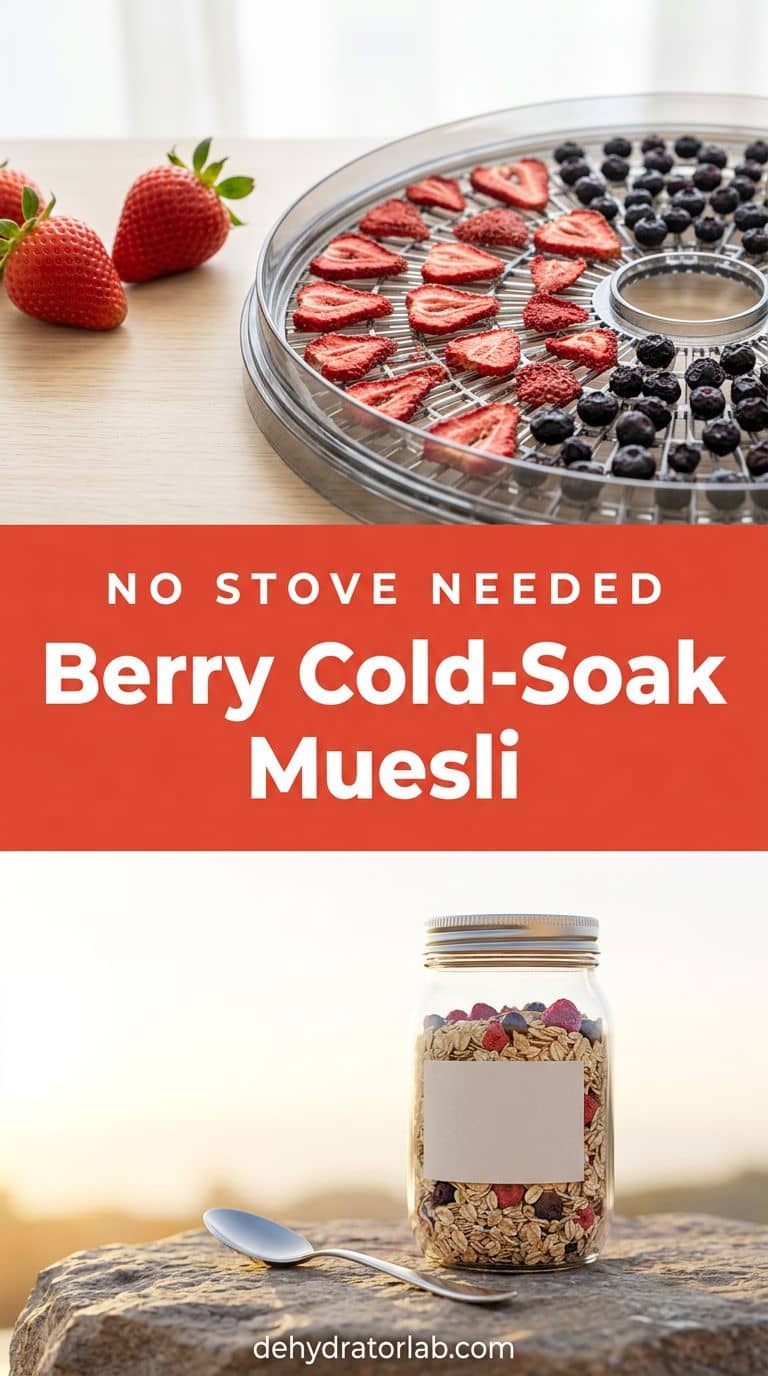
4. Berry Cold-Soak Muesli
Ever wake up too cold and too lazy to light a stove? This one needs no flame at all. It’s the breakfast I pack for hot days and fast mornings.
Bag 1/2 cup of rolled oats, 1/4 cup of chopped dried strawberries, 2 tablespoons of dried blueberries, 2 tablespoons of milk powder, and 1 teaspoon of sugar. Clemson lists 24 to 36 hours for strawberries and blueberries, and it says berries are done when they rattle when shaken. Firm berries like blueberries get a 15 to 30 second dip in boiling water first, then ice water, to check the skins. At camp, pour 2/3 cup of cold treated water into the jar, stir, and wait 20 to 30 minutes. Those numbers are mine.
- Treat your water first, per CDC.
- Seal the jar and give it a shake.
- Eat it the same morning, never overnight in a warm pack.
My berry recipes cover the drying in more detail. Breakfast without the stove.
5. Cinnamon Raisin Rice Pudding
Leftover rice does more than fried rice. Dried, it turns into a creamy morning pudding that tastes like the one from a diner.
Cook white rice a little firm, then spread it in a shallow tray to cool fast, following the HealthyWA rule above. Dry it at 135–145°F (57–63°C) for 4 to 6 hours, until the grains are hard and brittle, which matches my dried cooked rice guide. Bag 1/2 cup of the dried rice with 2 tablespoons of raisins, 2 tablespoons of milk powder, 1 tablespoon of sugar, and 1/2 teaspoon of cinnamon. At camp, add 3/4 cup of boiling water, cover, and wait about 10 minutes. The amounts and the wait are mine.
If you’d rather make your own raisins, see my raisin recipes. Dessert, but for breakfast.

6. Pineapple Coconut Quinoa Porridge
Quinoa is a light, quick grain that doesn’t get enough credit at breakfast. With pineapple and coconut, it tastes like a vacation you earned with a hike.
Cook quinoa, cool it quickly in a shallow tray, and dry it the same way as the rice, at 135–145°F (57–63°C) for about 4 to 6 hours. That time is my own estimate. Bag 1/2 cup of the dried quinoa with 1/4 cup of chopped dried pineapple, 2 tablespoons of coconut flakes, 1 tablespoon of milk powder, and a pinch of salt. Clemson lists 24 to 26 hours for 1/2 inch pineapple slices. At camp, add 3/4 cup of boiling water, cover, and wait 10 minutes. My pineapple recipes and coconut flakes guide cover the rest.
Taste it before you add sugar, since the pineapple is sweet on its own. A tropical start.

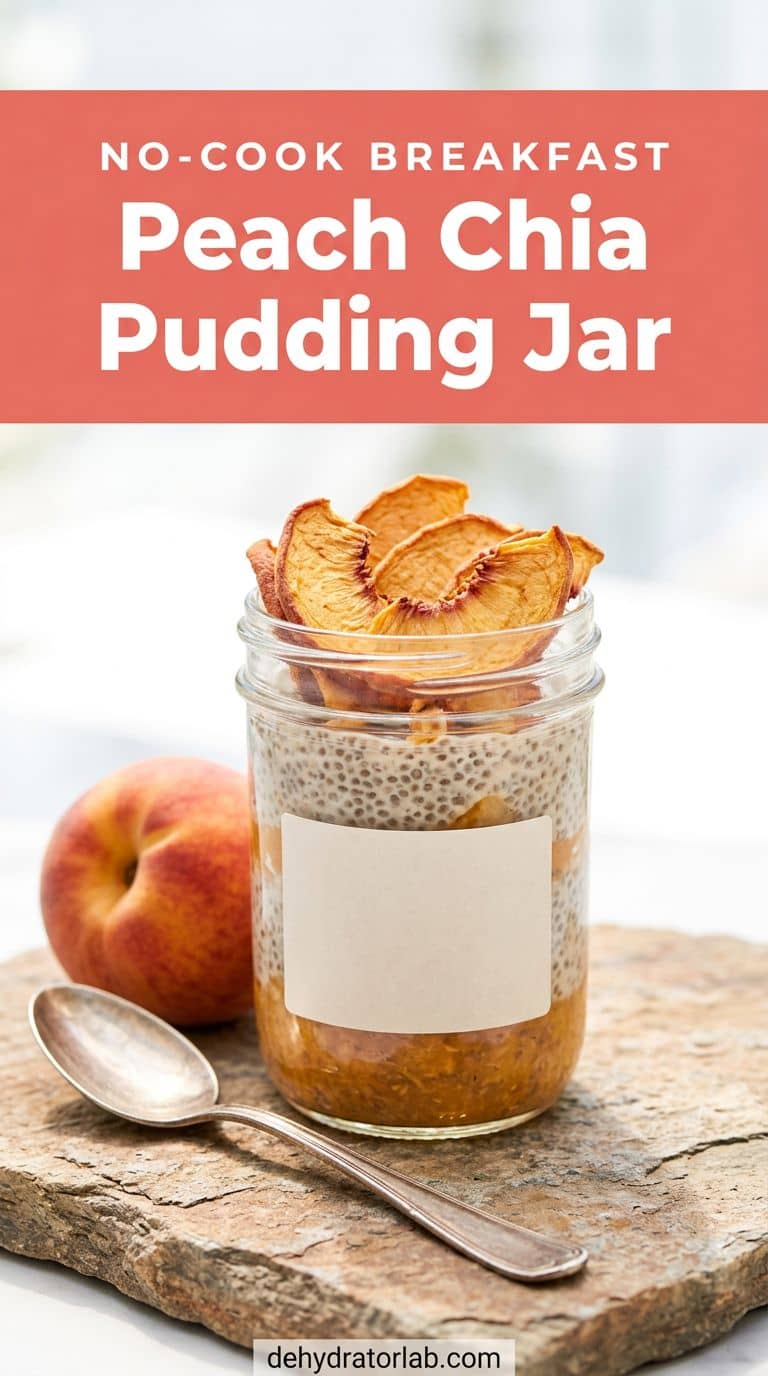
7. Peach Chia Pudding Jar
Chia seeds do the work here, so you only need a jar, cold water, and a little patience. It’s the second no-stove breakfast on the list.
Bag 3 tablespoons of chia seeds, 1/4 cup of chopped dried peaches, 2 tablespoons of milk powder, 1 tablespoon of sugar, and 1/4 teaspoon of cinnamon. Clemson lists 36 to 48 hours for peaches, with a pretreatment like steaming 8 minutes first. At camp, add 3/4 cup of cold treated water, stir well, wait 10 minutes, and stir again. It should be ready in 20 to 30 minutes, which is my estimate. My stone fruit recipes cover the peaches.
Stir twice, because chia clumps if you only stir once. Pudding, minus the fridge.
8. Cheesy Tomato Pepper Grits
Not everyone wants sweet at 6 a.m. These grits are salty, cheesy, and hot, and they hold up through a long day’s climb.
Bag 1/3 cup of instant grits, 2 tablespoons of cheese powder, 1 tablespoon of dried diced bell pepper, 1 tablespoon of dried tomato pieces, 1 teaspoon of dried onion, a pinch of garlic powder, and a pinch of salt. Clemson lists peppers at 8 to 12 hours with no blanching, onions at 3 to 9 hours, and tomatoes at 10 to 18 hours after a short blanch. Cut the pieces small, because Clemson says boiling liquid speeds up soaking. At camp, add 3/4 cup of boiling water, cover, and wait 8 to 10 minutes. The amounts and the wait are mine.
- Chop the dried veggies pea-sized or smaller.
- Use water at a full boil, not just hot.
- Stir in the cheese powder last so it doesn’t clump.
For the veggies, see my bell pepper guide and my tomato guide, and my cheese drying guide covers the cheese. Salty, cheesy, done.

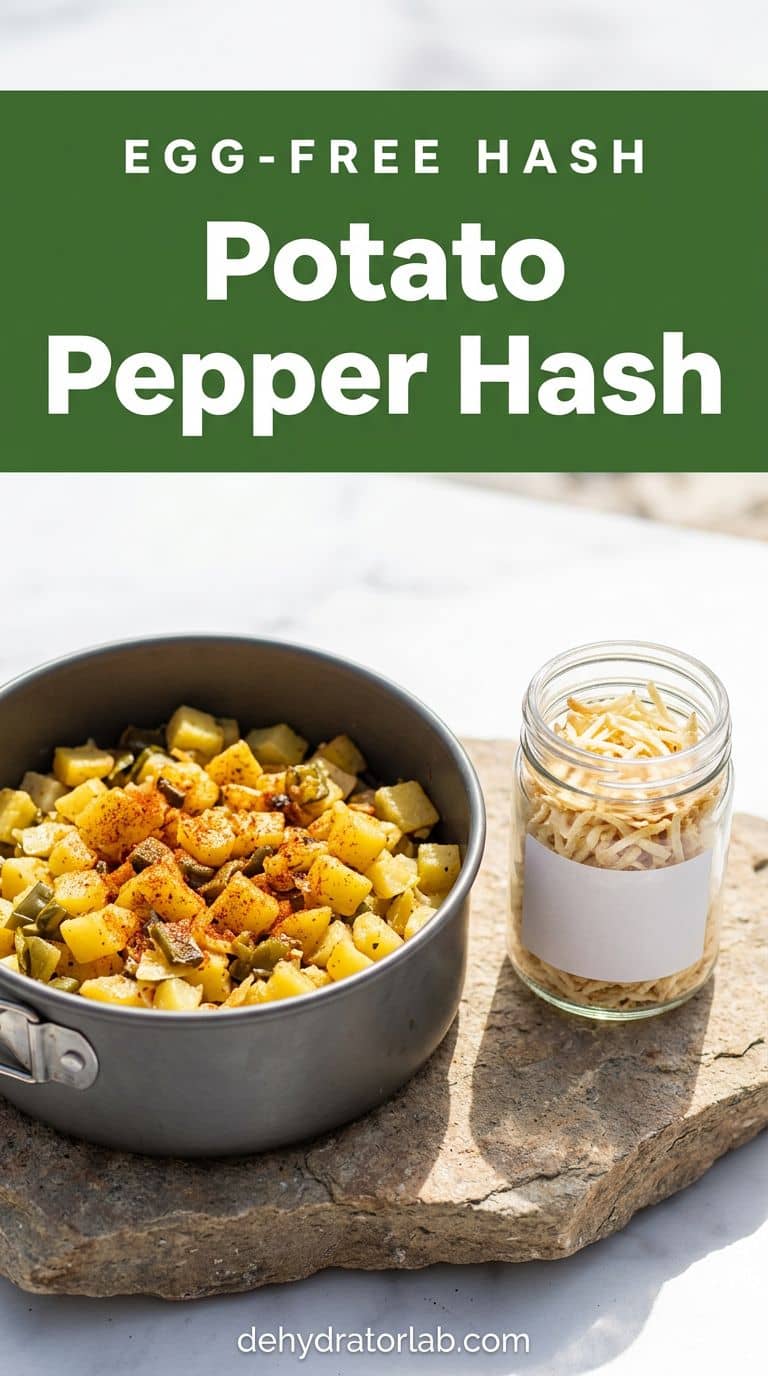
9. Potato Pepper Hash
This is the egg-free hash for people who don’t want eggs in the pack, or who already have a bag of them. It’s all potato, pepper, and smoky spice.
Shred potatoes, blanch them, and dry them. Clemson lists steam blanching for 6 to 8 minutes, or water blanching for 5 to 6, then 8 to 12 hours of drying. Bag 3/4 cup of dried shredded potato with 1 tablespoon of dried bell pepper, 1 tablespoon of dried onion, 1/2 teaspoon of smoked paprika, 1/4 teaspoon of garlic powder, and a pinch of salt. At camp, add 3/4 cup of boiling water, cover, and wait 10 to 15 minutes. Drain any extra water, and crisp it in a pot with a little oil if you have the fuel. Those amounts are mine. My potato guide covers the drying.
Want the egg and sausage version? My backpacking meal recipes have a loaded breakfast hash. The savory finish.
Quick Reference: Nine Breakfasts at a Glance
| Breakfast | Style | Drying time (Clemson) | Water and wait (mine) |
|---|---|---|---|
| 1. Apple cinnamon oatmeal | Hot | Apples: 6–12 hours at 1/8 inch | 3/4 cup, 3–5 min |
| 2. Peanut butter banana oatmeal | Hot | Bananas: 8–10 hours at 1/4–3/8 inch | 3/4 cup, 3–5 min |
| 3. Pumpkin spice porridge | Hot | Pumpkin: 10–16 hours at 1/8 inch | 1 cup, about 5 min |
| 4. Berry cold-soak muesli | Cold | Berries: 24–36 hours, until they rattle | 2/3 cup, 20–30 min |
| 5. Cinnamon raisin rice pudding | Hot | Rice: 4–6 hours (my rice guide) | 3/4 cup, about 10 min |
| 6. Pineapple coconut quinoa porridge | Hot | Pineapple: 24–26 hours at 1/2 inch | 3/4 cup, about 10 min |
| 7. Peach chia pudding jar | Cold | Peaches: 36–48 hours | 3/4 cup, 20–30 min |
| 8. Cheesy tomato pepper grits | Hot | Peppers 8–12, onions 3–9, tomatoes 10–18 hours | 3/4 cup, 8–10 min |
| 9. Potato pepper hash | Hot | Potatoes: 8–12 hours | 3/4 cup, 10–15 min |
The drying times, doneness tests, and storage times follow Clemson Extension (fruits) and Clemson Extension (vegetables). Clemson says most dried fruits keep about one year at 60°F (16°C) and six months at 80°F (27°C), and dried vegetables keep six months at 60°F and three months at 80°F (27°C), so I plan on the vegetable limit for any mix with veggies, rice, or quinoa.
The water advice follows CDC, and the rice cooling advice follows HealthyWA. The 135°F (57°C) and 135–140°F (57–60°C) settings, the rice and quinoa drying times, and every mix amount, water amount, and wait time are my own. Check how long dehydrated food lasts for storage by food type.
Personal Tips You Can Steal
I write the breakfast name, the water amount, and the wait time on every bag before it leaves my kitchen. I weigh each portion on a kitchen scale, since a few grams of oats changes how much water you need. I cool every dried ingredient completely before it goes in a bag, since warm food sweats. I carry the bags in reusable freezer pouches when I’m eating them within a few weeks. I treat my water before I cook, not after. I test every new mix at home before it goes near a trailhead.
Final Thoughts
You don’t need all nine. Start with the apple cinnamon oatmeal, since it’s the easiest, and add a cold-soak mix for the mornings you don’t want to cook. For more camp food, my camping meals roundup and my dehydrated egg recipes are the next stops, and my Mylar bag picks help with longer storage.
If you’re still choosing a machine, my best dehydrator for backpacking meals guide ranks six.
Related reading: 6 granola and granola bar recipes, 6 dehydrated smoothie pack recipes, 7 dehydrated soup recipes for hiking, and 10 dehydrated foods for hiking.
P.S. Pack the water amount on the bag, and breakfast will take care of itself. 🙂