Ever stand at the counter at 7 a.m. with a blender, an empty fruit bowl, and zero patience?
A smoothie pack moves the work to Sunday. One jar holds the dried fruit and the dry add-ins, and the morning job shrinks to pouring and blending. Here are six dehydrated smoothie packs you can assemble once and blend all week.

As an Amazon Associate, I earn from qualifying purchases. If you make a purchase after clicking on a link I may earn a small commission at no extra cost to you if items are purchased.
In this article:
TL;DR: Key Takeaways
- 🥭 Six packs: berry banana oat, tropical mango pineapple, peach oat cinnamon, green apple spinach, strawberry beet ginger, and chocolate peanut butter banana.
- 🫙 A pack is one glass jar of dried fruit plus dry add-ins, so about 1/2 cup of dried fruit stands in for roughly a cup of fresh.
- ⏱️ Soak the fruit in hot juice or water for 5 to 10 minutes, or add cold milk the night before and park the jar in the fridge.
- 🧊 Soaked fruit is perishable, so use it soon or keep it cold.
- 📦 Dried fruit keeps about a year at 60°F (16°C) and six months at 80°F (27°C), and vegetables keep about half as long.
- 🏷️ Label every jar with the flavor and the date, and flag the peanut one if anyone has an allergy.
First, how a pack works. Dried fruit shrinks, and Oregon State Extension says most dried fruits and vegetables measure about half the volume of fresh. Chopped or powdered foods take up about a quarter. That’s why a half-cup of dried pieces does the job of roughly a cup of fresh fruit. Every amount below is my own starting point, so adjust to your glass and your taste.
Now the soak. Hard dried pieces blend gritty if they go straight into the jar. Oregon State soaks dried fruit in boiling water or fruit juice for 5 to 10 minutes, and I use that on rushed mornings: pour about 1/2 cup of hot juice or water over the pack, wait 10 minutes, then add cold milk and ice.
If you’d rather do nothing at 7 a.m., add the cold milk the night before and keep the jar in the fridge. That overnight method is my habit. The same page says rehydrated fruit is quite perishable, so use it soon or keep it refrigerated.
Storage matters too. The National Center for Home Food Preservation says to pack dried food in amounts you can use at once, and it puts most dried fruit at about a year at 60°F (16°C) or six months at 80°F (27°C). Vegetables keep about half as long. I treat each pack like its shortest-lived ingredient and write the date on the jar. Let’s get into it.
Dried fruit bits are tougher than frozen ones, so the blender does real work here. A strong one gets the pieces smooth, and the box below is the one I reach for.

- 900 watts of power in this compact powerhouse turns anything from strawberries to spinach into smooth, sippable nutritio…
- Simple, intuitive design makes this a device you'll use every day. Just push, twist and blend. Yes, it's that easy.
- Did you know most smoothies can be made in under 60 seconds? Now you can fit healthful nutrition into your busy day!
1. Berry Banana Oat Pack
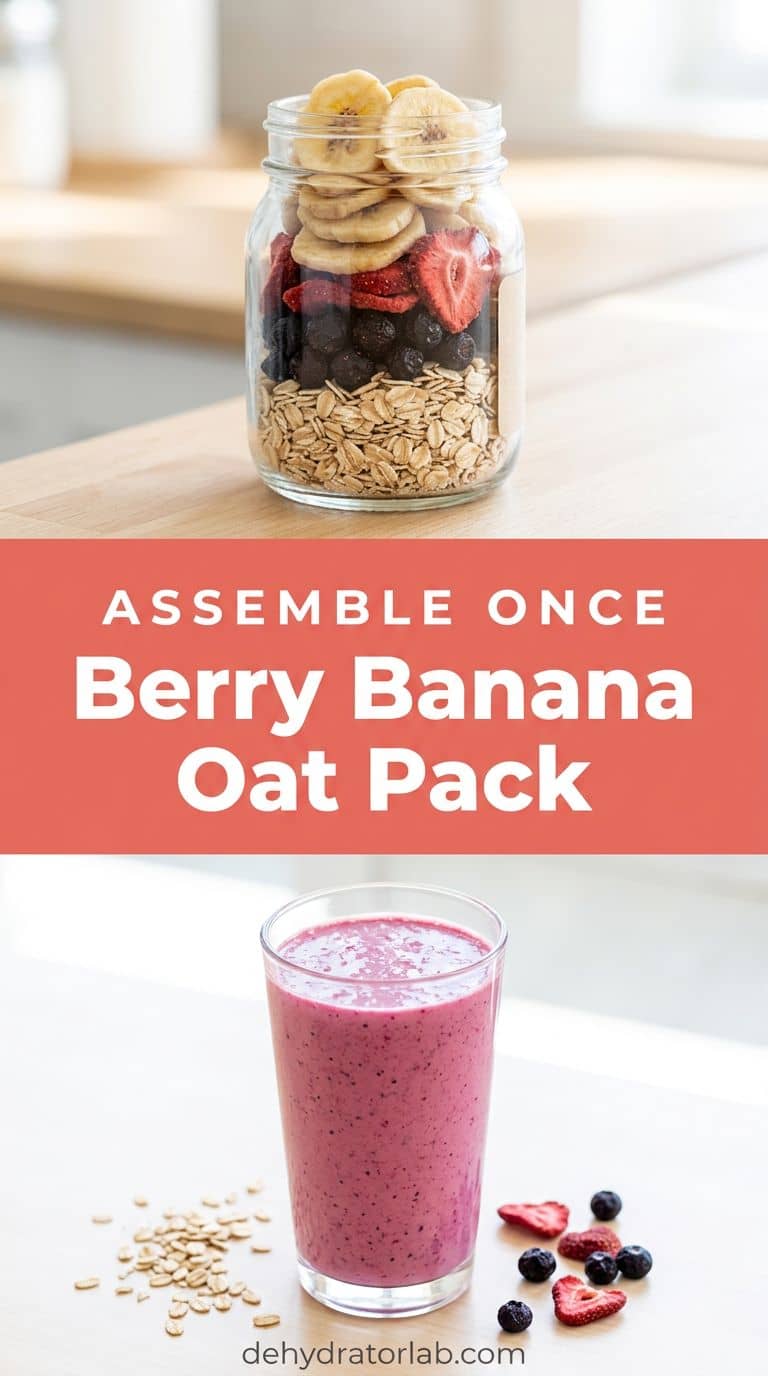
This is the pack that gets the family moving. In the jar, I use about 1/4 cup dried banana, 1/4 cup mixed dried strawberries and blueberries, and 1/4 cup rolled oats. Those amounts are my estimate.
Clemson cuts bananas 1/4 to 3/8 inch thick and dries them 8 to 10 hours, with a honey, ascorbic acid, or juice dip to keep them light. Strawberries need no pretreatment and take 24 to 36 hours. Blueberries get a 15 to 30 second dip in boiling water, then ice water, to crack the waxy skins, and dry 24 to 36 hours, until they rattle when shaken. Clemson doesn’t give a dehydrator temperature, and I run my machine at 135°F (57°C), my usual setting.
Soak the pack in hot juice for 10 minutes, then blend with 1 cup (240 ml) of cold milk. My guides on dehydrating bananas, dehydrating blueberries, and the berry recipes roundup cover each fruit. Oats turn it into breakfast.
2. Tropical Mango Pineapple Pack
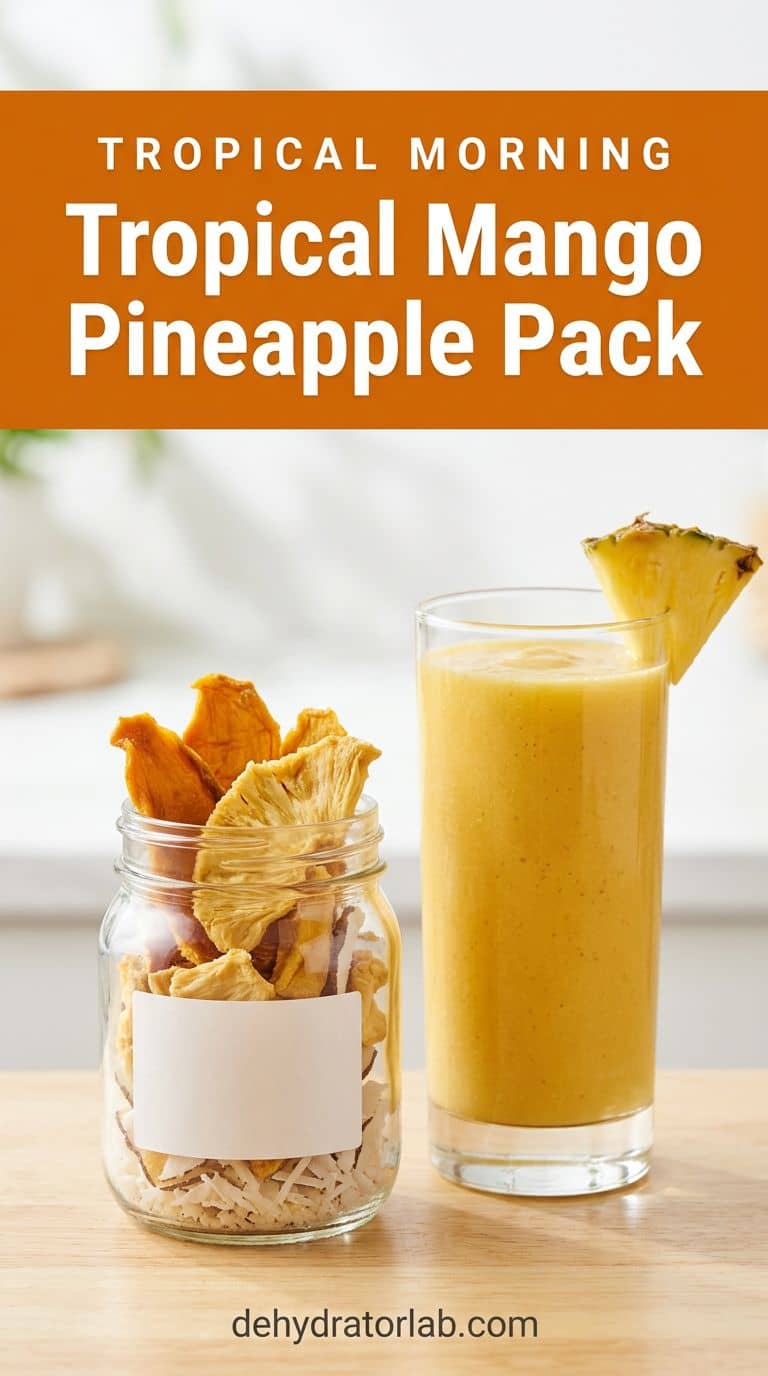
Tropical fruit works well in a pack because it’s naturally sweet and chewy, so it needs no sweetener. I fill the jar with about 1/4 cup dried mango, 1/4 cup dried pineapple, and 2 tablespoons of unsweetened shredded coconut. That’s my own mix.
Clemson slices pineapple 1/2 inch thick, needs no pretreatment, and dries it for 24 to 26 hours. Clemson has no mango entry, so I follow my own dehydrated mango recipes for mango and go by feel. Pineapple stays chewy, so chop the pieces small before they go in the jar.
Soak the pack in warm orange juice for 10 minutes, then blend with 3/4 cup (180 ml) of coconut milk. My pineapple recipes cover the drying in more detail. Chop small, soak first.
3. Peach Oat Cinnamon Pack
Peaches are the slow ones, and that’s the catch. Clemson dries them 36 to 48 hours after an ascorbic acid or juice dip, so plan on a day and a half or more, and expect thickness and humidity to move that number. It’s a great home for the soft peaches nobody wants to finish. My overripe fruit recipes and stone fruit recipes show how.
In the jar, I use about 1/2 cup diced dried peach, 1/4 cup rolled oats, and 1/2 teaspoon cinnamon. Those amounts are my estimate. Dice the peaches small before packing, because large pieces stay stubborn in the blender.
Soak the pack in hot water or juice for 10 minutes, then blend with 1 cup (240 ml) of milk or thinned plain yogurt. Slow to dry, quick to blend.

4. Green Apple Spinach Pack
This is the green pack, and the spinach hides behind the apple. Clemson dries apple slices about 1/8 inch thick for 6 to 12 hours, with a pretreatment such as ascorbic acid or a juice dip. For the greens, Clemson’s vegetable guide says to use young tender leaves, steam them 2 to 2½ minutes, and dry them 8 to 10 hours, until brittle. Grind the spinach fine so it blends smoothly.
In the jar, I use about 1/3 cup dried apple, 2 tablespoons dried banana for sweetness, and 1 teaspoon of spinach powder. That teaspoon is my rule of thumb from my smoothie booster post. Vegetables keep about half as long as fruit, so this is the pack I make last-minute and use first.
- Soak in hot juice for 10 minutes, then blend with cold water or milk.
- Blend right away, since Oregon State says not to let soaked vegetables stand over two hours unless refrigerated.
- Use this jar first, and date it clearly.
My apple dehydrating guide and spinach powder guide cover each ingredient. Apple hides the green.

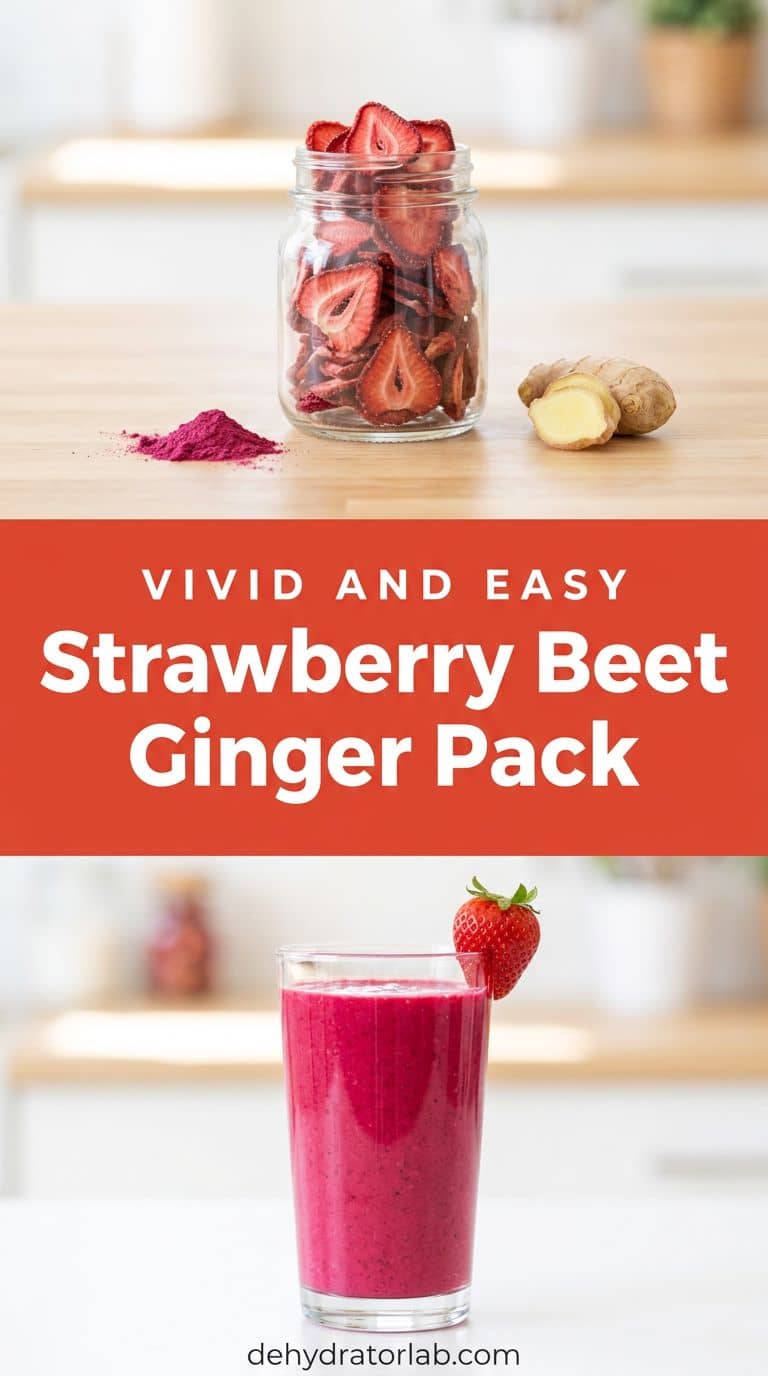
5. Strawberry Beet Ginger Pack
Strawberry is the sweet cover and beet is the color. In the jar, I use about 1/2 cup dried strawberries, 1/2 teaspoon beet powder, and a small pinch of ginger powder. Those amounts are my estimate, and beet powder is strong, so measure it with a dry spoon and keep it small.
Strawberries need no pretreatment, per Clemson, and take 24 to 36 hours. The beet and ginger come from powders you may already have, and my beet powder and ginger powder guides show how to make them. The beet turns the whole glass a deep magenta, so don’t be alarmed.
Soak the pack in warm orange juice for 10 minutes, then blend with 1 cup (240 ml) of cold water or milk. For other powder pairings, see my smoothie booster powders roundup. Half a teaspoon of beet is plenty.
6. Chocolate Peanut Butter Banana Pack
This is the dessert-for-breakfast pack. In the jar, I use about 1/2 cup dried banana, 1 tablespoon unsweetened cocoa powder, 2 tablespoons store-bought peanut butter powder, and 1/4 cup rolled oats. Those amounts are my starting point.
Banana carries the sweetness, so you can skip added sugar. Soak the banana in hot water for 10 minutes first, then blend with 1 cup (240 ml) of milk. My sweet treats for kids post has more banana and cocoa ideas.
This one has peanuts in it, so label the jar clearly if anyone in your house or at your table has a nut allergy. Label the peanut jar.

Quick Reference: Smoothie Packs at a Glance
| Pack | In the jar | Liquid |
|---|---|---|
| 1. Berry banana oat | Dried banana, strawberries, blueberries, oats | 1 cup (240 ml) milk |
| 2. Tropical mango pineapple | Dried mango, pineapple, shredded coconut | 3/4 cup (180 ml) coconut milk |
| 3. Peach oat cinnamon | Diced dried peach, oats, cinnamon | 1 cup (240 ml) milk or thinned yogurt |
| 4. Green apple spinach | Dried apple, banana, spinach powder | Cold water or milk |
| 5. Strawberry beet ginger | Dried strawberries, beet and ginger powder | 1 cup (240 ml) water or milk |
| 6. Chocolate peanut butter banana | Dried banana, cocoa, peanut butter powder, oats | 1 cup (240 ml) milk |
The fruit drying times and prep steps follow Clemson’s fruit guide, and the spinach steps follow Clemson’s vegetable guide. The soak methods, volume ratio, and refrigeration advice follow Oregon State, and the storage times follow NCHFP. The jar amounts, the 135°F (57°C) setting, the overnight fridge soak, and the soak times for each pack are my own estimates, so adjust them for your machine, your blender, and your taste.
Personal Tips You Can Steal
I build six jars on Sunday in one session, so the week is covered. I chop every dried piece small before it goes in the jar. I keep the cocoa and spinach powder in their own jars until I’m ready to assemble, so a damp scoop never touches the rest.
I label each jar with the flavor and the date. I keep the green apple pack on the front of the shelf, since it expires first. I add the liquid in the morning for a thinner blend, or the night before for a thicker one.
Final Thoughts
Smoothie packs won’t beat a handful of frozen berries for speed, but they win on shelf space, and they use up fruit you dried at its peak. Start with the berry banana oat pack, since it’s forgiving, and add one flavor a week.
Related reading: 9 fruit and vegetable powders for smoothies, 8 homemade drink mix recipes, best dehydrator for fruit, and how long dehydrated food lasts.
P.S. Keep a few spare glass jars on the shelf, since you’ll want more packs than you expect. 🙂