
Want a snack that tastes like a tropical vacation but doesn’t come out of a foil bag with a sugar coating?
Mango is one of the easiest fruits to dry, and it can go chewy, crisp, spicy, or powdery depending on how you handle it. Here are seven ways to put your dehydrator to work on a box of mangoes.

As an Amazon Associate, I earn from qualifying purchases. If you make a purchase after clicking on a link I may earn a small commission at no extra cost to you if items are purchased.
In this article:
TL;DR: Key Takeaways
- 🥭 Seven mango snacks: chewy slices, crisp chips, coconut chews, ginger-spiced slices, chili-lime rounds, a mango-pineapple mix, and mango powder.
- 📏 Cut thickness sets the texture: about 1/4 inch (6 mm) for chewy, about 1/8 inch (3 mm) for crisp.
- 🌡️ Run the dehydrator around 130–135°F (54–57°C) and judge doneness by feel, not the clock.
- 🍋 Lime juice and spices go on before drying so they stick to the fruit.
- 🫙 Cool and condition chewy pieces in a jar for 7–10 days before you call them shelf-ready.
- 🏷️ Dry mixed fruits on separate trays and combine them only after they’re done.
A few ground rules before the list. Pick mangoes that are ripe but still hold their shape when sliced, because overly soft fruit turns into a sticky fight. My full mango dehydrating guide covers peeling, pits, and tray loading in detail, so I won’t repeat all of it here.
Mango also has a lot of natural sugar, so it dries stickier than most fruit. Silicone dehydrator sheets are a lifesaver for the juicy and puree-based recipes below, and my dehydrator sheets guide explains which ones to buy. Let’s get into it.
1. Chewy Mango Slices
This is the one most people picture first: soft, bendy, candy-like slices with concentrated sweetness. Cut them about 1/4 inch (6 mm) thick and they stay chewy instead of snapping.
For even slices, an OXO Chef’s Mandoline 2.0 or a sharp knife on the peeled cheeks both work. Keep the pieces the same thickness so they finish together, then dry at 130–135°F (54–57°C) for about 10–12 hours. Humidity and tray load change the clock, so go by feel: the slice should bend without sticking to itself and show no wet spots when you tear one open.
- Slice the peeled cheeks to one even thickness.
- Lay them flat on a tray with no overlap.
- Pull a piece, let it cool, then bend test it.
Warm fruit feels softer than it really is, so always test after a minute of cooling. Cool first, judge second.

2. Crispy Mango Chips
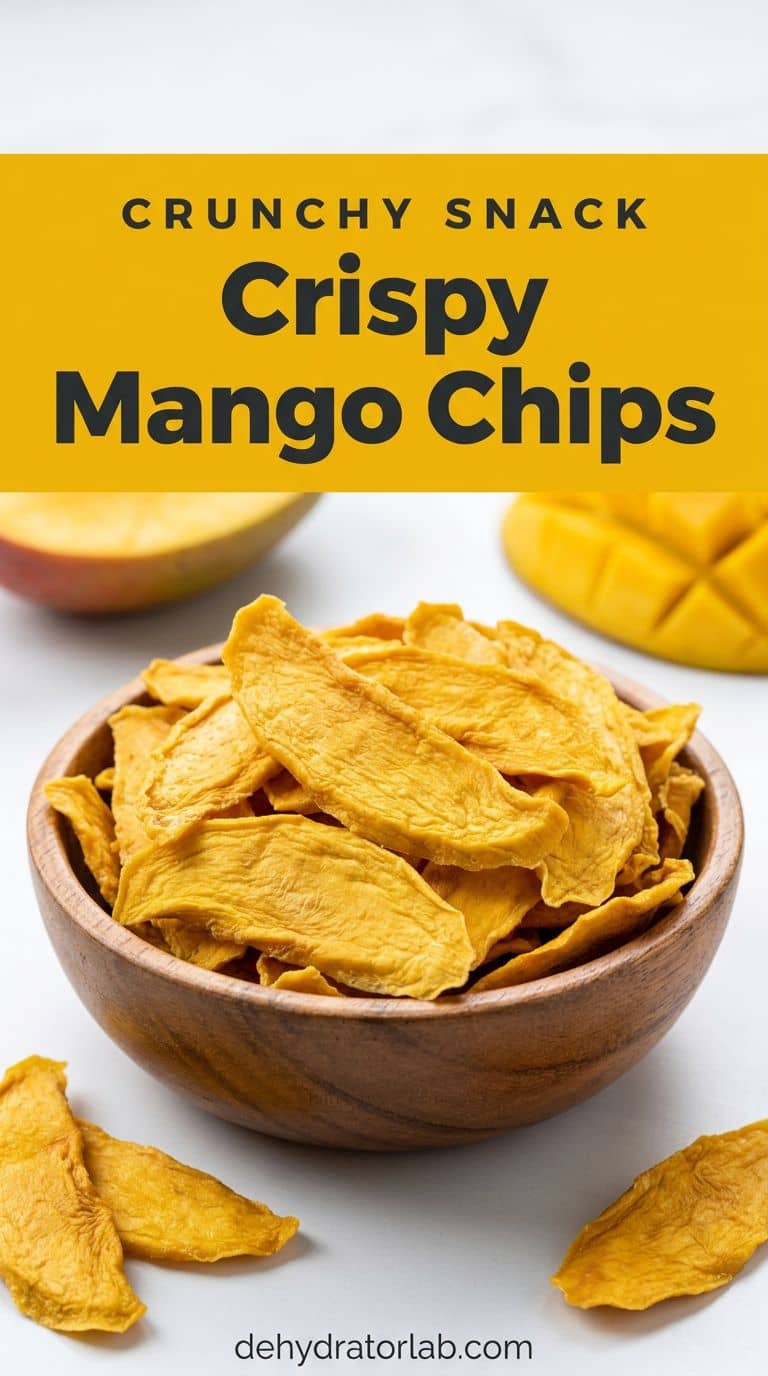
Slice the same fruit thinner and you get a totally different snack. Thin slices around 1/8 inch (3 mm) dry down to light chips that snap, which makes them a fun swap for potato chips at lunch. If you’d rather skip the dehydrator, my air fryer mango chips take a faster route.
Dry at about 135°F (57°C) for 8–12 hours, depending on thickness and humidity. The bend test flips here: you want a clean snap with no flex, and any chewy spot means more time. A chip that bends at the center will turn soft in the jar overnight.
Mango chips are brittle, so handle the trays gently and let them cool completely before storing. Snap, don’t bend.
3. Mango-Coconut Chews
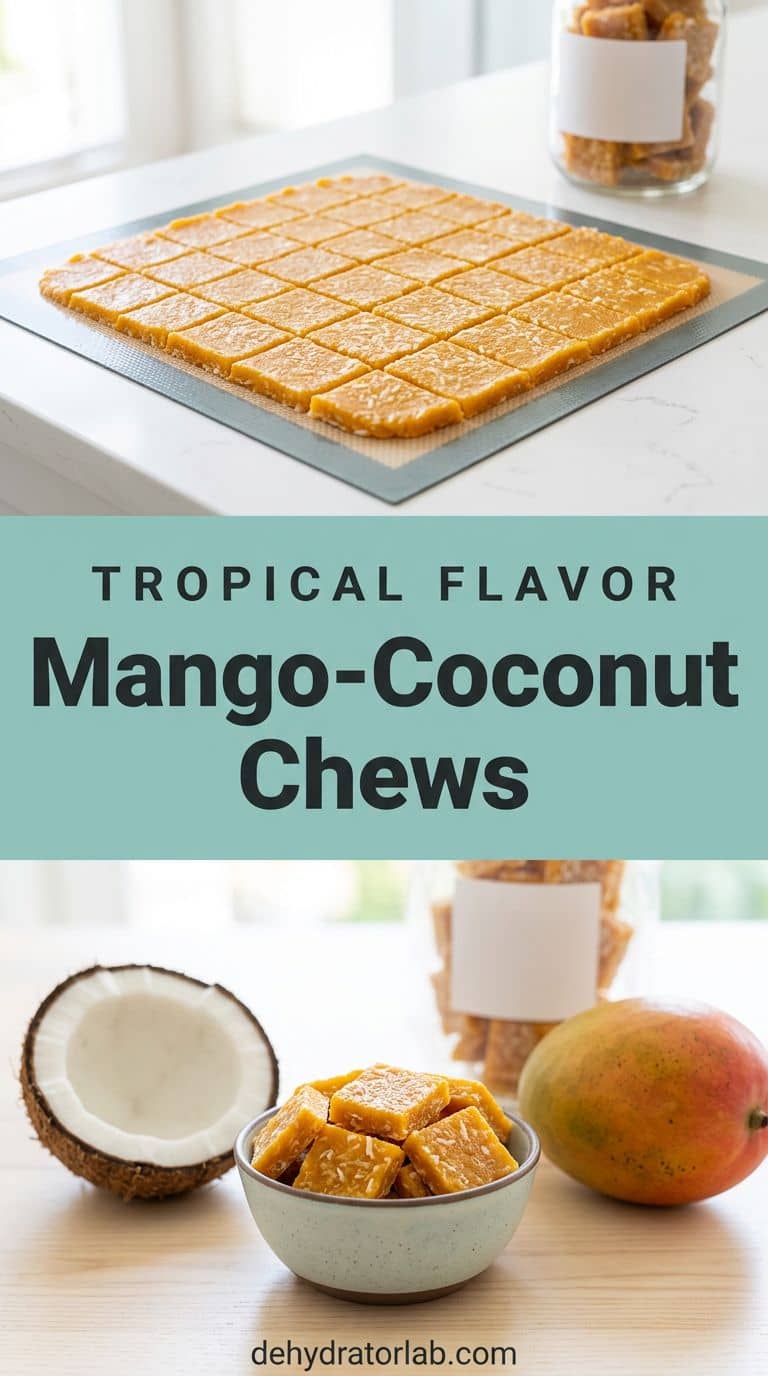
Mango and coconut belong together. Blend ripe mango into a puree, stir in unsweetened shredded coconut, and spread it on a silicone sheet about 1/4 inch thick. The method borrows from the NCHFP fruit leather method, with coconut added for chew and body.
Dry at about 135°F (57°C) for 8–12 hours, until the surface has no sticky spots and the center feels set. Cut it into small squares while it’s still warm and pliable. If you want to pair the coconut with other fruit, my dehydrated coconut flakes post shows how to dry your own.
- Use ripe mango for a sweeter chew.
- Fold in coconut after the puree is smooth.
- Dry until no sticky spots remain.
Because this one has a thick layer, check the middle of the sheet, not just the edges. Center first.
4. Ginger-Spiced Mango Slices
Sweet fruit loves a little heat. Toss 1/4-inch (6 mm) mango slices with a splash of lemon juice and a small amount of finely grated fresh ginger before they go on the tray. The ginger adds a warm bite, and the lemon keeps the flavor bright.
Dry the slices the same way as the chewy batch, at 130–135°F (54–57°C) for roughly 10–12 hours. For a stronger, steadier kick, dust them with a pinch of ground ginger, or use homemade powder from my dehydrated ginger powder guide. A citrus tip from my dehydrated citrus recipes works here too: a little zest goes a long way.
Go easy on the ginger the first time, because it intensifies as the fruit dries. Less is more until you know your batch.

5. Chili-Lime Mango Rounds
Here’s the spicy one. Slice the cheeks crosswise into 1/4-inch (6 mm) coins, toss them with fresh lime juice, then dust with chili powder and a pinch of salt. Drying locks the flavor in, so the heat and tang come with every bite. If you like savory-sweet heat, my spicy mango jerky goes even further.
Dry at 130–135°F (54–57°C) for about 10–12 hours. Apply the seasoning before drying so it sticks to the sticky surface, then add a light second dusting once the rounds come out and cool.
- Start with a mild chili powder.
- Taste a dried piece before adding more heat.
- Keep the salt light and even.
Start gentle. You can always sprinkle more after drying, but you can’t take heat back. Build the heat slowly.

6. Mango-Pineapple Tropical Mix
Two tropical favorites in one jar. Slice mango and pineapple to the same size, about 1/4 inch (6 mm), and dry them together in the same batch, but on separate trays. Pineapple and mango rarely finish at the same time, so pull each fruit as it’s ready instead of waiting on the slower one.
Once both fruits are done and cooled, toss them in one jar. This is a great base for trail mix too, and my trail mix recipes will give you ideas for nuts and seeds to add. For the pineapple half, my dehydrated pineapple rings post has the details.
The jar will taste like a tropical vacation by February. Separate trays, shared jar.

7. Mango Powder
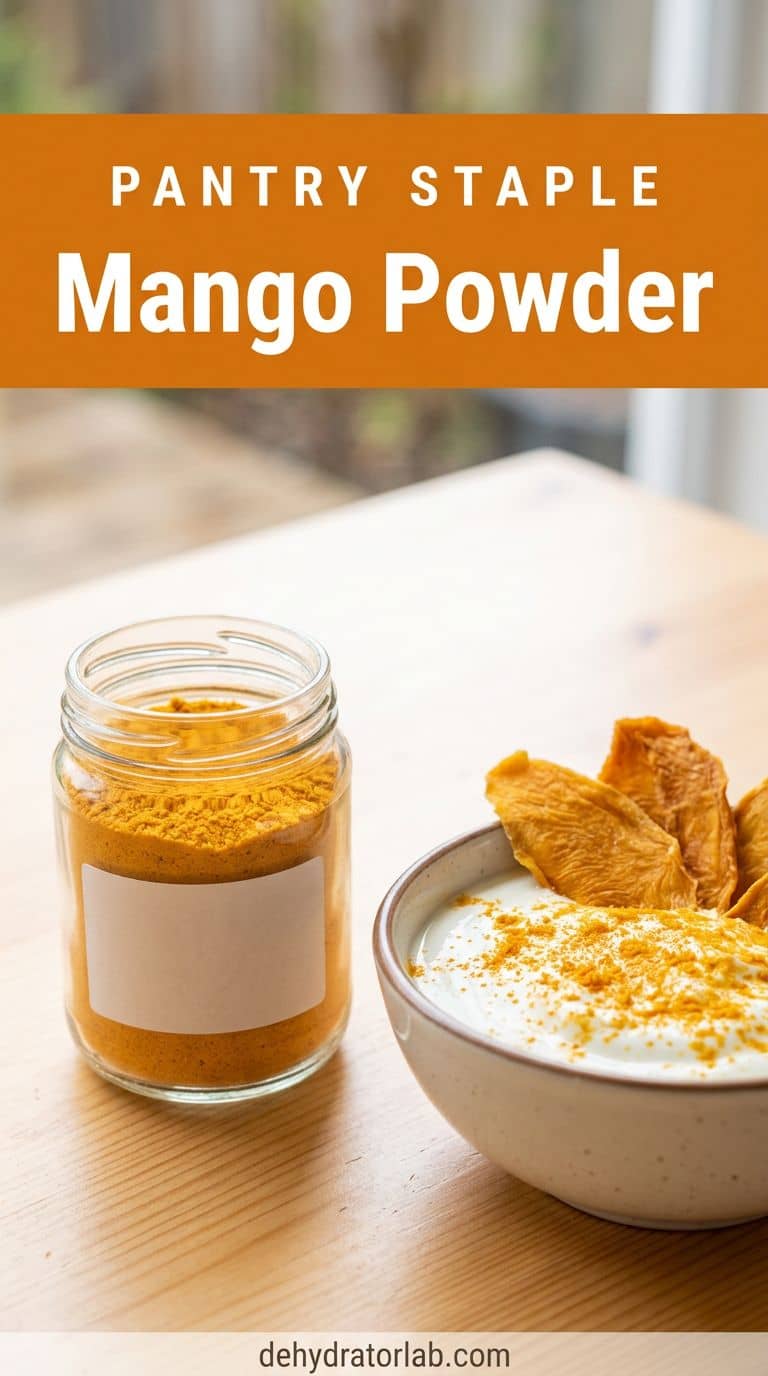
If you’ve got slices that dried too crisp or a tray of chips that crumbled, turn them into powder. Dry thin mango slices until they snap, then grind them fine. A spoonful of mango powder brightens yogurt, smoothies, oatmeal, and baking, and it’s the best way to use up the broken bits. My fruit powder ideas has plenty more uses.
Dry at about 135°F (57°C) until the pieces are brittle all the way through, then grind in short pulses so the sugars don’t gum up the blades. Sift out the coarse bits, and grind those again.
- Dry the slices until they snap clean.
- Grind in short pulses.
- Store in a small, dry jar.
Powder soaks up moisture quickly, so keep it in an airtight jar and consider a food-safe packet. Not sure which kind? My comparison of moisture absorbers vs oxygen absorbers sorts it out. Dry in, dry out.
Quick Reference: Mango Settings
| Recipe | Cut | Temp | Time | Done when |
|---|---|---|---|---|
| Chewy slices | 1/4 inch (6 mm) slices | 130–135°F (54–57°C) | 10–12 hours | Bends, no wet spots |
| Crispy chips | 1/8 inch (3 mm) slices | 135°F (57°C) | 8–12 hours | Snaps clean |
| Coconut chews | Puree + coconut, 1/4 inch thick | 135°F (57°C) | 8–12 hours | No sticky spots |
| Ginger slices | 1/4 inch (6 mm) slices | 130–135°F (54–57°C) | 10–12 hours | Bends, warm flavor |
| Chili-lime rounds | 1/4 inch (6 mm) coins | 130–135°F (54–57°C) | 10–12 hours | Leathery and bendy |
| Mango-pineapple mix | 1/4 inch (6 mm), separate trays | 135°F (57°C) | Pull each as it’s done | Bends, no wet spots |
| Mango powder | Thin slices, 1/8 inch (3 mm) | 135°F (57°C) | 8–12 hours | Brittle, grinds fine |
Times are ranges. Thickness, humidity, and tray load always change the clock.
Personal Tips You Can Steal
I cut every slice from the same mango to the same thickness, because mixed thickness means half the tray is done while the rest is still wet. I let dried pieces cool for a few minutes before judging them.
I condition chewy fruit in a loosely packed jar for 7–10 days, shaking it daily, as the NCHFP packaging guide recommends for dried fruit. I keep jars out of direct light and label them with the date. For how long each type keeps, my guide on how long dehydrated food lasts has the numbers.
Final Thoughts
Mango is forgiving, and a single box can turn into chewy slices, crisp chips, spicy rounds, and a jar of powder. Start with the chewy slices, nail the bend test, and branch out from there.
Related reading: 8 tropical fruit recipes to dehydrate at home, 7 chocolate-dipped dehydrated fruit recipes, and 10 trail mix recipes.
P.S. Buy an extra mango or two. Some of them won’t make it to the dehydrator. 🙂