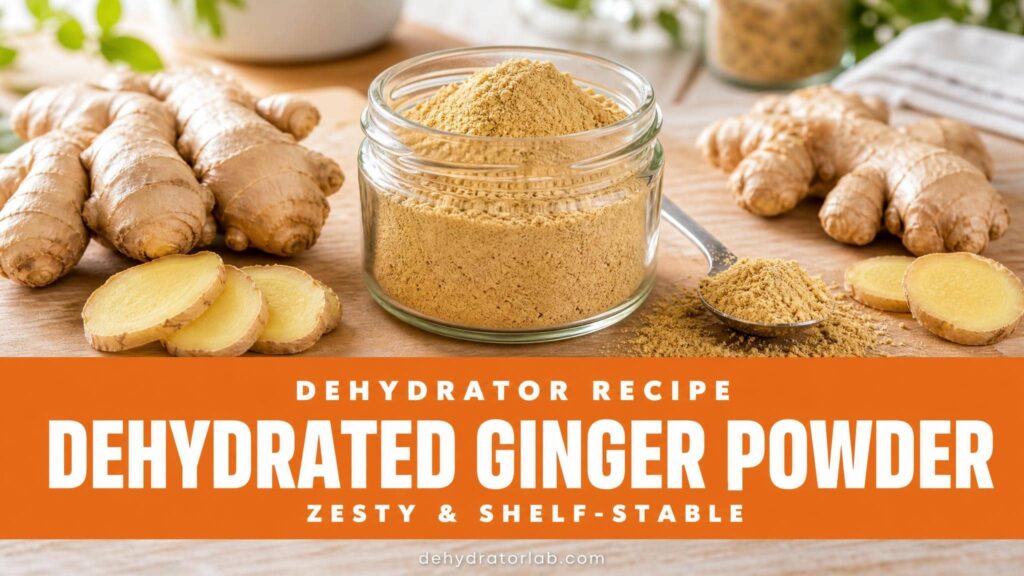
Ever buy a whole knob of ginger for one stir-fry, then find it shriveled in the crisper a month later? Dehydrated ginger powder is the fix. You dry sliced ginger root down to a fine, warm-spiced powder that keeps for a year and measures out exactly like the ground ginger in your spice rack.
It stirs into tea, bakes into gingerbread, and seasons marinades without the fuss of grating fresh root every time. Ready to stop losing ginger to the crisper drawer and start stocking a jar that never goes bad?
In this article:
TL;DR (Too Long; Didn’t Read): Key Takeaways
- 🫚 Choose firm, smooth-skinned ginger — wrinkled roots dry duller and less aromatic.
- 🔪 Slice thin and uniform so every piece dries at the same rate.
- 🌡️ Dry at 125–135°F until slices snap, not bend.
- ⏲️ Expect 4–8 hours depending on slice thickness and your machine.
- 🫙 Grind cool, condition for a few days, and store airtight for up to a year.
Why This Recipe Works
Fresh ginger is fibrous and mostly water, and your food dehydrator pulls that water out slowly, concentrating the warm, peppery oils into a powder that measures like any store-bought ground spice.
I keep a jar of this right next to my dehydrated ginger root slices — the slices are great for tea, but powder is what actually goes into baking, rubs, and marinades where you want it to disappear.
- No added sugar or fillers — just ginger.
- One small jar replaces store-bought ground ginger indefinitely.
- Blends invisibly into batters, rubs, and marinades for real ginger heat.
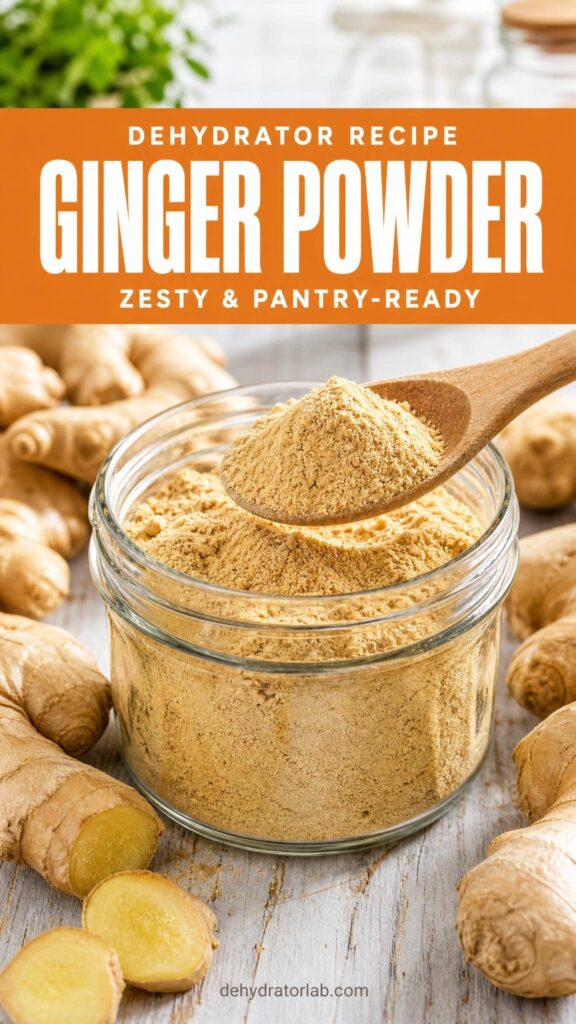
The Best Ginger To Use
Firm, plump ginger root with smooth, taut skin gives you the strongest flavor and the best-looking powder. Wrinkled or soft roots still work, but the payoff is smaller.
- Young ginger: thinner skin, milder heat, easier to slice.
- Mature ginger: spicier and more fibrous, gives a punchier powder.
- Skip any root with soft spots or mold — one bad section can taint a whole tray.
Ingredients
- 1 pound fresh ginger root
- That’s it — no sugar, oil, or additives needed for a plain, versatile powder
FYI, a single pound goes a long way once it’s ground. Ginger does all the work itself.
My Go-To Workflow (Step-By-Step)
- Wash the root. Rinse well to remove dirt from the folds and knuckles of the root.
- Peel or skip it. The skin is edible and dries fine, but peeling with the edge of a spoon gives a cleaner-tasting, lighter-colored powder.
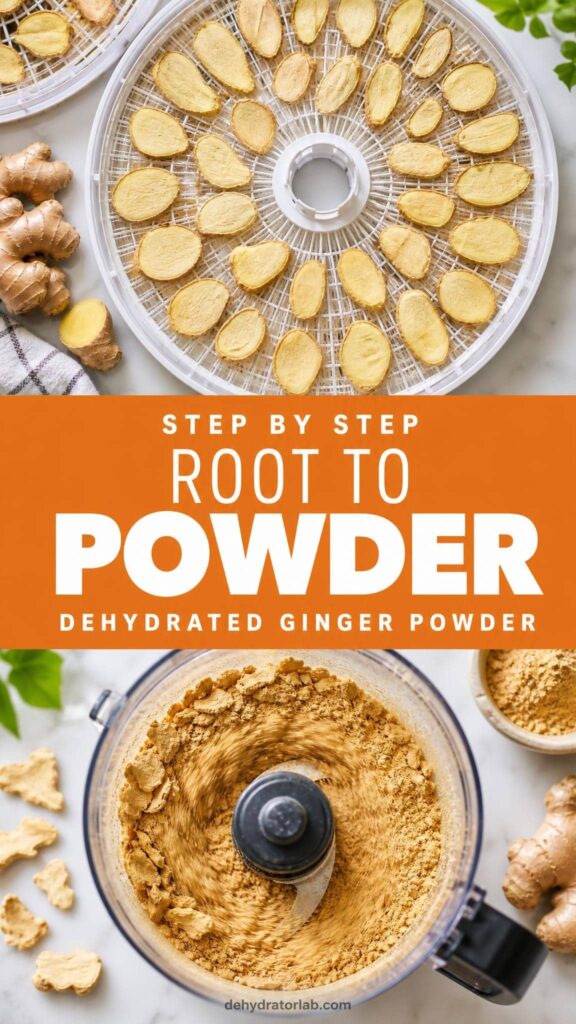
- Slice thin and even. Cut into 1/16–1/8-inch slices with a knife or mandoline. Thin, uniform pieces dry through completely instead of staying fibrous in the center for even drying.
- Load your trays. Spread slices in a single layer with no overlap on a mesh liner or standard tray.
- Set your dehydrator. Run at 125–135°F (52–57°C). A home oven works on its lowest setting, propped open a crack for airflow, though it runs less even than a dedicated machine.
- Rotate your trays. Swap trays top to bottom around the halfway mark so every batch dries evenly.
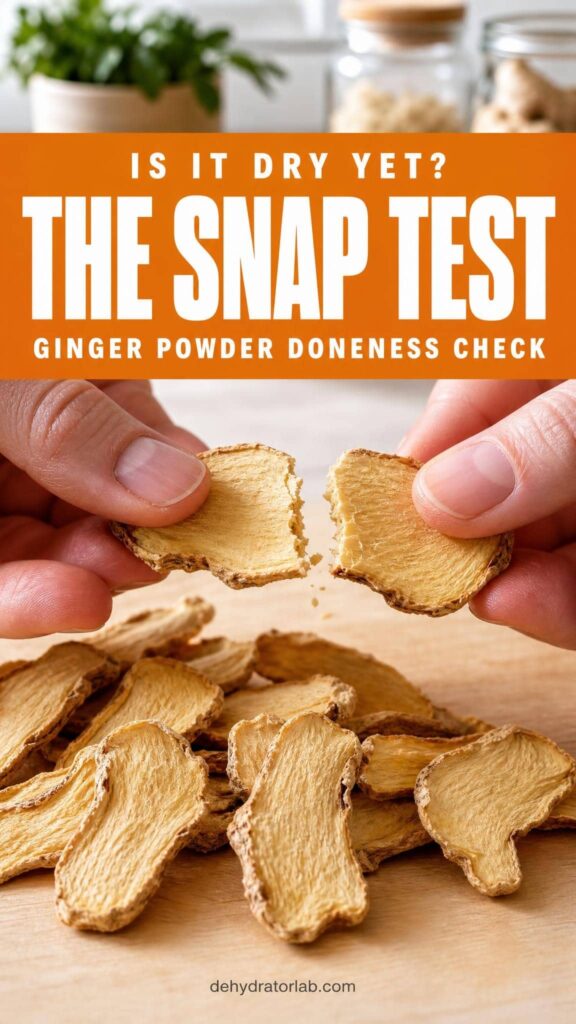
- Dry past “tea stage.” For slices meant for steeping tea, you’d stop once leathery to crisp. For powder, keep going until slices are fully brittle and snap cleanly. That’s your cue they’re bone dry.
- Cool completely. Let the dried slices come down to room temperature for 20–30 minutes before grinding. Warm pieces release steam inside a sealed grinder, and that steam turns into clumps.
- Grind in short pulses. Use a spice grinder or high-speed blender and pulse rather than run continuously. Sift out any fibrous bits and regrind them.
- Condition before you seal it. Fill a jar loosely no more than halfway and shake once a day for 2–3 days. Any clumping means there’s still moisture hiding — spread it back on a tray for another 30–60 minutes.
- Label and store. Write the date on the jar so future you knows exactly how old it is. Rotate oldest first.
Dehydrator Settings That Work
| Slice Thickness | Temperature | Typical Time |
|---|---|---|
| 1/16-inch | 125–135°F (52–57°C) | 4–5 hours |
| 1/8-inch | 125–135°F (52–57°C) | 6–8 hours |
| Young ginger, thin cut | 125–135°F (52–57°C) | 4–6 hours |
| Mature ginger, denser cut | 125–135°F (52–57°C) | 7–8 hours |
Your exact time swings with slice thickness, ginger age, humidity, and your specific machine. Check early, check often, and trust your hands over the clock.
The Dryness Test You Can Trust
Ever wonder why some batches of powder clump within a week? The secret lies in drying past “leathery” into truly bone dry. Ginger’s fibrous center holds moisture longer than the edges show.
- Bend a slice — it should snap cleanly, not fold like leather.
- Squeeze a piece — it should shatter, never feel cool or slightly springy.
- Break one in half — no pale, fibrous dampness hiding in the center, just fully dry.
Storage That Actually Lasts
- Airtight or nothing: a glass jar with a tight lid or a vacuum-sealed bag keeps humidity and oxygen out.
- Cool, dark, dry: a pantry shelf works; a spot near the stove or a sunny window does not.
- Shelf life: up to a year at room temperature for best aroma. Check the jar in week one for any condensation — that’s a sign it wasn’t dry enough.
Label with the date every time. Future you will say thanks when you’re rotating jars a year from now.
Beyond Tea: Ginger Powder In Marinades
Ground ginger isn’t just for gingerbread. It’s a staple in teriyaki-style jerky marinades, where it adds warmth without the wet bulk of fresh grated root. If you’ve made our air fryer teriyaki beef jerky or turkey jerky, you’ve probably reached for the ground ginger jar already.
Homemade powder works exactly like store-bought here — measure it the same way, teaspoon for teaspoon, since drying and grinding gets you to roughly the same concentration.
How To Actually Use It
A teaspoon goes a long way since the powder is concentrated root. Use it anywhere a recipe calls for ground ginger.
- Steep a pinch in hot water for a quick, warming tea.
- Bake into gingerbread, cookies, and spice cakes for classic warm flavor.
- Blend into marinades, dry rubs, and stir-fry sauces for real ginger heat.
Unlike fresh ginger, powder doesn’t need peeling or grating — just measure and stir it in directly.

Common Mistakes To Avoid
- Slicing unevenly. Thick and thin slices on the same tray finish at different times, so thin pieces scorch while thick ones stay fibrous.
- Grinding while warm. Warm powder traps steam in the jar, and steam turns into clumps within days.
- Stopping at “tea stage.” Leathery, still-flexible slices hold too much moisture for powder — keep drying until brittle.
- Skipping conditioning. A few days of shaking the jar catches hidden moisture before it becomes mold.
Frequently Asked Questions
Can I make ginger powder without a dehydrator?
Yes. Use your oven’s lowest setting, prop the door open slightly for airflow, and expect a similar or slightly longer time. Watch closely since ovens run less even than a dedicated machine.
Do I need to peel the ginger first?
No, but peeling with the edge of a spoon gives a lighter-colored, cleaner-tasting powder. Skin-on works fine and dries just as well.
Why is my powder clumping?
Leftover moisture is almost always the cause. Spread the powder on a tray and run it another 30–60 minutes at a low setting, cool fully, then reseal.
Is homemade ginger powder as strong as store-bought?
Usually stronger and fresher, since store-bought jars can sit on a shelf for a year before you buy them. Start with the same measurement your recipe calls for and adjust to taste.
How much powder does one batch make?
One pound of fresh ginger typically grinds down to about 1/3 to 1/2 cup of fine powder, since you’re removing nearly all the water weight.
Is dehydrated ginger powder healthy?
Ginger is well known for its anti-inflammatory and digestive benefits, and drying concentrates those active compounds into a smaller volume. It’s a common addition to teas and remedies for exactly that reason.
Personal Tips You Can Steal
I slice with a mandoline whenever I have a full root going, because uniform slices mean I’m not babysitting three different finish times. I peel with a spoon instead of a knife because it wastes less ginger and works around the knobby bits. I keep an unlabeled “test jar” going for a few days before committing a full batch to permanent storage, since a hidden clump early on saves the whole jar later. I grind in short pulses instead of one long blend because it keeps the powder from heating up and going stale-tasting.
Wrap-Up
Dehydrated ginger powder turns a root that was headed for the compost into a pantry staple that measures exactly like the spice jar it replaces. A pound of ginger, some patience in the dehydrator, and a quick grind gets you a jar of concentrated warmth that outlasts anything in your crisper drawer. Pair it with dehydrated turmeric powder for a golden tea blend, or stir it into dehydrated carrot powder for a warming soup base.
If you’d rather dry your ginger as slices first and decide on powder later, our dehydrated ginger root slices guide covers the slice version step by step. And if you’re new to the whole process, our beginner’s guide to using a food dehydrator covers the basics before you start.
P.S. Keep a small “working jar” next to the stove and the big batch sealed in the back of the pantry. You’ll use the powder more often when it’s within arm’s reach 🙂
Want just the essential recipe details without scrolling through the article? Get our printable recipe card with just the ingredients and instructions.
Related reading: dehydrated turmeric powder, dehydrated pumpkin powder, dehydrated carrot powder, and air fryer teriyaki beef jerky.
Printable Recipe Card
Want just the essential recipe details without scrolling through the article? Get our printable recipe card with just the ingredients and instructions.