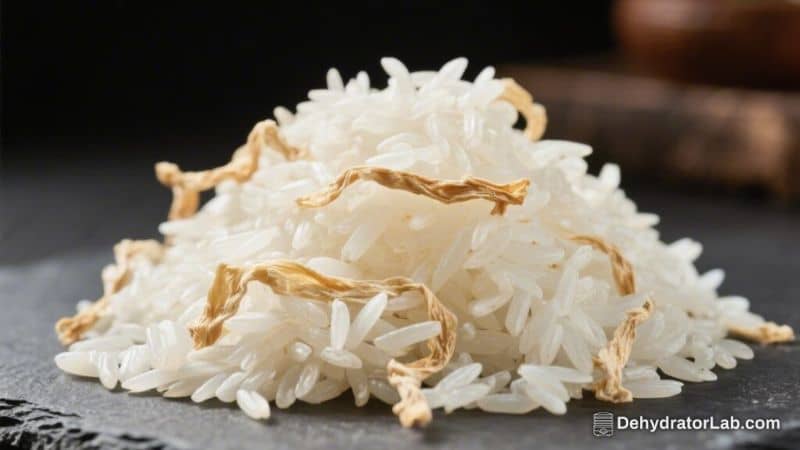

Dehydrated scrambled eggs are a smart, space-saving way to keep protein on hand for camping, emergency kits, and quick meals. They rehydrate into fluffy, tasty eggs that work in breakfast bowls, wraps, or fried rice. If you’ve ever lugged fragile eggs into the backcountry or worried about refrigeration, this solves both.
The method is simple, the results are reliable, and the flavor is surprisingly good. With a little prep, you’ll have ready-to-cook eggs that last for months.
In this article:
Key Points on Dehydrated Scrambled Eggs (TL;DR)
- 🥚 Scramble and cook the eggs soft before drying — this sets the protein and prevents rubbery texture later
- 🌡️ Dehydrate at 145-155°F (63-68°C) for 6-10 hours, stirring once or twice
- 🫙 Condition the dried eggs in a loosely filled jar for 3-5 days before long-term storage
- 🎒 Rehydrates 1:1 with hot water or broth — perfect for camping, emergencies, or quick meals
Why This Recipe Works

Scrambling the eggs before dehydrating sets the proteins and prevents a rubbery texture later. A gentle cook on the stovetop creates small, even curds that dry quickly and rehydrate better.
Adding a touch of dairy or oil helps preserve tenderness and improves mouthfeel. Seasoning lightly upfront makes the eggs taste balanced after drying, when flavors can dull slightly. Using a low, steady dehydrator temperature protects flavor and prevents case hardening.
Shopping List
- Large eggs (8–12, depending on dehydrator space)
- Milk or cream (optional, 1–2 tablespoons per 4 eggs)
- Butter or neutral oil (1–2 teaspoons)
- Salt (to taste; start with 1/4 teaspoon per 4 eggs)
- Ground black pepper (optional)
- Nonstick spray or parchment (for dehydrator trays)
- Optional add-ins: chives, onion powder, garlic powder, smoked paprika
How to Make It
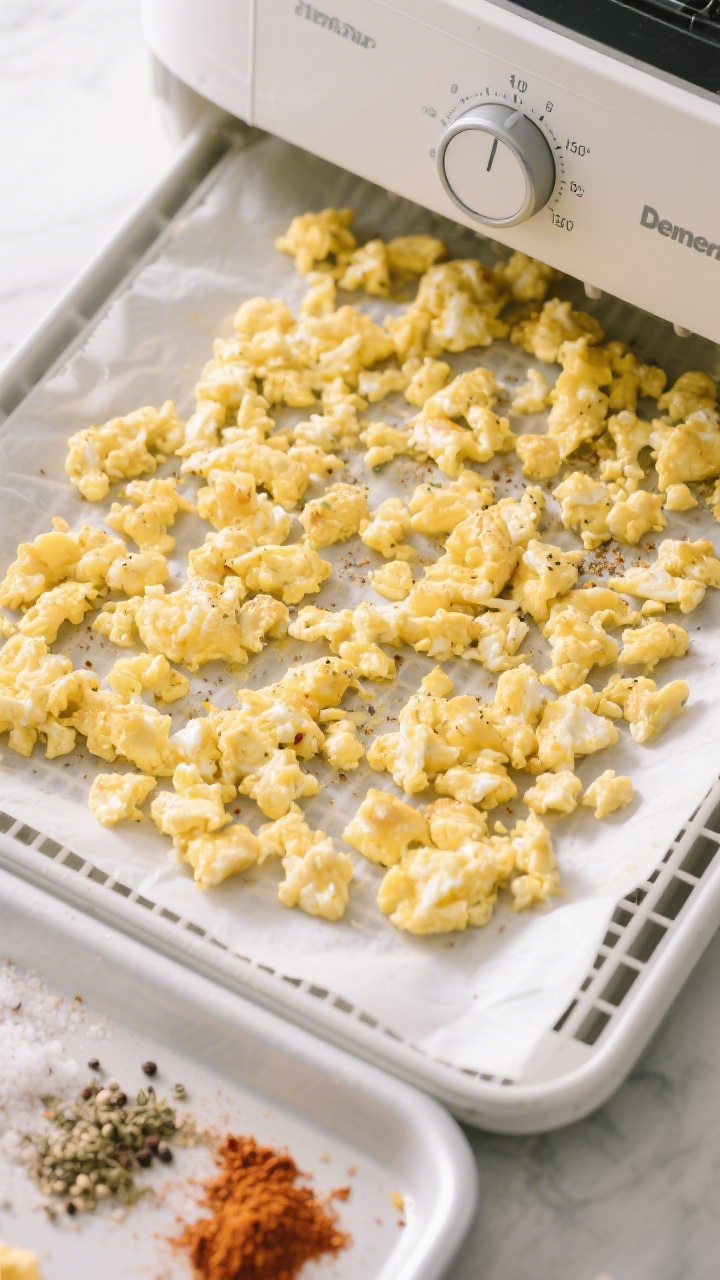
- Prep the trays. Line dehydrator trays with nonstick sheets or parchment, or use fine-mesh inserts.
Lightly mist with nonstick spray to prevent sticking.
- Whisk the eggs. Crack the eggs into a bowl. Add a pinch of salt, pepper, and milk or cream if using. Whisk until the mixture is uniform and slightly frothy.
Avoid overbeating.
- Cook low and slow. Warm a nonstick skillet over medium-low heat. Add butter or oil. Pour in the eggs and gently stir with a spatula, forming small, soft curds.
Cook just until set but still moist; avoid browning.
- Break into small pieces. Transfer the cooked eggs to a sheet pan and use your spatula or a fork to crumble into pea-sized bits. Smaller pieces dry faster and rehydrate better.
- Load the dehydrator. Spread the eggs in a single, even layer on prepared trays. Keep pieces from overlapping for consistent drying.
- Dehydrate. Set the dehydrator to 145–155°F (63–68°C).
Dry for 6–10 hours, checking after 5 hours. Stir once or twice during drying to expose moist spots.
- Check for doneness. Eggs are done when they are fully dry, crisp, and snap when broken. No cool or soft spots.
Pieces should feel firm and slightly brittle.
- Cool completely. Let eggs cool to room temperature on the trays. Trapped warmth can create condensation in storage.
- Condition the batch. Place dried eggs in a loosely filled jar for 3–5 days, shaking daily. If condensation appears, return eggs to the dehydrator to dry more.
This step evens out residual moisture.
- Package for storage. Transfer to airtight jars, vacuum-sealed bags, or Mylar with oxygen absorbers for long-term storage. Label with date.
Storage Instructions
- Room temperature: Store in a cool, dark place for up to 3–6 months if packed airtight and fully dried.
- Refrigeration: Extends quality to 9–12 months, especially in humid climates.
- Freezing: Best for long-term; up to 18 months in vacuum-sealed bags. Keep packages small to reduce repeated thawing.
- Moisture control: Use desiccant packs in jars if you live in a humid area.
Always cool eggs before sealing to prevent condensation.
- Signs to discard: Off smells, visible moisture, clumping, or mold. When in doubt, throw it out.

Why This is Good for You
Eggs deliver high-quality protein with all essential amino acids. They’re rich in choline for brain health and contain vitamins A, D, E, and B12.
Dehydrating doesn’t strip the protein, and it reduces weight and bulk for easy transport. Having shelf-stable eggs supports better meal planning and reduces food waste. For hikers, campers, or busy families, it’s a practical way to keep nourishing food on hand.
Common Mistakes to Avoid
- Overcooking the scramble: Dry, browned eggs turn rubbery after rehydration.
Keep curds soft before drying.
- Skipping nonstick liners: Eggs stick stubbornly to bare trays and mesh. Line them for easy removal.
- Drying too hot: High heat can toughen eggs and lock moisture inside. Stay within 145–155°F (63–68°C).
- Big chunks: Large pieces dry unevenly and rehydrate poorly.
Aim for pea-sized bits.
- Storing before fully cool: Warm eggs create condensation in sealed containers, leading to spoilage.
- Skipping conditioning: Uneven moisture causes mold. The jar-shake step helps catch issues early.
Variations You Can Try
- Herb and pepper: Add dried chives, parsley, or a pinch of chili flakes before cooking.
- Smoky camp-style: Stir in smoked paprika and onion powder for deeper flavor.
- Cheesy note: Mix in a tablespoon of finely grated hard cheese during scrambling. Dry thoroughly.
- Veggie boost: Fold in very finely cooked and drained bell pepper or spinach.
Keep ratios low to ensure full drying.
- Broth-infused rehydration: Rehydrate with hot chicken or vegetable broth for savory richness.
FAQ
How do I rehydrate dehydrated scrambled eggs?
Cover the dried eggs with an equal volume of hot water or broth (1:1 by volume). Let sit 5–10 minutes, then warm in a pan with a little oil or butter, stirring until heated through. Add a splash more liquid if needed.
Can I use the oven instead of a dehydrator?
Yes, but it’s less precise.
Set the oven to its lowest setting (ideally under 170°F/77°C), use convection if available, and prop the door slightly open for airflow. Place eggs on parchment-lined sheets and check frequently to avoid overdrying or browning.
Are dehydrated eggs safe to eat?
Yes, when prepared properly. Cook eggs to set, dry completely at food-safe temperatures, and store airtight.
Always rehydrate with clean, hot water and reheat to steaming before serving.
Do I have to add milk or cream?
No. Milk or cream adds tenderness and flavor, but plain scrambled eggs dehydrate and rehydrate just fine. If skipping dairy, include a teaspoon of oil or butter while cooking for better texture.
How long do rehydrated eggs keep?
Treat them like fresh-cooked eggs.
Once rehydrated and reheated, serve immediately. Don’t store rehydrated eggs for later; discard leftovers for safety.
Why are my rehydrated eggs rubbery?
They were likely overcooked before drying or dried at too high a temperature. Next time, cook softer curds and keep the dehydrator around 145–155°F (63–68°C).
Also, add a splash more liquid during rehydration.
Can I season the eggs before drying?
Yes. Light salt and spices work well. Avoid high-moisture add-ins like fresh tomatoes unless they’re precooked and very well drained, which can still lengthen drying time.
What’s the best way to pack them for backpacking?
Portion 1–2 servings into small zip-top or vacuum-sealed bags with a desiccant.
Label each with the required water amount. Keep bags deep in your pack away from punctures and heat.
Can I dehydrate raw eggs instead?
Home dehydrating raw eggs is not recommended due to safety concerns. Cooking the eggs first significantly reduces risk and produces better texture.
How many fresh eggs equal one cup of dried eggs?
Expect roughly 8–10 large eggs to dry down to about 1 cup of crumbled pieces, depending on how finely you break them and how dry they get.
For rehydration, start with a 1:1 volume of hot water and adjust.
In Conclusion
Dehydrated scrambled eggs are practical, tasty, and perfect for camping, emergency storage, or quick weekday meals. With the right technique—gentle cooking, thorough drying, and airtight storage—you’ll get reliable results every time. Keep a jar in the pantry or a few packets in your pack, and breakfast is always a few minutes away.
It’s lightweight convenience without sacrificing flavor or nutrition.
P.S. Building out your shelf-stable pantry? My Dehydrated Beet Chips are another easy one to stock up on.

Dehydrated Scrambled Eggs – Lightweight, Shelf-Stable Protein for Home and Trail
Ingredients
- Large eggs (8–12, depending on dehydrator space)
- Milk or cream (optional, 1–2 tablespoons per 4 eggs)
- Butter or neutral oil (1–2 teaspoons)
- Salt (to taste; start with 1/4 teaspoon per 4 eggs)
- Ground black pepper (optional)
- Nonstick spray or parchment (for dehydrator trays)
- Optional add-ins: chives, onion powder, garlic powder, smoked paprika
Instructions
- Prep the trays. Line dehydrator trays with nonstick sheets or parchment, or use fine-mesh inserts.Lightly mist with nonstick spray to prevent sticking.
- Whisk the eggs. Crack the eggs into a bowl. Add a pinch of salt, pepper, and milk or cream if using. Whisk until the mixture is uniform and slightly frothy.Avoid overbeating.
- Cook low and slow. Warm a nonstick skillet over medium-low heat. Add butter or oil. Pour in the eggs and gently stir with a spatula, forming small, soft curds.Cook just until set but still moist; avoid browning.
- Break into small pieces. Transfer the cooked eggs to a sheet pan and use your spatula or a fork to crumble into pea-sized bits. Smaller pieces dry faster and rehydrate better.
- Load the dehydrator. Spread the eggs in a single, even layer on prepared trays. Keep pieces from overlapping for consistent drying.
- Dehydrate. Set the dehydrator to 145–155°F (63–68°C).Dry for 6–10 hours, checking after 5 hours. Stir once or twice during drying to expose moist spots.
- Check for doneness. Eggs are done when they are fully dry, crisp, and snap when broken. No cool or soft spots.Pieces should feel firm and slightly brittle.
- Cool completely. Let eggs cool to room temperature on the trays. Trapped warmth can create condensation in storage.
- Condition the batch. Place dried eggs in a loosely filled jar for 3–5 days, shaking daily. If condensation appears, return eggs to the dehydrator to dry more.This step evens out residual moisture.
- Package for storage. Transfer to airtight jars, vacuum-sealed bags, or Mylar with oxygen absorbers for long-term storage. Label with date.
Related reading: how to make watermelon, dehydrated beet chips, and best vacuum sealer.
Printable Recipe Card
Want just the essential recipe details without scrolling through the article? Get our printable recipe card with just the ingredients and instructions.