
Craving a taste of the tropics without a plane ticket? Your dehydrator can get you most of the way there. Let’s turn a fruit bowl into a pantry full of tropical snacks.
Tropical fruit dries differently than the apples and berries most people start with — more sugar, more moisture, sometimes a different texture entirely. These eight recipes cover the ones worth the tray space, from the fruit you already buy every week to the one your grocery store started stocking last year.

As an Amazon Associate, I earn from qualifying purchases. If you make a purchase after clicking on a link I may earn a small commission at no extra cost to you if items are purchased.
In this article:
TL;DR (Too Long; Didn’t Read): Key Takeaways
- 🥭 Eight tropical fruit recipes, from everyday mango and pineapple to dragon fruit and toasted coconut.
- 🌡️ Most tropical fruit dries at 135°F (57°C); ripeness and cut thickness decide where you land in the range.
- 🍯 High-sugar fruit like mango and pineapple dries closer to chewy candy than to a crisp chip.
- 🥥 Coconut is the outlier — it runs cooler and faster than the rest of this list.
- 📦 Store everything airtight, cool, and dark; most keep 1–2 months at room temp.
Start with whatever’s ripest on your counter right now — I lined these up from the fruit you can find at any grocery store to the ones worth a special trip.
1. Mango Strips
Ever wonder why mango goes from juicy to chewy-candy the second the dehydrator gets to it? Sugar content is the reason. Mango carries more natural sugar than almost any other fruit on this list, so the dried result tastes closer to a gummy candy than a health snack.
Pick fruit that’s ripe but still holds its shape when sliced — too soft and you’ll fight the mandoline the whole way through. Cut into 1/4-inch strips, dry at 135–140°F (57–60°C) for 8–10 hours, and pull pieces that are leathery and pliable, not sticky.
Full step-by-step is in how to dehydrate mango. Want heat instead of sweet? The same base scales into spicy mango jerky for a completely different snack from the same fruit — one mango, two directions.

2. Pineapple Rings
Pineapple already tastes like candy fresh — dehydrated, it goes even further. The natural acidity keeps it from turning cloying, so you end up with something sweet-tart instead of just sweet.
Core and slice into 1/4-inch rings, pat off the excess juice, and load single layer with no overlap. Dry at 135°F (57°C) for 8–12 hours depending on ring thickness and how juicy your pineapple was to start.
- Plain: nothing added, just fruit and time.
- Spiced: a light dusting of chili powder or Tajin before drying.
- Snack mix: chop and toss with the coconut chips below for instant tropical trail mix.
Full method at dehydrated pineapple rings, or the broader guide at how to dehydrate pineapple if you want chunks or chips instead of rings.

3. Banana Chips
Bananas are tropical fruit that never get filed under “tropical” because they’re in every grocery store, every week, all year. That’s exactly why they belong here — no special shopping trip needed.
Slice into 1/4-inch rounds, dip briefly in lemon water so they don’t brown on the tray, and load single layer for even drying. Run 135°F (57°C) for 8–10 hours for chewy, or push toward 12 hours for a crisp, chip-like snap.
My full method with four cutting and dip options is in how to dehydrate bananas — it’s the recipe I’d point a total beginner to first.

4. Kiwi Rounds
Kiwi keeps its bright green color surprisingly well through drying, so these rounds stay a snack you actually want to look at, not just eat. The tiny black seeds go crunchy instead of disappearing, which is half the appeal.
Peel and slice into 1/4-inch rounds — don’t go thinner, kiwi is delicate and tears easily. Dry at 135°F (57°C) for 8–10 hours. Pull pieces when they’re leathery and pliable with just a little give, not stiff.
Full timing and troubleshooting is in how to dehydrate kiwi in a food dehydrator. Fair warning: the tang mellows a lot once dried, so don’t expect the same sour punch as fresh — it trades tart for chewy.

5. Papaya Strips
Papaya dries into something close to a soft, chewy candy, similar to mango but milder and a little more floral. It’s an easy sell to anyone who says they “don’t like” tropical fruit — the dried version tastes nothing like the sometimes-bland fresh version.
Peel, seed, and cut into 1/4-inch strips. Dry at 135°F (57°C) for 8–10 hours, checking after hour 8 since ripeness swings the timing more than with firmer fruit. Pull pieces that bend without cracking.
I don’t have a full dehydrator write-up on papaya yet, but the flavor and cut are identical to air fryer papaya chips if you want a faster batch some night, and the general rules in 15 best fruits to dehydrate cover the rest. Ripeness makes or breaks this one.

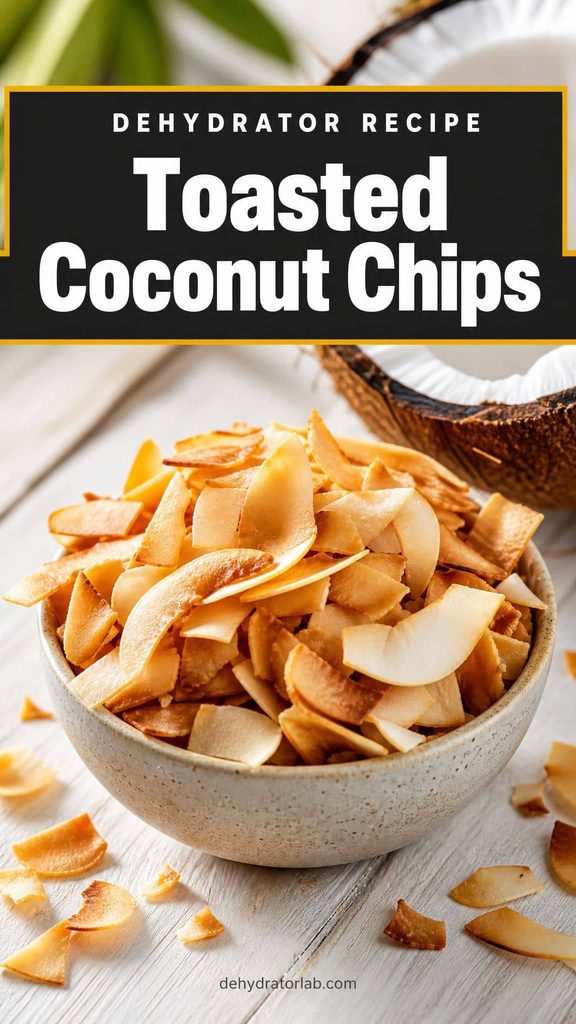
6. Toasted Coconut Chips
Coconut is the odd one out on this list, and it’s worth calling that out up front. It’s higher in fat than everything else here, which means it behaves differently in the dehydrator — lower heat, shorter time.
Shave fresh coconut meat into wide, thin flakes or use unsweetened large-flake coconut. Dry at 130–135°F (54–57°C) — a few degrees cooler than the fruit above, since higher heat can push the natural oils toward rancid before the flakes even finish. Most batches are done in 4–6 hours, fast compared to everything else on this list.
Watch closely near the end; thin flakes go from pale to over-toasted fast. The air fryer version at air fryer coconut chips uses the same flakes if you want a faster comparison batch. Toss the finished chips over the pineapple rings above for a two-ingredient tropical mix.
7. Dragon Fruit Chips
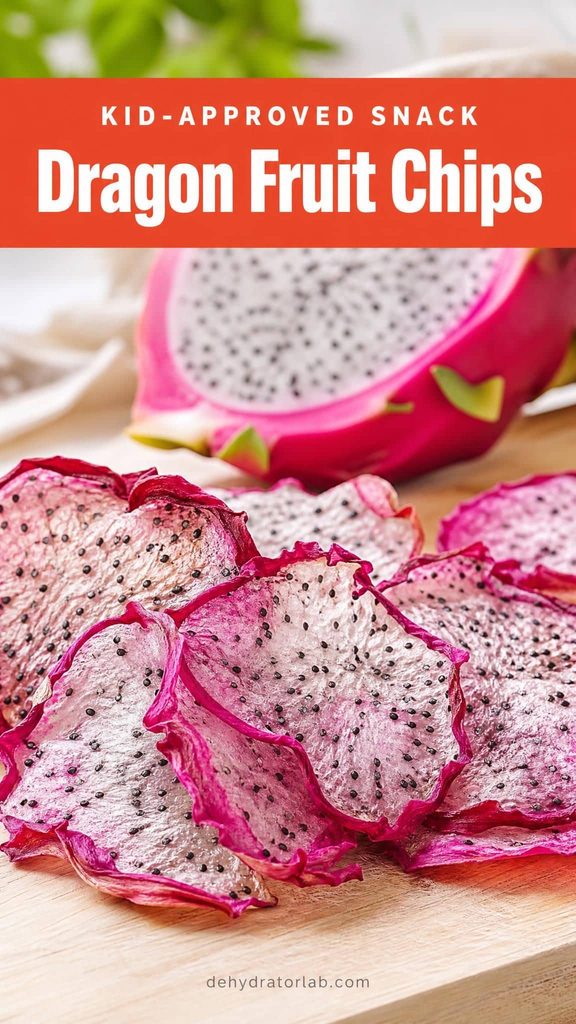
This is the one that stops people mid-scroll. Dragon fruit dries into thin, almost translucent chips with the seeds still speckled through them — it looks more like stained glass than a snack, and it tastes mild and lightly sweet.
Slice as thin as you can manage on a mandoline, about 1/8-inch — thin is the whole point here, since dragon fruit has a mild flavor that concentrates better in a thin piece. Dry at 135°F (57°C) for 10–12 hours; the high water content stretches the time past most of the fruit on this list.
I haven’t run a full dehydrator write-up on this one yet — the air fryer dragon fruit chips post covers the same cut and flavor if you want to compare methods. Color fades a bit as it dries, so don’t expect the same neon-pink as fresh.
8. Pineapple-Coconut Fruit Leather
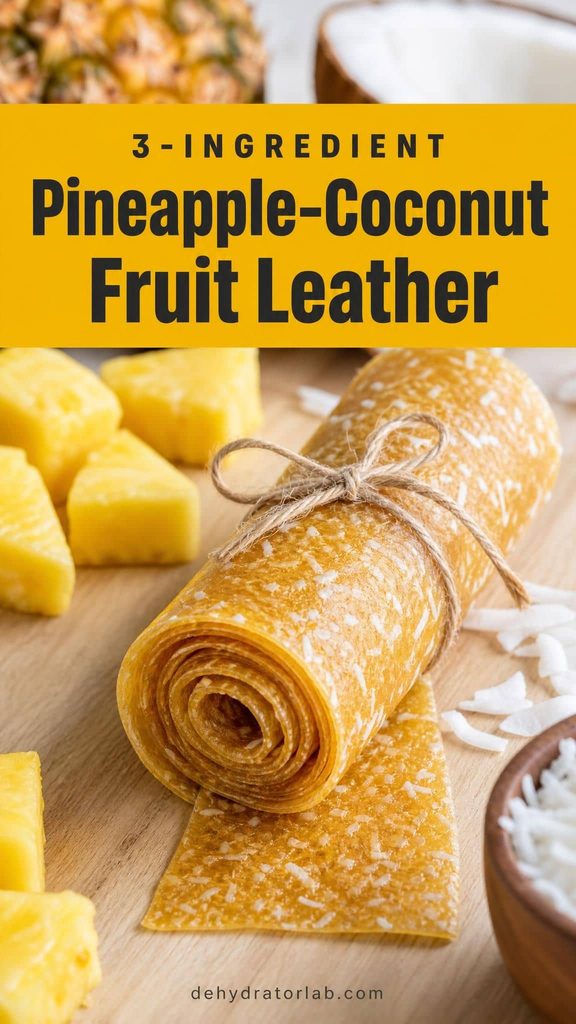
If you only make one recipe off this list to actually taste like a vacation, make this. Blended pineapple and coconut dry into a leather that tastes like a piña colada without the blender cleanup every time you want a snack.
Blend pineapple chunks with a splash of coconut milk or shredded coconut, pour thin onto a lined tray, and dry at 135°F (57°C) for 6–8 hours, checking after hour 6. You want it tacky and pliable, not wet in the center.
Full technique and a ready-made version of this exact combo is in pineapple coconut fruit leather. General fruit leather troubleshooting lives in how to make fruit leather in a dehydrator if this is your first roll. One batch, whole tropical vibe.
Personal Tips You Can Steal
I run every tropical fruit through a quick ripeness check before it hits the tray, because underripe mango and papaya dry tough instead of chewy, no matter how long you leave them in. I keep my Excalibur 3526TB loaded with only one fruit type per run, since mixing high-sugar fruit with coconut on the same trays throws off both finish times. If you run several fruits a week and want more trays to split them across, my Excalibur vs Cosori comparison pits Excalibur’s nine-tray against Cosori’s ten-tray at the same price.
I always pull the coconut chips early and check them again after they cool — warm coconut feels softer than it actually is. And I never skip patting fruit dry before loading; the extra surface moisture is the single biggest reason a batch runs long.
Final Thoughts
You don’t need an exotic grocery run to start this list — mango, pineapple, and banana get you three items in before you’ve bought anything unusual. Save dragon fruit and coconut for when you want to impress someone, and let the rest earn their spot in regular rotation.
Related reading: if you want the fruit-family basics before you commit to a full tray, start with 15 best fruits to dehydrate at home, and if kid snacks are the goal, check out 10 dehydrated fruit snack recipes the kids will actually eat next.
P.S. Buy tropical fruit a few days ahead and let it ripen on the counter before you slice — rushing a hard mango or papaya into the dehydrator is the fastest way to end up with tough, flavorless chips 🙂