
A shelf of dehydrated soup mixes is the pantry equivalent of money in the bank. No prep, no chopping at 6pm on a weeknight — just a jar, some water, and twenty minutes.
These are different from a full backpacking dinner where you cook the whole meal first and dry it as one dish. Here, you’re drying the individual ingredients — noodles, vegetables, beans, seasoning — and layering them into a jar as a mix. Add water later, simmer, and it becomes soup on demand. Most of the work is drying the vegetables first, so the machine you use decides how well the jar comes back to life months later. Let’s stock that shelf.

As an Amazon Associate, I earn from qualifying purchases. If you make a purchase after clicking on a link I may earn a small commission at no extra cost to you if items are purchased.
In this article:
TL;DR: Key Takeaways
- 🍜 Chicken noodle is the mix everyone reaches for first, and the one to start with
- 🫘 Lentil and split pea mixes need zero pre-soaking — the dehydrating already did that work
- 🍅 Minestrone and tortilla mixes are the most forgiving on exact ratios
- 🍄 Mushroom and potato leek go creamy with just milk powder and butter powder
- 🧡 Turmeric golden vegetable is the one to reach for feeling under the weather
- ✅ Every mix rehydrates the same basic way: water, simmer, done
Before you start: dry each ingredient separately at its own best temperature — starches and dried vegetables around 125–135°F (52–57°C), pre-cooked beans and lentils a little cooler if they’re already soft, and let everything cool fully before combining. The seasoning side is where drying your own herbs pays off, since the herb blend is what makes a jar taste like soup rather than salted water. Layer or mix into a jar, then store in airtight glass jars away from light — a vacuum sealer stretches shelf life even further if you’re stocking up for months rather than weeks.
To cook: dump the jar into a pot, add the water or broth the recipe calls for, bring to a simmer, and give it 15-20 minutes for everything to soften back up.
1. Chicken Noodle Soup Mix
My full chicken noodle soup mix recipe has the exact ratios, but the short version: dehydrated cooked chicken, dried egg noodles, carrot, celery, and a bouillon-forward seasoning blend, layered in a jar.
This is the gateway mix — familiar enough that nobody questions it, and forgiving enough that a slightly-off ratio still tastes like chicken noodle soup. The mix that convinces skeptics dehydrated soup is real soup.

2. Lentil Soup Mix
My full lentil soup mix recipe leans on already-cooked dehydrated lentils, so there’s no soaking required at camp or at home — just water, heat, and time.
Lentils hold their shape better than most beans through the dry-and-rehydrate cycle, which makes this one of the most reliable mixes on the whole shelf. The mix that never lets you down.

3. Minestrone Vegetable Soup Mix
Dehydrated tomato powder, small pasta shapes, dehydrated celery flakes, carrot, and cooked beans come together into a mix that tastes like it simmered on a stove all afternoon.
This is the most forgiving mix on the list — throw in a little more or less of any one vegetable and it still reads as minestrone. Good for using up whatever dehydrated vegetables you’ve already got jars of.
- Works with almost any dehydrated vegetable you have on hand
- Add a parmesan rind at the simmer stage if you’ve got one in the freezer
- The mix to make when the pantry needs cleaning out — use-it-up soup, done right

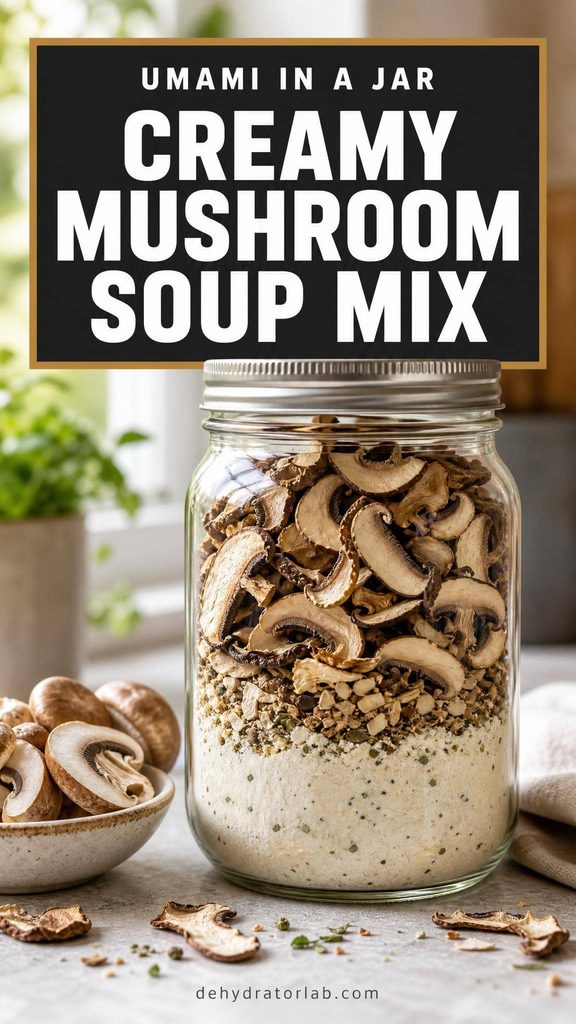
4. Creamy Mushroom Soup Mix
Mushroom powder plus dried sliced mushrooms, milk powder, and butter powder rehydrate into something closer to a good restaurant bisque than anything from a can.
Add the milk and butter powder at the jar-assembly stage, not before drying — they clump if they go through the dehydrator alongside the mushrooms. Whisk well once the water hits the pot, or the powder settles into lumps at the bottom instead of dissolving smooth. Restaurant-bisque flavor from a jar in your pantry.
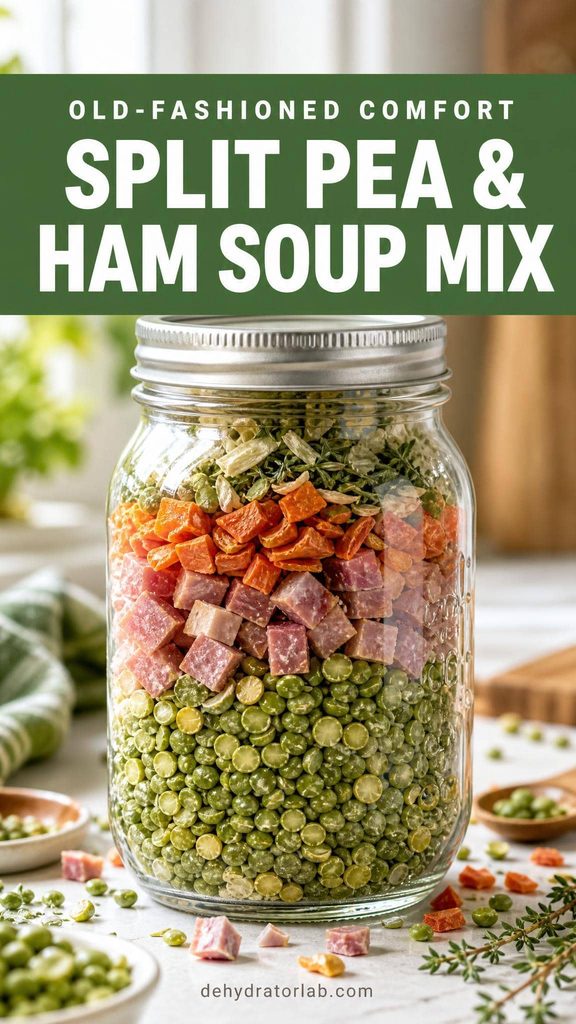
5. Split Pea & Ham Soup Mix
Dehydrated cooked split peas, diced dehydrated ham, carrot, and a bay-leaf-forward seasoning blend make the kind of thick, old-fashioned soup that tastes like it needs a whole Sunday to make — except it doesn’t anymore.
Split peas break down further than lentils during rehydration, which is exactly what gives this soup its classic thick, almost-stew texture. Give it the full simmer time rather than rushing it — the peas need every minute to soften completely. Sunday-dinner soup, any night of the week.
6. Tortilla Soup Mix
Tomato powder, dehydrated corn kernels, black beans, diced poblano pepper strips, and a chili-cumin seasoning blend build a soup with real heat and depth, not just a can of tomato with chili powder dumped in.
Keep the crushed tortilla chips and lime wedge as toppings added fresh at serving time rather than in the jar — chips go soggy in storage, and lime doesn’t dehydrate into anything worth using. Real depth, not just heat.

7. Potato Leek Soup Mix
Dried potato flakes, dehydrated leek slices, and milk powder rehydrate into a smooth, creamy soup that doesn’t need a blender to get there — the potato flakes do that work for you.
This is the mix to reach for when you want something gentle — light on spice, heavy on comfort. A pat of butter stirred in at the end rounds it out if you’ve got some on hand. Comfort food that doesn’t need a blender.

8. Turmeric Golden Vegetable Soup Mix
Turmeric powder, dehydrated carrot, cooked lentils, and a slice of dried ginger root make the soup I reach for the second anyone in the house feels a cold coming on.
Turmeric stains everything it touches, jars included, so keep this mix in a jar you don’t mind losing to a permanent yellow tint. A crack of black pepper at serving time helps your body actually use the turmeric — worth doing even if you’re just after the flavor. The soup for when someone in the house feels off.

Personal Tips You Can Steal
I write the water amount and simmer time right on the jar lid with a permanent marker, since I never remember which mix needs 15 minutes versus 20. I keep dairy powders like milk and butter powder in a small bag inside the jar rather than mixed loose through everything else, since they clump against damp vegetables over time.
I dry beans and lentils fully cooked, never raw, since raw legumes don’t rehydrate safely without a proper soak and long boil. I label every jar with the make date, not just the soup name, since even a well-sealed jar has a shelf life. And I keep at least one vegetarian mix on the shelf at all times, since not every guest eats meat.
Final Thoughts
A pantry shelf of soup mixes solves the “what’s for dinner” problem more reliably than almost anything else a dehydrator can make. Start with chicken noodle if you’re new to this, then work your way toward the turmeric golden mix once you’ve got a rotation going.
If you want to build your own mixes beyond these eight, my 10 best vegetables to dehydrate for homemade soups guide covers what to stock up on, and my 9 dehydrated seasoning recipes roundup has more blends to season whatever mix you build.
P.S. — the turmeric golden mix disappears fastest in my house the moment cold season starts. Happy dehydrating! 🙂