Ever tasted a soup that had real depth and wondered what the cook actually put in it? Nine times out of ten, it wasn’t a fancy stock. It was something savory, dried, and ground fine.
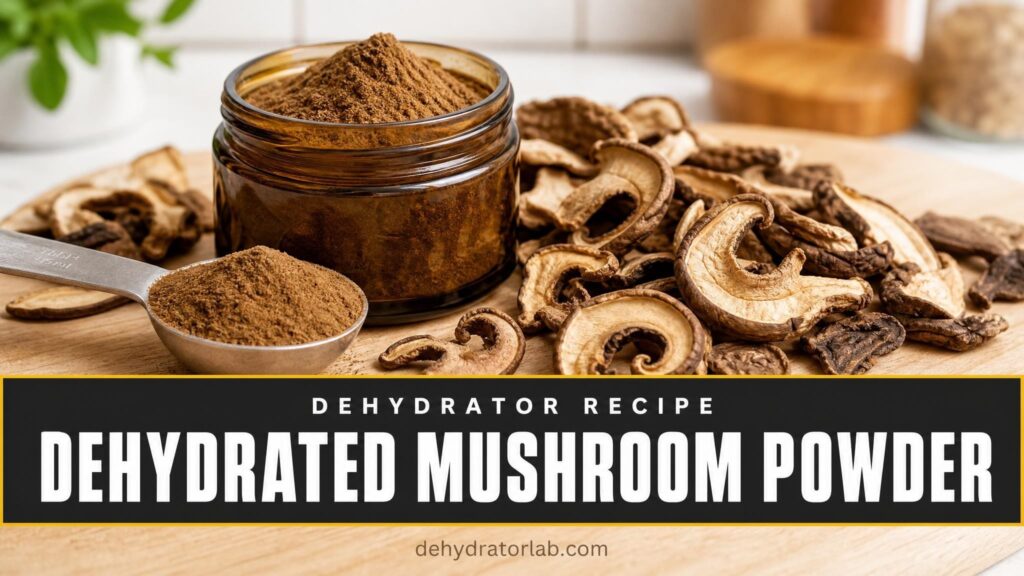
Mushroom powder is the cheapest way to get that flavor into your own cooking. You take mushrooms that were about to go slimy in the crisper drawer, dry them until they rattle, and grind them into a jar of pure savory backbone. A teaspoon does more work than a whole bouillon cube.
I keep a jar next to the stove and reach for it more than I reach for salt. Ready to turn $4 of button mushrooms into a year of flavor?
In this article:
TL;DR (Too Long; Didn’t Read): Key Takeaways
- 🍄 Drying concentrates flavor — a spoonful of mushroom powder carries more punch than a handful of fresh mushrooms.
- 🔪 Slice about 1/4 inch thick, brush clean instead of rinsing, and load a single layer with no overlap.
- 🌡️ Dry at 125–135°F for 4–8 hours, then cool completely before grinding.
- ✅ Test with a snap, not a bend — a clean crack means it’s done.
- 🫙 Store airtight in amber glass with a desiccant packet for 6–12 months of good flavor.
Why This Recipe Works
Drying concentrates. That’s the whole trick. Pull the water out of a mushroom and everything that made it taste like a mushroom stays behind, packed into a fraction of the volume.
- Flavor gets louder: the savory compounds concentrate as moisture leaves, so a spoonful of powder carries more punch than a handful of fresh.
- It dissolves invisibly: no rubbery slices floating in your sauce, just depth. Great for feeding people who claim they hate mushrooms.
- It rescues sad produce: slightly wrinkled mushrooms dry beautifully. Slimy ones don’t, so use them before they turn.
You get a shelf-stable ingredient out of something that normally spoils in five days, and it costs you an afternoon of doing nothing.
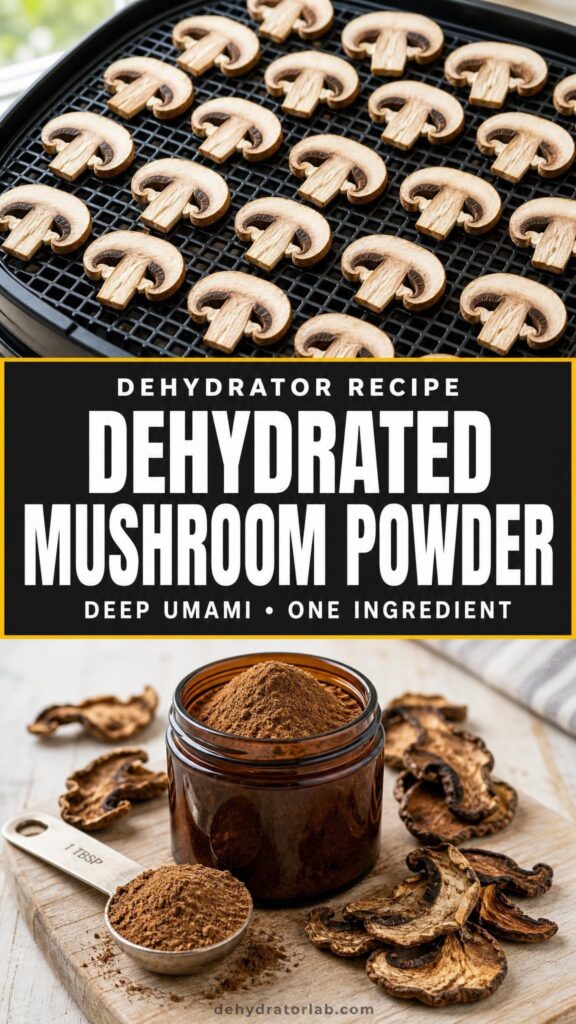
The Best Mushrooms For Powder
Almost anything works, but they don’t all taste the same once dried.
- Button and cremini: cheap, mild, endlessly useful. This is your everyday jar.
- Shiitake: the heavyweight. Deepest savory flavor of the common varieties, worth buying dried-ready if fresh ones are pricey.
- Porcini and other wild types: intense and aromatic. I blend a little into a cremini base rather than making a jar of it straight.
Whatever you use, buy them firm and dry. Wet, spotty mushrooms take longer to dry and taste flat at the end, so shop with your fingertips.
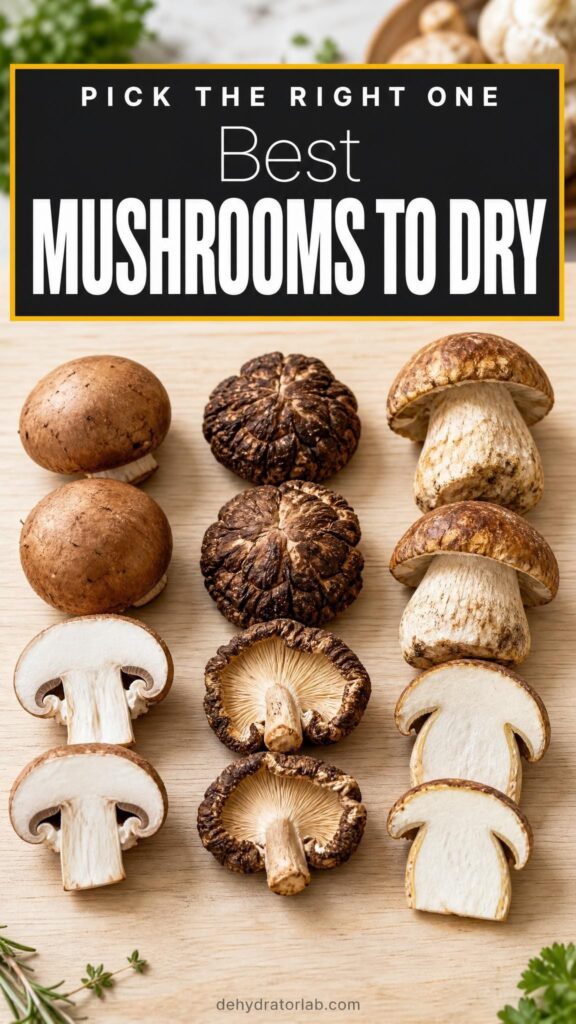
Gear Check
Nothing exotic here.
- A dehydrator with a real thermostat. I use a horizontal-airflow machine because mushroom slices are light and vertical units like to blow them around (dehydrator reviews here).
- A spice grinder or small blender. A coffee grinder you’ve retired from coffee duty is perfect.
- Airtight jars, ideally amber glass, plus a food-safe desiccant packet.
Skip the mandoline if your mushrooms are small — a sharp knife gets you there faster with less waste.
My Go-To Workflow (Step-By-Step)
- Clean them dry. Brush the dirt off or wipe with a barely damp cloth. Don’t rinse mushrooms under the tap. They’re sponges, and every drop you add is a drop you have to dry back out.
- Slice about 1/4 inch. Thinner is fine; thicker is not. Uniform slices dry at the same pace, which is the difference between one tray finishing together and you fishing out stragglers all evening.
- Load a single layer. No overlap, edge-to-edge spacing, air hitting every surface. Mushrooms shrink dramatically, so don’t be shy about filling trays. Mesh liners help if your slices are small (here’s how to stop food sticking to trays).
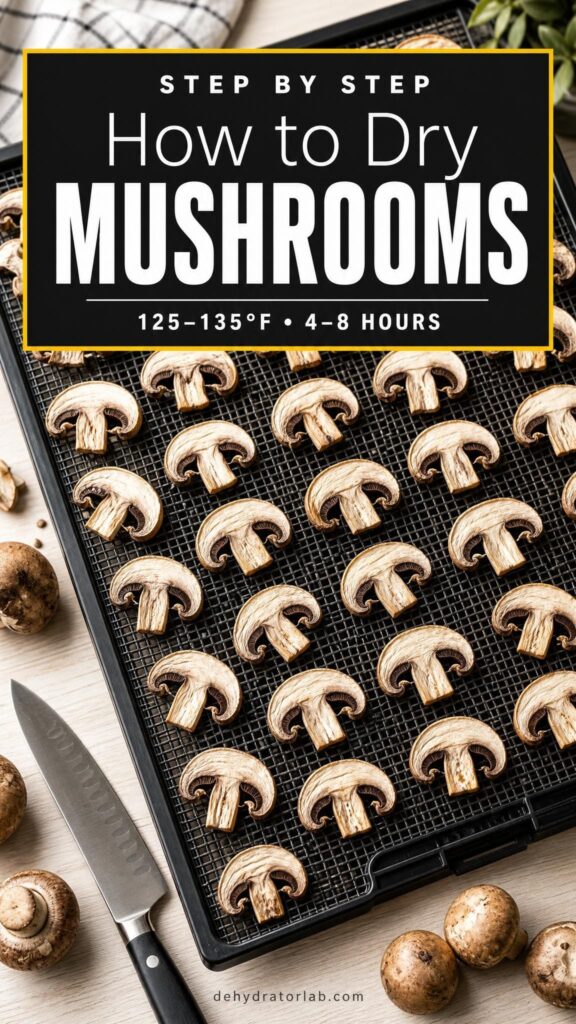
- Dry at 125–135°F. Low and steady. Higher temps case-harden the outside and trap moisture in the middle, which is exactly the problem you’re trying to avoid.
- Give it 4–8 hours. Thin slices from small buttons can be done at hour four. Thick shiitake caps in a humid kitchen will want closer to eight. Start checking at hour four.
- Cool completely. Ten minutes on the counter, minimum. Grinding warm mushrooms puts steam inside your grinder, and steam is how you get a jar of clumps.
- Grind in short pulses. Work in small batches. Long continuous grinding heats the powder and dulls the aroma.
- Sift and regrind. Push it through a fine sieve; throw the gritty leftovers back in the grinder. Two passes get you silky.
- Jar it immediately. Airtight, dark, dated label, desiccant packet on top.
The Dryness Test You Can Trust
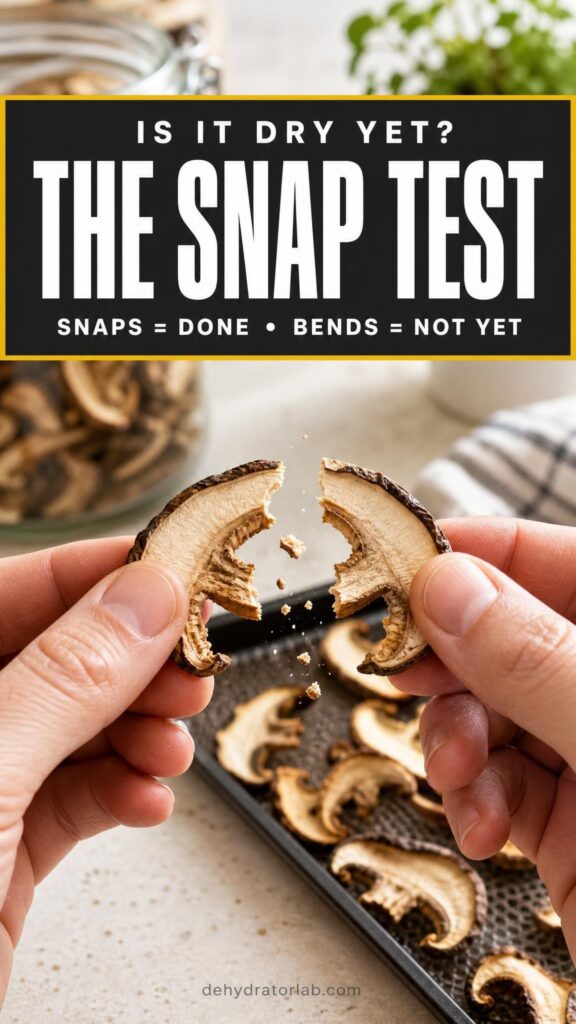
Take a slice off the tray, let it cool for a minute, and snap it.
- Clean snap: done. It should break like a cracker, not bend like leather.
- Any bend at all: not done. Back on the tray.
- Cool it first: warm slices feel crisper than they are, and that’s how half-dry batches end up in jars.
Test pieces from the middle of the tray, not the edges, because edges always finish first. Aim for bone dry every single time.
Storage That Actually Lasts
Powder has an enormous surface area, which means it absorbs moisture faster than slices do. Treat it accordingly.
- Airtight and opaque: amber glass or a sealed tin, in a cabinet away from the stove.
- Desiccant packet: cheap insurance against clumping.
- Never spoon it over a steaming pot: the steam goes straight up into your jar. Measure into your hand first.
Expect good flavor for 6–12 months. Check the jar in week one — if you spot fogging or clumping, spread it on a tray and dry it again. More on shelf life in my guide to how long dehydrated food lasts, and a vacuum sealer is worth it if you make big batches.
How To Actually Use It
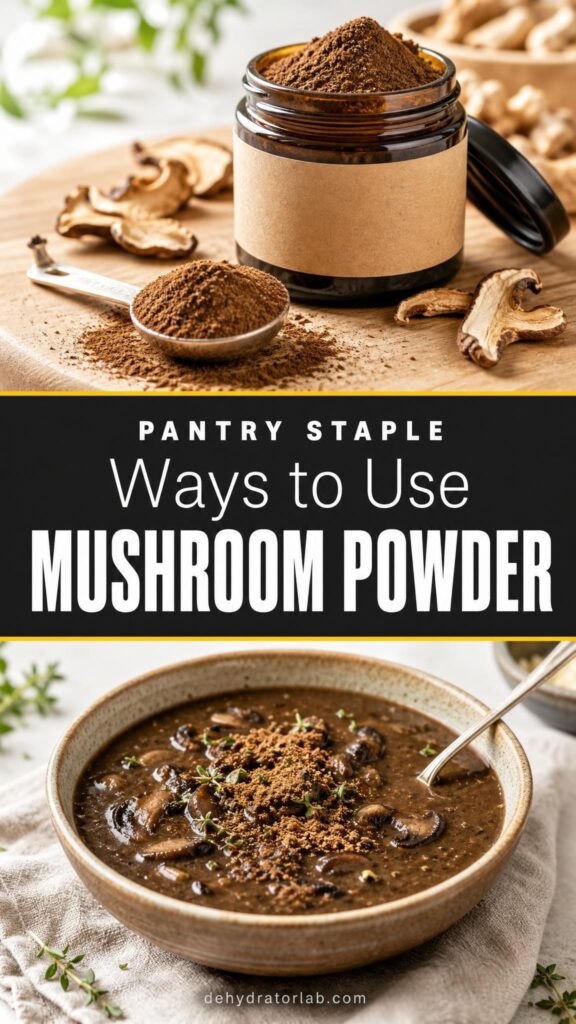
This is where the jar earns its shelf space. Powder is also the most volume-hungry thing a dehydrator makes, since a small jar starts as trays and trays of fresh mushrooms — if you want a useful quantity in one run, a bigger machine changes the arithmetic more than any technique does.
- Soups and stews: a teaspoon per quart, stirred in early. Instant backbone.
- Burgers and meatballs: a tablespoon per pound of ground meat. Nobody will identify it, everybody will notice it.
- Dry rubs and gravies: blend with salt, pepper, and garlic for an all-purpose savory seasoning.
It also plays well with the rest of the powder shelf — mix it with tomato powder for a deep pasta-sauce base, or with shallot powder for something close to a homemade stock cube. Toss a spoonful into a jar of dehydrated chicken noodle soup mix, and it stops tasting like a camping meal.
Common Mistakes To Avoid
Washing under running water. You add moisture you’ll spend two extra hours removing, and waterlogged mushrooms dry to a papery, flavorless chip. Brush, don’t rinse.
Cranking the temperature. Anything over 140°F browns the edges and turns the aroma bitter. Slow wins here, so favor steady heat.
Grinding while warm. Heat plus residual moisture equals a solid brick of powder three weeks later. Cool first, always.
Storing in a clear jar on a sunny shelf. Light degrades aroma faster than most people expect. Amber glass or a dark cabinet, pick one.
FAQ
How many fresh mushrooms do I need for a jar of powder?
Roughly a pound of fresh mushrooms yields about 1 to 1.5 ounces of powder, depending on variety and how wet they started. Mushrooms are around 90% water, so the shrink is dramatic.
Do I have to blanch mushrooms first?
No. Blanching adds moisture and mutes the flavor you’re trying to concentrate. Slice thin, dry low, and skip it.
Can I use an oven instead of a dehydrator?
Yes, but watch it. Set your oven to the lowest temperature it offers, prop the door open with a wooden spoon to increase airflow, and check every 45 minutes. Most ovens run hotter than their dial claims.
Why did my powder turn into a solid clump?
Trapped moisture, almost always. Either the slices weren’t fully dry, or you ground them warm. Break it up, spread it on a tray, dry it again, and add a desiccant packet this time.
Can I use dried mushrooms from the store?
Absolutely. Store-bought dried shiitake or porcini grind up fine and save you the drying step. Check they snap rather than bend before you grind.
Is mushroom powder the same as mushroom seasoning?
No. Commercial “mushroom seasoning” is usually mostly salt with a little mushroom in it. Yours is 100% mushroom, so you control the salt separately.
What’s the shelf life?
Best flavor within 6–12 months in an airtight, dark container. It stays safe longer than that, but the aroma fades, and the whole point is the aroma.
Personal Tips You Can Steal
I dry a mixed tray — mostly cremini with four or five shiitake caps tucked in — because that blend tastes better than either one alone and costs barely more.
I grind in two grades and keep two jars: a coarse one for rubs and roasted vegetables, a fine one for sauces and soups.
I always label with the date and the mushroom mix, because six months later I never remember which jar was the good batch.
And I run one last snap test on a piece from the middle tray before anything goes in a jar. That thirty-second habit has saved me more batches than any other thing I do.
Wrap-Up
Dehydrated mushroom powder is about as close to free flavor as home preserving gets. Slice thin, dry at 125–135°F until the pieces snap, cool them properly, grind in short pulses, and store it dark and airtight. That’s the whole job.
Make a jar this weekend and stir a spoonful into whatever you cook on Monday. You’ll figure out fast why I keep mine within arm’s reach of the stove.
P.S. Don’t throw out the mushroom stems. They’re just as savory as the caps, and they dry faster, so I dry them alongside and grind them right in.
Related reading: how to dehydrate mushrooms, mushroom jerky recipes, onion powder, and dehydrated celery flakes.