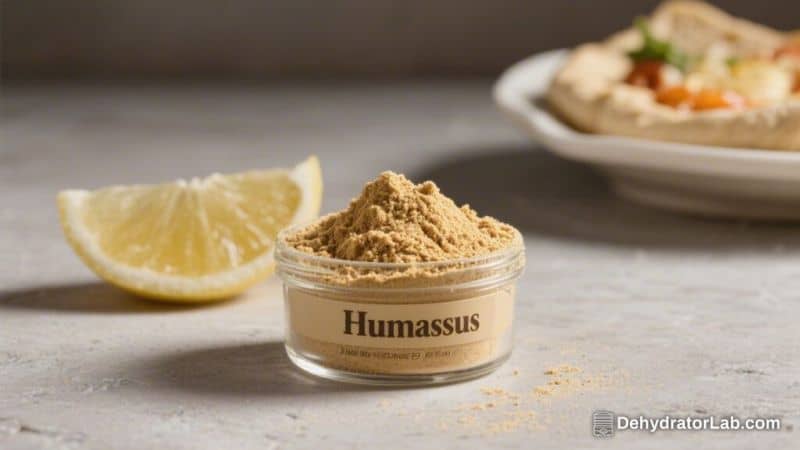
If you love hummus but hate hauling tubs of dip to picnics or backpacking trips, dehydrated hummus powder is a smart solution. It packs all the flavor of classic hummus into a dry mix that’s easy to store and even easier to rehydrate. Just add water and oil, stir, and you’ve got creamy hummus on demand.
It’s great for meal prep, camping, and quick snacks at home. Plus, you control the ingredients, which means cleaner flavors and fewer additives.
In this article:
Key Points on Dehydrated Hummus Powder (TL;DR)
- 🧆 Blend chickpeas, tahini, lemon, and spices into a smooth base before drying.
- 🌡️ Dry at 135°F for 6-10 hours until brittle, not tacky.
- 🥄 Season slightly bolder than usual, flavor mellows after drying and rehydrating.
- 💧 Rehydrate with cold water plus a splash of olive oil.
Why This Recipe Works
This recipe builds a flavorful base before dehydration, so you don’t end up with a bland powder. A mix of chickpeas, tahini, lemon, garlic, and spices is blended smooth, then gently dehydrated so the flavors concentrate without scorching.
Once dry, the mix blitzes into a fine powder that comes back to life in seconds with water and a splash of olive oil. The sodium and acid levels are balanced to taste bright after rehydrating—not dull or flat. And because it’s shelf-stable, you can whip up a fresh batch anywhere with minimal cleanup.
What You’ll Need
- Cooked chickpeas (2 cups; canned, drained and rinsed, or home-cooked)
- Tahini (1/3 cup)
- Fresh lemon juice (3–4 tablespoons), plus zest from 1 lemon for extra punch
- Garlic (1–2 cloves), or 1 teaspoon garlic powder for milder flavor
- Ground cumin (1 teaspoon)
- Salt (3/4 to 1 teaspoon), to taste
- Smoked paprika (1/2 teaspoon), optional
- Olive oil (2 tablespoons) for the base mixture and more for serving
- Water (as needed for blending and later rehydration)
- Optional add-ins: onion powder, cayenne, black pepper, sumac, or dried herbs
Equipment: High-speed blender or food processor, dehydrator with fruit-leather trays (preferred) or an oven with baking sheets and silicone mats/parchment, and a spice grinder or blender for powdering. No fruit-leather trays? Hummus is a paste, so mesh will not do — you need solid sheets that hold a paste flat while it dries.
Airtight jars or vacuum-seal bags for storage.
Instructions
- Blend the hummus base. Add chickpeas, tahini, lemon juice, garlic, cumin, salt, paprika, and 2 tablespoons olive oil to a blender. Add 2–4 tablespoons water as needed to create a thick but spreadable puree. Blend until very smooth.
- Taste and adjust. The mix should taste slightly saltier and brighter than usual. Note: Flavors soften after drying and rehydrating, so a bit of extra lemon and salt now pays off later.
- Prepare drying trays. Line dehydrator trays with nonstick sheets or an oven tray with silicone mats.
Avoid paper that can stick.
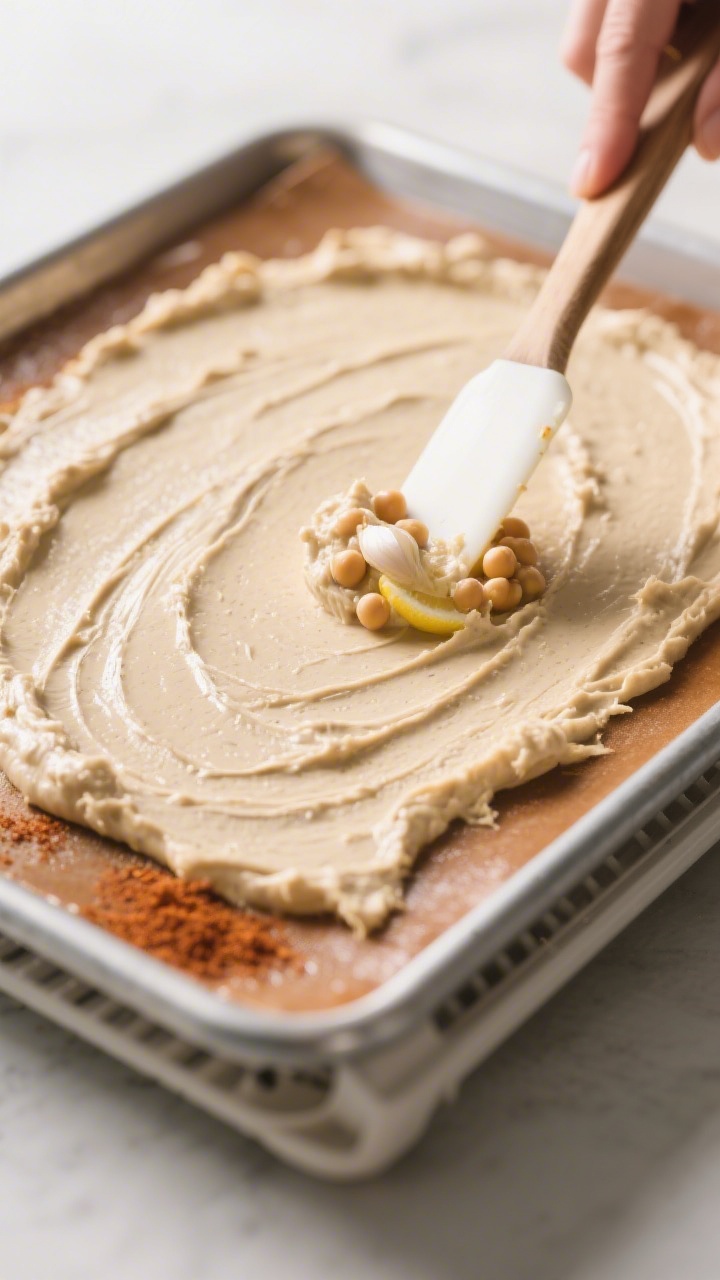
- Spread thin and even. Using a spatula, spread the hummus in a uniform layer about 1/8 inch thick. Thinner layers dry faster and more evenly.
- Dehydrate low and slow. In a dehydrator, dry at 135°F/57°C for 6–10 hours, flipping sheets halfway if needed. In an oven, set to the lowest temperature ( ideally 170–200°F / 75–95°C), prop the door slightly open for airflow, and bake 3–5 hours, checking often.
It’s done when completely dry, brittle, and not tacky.
- Cool completely. Let the dried sheets cool to room temperature to avoid trapping moisture during storage.
- Break and grind. Break the sheets into shards and grind in a spice grinder or blender until very fine. If needed, sift and re-grind larger bits.
- Season the powder. Taste the powder. If it needs more brightness or depth, whisk in a little citric acid (start with 1/8 teaspoon), extra salt, or ground spices. Optional: Stir in 1–2 teaspoons powdered lemon zest for zing.
- Store airtight. Transfer to a jar or vacuum-seal bag with a desiccant pack if you have one.
Label with date and any flavor notes.
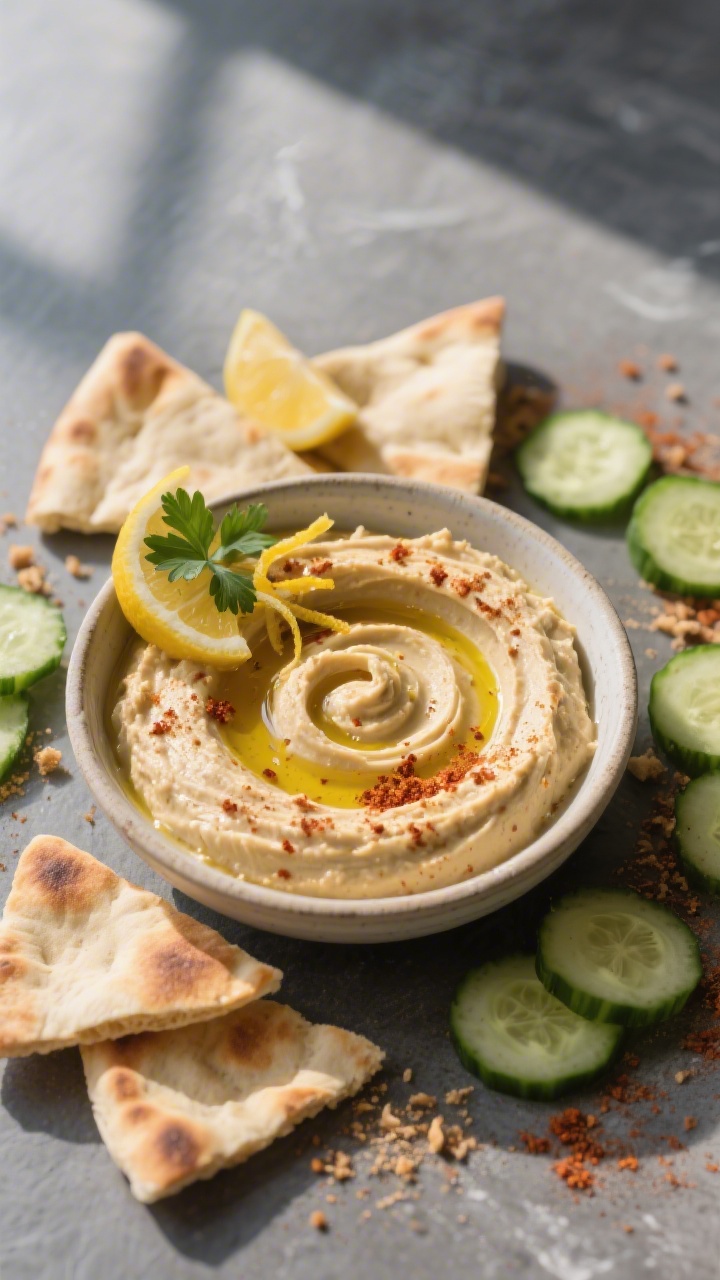
- To rehydrate. Mix 1/2 cup hummus powder with 6–8 tablespoons cold water and 1–2 teaspoons olive oil. Stir until smooth, adding water a little at a time to your preferred texture. Rest 2–3 minutes to let flavors bloom, then adjust salt, lemon, or oil.
Keeping It Fresh
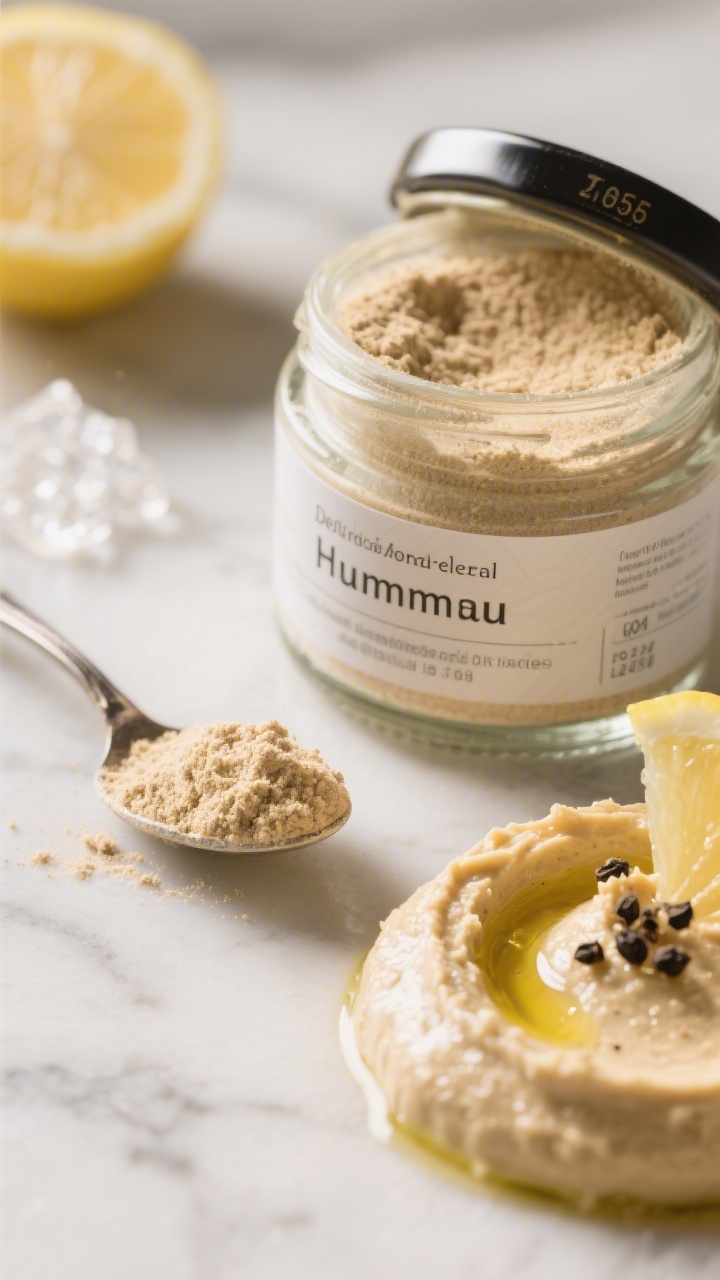
Moisture is the enemy here. Store in an airtight container in a cool, dark pantry for up to 6 months.
If you live in a humid climate, add a food-safe desiccant and consider vacuum sealing. For longest life, keep the powder in the freezer; it won’t clump, and flavor stays bright.
Always use a dry spoon and re-seal quickly. If the powder ever smells stale or tastes flat, refresh with a pinch of salt, cumin, and a squeeze of lemon when serving.
Why This is Good for You
Chickpeas bring plant protein and fiber that help keep you full and support digestion.
Tahini adds healthy fats along with calcium and iron. Garlic and lemon contribute antioxidants and a flavor lift without extra sugar. Because you control the salt and oil, it’s easy to keep this mix lighter than many store-bought dips.
It’s also naturally vegan and gluten-free, so it works for a range of diets.
Pitfalls to Watch Out For
- Too thick to spread: If the base mixture is paste-like, add a splash of water to reach a smooth, spreadable consistency. Thick layers dry unevenly.
- Overheating: High oven temps can toast the tahini and turn flavors bitter. Keep it low and check often.
- Under-drying: Slightly tacky sheets will clump in the grinder and spoil faster.
Dry until brittle.
- Flat flavor after rehydration: This usually means not enough acid or salt in the base. Fix by stirring in lemon juice and a pinch of salt when serving.
- Clumping in storage: This points to moisture exposure. Use airtight containers and consider a desiccant pack.
Recipe Variations
- Roasted Red Pepper: Blend in 1/2 cup well-drained roasted peppers.
Expect slightly longer drying time. Add a pinch of smoked paprika.
- Herby Lemon: Add 1–2 teaspoons dried parsley, dill, or mint and extra lemon zest. Bright and fresh.
- Spicy Harissa: Stir in 1–2 teaspoons harissa powder or cayenne.
Balance heat with a touch more lemon.
- Sumac and Za’atar: Add 1 teaspoon sumac and 2 teaspoons za’atar to the base or fold into the powder after grinding.
- Garlic Lovers: Use roasted garlic for sweetness, or add 1 teaspoon garlic powder post-grind for a punchier finish.
- Oil-Free Backpacking Mix: Skip the oil in the base and add none when rehydrating; use a bit more water and a squeeze of lemon at serving.
FAQ
How long does dehydrated hummus powder last?
In an airtight jar in a cool pantry, it lasts about 4–6 months. In the freezer, it can hold quality for up to a year. Always check aroma and taste before use.
Can I make this without a dehydrator?
Yes.
An oven on its lowest setting works. Keep the door cracked slightly for airflow and check often to prevent browning. Use silicone mats to avoid sticking.
What if I don’t have tahini?
You can use almond butter, cashew butter, or sunflower seed butter.
The flavor shifts slightly, but it still rehydrates creamy. Start with a bit less and adjust to taste.
Is it safe to use canned chickpeas?
Absolutely. Drain and rinse well to remove excess sodium and any canning liquid flavors.
Home-cooked chickpeas work great too; just cook until very tender.
How do I get it super smooth after rehydrating?
Use cold water, add gradually, and whisk or blend for 20–30 seconds. Let it rest a couple minutes, then whisk again. A tiny splash of olive oil adds silkiness.
Can I turn the powder into a sauce or dressing?
Yes.
Thin the rehydrated hummus with extra water and lemon juice until pourable. Add a touch of honey or maple for balance if using on salads or grain bowls.
Why does my powder taste dull?
It likely needs more acid or salt. Stir in a pinch of salt, a squeeze of lemon, or a touch of citric acid.
A dusting of cumin or paprika can also wake it up.
Can I use this powder straight without rehydrating?
Sure. Sprinkle it over popcorn, roasted vegetables, or avocado toast. It adds a savory, nutty kick—think of it like a hummus-flavored seasoning.
Personal Tips You Can Steal
- I always over-season the base slightly — the flavor softens more than you’d expect after drying and rehydrating.
- A splash of olive oil at the rehydration step makes a real difference in silkiness, don’t skip it.
- I sprinkle the plain powder straight onto popcorn or avocado toast when I don’t feel like rehydrating.
Wrapping Up
Dehydrated hummus powder is a handy, flavorful shortcut that fits anywhere—your pantry, lunchbox, or trail pack.
It mixes up fast, tastes fresh, and gives you control over every ingredient. Make a big batch, stash it well, and you’ll have creamy hummus on standby whenever you need it. Simple, versatile, and surprisingly delicious—this one’s worth keeping in rotation.
Dehydrated Hummus Powder – A Portable, Flavor-Packed Pantry Staple
Ingredients
- Cooked chickpeas (2 cups; canned, drained and rinsed, or home-cooked)
- Tahini (1/3 cup)
- Fresh lemon juice (3–4 tablespoons), plus zest from 1 lemon for extra punch
- Garlic (1–2 cloves), or 1 teaspoon garlic powder for milder flavor
- Ground cumin (1 teaspoon)
- Salt (3/4 to 1 teaspoon), to taste
- Smoked paprika (1/2 teaspoon), optional
- Olive oil (2 tablespoons) for the base mixture and more for serving
- Water (as needed for blending and later rehydration)
- Optional add-ins: onion powder, cayenne, black pepper, sumac, or dried herbs
Instructions
- Blend the hummus base. Add chickpeas, tahini, lemon juice, garlic, cumin, salt, paprika, and 2 tablespoons olive oil to a blender. Add 2–4 tablespoons water as needed to create a thick but spreadable puree. Blend until very smooth.
- Taste and adjust. The mix should taste slightly saltier and brighter than usual. Note: Flavors soften after drying and rehydrating, so a bit of extra lemon and salt now pays off later.
- Prepare drying trays. Line dehydrator trays with nonstick sheets or an oven tray with silicone mats.Avoid paper that can stick.
- Spread thin and even. Using a spatula, spread the hummus in a uniform layer about 1/8 inch thick. Thinner layers dry faster and more evenly.
- Dehydrate low and slow. In a dehydrator, dry at 135°F/57°C for 6–10 hours, flipping sheets halfway if needed. In an oven, set to the lowest temperature ( ideally 170–200°F / 75–95°C), prop the door slightly open for airflow, and bake 3–5 hours, checking often.It’s done when completely dry, brittle, and not tacky.
- Cool completely. Let the dried sheets cool to room temperature to avoid trapping moisture during storage.
- Break and grind. Break the sheets into shards and grind in a spice grinder or blender until very fine. If needed, sift and re-grind larger bits.
- Season the powder. Taste the powder. If it needs more brightness or depth, whisk in a little citric acid (start with 1/8 teaspoon), extra salt, or ground spices. Optional: Stir in 1–2 teaspoons powdered lemon zest for zing.
- Store airtight. Transfer to a jar or vacuum-seal bag with a desiccant pack if you have one.Label with date and any flavor notes.
- To rehydrate. Mix 1/2 cup hummus powder with 6–8 tablespoons cold water and 1–2 teaspoons olive oil. Stir until smooth, adding water a little at a time to your preferred texture. Rest 2–3 minutes to let flavors bloom, then adjust salt, lemon, or oil.
Related reading: dehydrated pineapple rings, how to dehydrate onions, and dehydrator reviews.
P.S. Building a pantry powder stash? Our Dehydrated Horseradish Powder is another shelf-stable win.
Printable Recipe Card
Want just the essential recipe details without scrolling through the article? Get our printable recipe card with just the ingredients and instructions.