Looking to stretch mushroom season past, well, mushroom season? You can totally stock your pantry with crisp, ready-for-anything slices by dehydrating them – and it’s way easier than people make it sound.
You set a gentle temp, spread the slices, and let the dehydrator do the heavy lifting while you plan risottos for the next six months. Sounds good, right?
In this article:
TL;DR: Key Takeaways
- 🍄 Wipe or brush clean instead of soaking — mushrooms act like sponges.
- 🌡️ Dry at 125-135°F for 4-8 hours depending on thickness.
- 🔪 Slice 3-5mm thick for even drying and easy rehydration.
- 💧 Save your rehydration liquid — it’s packed with flavor for soups and sauces.
- 📦 Condition a week in jars, shaking daily, before long-term storage.
Why Dehydrate Mushrooms at All?
You lock in flavor, prevent waste, and speed up weeknight cooking because dried mushrooms rehydrate quickly and taste wonderfully concentrated.
You also reclaim fridge space because dried mushrooms store for months when you keep them airtight and away from light and moisture. Fresh mushrooms last days; properly dried ones last much, much longer.
The Sweet-spot Temperature
Dehydrators shine because they hold a steady, low heat that preserves flavor and texture while driving out moisture evenly. For mushrooms, set your dehydrator between 125–135°F (52–57°C) for most culinary varieties like cremini, portobello, shiitake, oyster, and button. This range balances speed and quality, keeping aromas intact while preventing toughness or scorching.
Wondering if a lower setting makes them even better? Some folks go as low as 110–130°F (43–54°C) depending on variety and goals, but most kitchen workflows land comfortably around 130°F (55°C) for reliable results. Higher heat speeds drying but can dent rehydration quality, so stay in the low-and-slow zone for the best bite later.
How Long Does It Take
Drying time depends on slice thickness, mushroom variety, and how packed your trays are. Expect 4–8 hours at about 130°F for thin, even slices, and longer if you load thicker pieces or crowd the trays.
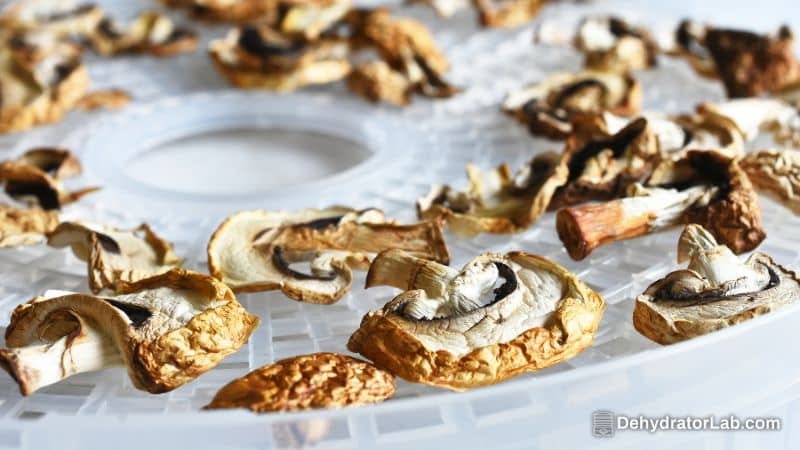
Check after 4 hours, rotate trays if needed, and continue until the pieces feel brittle or very firm and dry throughout—no cool, damp centers.
Want a quick benchmark? Many home setups hit roughly 7 hours for fully dehydrated slices when you cut uniformly at 3–5 mm. If yours still bends with a little give, keep going; you want a crisp snap or very firm “leathery” feel for shelf stability.
Prep Like a Pro
Great dehydration starts with clean, consistent prep. Mushrooms behave like little sponges, so wipe or brush instead of soaking to avoid adding extra water you’ll just need to remove again. Trim tough stems if you want (shiitake stems can be chewy), or slice stems thinner to help them dry at the same pace as caps.
- Slice to 3–5 mm for even drying and easy rehydration.
- Spread pieces in a single layer with gaps so air can circulate.
- Don’t overcrowd trays; packed trays dry slowly and unevenly.
Should You Pretreat to Prevent Browning?
If you like bright, clean-looking slices, pretreating helps. Mushrooms can brown from enzymes and oxidation, and simple blanching or brief dips in citric acid or sulfite solutions can keep color lighter and improve rehydration later.
Many home cooks skip this; the flavor still turns out great, and the natural tan looks lovely in soups. But if you want optimal color, a quick step pays off.
- Blanch for about 1–3 minutes to inactivate browning enzymes, then pat dry before dehydrating.
- A light citric acid solution (around 0.5–1.5%) reduces browning and helps rehydration quality; dry promptly after dipping.
- Lower drying temps generally improve future rehydration and color retention, so don’t crank the heat.
Do you need pretreatment for everyday cooking? Not always. If you care more about deep, savory flavor than color, slice, dry, and enjoy. If you plan on gifting jars or want photo-friendly slices for your blog, pretreating is worth it.
Step-by-step: Dehydrating Mushrooms
You want a clean, consistent routine that works every time. Here’s the straightforward method that never lets me down:
1. Clean and slice
- Brush or wipe mushrooms clean; avoid soaking.
- Slice 3–5 mm thick for even drying and easy rehydration.
2. Optional pretreat
- Blanch 1–3 minutes or dip in a light citric acid solution; drain and pat dry.
3. Load your dehydrator
- Arrange in one layer with small gaps for airflow.
- Set temp to 125–135°F (52–57°C).
4. Dry and rotate
- Dry 4–8+ hours; rotate trays every few hours if your unit has hotspots.
- Test by breaking a slice; it should snap or feel very firm with no moisture inside.
5. Condition the batch
- After drying, let slices cool, then jar them loosely for a week, shaking daily. If any condensation appears, return to the dehydrator to finish drying.
Why condition? Ever wonder why some jars clump or grow soft spots? Conditioning distributes any remaining moisture evenly so your whole batch stores safely and avoids hidden damp centers.
Storage That Actually Lasts
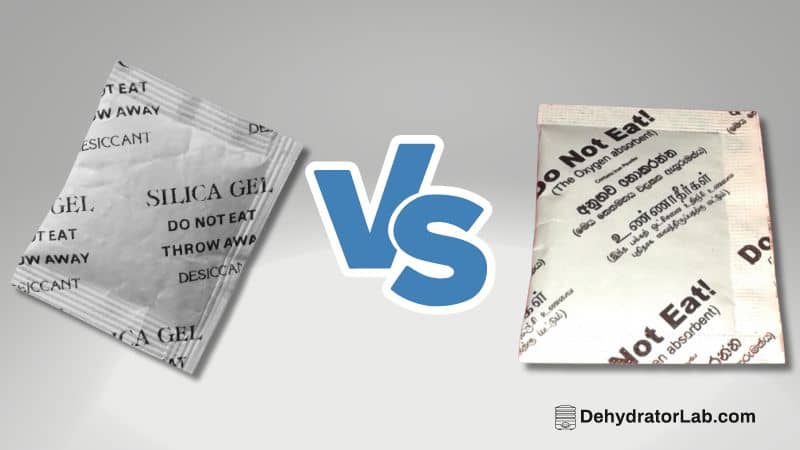
Store dried mushrooms in airtight containers in a cool, dark, dry place. Light and humidity shorten shelf life and fade flavor, so think pantry, not over-the-stove. For long-term storage, use glass jars with tight lids and add a small desiccant pack if your area is humid.
How long do they keep? Under good conditions, 1–2 years is a solid expectation, with the best aroma in the first year. As always, your nose tells the truth—if they smell dull or stale, use them for stock where other aromatics can help.
How to Rehydrate Like a Chef
Rehydration is as simple as covering dried slices with warm water and letting them soak until pliable. Most mushrooms soften in 15–30 minutes, depending on thickness. Strain and save the soaking liquid because it packs lots of flavor—pour it into risotto, soups, and pan sauces after straining out any grit.
- Hot water speeds things up; cooler water draws flavor more gently if you want a subtler stock.
- Chop rehydrated pieces to match your recipe’s texture.
- Taste before salting; the soaking liquid can bring savory depth already.
Ever wonder why some dried mushrooms bounce back beautifully while others feel tough? Lower drying temperatures and good pretreatment can improve rehydration, so your slices drink up water and rebound tender.
Slicing Thickness vs. Flavor Payoff
Thinner slices dry faster and rehydrate quickly, which helps on busy nights. Thicker slices carry a meatier bite and feel decadent in sauces and braises, but they take longer to dry and soak. If you cook lots of quick soups or pastas, go thin; if you want hearty stews and risottos, lean thicker for that luxe chew.
Pro tip: Mix slice sizes and keep them in separate jars labeled “thin” and “thick,” so you can grab exactly what your recipe needs. That little bit of sorting gives you flexibility later without extra work.
Dehydrator vs. Oven vs. Air Drying
Got a dehydrator? Use it. You get stable temperatures, airflow, and even results. Ovens can work, but most home ovens run hot and may not hold steady at 140°F or below; prop the door slightly ajar to vent moisture and monitor closely. Air drying works in warm, dry, well-ventilated spaces, but it takes patience and invites uneven results in humid climates.
- Dehydrator: best control and consistency; 125–135°F is the sweet spot.
- Oven: use the lowest setting; aim below 140°F; expect longer times and more checking.
- Air dry: choose very dry air and good airflow; avoid sunlight; watch for slow spots.
Safety, Quality, and Common Mistakes
Mushrooms carry high moisture, so under-drying causes spoilage. Dry completely, condition the jar, and store in airtight containers. If mushrooms ever smell off or feel soft after storage, don’t risk it—dry them more or discard.
Drying helps reduce microbial risks by lowering water activity, which is why this method extends shelf life so well.
Common pitfalls to dodge:
- Thick, uneven slices that dry at different speeds.
- Overcrowded trays that trap moisture and slow the process.
- Cranking the heat too high hurts rehydration quality.
Flavor Upgrades You’ll Actually Use
You can dry single varieties for a clean, recognizable flavor, or build your own mushroom blend with cremini, shiitake, and oyster for balanced richness. Dry a batch of garlic or shallots alongside and combine in a jar for instant soup starters. Blitz dried mushrooms in a blender to make mushroom powder—a secret weapon for steaks, gravies, and roasted veg.
Ever tried stirring a spoon of mushroom powder into butter and tossing it with hot pasta? It’s like a five-minute umami mic drop. You’ll keep that jar by the stove forever, promise.
Troubleshooting Quick Hits
- Mushrooms feel leathery but not crisp: Extend drying in 30–60 minute increments and recheck; some varieties finish leathery and still store fine if fully dry inside.
- Uneven batches: Rotate trays and keep slices uniform; condition after drying to normalize residual moisture.
- Dull flavor after months: Use for stock or grind into powder; freshness fades before safety does if stored well.
Frequently Asked “wait, What About…” Questions
- Whole vs. sliced? Slice for predictability. Whole mushrooms dry unevenly and take much longer.
- Pretreatment required? No, but it maintains color and can improve rehydration.
- Best temp? 125–135°F keeps quality high and results consistent.
The Quick-start Checklist
If you like a punchy checklist you can tape in your pantry, here’s the no-nonsense version:
- Clean with a brush or towel; don’t soak.
- Slice 3–5 mm thick; optional blanch/dip for color.
- Set dehydrator to 125–135°F (52–57°C).
- Dry 4–8+ hours until brittle or very firm and dry.
- Condition in jars for a week; re-dry if you see condensation.
- Store airtight, cool, and dark; enjoy up to 1–2 years.
A Quick Personal Note
I used to rush mushroom drying because patience is hard, and, surprise, I ended up with jars that clumped or tasted flat. When I slowed down, sliced evenly, and held a steady 130°F, everything clicked – great aroma, snappy texture, and zero storage drama. Ever wonder if the little steps matter?
They do it here, especially even slicing and conditioning. Those two steps turn a good batch into a great one.
Wrap-up
If you want pantry power-ups, dehydrated mushrooms deliver: set 125–135°F, slice uniformly, dry to crisp or very firm, and store airtight for months of umami happiness.
Treat rehydration liquid like liquid gold, keep temps low for quality, and use pretreatments if you want brighter color and better bounce-back. You’ll turn weeknight dinners into “wow, what is that?” moments — and yes, you’ll feel smug about it. You earned it.
P.S. — Save every drop of your soaking liquid. It’s the best-kept secret ingredient in your fridge right now.