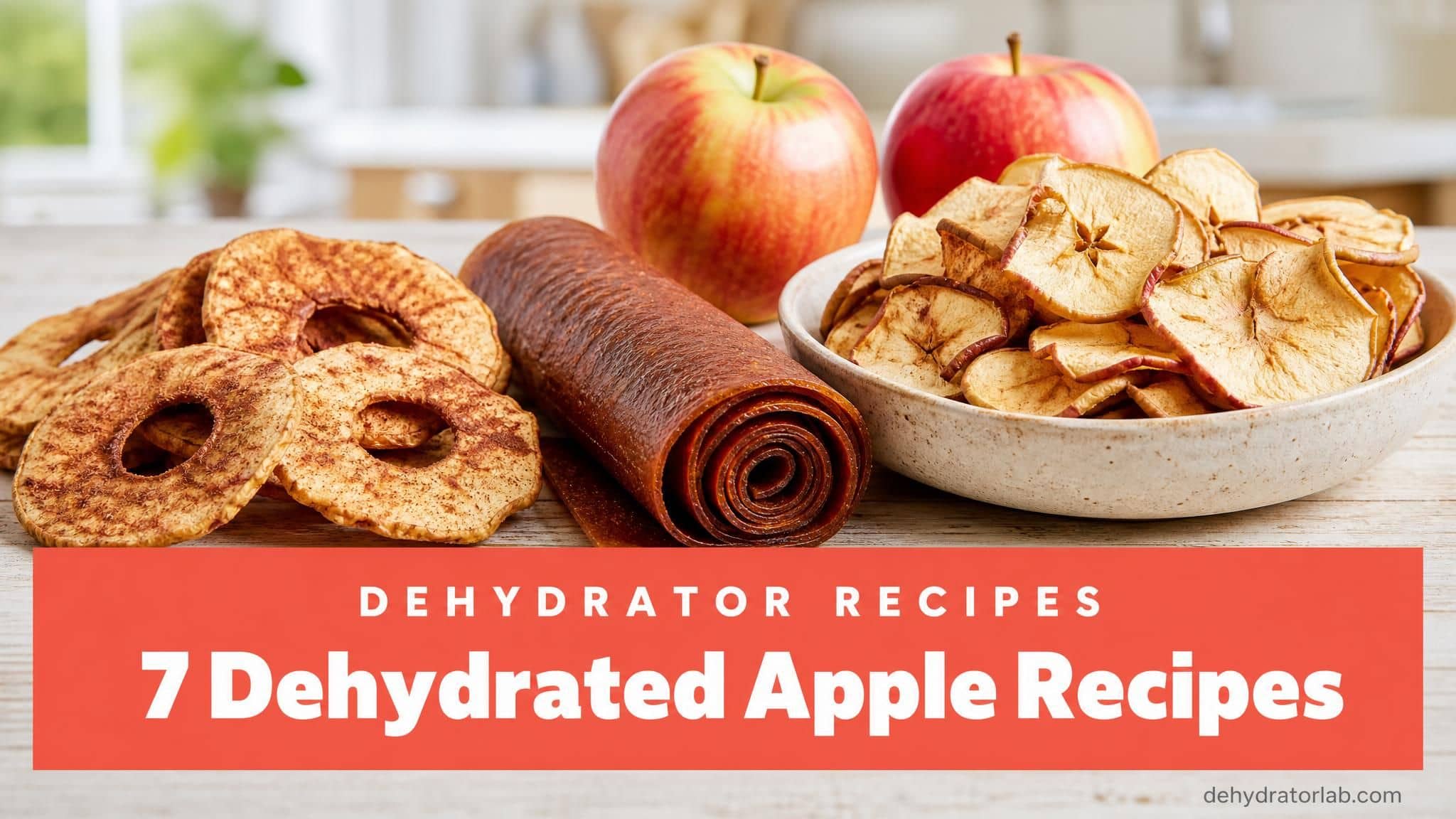
That bag of bananas went from yellow to freckled to “why is the whole counter fruity” in about two days.
Before you toss them, try your dehydrator. Soft, spotty fruit is packed with sugar and flavor, and it just needs the right format. Here are seven overripe fruits worth rescuing.
As an Amazon Associate, I earn from qualifying purchases. If you make a purchase after clicking on a link I may earn a small commission at no extra cost to you if items are purchased.
In this article:
TL;DR: Key Takeaways
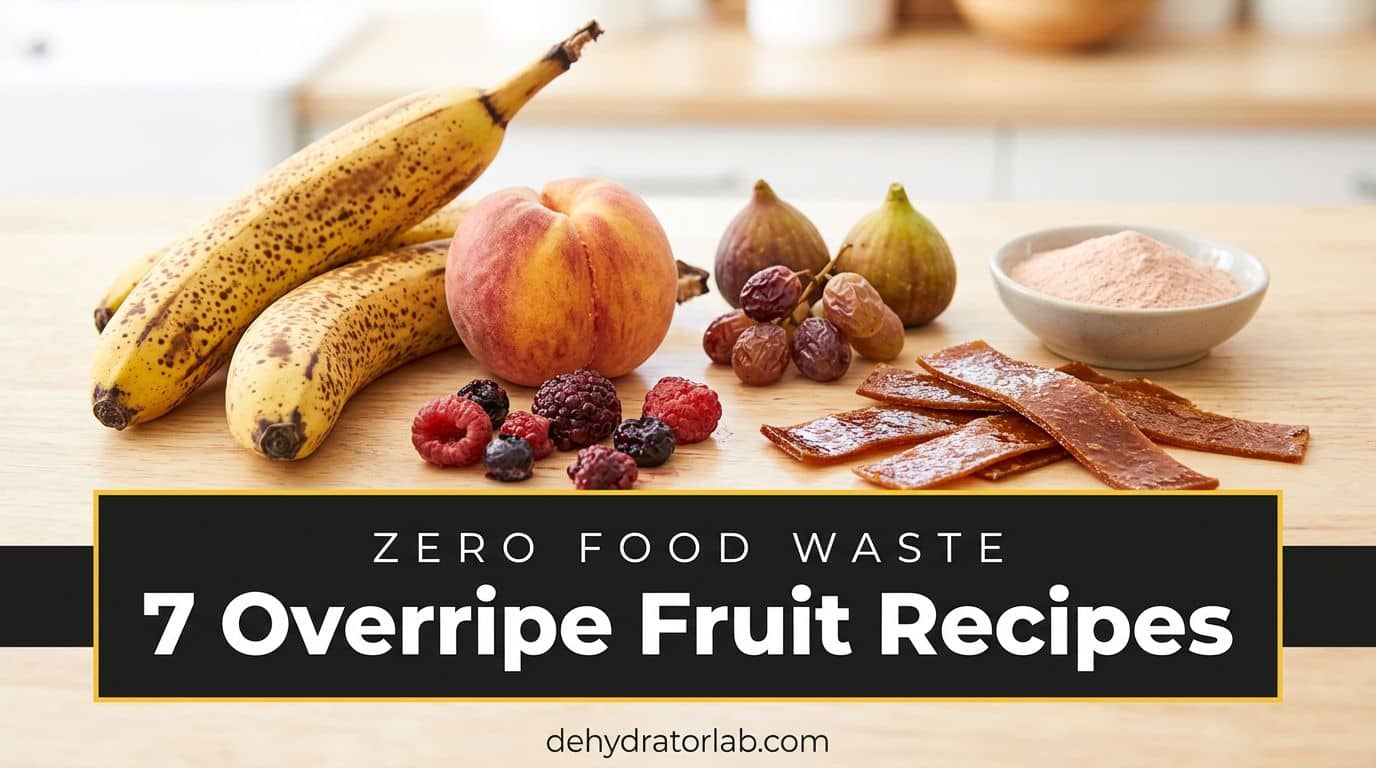
- 🍌 Seven overripe fruits get a second life: bananas, peaches, figs, grapes, apricots and plums, berries, and mealy apples or pears.
- 🥄 Soft fruit works best as puree sheets, powder, or halves, not thin slices that fall apart.
- 🌡️ Puree sheets dry at 135–145°F (57–63°C), about 1/8 inch thick, for 6–8 hours or more.
- 🛑 Toss anything moldy, fermented, or leaking. Overripe is fine; spoiled is not.
- 🧂 Dried fruit needs about a week of conditioning in a jar before long-term storage.
- ♻️ Freeze fruit that’s on its way out, then dry it when you have a full tray.
Quick reality check first. Overripe means soft, spotty, extra sweet, and a little wrinkly. It doesn’t mean moldy, sour-smelling, or oozing. The National Center for Home Food Preservation actually calls for “ripe or slightly overripe fruit” in its fruit leather method, so you’re on solid ground.
Why puree and powder over slices? Soft fruit turns to mush under a knife and sticks to trays. A blender and a solid sheet fix that. If you’re new to the leather method, my fruit leather guide covers the basics, and my food waste roundup has more rescue missions. Let’s get into it.
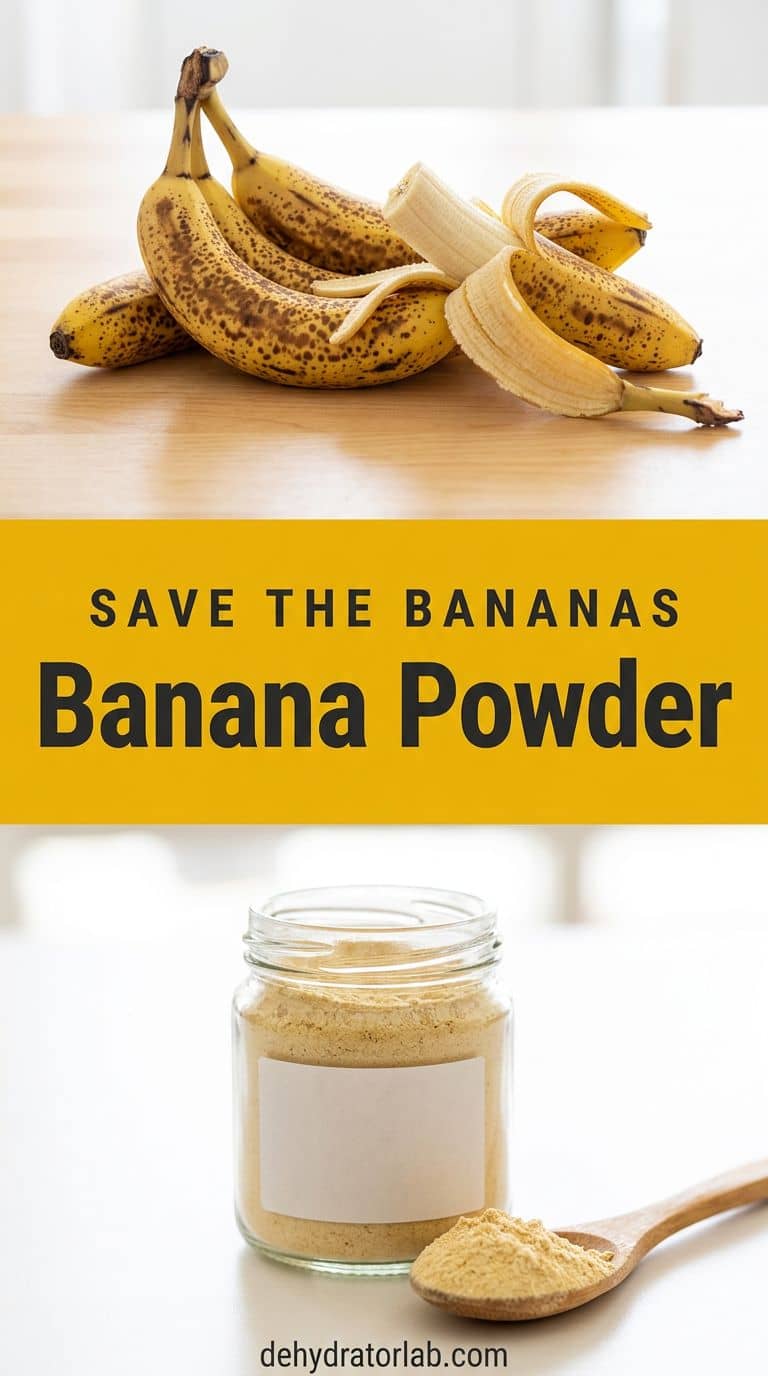
1. Banana Powder from Black-Spotted Bananas
Bananas past their prime are the classic rescue. The darker the peel, the sweeter and more banana-forward the fruit, making it the best powder base in the produce bowl.
Mash or blend the bananas until smooth, then spread the puree about 1/8 inch thick on a solid sheet. Dry at 135–145°F (57–63°C) for roughly 8–12 hours. Banana sugar makes the sheet sticky, so wait for a leathery, dent-free center, then keep drying until it turns brittle. Break it up and grind it fine.
- Blend smooth so no lumps stay damp.
- Dry until the sheet snaps, not bends.
- Grind and sift for fine powder.
A Cuisinart SG-10 grinder turns the brittle sheet into powder in seconds. Stir it into oatmeal, smoothies, or pancake batter, or see my fruit powder ideas and banana dehydrating guide. Darker peel, sweeter powder.
2. Spiced Peach Leather from Soft Peaches
A peach that’s bruised and soft is a peach that’s about to turn on you. It’s also the juiciest, most fragrant fruit you’ll ever put in a blender.
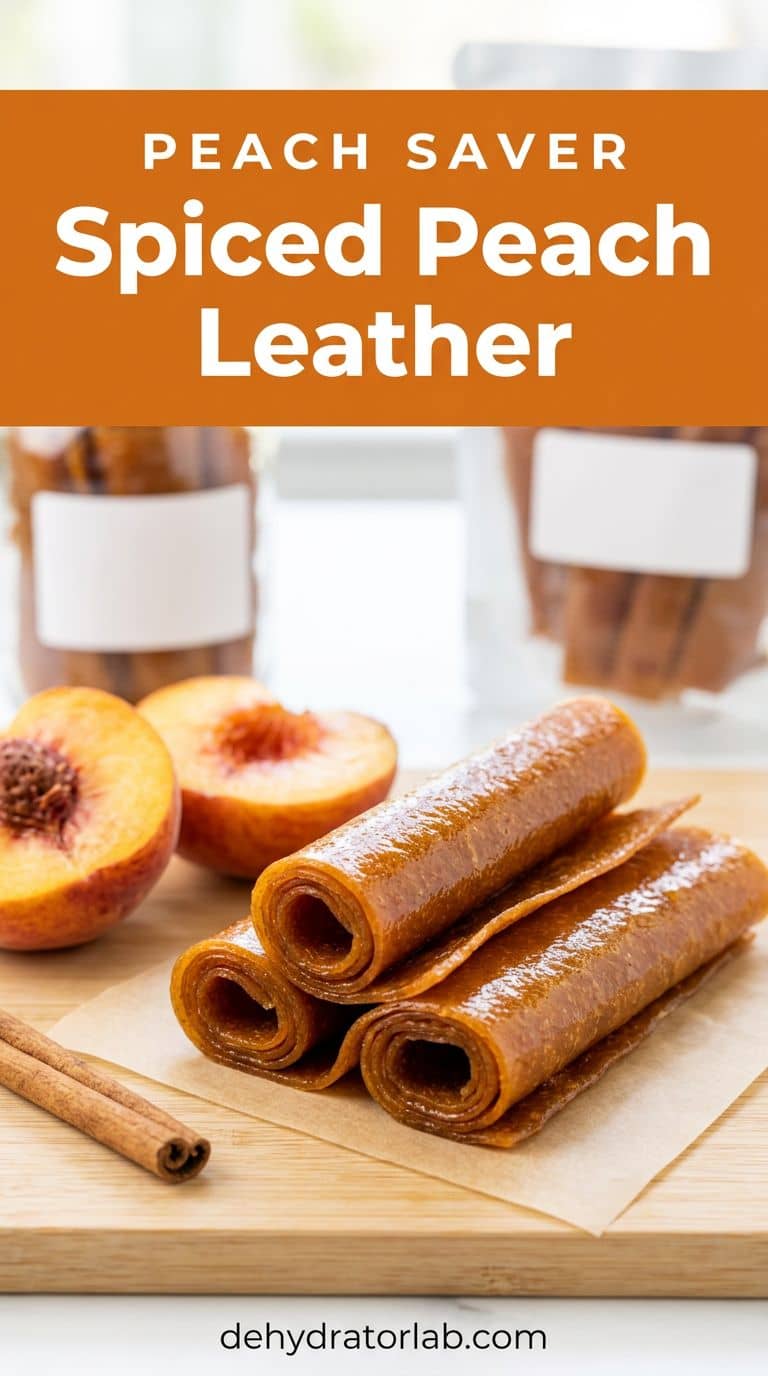
Score the bottoms, dunk the peaches in boiling water for 30 seconds, and the skins slide right off. Pit them, cut away any bruised spots, and blend with a pinch of cinnamon. Spread 1/8 inch thick and dry at 135–145°F (57–63°C) for 6–10 hours, longer when the puree is watery. It’s done when the center leaves no dent under your finger.
Juicy fruit makes the thinnest, glossiest leather, so keep the layer even. Want a ready recipe to follow? Try my raspberry peach fruit leather, or learn the whole-slice approach in dehydrated peaches. Soft fruit loves a blender.
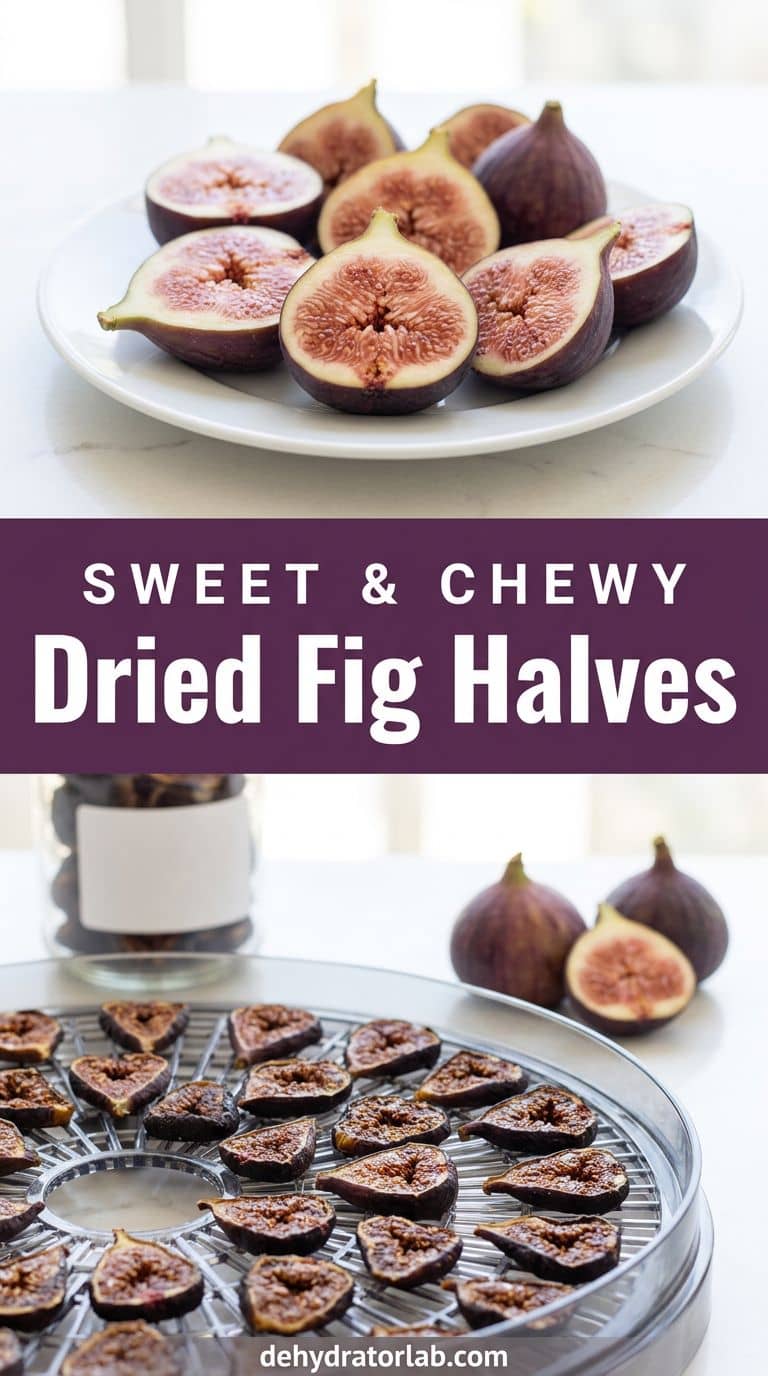
3. Dried Fig Halves from Squishy Figs
Figs are the fruit that ripen to the point of collapse. Once they get soft and drippy, they’re perfect for drying, because the sugar is already doing half the work.
Trim the stems, cut off any bruised or sour-smelling spots, and halve the figs. Lay them cut side up in a single layer with space between each. Dry at 135°F (57°C) for roughly 12–24 hours, flipping once. They should feel leathery and chewy, with no sticky wet center.
Figs split easily when overripe, so handle them gently and keep the halves uniform. My full fig dehydrating guide has the details. Cut side up, give them space.
4. Homemade Raisins from Wrinkled Grapes
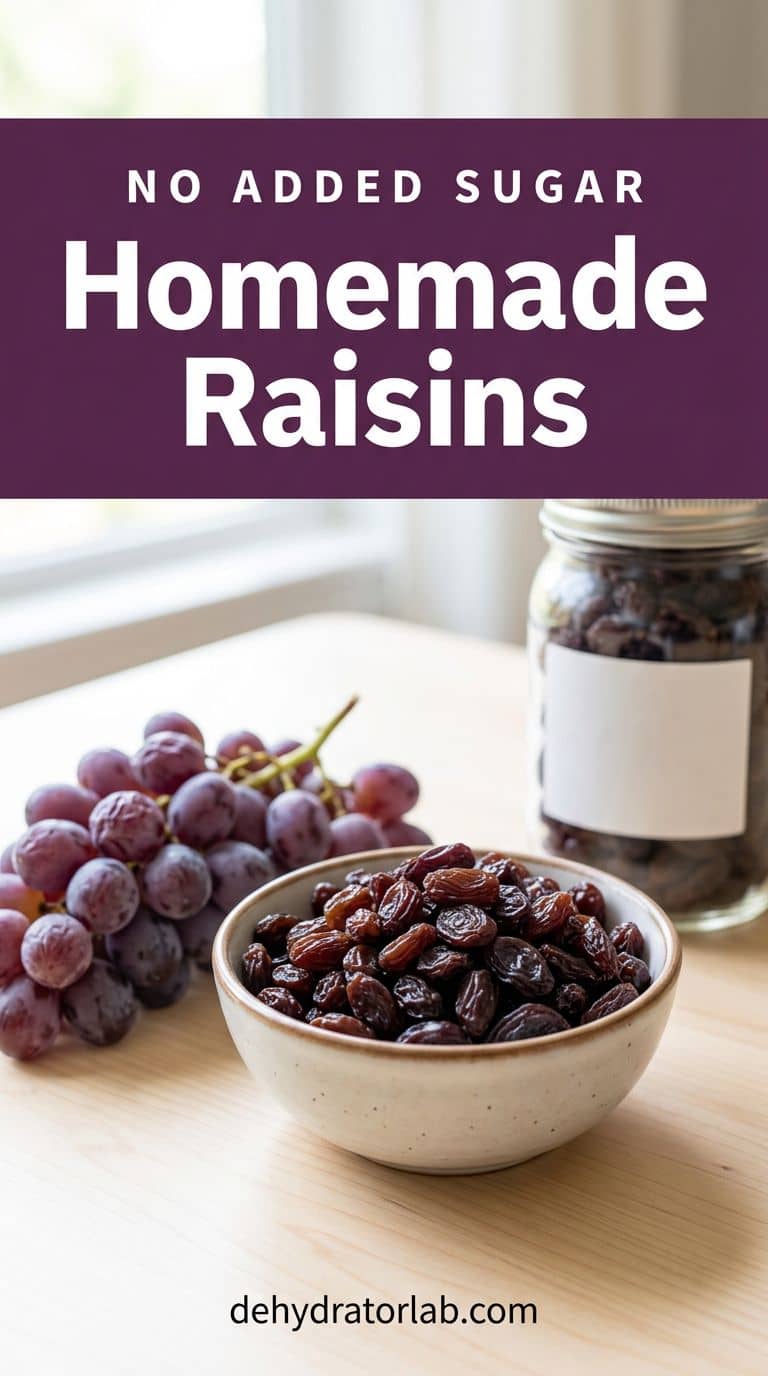
Grapes that have started to wrinkle on the stem are halfway to raisins already. You’re just finishing the job.
Sort them first. Keep the soft, wrinkled, still-sweet grapes, and throw out anything moldy, split and leaking, or fermented-smelling. Wash, pull the stems, and dry the grapes whole on a mesh tray at 135°F (57°C). Thin-skinned grapes can dry in a day, and thicker ones can take longer, so go by feel. Done raisins are chewy, with no juice when pinched.
If the skins are tough, a quick dip in boiling water cracks them and speeds things up. My grape dehydrating guide walks through it step by step. Wrinkled is a head start.
5. Apricot and Plum Halves from Soft Stone Fruit
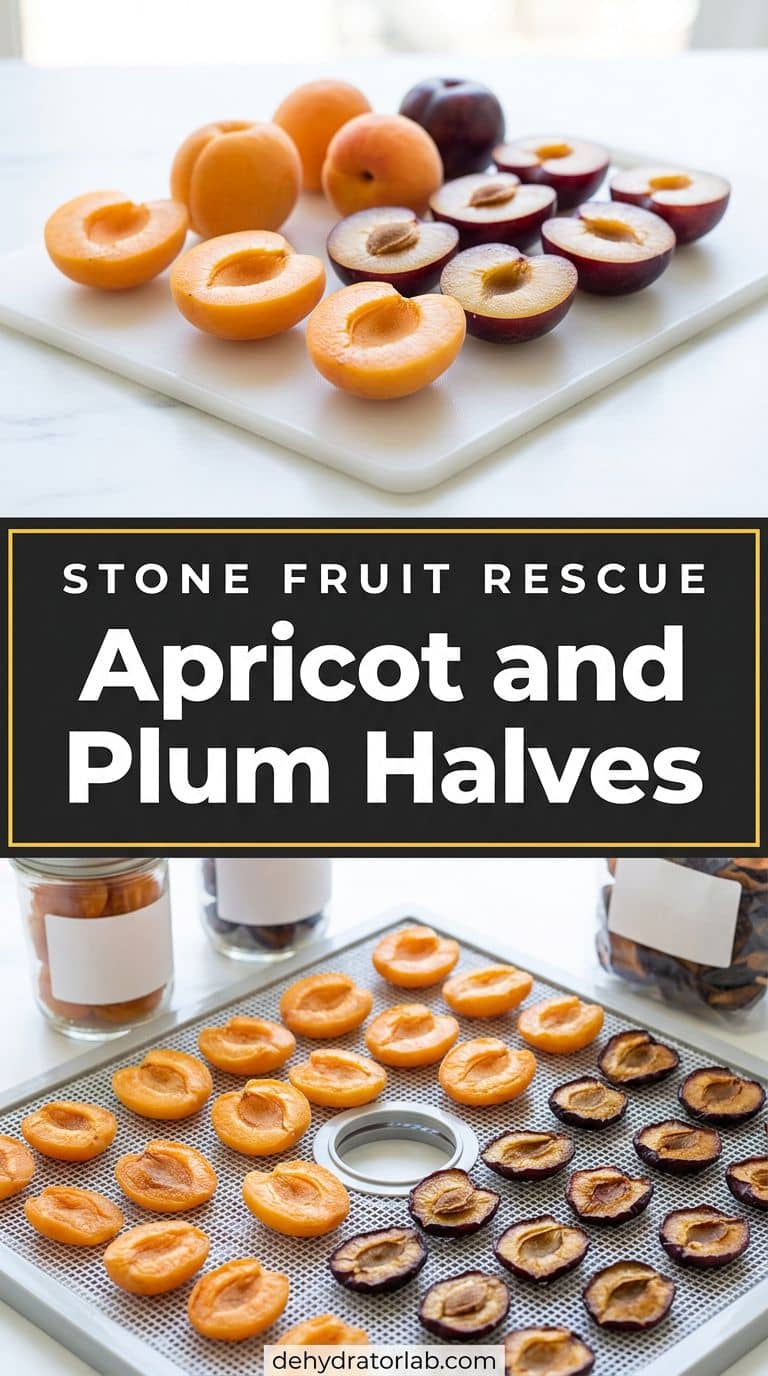
Apricots and plums go from firm to soft fast. Slices won’t hold up, but halves will, since the skin acts as a little holder for the flesh.
Halve the fruit and pull the pits, then cut away any bruised spots. Place the halves skin side down, cut side up, close but not touching. Dry at 135–145°F (57–63°C), and plan on a long haul, roughly 18–30 hours depending on size and humidity. Plums run slower than apricots. The halves are ready when they’re leathery and pliable, with no wet pockets.
Overripe plums split easily, so work gently and keep the sizes matched. Bigger halves can be cut into quarters to speed things up. See my plum dehydrating guide and 15 best fruits to dehydrate for more. Keep halves even.
6. Mixed Berry Powder from Mushy Berries
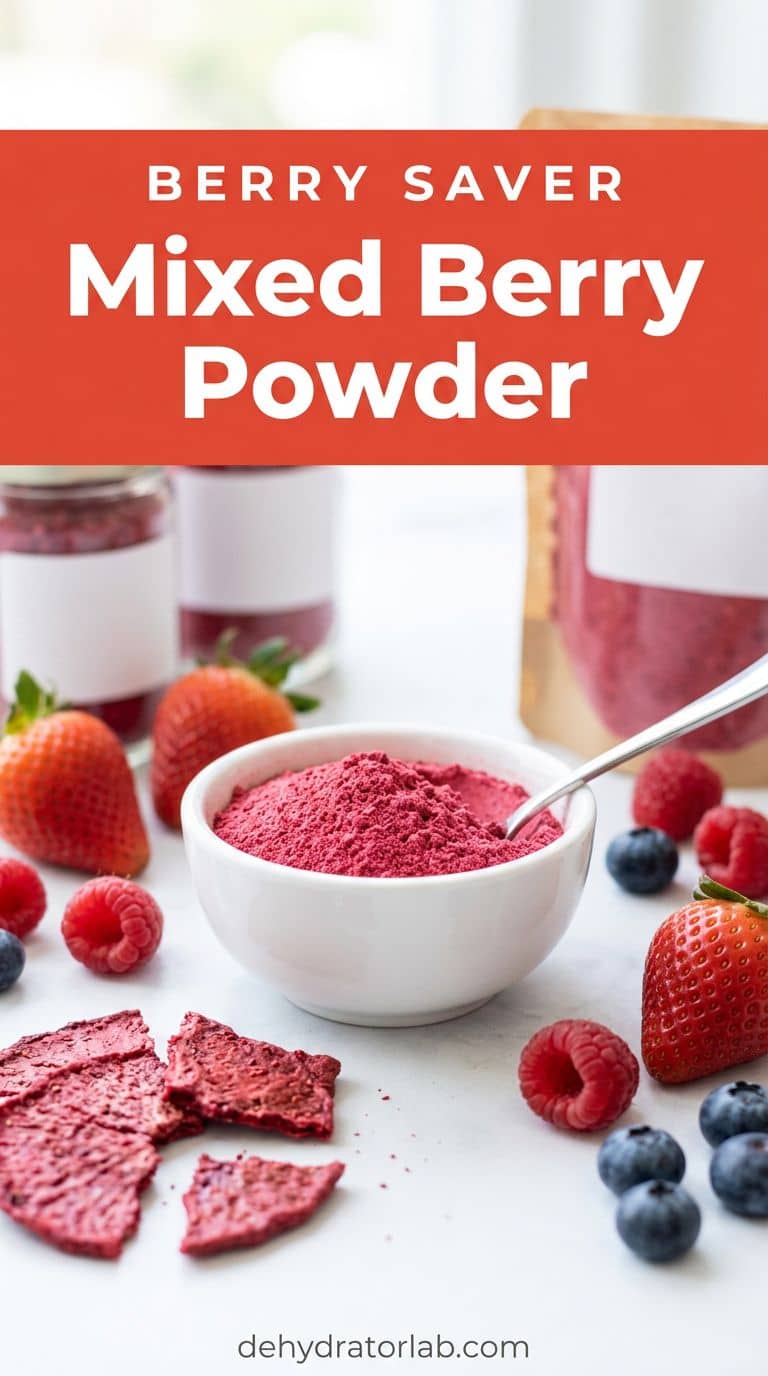
The berries at the back of the fridge are usually the ones nobody wants to touch. Perfect. Mushy berries are exactly what you want for powder.
Rinse and sort, removing anything with fuzzy mold. Blend, then strain out the seeds if you want a smoother result. Spread the puree on a solid sheet about 1/8 inch thick and dry at 135–145°F (57–63°C) for roughly 8–12 hours, until brittle. Break the sheet into pieces and grind.
- Freeze extra berries until you have enough for a full tray.
- Strain seeds for a smoother powder.
- Dry until the sheet snaps in half.
Stir the powder into yogurt, frosting, or smoothies for color and flavor. My strawberry powder and raspberry powder posts go deeper. Mush makes great powder.
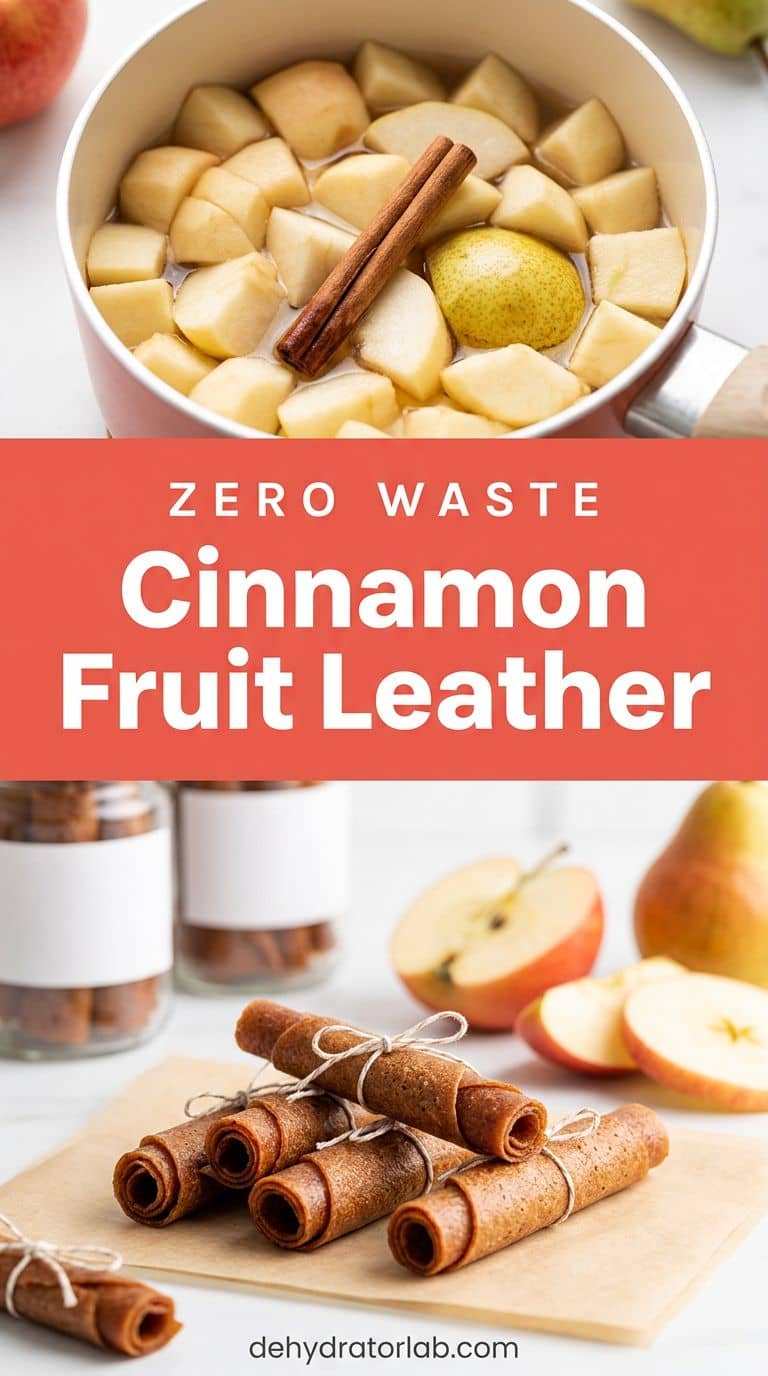
7. Cinnamon Fruit Leather from Mealy Apples and Pears
Mealy apples and soft pears are no good for crisp chips, but they make fantastic leather. Cooking them down fixes the texture problem for good.
Peel, core, and chop the fruit, then simmer with a splash of water and a pinch of cinnamon for about 10 minutes until soft. Blend smooth and spread 1/8 inch thick. Dry at 135–145°F (57–63°C) for roughly 6–8 hours, until the center has no indent. Mealy fruit tends to be less juicy, so the sheet often dries faster than peach.
For a recipe to follow, my apple cinnamon fruit leather is a good match, and the 10-recipe fruit leather roundup has more flavors. Cook it soft, dry it flat.
Quick Reference: Overripe Fruit, Best Format
| Fruit | Best format | Dry at | Done when |
|---|---|---|---|
| Bananas | Powder (puree sheet) | 135–145°F (57–63°C), 8–12 hours | Brittle, snaps |
| Soft peaches | Leather | 135–145°F (57–63°C), 6–10 hours | No dent in center |
| Soft figs | Halves | 135°F (57°C), 12–24 hours | Leathery, chewy |
| Wrinkled grapes | Whole raisins | 135°F (57°C), a day or more | Chewy, no juice |
| Apricots and plums | Halves | 135–145°F (57–63°C), 18–30 hours | Pliable, no wet spots |
| Mushy berries | Powder (puree sheet) | 135–145°F (57–63°C), 8–12 hours | Snaps in half |
| Mealy apples and pears | Cooked leather | 135–145°F (57–63°C), 6–8 hours | No dent in center |
Times shift with humidity, tray load, and thickness, so the feel test always wins over the clock.
Personal Tips You Can Steal
I freeze soft fruit in labeled bags the day it turns, then dry it when I have a full tray. I run puree sheets on solid liners every time, because overripe fruit drips right through mesh. I sniff and taste before I commit, and anything that smells fermented goes straight in the compost.
I store finished fruit in jars and shake them daily for about a week, which the NCHFP packaging guide calls conditioning. I label every jar with the fruit and the date, since future me never remembers. For general tricks, my food dehydrating tips are a good start, and how long dehydrated food lasts covers storage.
Final Thoughts
Overripe fruit isn’t a failure; it’s a head start. Pick the format that fits the texture, dry it thoroughly, and your counter clutter becomes a pantry full of powders, leathers, and chewy halves.
Related reading: 9 ways to use your dehydrator to reduce food waste, best dehydrator for fruit leather, and 10 fall foods that are perfect for dehydrating.
P.S. Those bananas on your counter? Peel them tonight and start a tray. 🙂