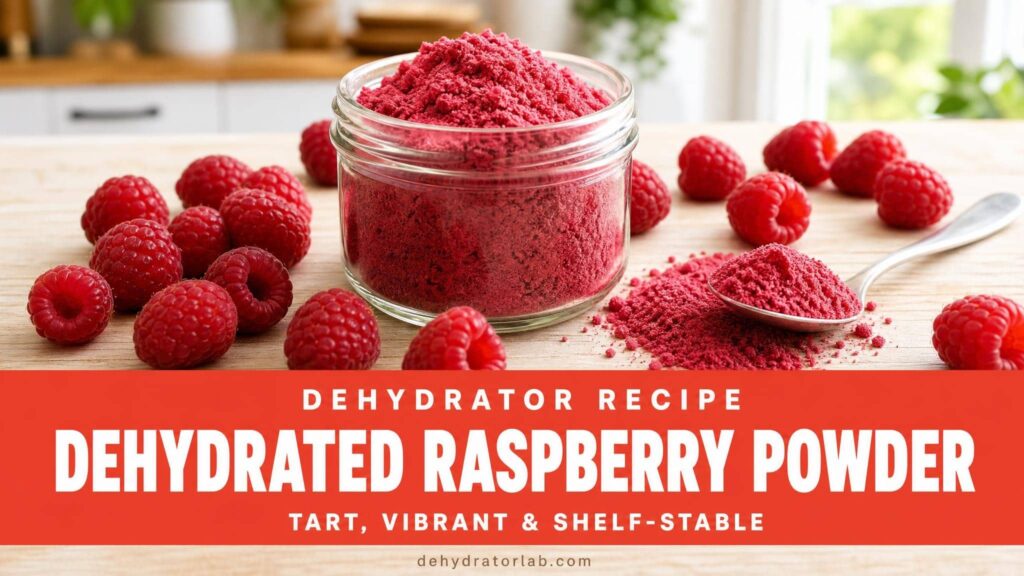
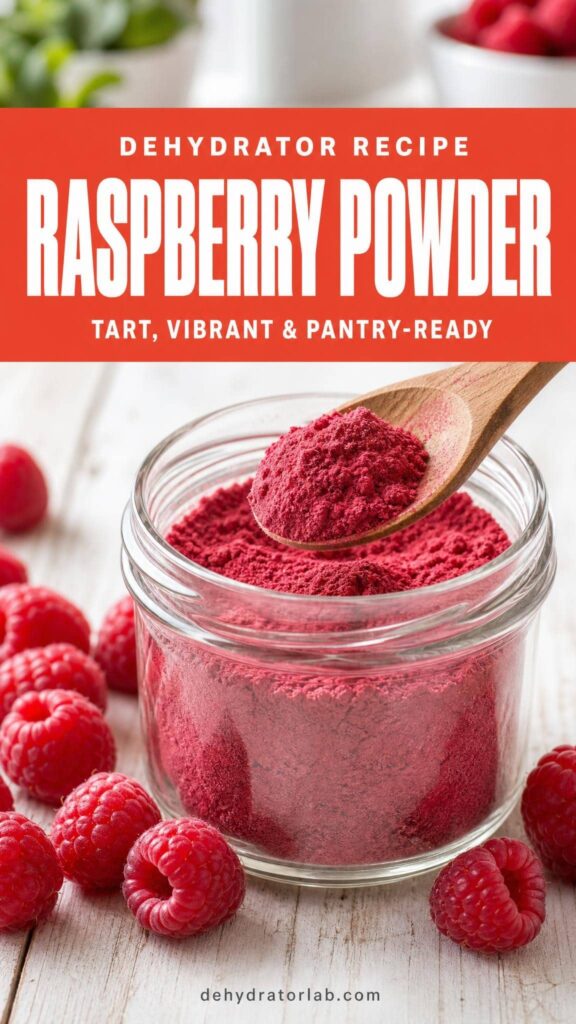
Fresh raspberries have maybe a five-day window before they turn to mush in the fridge. Dehydrated raspberry powder skips that whole race against time. You dry the berries down to a fine, deep pink-red powder that keeps its tart punch for months, no mold watch required.
It dusts onto yogurt, dissolves into smoothies, and folds into frosting without the seeds or the wet mess of fresh berries. Ready to stop losing raspberries to the compost bin and start stocking a jar that never goes bad?
In this article:
TL;DR (Too Long; Didn’t Read): Key Takeaways
- 🍇 Raspberries are mostly water, so plan on a longer dry time than firmer fruit.
- 🔪 Halve larger berries so the moisture inside has a shorter path out.
- 🌡️ Dry at 125–135°F until pieces are fully brittle, not just shriveled.
- ⏲️ Expect 10–16 hours depending on berry size and your machine.
- 🫙 Grind cool, sift out the seeds if you want it smooth, and store airtight for up to a year.
Why This Recipe Works
Raspberries pack a sharp, tart flavor into a fruit that spoils faster than almost anything else in the produce aisle. Your food dehydrator pulls that water out slowly and evenly, leaving behind concentrated flavor and color that grinds into a powder shelf-stable fresh raspberries could never be.
I make a batch whenever raspberries go on sale in bulk, since half the carton usually softens before I can eat it fresh. Once ground, the tartness works just as hard in a smoothie as it does dusted over a cheesecake.
- No added sugar or preservatives — just raspberries.
- One small jar replaces several cartons of fresh berries in the fridge.
- Blends invisibly into batters and drinks for real tart raspberry flavor.
The Best Raspberries To Use
Fresh, ripe raspberries give you the brightest color and most concentrated tart-sweet flavor. Frozen raspberries work well too and are often cheaper, since they were picked and frozen at peak ripeness.
- Firm, deep-red berries with no mushy or moldy spots.
- Frozen raspberries, thawed and well-drained, work as a reliable backup.
- Slightly overripe berries still work here since drying masks soft texture — a good use for berries about to turn.
Ingredients
- 3 cups fresh or thawed raspberries
- That’s it — no sugar or additives needed for a plain, versatile powder
FYI, raspberries lose more volume than almost any other fruit on this site once dried. Start with more than you think you’ll need.
My Go-To Workflow (Step-By-Step)
- Rinse and dry thoroughly. Rinse raspberries gently in a colander and pat dry with a towel or spin them in a salad spinner. Any leftover surface water adds drying time.
- Halve the larger berries. Small berries can dry whole, but halving larger ones gives moisture inside a shorter path to escape and helps them dry more evenly.
- If using frozen, thaw and drain well. Thawed raspberries release a lot of liquid. Drain in a fine-mesh strainer for a few minutes before loading trays.
- Load your trays. Arrange berries cut-side up in a single layer with space between pieces on a mesh liner for even airflow.
- Set your dehydrator. Run at 125–135°F (52–57°C). A home oven works on its lowest setting, propped open a crack for airflow, though it runs less even than a dedicated machine.
- Rotate your trays. Swap trays top to bottom around the halfway mark so every batch dries evenly.
- Dry until fully brittle. Berries should be hard and crack rather than bend or feel tacky. That’s your cue they’re bone dry.
- Cool completely. Let the dried berries come down to room temperature for 20–30 minutes before grinding. Warm pieces release steam inside a sealed grinder, and that steam turns into clumps.
- Grind in short pulses. Use a spice grinder or high-speed blender and pulse rather than run continuously.
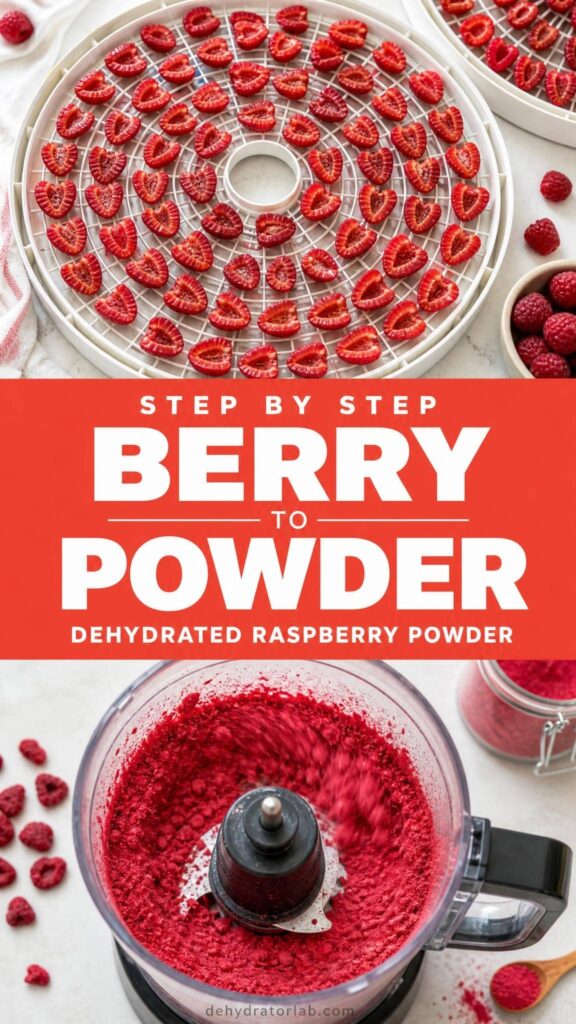
- Sift out the seeds, if you want. Raspberry seeds don’t grind down completely. Run the powder through a fine-mesh sieve for a smooth finish, or leave them in for a rustic texture and extra fiber.
- Condition before you seal it. Fill a jar loosely no more than halfway and shake once a day for 2–3 days. Any clumping means there’s still moisture hiding — spread it back on a tray for another 30–60 minutes.
- Label and store. Write the date on the jar so future you knows exactly how old it is. Rotate oldest first.
Dehydrator Settings That Work
| Prep Style | Temperature | Typical Time |
|---|---|---|
| Small berries, whole | 125–135°F (52–57°C) | 10–14 hours |
| Larger berries, halved | 125–135°F (52–57°C) | 12–16 hours |
| Thawed frozen berries | 125–135°F (52–57°C) | 14–18 hours |
Your exact time swings with berry size, water content, humidity, and your specific machine. Check early, check often, and trust your hands over the clock.
The Dryness Test You Can Trust
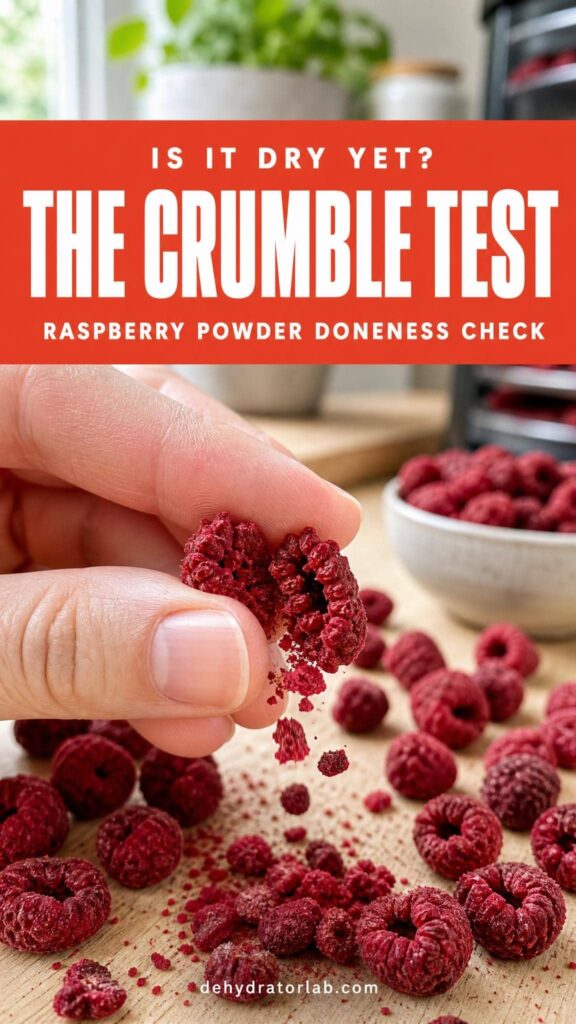
Ever wonder why some batches of berry powder mold within a week in the jar? The secret lies in drying past “looks shriveled” into truly bone dry. Raspberries hold moisture deep in the core longer than the outside shows.
- Break a berry in half — no soft, moist center, all the way through to fully dry.
- Press one between your fingers — it should crumble, never feel squishy or leave residue.
- Listen for it — properly dried berries rattle and clink against each other on the tray.
Storage That Actually Lasts
- Airtight or nothing: a glass jar with a tight lid or a vacuum-sealed bag keeps humidity and oxygen out.
- Cool, dark, dry: a pantry shelf works; a spot near the stove or a sunny window does not.
- Shelf life: up to a year at room temperature, longer in the freezer. Check the jar in week one for any condensation — that’s a sign it wasn’t dry enough.
Label with the date every time. Future you will say thanks when you’re rotating jars a year from now.
How To Actually Use It
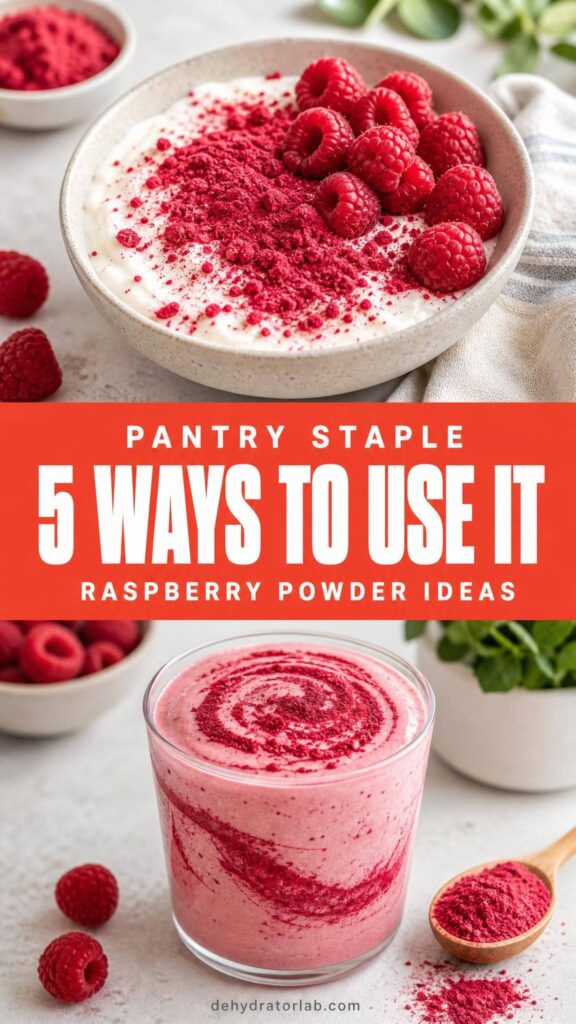
A tablespoon goes a long way since the tart flavor is concentrated. Use it dry as a dusting or stir it into liquids for color and punch.
- Blend into smoothies for tart flavor and vivid color without watery seeds.
- Dust over yogurt, oatmeal, or ice cream as a naturally tart finishing touch.
- Whisk into frosting, whipped cream, or batters for real raspberry flavor without added liquid.
To rehydrate into a quick sauce or jam-style spread, combine 1 part powder with about 2 parts warm water and let it sit 5–10 minutes, then simmer briefly to thicken if you like.
Common Mistakes To Avoid
- Skipping the pat-dry step. Surface water on rinsed berries adds hours to the drying time.
- Overcrowding the trays. Berries touching each other trap moisture between them and dry unevenly.
- Grinding while warm. Warm powder traps steam in the jar, and steam turns into clumps within days.
- Skipping conditioning. A few days of shaking the jar catches hidden moisture before it becomes mold.
Frequently Asked Questions
Can I make raspberry powder without a dehydrator?
Yes. Use your oven’s lowest setting, prop the door open slightly for airflow, and expect a similar or slightly longer time. Watch closely since ovens run less even than a dedicated machine.
Do I have to remove the seeds?
No, it’s optional. Sifting through a fine-mesh sieve after grinding removes most seed fragments for a smooth powder. Skipping this step leaves a slightly gritty texture with extra fiber, which some people prefer.
Why is my powder clumping?
Leftover moisture is almost always the cause. Spread the powder on a tray and run it another 30–60 minutes at a low setting, cool fully, then reseal.
Can I use frozen raspberries instead of fresh?
Yes, and it’s often cheaper. Thaw them fully and drain off the excess liquid before loading your trays, since frozen berries release more water than fresh ones as they thaw.
How much powder does one batch make?
Three cups of fresh raspberries typically grinds down to about 1/3 to 1/2 cup of fine powder, since raspberries are mostly water and shrink dramatically once dried.
Is dehydrated raspberry powder healthy?
Raspberries are well known for their fiber, vitamin C, and antioxidant content, and drying concentrates much of that nutrition into a smaller volume. Vitamin C levels do drop somewhat with heat and air exposure during drying, which is normal for any dried fruit.
Personal Tips You Can Steal
I always halve my berries now, even the small ones, since I got tired of finding a soft center on pieces that looked perfectly dry from the outside. I run a “seed test” batch through the sieve before committing a whole jar, since some grinders leave more seed fragments than others. I keep a small shaker jar in the fridge door for daily use and the bulk batch sealed in the pantry, since raspberry powder pulls moisture from fridge air faster than most other fruit powders. I always run one extra hour past “looks done,” since raspberries hide moisture in the center better than firmer fruit.
Wrap-Up
Dehydrated raspberry powder turns a fruit that barely survives the week into a pantry staple that adds tart, vivid flavor to everything from smoothies to frosting. A few cartons of raspberries, some patience in the dehydrator, and a quick grind gets you a jar of concentrated tartness that outlasts anything in your fruit bowl. Pair it with dehydrated strawberry powder for a two-berry blend, or stir it alongside dehydrated blueberry powder for a mixed-berry smoothie base.
If you’d rather dry your raspberries whole as a snack first and decide on powder later, our berry dehydrating guide and fruit leather guide cover related techniques step by step. For more pantry inspiration, check our roundup of essential dehydrated foods, and if you’re new to the whole process, our beginner’s guide to using a food dehydrator covers the basics before you start.
P.S. Keep a small “working jar” next to the fridge and the big batch sealed in the back of the pantry. You’ll use the powder more often when it’s within arm’s reach 🙂
Want just the essential recipe details without scrolling through the article? Get our printable recipe card with just the ingredients and instructions.
Related reading: dehydrated strawberry powder, dehydrated blueberry powder, air fryer raspberry chips, and how to make fruit leather in a dehydrator.
Printable Recipe Card
Want just the essential recipe details without scrolling through the article? Get our printable recipe card with just the ingredients and instructions.