Tired of eggs being the one pantry item you can never stock ahead of time?
Fresh eggs are fragile, need refrigeration, and go bad on a schedule you don’t control. Dehydrated eggs sidestep all three problems – they pack down to almost nothing, sit on a shelf for months, and rehydrate into real scrambled eggs, not a chalky imitation.
One rule matters for every single recipe below: always cook eggs fully before they go in the dehydrator. Raw eggs never get hot enough in a dehydrator to be food-safe – cooking first is what makes this whole method work.
Let’s get seven ways to keep eggs on hand no matter what you’re stocking up for.

In this article:
TL;DR: Key Takeaways
- 🥚 These 7 recipes cover camping breakfasts, baking substitutes, and long-term emergency storage — all from the same basic technique.
- 🍳 Cook eggs fully before drying, every time — raw eggs are never safe to dehydrate at home.
- 🌡️ Cooked egg pieces and powders dry at 145–155°F (63–68°C) for 6-10 hours, stirring once or twice to expose damp spots.
- 🔪 Break cooked eggs into pea-sized pieces before loading the tray — big chunks dry unevenly and rehydrate poorly.
- 🧂 Season lightly before drying; flavor dulls slightly in the process, so taste and adjust once rehydrated too.
- 📦 Condition every batch 3-5 days in a loosely filled jar before long-term storage, and pack with oxygen absorbers for the longest shelf life.
Seven ways to keep eggs shelf-stable, from a quick camp breakfast to a full emergency stash. Let’s get into it.
1. Classic Dehydrated Scrambled Eggs
This is the base method every other recipe on this list builds from, so I won’t repeat the full step-by-step here — I’ve already got a complete dehydrated scrambled eggs guide with exact temps, timing, and a printable recipe card. Short version: scramble the eggs soft, crumble into pea-sized pieces once cooked, and dry at 145–155°F (63–68°C) for 6-10 hours.
What belongs here instead is the why: this plain version is the one to master first because every flavored variation below — cheesy, veggie-loaded, or bulk-batched — is just this same base with something folded in before or after drying.
Master this one first; the rest of the list is just a variation.

2. Cheesy Bacon Dehydrated Scrambled Eggs
Ever wonder why the “just add water” camp breakfast never tastes like much? It’s missing fat and salt, both of which dull during drying. This version builds them back in. Scramble your eggs as usual, fold in 2 tablespoons of finely shredded dehydrated hard cheese per 4 eggs while the curds are still soft, and stir in 2 tablespoons of finely chopped, fully cooked bacon.
Crumble small and dry at 145–155°F (63–68°C) for 7-11 hours — the extra fat from cheese and bacon means it runs a little longer than the plain version, so check at hour 7 and keep going until pieces snap dry with no greasy give.
- Blot visible grease with a paper towel around the halfway mark to speed drying.
- Sharp cheddar or Parmesan hold up better through drying than soft cheeses.
- Rehydrates into something that actually tastes like a diner breakfast — not a compromise, an upgrade.

3. Dehydrated Egg & Vegetable Scramble Jar Mix
This one’s built to be a complete jar meal, not just a protein add-in. Layer your dried scrambled egg crumbles with 3 tablespoons dehydrated corn kernels, 2 tablespoons dehydrated bell pepper pieces, and a pinch of onion powder in a pint jar — everything’s already dry, so this is assembly, not drying.
To rehydrate, cover with hot water 1:1 by volume, let sit 8-10 minutes so the vegetables catch up to the eggs, then warm in a pan with a little oil. The corn and pepper rehydrate at roughly the same rate as the egg crumbles, which is exactly why this combination works without babysitting different soak times.
A full camp breakfast that lives in one jar, not four.

4. Whole Egg Powder for Baking Substitute
FYI, this is a different process from the scrambled versions above — no skillet involved. Spread thin, fully cooked scrambled egg (made without any fat or seasoning, just eggs) into a completely flat layer on a lined tray and dry at 135–145°F (57–63°C) for 8-12 hours, until it snaps dry with zero give. Grind the dried pieces to a fine powder in a spice grinder or food processor.
For baking, 1 tablespoon of egg powder whisked with 2 tablespoons of water replaces one large egg in most recipes — quick breads, muffins, and pancakes tolerate the swap best. Cakes that lean on eggs for structure can turn slightly denser, so test a small batch before you commit a whole recipe to it.
- Grind in short pulses — running the grinder too long can warm the powder and clump it.
- Sift before measuring to break up any small clumps that formed in storage.
- A tightly sealed jar keeps this fresh far longer than fresh eggs ever could — the pantry staple most people never think to make.

5. Egg White Powder for Meringues & Baking
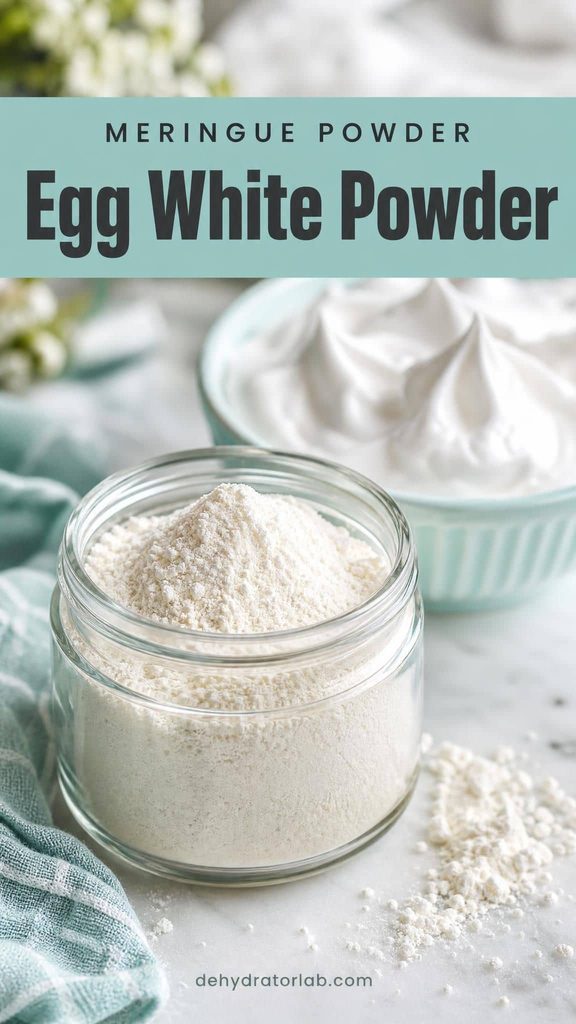
This is the one for people who separate eggs constantly and hate wasting the whites, or who want shelf-stable meringue powder without buying a specialty tin. Whisk egg whites until just frothy (don’t whip to peaks), spread thin on a lined tray, and dry at 115–125°F (46–52°C) for 10-14 hours — noticeably lower and slower than the whole-egg versions, since egg white protein toughens and yellows if it dries too hot.
Grind fully dried sheets into a fine powder once cooled. Rehydrate 1 tablespoon powder with 2 tablespoons water and let sit 5 minutes before whipping for meringues, or add the dry powder straight into cookie and macaron recipes that call for meringue powder.
The baker’s staple you didn’t know your dehydrator could make.
6. Bulk Dehydrated Egg Crumbles for Long-Term Storage
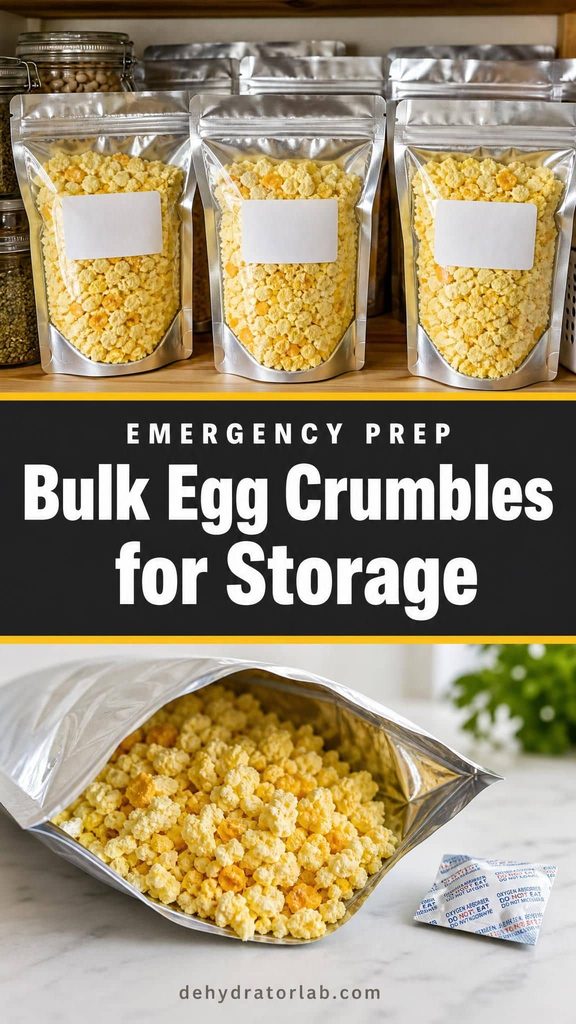
This is the classic scrambled egg method scaled up and treated differently after drying, built specifically for an emergency shelf rather than next weekend’s camp trip. Cook a full dozen (or several dozen) eggs in batches, plain and unsalted so nothing shortens shelf life, and dry in the largest batches your machine allows at 145–155°F (63–68°C) for 6-10 hours per load.
The difference is entirely in the packaging. Condition every batch 3-5 days in a loosely filled jar first, then move to Mylar bags with an oxygen absorber rather than a regular jar — for the full breakdown of which absorber does what, my moisture absorbers vs oxygen absorbers guide covers it. Stored this way in a cool, dark spot, properly dried eggs hold up for months; for a broader look at how storage method changes shelf life across dehydrated foods generally, see my guide on how long dehydrated food lasts.
- Batch in small, dated portions rather than one giant bag — you’ll open smaller amounts more often, and every opening lets in air.
- Skip seasoning entirely for this batch; add salt and spice at rehydration time instead.
- Label with the drying date, not just the “use by” — future you will thank present you for that one line.
7. Dehydrated Egg & Cheese Breakfast Burrito Filling Mix
Be advised, this one skips the tortilla — it’s the filling, ready to fold into whatever wrap you’ve got on hand at rehydration time. Combine your dried scrambled egg crumbles with 3 tablespoons finely shredded dehydrated cheese and 3 tablespoons dehydrated cooked black beans for extra heft, all pre-dried, so this is another assembly recipe rather than a drying one.
For more protein without the beans, swap in 2 tablespoons dehydrated cooked ground beef instead — either version rehydrates the same way: cover with hot water 1:1, sit 8-10 minutes, warm through in a pan, then spoon into a warmed tortilla.
Breakfast burritos that pack flat and cook in minutes.

Personal Tips You Can Steal
I always undercook the scramble slightly on the stove, since a few extra minutes of dehydrator heat finishes the job — cooking all the way on the skillet first is how you end up with rubbery rehydrated eggs. I crumble with two forks instead of a knife; it breaks pieces down unevenly in a good way, which actually rehydrates better than perfectly uniform bits.
I keep my egg powders in small jars instead of one big one, since powder exposed to air on every scoop loses quality faster than crumbles do. And I always run a test batch of any new powder ratio in a muffin recipe before I trust it in something fussier like a cake.
Final Thoughts
Seven ways to keep eggs on hand, whether that means a camp breakfast, a baking swap, or a genuine emergency stash — and every single one starts with the same cook-first, dry-low rule. Start with the classic scrambled version, then branch into whichever bucket matches what you’re actually stocking up for.
For general guidance on safe drying temperatures and times, the National Center for Home Food Preservation’s drying guide is a solid, evidence-based reference.
Related reading: for more shelf-stable proteins to pair with these, see dehydrated cooked ground beef, and for the full explainer on packaging choices, check out moisture absorbers vs oxygen absorbers.
P.S. Start with a single dozen eggs and the classic method before you commit a whole flat to bulk storage — once you know how your machine handles the timing, scaling up is just more trays. Happy dehydrating! 🙂