Is there anything better than a hot cup of soup when the sun drops behind the ridge and your fingers stop cooperating?
Most trail dinners are a pile of noodles or rice. Soup is different, because it can be lighter, faster, and easier on your fuel. The trick is building it from powders and flakes that melt into hot water in minutes. Here are seven soups worth carrying.

As an Amazon Associate, I earn from qualifying purchases. If you make a purchase after clicking on a link I may earn a small commission at no extra cost to you if items are purchased.
In this article:
TL;DR: Key Takeaways
- 🍲 Seven trail soups built mostly from powders and flakes, so most of them need nothing more than boiling water and a lid.
- ⏱️ Most are ready in 5 to 10 minutes off the heat. The corn chowder and white bean soup want a short simmer.
- 🎒 Mix each soup at home into one labeled bag, so camp cooking is dump, pour, stir.
- 🧂 Bouillon and cheese powder carry salt, so season to taste before you add any.
- 🥛 Dairy and egg soups are best packed fresh and eaten early in a trip. These are my own rules of thumb.
- 🌡️ Boiling water is 212°F (100°C) at sea level and lower at altitude, so give each soup an extra minute up high.
Every recipe here is my own, which means the amounts are starting points that you can tweak. These are not the jar mixes from my 8 dehydrated soup mix recipes, which simmer for 15 to 20 minutes on a stove. They are also not full dinners like my 10 backpacking meal recipes or the noodle bowls in my 5 one-pot trail meals. These are lighter cups and bowls you can sip between a snack and the main course, or stretch into dinner with a handful of crackers.
Quantities below make one big mug, about 1 1/2 cups of water. Double them for dinner for two, and weigh them on a scale if you’re counting grams. A spice grinder is handy for turning dried vegetables into the fine powders most of these soups rely on, and the one below is what I use.

- Electric spice-and-nut grinder with durable stainless-steel blades
- Heavy-duty motor; push-top lid for simple on/off control
- Bowl holds 90 grams; extra storage space in lid; non-slip rubber feet
1. Tomato Basil Soup
This is the easiest soup to start with, and the one most people ask me for. Stir 3 tablespoons of tomato powder, 2 tablespoons of milk powder, 1 teaspoon of dried basil, 1/2 teaspoon of garlic powder, 1/2 teaspoon of onion powder, and a pinch of salt and pepper together at home. At camp, pour in 1 1/2 cups of boiling water, whisk, and let it sit covered for 5 minutes.
The milk powder is what turns a thin red broth into something creamy. Skip it for a vegan version, and the soup still tastes like tomato, just sharper. Whisk with a spoon handle or a small fork, because milk powder clumps if you only stir lazily.
For more depth, add a pinch of smoked paprika, or crumble in a few sun-dried tomato bits that you’ve chopped small. Crushed crackers on top turn it from a snack into a light lunch. Tomato soup, five minutes, one cup.

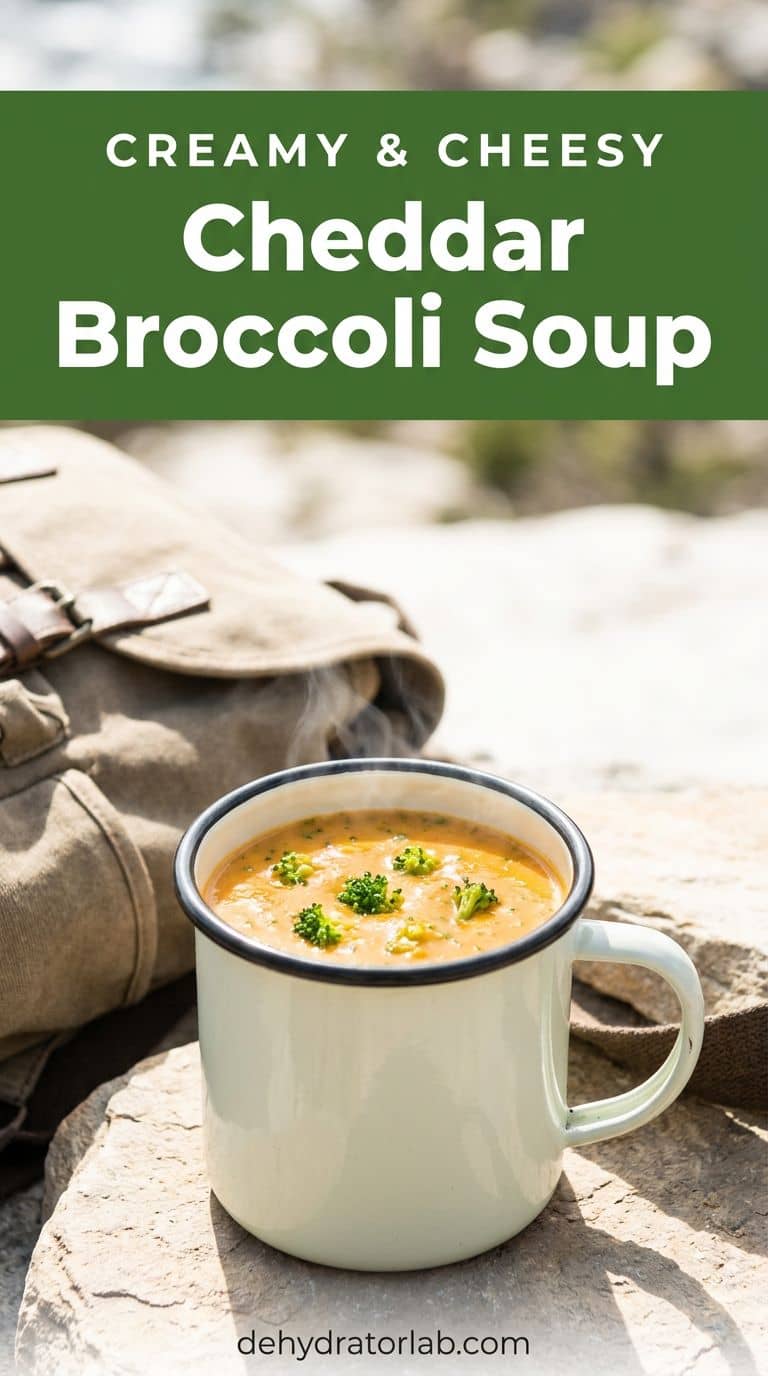
2. Cheddar Broccoli Soup
Cheese soup travels better than you’d expect, because cheese powder does the heavy lifting. Mix 1/4 cup of potato flakes, 3 tablespoons of cheese powder, 2 tablespoons of milk powder, 1/4 cup of finely chopped dehydrated broccoli, 1/4 teaspoon of mustard powder, and 1/4 teaspoon of garlic powder. Add 1 1/4 cups of boiling water, stir well, and wait about 8 minutes.
Broccoli is the slow part, so cut it small before you dry it. My guide to dehydrating broccoli covers the cut size, and pea-sized florets soften in the same window as the potato flakes. If the florets are still chewy at minute 8, give the soup another 2 minutes with the lid on.
- Chop the broccoli small before drying.
- Stir the cheese powder in last to avoid lumps.
- Let it sit covered so the potato flakes thicken on their own.
It’s thick, salty, and filling. Cheese soup without a stove marathon.
3. Trail Corn Chowder
Chowder is the heartiest soup on the list, and it uses what’s probably already in your pantry. Combine 1/3 cup of dehydrated corn kernels, 1/4 cup of potato flakes, 2 tablespoons of diced dehydrated bell pepper, 2 tablespoons of milk powder, 1 teaspoon of onion flakes, 1/2 teaspoon of smoked paprika, and 1 teaspoon of low-sodium bouillon.
Corn kernels are the stubborn ingredient. Pour 1 1/2 cups of boiling water over the corn and pepper first, then set up the tent, and add the potato flakes and milk powder when you come back. If you’d rather cook it, simmer for 5 minutes and stir in the powders at the end. This soup is the exception on the list that gets better with a little heat.
Smoked paprika gives it the feel of bacon without any meat. Add a pinch of black pepper at the end for bite. Corn chowder that keeps you warm.

4. Carrot Ginger Soup
This one is bright, light, and surprisingly sweet. Mix 3 tablespoons of carrot powder, 1/2 teaspoon of ginger powder, 2 tablespoons of coconut milk powder, 1/4 teaspoon of turmeric, and 1/2 teaspoon of bouillon. Pour in 1 1/2 cups of boiling water, stir, and cover for 5 minutes.
Coconut milk powder is the same ingredient I use in the curry noodle cup in my one-pot trail meals, so one bag covers both. If you only have regular milk powder, the soup still works, and it just reads a little less rich.
Carrot powder is naturally sweet, so a pinch of black pepper or a dash of hot sauce keeps the soup from tasting like baby food. A few toasted pumpkin seeds on top add crunch. Sunshine in a mug.

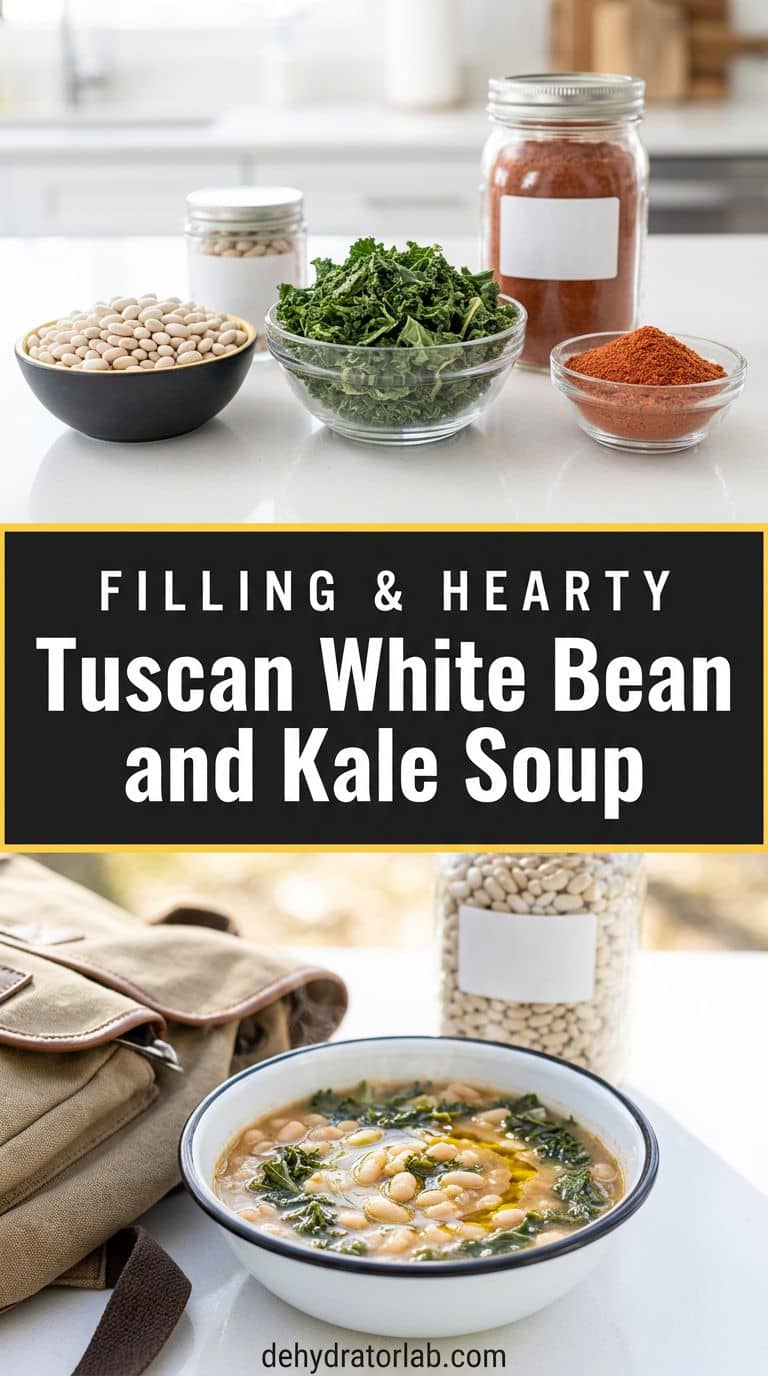
5. Tuscan White Bean and Kale Soup
If you want a soup that eats like dinner, start here. Use 1/2 cup of dehydrated cooked white beans, 2 tablespoons of crumbled dried kale or kale powder, 1 tablespoon of tomato powder, 1 teaspoon of Italian herbs, 1/2 teaspoon of garlic powder, and 1 teaspoon of bouillon. Beans are the heavy ingredient, so they set the timing.
Dry cooked white beans the same way I dry black beans in my dehydrated cooked black beans guide. I use 135–140°F (57–60°C) for around 7 to 9 hours, until the beans are hard all the way through, and that range is my own estimate for white beans. Pour 1 1/2 cups of boiling water over the mix, cover, and let it sit for 10 minutes, or simmer for 5 to 8 minutes if you have fuel to spare.
- Dry the beans until a bean snaps, not bends.
- Add a small olive oil packet at camp for richness.
- Simmer if the beans still feel firm, because they need the time.
It’s the closest thing to a real Tuscan soup you’ll eat above treeline. Beans do the work.
6. Sweet Potato Peanut Soup
This soup is rich, a little spicy, and the best one to eat when you’re cold and hungry. Mix 1/4 cup of sweet potato powder, 2 tablespoons of peanut butter powder, 1/2 teaspoon of ginger powder, 1/4 teaspoon of cayenne, 1 teaspoon of bouillon, and 1 teaspoon of onion flakes. Add 1 1/2 cups of boiling water, whisk hard, and wait 5 minutes.
Peanut butter powder settles at the bottom, so whisk with the spoon handle and stir again before you drink. If the soup feels too thick, add a splash of water instead of more heat. Start with a pinch of cayenne, because it gets stronger as it sits.
A handful of chopped roasted peanuts on top turns this into a full snack. It’s a hearty, warming cup with no dairy at all. Thick, warm, and surprisingly rich.

7. Egg Drop Soup
For the lightest, fastest soup on the list, this is it. Combine 1/4 cup of dehydrated scrambled eggs, crumbled small, with 1 teaspoon of bouillon, 1 tablespoon of dehydrated scallions, 1/4 teaspoon of ginger powder, and a pinch of white pepper. Pour in 1 1/2 cups of boiling water, stir, and cover for 4 minutes.
Cook the eggs fully before you dry them, which scrambling them does anyway. The soup won’t have the silky ribbons of restaurant egg drop, but the flavor is close, and the eggs add real protein to a very light cup. A few drops of sesame oil from a small packet finish it well.
Add a spoonful of mushroom powder for extra savory depth. Since this soup includes egg, I pack it for the first days of a trip, and that’s my own habit, not a rule from a guideline. Warm, light, and ready in minutes.

Quick Reference: Trail Soup Ratios
| Soup | Base (per mug) | Water | Time (my estimate) | Heat needed |
|---|---|---|---|---|
| Tomato basil | 3 tbsp tomato powder + 2 tbsp milk powder | 1 1/2 cups | About 5 min | Just boiled |
| Cheddar broccoli | 1/4 cup potato flakes + 3 tbsp cheese powder + broccoli | 1 1/4 cups | About 8 min | Just boiled |
| Corn chowder | 1/3 cup corn + 1/4 cup potato flakes | 1 1/2 cups | 10 min soak or 5 min simmer | Short simmer helps |
| Carrot ginger | 3 tbsp carrot powder + 2 tbsp coconut milk powder | 1 1/2 cups | About 5 min | Just boiled |
| White bean and kale | 1/2 cup dried white beans + kale | 1 1/2 cups | 10 min soak or 5 to 8 min simmer | Simmer is better |
| Sweet potato peanut | 1/4 cup sweet potato powder + 2 tbsp peanut butter powder | 1 1/2 cups | About 5 min | Just boiled |
| Egg drop | 1/4 cup dried scrambled egg + scallions | 1 1/2 cups | About 4 min | Just boiled |
Amounts make one large mug. Times depend on how fine you grind, how cold it is, and how high you are, so treat them as a starting point and add water in small splashes.
Packing, Water, and Safety
Mix each soup into its own bag at home and write the water amount and the name on the front. Dried foods keep best in clean, airtight packaging that stays cool, dry, and dark, which is the advice in the National Center for Home Food Preservation guide to packaging and storing dried foods. I use a vacuum sealer for anything that has to last a few weeks, and a zip bag for soups I’ll eat within the week.
Dairy and egg powders are the ingredients I’m most careful with. I keep those bags cold until the day I leave, and I pack the dairy and egg soups for the early days of a trip. That’s my own conservative habit, so use your judgment and common sense about heat, humidity, and trip length. Anything that smells off or looks damp stays home.
Salt is the other thing to watch. Bouillon and cheese powder carry a lot, and the American Heart Association notes that most Americans get too much sodium, so lower-sodium picks are generally a smart move. I treat bouillon as a seasoning and taste before I add more. Always pour boiling water away from your hands, set the pot on flat ground, and let the cup cool for a minute before you sip.
Personal Tips You Can Steal
I grind my dried vegetables in small batches so the powders stay fresh, and I label every bag with the soup name, the water amount, and the date. I pack a small insulated pot cozy because it saves fuel and keeps soups hot while they steep.
I test every new soup at home first, since a recipe that tastes flat in my kitchen will taste worse at 8,000 feet. I carry a few olive oil packets for extra calories. I keep a spare bag of plain bouillon in my food bag in case a soup needs rescuing. For more on my gear, see my best dehydrators for backpacking meals.
Final Thoughts
A cup of hot soup does more for morale than almost anything else in your food bag. Start with the tomato basil and the egg drop soup, then work up to the chowder and the white bean soup once you trust your timing.
Related reading: 10 best vegetables to dehydrate for soups, 10 dehydrated foods for hiking, 7 dehydrated ingredients that make broth taste better, and 8 emergency food prep recipes.
P.S. If you get cold hands at the trailhead, pour the water into the mug first and add the powder after. The first sip will thank you. 🙂