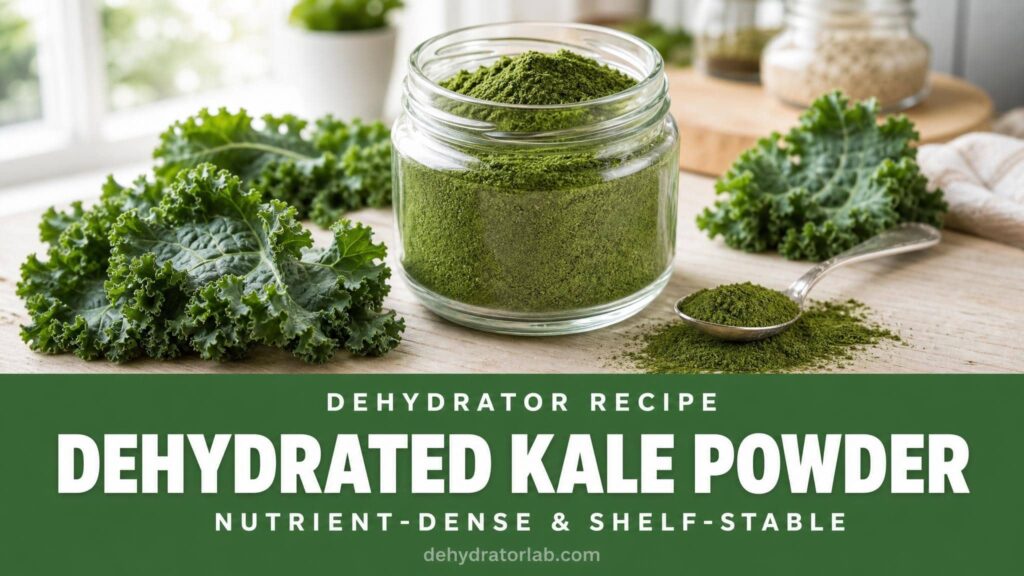
Ever buy a big bunch of kale for one salad, then watch the rest go limp and yellow in the crisper? Dehydrated kale powder is the fix. You dry a whole bunch down to a fine, deep green powder that keeps for months and sneaks nutrients into everything from smoothies to bread dough.
It disappears into batters, soups, and sauces without anyone noticing a leaf in their bowl. Ready to stop tossing wilted kale and start stocking a jar that never goes bad?
In this article:
TL;DR (Too Long; Didn’t Read): Key Takeaways
- 🥬 Strip the tough center ribs first — they dry slower and grind gritty.
- 💧 Dry the leaves thoroughly before loading trays so moisture doesn’t slow things down.
- 🌡️ Dry at 115–125°F until leaves crumble easily between your fingers.
- ⏲️ Expect 3–6 hours depending on leaf thickness and your machine.
- 🫙 Grind cool, condition for a few days, and store airtight for 6–12 months.
Why This Recipe Works
Kale is sturdy for a leafy green, but it’s still mostly water once you get past those tough ribs. Your food dehydrator pulls that water out slowly at a low temperature, protecting the color and nutrients while concentrating everything into a fine powder.
I keep a jar of this next to my dehydrated spinach powder and rotate between the two depending on what’s cheap that week. Both disappear into food the same way, so it comes down to whichever bunch is going soft first.
- No added sugar, salt, or fillers — just kale.
- One small jar replaces a whole bunch of kale in the pantry.
- Blends invisibly into smoothies and batters for a nutrient boost with no bitterness.
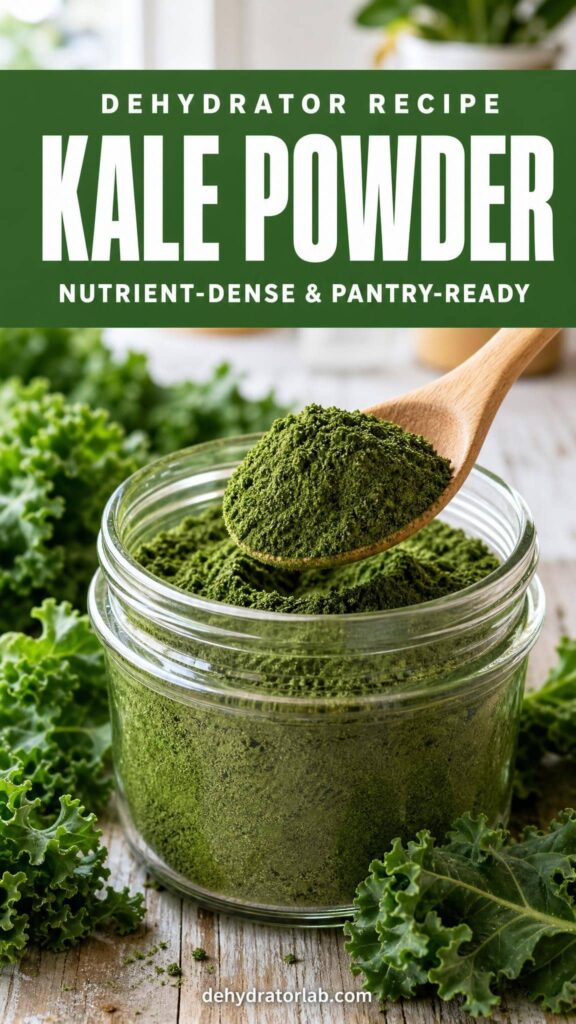
The Best Kale To Use
Curly kale, lacinato (dinosaur) kale, and red Russian kale all dehydrate well. Pick based on what’s fresh and cheap — the powder tastes similar no matter which variety you start with.
- Curly kale: widely available and dries into a classic grassy powder.
- Lacinato (dinosaur) kale: flatter leaves dry a bit faster and evenly.
- Slightly wilted bunches still work here since you’re drying them anyway — a good use for almost-gone greens.
Ingredients
- 2 large bunches of kale, ribs removed
- That’s it — no oil, salt, or additives needed for a plain, versatile powder
FYI, this is one of the cheapest powders on the whole site. Kale does all the work itself.
My Go-To Workflow (Step-By-Step)
- Wash and sort. Rinse thoroughly to remove grit from the curls, and discard any yellowed or slimy leaves. Clean leaves make cleaner-tasting powder.
- Strip the ribs. Tear or cut the leafy part away from the thick center rib. The rib is fibrous and dries slower, so leaving it in gives you a gritty powder with woody bits.
- Dry the leaves well. Spin them dry or pat with towels. Excess surface moisture slows drying and can dull the color.
- Load your trays. Tear leaves into large pieces and spread in a single layer with no overlap. Overlapping traps moisture and lengthens drying time for even drying.
- Set your dehydrator. Run at 115–125°F (46–52°C). A home oven works on its lowest setting, propped open a crack for airflow, though it runs less even than a dedicated machine.
- Rotate your trays. Swap trays top to bottom around the halfway mark so every batch dries evenly.
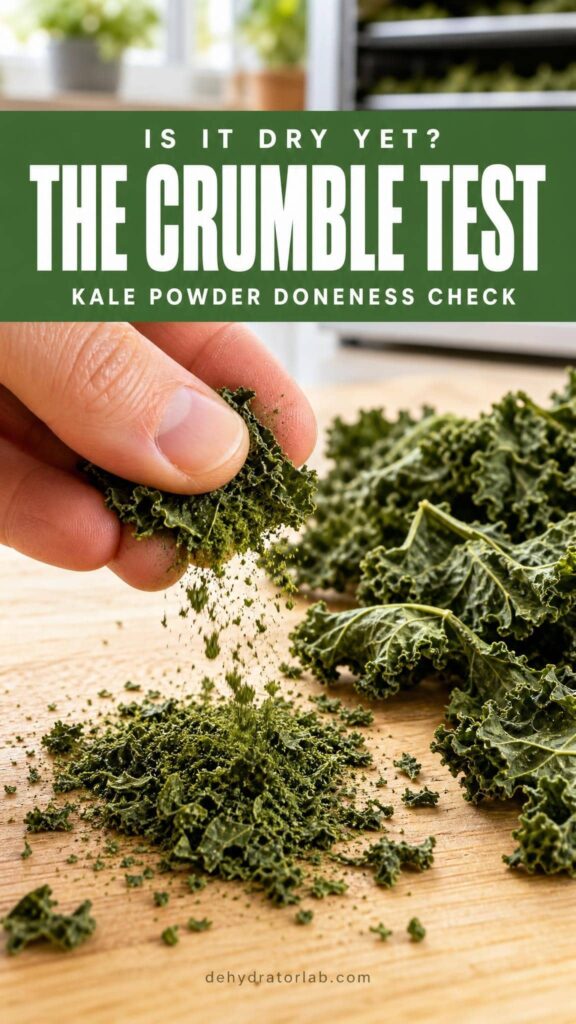
- Dry until crumbly. Finished leaves crumble easily between your fingers with no leathery spots left. That’s your cue they’re bone dry.
- Cool completely. Let the dried leaves come down to room temperature for 10–15 minutes before grinding. Warm pieces release steam inside a sealed grinder, and that steam turns into clumps.
- Grind in short pulses. Use a spice grinder, blender, or food processor and pulse rather than run continuously. Sift out any coarse bits and regrind them for a finer powder.
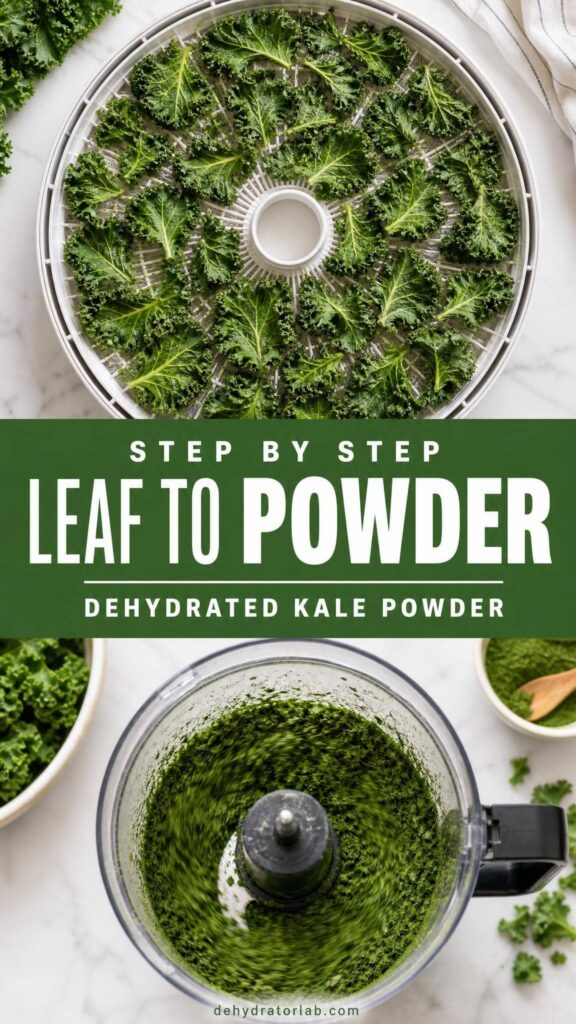
- Condition before you seal it. Fill a jar loosely no more than halfway and shake once a day for 2–3 days. Any clumping means there’s still moisture hiding — spread it back on a tray for another 20–30 minutes.
- Label and store. Write the date on the jar so future you knows exactly how old it is. Rotate oldest first.
Dehydrator Settings That Work
| Prep Style | Temperature | Typical Time |
|---|---|---|
| Curly kale, torn | 115–125°F (46–52°C) | 4–6 hours |
| Lacinato kale, torn | 115–125°F (46–52°C) | 3–5 hours |
| Smaller pieces / baby kale | 115–125°F (46–52°C) | 3–4 hours |
Your exact time swings with leaf thickness, how well you dried them before loading, humidity, and your specific machine. Check early, check often, and trust your hands over the clock.
The Dryness Test You Can Trust
Ever wonder why some batches of powder clump within a week? The secret lies in drying past “looks crispy” into truly crumble-dry. Thicker leaf veins hold moisture longer than the thin parts show.
- Crumble a leaf between your fingers — it should turn to dust, not just crack.
- Check the thickest vein left in a piece — it should snap, never bend.
- Feel for coolness or springiness — either means it’s not fully dry yet.
Storage That Actually Lasts
- Airtight or nothing: a glass jar with a tight lid or a vacuum-sealed bag keeps humidity and oxygen out.
- Cool, dark, dry: a pantry shelf works; a spot near the stove or a sunny window does not.
- Shelf life: 6–12 months at room temperature, longer in the freezer. Check the jar in week one for any condensation — that’s a sign it wasn’t dry enough.
Label with the date every time. Future you will say thanks when you’re rotating jars a year from now.
How To Actually Use It
A teaspoon or two goes a long way since the powder is concentrated leafy green. Use it anywhere you want a nutrient boost without changing the texture of a dish.
- Blend into smoothies, juices, or protein shakes for a hidden nutrient boost.
- Whisk into pancake, muffin, or bread batter for natural green color.
- Stir into soups, sauces, and dips for extra body and a subtle earthy note and real vegetable nutrition.
Unlike some vegetable powders, kale powder doesn’t need rehydrating first — just stir it directly into whatever you’re making and let the liquid do the work.

Common Mistakes To Avoid
- Leaving the ribs in. They dry slower and grind into gritty, fibrous bits that never quite turn to powder.
- Grinding while warm. Warm powder traps steam in the jar, and steam turns into clumps within days.
- Overcrowding trays. Piled-up leaves trap moisture and dry unevenly, leaving some pieces still leathery.
- Skipping conditioning. A few days of shaking the jar catches hidden moisture before it becomes mold.
Frequently Asked Questions
Can I make kale powder without a dehydrator?
Yes. Use your oven’s lowest setting, prop the door open slightly for airflow, and expect a similar or slightly longer time. Watch closely since ovens run less even than a dedicated machine.
Do I really need to remove the ribs?
You don’t have to, but it makes a real difference. Ribs dry much slower than the leafy part, so leaving them in usually means woody bits that never grind fine.
Why is my powder clumping?
Leftover moisture is almost always the cause. Spread the powder on a tray and run it another 20–30 minutes at a low setting, cool fully, then reseal.
Can I use frozen kale?
Yes, but thaw and squeeze it very dry first. The texture is a little different from fresh, but it still powders and tastes fine.
How much powder does one batch make?
Two large bunches of kale typically grinds down to about 1/4 to 1/3 cup of fine powder, since you’re removing nearly all the water weight from a leafy green.
Is dehydrated kale powder healthy?
Kale is well known for its vitamin K, vitamin A, and antioxidant content, and drying concentrates much of that nutrition into a smaller volume. Some heat-sensitive vitamins are reduced in the process, which is normal for any dried leafy green.
Personal Tips You Can Steal
I strip the ribs by hand while watching TV, because it’s tedious enough that I’d never do it standing at the counter otherwise. I tear leaves into big pieces instead of small ones, since they shrink dramatically and small pieces slip through mesh liners. I keep an unlabeled “test jar” going for a few days before committing a full batch to permanent storage, because a hidden clump early on saves the whole jar later. I grind in short pulses instead of one long blend so the powder doesn’t heat up and lose its color.
Wrap-Up
Dehydrated kale powder turns a bunch that was headed for the compost into a pantry staple that quietly upgrades everything you cook. A couple bunches, some patience in the dehydrator, and a quick grind gets you a jar of concentrated greens that outlasts anything in your crisper drawer. Pair it with dehydrated spinach powder for a rotating greens supply, or dust it over a batch of crispy kale chips for a double dose of green.
If you’d rather keep the leaves whole and crispy, our dehydrated kale chips guide covers the snack version step by step. And if you’re new to the whole process, our beginner’s guide to using a food dehydrator covers the basics before you start.
P.S. Keep a small “working jar” next to the blender and the big batch sealed in the back of the pantry. You’ll use the powder more often when it’s within arm’s reach 🙂
Want just the essential recipe details without scrolling through the article? Get our printable recipe card with just the ingredients and instructions.
Related reading: dehydrated spinach powder, dehydrated arugula powder, dehydrated kale chips, and air fryer kale chips.
Printable Recipe Card
Want just the essential recipe details without scrolling through the article? Get our printable recipe card with just the ingredients and instructions.