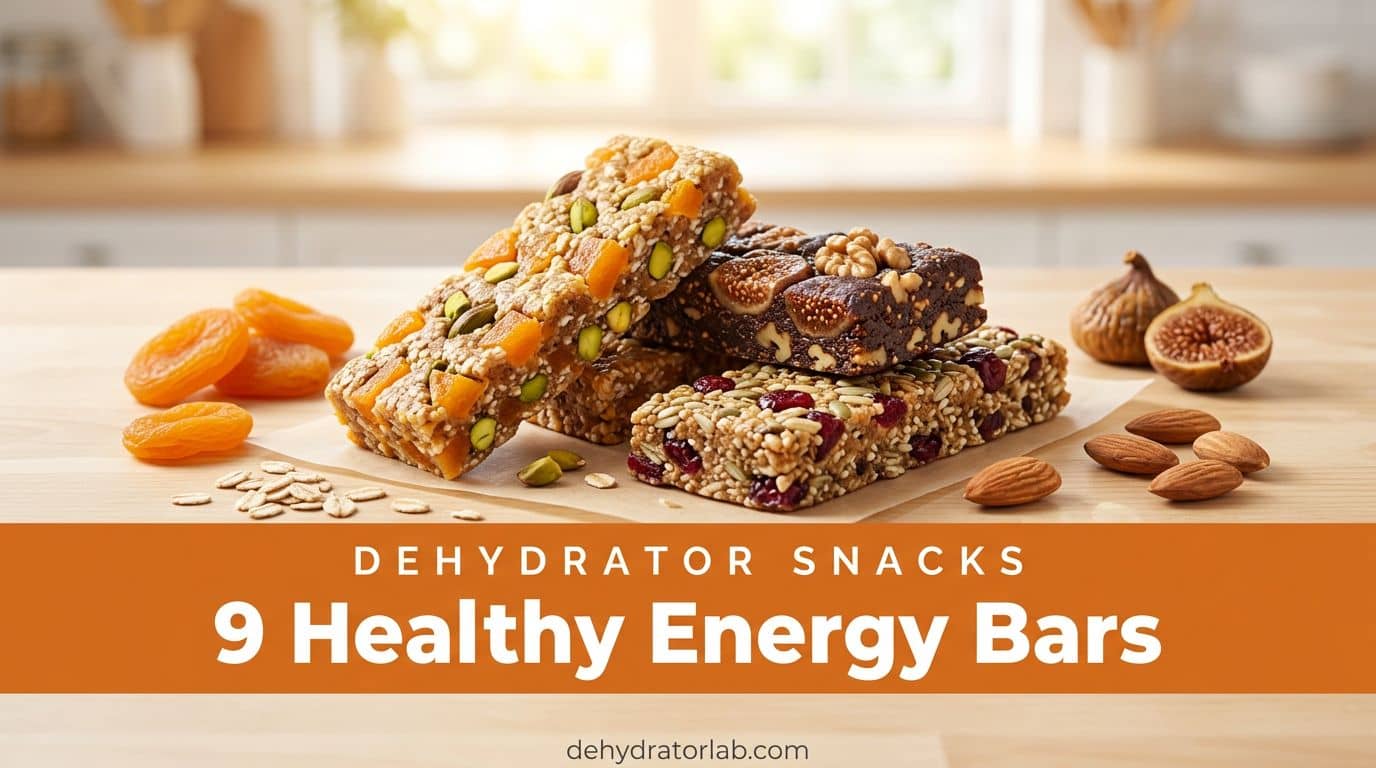
Craving an energy bar that tastes like fruit and nuts instead of syrup and chalk?
A dehydrator is the quiet hero here. Soft dried fruit blends into a sticky paste that holds oats, nuts, and seeds together with no syrup and no oven. Low heat then firms the outside while the center stays chewy. Let’s fill your trays with bars that travel well.
As an Amazon Associate, I earn from qualifying purchases. If you make a purchase after clicking on a link I may earn a small commission at no extra cost to you if items are purchased.
In this article:
TL;DR: Key Takeaways
- 🍊 Dried fruit soaked and blended into a paste is the binder for most of these bars. No syrup needed.
- 🌡️ Dry pressed bars at 125–135°F (52–57°C) for about 4 to 6 hours, until the surface is dry and the center is still pliable.
- 🔪 Score the bars after about 2 hours so the sides dry too, then flip the slab once.
- 🧊 Cool the bars completely before you wrap them. Warm bars sweat and turn gummy in a bag.
- 🌰 Nuts go rancid faster than you’d think, so keep spare bars in the fridge or freezer.
- 📐 Use the mix-and-match formula near the end to invent your own flavor.
Plenty of dehydrator granola already lives on this site, and my 6 granola and granola bar recipes cover the peanut butter, raw date-and-seed, and protein versions. So this list skips those. Every bar here is built on a different dried fruit, from apricots to prunes. If you love a loose mix instead, my 10 trail mix recipes have you covered.
Every bar follows one base method. Soak the dried fruit in hot water for about 10 minutes, drain it, and pulse it in a food processor until it clumps like thick jam. Stir in the rest, press it about 1/2 inch thick into an 8×8 pan lined with silicone dehydrator sheets, and dry. Each recipe makes about 8 bars, and the amounts are my own starting points, so adjust them to taste. A food processor does the paste work in seconds, so here’s the one I use.

- LARGE CAPACITY: 10-cup food processing container provides ample space for preparing family-sized portions of chopped veg…
- VERSATILE ATTACHMENTS: Includes stainless steel shredding blade and disc stand, and food pusher for various food prepara…
- POWERFUL PERFORMANCE: 500-watt motor with 2 speed settings and pulse function allows precise control for different proce…
1. Apricot Pistachio Chewy Bars
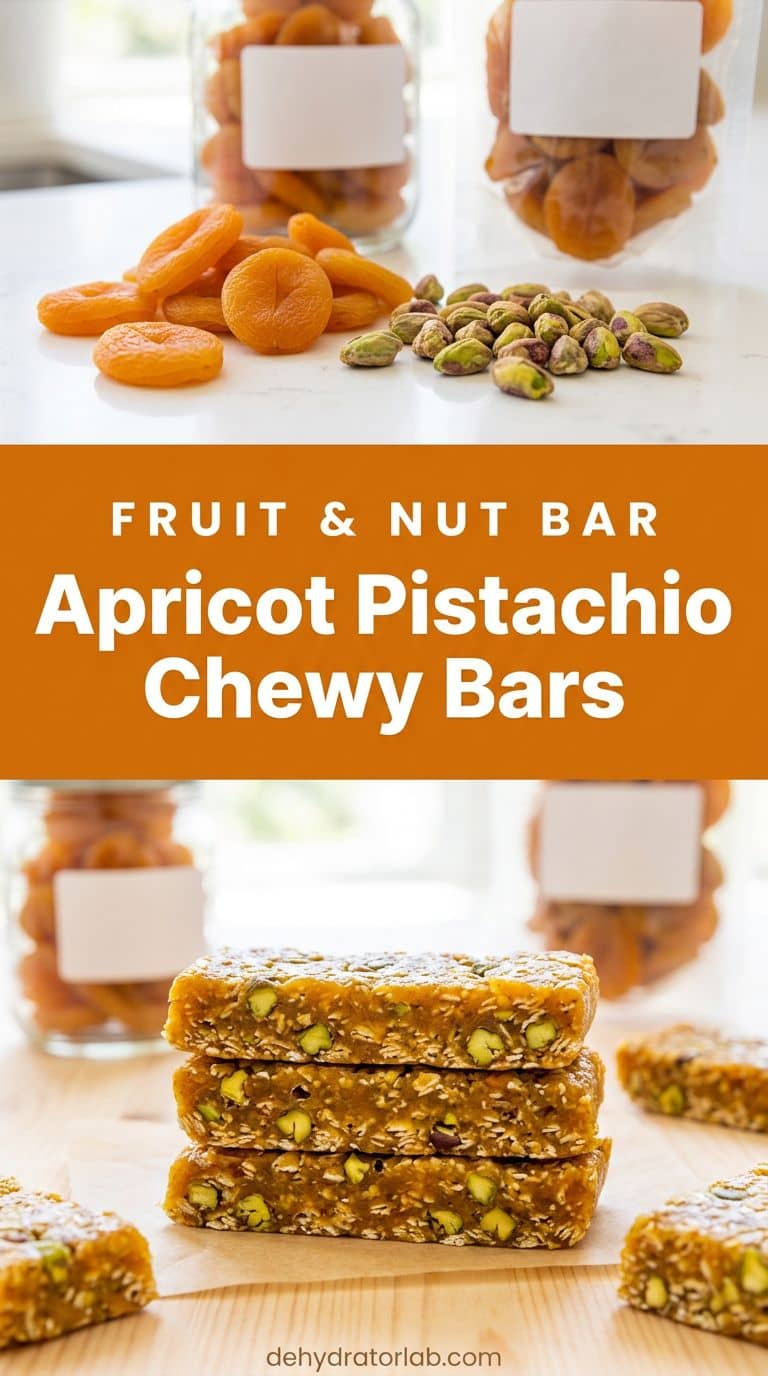
Apricots bring a tart edge that keeps a fruit bar from tasting like candy. They also blend into a thick, golden paste without any help. Soak 1 1/2 cups of dried apricots for 10 minutes, drain, and pulse them until they clump.
Stir in 1 cup of rolled oats, 3/4 cup of chopped pistachios, 1/2 teaspoon of cardamom, and a pinch of salt. Add 1 tablespoon of honey only if your apricots are very tart. Press into the pan and dry at 125–135°F (52–57°C) for about 4 to 6 hours, scoring the slab into bars after the first 2 hours and flipping it once.
If you’d like to dry your own fruit first, my apricot chips and stone fruit recipes show how apricots behave on a tray. Tart apricot, buttery pistachio.
2. Tart Cherry Almond Bars
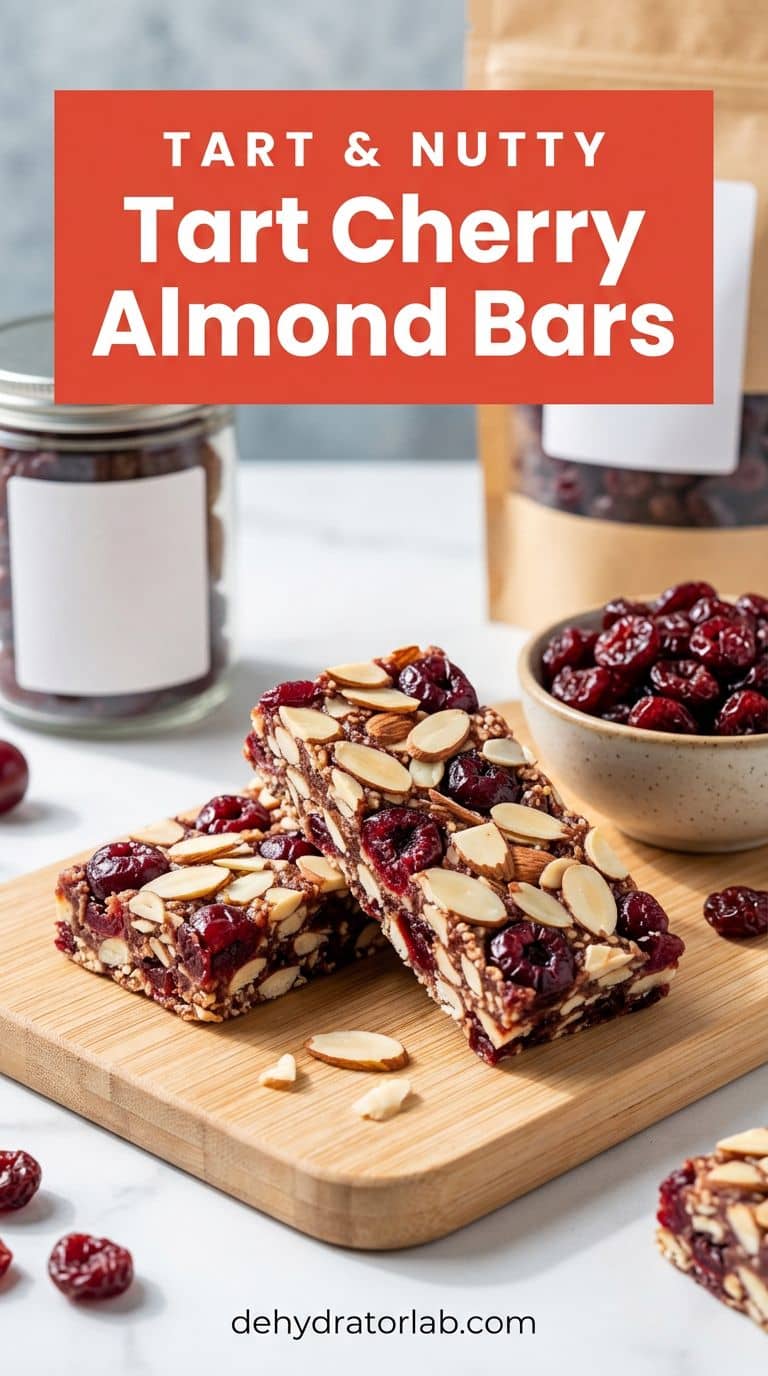
Tart cherries are the tangy, ruby-red option on this list. Soak 1 cup of dried tart cherries, then pulse about two thirds of them into a paste and roughly chop the rest. The chopped pieces give you chewy bursts in every bite. My guide on how to dehydrate cherries covers drying your own.
Almond butter does half of the binding here, so you need less fruit. Mix in 1/2 cup of almond butter, 1 cup of rolled oats, 1/2 cup of sliced almonds, and 1 teaspoon of vanilla. Press and dry at 125–135°F (52–57°C) for about 4 to 6 hours.
Nut butter bars can feel a little greasy on the surface after drying. Let them rest on a rack for 10 minutes before you wrap them. Cherry bite, almond crunch.
3. Fig and Walnut Bars
Think of these as a homemade fig-cookie bar with no pastry. Figs make the stickiest, most jam-like paste of any fruit here, and their tiny seeds add a pleasant crunch. Snip the hard stems off 1 1/2 cups of dried figs, soak them for 10 minutes, and drain. My how to dehydrate figs guide covers drying your own.
Pulse the figs in short bursts, then stir in 3/4 cup of chopped walnuts, 1/2 cup of rolled oats, the zest of 1 orange, and 1/2 teaspoon of cinnamon. The orange zest keeps the fig flavor bright. Dry at 125–135°F (52–57°C) for about 4 to 6 hours.
- Snip the stems before you soak.
- Pulse in short bursts so the seeds stay crunchy.
- Press firmly and score early.

4. Banana Oat Energy Bars
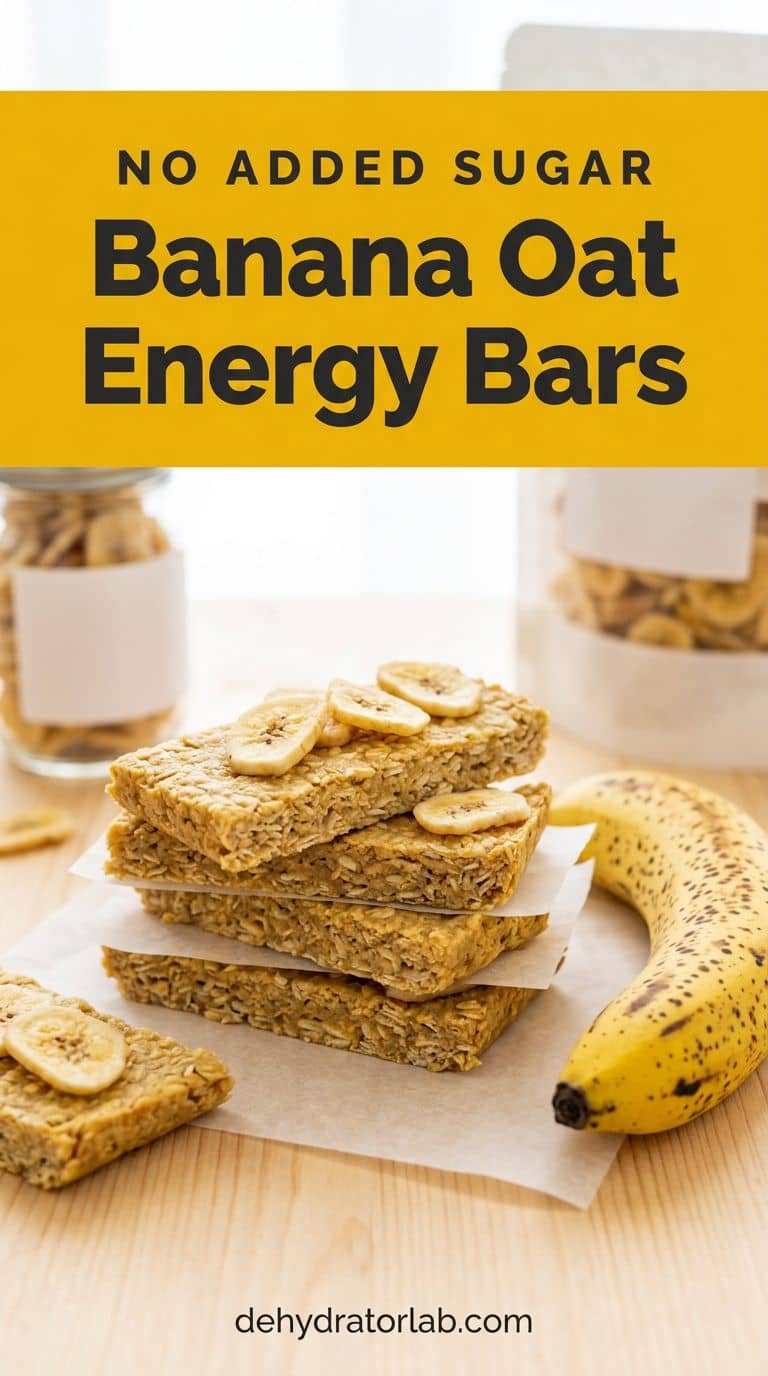
This is the softest bar on the list, and the easiest to start with. Mash 2 very ripe bananas, about 1 cup, then stir in 2 cups of rolled oats, 1/4 cup of sunflower seed butter, 1/2 teaspoon of cinnamon, and 1/3 cup of chopped dehydrated banana chips for texture.
Fresh banana adds moisture, so these bars need longer. Dry at 135°F (57°C) for about 5 to 7 hours, flipping once, until the surface is dry and the bars bend without cracking. They stay softer than the fruit-paste bars, so keep them in the fridge and eat them within about a week. Both of those are my own estimates.
Sunflower seed butter keeps the bar nut-free, as long as your jar is. Check the label if allergies matter. Spotty bananas do the sweetening.
5. Pumpkin Seed and Cranberry Bars
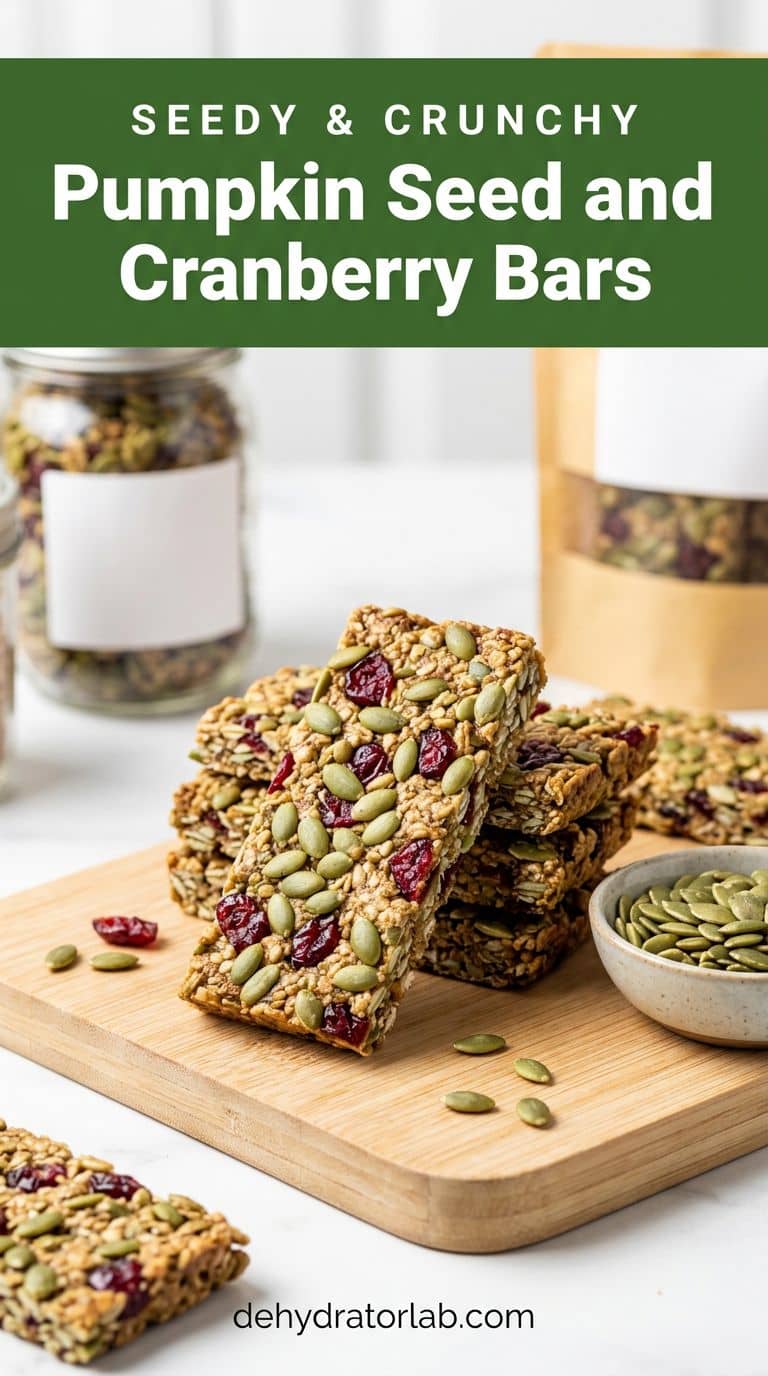
These are the crunchy, seedy option for people who don’t want a soft bar. Toast 1 cup of raw pumpkin seeds and 1/2 cup of sunflower seeds in a dry pan until fragrant, or use my seasoned pumpkin seeds for a flavored version. Mix them with 1/2 cup of chopped dried cranberries and 1 cup of rolled oats.
Warm 1/3 cup of honey with 2 tablespoons of coconut oil until it pours, then stir it through the seeds with 1/2 teaspoon of cinnamon. Press hard into the pan and dry at 125–135°F (52–57°C) for about 3 to 5 hours, until the top feels dry and the slab holds together when lifted.
- Warm the honey so it coats every seed.
- Press with a flat spatula until the slab is firm.
- Cool fully before you cut, because warm slabs crumble.
6. Apple Pie Oat Bars
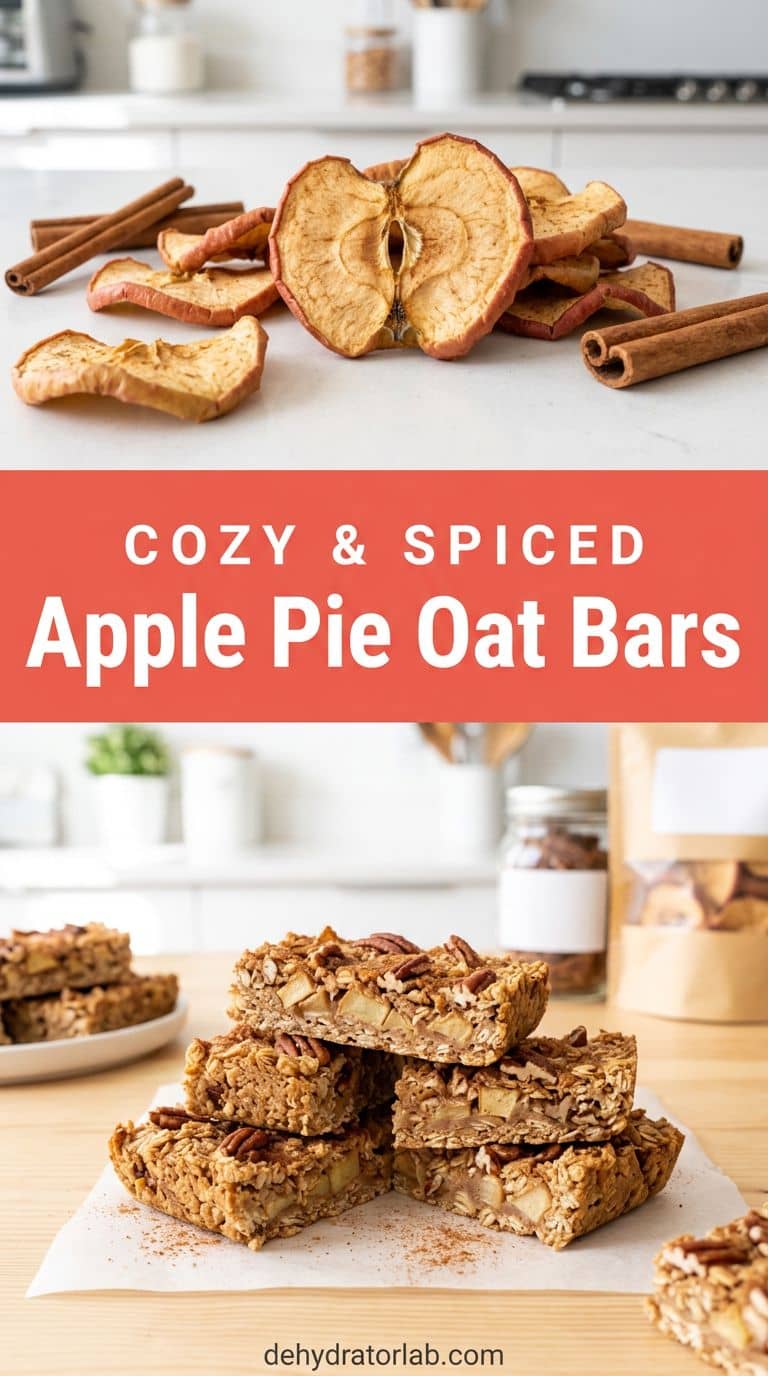
Apple pie flavor, no crust required. Use 1 1/2 cups of dried apple pieces, soaked for 10 to 15 minutes because apples take a little longer to soften, then pulse into a coarse paste. My 7 dehydrated apple recipes show what else you can do with your own apple slices.
Stir in 1 1/2 cups of rolled oats, 1/2 cup of chopped pecans, 1 teaspoon of cinnamon, 1/4 teaspoon of nutmeg, and 1 tablespoon of maple syrup. Dry at 125–135°F (52–57°C) for about 4 to 6 hours. The apple paste is drier than fig or prune paste, so add a splash of the soaking water if the mix crumbles.
A pinch of salt makes the cinnamon taste warmer. Pie flavor, no crust.
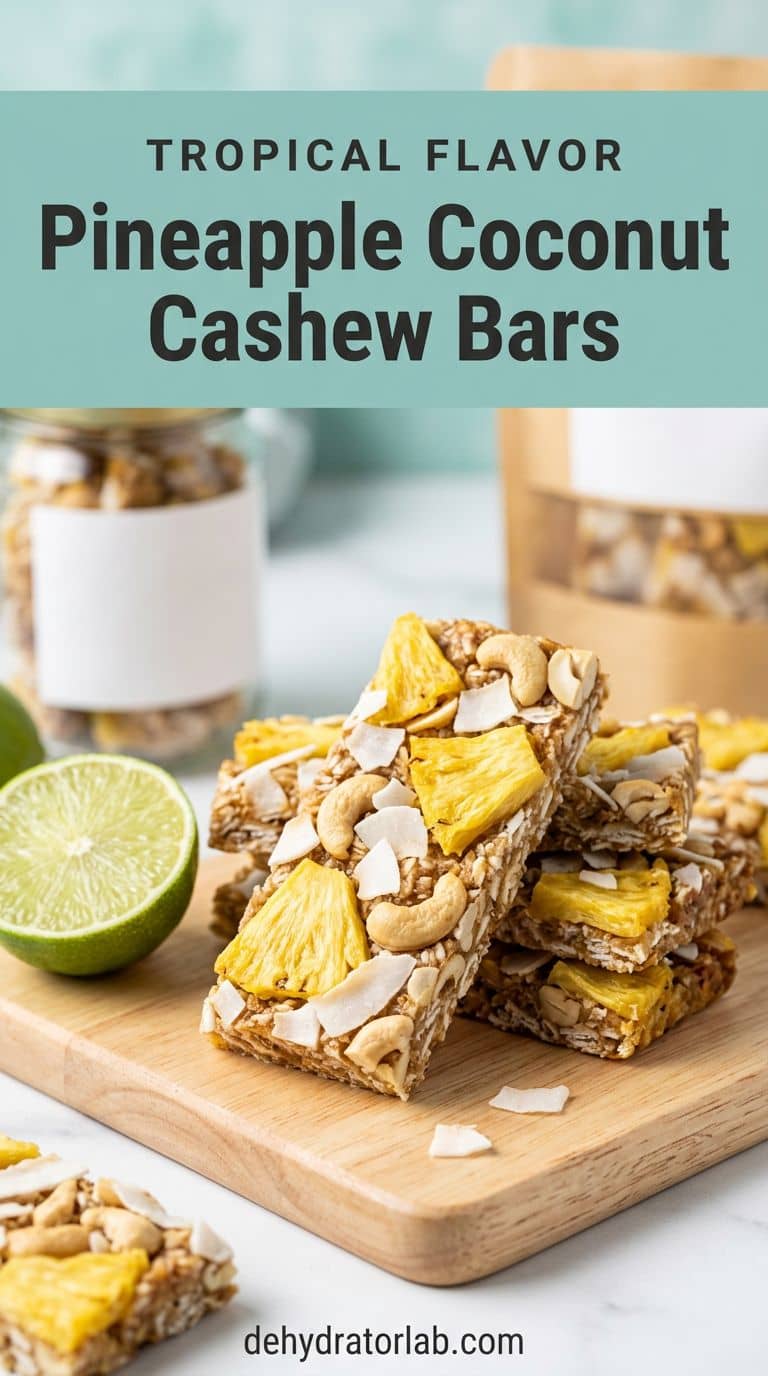
7. Pineapple Coconut Cashew Bars
A tropical bar that tastes like a vacation snack. Soak 1 cup of dried pineapple, such as the kind from my dehydrated pineapple rings, and chop it fine rather than blending, because pineapple turns stringy in a food processor.
Mix in 1/2 cup of cashew butter, 1/2 cup of unsweetened dehydrated coconut flakes, 1 cup of rolled oats, 1/4 teaspoon of salt, and the zest of 1 lime. Press and dry at 125–135°F (52–57°C) for about 4 to 6 hours.
The lime zest keeps the sweetness from getting heavy. Tropical, with a salty edge.
8. Chocolate Prune Hazelnut Bars
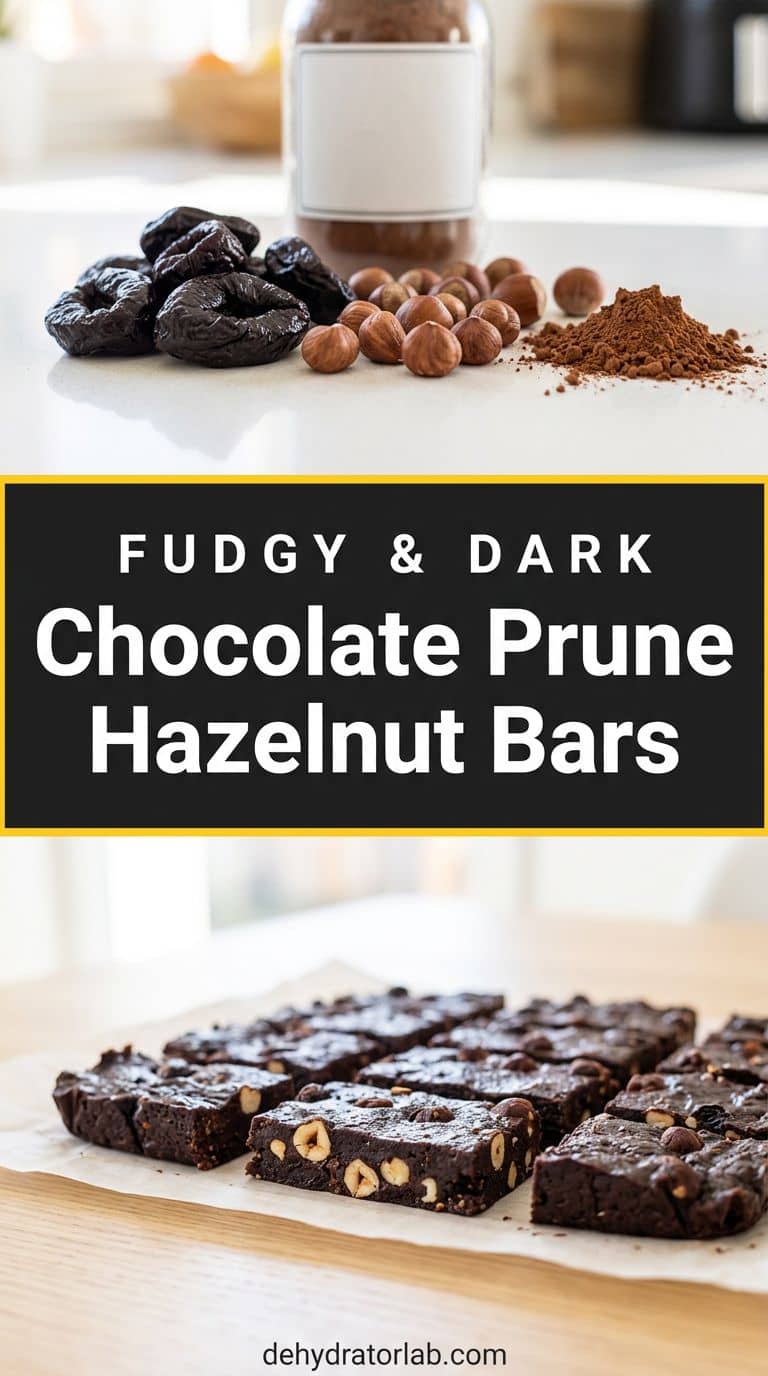
Prunes are the secret weapon of fruit bars. They’re soft, very sweet, and they make the fudgiest paste of the bunch. Soak 1 1/2 cups of pitted prunes for 10 minutes and drain. If you’d like to dry plums yourself, my guide to dehydrating plums walks you through it.
Stir in 1/4 cup of cocoa powder, 3/4 cup of chopped hazelnuts, 3/4 cup of rolled oats, 1 teaspoon of vanilla, and a pinch of salt. Cocoa powder gives you chocolate flavor with no melting. Dry at 125–135°F (52–57°C) for about 4 to 6 hours.
- Dust your hands with cocoa so the paste doesn’t stick.
- Slice with a sharp, damp knife.
- Wrap each bar so the sticky stays inside.
9. Tahini Sesame Ginger Bars
This one is nutty, a little savory, and gently spicy. Warm 1/3 cup of tahini with 1/3 cup of honey and 2 teaspoons of dehydrated ginger powder until smooth, then stir in 3/4 cup of sesame seeds, 1 cup of rolled oats, and 1/2 cup of chopped raisins.
Press it into the pan and dry at 125–135°F (52–57°C) for about 3 to 5 hours, until the top is dry and the edges are firm. Sesame bars firm up a lot as they cool, so don’t judge them straight off the tray.
It’s the bar that tastes like a grown-up snack. Nutty, warm, and gently spicy.

Quick Reference: Binder, Dry Time, and Storage
| Bar | Binder | Dry at | Keeps |
|---|---|---|---|
| Apricot Pistachio | Dried apricot paste | 125–135°F (52–57°C), 4–6 h | Room temp 3–4 days, fridge 2 weeks |
| Tart Cherry Almond | Cherry paste + almond butter | 125–135°F (52–57°C), 4–6 h | Fridge 2 weeks |
| Fig and Walnut | Dried fig paste | 125–135°F (52–57°C), 4–6 h | Room temp 3–4 days, fridge 2 weeks |
| Banana Oat | Mashed banana + seed butter | 135°F (57°C), 5–7 h | Fridge about 1 week |
| Pumpkin Seed Cranberry | Warm honey + coconut oil | 125–135°F (52–57°C), 3–5 h | Room temp 1 week |
| Apple Pie Oat | Dried apple paste + maple | 125–135°F (52–57°C), 4–6 h | Room temp 3–4 days, fridge 2 weeks |
| Pineapple Coconut Cashew | Pineapple + cashew butter | 125–135°F (52–57°C), 4–6 h | Fridge 2 weeks |
| Chocolate Prune Hazelnut | Prune paste | 125–135°F (52–57°C), 4–6 h | Room temp 3–4 days, fridge 2 weeks |
| Tahini Sesame Ginger | Tahini + honey | 125–135°F (52–57°C), 3–5 h | Room temp 1 week |
All drying times and storage lengths here are my own estimates from home batches, not lab tests. They shift with your dehydrator, the thickness of the slab, and how wet the fruit paste is.
The Mix-and-Match Bar Formula
Once you’ve made two or three of these, you won’t need the recipes anymore. My rule of thumb for an 8×8 pan is 1 1/2 cups of soaked dried fruit, 1 cup of oats or seeds, 3/4 cup of chopped nuts, and about 1 teaspoon of flavor, such as a spice, zest, or vanilla. Add a spoonful of nut butter or honey only if the paste feels dry.
If the mix crumbles when you press it, add a splash of the soaking water. If it feels wet and shiny, add a few more oats. Press a small ball in your palm, and if it holds together, the batch is ready.
Storing Your Bars
Cool the slab completely before you wrap anything. The National Center for Home Food Preservation points out that warm food sweats in a container, and that can lead to mold. It also recommends airtight packaging in a cool, dry, dark place for dried foods, and notes that home-dried fruit should end up at about 20 percent moisture. These bars are softer than plain dried fruit, so I treat them more like fresh snacks and keep most of them cold.
Nuts add another reason to chill. Kansas State University Research and Extension says the fats in nuts can spoil quickly and taste rancid, and it recommends the freezer for storage, with sealed nutmeats best used within six months. I wrap bars one at a time and pack them in airtight storage containers. My notes on how long dehydrated food lasts cover more storage basics.
Personal Tips You Can Steal
I always soak the fruit in hot water instead of cold, because it softens in 10 minutes rather than an hour. I weigh the fruit for the first batch of any new bar and write the amount on the recipe card. I press each slab with a sheet of parchment on top, so the mixture doesn’t stick to my hands.
I score the bars after the first 2 hours, since a solid slab traps moisture in the middle. I freeze half of every batch, and I put a label on each bag with the flavor and the date. I tuck one bar in my daypack in a small zip bag, and future me is always grateful on a long walk.
Final Thoughts
Fruit-paste bars are one of the most forgiving things you can make in a dehydrator. Start with the apricot pistachio or the banana oat, then work your way to the fig and the chocolate prune once you have a feel for the paste.
Related reading: 6 granola and granola bar recipes, 8 homemade dehydrated cracker recipes, 8 high-protein trail mix recipes, and 7 dehydrated soup recipes for hiking.
P.S. If your bars come out too soft, just give the pan another hour on the tray. You can always dry more, but you can’t un-dry. 🙂