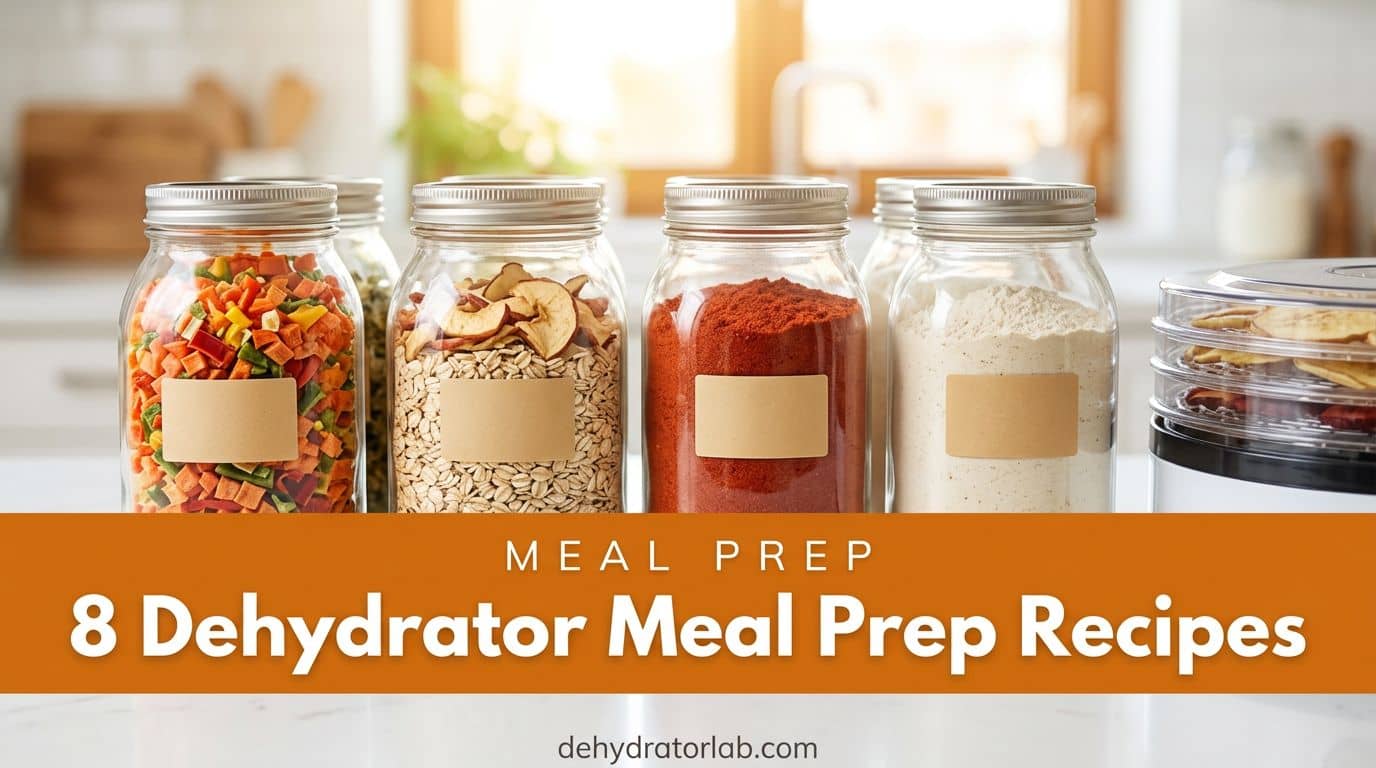
It’s Wednesday night, and the container of chopped vegetables you were so proud of on Sunday has turned into a damp, sad pile. Sound familiar?
Drying the components ahead of time fixes that, because dry food waits patiently and fresh food doesn’t. Here are eight dehydrator meal prep recipes that do their best work in a jar.
As an Amazon Associate, I earn from qualifying purchases. If you make a purchase after clicking on a link I may earn a small commission at no extra cost to you if items are purchased.
In this article:
TL;DR: Key Takeaways
- 🥣 A dry jar holds the shelf-friendly part. The liquid goes in the night before or at serving.
- 🍎 Dried fruit plumps in milk or batter, so oats and pancakes need no fresh fruit.
- 🥕 Dice small and keep sizes even, and vegetable mixes rehydrate in minutes.
- 🍅 Powders turn into sauce bases, pancake flavor, and smoothie boosters.
- 🌾 Cooked grains and bean mixes need fast cooling, a hot drying temperature, and a cold home for the dry jar.
- 🏷️ Label every jar with the date and the one thing you add at serving.
This list is about weeknight components, not whole meals. If you want soups, my 8 soup mix recipes have you covered, and my 10 pantry foods to keep stocked list handles rice, pasta, and cooked chicken. For emergency stockpiles, see my emergency food prep recipes.
Cooked foods need more care than fruit chips. I follow the Illinois Extension leftovers guide before anything goes on a tray: refrigerate within 2 hours, cool in shallow pans, and reheat to 165°F (74°C). I did not find a university guide for drying whole cooked dishes, so every time and temperature from me is a home estimate, not a tested standard.
Three of these recipes use powders, and a good blender makes them easy. I use one like the model below.

- 900 watts of power in this compact powerhouse turns anything from strawberries to spinach into smooth, sippable nutritio…
- Simple, intuitive design makes this a device you'll use every day. Just push, twist and blend. Yes, it's that easy.
- Did you know most smoothies can be made in under 60 seconds? Now you can fit healthful nutrition into your busy day!
1. Overnight Oats Jars with Dried Fruit
Fresh berries turn watery in overnight oats. Dried fruit does the opposite. It soaks up the milk, plumps back up, and sweetens the jar on its own. Apple is my favorite, and the Clemson extension gives apples about 6 to 12 hours in the dehydrator, so a Sunday batch is easy. See my apple drying guide for slice thickness.
For the dry jar, I layer 1/2 cup rolled oats, 1 tablespoon chia seeds, a pinch of cinnamon, and 2 tablespoons chopped dried apple or banana chips in a wide glass jar. The night before, I add 1/2 cup milk or yogurt and stir. Clemson says dried fruit should be pliable but not sticky or tacky, so test your fruit before it goes in the jar.
Once the milk goes in, treat it as a leftover. I eat mine within 3 to 4 days, in line with the Illinois guide. Add the milk last.

2. Smoothie Jars with Fruit and Greens Powder
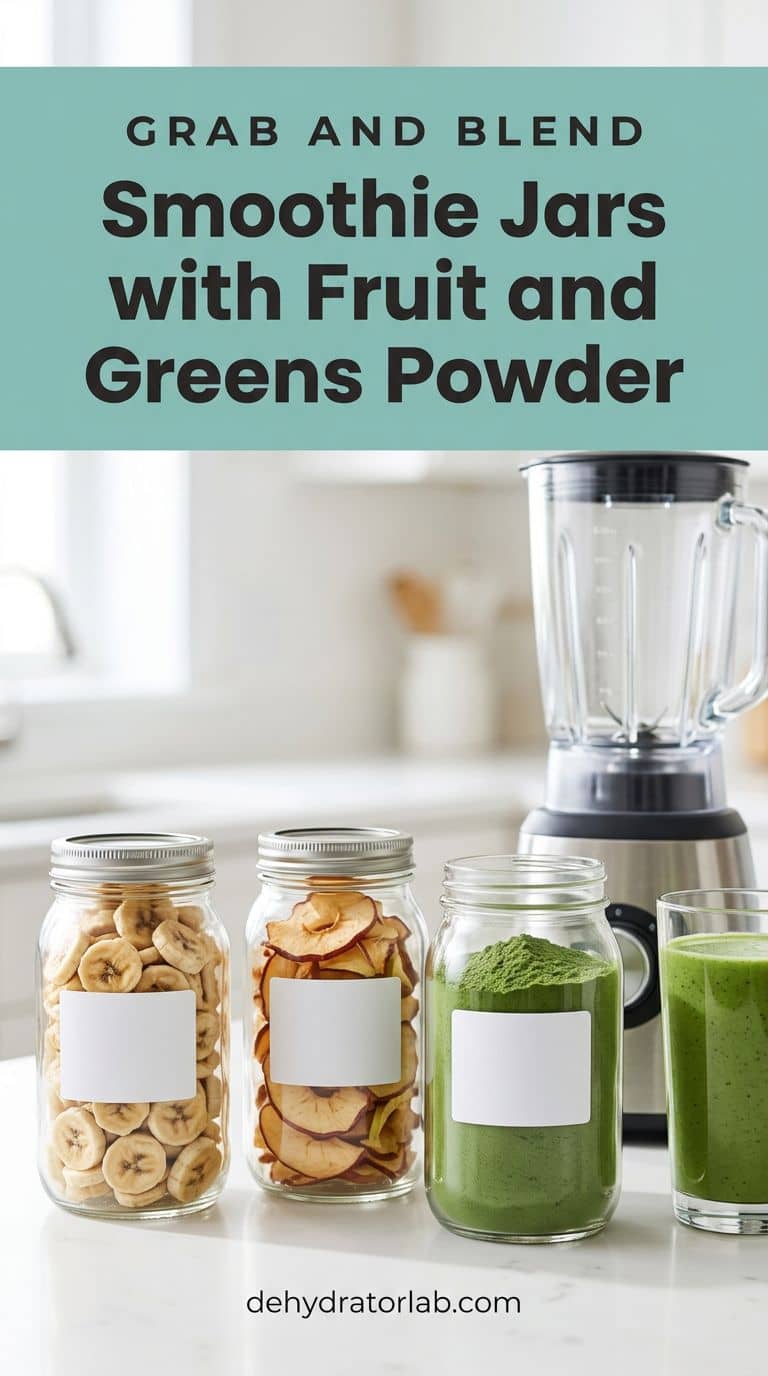
Smoothie prep usually means a freezer bag of chopped fruit. A dry jar needs no freezer space. I pack dried banana, dried apple, and a spoonful of spinach powder into one jar. The Clemson guide says vegetables should dry until brittle or crisp, and that is the texture to aim for before you grind spinach or kale into powder.
At serving time, I add 1 cup of milk or yogurt and let the jar stand for about 10 minutes before blending. That short soak is my own habit, and it keeps the smoothie from turning gritty. Then I blend with ice until smooth. The blender above handles the powder and the dried fruit.
Fruit powder clumps fast in humid air, so keep the lid tight. My pumpkin powder ideas work in a smoothie jar too. Soak, then blend.
3. Stir-Fry Confetti Jars
This is the prep that saves me the most chopping. I dry a mix of diced green pepper, carrot, mushroom, and onion, then keep it in a jar for stir-fries, fried rice, and ramen. Clemson says onions, green peppers, and mushrooms need no blanching. Carrots do, at 3 to 3-1/2 minutes of steam. See my guides to carrots, mushrooms, and onions.
I dice everything to about 1/4 inch (6 mm), because small pieces dry evenly and rehydrate fast. Clemson stresses uniform size for this reason. I dry the mix at 125–135°F (52–57°C), and keep onions on their own tray so the smell stays out of the carrots.
To serve, I cover a big handful with boiling water for 10 to 15 minutes, drain, and toss it into a hot pan. Or I drop the dry mix straight into a pot of ramen broth. Dice small.
- Steam-blanch the carrots, skip the rest.
- Dice everything to the same size.
- Use a handful per serving, soaked for 10 to 15 minutes.

4. Pasta Night Sauce Packets
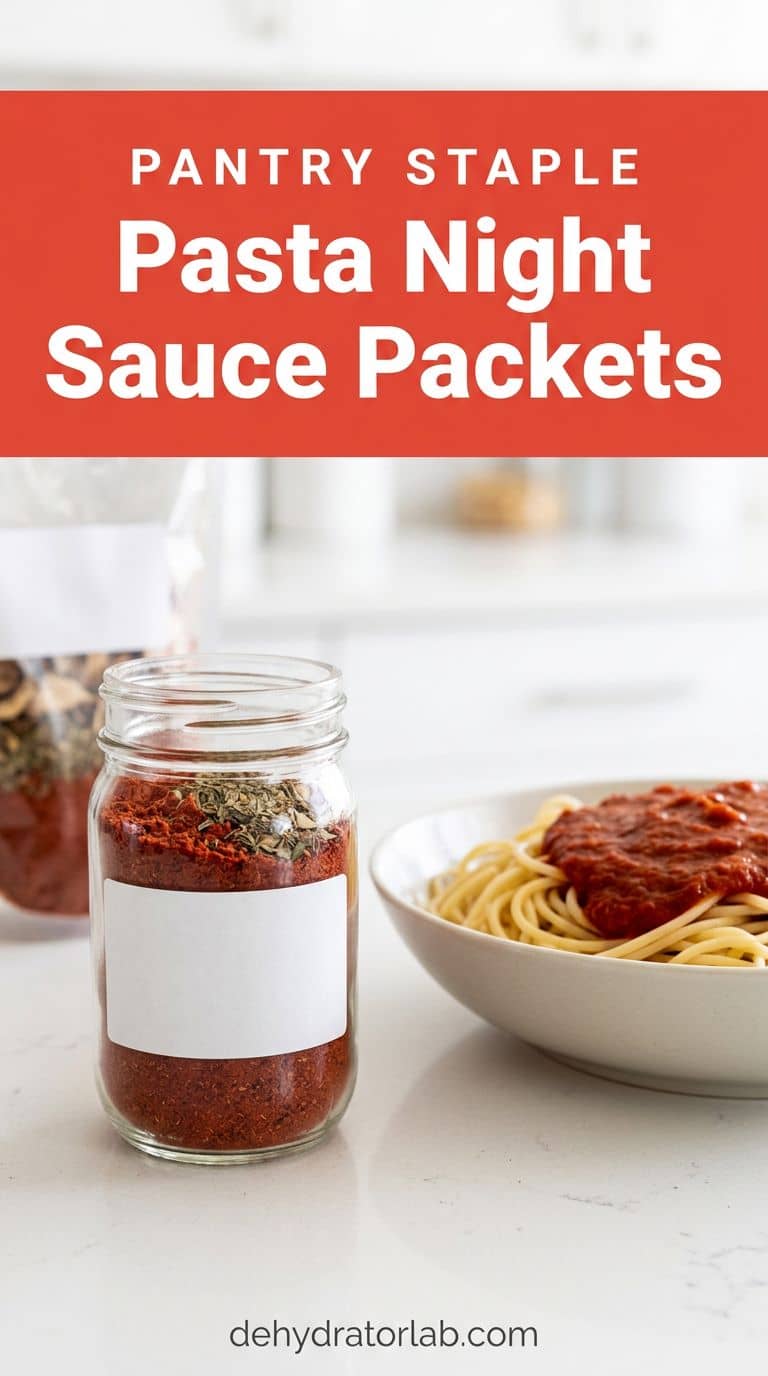
A packet of dry sauce mix beats a jar of store-bought sauce when you run out of room in the pantry. I build mine around tomato powder, with a spoonful of mushroom powder for depth, plus dried onion, garlic powder, basil, and oregano. My seasoning recipes cover the herb blend.
To serve, I whisk 1/4 cup of the mix with about 1/2 cup warm water to make a thick paste, then thin it to taste and simmer for about 10 minutes with a drizzle of olive oil. Those ratios are my estimates, so adjust them. The sauce tastes like a quick weeknight sauce, not a slow Sunday simmer, and that is fine with me.
A can of crushed tomatoes stirred in makes it taste fuller. I portion each packet into a small jar or bag. Paste first, then thin.
5. Chickpea and Lentil Patty Mix
Veggie patties are great meal prep, but the mix gets mushy in the fridge. A dry mix fixes that. I dry cooked chickpeas and cooked lentils until hard, then grind them coarsely with oats, dried onion, cumin, paprika, and salt. More bean ideas are in my dehydrated bean and lentil recipes.
To serve, I stir 1 cup of mix into about 3/4 cup hot water and let it sit for 10 minutes. Then I add an egg, shape four patties, and pan-fry them 4 to 5 minutes per side. I check the center with a thermometer and take it to 165°F (74°C). Those amounts are my estimates, so add water a spoonful at a time.
Because this mix is cooked food, I keep the jar in the fridge and use it within a month or so. That is my habit, not a tested standard. Grind it coarse.
- Dry the beans until they snap, not bend.
- Grind coarse for texture.
- Check the cooked patty for 165°F.

6. Weekday Pancake Jars with Fruit Powder
Pancake mix from a box has no fruit. Mine does, without the soggy part. I grind dried apple or blueberries into a fine powder and mix it into the dry ingredients. The Clemson guide says fruit is generally eaten without rehydrating, and in a pancake batter the fruit powder dissolves into the milk and egg.
My base is 1 cup flour, 2 teaspoons baking powder, 1 tablespoon sugar, 1/4 teaspoon salt, 2 tablespoons fruit powder, and a pinch of cinnamon. To serve, I whisk in 3/4 cup milk, 1 egg, and 1 tablespoon oil. I use the jars within a month or two, since baking powder loses strength over time.
Pumpkin powder works here too, and I cover it in my pumpkin powder guide. Shake, pour, flip.

7. Quinoa and Farro Bowl Bases
I cover rice and pasta in my pantry foods list. Quinoa and farro work the same way, and they make a good base for lunch bowls. I cook them, cool them, and dry them until each grain is hard with no soft center.
Cooling is the step that matters. The Illinois guide names 40°F to 140°F as the danger zone, says to refrigerate within 2 hours, and recommends shallow pans no deeper than 4 inches. I spread the cooked grain thin right away, then dry it at 145–155°F (63–68°C), above that 140°F line. About 5 to 8 hours is my estimate, so go by the crunch test.
I keep the dried grain in a sealed storage container in the freezer and use it within a couple of months. That is my habit, not a tested standard. To serve, I cover it with an equal amount of boiling broth for 10 to 15 minutes, then fluff. Cool fast, dry hard.
- Spread the cooked grain thin the moment it cools.
- Dry until every grain is hard.
- Store it cold and soak with boiling broth.

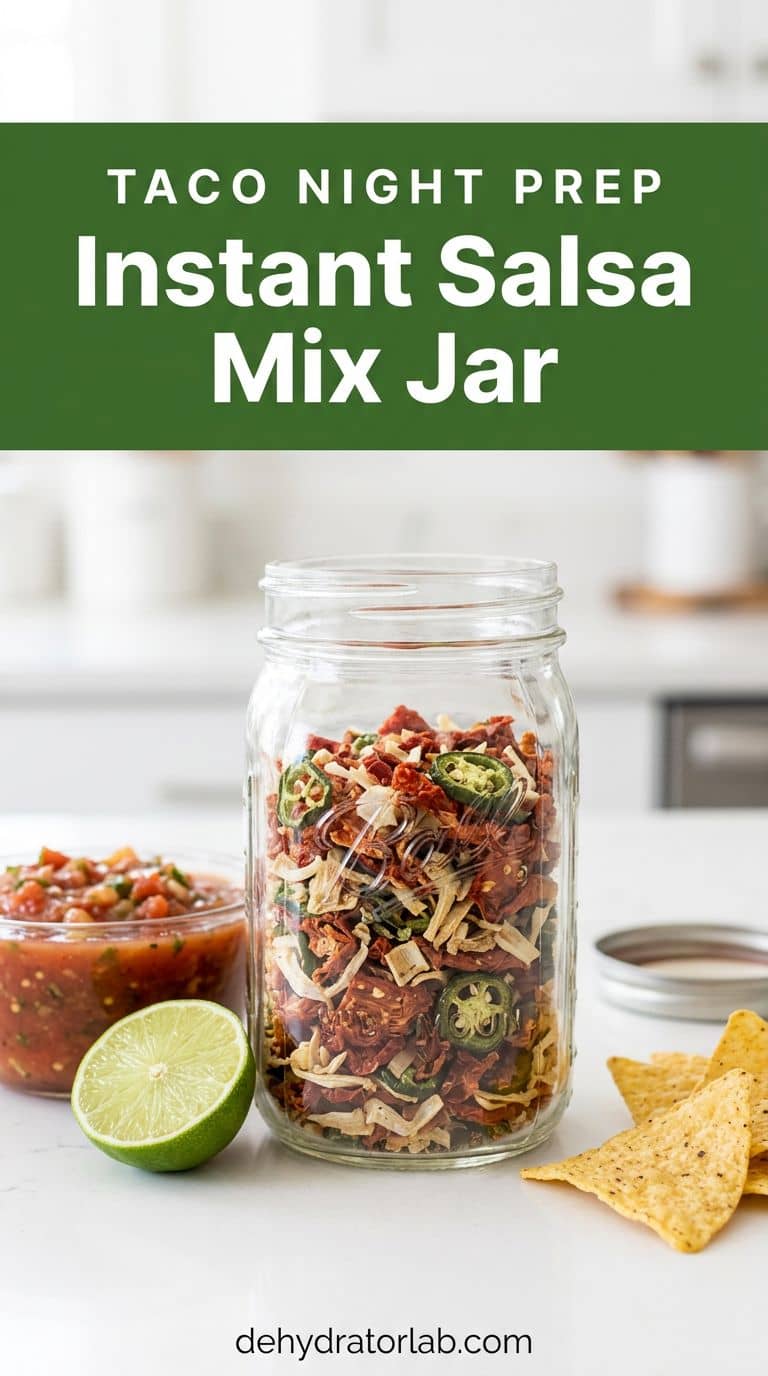
8. Instant Salsa Mix Jar
Salsa is the trickiest jar on this list. I dry diced Roma tomato, onion, jalapeño with the seeds out, and a little garlic, then keep the mix in a jar. My jalapeno guide covers handling the peppers, and my condiment recipes have more ideas.
To serve, I cover 1/2 cup of mix with about 1/2 cup warm water and the juice of one lime, and let it sit for 15 to 20 minutes. Then I mash it lightly. Those amounts are my estimates. The texture lands closer to a cooked salsa than a fresh pico, so I stir in fresh cilantro at the end.
Once it is rehydrated, I treat it as a fresh leftover and eat it within 3 to 4 days from the fridge. Warm water, lime, wait.
Quick Reference: Dry Jar and Add at Serving
| Recipe | Dry jar holds | Add at serving |
|---|---|---|
| 1. Overnight oats | Oats, chia, dried apple, cinnamon | Milk or yogurt, the night before |
| 2. Smoothie jar | Dried fruit, spinach powder | Milk or yogurt, 10-minute soak, blend |
| 3. Stir-fry confetti | Pepper, carrot, mushroom, onion | Boiling water, 10 to 15 minutes |
| 4. Pasta sauce packet | Tomato powder, herbs, onion | Warm water, simmer about 10 minutes |
| 5. Patty mix | Ground chickpeas, lentils, oats | Hot water, egg, pan-fry to 165°F (74°C) |
| 6. Pancake jar | Flour, baking powder, fruit powder | Milk, egg, oil |
| 7. Grain bowl base | Dried quinoa or farro | Boiling broth, 10 to 15 minutes |
| 8. Salsa mix | Tomato, onion, jalapeño, garlic | Warm water and lime, 15 to 20 minutes |
Soak times, ratios, and drying temperatures for cooked foods are my own home estimates. Check every dish for doneness and adjust for your machine.
Personal Tips You Can Steal
I write the date and the one add-at-serving step on a strip of masking tape for every jar. I dry cooked foods on their own tray and onions on another, so the smells stay separate. I cool every cooked batch in a thin layer before it goes near the dehydrator. I keep the jars with cooked ingredients in the freezer or fridge, not the pantry. I taste a spoonful of every new mix on a quiet night before I trust it on a busy one. I prep two or three jars a week, not eight, so nothing sits around.
Final Thoughts
Dry jars do not replace cooking. They remove the chopping, the soggy containers, and the Wednesday guesswork. Start with the oats or the stir-fry jar, and add one new jar each week.
Related reading: 8 dehydrated soup mix recipes, 10 easy dehydrating projects for beginners, best vegetables to dehydrate, and how long dehydrated food lasts.
P.S. Start with the fruit jars. They are the most forgiving, and they keep the longest. 🙂