
Ever stood over a stew pot at 6 p.m. wishing the beans had soaked overnight?
A shelf of dried beans and lentils is cheap and filling, but only if you plan a day ahead. Cook them once, dry them, and a hearty stew goes from a weekend project to a weeknight pot. Here are nine legumes and the stew each one belongs in.

As an Amazon Associate, I earn from qualifying purchases. If you make a purchase after clicking on a link I may earn a small commission at no extra cost to you if items are purchased.
In this article:
TL;DR: Key Takeaways
- 🫘 Cook every bean and lentil fully before it goes on the tray. Dried raw legumes won’t soften properly in a stew pot.
- 🌡️ Beans dry at 135–145°F (57–63°C) for 8 to 12 hours, and lentils at 125–135°F (52–57°C) for 4 to 8 hours.
- 💧 In the pot, plan on about 2 to 2 1/2 cups of liquid for every cup of dried beans.
- 🍅 Add tomatoes and vinegar after the beans soften, because acid can keep them firm.
- 🔥 Kidney beans need a hard boil for at least 30 minutes before drying, and never a slow cooker from raw.
- 🧂 Season near the end of cooking, then taste again after the stew simmers.
I already have full guides for dehydrated cooked black beans and dehydrated cooked lentils, so those two get a quick stew idea here and a link for the full method. This list is about picking the right legume for the right pot. If you want jar-style mixes instead, see my 8 dehydrated soup mix recipes. For trail versions, I have the dehydrated chili backpacking meal and the beef stew backpacking meal.
The amounts below are my own starting points for a pot that serves four to six, so adjust them to taste. Small lentils can slip through the holes on some mesh trays, so I line my trays with silicone sheets like the one below.

- STOP SMALL FRUIT FROM FALLING – Our ultra-fine 1mm mesh structure ensures tiny berries, sliced herbs, and seeds stay on …
- SAVE 60 MINUTES ON CLEANUP – High-release silicone coating makes these 100% non-stick. Meat oils and fruit sugars slide …
- PROFESSIONAL GRADE & BPA-FREE – Made from premium food-grade silicone, certified safe for temperatures up to 450°F. Enjo…
1. Pinto Beans for Ranch-Style Stew
Pinto beans are the creamy, forgiving workhorse of the list. Soak them overnight, simmer until tender, and expect 90 to 120 minutes on the stove. That’s the range the University of Nebraska-Lincoln gives for pinto, kidney, and navy beans, so don’t rush it.
Drain them well and dry them at 135–145°F (57–63°C) for 8 to 12 hours, until they are hard all the way through. For the stew, use 1 1/2 cups of dried pintos, 1 tablespoon of tomato powder, 1 teaspoon of cumin, 1/2 teaspoon of smoked paprika, a handful of dehydrated poblano strips, and 6 cups of broth. Simmer about 30 minutes.
Pintos break down a little as they cook, and that’s the point. They thicken the broth without any flour. Creamy without cream.

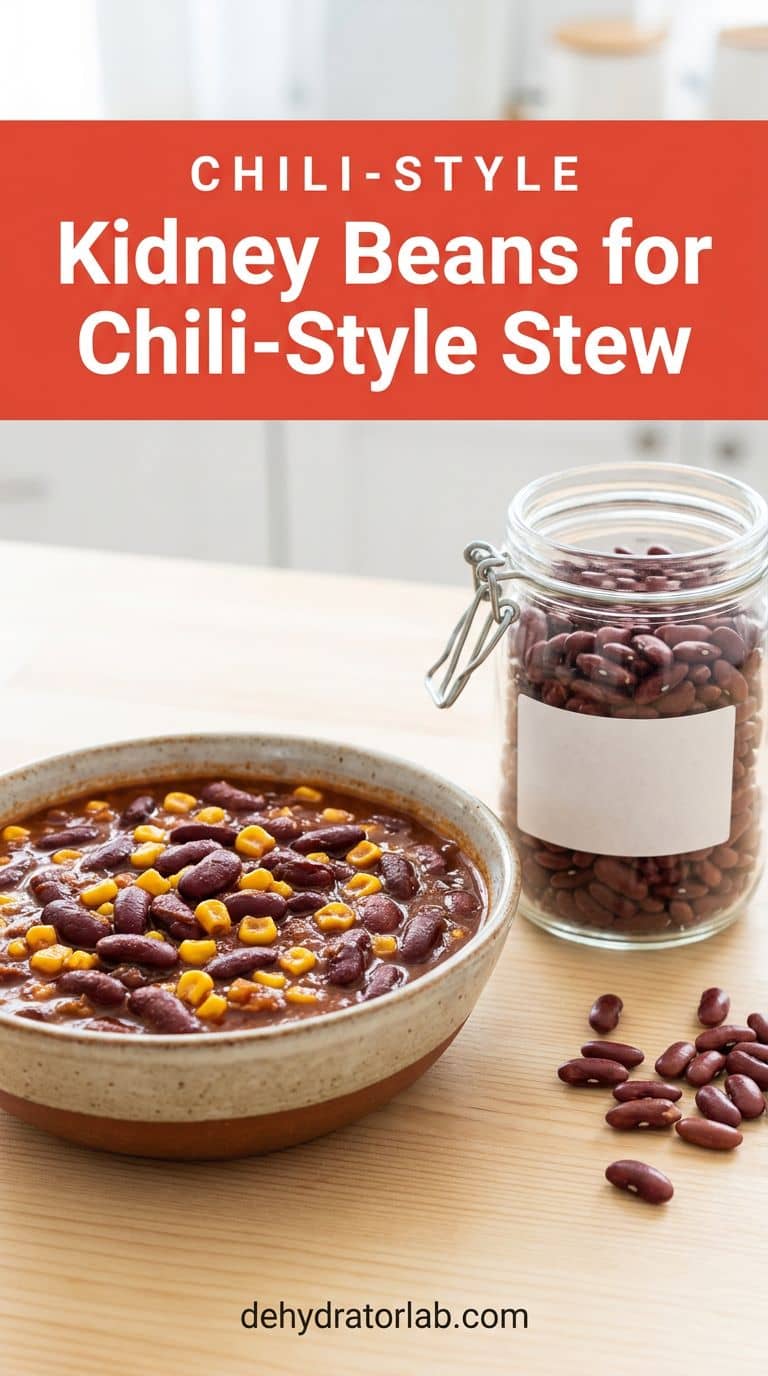
2. Kidney Beans for Chili-Style Stew
Kidney beans are the one legume on this list with a safety rule. Raw red kidney beans carry a natural toxin called phytohaemagglutinin, and Ohio State University Extension, citing the FDA, says a handful of undercooked beans can cause severe vomiting followed by diarrhea. It cites the FDA’s advice to soak dry beans for at least 5 hours and boil them in fresh water for at least 30 minutes. It also says not to use a slow cooker, since it likely won’t get hot enough.
Once the beans are boiled properly, drying is the same as for the others. Dry at 135–145°F (57–63°C) for 8 to 12 hours. Because they’re already fully cooked, dried kidney beans are safe to simmer in any stew, but only if the boil step was never skipped.
- Soak at least 5 hours, then boil in fresh water for 30 minutes or more.
- Never start raw kidney beans in a slow cooker.
- Label the jar so nobody mistakes raw for cooked.
For a chili-style stew, simmer 1 1/2 cups of dried kidney beans with 1/2 cup of dehydrated corn, 1 tablespoon of chili powder, and a pinch of cocoa powder. The cocoa is my own trick for depth. Boil first, trust later.
3. Navy Beans for Smoky Baked-Bean Stew
Navy beans are small, pale, and mild, which makes them the best canvas for smoke and sweetness. They need the same long simmer as pinto and kidney beans, so plan 90 to 120 minutes before drying, and dry them at 135–145°F (57–63°C) for 8 to 12 hours.
My baked-bean-style stew uses 1 1/2 cups of dried navy beans, 2 tablespoons of tomato powder, 1 teaspoon of smoked paprika, 1/2 teaspoon of mustard powder, 1 tablespoon of molasses, and a spoonful of dehydrated onion. Add 6 cups of water or broth and simmer about 30 minutes. For more flavor ideas, my dehydrated seasoning recipes include a BBQ rub that works well here.
Hold the molasses until the beans are tender, because sugar and acid can slow softening. Smoke first, sweetness last.

4. Chickpeas for Moroccan-Style Stew
Chickpeas are the toughest bean to dry and the one I love most in a stew. They’re dense, so cook them until they’re truly soft, then dry them at 135–145°F (57–63°C) for 8 to 12 hours. My cooking time is an estimate of about 1 to 2 hours after an overnight soak.
Break one open before you store the batch. If there is any soft or gummy center, they need more time. For the stew, use 1 1/2 cups of dried chickpeas, 1 tablespoon of tomato powder, 1 teaspoon of turmeric powder, 1 teaspoon of cumin, 1/2 teaspoon of ginger, 1/2 teaspoon of cinnamon, 1 tablespoon of carrot powder, and a handful of diced dried carrots. Simmer in 6 cups of broth for about 30 minutes.
Finish with lemon juice and fresh cilantro, added at the end. Warm spice, firm bite.

5. Black Beans for Black Bean and Sweet Potato Stew
My full method for dehydrated cooked black beans has the exact steps, so here’s the stew idea. The University of Nebraska-Lincoln lists black beans at about 60 to 90 minutes on the stove, which is a little quicker than pinto or kidney. Dry them at 135–145°F (57–63°C) for 8 to 12 hours, and rehydrate at 1 cup of beans to 2 to 2 1/2 cups of hot liquid.
For the stew, add 1 1/2 cups of rehydrated black beans to 2 cups of diced fresh sweet potato, 1 tablespoon of chipotle in adobo, 1 teaspoon of cumin, and 5 cups of broth. A spoonful of sweet potato powder stirred in at the end thickens the pot. Finish with lime juice.
The sweetness of the potato softens the smoke of the chipotle. Sweet, smoky, and filling.

6. Brown or Green Lentils for Root Vegetable Stew
Lentils skip the soak entirely. The University of Nebraska-Lincoln says lentils, split peas, and black-eyed peas do not need to be soaked, and my dehydrated cooked lentils guide cooks brown or green lentils for 18 to 25 minutes, just to tender. Dry them at 125–135°F (52–57°C) for 4 to 8 hours, until they snap.
For a rustic stew, rehydrate 1 1/2 cups of dried lentils in 3 cups of boiling broth, then add 1 cup of diced carrots and potatoes, 2 tablespoons of celery flakes, 1/4 cup of dehydrated leek slices, 1 teaspoon of thyme, and 3 more cups of broth. Simmer 25 minutes.
Brown and green lentils hold their shape, so the stew has bite instead of mush. The lentil that never falls apart.

7. Red Lentils for Dal-Style Stew
Red lentils behave differently. They break down in minutes, which is exactly what you want in a creamy, dal-style stew. They’re not good for drying whole, since mushy lentils dry into hard clumps, so I dry them as a thin purée instead.
Cook 1 cup of red lentils in 3 cups of water until soft, about 10 to 15 minutes (my estimate), then spread the mash very thin on a lined tray and dry it at 125–135°F (52–57°C) for about 3 to 6 hours, also my estimate. Break the dry sheets into flakes. My lentil guide notes you can also pulse dried lentils into a meal for instant dhal, which works with these flakes too.
To cook, whisk 1 cup of flakes into 4 cups of hot water with 1 teaspoon of turmeric, 1 teaspoon of ginger powder, 1 tablespoon of tomato powder, and 1 teaspoon of garam masala. Simmer 5 minutes. Instant dal, no soak.

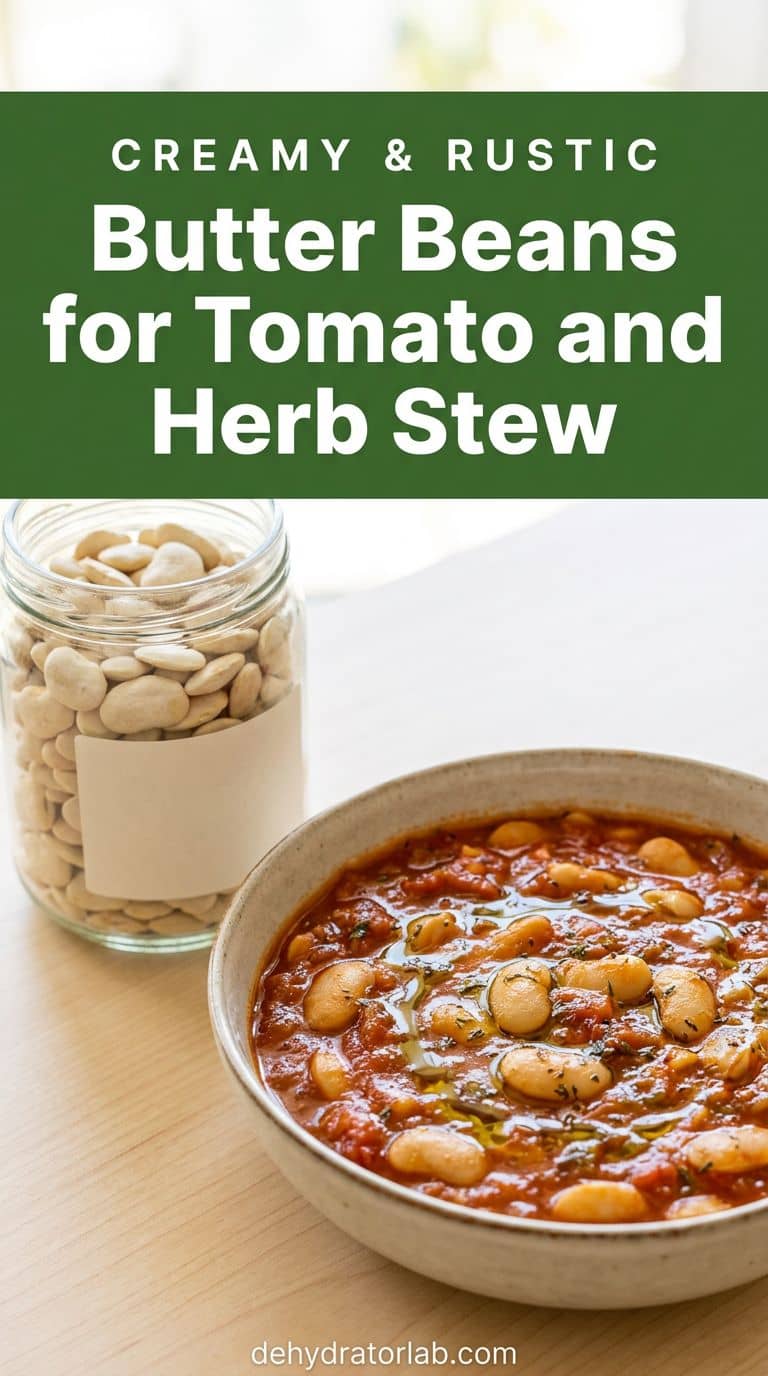
8. Butter Beans for Tomato and Herb Stew
Butter beans, also called lima beans, are large, buttery, and a little fragile. Simmer them gently after an overnight soak, since hard boiling splits the skins. I estimate 45 to 60 minutes, but check a bean before you drain them.
Dry them at 135–145°F (57–63°C) for 8 to 12 hours. For the stew, use 1 1/2 cups of dried butter beans, 2 tablespoons of tomato powder, 2 tablespoons of celery flakes, 1 teaspoon of dried herb blend, and 6 cups of broth. Let the beans soften in plain broth first, then stir in the tomato powder for the last 10 minutes.
- Simmer gently so the skins stay on.
- Add the tomato late so the beans can soften.
- Finish with olive oil and let the stew rest for 10 minutes.
It’s a quiet, creamy stew with a tangy edge. Mild beans, bold tomato.
9. Black-Eyed Peas for Southern-Style Stew with Greens
Black-eyed peas cook faster than most beans, and they don’t need a soak. I estimate 30 to 45 minutes of simmering, then I dry them at 135–145°F (57–63°C) for 8 to 12 hours. They shrink a lot, so a full tray makes a small jar.
For the stew, use 1 1/2 cups of dried black-eyed peas, 2 tablespoons of kale powder or a handful of dried greens, 1 teaspoon of smoked paprika, 1/2 teaspoon of garlic powder, 1 tablespoon of dehydrated scallions, and 6 cups of broth. Simmer 25 minutes and finish with a splash of hot sauce or vinegar.
Serve it over rice, or with cornbread for dunking. No soak, no fuss.

Quick Reference: Dry, Cook, and Rehydrate
| Legume | Soak | Cook before drying | Dry at | Rehydrate |
|---|---|---|---|---|
| Pinto | Yes, overnight | 90–120 min | 135–145°F (57–63°C), 8–12 h | 20–30 min in stew |
| Kidney | Yes, 5+ h | Boil 30+ min | 135–145°F (57–63°C), 8–12 h | 20–30 min in stew |
| Navy | Yes, overnight | 90–120 min | 135–145°F (57–63°C), 8–12 h | 20–30 min in stew |
| Chickpeas | Yes, overnight | About 1–2 h | 135–145°F (57–63°C), 8–12 h | 20–30 min in stew |
| Black beans | Yes, overnight | 60–90 min | 135–145°F (57–63°C), 8–12 h | 10–20 min |
| Brown or green lentils | No | 18–25 min | 125–135°F (52–57°C), 4–8 h | 5–10 min soak or 3–5 min simmer |
| Red lentils (flakes) | No | 10–15 min, then dry as a thin purée | 125–135°F (52–57°C), 3–6 h | About 5 min |
| Butter beans | Yes, overnight | About 45–60 min | 135–145°F (57–63°C), 8–12 h | 20–30 min in stew |
| Black-eyed peas | No | About 30–45 min | 135–145°F (57–63°C), 8–12 h | 15–25 min in stew |
Cooking times for pinto, kidney, navy, and black beans follow the University of Nebraska-Lincoln ranges. The other cooking and rehydration times are my own estimates, and they shift with the age of the beans and the size of the pieces.
Stew Pot Math
For a pot that serves four to six, I use about 1 1/2 cups of dried beans or lentils, 1 cup of diced dried or fresh vegetables, and 6 to 7 cups of liquid in total. That follows the rule of thumb of 2 to 2 1/2 cups of liquid for every cup of dried beans, plus extra for the stew itself. Add more broth if the pot gets thick, since dried beans keep drinking as they sit.
Rehydrate in plain broth first when you can, and add tomatoes, vinegar, and lemon later. The University of Nebraska-Lincoln says acidic ingredients can keep beans from becoming tender. For storage, use clean, airtight packaging in a cool, dark, dry spot, which matches the National Center for Home Food Preservation guide to packaging and storing dried foods.
I keep my dried legumes in airtight glass jars and shake them daily for the first few days to catch any hidden moisture. My notes on how long dehydrated food lasts cover shelf life in more detail.
Personal Tips You Can Steal
I cook a double batch whenever I’m already making a stew, and I dry the extra on a tray that’s otherwise empty. I label every jar with the legume, the cook date, and whether it’s seasoned. I keep kidney beans in a jar of their own, marked as boiled. I add salt near the end of cooking and taste again after the stew rests.
I break one bean from every batch before I store it, to check for a soft center. I keep a few jars of dried vegetables close by, and the ones in my 10 best vegetables to dehydrate for soups guide are the ones I reach for first.
Final Thoughts
A pantry of dried beans and lentils turns a cold evening into a stew night with almost no planning. Start with the brown lentil stew and the pinto bean stew, then work your way to the chickpea and black-eyed pea pots once your drying routine feels easy.
Related reading: 8 emergency food prep recipes, 10 dehydrated foods to always have stocked, 7 dehydrated soup recipes for hiking, and 7 dehydrated ingredients that make broth taste better.
P.S. If a stew tastes flat at the end, add a small splash of vinegar and stir. It wakes everything up. 🙂