In this article:
Jalapenos in a Dehydrator: Clear Steps, Zero Guesswork
Got a mountain of jalapenos and zero time to babysit them before they wrinkle into sadness? Let’s turn that spicy pile into a shelf-stable flavor that you toss into soups, tacos, and chili without thinking twice.
I keep jars of dried jalapenos because they save space, keep their kick, and make weeknights taste like I planned. Ready to make your dehydrator earn MVP status?
TL;DR: Key Takeaways
- 🌡️ Dry at 125-135°F for 6-12 hours depending on thickness.
- 🧤 Wear gloves through slicing, loading, and grinding — capsaicin doesn’t wash off easily.
- 🌶️ Keep seeds and membranes in for full heat, scrape them out for a milder batch.
- 🔨 Dry to leathery for cooking, brittle for grinding into powder.
- 📦 Condition for a week before sealing to catch hidden moisture pockets.
Why Dehydrate Jalapenos
You keep the bold jalapeno flavor while you strip moisture, so your peppers last for months without hogging fridge space. You preserve color and taste when you dry at low heat with steady airflow and patience. You also gain options—use slices for soups, halves for rehydrating, or grind brittle pieces into a jalapeno powder.
What You Need
- A food dehydrator with temperature control near 125–135°F
- A sharp knife or mandoline for even slices
- Nitrile gloves to keep capsaicin off your fingers
- Mesh liners or fine trays for small pieces
- Airtight jars or vacuum bags with desiccant
Pick and Prep Jalapenos
Choose firm peppers with smooth, shiny skin and bright color for the best flavor. Skip peppers with soft spots because they dry unevenly and taste flat. Rinse them, dry them thoroughly, and pull on gloves — capsaicin sticks around like a bad earworm.
Trim stems and pick your cut – rings, halves, strips, or dice – and stick to a uniform thickness around 1/8–1/4 inch.
Control the Heat
Scrape out seeds and membranes for a milder batch. Leave them in for full fire if you like that jalapeno uppercut. Split your batch if you want both heat levels in one run and label jars clearly later.
Dehydrator Settings That Work
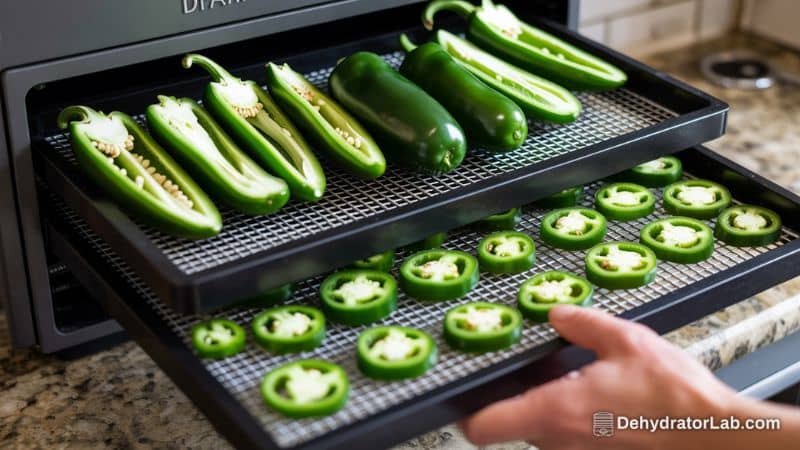
Set your dehydrator between 125–135°F to pull moisture without cooking the peppers. Lay the pieces in a single layer with small gaps for airflow so you get even drying. Rotate trays if your machine runs hot in spots and check progress toward the end.
Step-By-Step Drying Guide
- Preheat the dehydrator to 125°F so you start drying immediately.
- Load trays with non-overlapping pieces for even airflow.
- Dry 6–12 hours for thin slices; go longer for halves or thick cuts.
- Test texture: leathery for cooking or brittle for powder.
- Cool fully on trays, then pack to prevent condensation.
Doneness: Leathery Vs. Brittle
Aim for a leathery feel when you plan to rehydrate for soups, stews, or sauces. Choose a brittle snap when you want powder or flakes that grind cleanly. If the outside feels tough but the center chews soft, lower the heat and keep drying until the middle catches up.
Troubleshooting Common Mistakes
- Browning or “cooked” look: lower to 125°F and slice thinner next time.
- Drying stalls: spread pieces wider and rotate trays.
- Uneven batch: pull finished pieces early and let thicker ones continue.
- Sticky after storage: re-dry the batch and close containers tightly.
Safety, Ventilation, and Handling
Wear gloves while you slice, load trays, and bottle powder to protect your skin. Grind outdoors or under a strong vent to avoid pepper dust that sneaks into your lungs when you least expect it.
Clean boards and knives with hot, soapy water before you touch your face or anything else.
Storage That Actually Lasts
Let peppers cool to room temperature so you avoid condensation in the container. Pack in airtight jars, mylar, or vacuum bags to block humidity and oxygen. Add a food-safe desiccant packet if your climate is humid or your powder tends to clump.
Condition for Safety and Quality
Conditioning evens moisture across your batch so you avoid hidden damp spots. Fill a jar halfway with dried peppers and shake daily for a week. If you see fogging or droplets, return the peppers to the dehydrator and dry longer. After a week without condensation, fill jars to the top and seal.
Rehydrate Like A Pro
Soak dried jalapenos in hot water for 10–15 minutes to soften for soups and sauces. Go 5–10 minutes when you want a little chew for tacos or scrambles. Toss them straight into simmering dishes without soaking when you already have liquid, and save the soaking liquid for extra flavor.
Make Jalapeno Powder and Flakes
Dry to a brittle snap, then pulse in a spice or coffee grinder to your perfect texture. Work in short bursts so you avoid heat buildup and clumping. Grind outdoors or under a vent because that sneaky dust cloud shows no mercy. Store powder in a tight jar with desiccant and keep it away from light and heat.
Oven And Air-Dry Alternatives
Use your oven only if it holds low temperatures and you boost airflow. Set the lowest heat, place a rack over a sheet, and crack the door slightly to let moisture escape.
Air-dry strings can work in hot, dry climates with strong airflow, but jalapenos struggle when humidity creeps over 50–60%. The dehydrator wins on speed and consistency.
Time and Texture Cheat Sheet
- Thin rings or strips: 6–12 hours to leathery
- Halves: 10–18 hours, depending on thickness
- Powder-ready: dry until pieces snap cleanly
- Whole peppers: expect much longer, or slice to speed things up
Drying time always depends on thickness, humidity, and airflow. Check the texture near the end instead of trusting the clock and pulling trays when you hit your goal.
Flavor-Boosting Ideas
- Drop dried slices into chili, tortilla soup, or mac and cheese for instant heat.
- Blend rehydrated jalapenos into salsa verde or enchilada sauce for fresh flavor.
- Mix powder with salt, lime zest, and a touch of sugar for a killer rim mix.
- Stir flakes into honey or maple syrup for a spicy drizzle over wings and bacon.
Quick Oil and Butter Moves
Bloom flakes in warm oil to make a fast chili oil that you spoon over noodles or pizza. Whip jalapeno-lime butter with cilantro for grilled corn, steak, or roasted veggies. You add punch without extra prep and win dinner in five minutes.
FAQs (You Actually Ask)
Can I dehydrate with seeds for extra heat?
Yes, and you get more bite if you keep the seeds and pith. If you want a milder batch, scrape them out with a spoon.
What if my dehydrator won’t go down to 125°F?
Use the lowest setting it offers, slice thinner, and rotate trays more often for even results.
Should I condition after drying?
Yes, because you prevent hidden moisture pockets. Shake daily for a week and re-dry if you notice condensation.
Will the peppers stay spicy after dehydration?
Absolutely. Drying concentrates flavor, and powder hits fast and evenly when you season.
How long do dried jalapenos last?
Store them airtight in a cool, dark place and enjoy months of spicy, ready-to-go flavor.
Pro Tips From The Trenches
- Line trays with mesh for diced peppers and small rings to prevent drop-through.
- Keep a dedicated “spice grinder,” because jalapeno cappuccinos don’t slap.
- Label jars with variety names so you can calibrate heat across recipes.
- Batch dry on cooler days to reduce indoor heat and pepper aroma while you work.
I also mix simple blends like jalapeno-garlic or jalapeno-lime for weeknight wins. You season faster and still keep that fresh jalapeno personality in every bite.
Personal Tips You Can Steal
- I dedicate a cheap pair of kitchen scissors just for slicing hot peppers — one less thing to scrub capsaicin off of.
- I always run a small test batch through the grinder before doing the full jar — it tells me if I need to dry it longer.
- Splitting one batch into mild and hot halves saves me from making two separate drying runs.
- I mix my jalapeno powder half-and-half with garlic powder for an everyday shaker — it goes on everything from eggs to popcorn.
Conclusion
Set your dehydrator to 125–135°F, slice evenly, and pick your finish – leathery for cooking or brittle for powder—and you’ll stock the pantry with flavor that never phones it in.
You save space, cut waste, and make fast meals taste like you actually planned. Grab gloves, load the trays, and let the machine hum while you do something fun – your next taco night will absolutely thank you.
P.S. — Glove up before you touch anything else in the kitchen. Skip that step once and you’ll remember for weeks.