Ever stood at a trailhead with a pack that weighs more than your patience?
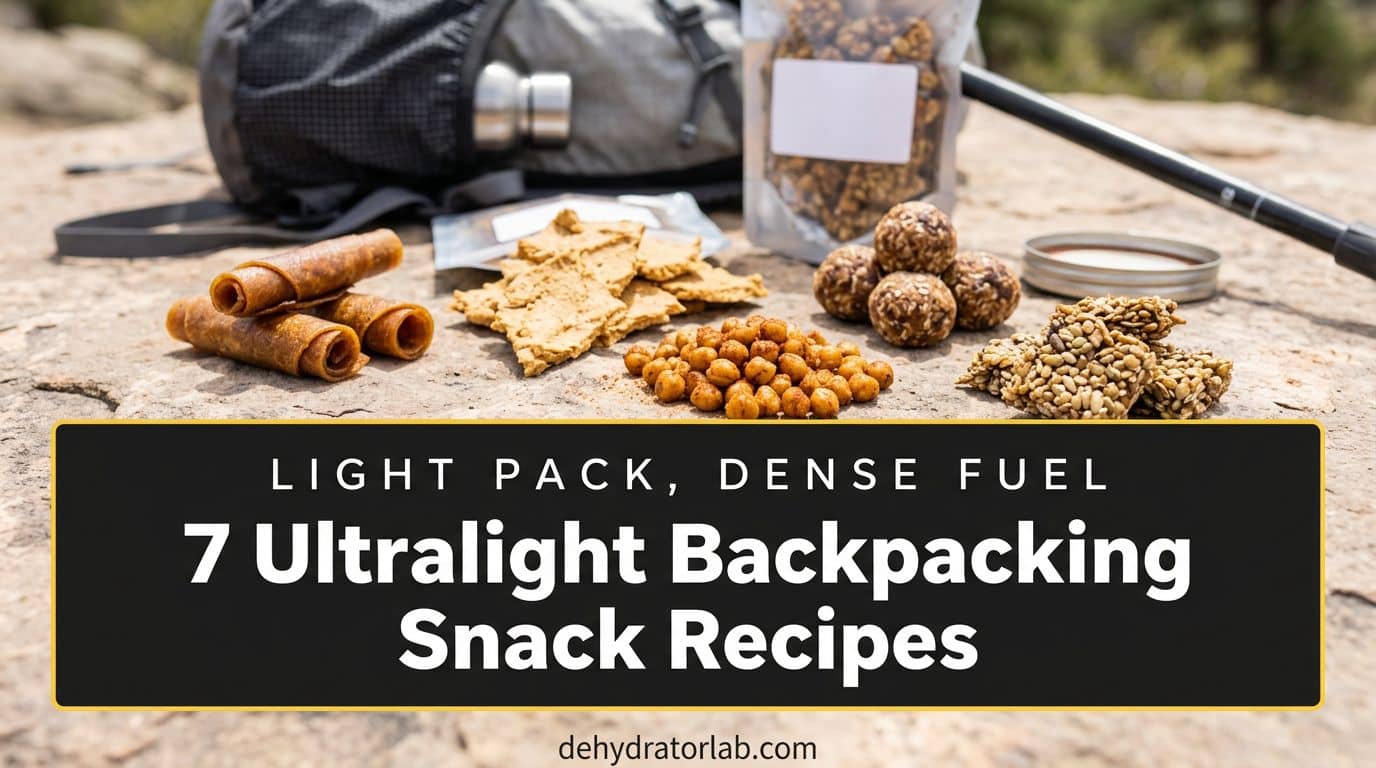
Food is the one weight you can shrink at home. Your dehydrator pulls out the water, and what’s left is dense, light, and hard to crush. Here are seven snacks built for the lightest pack you can carry.
As an Amazon Associate, I earn from qualifying purchases. If you make a purchase after clicking on a link I may earn a small commission at no extra cost to you if items are purchased.
In this article:
TL;DR: Key Takeaways
- ⚖️ REI says to pick foods with at least 100 calories per ounce, and 125 or more is even better.
- 🎒 REI puts a day of food at about 1½ to 2 lb (0.7 to 0.9 kg) per person, so every ounce of snack counts.
- 🥜 Seven snacks: a nut-butter banana leather, hummus bark, spiced chickpeas, date-oat bites, seed clusters, a cheesy corn crunch, and mango-chili strips.
- 🔢 My calories-per-ounce numbers are estimates from labels and kitchen-scale math. Most land between 100 and 145, and the mango strips sit just under 100.
- 🧈 Fat goes rancid, so snacks with nut butter, seeds, or oil get a shorter shelf life. Clemson says plain dried fruit keeps about a year at 60°F (16°C).
- 📦 Dry hard, cool fully, bag one day at a time, and seal.
Every recipe below makes roughly four to six 1-ounce (28 g) servings, so scale it up for a longer trip. I dry fruit at 135°F (57°C) and the nut, seed, and legume snacks at 135–145°F (57–63°C), my usual settings. Drying times are my own unless I name a source, because your humidity, tray load, and slice thickness change them. For the full dinner side of the pack, my backpacking meal recipes and one-pot trail meals pair well with this list.
Dense snacks only stay good if air and moisture stay out. A vacuum sealer pulls the air out and shrinks the bag, and the box below is the kind I use.

- 【Clear Vacuum Bags】Our sealable vacuum bags are made of high quality materials can withstand high temperature, food save…
- 【Suit For Most Vacuum Sealer Machines】These clear bags can Suit for all clip vacuum bag sealing machines directly, the b…
- 【Popular Size Bags for Food Storage】With pre-cut Vacuum Sealer Bags,Heavy Duty Pre-Cut Design Commercial Grade Food Seal…
Calories Per Ounce, and Why They Matter
REI tells ultralight hikers to choose foods with at least 100 calories per ounce, and 125 or more is even better. It lists nuts, nut butters, seeds, dried fruit, hard cheese, jerky, and energy bars as calorie-dense foods. It also says to plan about 1½ to 2 lb (0.7 to 0.9 kg) of food per person per day, which works out to roughly 2,500 to 4,500 calories. That’s the math behind this whole list.
REI doesn’t publish calories per ounce for individual foods, so the numbers in this article are my estimates. I add up the calories on each ingredient label, then divide by the finished weight on a kitchen scale. Do the same with your own ingredients, because a heavier hand with the nut butter changes the answer. Fruit is the catch: dried fruit is light but sugary, so it often lands near 100. Seeds, nut butters, and oil are what push a snack higher.
Fat needs one more warning. Fat is what makes a snack dense, and fat is also what goes rancid.
Clemson Extension says dried fruit should be conditioned, which means packing it loosely in a jar and shaking it daily for 7 to 10 days to even out the moisture. It also says dried fruit keeps about a year at 60°F (16°C) and six months at 80°F (27°C). Those numbers are for plain dried fruit.
Anything here with nut butter, seeds, or oil is a two-to-three-week snack at room temperature by my own rule, and I freeze the extra. That limit is mine, not a published one. For storage by food type, check how long dehydrated food lasts.
Several recipes use nuts, seeds, or sesame, so label each bag if you share your food. Let’s get into it.
1. Almond-Butter Banana Leather Rolls
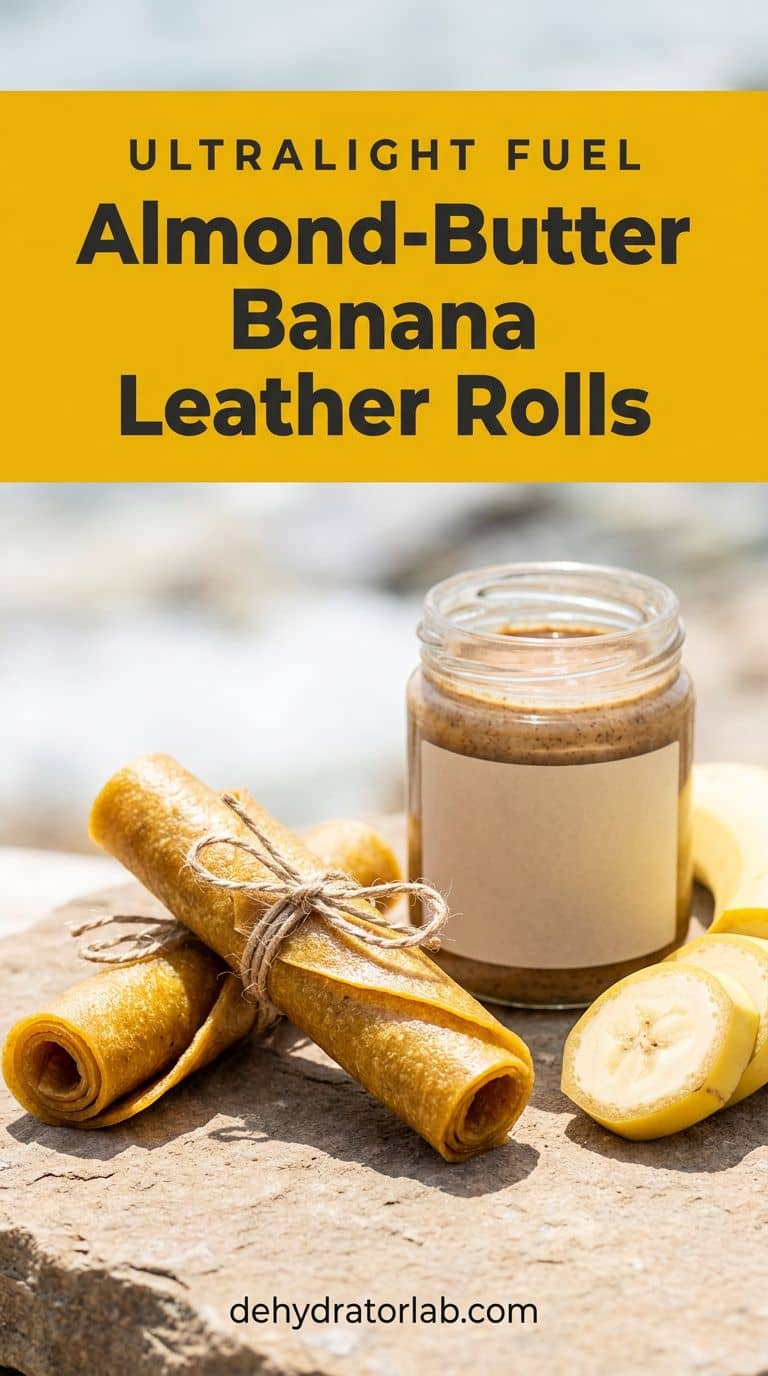
Plain fruit leather is light. Add nut butter, and it turns into fuel you can roll up and stuff in a hip pocket.
Blend 3 ripe bananas with 4 tablespoons of almond butter and 1/2 teaspoon of cinnamon until smooth. Spread it 1/8 inch (3 mm) thick on a lined fruit leather tray, then dry at 135°F (57°C) for about 6 to 10 hours. It’s done when no sticky spots remain and it peels off in one piece. Blot any beads of oil with a paper towel, roll the sheet in parchment, and cut it into strips.
By my math, that lands around 110 to 120 calories per ounce. My single-ingredient fruit leather recipes and tropical fruit leather recipes cover the base technique, and my banana guide covers ripeness.
Swap in sunflower seed butter if anyone near you has a tree nut allergy. A leather that pulls its weight.
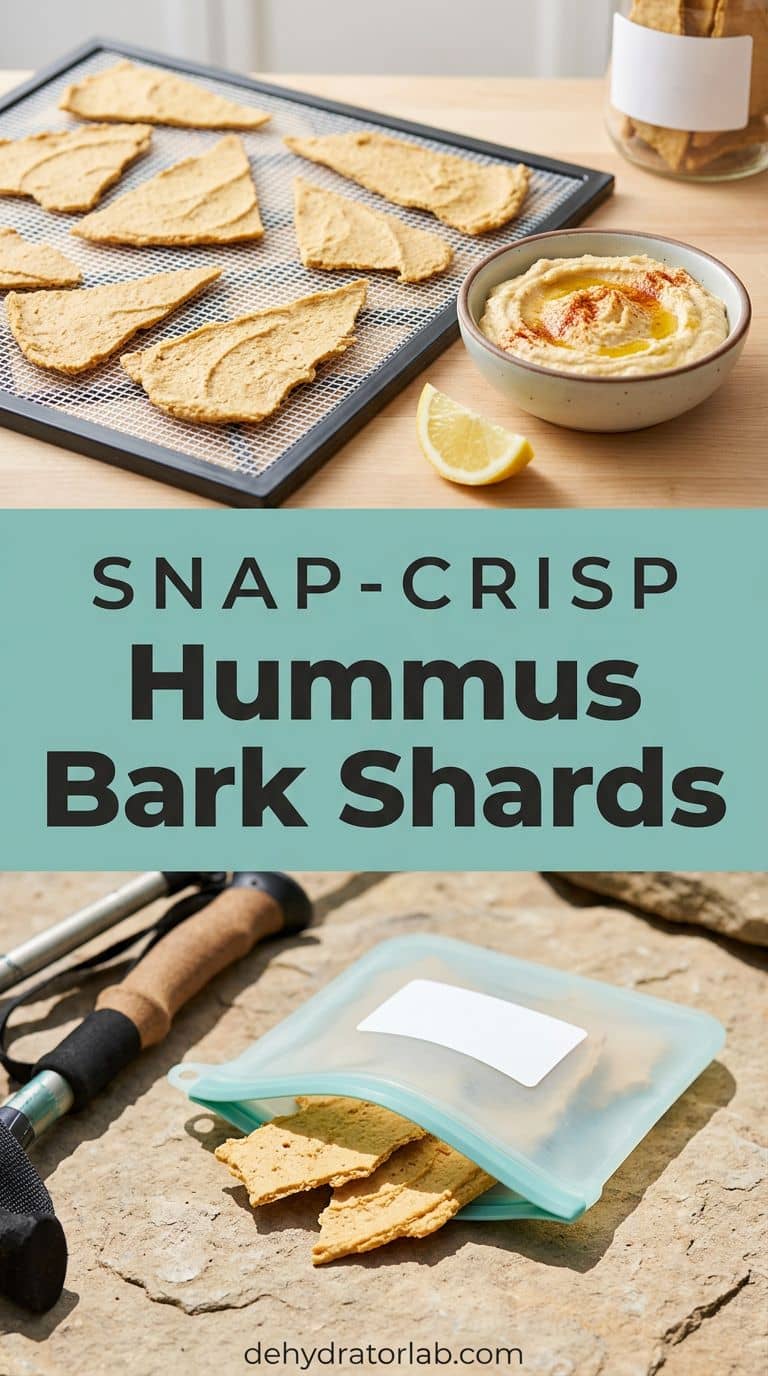
2. Hummus Bark Shards
Ever wish hummus came in a bag you could snap? This is that bag, and it weighs next to nothing.
Spread 1 cup of thick hummus 1/8 inch (3 mm) thick on a lined tray. Dry at 135°F (57°C) for about 8 to 12 hours, flipping the sheet once after 5 hours, until it snaps like a cracker. Break it into shards. Hummus has oil and tahini in it, so it’s one of the fatty snacks on this list. I’d say about 125 to 150 calories per ounce, and the range depends on how oily your hummus is. Eat the shards as crunchy chips, or crush a handful into a little water and stir to bring the dip back. My hummus powder guide covers that version in more detail.
Humid air softens the bark, so keep it sealed. Hummus that snaps.
3. Crunchy Spiced Chickpeas
Chickpeas are a trail-mix favorite, but the dehydrator makes them crunchier and lighter than a store-bought bag.
Drain and rinse one 15-ounce can of chickpeas, then pat them very dry. Toss with 2 teaspoons of olive oil, 1/2 teaspoon of smoked paprika, 1/2 teaspoon of garlic powder, and 1/2 teaspoon of salt. Spread them in a single layer and dry at 135–145°F (57–63°C) for about 10 to 14 hours. They’re done when one cracks cleanly between your teeth instead of bending. That’s my rule of thumb, and humidity can add hours. I estimate 100 to 110 calories per ounce, so they sit near REI’s floor. My high-protein trail mixes use chickpeas too if you want to blend them with nuts.
Dried chickpeas are hard, so crush one first if you have dental work. Crunch with staying power.

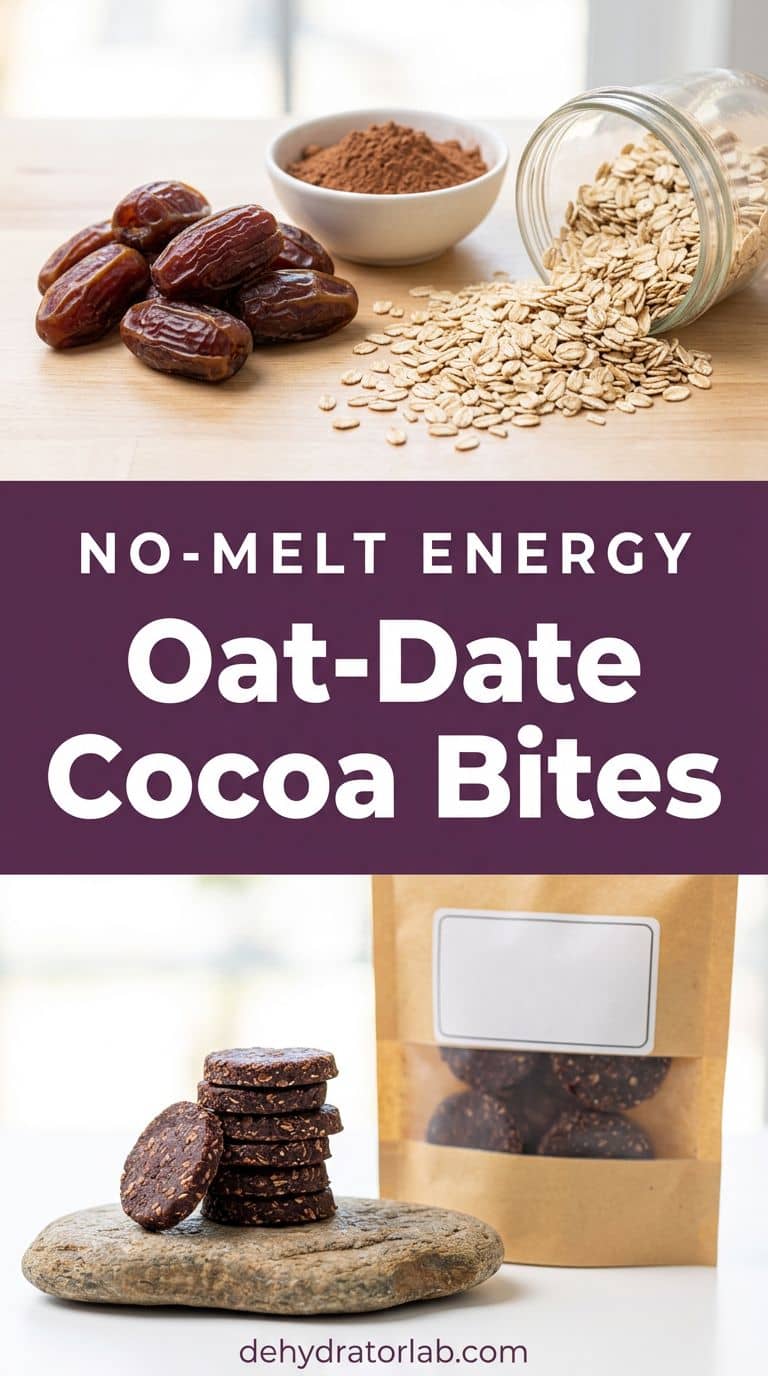
4. Oat-Date Cocoa Bites
These taste like cookie dough and don’t melt in a hot pack. The dehydrator only has to firm them up.
Process 1 cup of pitted Medjool dates, 1/2 cup of rolled oats, 1/4 cup of almond butter, 2 tablespoons of cocoa powder, and a pinch of salt until it clumps. Press it into 1/4 inch (6 mm) coins and dry at 125–135°F (52–57°C) for about 3 to 5 hours, until firm outside and no longer sticky. My estimate is 105 to 115 calories per ounce. They’re similar to the fruit-paste bars in my energy bar recipes, only smaller and denser. My granola and granola bar recipes have more ideas if you like this style.
Sunflower seed butter works in place of almond butter. Cookie dough, minus the melt.
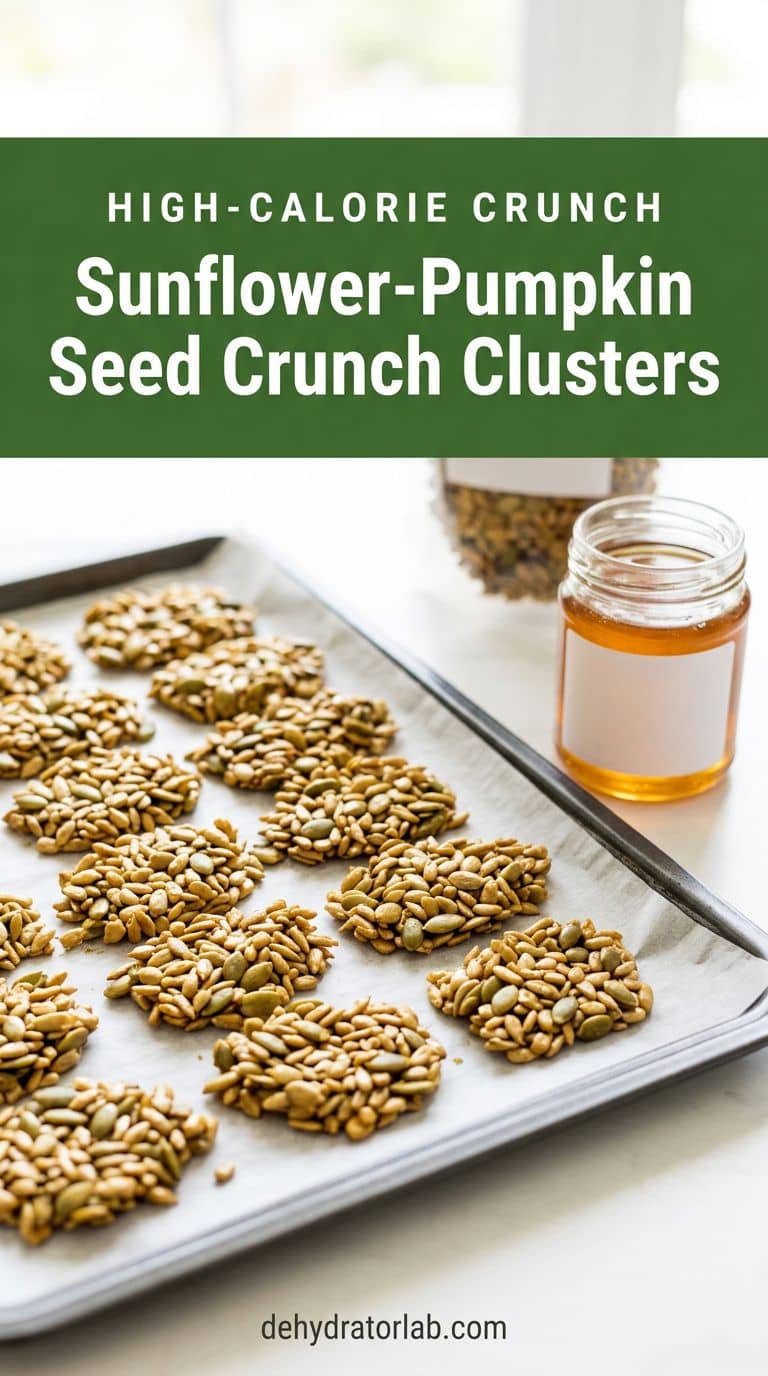
5. Sunflower-Pumpkin Seed Crunch Clusters
Seeds are the densest thing on this list, and honey turns them into clusters you can pour into a bag.
Mix 1 cup of sunflower seeds, 1/2 cup of pumpkin seeds, 1/4 cup of rolled oats, 3 tablespoons of honey, 2 tablespoons of sunflower seed butter, 1/2 teaspoon of cinnamon, and a pinch of salt. Press small clumps onto a lined tray and dry at 135°F (57°C) for about 6 to 10 hours, turning once halfway, until dry and crisp. By my math, that’s 130 to 145 calories per ounce, the highest on the list. Soaking the seeds first is optional, and my soaked and dehydrated nut recipes explain how. My savory trail mixes are a good match if you’d rather skip the honey.
Seeds are fatty, so this is a freezer-batch snack. Small clusters, big calories.
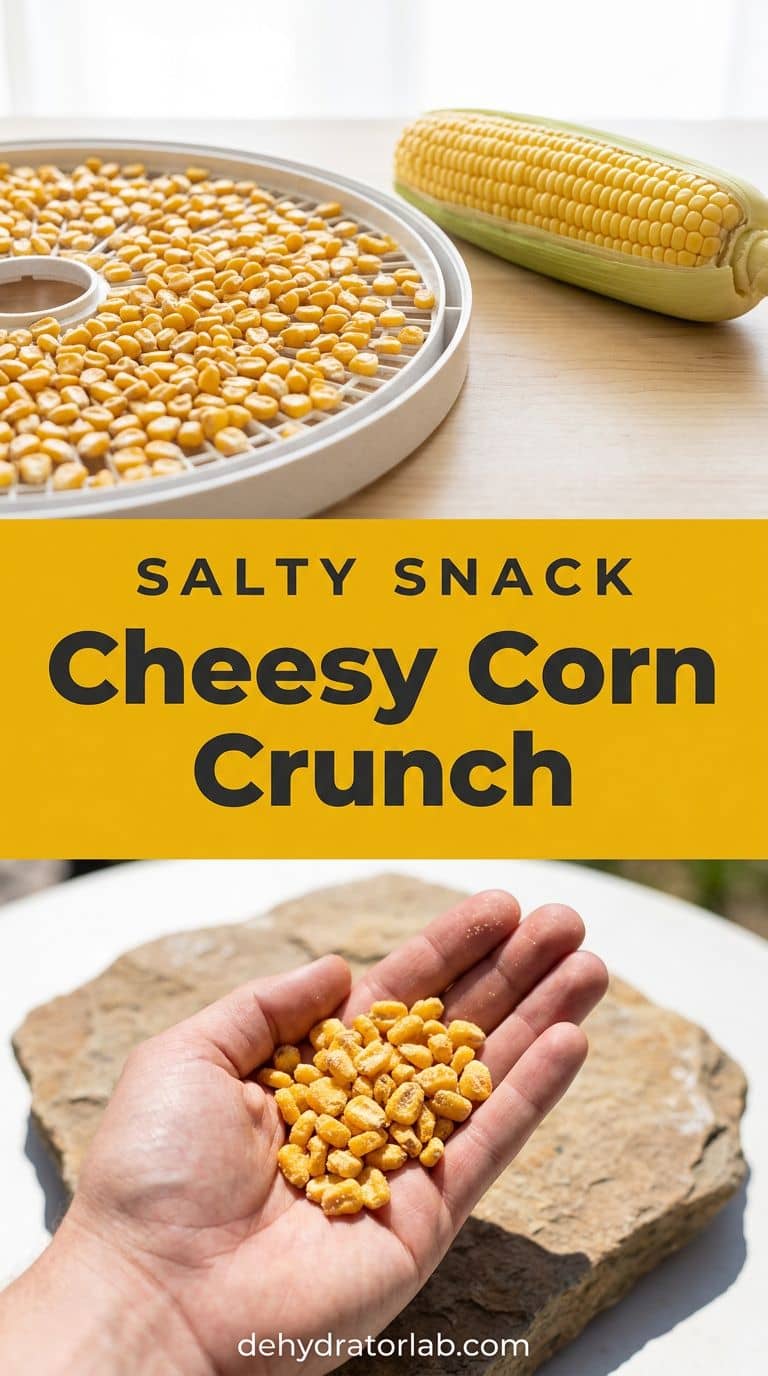
6. Cheesy Corn Crunch
Dried sweet corn is hard, sweet, and light, and a little oil and cheese flavor turn it into a salty snack.
Thaw 2 cups of frozen corn, drain it, and pat it dry. Spread it on a tray and dry at 135°F (57°C). Clemson lists 6 to 10 hours for corn, and I dry mine until the kernels are hard and rattle on the tray. Toss with 2 teaspoons of olive oil, 2 tablespoons of nutritional yeast or cheese powder, 1/4 teaspoon of salt, and a pinch of smoked paprika. Return it to the dehydrator for 30 minutes to set the coating. My estimate is 105 to 115 calories per ounce, just above REI’s floor. My dehydrated corn kernels guide covers the base drying.
This isn’t a fried corn nut, but dried corn is still hard, so crush a kernel first if your teeth are sensitive. Salty, light, and loud.
7. Mango-Chili Strips
This is the one I pack for the last hill of the day. It’s fast sugar with a little heat, and it weighs almost nothing.
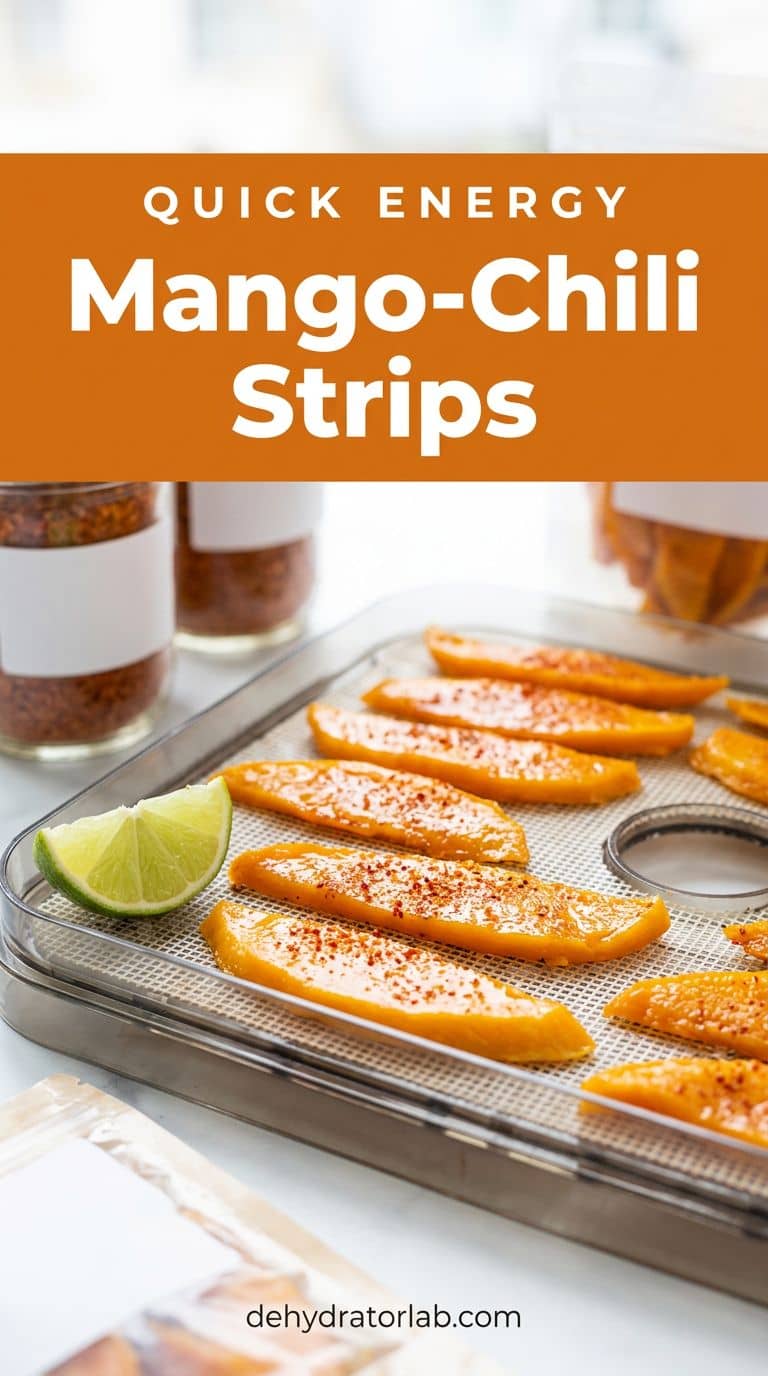
Slice ripe mango into 1/4 inch (6 mm) strips and toss with a squeeze of lime and a pinch of chili-lime seasoning. Dry at 135°F (57°C) for about 8 to 14 hours, until leathery and pliable but not sticky. Clemson doesn’t list mango, so that range is mine, and my mango recipes go deeper. Condition the strips in a loosely packed jar for 7 to 10 days, as Clemson recommends for dried fruit. I estimate 85 to 95 calories per ounce, which is under REI’s 100 mark. Pair it with a seed cluster or a hummus shard instead of leaning on it alone.
It’s a quick-energy treat, not a calorie backbone. Heat with a payoff.
Quick Reference: Seven Snacks at a Glance
| Snack | Calories per ounce (my estimate) | Drying time | Best use |
|---|---|---|---|
| 1. Almond-butter banana leather | 110–120 | 6–10 h at 135°F (57°C) | Daily base snack |
| 2. Hummus bark shards | 125–150 | 8–12 h at 135°F (57°C) | Salty crunch, or dip |
| 3. Crunchy spiced chickpeas | 100–110 | 10–14 h at 135–145°F (57–63°C) | Protein crunch |
| 4. Oat-date cocoa bites | 105–115 | 3–5 h at 125–135°F (52–57°C) | Sweet craving, no melt |
| 5. Seed crunch clusters | 130–145 | 6–10 h at 135°F (57°C) | Highest calories per ounce |
| 6. Cheesy corn crunch | 105–115 | 6–10 h at 135°F (57°C), per Clemson | Salty, light handful |
| 7. Mango-chili strips | 85–95 | 8–14 h at 135°F (57°C) | Last-hill quick energy |
The 100 and 125 calories-per-ounce targets and the daily food weight come from REI. The corn drying time follows Clemson Extension (vegetables), and the conditioning advice and plain dried fruit storage times follow Clemson Extension (fruits). Every calorie estimate, every other drying time, every recipe amount, and the two-to-three-week limit for fatty snacks are my own. For more on shelf life, see my Mylar bag picks.
Personal Tips You Can Steal
I weigh every finished batch on a kitchen scale and write the ounces on the bag, so the calorie math is done before I reach the trailhead. I pack snacks in reusable snack bags, one day’s worth per bag.
I freeze any batch with nut butter, seeds, or oil and pack no more than a week of it at a time. I keep one mango strip in my hip pocket for the last hill. I test every new snack on a long day hike before it goes into a multi-day pack. I label each bag for allergens before I hand anything to a friend.
Final Thoughts
You don’t need all seven. Start with the seed clusters and the banana leather, since they carry the most fuel for the least weight, and add a crunchy snack for variety. For more camp food, my camping meals roundup and my hiking foods guide are the next stops, and my best dehydrator for backpacking meals guide ranks six machines if you’re still choosing one.
Related reading: 10 trail mix recipes, 8 high-protein trail mix recipes, 9 healthy energy bar recipes, and 8 homemade dehydrated cracker recipes.
P.S. Weigh your snacks once, and your pack will thank you all season. 🙂