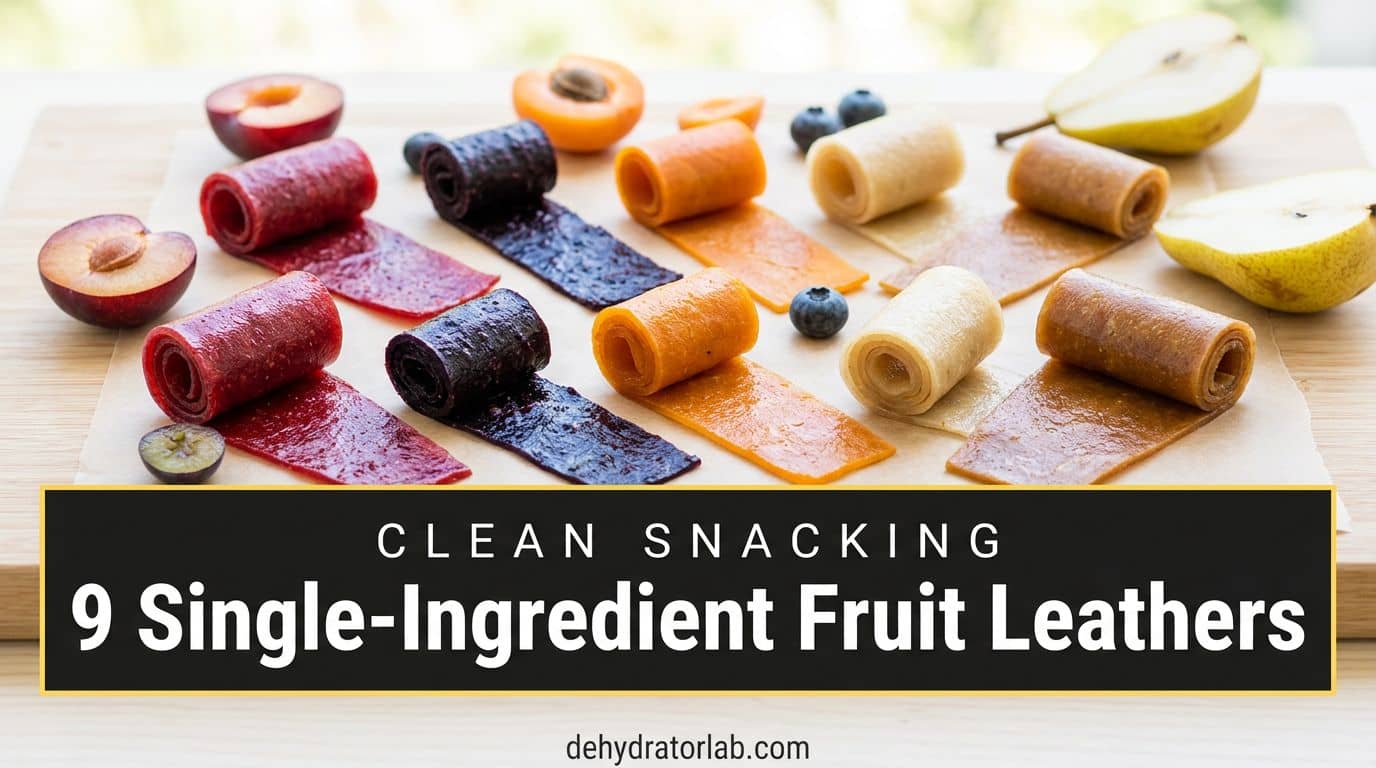
A fruit leather with a ten-item ingredient list isn’t a snack. It’s candy in a roll-up costume.
The fix is almost embarrassingly simple: one fruit, one dehydrator, nothing else. No sugar, no pectin, no spice rack, just puree that dries into something chewy and bendy. Here are nine fruits that pull it off.
As an Amazon Associate, I earn from qualifying purchases. If you make a purchase after clicking on a link I may earn a small commission at no extra cost to you if items are purchased.
In this article:
TL;DR: Key Takeaways
- 🍐 Nine fruits make leather with nothing added: pear, plum, apricot, blueberry, peach, raspberry, banana, Hachiya persimmon, and cantaloupe.
- 🔥 Spread the puree about 1/8 inch thick and dry at 135–145°F (57–63°C) for 6–8 hours, longer for juicy fruits.
- 🍋 Pale fruits brown fast, so one optional squeeze of lemon is the only exception to the one-ingredient rule.
- 🫐 Berries and plums need a quick simmer or a strainer to deal with skins and seeds.
- 🍌 Ripe beats perfect: soft, spotty, even slightly overripe fruit gives the sweetest leather.
- ✅ It’s done when the center leaves no dent under your finger, and the skin peels off in one piece.
Here’s the plan behind every recipe below. Wash and trim the fruit, cook anything firm or skin-heavy until soft, and blend until smooth. Spread the puree about 1/8 inch thick on a lined tray. The National Center for Home Food Preservation lands on the same thickness and 140°F (60°C), and its doneness test is the one I trust: touch the center, and if no indentation remains, you’re done.
“Single-ingredient” means the fruit and nothing else. I allow myself one exception. Pale fruits like pear, peach, and banana darken fast, so a small squeeze of lemon juice is fine if you want a brighter color. Skip it and the leather still tastes great.
Gear check: a solid silicone dehydrator sheet keeps the puree from dripping through the mesh and sticking to the tray, then peels away cleanly. Parchment cut to fit works in a pinch, and my full fruit leather walkthrough covers the basics. Let’s get into it.
1. Pear
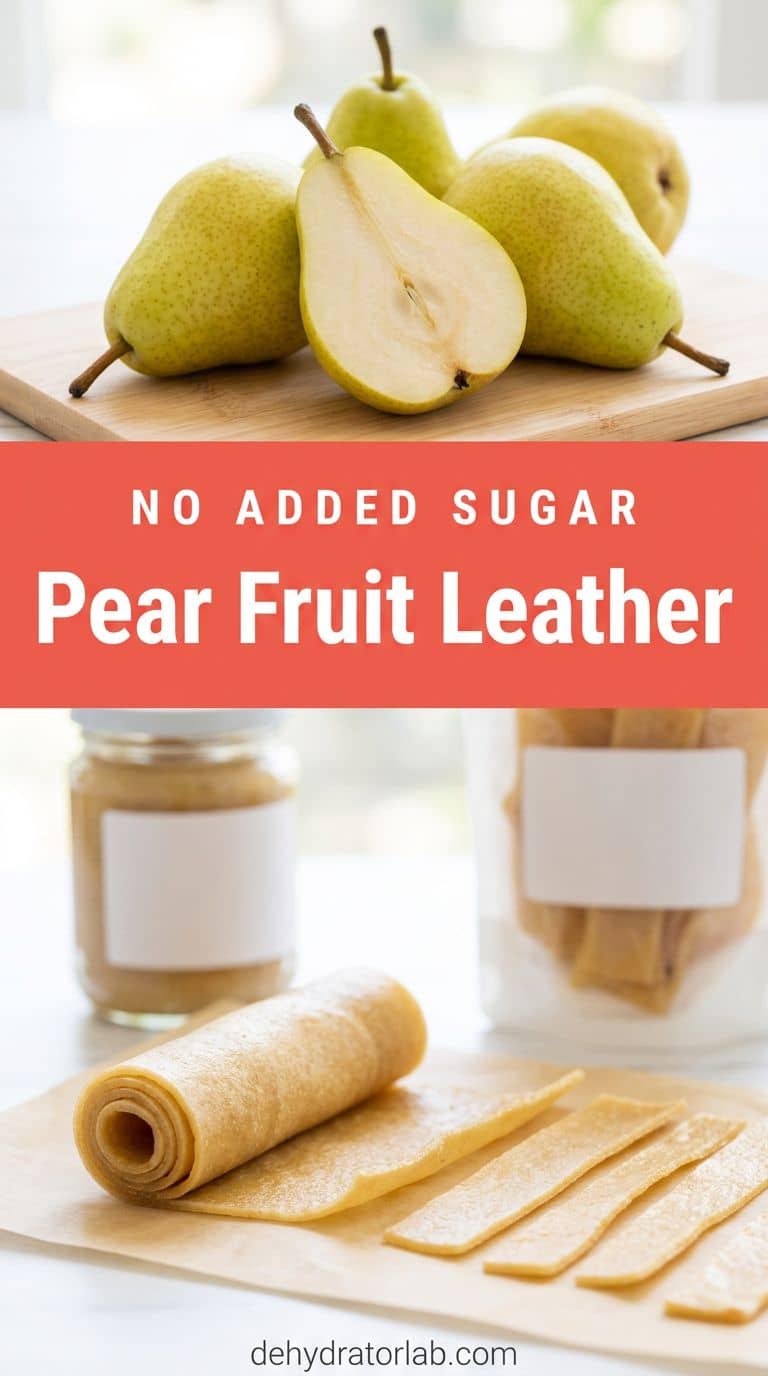
Pear leather is the mild, quiet one, and that’s exactly why it works. Ripe Bartlett pears blend into a smooth, pale puree that’s sweet without any sharpness, which makes it a friendly first batch.
Peel and core the pears, then simmer the chunks in a splash of water for about 10 minutes until soft. Blend until completely smooth, because pears can leave a faint grain if you rush it. Keep the layer close to 1/8 inch so the center dries as fast as the edges.
Pears brown quickly, so this is the best place to use that optional squeeze of lemon. Want a crunchy version of the same fruit? Try these air fryer pear chips. Smooth puree makes smooth leather.
2. Plum
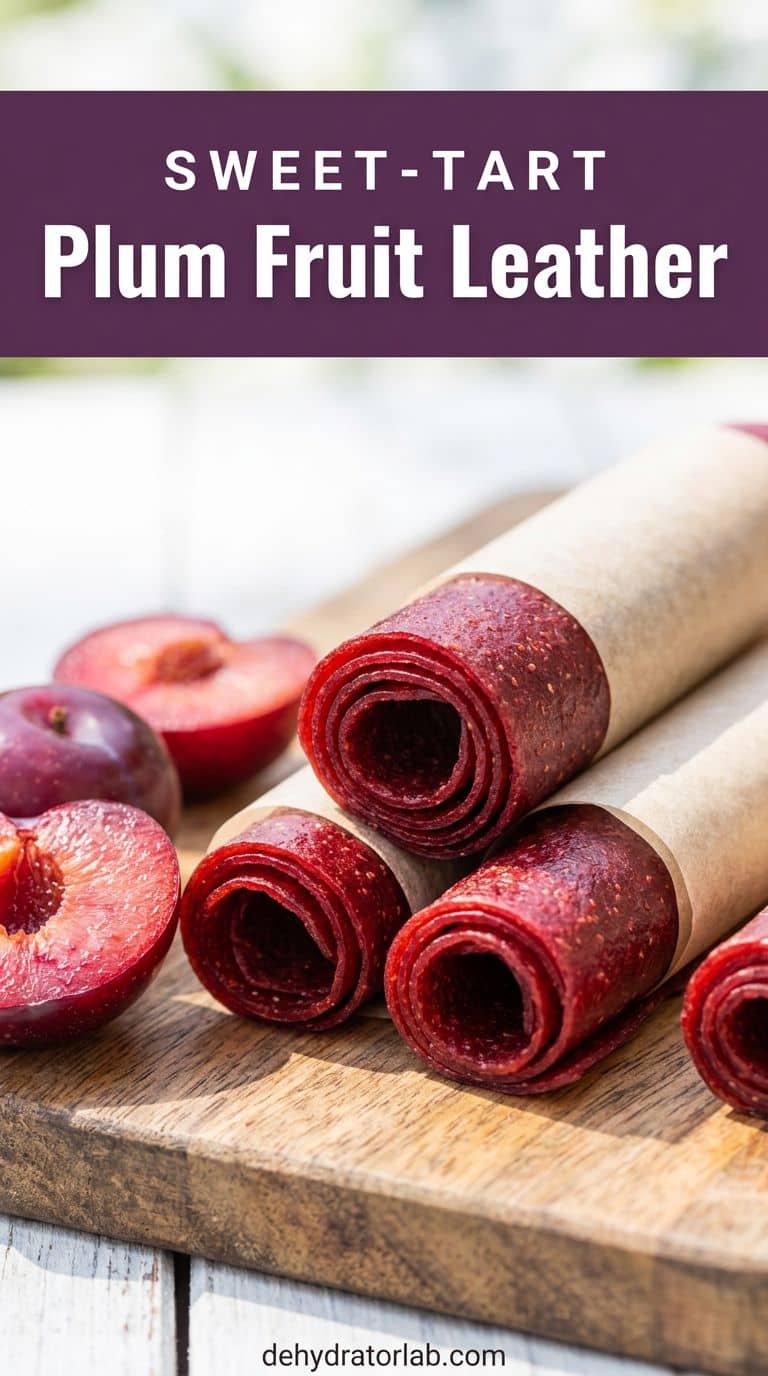
Plums bring something the other fruits can’t: built-in color and tartness. Leave the skins on and the puree turns a deep ruby, with a sweet-tart bite like a fruit roll-up’s grown-up cousin.
Halve the plums, pull the pits, and simmer the halves for about 10 minutes until the skins soften. Blend until smooth, and push the puree through a mesh strainer if you spot bits of skin. My guide to dehydrating plums covers the whole-fruit method too.
Plum skins carry natural pectin, which gives the leather a firmer, cleaner peel off the sheet. Keep the skins on.
3. Apricot
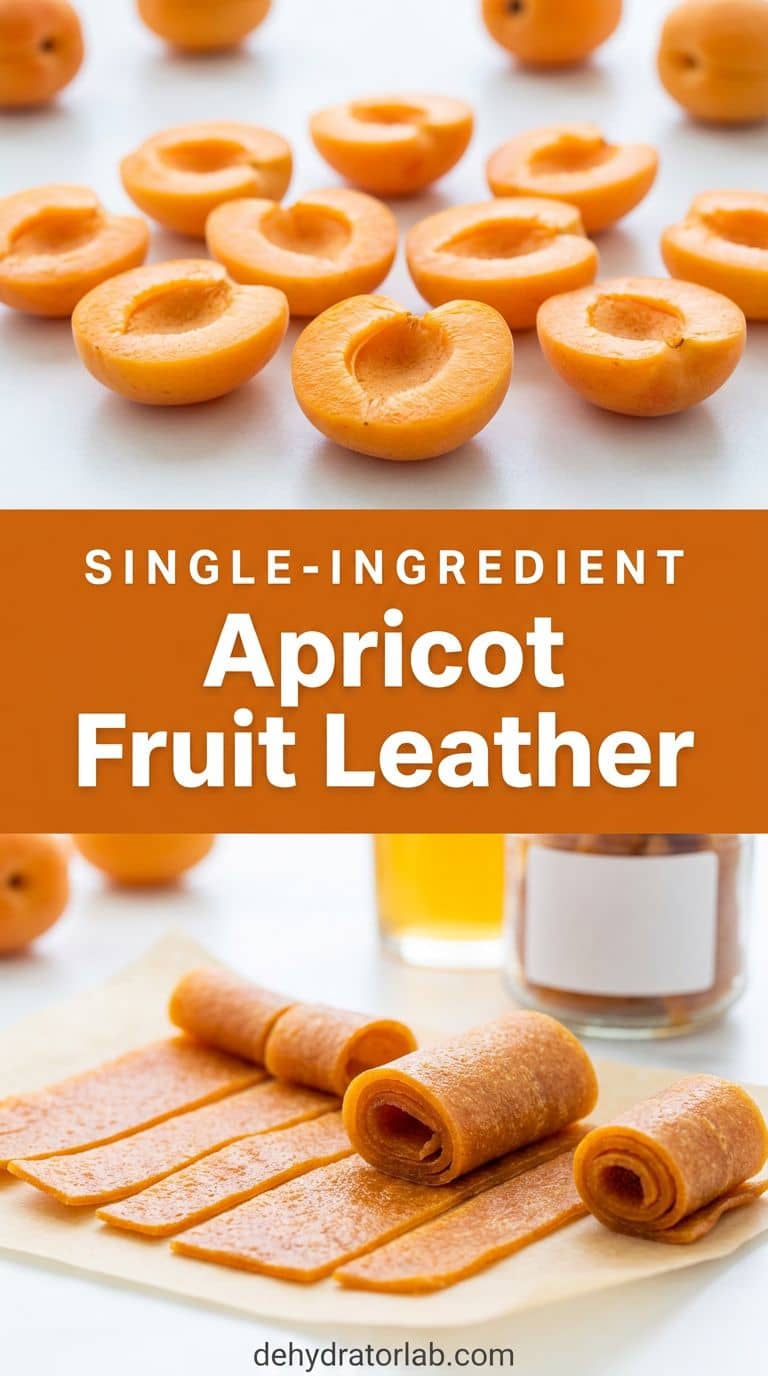
Apricot leather tastes like the best dried apricot you’ve ever had, only softer. The flavor concentrates hard as the water leaves, so a small tray of fresh fruit goes a long way.
Halve the fruit, discard the pits, and cook it down for 8 to 10 minutes. Blend until velvety. The puree is naturally thick, so it spreads evenly with one pass of a spatula. I leave the skins on and blend them well.
Ripe apricots tend to hold their orange color, so the lemon is optional here. For a crispier snack, these air fryer apricot chips are worth a batch. Let the apricot do the work.
4. Blueberry
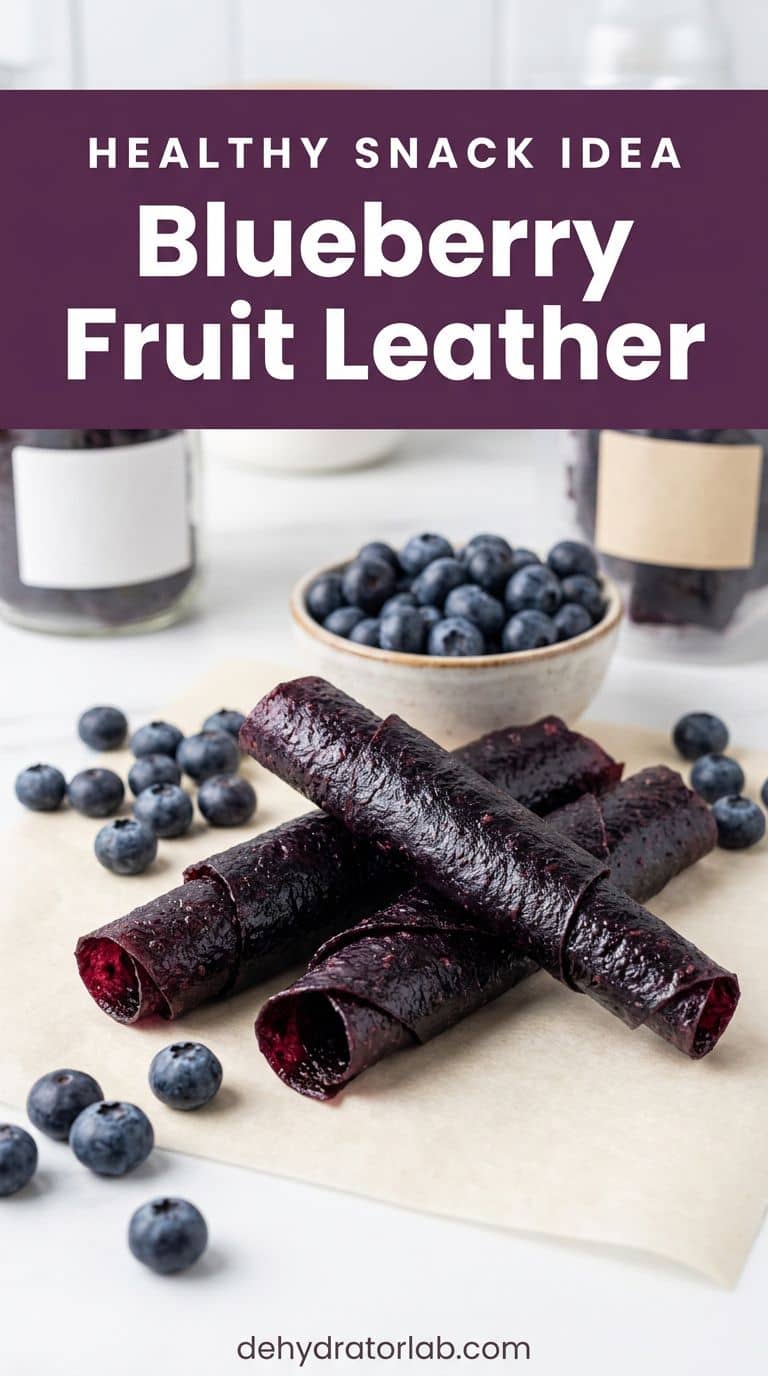
Blueberry leather is the darkest, boldest roll-up on the list, with a jammy flavor that survives drying.
Blueberry skins are tough, so blending raw berries leaves flecks. Simmer them with a splash of water for 5 to 8 minutes until they burst, then blend. Frozen berries work fine; just thaw and drain them first.
Three checks for a clean sheet:
- Simmer until every berry pops.
- Press the puree through a fine strainer.
- Dry until the center shows no sticky spots.
Got extra berries? My dehydrated berry recipes use them nine ways, and blueberry powder is a smart home for a leftover pint. Pop every berry first.
5. Peach
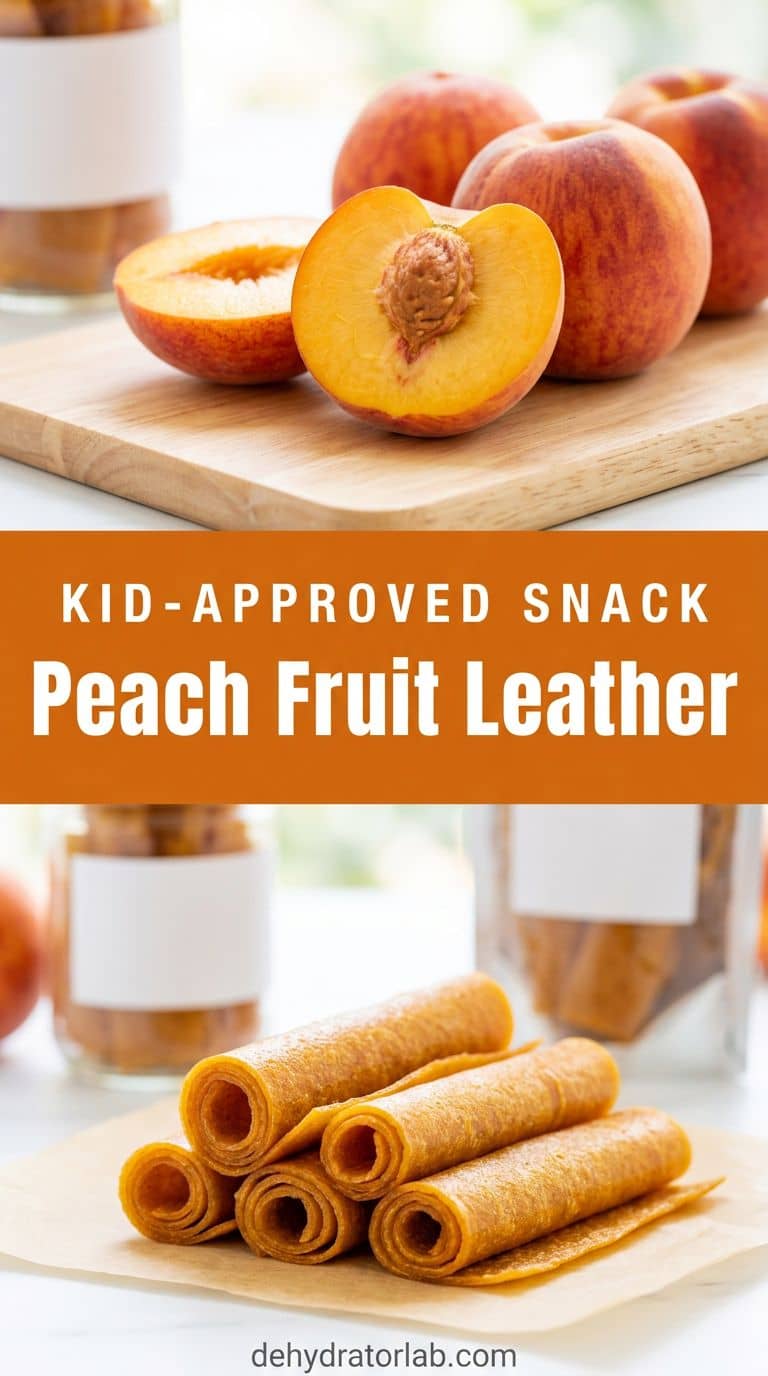
Peach leather smells like summer the second it hits the tray. It’s also close to foolproof, because ripe peaches break down into a thick, sweet puree with almost no effort.
Score a small X on the bottom of each peach, dunk it in boiling water for 30 seconds, and the skins slip right off. Slice, simmer briefly if the fruit is firm, and blend. Soft, very ripe peaches can go straight into the blender.
Peaches shine solo, but they pair well too. My raspberry peach fruit leather is the two-fruit version, and dehydrated peach slices give you a chewier option. Soft peaches win.
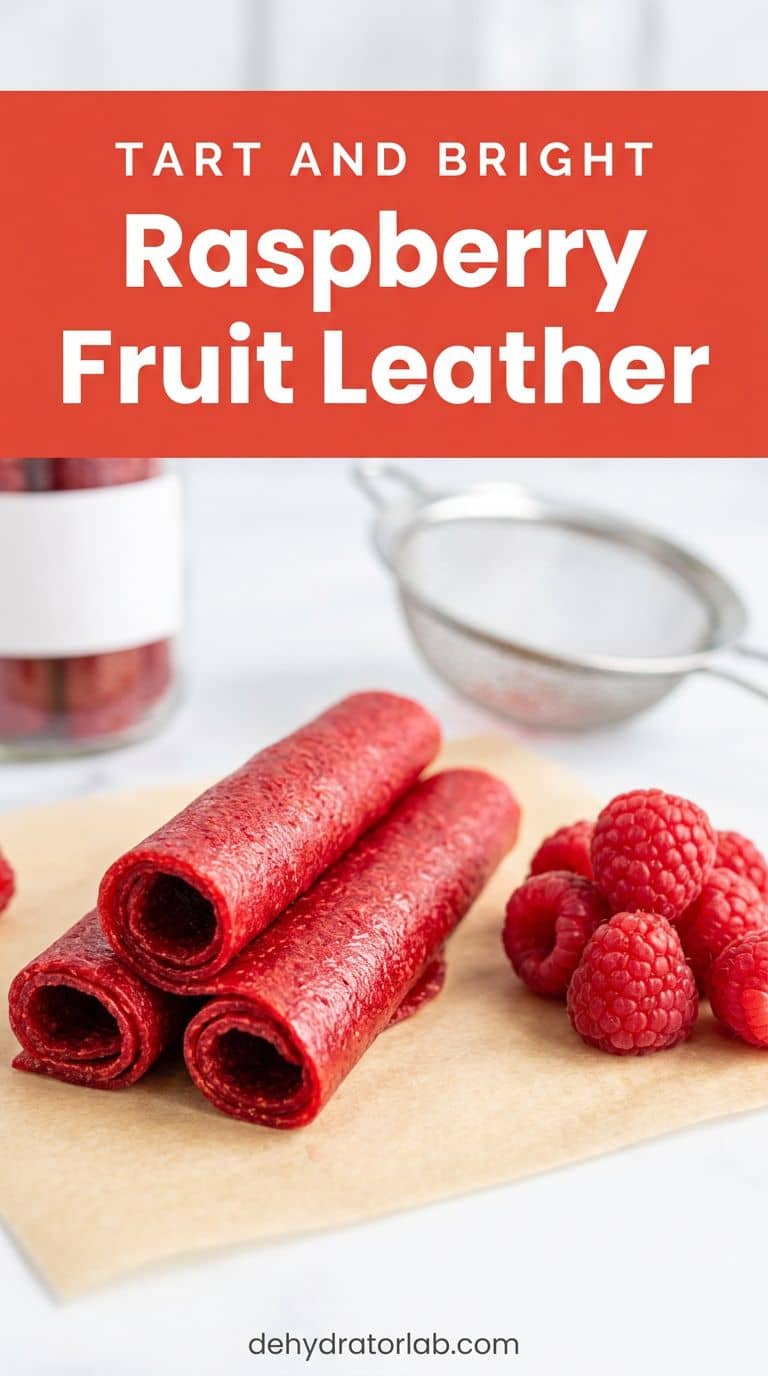
6. Raspberry
Raspberries are the tart one. The flavor is so concentrated that a thin sheet tastes like a bite of fresh berry, with no sugar to soften it.
The catch is seeds. Blend the berries, then press the puree through a fine mesh strainer. It takes two minutes and removes the crunch. The puree is runny, so level the tray before it goes into the machine.
Love the flavor? Dehydrated raspberry powder gives you the same taste in a spoonable form. Best ways to eat this leather:
- Roll it around a cheese stick.
- Cut it into strips and stir into oatmeal.
- Chop it into yogurt for a tart-sweet topping.
7. Banana
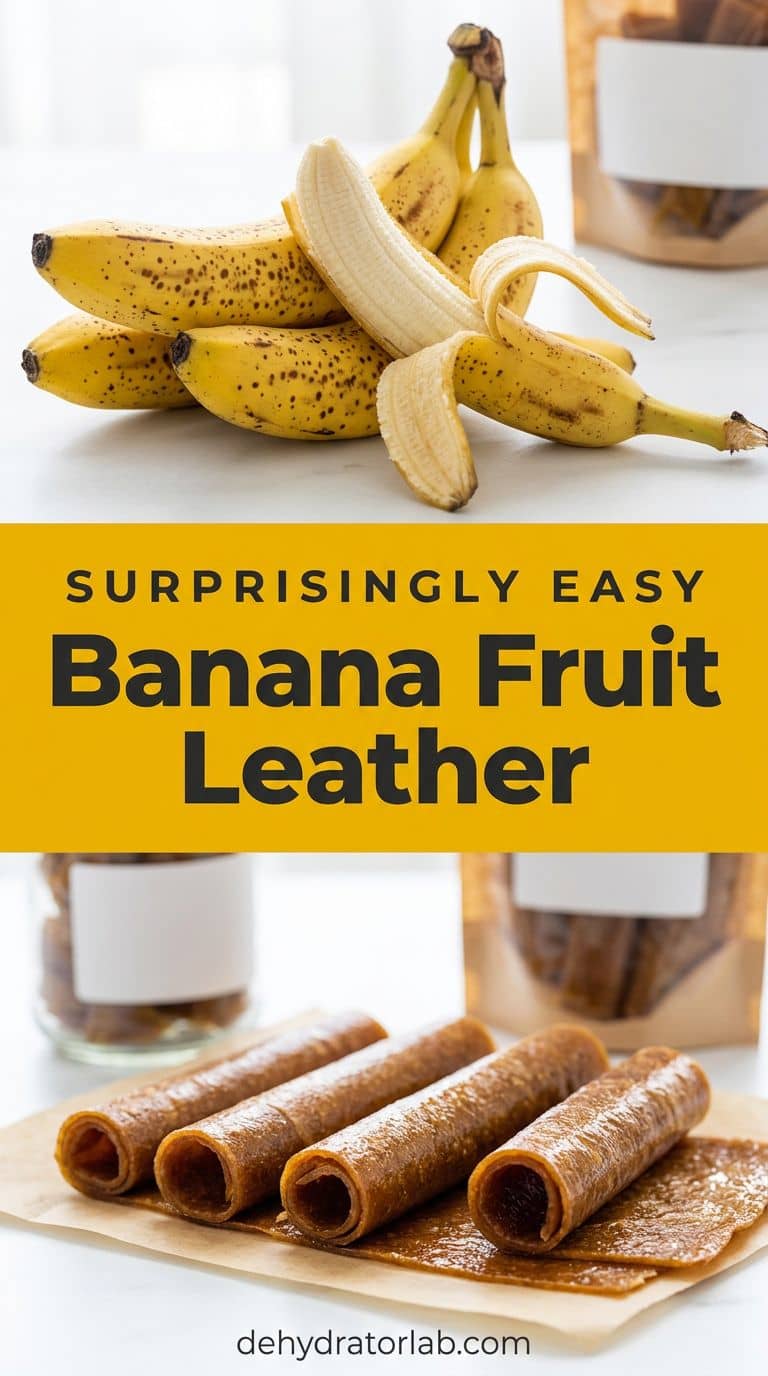
Banana leather is the most filling roll-up of the bunch. It’s dense, chewy, and sweet enough to pass for candy.
Pick bananas with plenty of brown speckles. Peel them, break them into chunks, and blend with no added liquid; they turn creamy on their own. Banana puree is thick, so spread it thinner than you think you should, around 1/8 inch, or the middle stays gummy.
Expect the color to darken to caramel brown as it dries. That’s normal, and lemon only slows it down. This is also the stickiest puree on the list, so a silicone sheet earns its keep. My guide to dehydrating bananas explains how ripeness changes texture. Spread it thin.
8. Hachiya Persimmon
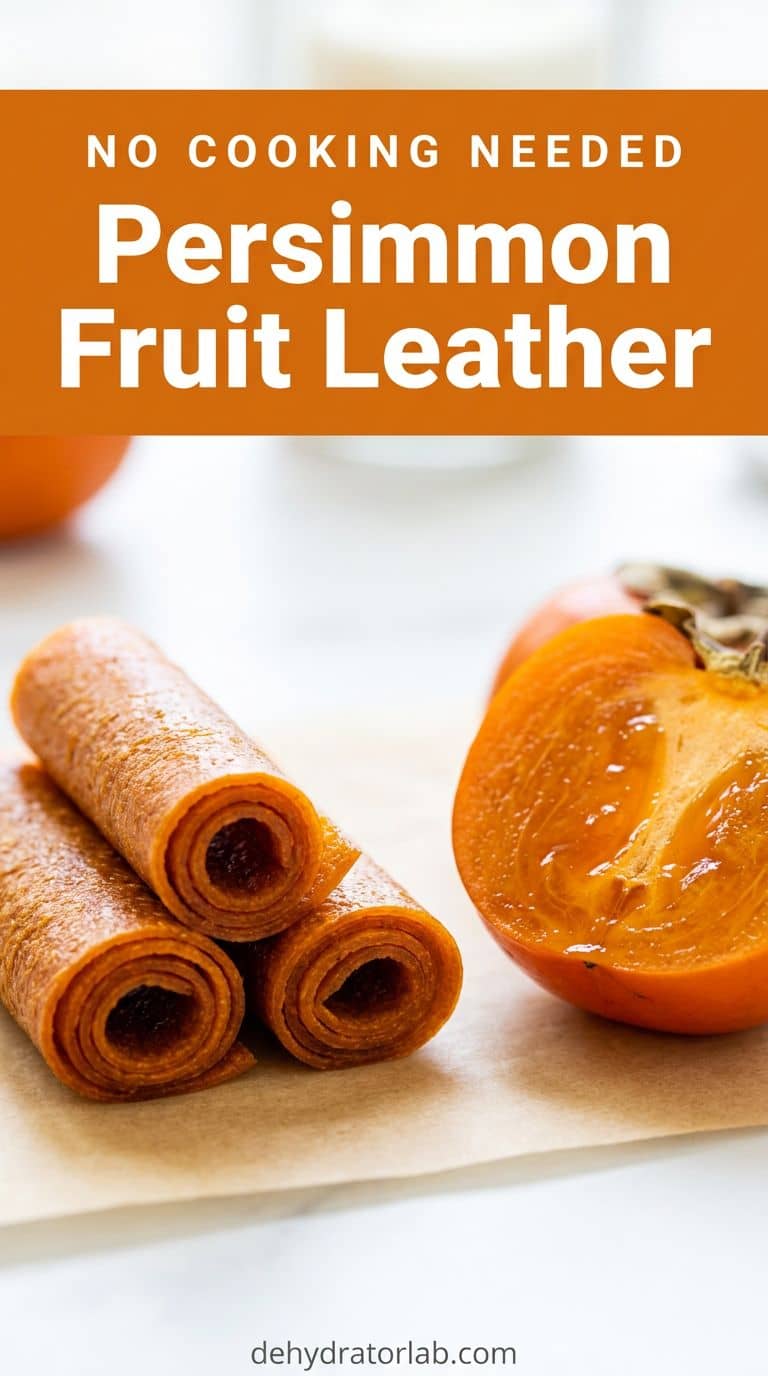
Hachiya persimmons are the sleeper pick. When they’re fully ripe, the pulp is jelly-soft and tastes like honeyed apricot with a hint of brown sugar, and there’s no cooking required.
Ripeness is everything. An underripe Hachiya is astringent and will dry out your mouth. Wait until the skin is glossy, the fruit feels like a water balloon, and the cap lifts off easily. Then scoop out the pulp, remove any seeds, and blend.
The pulp is thick and spreads like frosting. If you like this fruit, my Korean-inspired snack roundup has more ideas for it. Wait for jelly-soft.
9. Cantaloupe
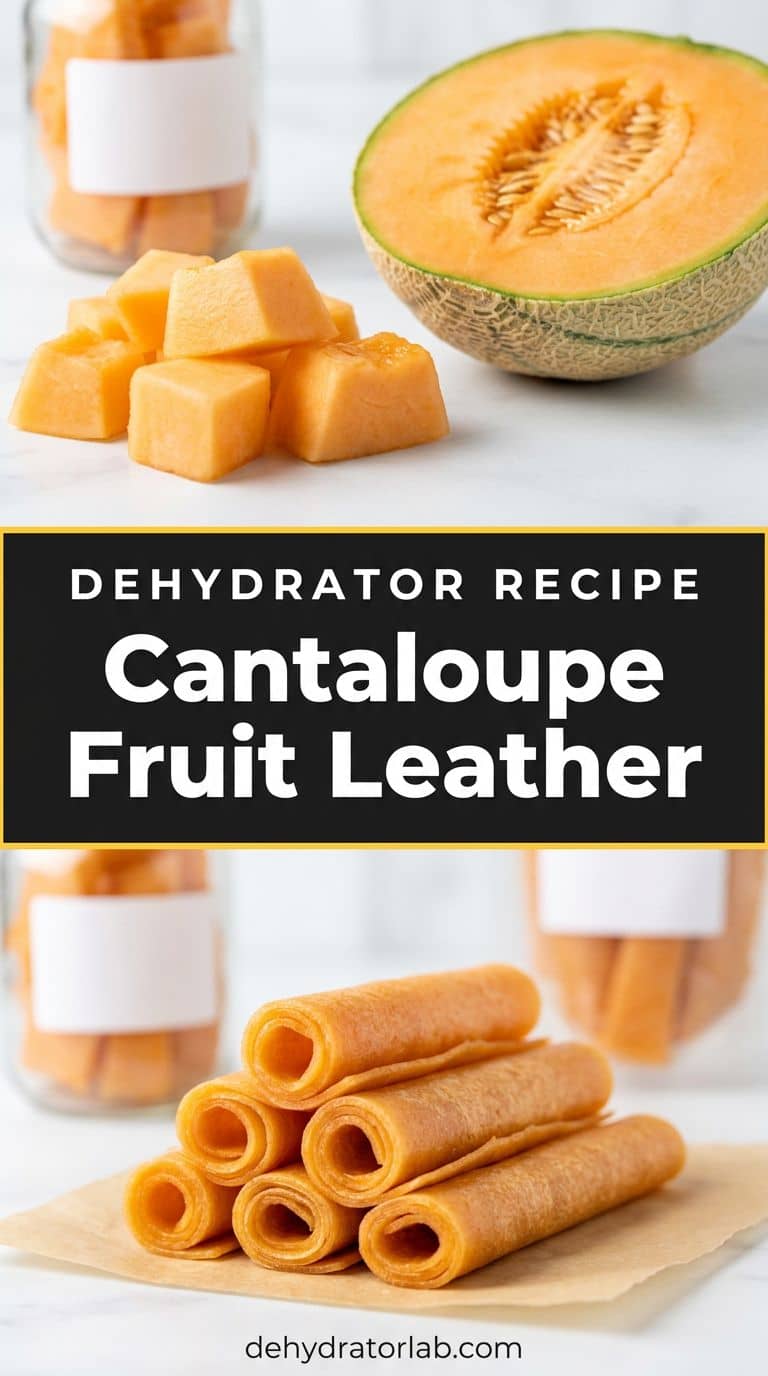
Cantaloupe is the wildcard. It’s the wettest fruit here, so it needs extra care, but the payoff is leather that tastes like concentrated melon candy.
Cube the melon and blend it. Then simmer the puree for 10 to 15 minutes to cook off some of the water, because a watery puree runs off the tray and takes forever to dry. Curious about melon in chip form? Try these air fryer cantaloupe chips.
Three rules for melon leather:
- Simmer or drain the puree to cut the water.
- Keep the layer no thicker than 1/8 inch.
- Dry until the center shows no dent, even if that runs past the 8-hour mark.
Melon leather is the most patient recipe in the list, and it’s still just one ingredient. Cook off the water first.
Personal Tips You Can Steal
I freeze leftover puree in a flat zip bag so I can thaw it and fill a tray whenever I want. I rotate the trays halfway through so the edges don’t dry before the center. I start checking at the 5-hour mark, then every hour after that, because humidity and fruit ripeness change the clock.
I roll finished leather in strips of parchment so the pieces don’t weld into one block. I write the fruit and the date on every bag, because future me never remembers which beige roll was pear.
Final Thoughts
Single-ingredient leather proves you don’t need a recipe card, just ripe fruit and a little patience. Pick one from this list and start there. Want apple or cherry? They have their own pages: apple cinnamon fruit leather and cherry fruit leather. Shopping for a machine? My guide to the best dehydrator for fruit leather covers seven picks.
Related reading: 10 Fruit Leather Recipes the Whole Family Will Fight Over, 8 Tropical Fruit Leather Recipes, and 7 Veggie-Boosted Fruit Leather Recipes Kids Won’t Notice.
P.S. Grab the softest, spottiest fruit in your bowl today and turn it into a tray of leather. Future you will thank present you. 🙂