Tired of paying import-aisle prices for a small bag of Korean snacks that’s mostly air?
Your dehydrator can make most of these at home for a fraction of the cost, and you control the spice level instead of guessing from a label written in a language you can’t read. From gochujang-glazed chips to a genuinely traditional dried fruit, these eight recipes bring the flavors of Korean snacking straight into your own kitchen.
Let’s turn your trays into a K-snack aisle.

In this article:
TL;DR: Key Takeaways
- 🌶️ 8 Korean-inspired snacks built around gochujang, gochugaru, sesame oil, and other pantry staples.
- 🍠 Vegetable and fruit items dry at 125–135°F (52–57°C); the beef jerky needs 155–160°F (68–71°C) for food safety.
- 🌊 Seaweed and dried fruit items dry fastest, often in 2-4 hours; jerky and persimmon take the longest.
- 🌶️ Adjust gochugaru and gochujang amounts to taste — Korean spice levels vary a lot by household.
- 📦 Stored airtight, most of these keep 2-4 weeks; the jerky and dried persimmon last longest.
- 🥢 Great as standalone snacks or crumbled over rice, noodles, and banchan spreads.
Eight snacks, all built around real Korean pantry flavors. Let’s get into it.
1. Gochujang Sweet Potato Chips
Sweet potato already leans candy-sweet once it’s dehydrated, and a thin gochujang glaze turns that sweetness into something with real backbone. Slice sweet potato into ⅛-inch rounds, toss lightly in a mix of gochujang, a splash of rice vinegar, and a drizzle of sesame oil, then dry at 125–135°F (52–57°C) for 6-10 hours until fully crisp.
Keep the glaze thin — a heavy coat traps moisture and stretches drying time out for hours. If you want the plain technique first, my dehydrated sweet potato powder guide covers the base drying method these chips build on.
Sweet, spicy, and gone before the batch even cools.

2. Gim (Seaweed) Chips With Sesame Oil
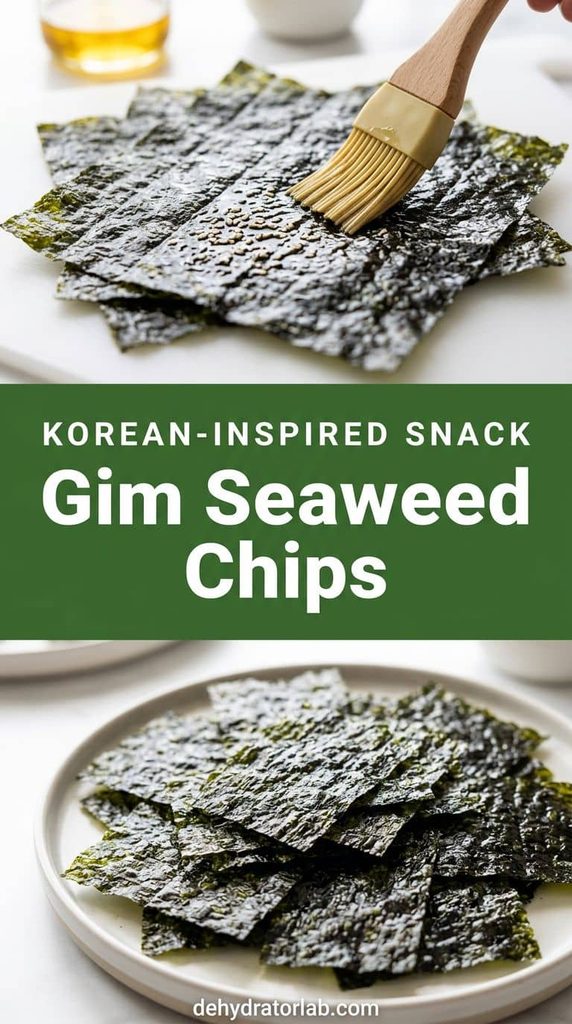
Gim is the roasted seaweed sheet that shows up in nearly every Korean side-dish spread, and it’s one of the easiest things on this list to make at home. Brush full sheets of dried seaweed lightly with sesame oil, sprinkle with a little salt, and dehydrate at 115–125°F (46–52°C) for 1-2 hours until they’re fully crisp and shatter cleanly.
Cut sheets into smaller squares before or after drying, whichever keeps them from crumbling on you. This is genuinely the fastest recipe in the whole roundup, so it’s a good one to start with if you want a quick win.
Crisp, salty, and gone in about the time it takes to boil rice.
3. Korean BBQ Beef Jerky (Yukpo-Style)
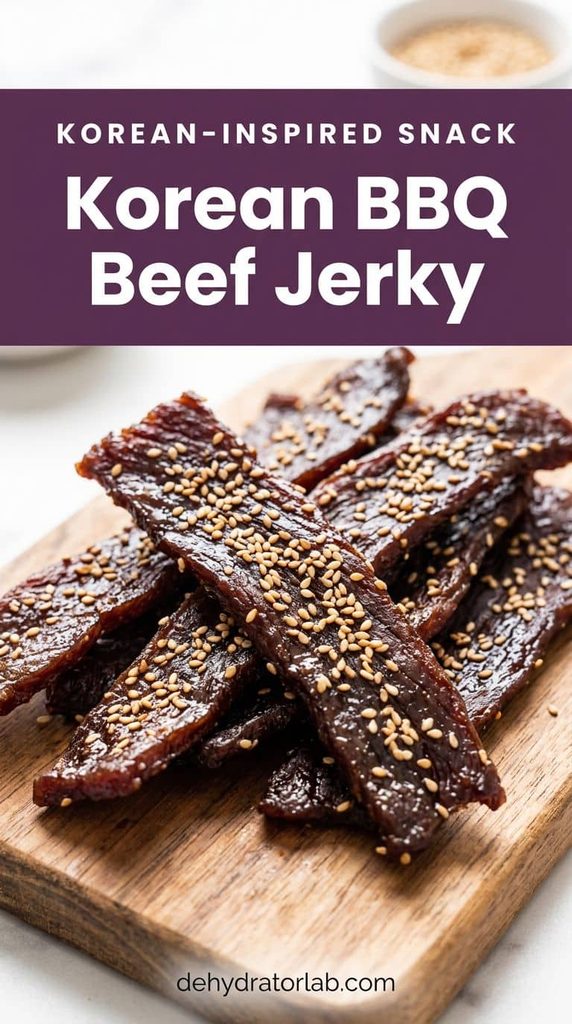
Traditional Korean yukpo leans sweeter and more sesame-forward than the peppery American jerky you’re probably used to. Marinate thin-sliced lean beef in soy sauce, brown sugar or honey, sesame oil, garlic, and a little black pepper for at least 4 hours, then dry at 155–160°F (68–71°C) for 4-6 hours until firm and dry to the touch.
Be advised: that 155–160°F range isn’t optional for meat — it’s the temperature that keeps homemade jerky food-safe. My best cuts of beef for dehydrator jerky guide has more on picking the right cut, and 8 sweet and savory jerky marinades covers the marinade balance in more depth.
- Slice against the grain for a more tender chew.
- Toasted sesame seeds pressed on before drying add crunch and a nuttier finish.
- Blot excess marinade before laying strips on trays for faster, more even drying.
Sweeter, nuttier, and a genuine change of pace from standard beef jerky.
4. Gotgam-Style Dried Persimmon
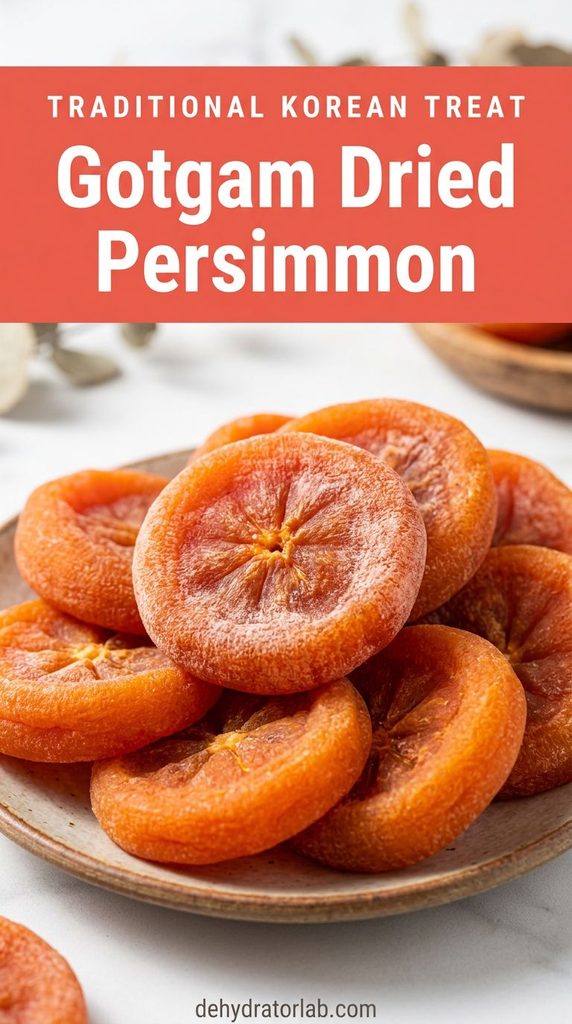
Gotgam is a genuinely traditional Korean dried fruit — whole persimmons air-dried for weeks until the outside turns leathery and a natural sugar bloom forms on the skin. A dehydrator gets you a faster, more reliable version at home. Peel firm, not-yet-soft persimmons, slice into ¼-inch rounds, and dry at 135–145°F (57–63°C) for 8-12 hours until deeply chewy but not brittle.
Use firm Fuyu-type persimmons rather than the soft Hachiya type, which turns to mush before it ever dries. The flavor concentrates into something between a date and dried apricot — worth trying even if you’ve never had fresh persimmon before.
A genuinely traditional snack that most people have never even tried fresh.
5. Dehydrated Kimchi Flakes
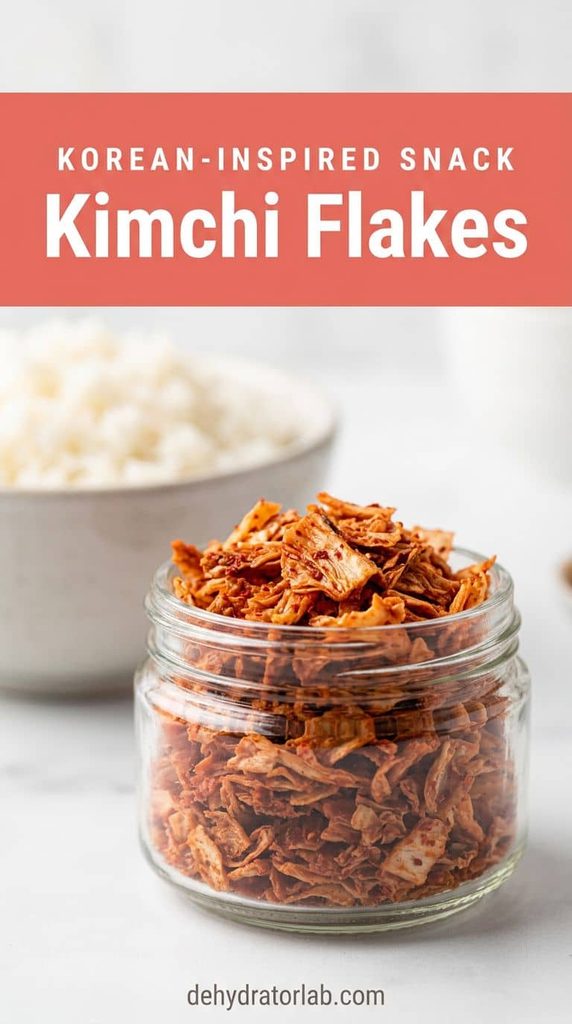
If you already love kimchi, drying it down into flakes turns it into a shelf-stable seasoning you can sprinkle over rice, eggs, or noodles any time the craving hits — no fridge jar required. Squeeze out excess liquid, spread thin, and dry until fully brittle.
I’ve got a full walkthrough with exact temps, times, and grinding tips in my dehydrated kimchi flakes guide, so I won’t repeat the whole method here — that post is the one to follow step by step.
All the punch of kimchi, none of the jar taking up fridge space.
6. Spicy Dried Radish Strips (Banchan-Style)
Dried radish strips show up in Korean side-dish spreads seasoned sweet, salty, or spicy — this version leans spicy, built around gochugaru (Korean chili flakes) instead of fresh chili. Cut Korean or daikon radish into thin matchsticks, toss with a little salt to draw out moisture, pat dry, then dehydrate at 125–135°F (52–57°C) for 4-6 hours.
Once dry, toss the strips with gochugaru, a little sesame oil, minced garlic, and a pinch of sugar to balance the heat. They rehydrate beautifully too, so a batch works as a snack today and a banchan side dish next week. My root vegetable chip recipes roundup has more on drying radish and similar root vegetables if you want the base technique.
A snack today, a side dish next week — same jar, two jobs.

7. Roasted Corn Tea Kernels (Oksusu-cha)
Oksusu-cha is the toasty, faintly sweet corn tea served all over Korea, and it starts with dried corn kernels roasted until deep golden-brown. Dry fresh or blanched corn kernels at 125–135°F (52–57°C) for 6-8 hours until fully hard and rattly, then pan-roast them in a dry skillet until dark golden before steeping in hot water.
The roasting step is what turns plain dried corn into something tea-worthy — skip it and you’ve just got dried corn, not oksusu-cha. My dehydrated corn kernels guide covers the drying half of this in more detail.
A tea that starts on your dehydrator tray, not in a bag from the store.

8. Honey Gochugaru Candied Chickpeas
This one’s the sweet-heat curveball of the list — roasted chickpeas coated in a sticky honey-gochugaru glaze, then dried until the coating sets into a light, crackly shell instead of staying tacky. Toss cooked, dried chickpeas with honey, a spoonful of gochugaru, and a pinch of salt, then dehydrate at 135–145°F (57–63°C) for 4-6 hours, stirring once or twice so they don’t clump.
They land somewhere between a trail mix ingredient and a full-on candy, and they hold up well mixed into a bigger snack bowl with the seaweed chips or corn kernels from this list.
The snack that sneaks protein into what tastes like candy.

Personal Tips You Can Steal
I keep gochujang, gochugaru, and toasted sesame oil stocked at all times now, since they cover most of the flavor work in this whole roundup. I taste-test glazes on one test piece before committing a full tray, since gochugaru heat varies a lot brand to brand.
I dry a double batch of seaweed chips every time since they disappear the fastest of anything on this list. And I label every jar with the make date – kimchi flakes and radish strips look nearly identical once they’re dried and ground.
Final Thoughts
Eight snacks, all built on real Korean pantry staples instead of a “fusion” guess. Some of these you’ll make on repeat within a week, and gotgam alone is worth the whole batch if you’ve never tried traditional dried persimmon before.
Related reading: for more jerky marinade ideas beyond this Korean version, see my 8 sweet and savory jerky marinades, and for more dehydrated vegetable chip ideas, check out 15 dehydrated vegetable chip recipes.
P.S. Start with the gim seaweed chips if this is your first Korean snack batch — it’s the fastest recipe here and basically foolproof. Happy dehydrating! 🙂