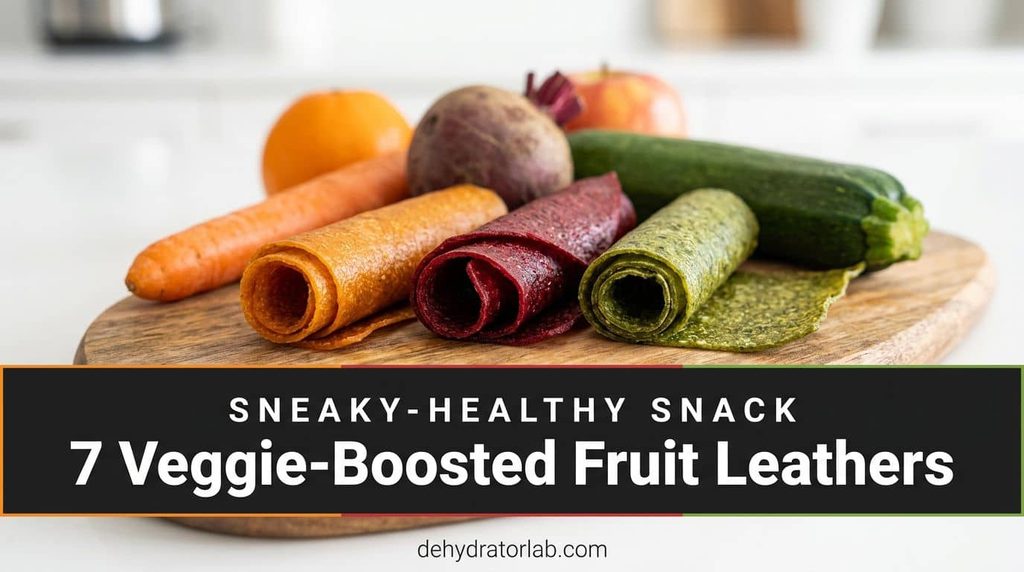
Ever wish there was a way to get an extra vegetable into your kid without a single complaint at snack time? Fruit leather is that way, and they’ll never see it coming.
The trick is simple: cook the vegetable first, blend it with a fruit that’s bold enough to carry the flavor, and let the dehydrator do the rest. Seven combinations below, each one built so the fruit wins the taste test every time. Vegetable purée is thicker than fruit purée, so it rewards the machines I recommend for leather — the ones with proper solid sheets rather than mesh with a liner thrown on top.
As an Amazon Associate, I earn from qualifying purchases. If you make a purchase after clicking on a link I may earn a small commission at no extra cost to you if items are purchased.
In this article:
TL;DR (Too Long; Didn’t Read): Key Takeaways
- 🥕 Seven fruit-forward leathers, each one blended with a cooked vegetable the fruit completely hides.
- 🔥 Cook the vegetable first — steamed, boiled, or roasted until soft. Raw vegetable puree won’t dry the same way fruit does.
- 🌡️ Same base method as any fruit leather: spread thin, dry at 135°F (57°C) for 6-10 hours depending on thickness.
- 🎨 Color matching matters — pair orange with orange, red with red, so nothing looks “off” before a single bite.
- 📦 These run a shorter shelf life than pure fruit leather — less natural sugar and acid means less preservation power, so lean on the fridge or freezer for anything past a week or two.
If fruit leather is new territory for you, how to make fruit leather in a dehydrator covers the base method start to finish before you add a single vegetable to the mix.
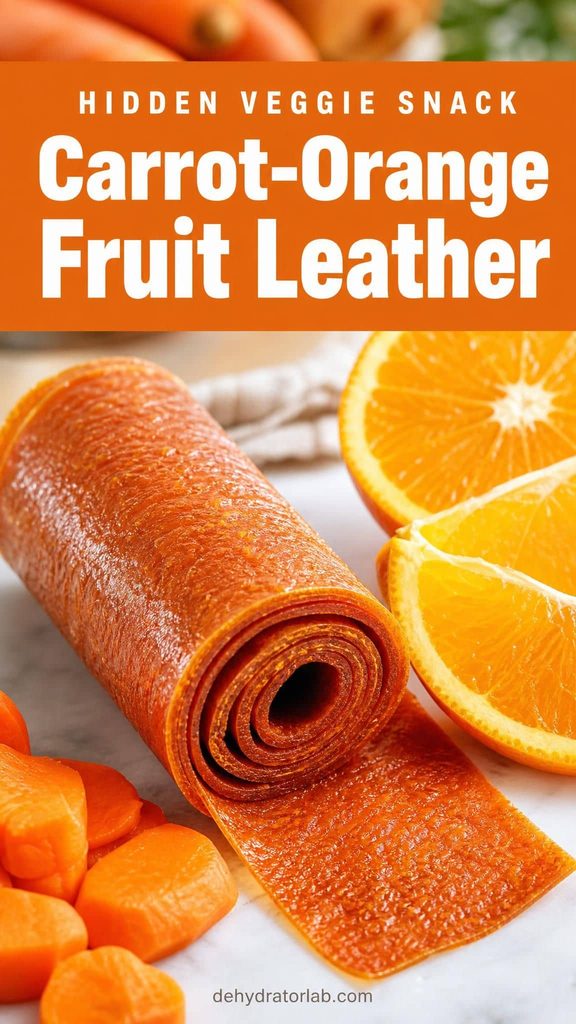
1. Carrot-Orange Fruit Leather
Carrot is already sweet once it’s cooked, and orange is loud enough to cover whatever’s left of the vegetable flavor completely. The color match is the real trick here — nobody double-checks an orange-colored leather.
Steam or boil carrots until fork-tender, then blend with fresh orange juice and a little zest until smooth. Spread thin on a lined tray and dry at 135°F (57°C) for 6-8 hours, checking after hour 6 for tacky and pliable, not wet in the center.
If you keep a jar of dehydrated carrot powder around already, this is a good excuse to use fresh carrot instead for once. Nobody suspects orange on orange.
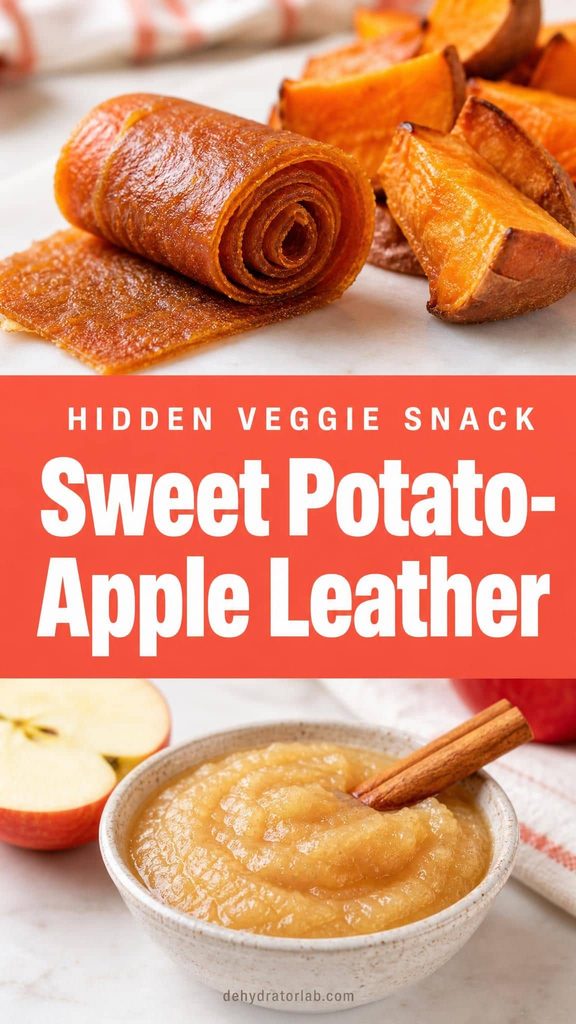
2. Sweet Potato-Apple Fruit Leather
Sweet potato already tastes like dessert once it’s roasted, so pairing it with apple is less about masking flavor and more about stretching one vegetable across a whole batch of snacks.
Roast or boil sweet potato until soft, then blend with unsweetened applesauce and a pinch of cinnamon until smooth. Spread thin and dry at 135°F (57°C) for 8-10 hours — sweet potato runs thicker than most purees, so give it extra time.
Already have a jar of dehydrated sweet potato powder? Whisk a spoonful with warm water instead of roasting one from scratch. My apple recipes roundup has more ways to use the applesauce half if you end up with extra. Tastes like pie filling, counts as a vegetable.
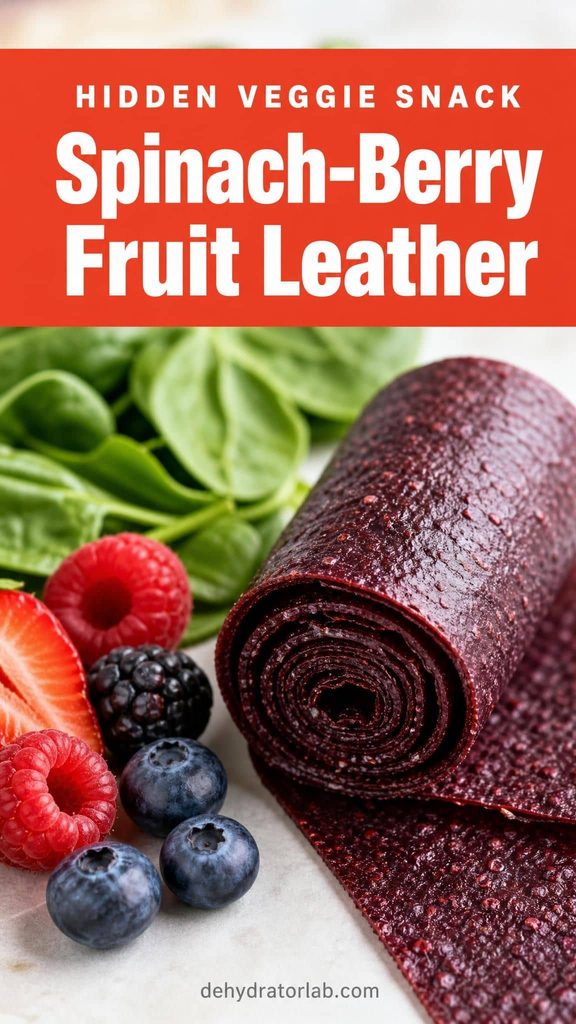
3. Spinach-Mixed Berry Fruit Leather
This is the boldest one on the list, and it works because berries are dark enough to swallow spinach’s green completely. A small amount goes a long way — too much and you’ll taste it, so start light.
Steam spinach briefly until wilted, squeeze out the extra water, then blend with a mix of strawberries, blueberries, and blackberries until smooth. Spread thin and dry at 135°F (57°C) for 6-8 hours, checking after hour 6.
- Keep spinach under a quarter of the total volume — more than that and the flavor starts to show through.
- Squeeze the spinach dry before blending, or the extra water thins the puree and stretches the dry time.
- My berry recipes roundup has more on picking berries at their sweetest, for the days you want maximum cover.
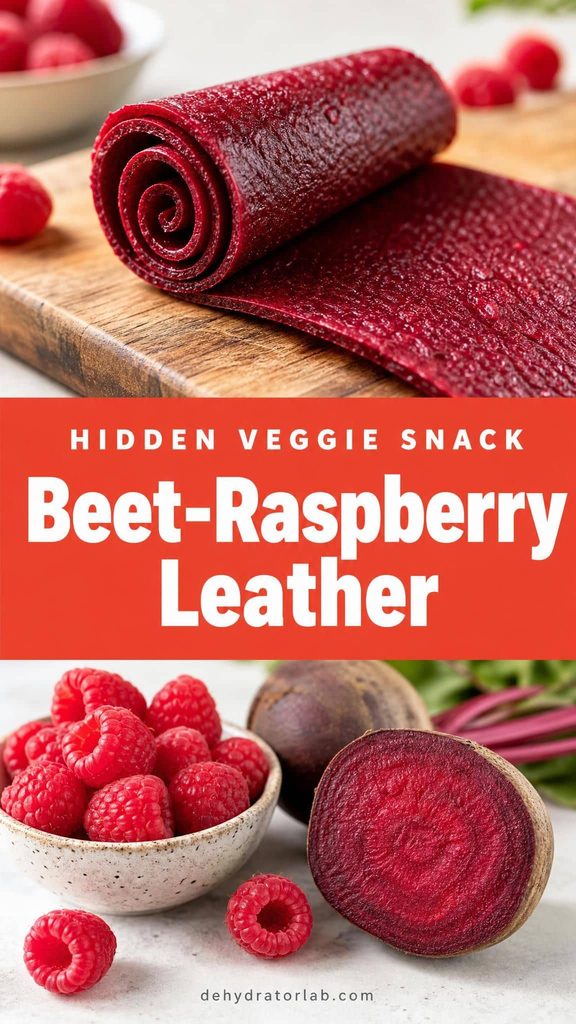
4. Beet-Raspberry Fruit Leather
Beet and raspberry share almost the exact same shade of red, which makes this the easiest color match on the whole list. Beet’s earthy sweetness disappears completely under raspberry’s tart punch.
Boil or roast beets until fork-tender, peel, and blend with fresh raspberries and a squeeze of lemon juice until smooth. Spread thin and dry at 135°F (57°C) for 6-8 hours.
Wear gloves while handling cooked beets, or your cutting board joins the red side too. A jar of dehydrated beet powder works in a pinch if fresh beets aren’t on hand. Red on red, no questions asked.
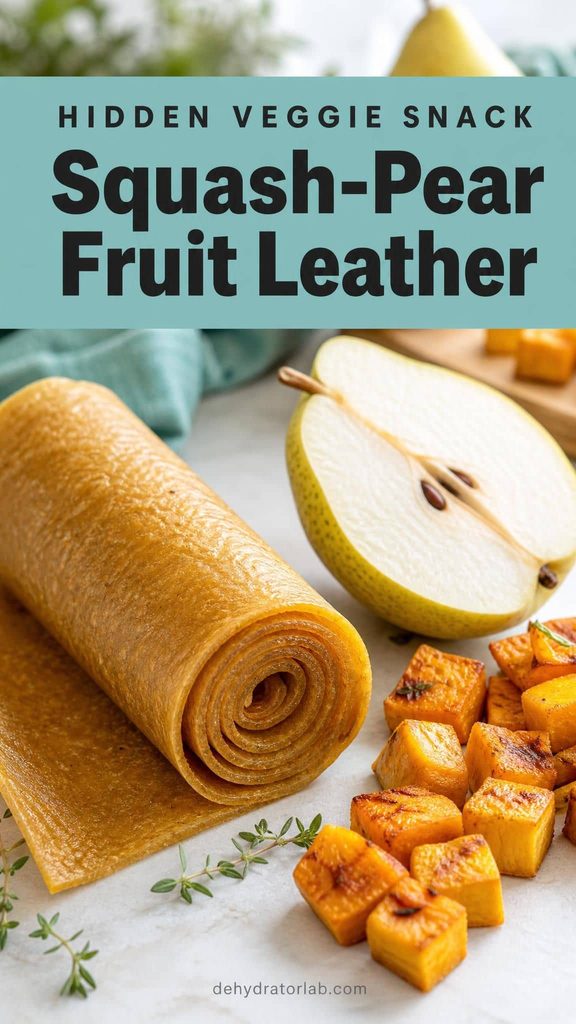
5. Butternut Squash-Pear Fruit Leather
Butternut squash roasts into something mellow and nutty, and pear’s soft sweetness smooths it into a leather that reads as fall dessert, not vegetable snack.
Roast butternut squash until soft, then blend with peeled ripe pear and a pinch of nutmeg until smooth. Spread thin and dry at 135°F (57°C) for 8-10 hours — squash purees thicker than most fruit, so plan for the longer end.
My squash and gourd chip roundup covers the same vegetable in a crunchier direction, if leather isn’t the only thing you want from this squash. Roast it once, use it twice.
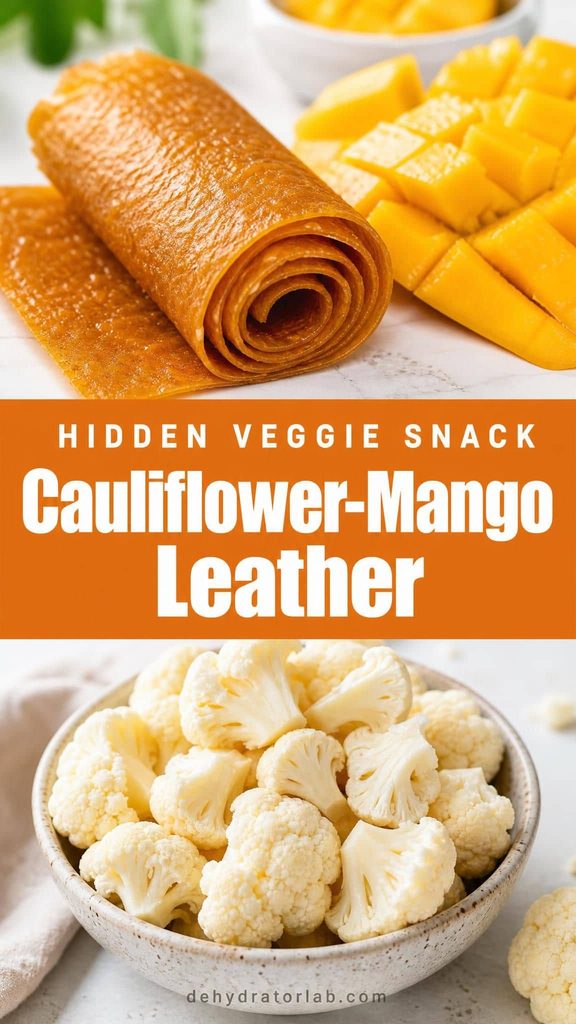
6. Cauliflower-Mango Fruit Leather
Ever notice how cauliflower barely tastes like anything once it’s cooked and blended? That’s exactly why it’s the best vegetable on this list for hiding — mango is loud enough that cauliflower doesn’t get a vote.
Steam cauliflower until very soft, then blend with ripe mango and a squeeze of lime until completely smooth — any lumps will show up as odd texture in the finished leather. Spread thin and dry at 135°F (57°C) for 6-8 hours.
If cauliflower in a dehydrator still sounds odd, my cauliflower jerky recipe proves it handles savory just as well as this handles sweet. The vegetable with nothing to say for itself.
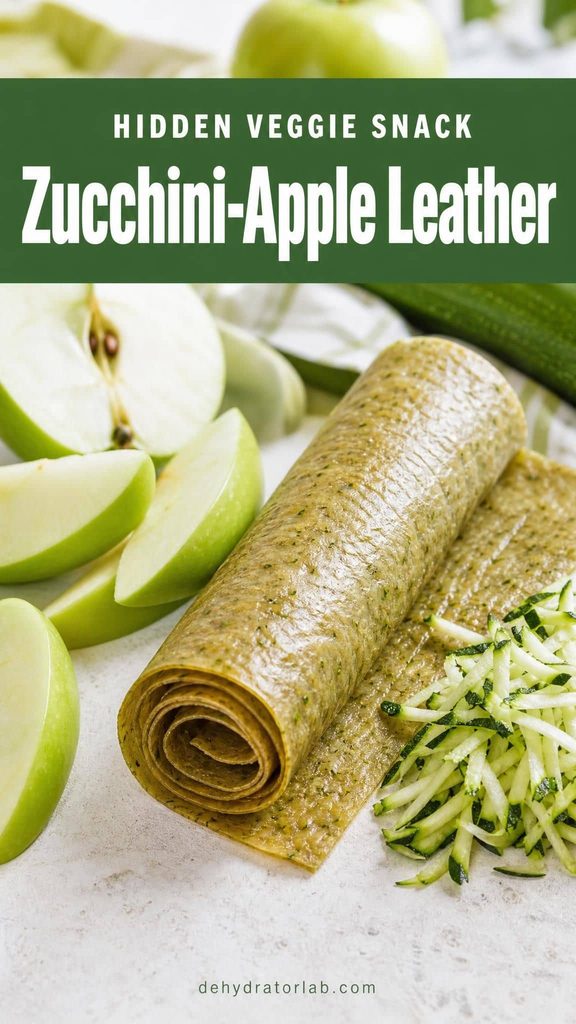
7. Zucchini-Green Apple Fruit Leather
Zucchini is close to flavorless even raw, so cooked and blended into green apple, it disappears entirely — this one’s less about hiding a strong flavor and more about sneaking in the fiber.
Steam or sauté shredded zucchini until soft, squeeze out the extra water, then blend with peeled green apple and a squeeze of lemon juice until smooth. Spread thin and dry at 135°F (57°C) for 6-8 hours, checking after hour 6.
If you’ve never dried zucchini in any form, my how to dehydrate zucchini guide covers the basics on the vegetable solo. The one nobody will even ask about.
Personal Tips You Can Steal
I always cook the vegetable the day before and let it cool completely in the fridge overnight – blending warm vegetable with cold fruit throws off the puree’s consistency more than you’d expect. I keep the vegetable ratio low the first time I try a new combo, then taste-test before committing a full tray to it.
I never skip the lemon or lime juice in the lighter-colored ones; it keeps pale purees from turning brown before they even hit the dehydrator. And because these run a shorter shelf life than straight fruit, I only make a batch as big as we’ll actually eat within a couple weeks.
Final Thoughts
None of these taste like a compromise, and that’s the whole point. Start with carrot-orange or beet-raspberry if you want a sure thing on the first try, then work your way toward cauliflower-mango once you trust the method.
Related reading: if straight fruit is more what you’re after, my fruit leather roundup has ten flavors with no vegetables involved, and 10 dehydrated fruit snack recipes the kids will actually eat has more kid-tested ideas beyond leather. For general food-safety basics on drying produce at home, the National Center for Home Food Preservation’s guide is worth a bookmark.
P.S. Don’t announce what’s in it before snack time — let the empty plate do the convincing, then tell them later if you want to see the reaction 🙂