In this article:
How to Make Cauliflower Jerky in a Food Dehydrator
Alright, let’s talk about jerky. You’re probably thinking of beef, right? Tough, chewy, protein-packed strips that have saved many a hiker from hangry meltdowns. But what if I told you one of the most satisfying, addictive jerky recipes you’ll ever make doesn’t involve meat at all?
I know, I know. It sounds a little out there. But trust me on this. Cauliflower jerky is a game-changer. It’s chewy, deeply flavorful, and so moreish you’ll find yourself hiding the final batch from your family. I speak from experience. My last attempt disappeared so fast, I’m pretty sure my dog developed thumbs.
So, if you’re looking for a killer plant-based snack, want to use that dehydrator gathering dust in your cupboard, or are just plain curious, you’ve come to the right place. Let’s turn that humble, often-misunderstood veggie into a snack you’ll actually crave.
TL;DR: Key Takeaways
- 🔪 Cut into ¼-inch steaks through the core, not florets — even drying matters.
- 🥣 Marinate at least 2 hours, ideally overnight, for real flavor penetration.
- 🌡️ Dry at 135°F for 4-8 hours until leathery and pliable, not crisp.
- 🧂 Pat off excess marinade before loading trays to speed drying.
- 📦 Room temp keeps it a week, fridge stretches it to 2-3 weeks.
Why on Earth Would You Make Jerky from Cauliflower?
Before we get our hands dirty, let’s address the elephant in the room. Why cauliflower? It’s not exactly known for its meaty texture.
Well, that’s where the magic happens. Cauliflower is a blank canvas. It doesn’t have a strong flavor of its own, which means it soaks up marinades like a sponge. And when you slowly dehydrate it, something miraculous occurs. It loses its water content and transforms into a delightfully chewy, almost meat-like bite.
It’s perfect for vegetarians, vegans, or anyone just trying to eat a few more veggies without dying of boredom. Who knew a boring veggie could be this exciting? It’s also a lot cheaper and quicker to make than beef jerky, which is a huge win in my book.
Gathering Your Gear and Ingredients
You don’t need a ton of fancy equipment, but a few key items are non-negotiable. Don’t worry, the list is short and sweet.
The Essential Tool: Your Dehydrator
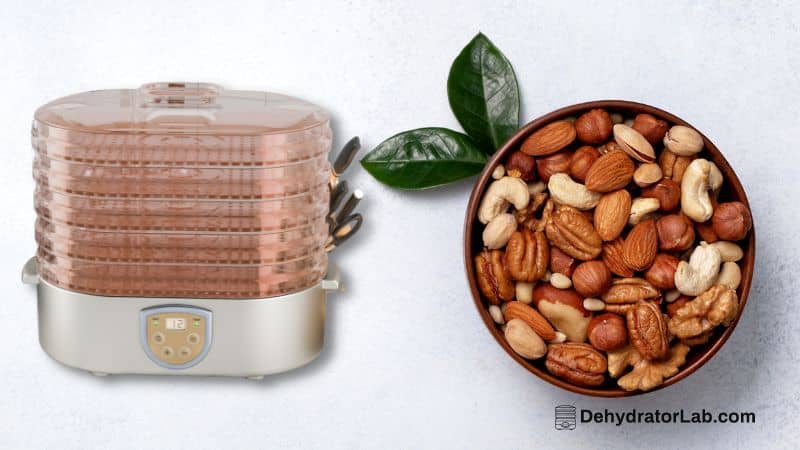
You absolutely need a food dehydrator for this. An oven can work on its very lowest setting, but it’s inconsistent, uses way more energy, and you risk baking instead of dehydrating. A dehydrator gives you low, steady, circulating air, which is the secret to perfect jerky.
I use a basic circular model with a stackable tray design. It’s not fancy, but it gets the job done. If you have one with a digital thermostat, even better! You can set it and forget it.
The Star of the Show: The Cauliflower
This one’s pretty obvious. Grab one large, fresh head of cauliflower. Look for one that’s firm, with tightly packed florets and no soft or brown spots. You want a good, dense head—it’ll yield more jerky for your efforts.
For the Can’t-Live-Without-It Marinade
The marinade is everything. This is where you define the flavor. I’ve tested a lot of combinations, and this savory, slightly smoky, umami-packed blend is my hands-down favorite. You’ll need:
- ½ cup soy sauce or tamari (use tamari for a gluten-free option)
- 2 tablespoons olive oil
- 1 tablespoon maple syrup or agave nectar
- 2 teaspoons smoked paprika
- 1 teaspoon garlic powder
- 1 teaspoon onion powder
- ½ teaspoon liquid smoke (Don’t skip this! It’s the cheat code for that smoky jerky flavor.)
- Optional: ¼ teaspoon cayenne pepper or a few cracks of black pepper for a little kick
Feel free to play around with this. Love heat? Add some chili flakes or a dash of sriracha. Prefer teriyaki? Swap the maple syrup for a tablespoon of brown sugar and a teaspoon of grated ginger. This is your jerky. Make it your own.
The Pre-Game: Prepping Your Cauliflower for Greatness
This is the most important step. Get this right, and you’re golden. Mess it up, and you’ll have either mushy or burnt cauliflower. We want chewy, not chewy-charcoal.
The Cutting Board is Your Battlefield
First, wash that cauliflower and pat it completely dry. Water is the enemy of dehydration.
Now, for the critical part: cutting. You want to slice the cauliflower into steaks. Don’t just break it into florets. Why? Florets have a crazy, uneven surface area. The thin tips will burn to a crisp long before the thick stems dehydrate.
Here’s my method:
- Remove the leaves and slice off the very bottom of the stem.
- Place the cauliflower head upright on your cutting board. Using a sharp chef’s knife, slice straight down through the center, right through the core.
- You’ll get two large halves with the core intact. Now, slice each half into ¼-inch thick slices. The core is your best friend here—it holds the “steaks” together.
You’ll get some perfect steaks from the middle and a bunch of smaller, flatter pieces from the edges. That’s totally fine! The variety gives you different textures. Just make sure every piece is about the same ¼-inch thickness. Consistency is key for even drying.
The Flavor Infusion: Marinating Like a Pro
This is where the magic starts. You’ve prepped your ‘flower, now let’s give it some personality.
Mixing and Marinating
In a medium bowl, whisk together all of your marinade ingredients until they’re well combined. Taste it! Does it need more smoke? More sweetness? Adjust it now.
Add your cauliflower slices to a large, resealable plastic bag or a shallow baking dish. Pour the marinade over the top, then seal the bag or cover the dish.
Now, the hardest part: waiting. You need to let this marinate for at least 2 hours, but ideally overnight in the fridge.
I’m impatient, so I get the struggle. But believe me, the overnight marinade makes a world of difference. The flavor penetrates all the way through, resulting in a much more complex and delicious jerky. Don’t rush it!
Once it’s done marinating, pull the bag out of the fridge. Drain the cauliflower in a colander, but do not rinse it. You want all that glorious flavor to stay put. Gently pat the slices with a paper towel to remove excess marinade. This helps speed up the drying process.
The Main Event: Dehydrating Your Jerky
The moment of truth! Fire up that dehydrator.
Time and Temperature are Everything
Arrange your marinated cauliflower slices in a single layer on the dehydrator trays. Make sure none of them are overlapping, or they won’t dry properly.
Now, set your dehydrator to 135°F (57°C). This is the sweet spot for vegetable jerky. It’s high enough to safely remove the moisture efficiently, but low enough that you won’t cook it.
Pop the trays in, turn on the machine, and let it work its magic. The total drying time will be between 4 to 8 hours.
Why such a big window? It depends on the humidity in your house, the thickness of your slices, and your personal preference for chewiness. I like my jerky on the softer, chewier side, so I start checking around the 4-hour mark.
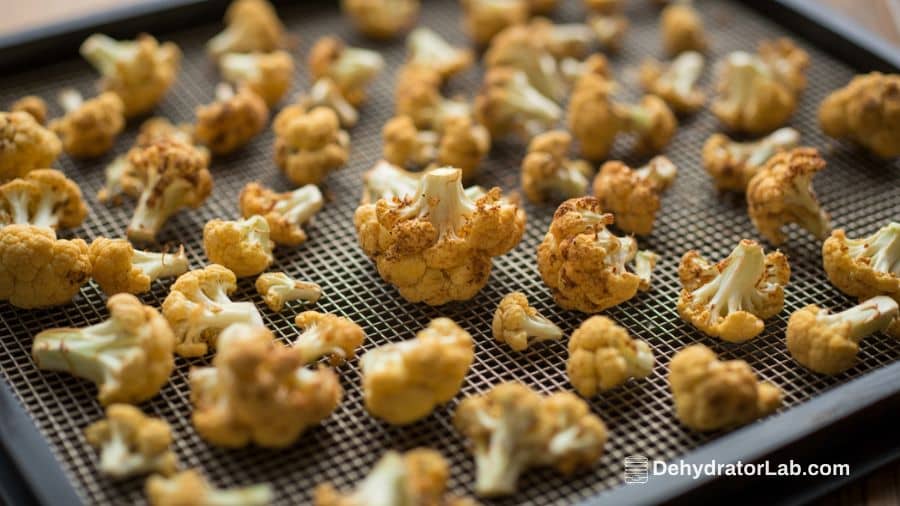
How do you know when it’s done? The jerky should be leathery and pliable, but not crisp. It shouldn’t feel wet or sticky. When you bend a piece, it should flex without breaking, but you shouldn’t see any moisture seep out. If a piece snaps in two, you’ve probably gone a bit too long—it’ll still taste great, just be a little crunchier.
Stashing Your Snack (Storage Tips)
You did it! You made cauliflower jerky. Now, let’s make sure it lasts.
Let the jerky cool completely on the trays before you even think about storing it. Trapping any residual heat will create steam and mold, and we’ve worked too hard for that.
Once it’s cool, store your jerky in an airtight container. I use a glass jar with a lid. You can keep it at room temperature for about a week.
For longer storage—if it even lasts that long—pop it in the refrigerator. It’ll stay fresh and chewy for 2-3 weeks. I’ve never had a batch last long enough to test its freezer longevity, but it probably freezes well too.
Your Next-Level Jerky Journey
So, there you have it. You’ve transformed a simple head of cauliflower into a savory, satisfying, and seriously addictive snack. It’s a conversation starter, a lunchbox hero, and proof that plants can be just as fun as any other food.
The best part? This is just the beginning. Now that you’ve mastered the basic recipe, you can go wild. Try a buffalo sauce marinade, a sweet and sour glaze, or a spicy gochujang mix.
Go on, give it a shot. And when your friends are begging you for the recipe, you can casually tell them it’s just cauliflower. The look on their faces will be totally worth the effort.
Happy dehydrating!
P.S. — Cut steaks, not florets. It’s the single biggest reason people end up with burnt tips and mushy stems.