Ever cook a big batch of protein on Sunday, then watch half of it turn sad in the fridge by Thursday?
Your dehydrator fixes that. Cook lean meat first, dry it hard, and you get light, dense pieces that wait in a jar or the freezer until you need them. Here are eight cooked proteins to make once and use all month.

As an Amazon Associate, I earn from qualifying purchases. If you make a purchase after clicking on a link I may earn a small commission at no extra cost to you if items are purchased.
In this article:
TL;DR: Key Takeaways
- 🌡️ USDA FSIS says to heat meat to 160°F (71°C) and poultry to 165°F (74°C) before you dehydrate it. Cook first, always.
- 🥩 Lean wins. NCHFP says to trim and discard all fat because it turns rancid quickly, and REI says to choose lean or extra-lean meat only.
- 🐔 REI also says home-cooked chicken will not rehydrate unless it was canned or pressure cooked, so my chicken recipes lean on canned chicken or a simmer.
- 📅 The sources disagree on shelf life, from 2 weeks to 2 months at room temperature, so I plan on 2 weeks, then the freezer.
- 🍳 Eight proteins: taco turkey, Italian turkey sausage, ham, Canadian bacon, canned chicken, pork tenderloin, ground chicken, and lean ground beef.
- 📦 Dry hard, cool fully, vacuum-seal small portions, and freeze what you won’t use soon.
Every recipe below starts with about 1 pound (450 g) of raw meat, or the can sizes I name. I cook each protein first, blot the fat, spread it in a single thin layer, and dry it at 145°F (63°C), the same temperature REI uses for meat. Drying times, yields, and seasoning amounts are my own, because piece size, tray load, and humidity move them.
I already have a full guide to dehydrated cooked ground beef, so beef gets a short spot at the end instead of a repeat. For full trail dinners built on top of these proteins, my backpacking meal recipes are the next stop.
Dried meat only stays good if air and moisture stay out. A vacuum sealer pulls the air out and flattens the bag, and the box below is the kind I use.

- 【Clear Vacuum Bags】Our sealable vacuum bags are made of high quality materials can withstand high temperature, food save…
- 【Suit For Most Vacuum Sealer Machines】These clear bags can Suit for all clip vacuum bag sealing machines directly, the b…
- 【Popular Size Bags for Food Storage】With pre-cut Vacuum Sealer Bags,Heavy Duty Pre-Cut Design Commercial Grade Food Seal…
Cook First, Then Dry: The Temperature Rule
Drying does not make raw meat safe by itself, so every recipe here is cooked before it goes on a tray. FSIS says to steam or roast meat to 160°F (71°C), and poultry to 165°F (74°C), as measured with a food thermometer, before dehydrating. It then says to dry at an air temperature of at least 130–140°F (54–60°C) throughout. NCHFP preheats its dehydrator to 140°F (60°C), and REI dries ground beef and chicken at 145°F (63°C). I use 145°F (63°C) for every recipe in this article.
Raw meat has its own clock. FSIS says to use or freeze raw ground beef and poultry within 2 days, and whole red meats within 3 to 5 days, with the fridge at 40°F (4°C) or below. Cook your protein while it’s fresh, not when it’s on its last day.
Why Lean Meat Wins, and Fat Is the Enemy
Fat is what ruins dried meat on the shelf. NCHFP says to trim and discard all fat because it becomes rancid quickly. REI says to choose lean or extra-lean meat only, since extra fat can lead to spoilage, and to blot fat with paper towels after cooking and again during drying. That’s why most of the list is turkey, ham, chicken, and tenderloin.
Blotting is the step people skip. Press a paper towel on the crumbles right out of the pan, and again at the halfway point of the drying cycle. If towels still come away greasy, the batch is a use-it-this-week batch, not a pantry batch.
How Long Does It Keep? The Sources Disagree
Here’s the honest part. NCHFP says properly dried jerky keeps two weeks at room temperature in a sealed container, and that refrigerating or freezing is best for longer. FSIS says home-dried jerky can be stored 1 to 2 months. REI says dried meat in freezer bags in a cool, dark place should be eaten within a month, and that vacuum-sealed, frozen meat can last up to a year.
None of those pages is about cooked crumbles specifically, so treat them as the closest guides available. My rule is the cautious end: up to 2 weeks at room temperature, then vacuum-sealed in the freezer. That’s my own call, not a published limit. For storage by food type, check how long dehydrated food lasts, and my Mylar bag picks cover bulk storage.
Rehydrating: What the Sources Say About Chicken
REI states plainly that home-cooked chicken will not rehydrate unless it was canned or pressure cooked. It also says ground beef doesn’t rehydrate well on its own, and that adding 1/2 cup of bread crumbs per pound of meat helps. I follow both. Canned chicken gets its own recipe, and the ground chicken recipe is a simmer-only recipe.
Whatever you rehydrate, cover it with just-boiled water and heat it until it’s steaming hot before you eat it. That last part is my own habit.
Let’s get into it.
1. Taco-Seasoned Turkey Crumbles
Taco night, with nothing in the fridge. This is the easiest protein to start with.
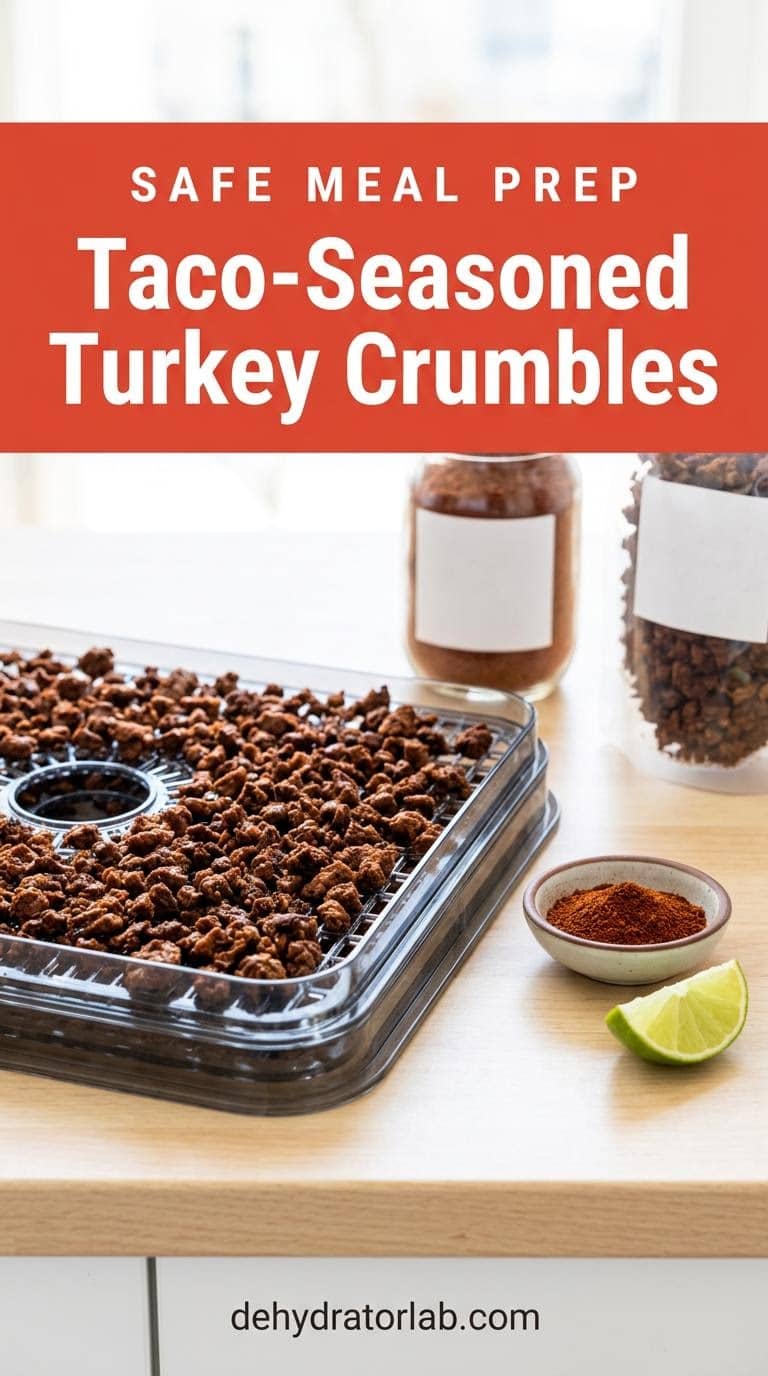
Cook 1 pound (450 g) of extra-lean ground turkey in a skillet, breaking it into small crumbles, until a thermometer reads 165°F (74°C). Stir in 2 tablespoons of taco seasoning (chili powder, cumin, paprika, garlic powder, oregano) and 1/2 cup of plain bread crumbs, the ground-meat trick from REI.
Blot with paper towels, spread thin on a mesh sheet, and dry at 145°F (63°C) for about 5 to 7 hours, until the pieces are dark, hard, and dry all the way through. Break a few open to check. Pair it with my dehydrated black beans and dehydrated corn for a no-cook taco bowl.
To rehydrate, cover with just-boiled water for 10 to 15 minutes, then drain and heat through. Taco night, minus the fridge.
2. Italian Turkey Sausage Crumbles
Sausage already has the seasoning built in, so this one is the lowest effort on the list.
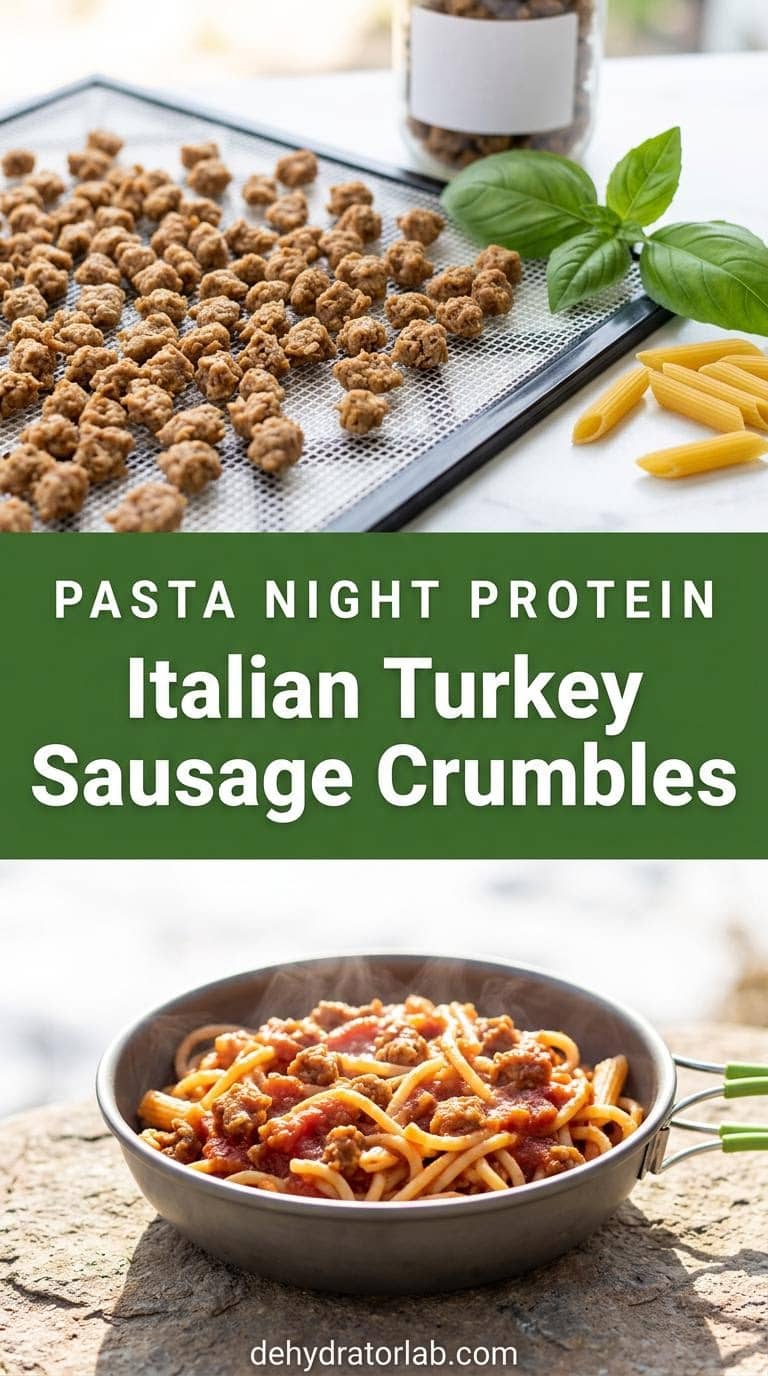
Remove the casings from 1 pound (450 g) of lean turkey sausage and cook it, crumbled small, to 165°F (74°C). Blot with paper towels, then blot again, because sausage holds more fat than plain turkey even when the label says lean. Dry at 145°F (63°C) for about 5 to 7 hours, blotting once at the halfway point. The pieces should snap, not bend. Add no extra salt, since the sausage is already seasoned. These go into pasta with a spoonful of my tomato powder, and my one-pot trail meals show how to build the bag.
Check the label for added sugar and fillers. Pasta night in a bag.
3. Lean Ham Dice
Ham dries into little salty cubes that hide in almost anything.
Trim all visible fat from 1 pound (450 g) of lean cooked ham steak and cut it into 1/4 inch (6 mm) dice. Ham is already cooked, but I still steam the dice until a thermometer reads 160°F (71°C), because the FSIS rule applies to meat before drying. Blot, spread thin, and dry at 145°F (63°C) for about 5 to 7 hours until hard. Ham is cured and salty, and salt concentrates as water leaves, so season nothing and taste before you add more. Stir the cubes into rice, soup, or eggs. My dehydrated scrambled eggs make a fast breakfast partner.
Pick a lean ham steak with no sugar glaze. Salty, light, and ready.

4. Canadian Bacon Breakfast Bits
Canadian bacon is lean, and lean is exactly what dehydrators like.
Trim any edge fat from 8 ounces (225 g) of Canadian bacon and cut it into 1/4 inch (6 mm) dice. Steam the dice to 160°F (71°C), blot, and spread them thin. Dry at 145°F (63°C) for about 4 to 6 hours, until the cubes are hard and dry through the middle. They’re small and lean, so they dry faster than ham. At camp, pour just-boiled water over them for 10 minutes, then stir them into my dehydrated egg recipes for camping for a hot breakfast.
Check the label for added sugar and skip any sweet-cured version. Hot breakfast, no cooler.

5. Canned Chicken Shreds
Remember REI’s warning about home-cooked chicken? Canned chicken is the workaround, and it’s cheap.
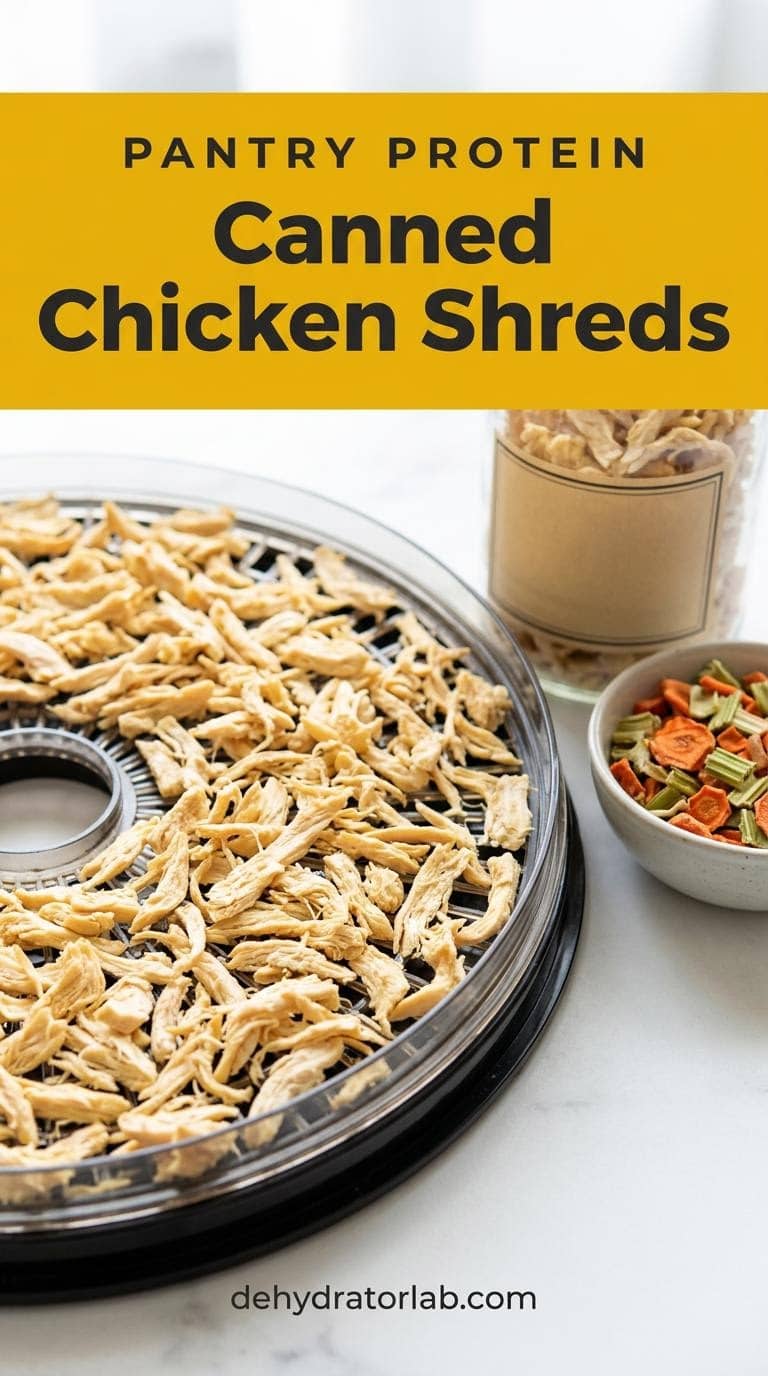
Drain two 12.5-ounce (354 g) cans of chicken breast very well and break the chicken into pea-sized pieces. Canned chicken is already cooked, but I heat it through to 165°F (74°C) before drying, a cautious extra step that is my own rule. Blot hard, spread thin, and dry at 145°F (63°C) for about 6 to 8 hours, until dry and brittle, which is how REI describes its chicken. Rehydrate in soup. It’s one of the proteins I reach for in my dehydrated soup mixes, and my dehydrated canned tuna guide uses the same canned-protein idea.
Pick a brand packed in water, not oil. Shelf-stable chicken, made lighter.
6. Carnitas-Style Pork Tenderloin Bits
Pork tenderloin is one of the leanest cuts, which makes it a good candidate for the dehydrator.
Trim every bit of fat and silver skin from a 1-pound (450 g) pork tenderloin and rub it with cumin, smoked paprika, garlic powder, and a little salt. Roast or steam it to 160°F (71°C), the FSIS number for meat before drying. Shred it fine or cut it into 1/4 inch (6 mm) dice, blot well, and dry at 145°F (63°C) for about 6 to 8 hours, until hard and dry all the way through.
Pork bits come out chewier than turkey, so simmer them for about 10 minutes in a rice or bean bowl instead of just soaking them. My bell pepper powder adds sweet color to the pot.
Chewy is normal here. Carnitas that weigh next to nothing.

7. Ground Chicken Crumbles (Soup Only)
This is the one with a warning label, so use it where a simmer will fix the texture.
Cook 1 pound (450 g) of ground chicken breast in small crumbles to 165°F (74°C), blot, and spread thin. Dry at 145°F (63°C) for about 6 to 8 hours, until dry and brittle. REI says home-cooked chicken will not rehydrate, so don’t expect a soak-and-eat result. Drop the crumbles into a simmering pot for 10 to 15 minutes instead, where they soften into chewy little pieces. That texture note is my own, so test a small batch first. My dehydrated soup recipes for hiking are good places to use it.
If you want no-simmer trail meals, use recipe 5 instead. Simmer it, don’t soak it.

8. Lean Ground Beef, the Short Version
This is the classic, and it already has its own guide, so here are only the basics.
Cook 1 pound (450 g) of 90 to 95 percent lean ground beef until no pink remains, break it into crumbles, and blot. REI adds 1/2 cup of bread crumbs per pound and dries at 145°F (63°C) for about 6 hours, until the meat is dark and dry, with about 2 cups of dried beef as the result. My full cooked ground beef guide covers the rinse step, conditioning, and the variations. Once you have a jar, my chili backpacking meal and beef stew backpacking meal put it to work.
Start here if you’ve never dried meat. The easiest protein to batch.

Quick Reference: Eight Proteins at a Glance
| Protein | Cook to | Drying time | Best use |
|---|---|---|---|
| 1. Taco turkey crumbles | 165°F (74°C) | 5–7 h at 145°F (63°C) | Taco bowls, rice |
| 2. Italian turkey sausage | 165°F (74°C) | 5–7 h at 145°F (63°C) | Pasta, one-pot meals |
| 3. Lean ham dice | 160°F (71°C) | 5–7 h at 145°F (63°C) | Rice, soup, eggs |
| 4. Canadian bacon bits | 160°F (71°C) | 4–6 h at 145°F (63°C) | Camp breakfast |
| 5. Canned chicken shreds | 165°F (74°C), my step | 6–8 h at 145°F (63°C) | Soup, no-simmer bowls |
| 6. Pork tenderloin bits | 160°F (71°C) | 6–8 h at 145°F (63°C) | Rice and bean bowls |
| 7. Ground chicken crumbles | 165°F (74°C) | 6–8 h at 145°F (63°C) | Simmered soup only |
| 8. Lean ground beef | No pink, per my guide | About 6 h at 145°F (63°C), per REI | Chili, pasta, stew |
The 160°F (71°C) and 165°F (74°C) cooking temperatures, the 130–140°F (54–60°C) minimum drying air temperature, and the raw meat storage times follow USDA FSIS. The advice to trim all fat and the two-week room-temperature figure follow NCHFP.
The 145°F (63°C) drying temperature, the lean-meat rule, the bread crumb ratio, the chicken rehydration warning, and the one-month and one-year storage figures follow REI. Every other drying time, every recipe amount, every texture note, and my two-week room-temperature rule are my own.
Personal Tips You Can Steal
I weigh every batch on a kitchen scale before and after drying, so I know how much water to add later. I check the temperature with a thermometer every time and never go by color. I blot the fat twice, once after cooking and once halfway through drying.
I vacuum-seal single-meal portions and write the protein, the date, and the water amount on each bag. I freeze anything I won’t eat within two weeks, using reusable freezer pouches for the batches I’m eating soon. I throw out any bag that smells off or feels damp. I test every new protein in a soup at home before it goes in a pack.
Final Thoughts
You don’t need all eight. Start with the taco turkey and the Canadian bacon bits, since they’re the easiest to cook and the easiest to use, and add canned chicken for soups. For full trail dinners to put them in, my camping meals roundup and my backpacking meal recipes are the next stops, and if you want a chewy snack instead, my ground meat jerky recipes are worth a look.
Related reading: dehydrated cooked ground beef, 7 dehydrated egg recipes for camping, 8 dehydrated soup mix recipes, and 10 dehydrated foods to always have stocked.
P.S. Cook it hot, dry it hard, and freeze what you won’t eat soon. 🙂