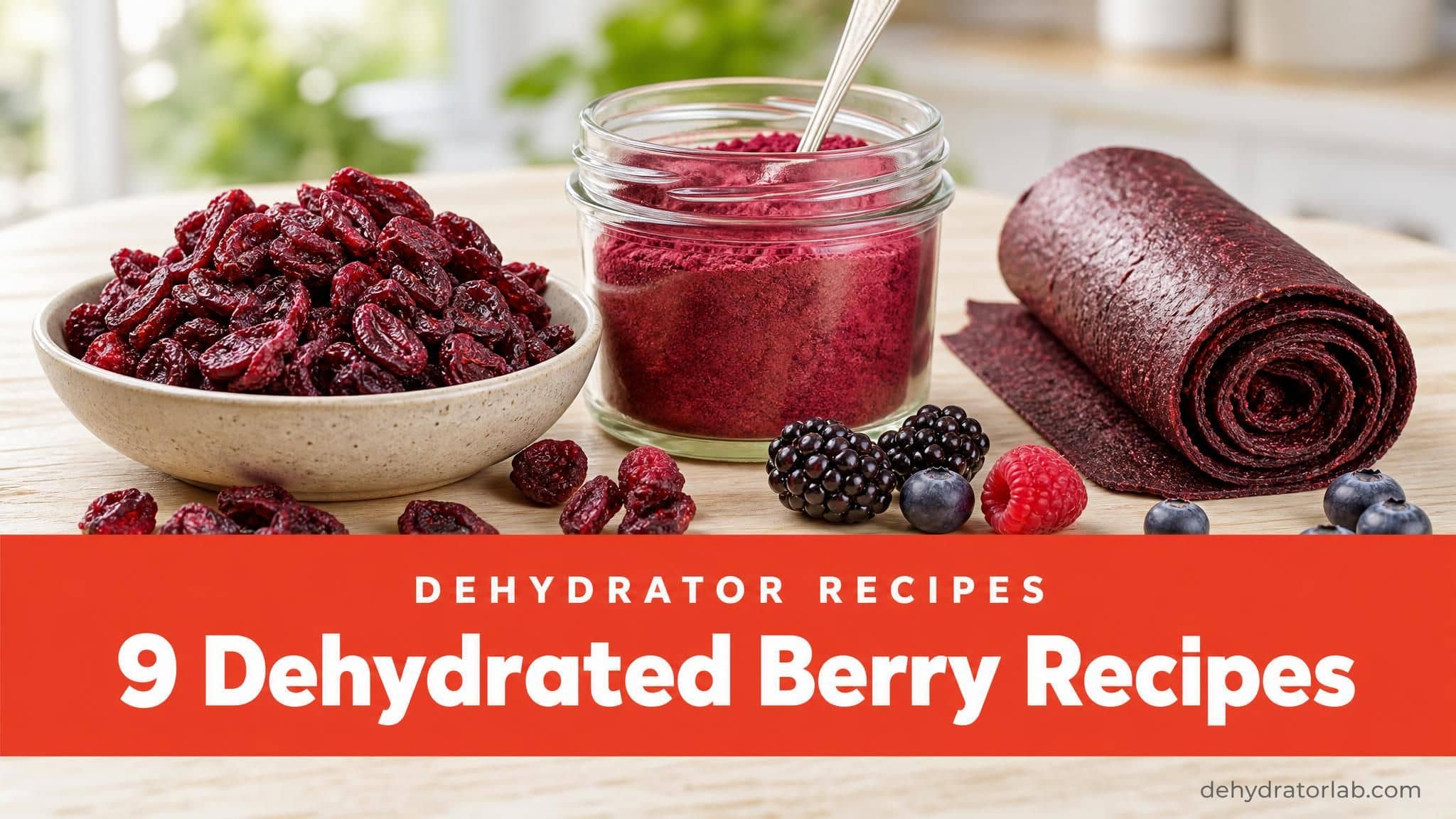
Ever handed your kid a store-bought fruit snack pouch and squinted at the ingredient list? Corn syrup, three kinds of dye, and “fruit” buried somewhere around ingredient number nine. Let’s fix that with real fruit and your dehydrator.
I’ve been running trays through my Excalibur for years, mostly because my own kids went through fruit snacks like they were free. These ten recipes are the ones that actually survive the ride home from the pantry to the lunchbox — no mush, no fighting, no “I don’t like this one” halfway through the bag.

As an Amazon Associate, I earn from qualifying purchases. If you make a purchase after clicking on a link I may earn a small commission at no extra cost to you if items are purchased.
In this article:
TL;DR (Too Long; Didn’t Read): Key Takeaways
- 🍎 Ten dehydrated fruit snacks kids actually finish, from cinnamon apple chips to homemade raisins.
- 🌡️ Most fruit dries at 135–140°F (57–60°C); the range you land on depends on cut thickness and how chewy you want the result. Holding that range for a full day without drifting is where machines differ, so it’s worth seeing the dehydrators I recommend for fruit before you commit to a batch.
- 🚫 No added sugar needed — the fruit’s own sugars concentrate as the water leaves.
- 🍯 A quick lemon juice dip keeps apples, pears, peaches, and bananas from browning in the tray.
- 🎒 Every recipe here packs for lunchboxes, hikes, and car rides without turning into a sticky mess.
- 📦 Store everything airtight, cool, and dark — most of these keep 1–2 months at room temp.
Grab whatever fruit’s ripening on your counter and let’s get into the list — I lined these up from the easiest starting point to the ones worth saving for a weekend batch.
1. Cinnamon Apple Chips
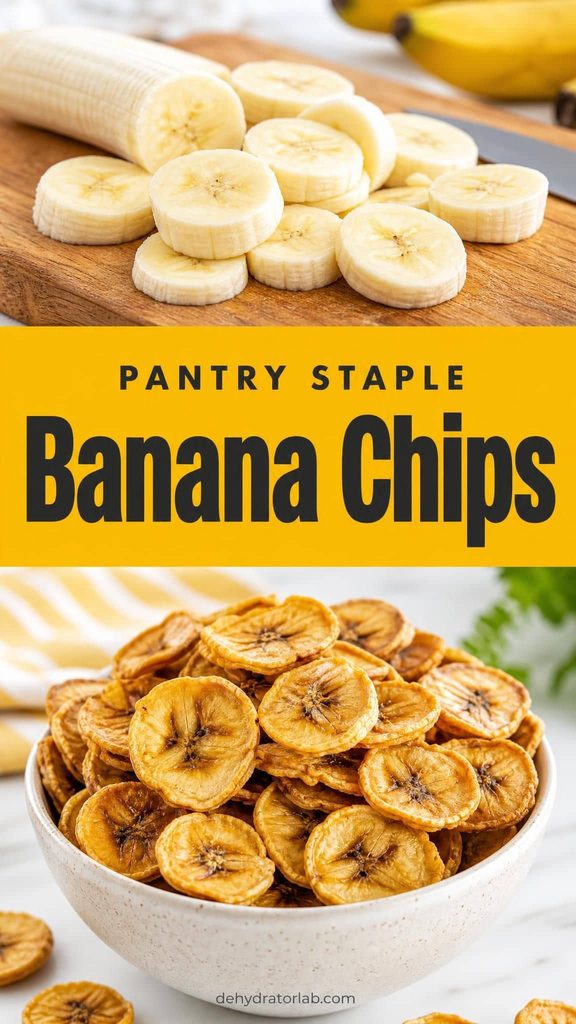
This is the one every kid-snack list starts with, and for good reason. Thin apple rounds dusted with cinnamon come out of the dehydrator crisp-brittle and taste like the inside of a pie without any of the sugar you’d add to actually bake one.
Slice apples about 1/8-inch thick on a mandoline so every ring dries at the same rate, dip in lemon water for 2–3 minutes to stop browning, then load single layer with no overlap. Run your dehydrator at 135–140°F (57–60°C) for 6–10 hours depending on thickness and how many trays you’re running at once.
Want it closer to a fruit leather? Try the apple cinnamon fruit leather version instead — same flavor, different bite. For the chips, pull a piece and check it: it should snap without bending, not go soft under a squeeze. Store in a jar with the lid tight for weeks of grab-and-go snacking.
2. Strawberry Fruit Roll-Ups
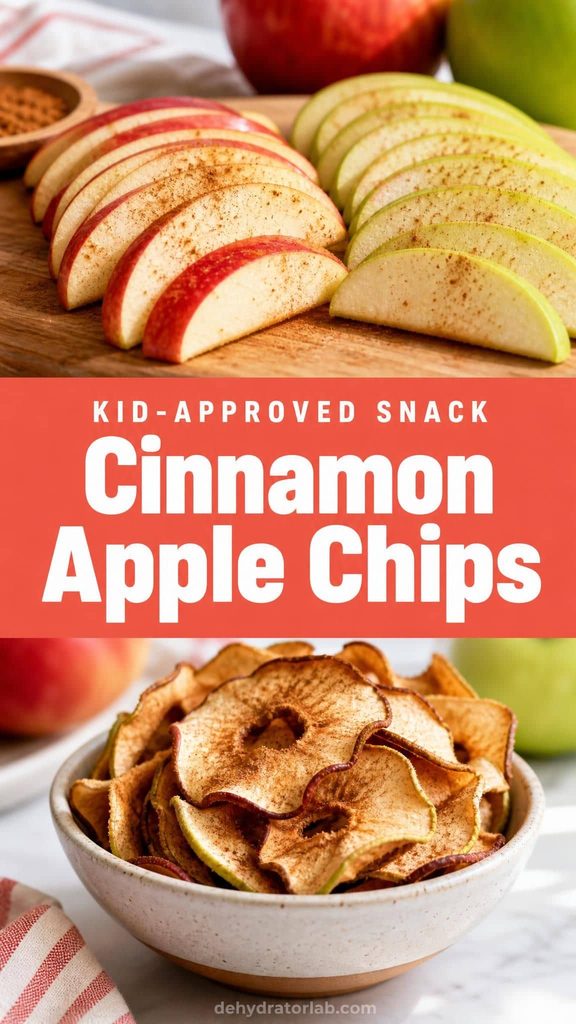
This is the recipe that gets the loudest reaction, because it looks exactly like the foil-pouch snack kids already know — except it’s just strawberries. Blend hulled strawberries into a smooth puree, pour it thin onto a lined dehydrator sheet, and let the machine do the rest. A lined mesh tray works, but lipped sheets that keep purée in place are what stop a thin pour from running off the edge.
Dry at 135°F (57°C) for 6–8 hours, checking after hour 6 — you want it tacky and pliable, not wet in the center and not so dry it cracks when you roll it. A half banana blended in adds natural sweetness and helps the leather hold together for cleaner rolls.
- Sweeter batch: blend in a spoonful of applesauce along with the strawberries.
- Faster prep: skip the blender and use a food processor pulse instead.
- Longer shelf life: roll in parchment before storing so pieces don’t fuse into one giant sticky lump.
Full technique and troubleshooting lives in how to make fruit leather in a dehydrator — read that once and you can swap in almost any fruit.
3. Banana Chips
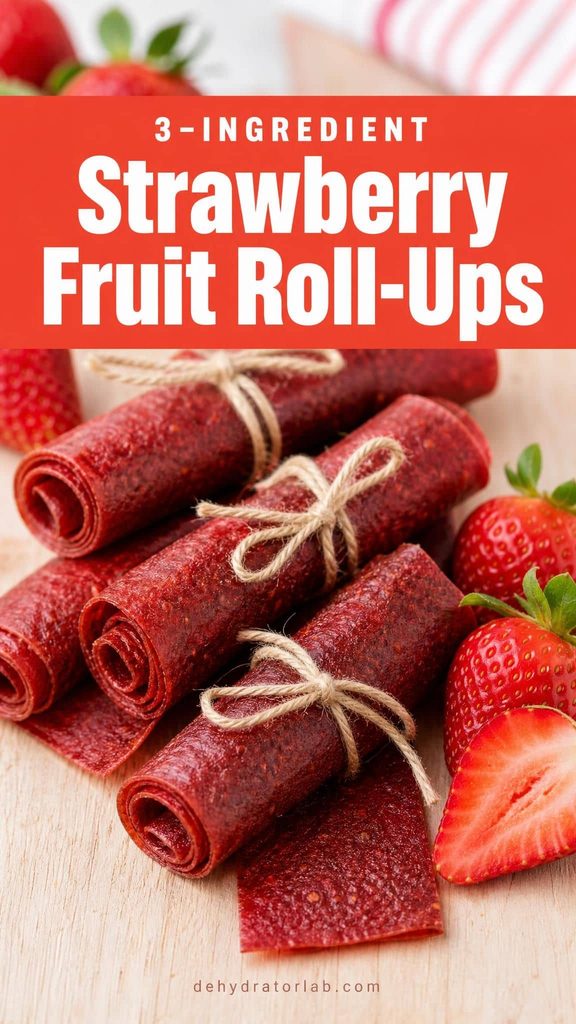
Bananas are the walk in the park of this whole list. Unzip them, slice into 1/4-inch rounds, dip briefly in lemon water so they don’t go brown on the tray, and load single layer for even drying.
Run 135°F (57°C) for 8–10 hours if you want them chewy, or push closer to 12 hours for a crisp, chip-like snap. The riper the banana, the sweeter the chip — but overripe ones turn gummy in the middle, so aim for spotted, not black.
My full method with four different cutting and dip options is in how to dehydrate bananas. Kids who won’t touch a fresh banana will absolutely eat the chip version — it’s happened in my house more than once.
4. Mango Strips
Ever wonder why mango goes from juicy to chewy-candy the second the dehydrator gets to it? Sugar content is the reason. Mango carries more natural sugar than most fruit on this list, so the dried result tastes closer to candy than to a health snack — kids never argue with that trade.
Pick fruit that’s ripe but still holds its shape when sliced — too soft and you’ll fight the slicer the whole way through. Cut into 1/4-inch strips, dry at 135–140°F (57–60°C) for 8–10 hours, and pull pieces that are leathery and pliable, not sticky.
The step-by-step is in how to dehydrate mango. If your kids like heat later on, that same base recipe scales up into a spicy mango jerky for the adults raiding the same jar.

5. Pineapple Rings (Fun Shapes)
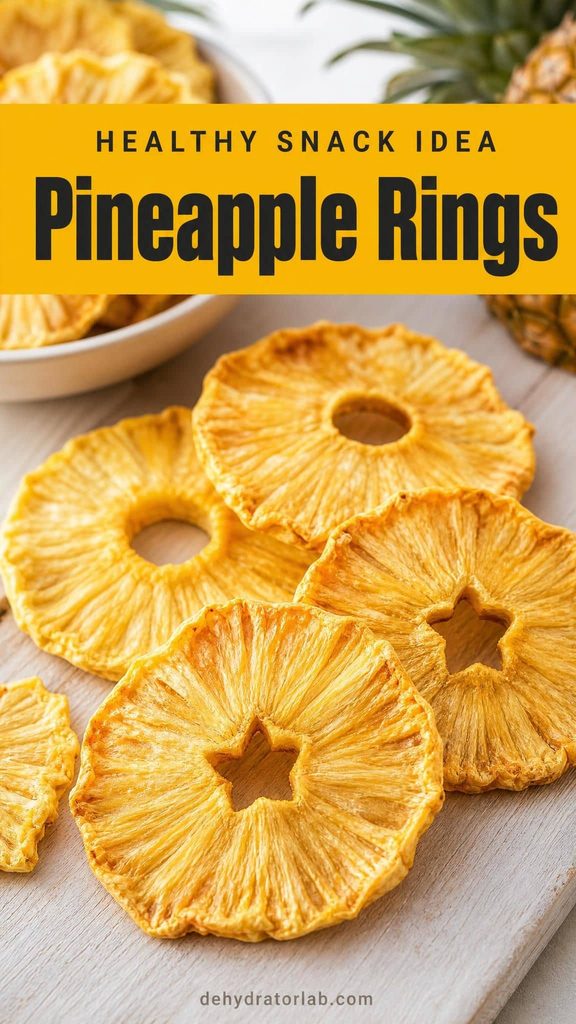
Pineapple already dries into something close to candy, so the only job left is making it fun to grab. Cut rings about 1/4-inch thick, then press a small star or heart cookie cutter through the center before drying — same fruit, better odds a picky kid says yes.
Dry at 135°F (57°C) for 8–12 hours depending on ring thickness and how much juice your pineapple was carrying. Pull pieces when they’re chewy at the edges and just slightly tacky in the center — they firm up more as they cool.
Full walkthrough at dehydrated pineapple rings, including how to keep the enzymes from irritating your mouth if you’re working with very fresh fruit. Uneven shapes dry unevenly, so keep those rings roughly the same size.
6. Peach Slices
Peaches dry into something closer to a chewy gummy than a chip, which is exactly why kids go back for more. Peel if you want a smoother texture, slice into 1/4-inch wedges, and give them a quick lemon water dip so they don’t brown before the tray even goes in.
Dry at 135°F (57°C) for 8–10 hours. Ripeness is the variable that shifts this the most — a very ripe peach releases more moisture and can run an hour or two longer. You’re done when a slice bends without cracking and doesn’t feel wet at the center.
Full method and storage notes are in make dehydrated peaches in a food dehydrator. Toss a handful into a snack mix with the banana chips above for variety in one bag.

7. Watermelon “Fruit Jerky”
This is the one that surprises people. Watermelon is over 90% water, so it feels like an odd dehydrator candidate — but what’s left behind after all that water leaves is a chewy, deeply sweet, almost fruit-jerky texture that tastes nothing like fresh watermelon. The transformation is the whole appeal.
Cut 1/4-inch slabs, blot dry with a towel before loading, and be patient — the water content is the enemy here, and it stretches drying time well past a typical fruit. Run 135–140°F (57–60°C) for 10–15 hours, checking after hour 10.
Full timing and cut guidance is in how to make watermelon chips in a food dehydrator. Fair warning: this one disappears fast once kids realize it tastes like a fruit-flavored candy strip, not a vegetable.

8. Mixed Berry Fruit Leather
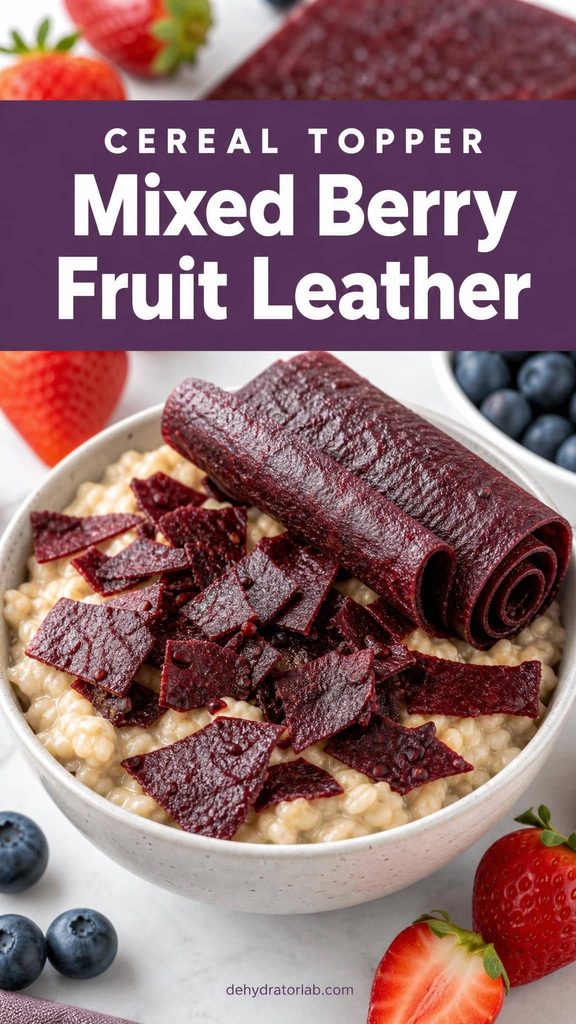
Blueberry and strawberry together dry into a deep purple-red leather that works as more than a snack — crush a sheet into flakes and it doubles as a cereal or oatmeal topper. That’s the move if your kids are picky about “wet” fruit but fine with crunchy fruit dust.
Blend equal parts blueberries and strawberries, strain if you want a smoother sheet, pour thin, and dry at 135°F (57°C) for 6–8 hours. Berries carry less pectin than apples or bananas, so this leather stays a little softer — that’s normal, not a fail.
- Snack roll: cut into strips and roll in parchment, exactly like the strawberry version above.
- Cereal topper: let it dry an extra hour past tacky, then crumble by hand.
- Baking mix-in: chop small and fold into muffin batter for a burst of real fruit flavor.
Same base technique as the fruit leather guide — swap in whatever berries are cheapest that week.
9. Cinnamon Pear Chips
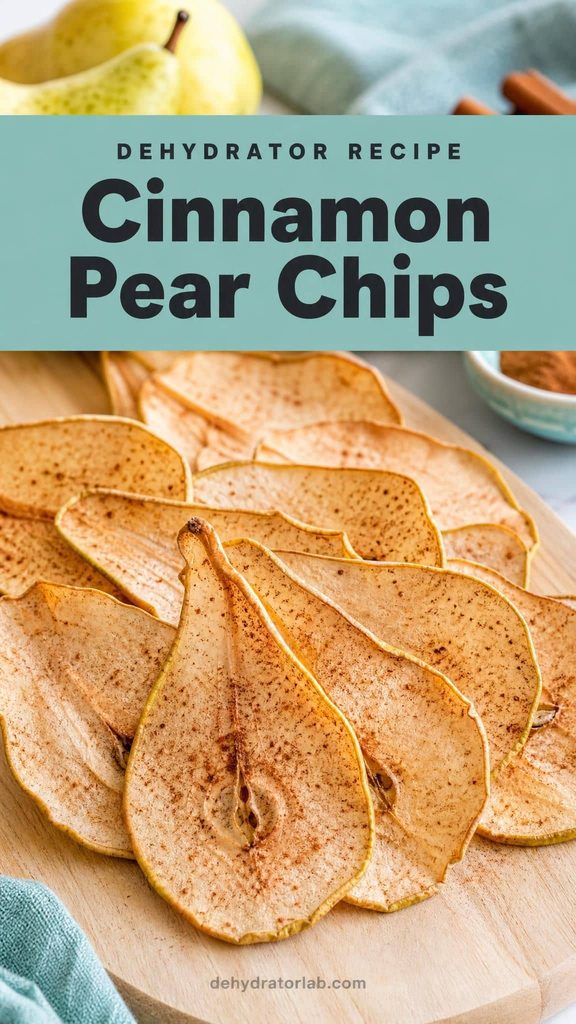
Pears dry a little softer and more floral than apples, which makes them worth keeping on rotation instead of picking one or the other. Slice 1/8-inch thick on the same mandoline you used for the apple chips, dust lightly with cinnamon, and load single layer.
Dry at 135–140°F (57–60°C) for 6–10 hours. Pears vary more than apples do batch to batch — a very ripe pear runs faster, a firm one takes the long end of the range. Pull when a chip snaps clean rather than bending.
I don’t have a full dehydrator write-up on pears yet, but the air fryer cinnamon pear chips post covers the same flavor if you want a faster batch on a night you don’t want to wait, and the general rules in 15 best fruits to dehydrate cover the rest. Consistency over speed still wins for a shelf-stable batch.
10. Homemade Raisins
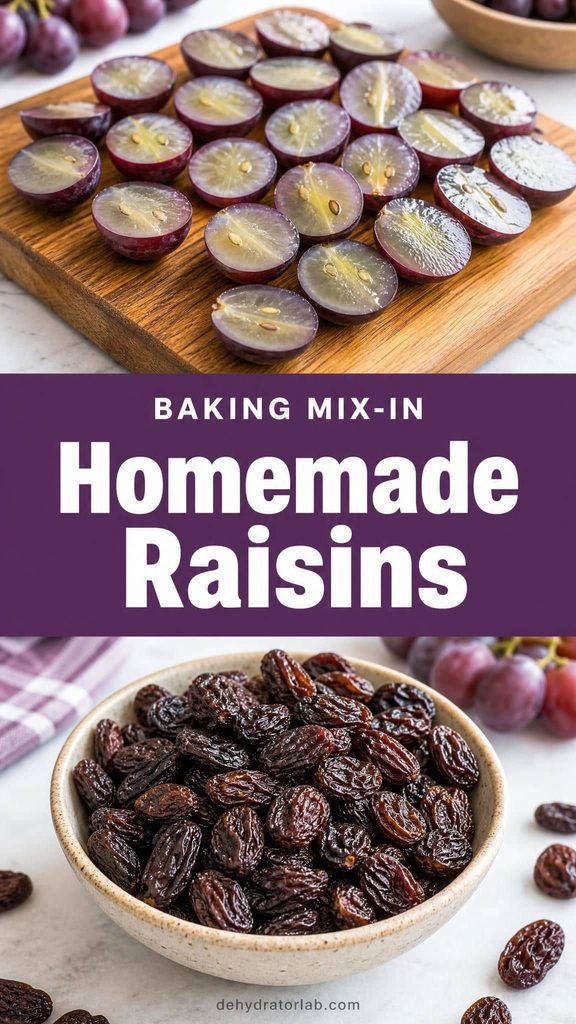
The simplest recipe on this list and, oddly, the one that surprises kids the most — because most of them have never actually watched a grape turn into a raisin. Wash grapes, halve them (whole grapes work too, they just take longer), and load single layer, cut side up.
Dry at 135–140°F (57–60°C) for 24–36 hours. That’s a long stretch compared to everything else here — grape skins act as a natural barrier, and halving cuts the time down noticeably versus drying grapes whole. Be patient; this one runs overnight and then some.
Full timing breakdown and doneness cues are in how to dehydrate grapes in a food dehydrator. No added sugar, no oil coating like the store-bought kind — just grape, concentrated down to the raisin you remember.
Personal Tips You Can Steal
I run a lemon-water bowl next to the cutting board for every light-colored fruit on this list, because rinsing browning apples mid-batch wastes more time than the dip ever costs. I keep my Excalibur 3526TB loaded with two trays of the same fruit at a time so I’m not guessing at different finish times across the machine.
I always cut a test piece from the middle tray, not the edge, before calling a batch done — edge pieces dry faster and lie to you. I label every jar with the fruit and the date, because future me never remembers which jar is three weeks old. And I never skip the cool-down before sealing; warm fruit in a sealed jar means condensation, and condensation means mold within a week.
Final Thoughts
None of these ten need a special occasion — they’re just what happens when you run whatever fruit is sitting on your counter through the dehydrator instead of letting it go soft. Start with the apple chips or the banana chips if this is your first batch; both are close to foolproof and give you the confidence to try the trickier ones like watermelon and raisins.
Related reading: if the kids like the crunchy side of this list more than the chewy side, check out 6 kid-friendly dehydrated veggie chips next, and browse 15 best fruits to dehydrate at home for a few more options that didn’t make this particular cut.
P.S. Keep a small notebook by the dehydrator and jot down which fruit, which cut, and how many hours it actually took. You’ll stop guessing by batch three and start repeating your best ones on purpose 🙂