Ever read the ingredient list on a bag of store-bought dog treats and not recognize half of it?
A dehydrator fixes that in one step. Most of these recipes are a single ingredient, dried low and slow until they’re chewy or crisp — no preservatives, no mystery fillers, no salt your dog doesn’t need.
Quick note before we start: every dog is different, so if yours has allergies, a health condition, or you’re not sure about portion size for their weight, run new treats by your vet first.
Let’s fix that ingredient list with treats you can actually pronounce.

In this article:
TL;DR: Key Takeaways
- 🐾 8 simple, dog-safe dehydrated treats — mostly single-ingredient, all free of salt, seasoning, and added sugar.
- ⚠️ None of these go anywhere near onion, garlic, xylitol, chocolate, or grapes — the well-known toxic list for dogs.
- 🌡️ Produce dries at 125–140°F (52–60°C); meat and fish run hotter, 145–155°F (63–68°C), after a full pre-cook.
- 🍗 Meat and fish items get fully cooked before they go in the dehydrator — raw isn’t a shortcut here, it’s a risk.
- 🥜 Read every label — peanut butter and some “natural” ingredients can hide xylitol, which is toxic to dogs in tiny amounts.
- 📦 Stored airtight, most of these keep 2-3 weeks at room temperature, longer in the fridge.
Eight treats, zero mystery ingredients. Let’s get into it.
1. Sweet Potato Chews
This is the treat that beats rawhide on every front — one ingredient, fully digestible, and dogs go nuts for the chewy-firm texture. Slice sweet potato into ¼-inch rounds with a mandoline for even thickness, skip any oil or seasoning, and dry at 130–140°F (54–60°C) for 6-8 hours.
For the same slicing and drying technique on the human side, my how to dehydrate sweet potatoes guide covers the details — just leave out any spice rub for the dog version.
- Just one ingredient, no seasoning needed
- Slice thickness controls chewy vs. crunchy
- Keeps for weeks in an airtight container at room temperature
The single-ingredient chew that beats rawhide every time.

2. Chicken Jerky Strips
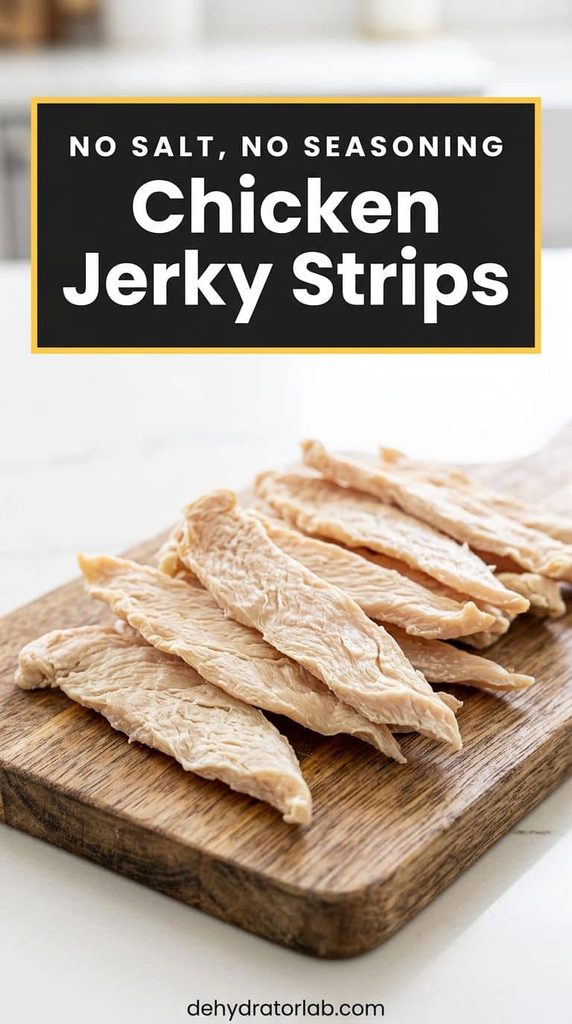
This is your dog’s version of jerky, minus the seasoning packet. Trim lean chicken breast of all fat and skin — fat turns rancid fast and can upset a dog’s stomach — then slice into strips about ¼ inch thick.
Cook the chicken all the way through first (internal temp of 165°F/74°C) before it goes anywhere near the dehydrator; raw poultry carries the same salmonella risk for pets it does for people. Then dry at 145–155°F (63–68°C) for 4-6 hours until firm and dry throughout, with no squishy centers.
For the general method, my chicken jerky in a food dehydrator guide has the full human version — for a dog, skip the marinade and seasoning entirely.
No seasoning packet needed for this one.
3. Beef Liver Treats
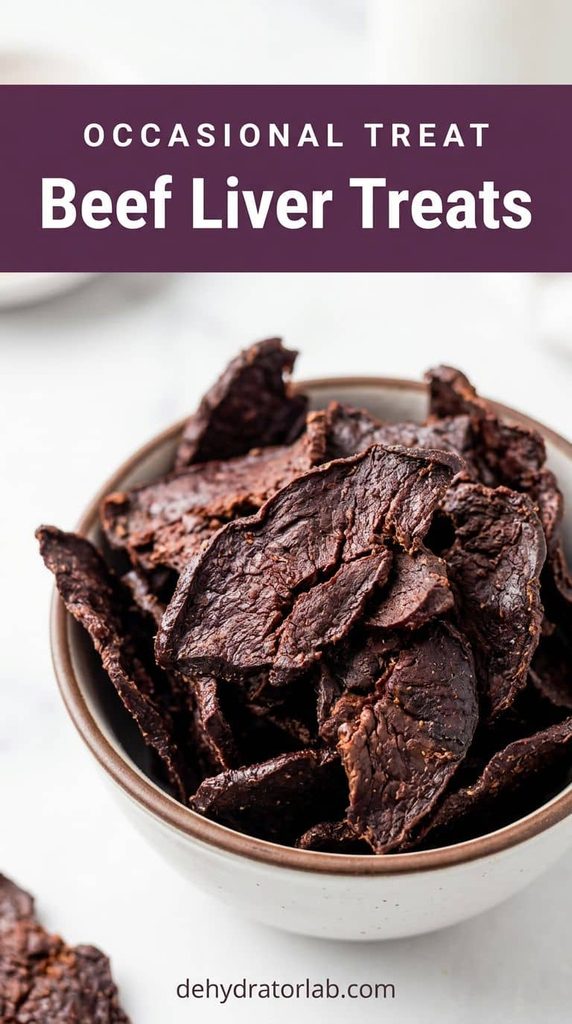
Ever notice which treat your dog picks first every time? It’s usually this one — the smell alone gets tails wagging. Slice beef liver thin, about ⅛ inch, since it shrinks a lot as it dries.
Cook it briefly first — a quick pan-sear or boil until no longer pink inside — since organ meat carries more bacteria risk raw than muscle meat does. Then dry at 145–155°F (63–68°C) for 8-12 hours until fully dry with a brittle-snap texture, unlike the chewier chicken jerky above.
Worth noting: liver is extremely rich in vitamin A, so a handful of these a week is plenty — this one’s an occasional extra, not a daily staple. For notes on storing dried meat safely long-term, see my how long dehydrated meat lasts guide.
The treat that disappears the fastest.
4. Apple & Cinnamon Dog Treats
All the crunch of a treat, none of the sugar. Core the apple completely and remove every seed — apple seeds contain trace amounts of a cyanide-producing compound, so coring fully is a habit worth keeping even though a stray seed or two isn’t an emergency.
Slice into ⅛-inch rounds, dust lightly with real cinnamon (never nutmeg, which is toxic to dogs), and dry at 135–140°F (57–60°C) for 6-8 hours until leathery — dogs tend to prefer the chewier bite here over a crisp chip.
For more on picking the right apple variety and slicing technique, see my best apples to dehydrate guide — just skip any recipe that adds sugar or a caramel coating.
All the crunch of a treat, none of the sugar.

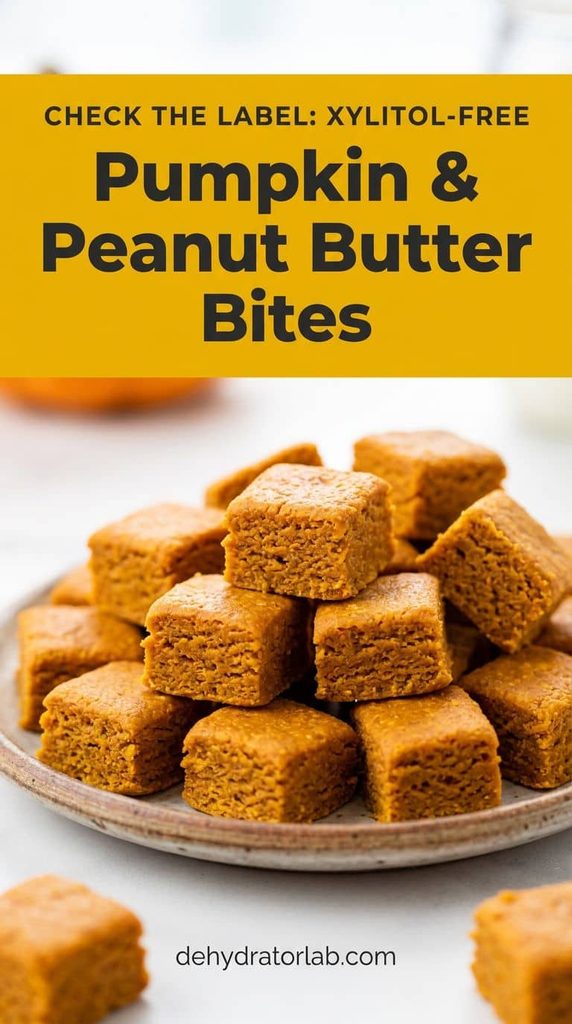
5. Pumpkin & Peanut Butter Bites
This is the one where the label check matters most. Puree plain canned pumpkin — 100% pumpkin, never pumpkin pie filling, which has added sugar and spices like nutmeg — with a spoonful of peanut butter, and check that label carefully every single time: some “natural” peanut butters now sweeten with xylitol, which is toxic to dogs even in tiny amounts.
Spread the mixture thin on a lined tray and dry at 125–135°F (52–57°C) for 8-10 hours until firm, then cut into bite-sized pieces before storing.
For the plain single-ingredient technique behind each half of this recipe, see my dehydrated pumpkin and dehydrated peanut butter guides.
- Always 100% pumpkin, never pie filling
- Peanut butter must say xylitol-free on the label
- Cut into pup-sized bites before storing
The one where reading the label actually matters.
6. Salmon Jerky Strips
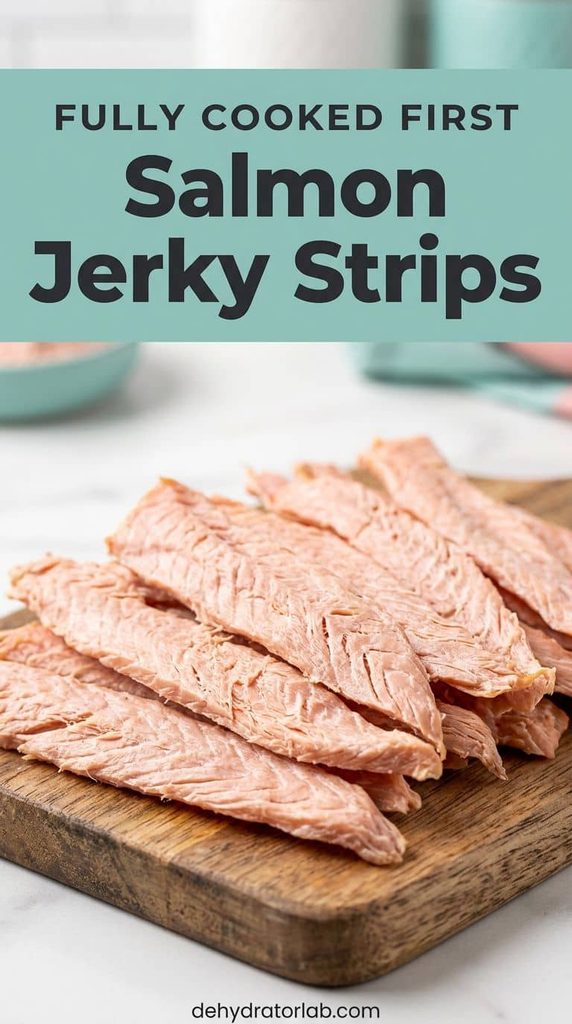
Be advised, raw salmon is a real hazard for dogs — Pacific salmon in particular can carry a parasite that causes salmon poisoning disease, which is genuinely dangerous. Always bake or steam the salmon fully cooked first, remove every bone, and flake or slice it into strips.
Dry at 145–155°F (63–68°C) for 6-8 hours until firm and dry throughout. It’s a great source of omega-3s for a shiny coat, but treat it as an occasional add-in rather than a daily staple, and stick to smaller fish to keep mercury exposure low.
My best dehydrator for jerky guide covers the human seasoned versions — for a dog, drop every marinade and spice and dry the fish plain.
Omega-3s dogs actually love the taste of.
7. Carrot Chips for Dogs
A teething trick that lasts on the shelf instead of the freezer. Slice carrots into rounds or matchsticks, no seasoning needed, and dry at 125–135°F (52–57°C) for 6-8 hours until fully crisp.
The firm, dried texture holds up well to gnawing, which makes this a shelf-stable alternative to the frozen-carrot trick a lot of puppy owners already use. For more on the plain drying technique, see my dehydrated carrot guide.
A teething trick that lasts on the shelf.

8. Banana Dog Treats
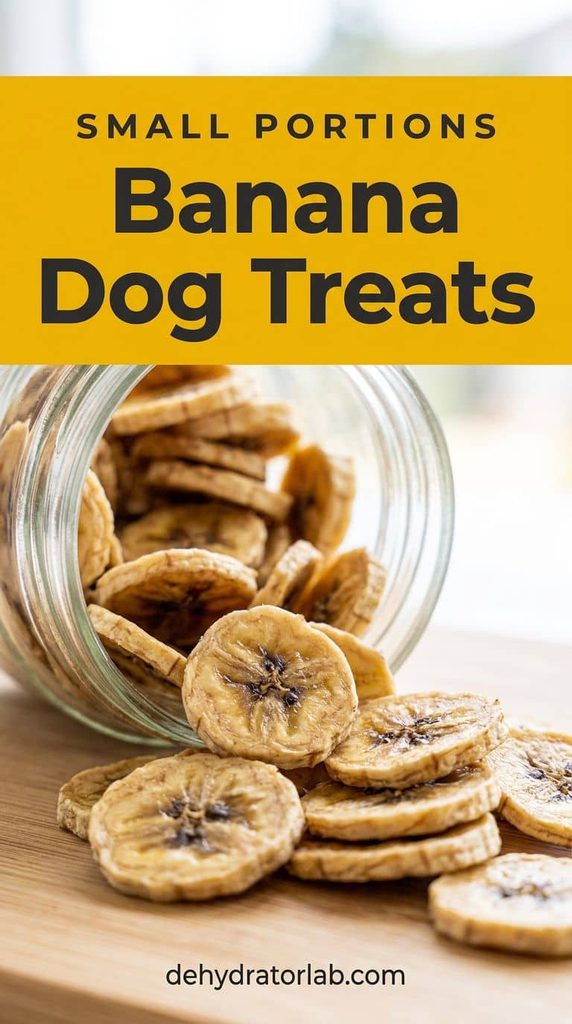
The treat every dog already knows and loves, minus the wrapper — and minus the chocolate dip, which is a hard no for dogs regardless of how small the amount. Slice banana into rounds about ¼ inch thick and dry at 135–140°F (57–60°C) for 6-10 hours until chewy, not crisp; bananas usually finish leathery rather than snap-dry.
Banana runs higher in natural sugar than most items on this list, so keep portions small, especially for smaller dogs. My how to dehydrate bananas guide covers slicing and browning tips — just skip the topping step entirely here.
The treat every dog already knows and loves, minus the wrapper.
Personal Tips You Can Steal
I keep a separate tray just for pet treats so nothing cross-contaminates with a seasoned human batch drying at the same time. I always let a new treat cool completely and give my own dog just one piece the first time, watching for any reaction before making it a regular thing.
I check every peanut butter jar label before I buy it now, since xylitol shows up in brands I never expected. And I store dog treats in their own labeled jar — future you will thank present you when you’re reaching for a snack at 11 pm and don’t want to mix up jars.
Final Thoughts
These eight treats use exactly what’s already safe for a dog to eat — lean meat, plain produce, nothing seasoned or sweetened for human taste buds. A dehydrator just makes them shelf-stable, so you’re not restocking every week.
One thing worth saying plainly: dogs have different tolerances than people, and if your dog has any health condition, allergies, or you’re unsure about portion size for their weight, check with your vet before adding a new treat to their routine – especially organ meat like liver, which should stay an occasional extra, not a daily staple. For a full rundown of human foods that are genuinely dangerous for dogs, the ASPCA’s people-foods-to-avoid guide is worth bookmarking.
Related reading: for more ways a dehydrator earns its counter space, see 10 brilliant uses for a food dehydrator, and for the full human jerky method these recipes are adapted from, check out how to make beef jerky with a dehydrator.
P.S. Start with the sweet potato chews if this is your first batch — one ingredient, nothing to double-check. Happy dehydrating! 🙂