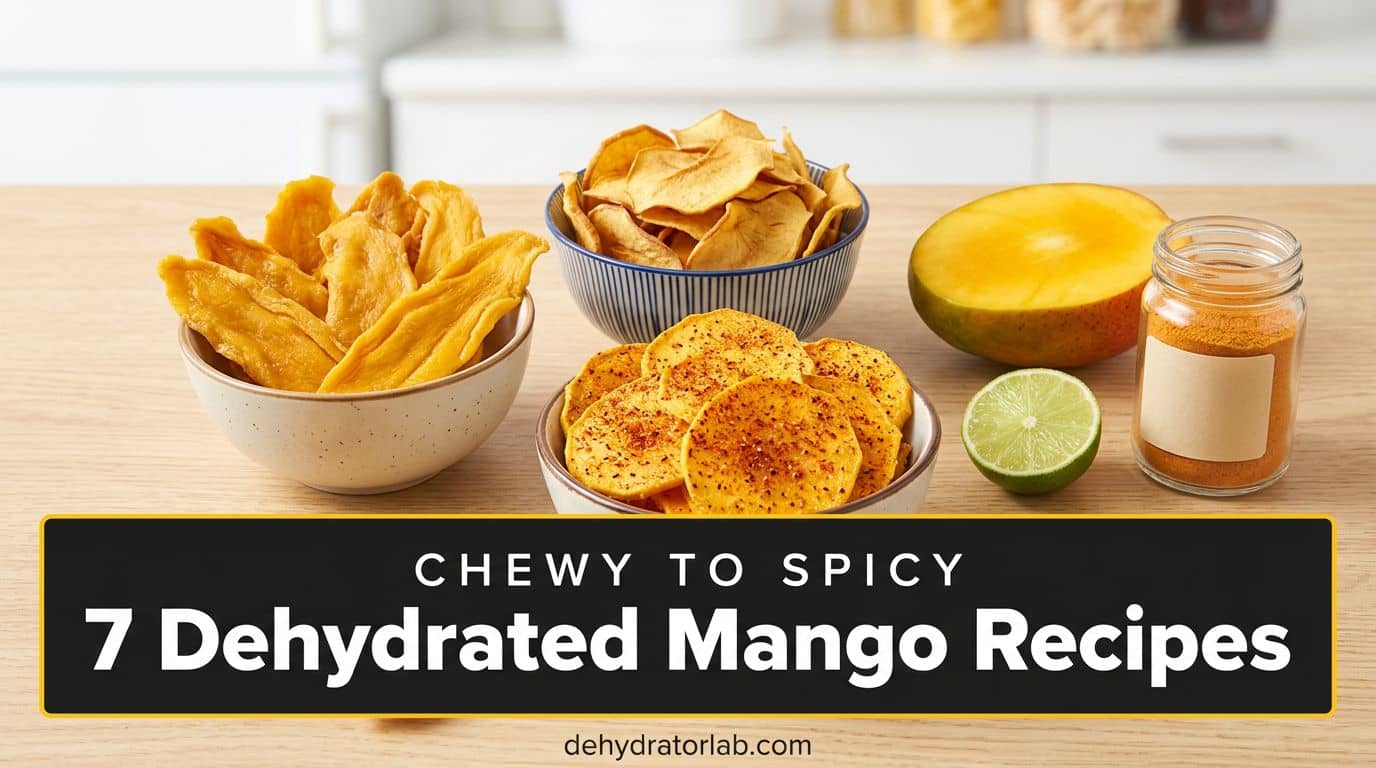
Want a smoothie that tastes better, looks brighter, and uses up the produce that’s about to go soft?
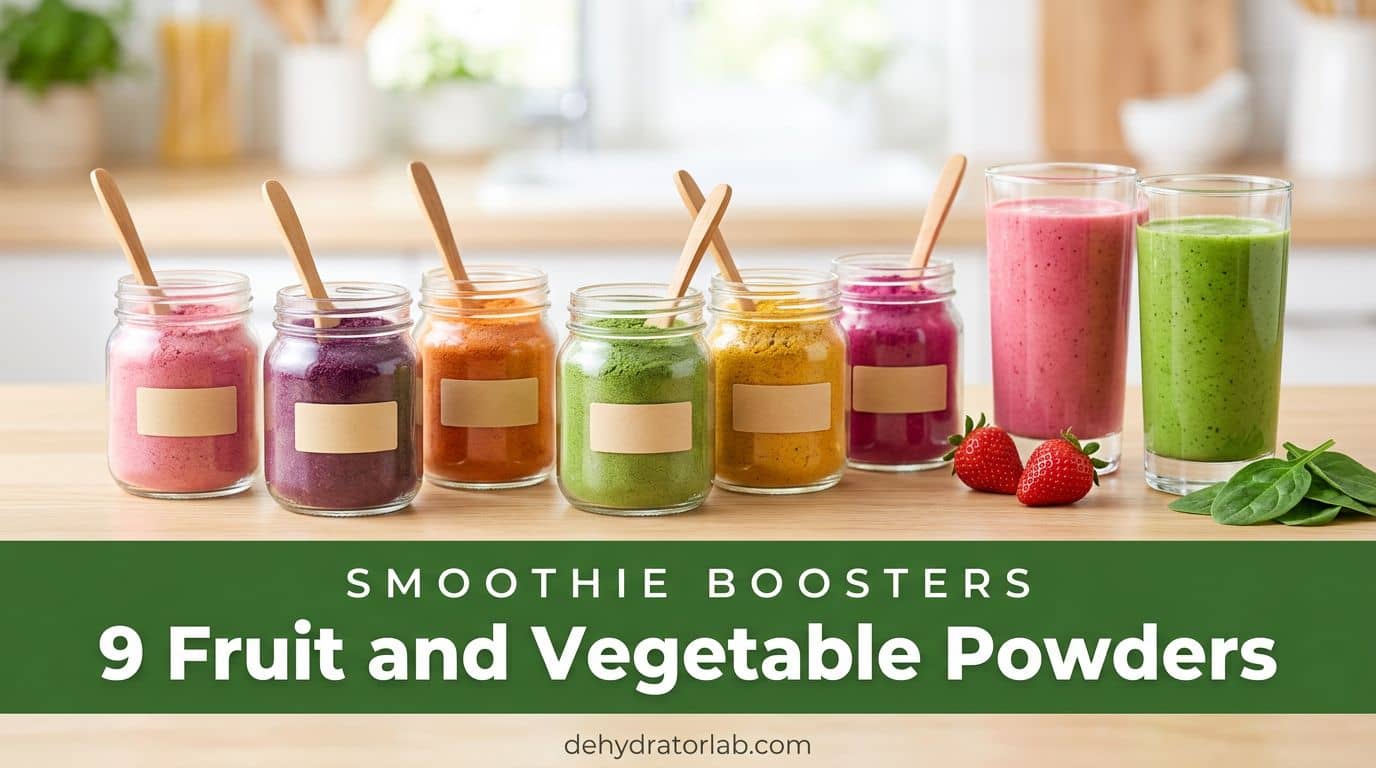
A spoonful of homemade fruit or vegetable powder does all three. It adds color and flavor without watering the blend down, and it keeps for months in a jar. Here are nine powders worth stirring in.
As an Amazon Associate, I earn from qualifying purchases. If you make a purchase after clicking on a link I may earn a small commission at no extra cost to you if items are purchased.
In this article:
TL;DR: Key Takeaways
- 🍓 Nine powders: strawberry, carrot, blueberry, spinach, banana, sweet potato, kale, beet, and mango.
- 🥄 My rule of thumb is 1 tablespoon of fruit powder or 1 teaspoon of leafy green powder per 12 ounces (350 ml) of smoothie.
- 🥬 Spinach is the easiest green to hide, and kale and beet need a sweeter partner.
- 💧 Whisk powder into the liquid first, then blend, and it won’t clump.
- 🫙 Dry food until it’s brittle and store the powder airtight, because even a little moisture ruins a jar.
- ⏳ Fruit powders keep longer than vegetable powders, so make small batches of the veggies.
I won’t walk through the full drying method for each powder here. Every powder links to its own guide, and the basics live in my vegetable powder recipes and fruit powder uses roundups. This list is about the smoothie side: how much to add, what to pair it with, and which ones fight back. The doses are my own rule of thumb from daily use, so start small and adjust to your taste.
One tool does most of the work, a small spice grinder. Fine powder blends smooth, and coarse powder leaves grit in the bottom of the glass. The box below is the grinder I use, and I grind in short pulses so the powder never heats up.

- Electric spice-and-nut grinder with durable stainless-steel blades
- Heavy-duty motor; push-top lid for simple on/off control
- Bowl holds 90 grams; extra storage space in lid; non-slip rubber feet
1. Strawberry Powder
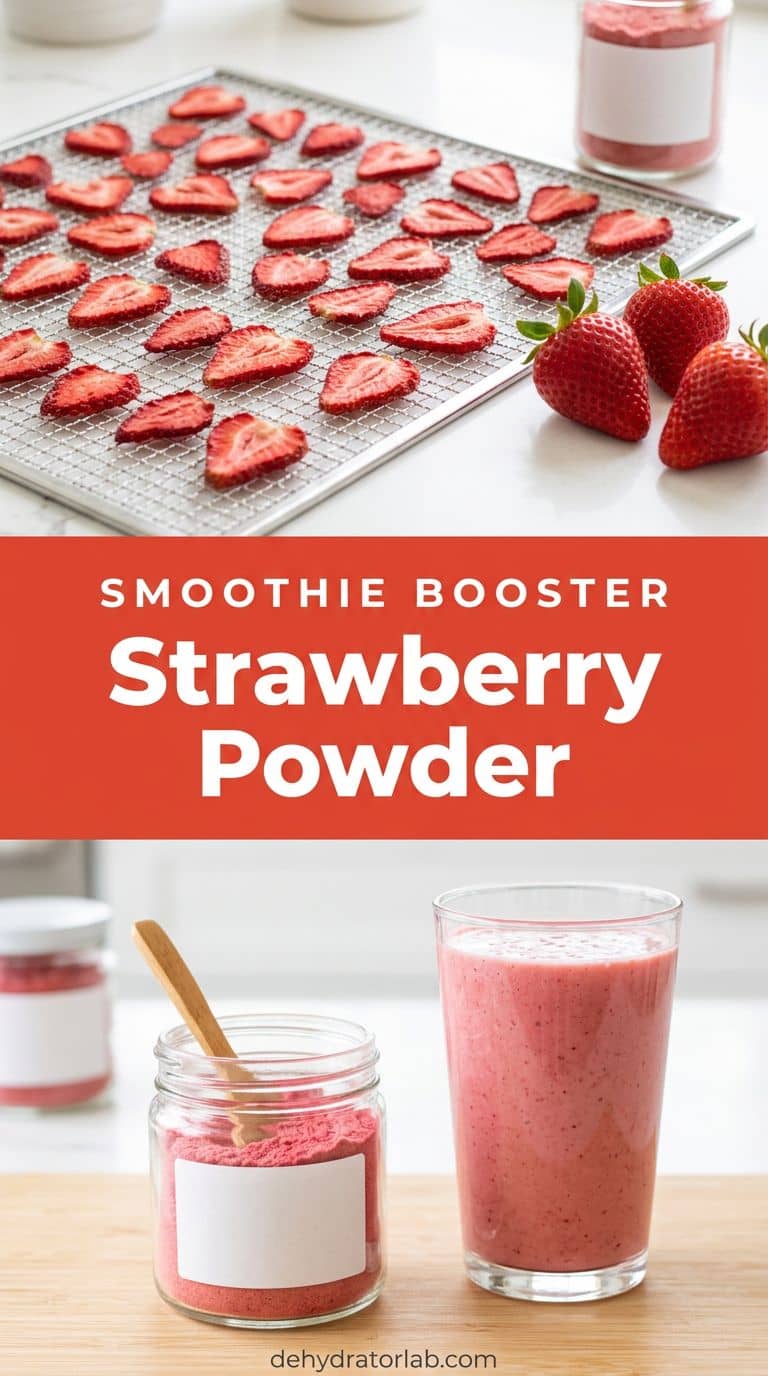
Strawberry powder is the easiest place to start, because it tastes exactly like what it is. Stir 1 tablespoon into a banana and milk smoothie and you get a pink color and a jammy fruit flavor without buying another bag of frozen berries. My full method is in my strawberry powder guide.
The seeds grind fine, so the texture stays smooth. Pair it with banana, vanilla yogurt, or oat milk. Fruit powders pull moisture from the air, so keep the jar closed and the spoon dry.
My go-to glass: 1 frozen banana, 1 cup (240 ml) of milk, 1 tablespoon of strawberry powder, and a splash of vanilla.
It also works as a rescue. A smoothie that tastes flat usually wakes up with a spoonful of berry powder. Pink without the frozen bag.
2. Carrot Powder
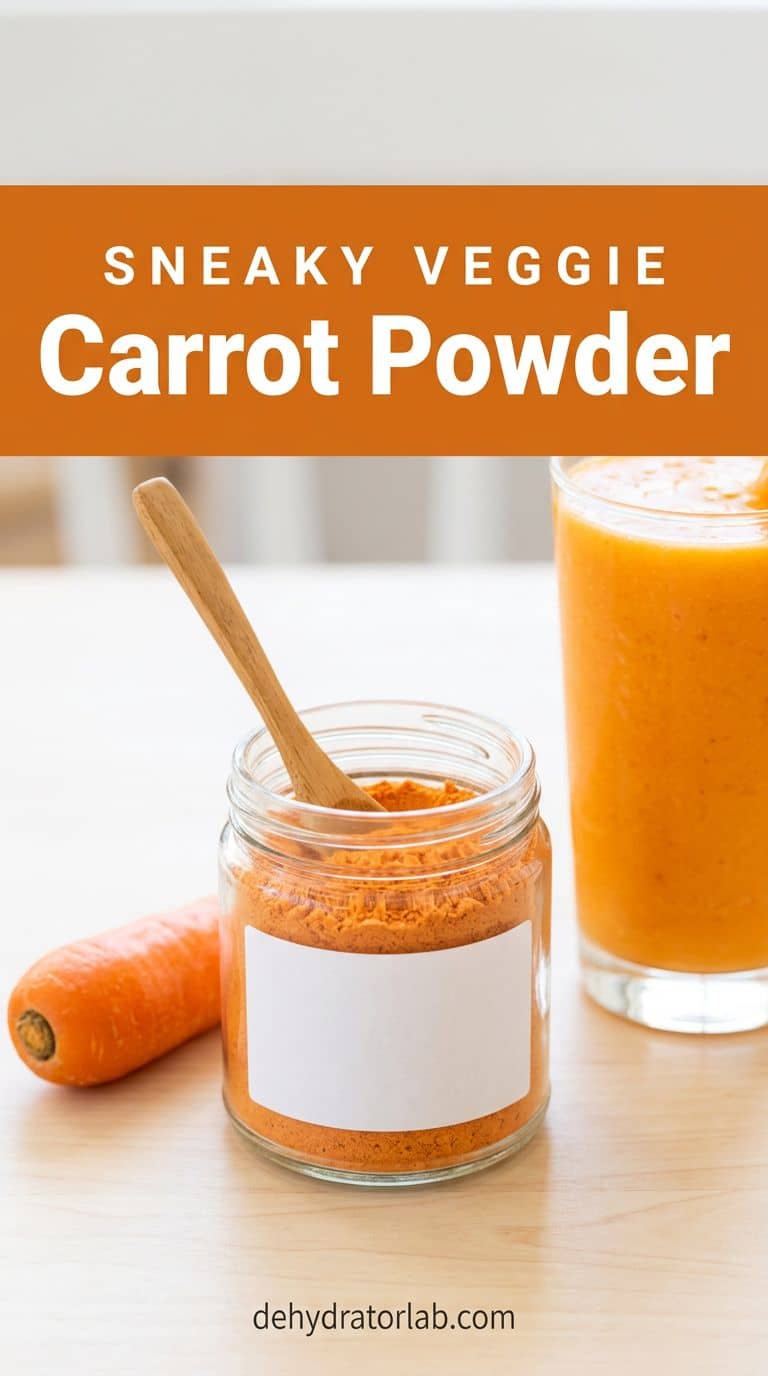
Carrot powder is the mild one. It adds a gentle sweetness and a warm orange color, and almost nobody can taste it. It disappears into tropical blends, so I use it when I want color without changing the flavor. See my carrot powder guide for the drying details.
Use 1 tablespoon in a mango, pineapple, or orange juice smoothie. A pinch of ground ginger ties it together.
My go-to glass: 1 cup (240 ml) of orange juice, 1/2 cup of frozen mango, 1 tablespoon of carrot powder, and a pinch of ground ginger.
If you have picky eaters at home, this is the one to start with. Color with no fuss.
3. Blueberry Powder
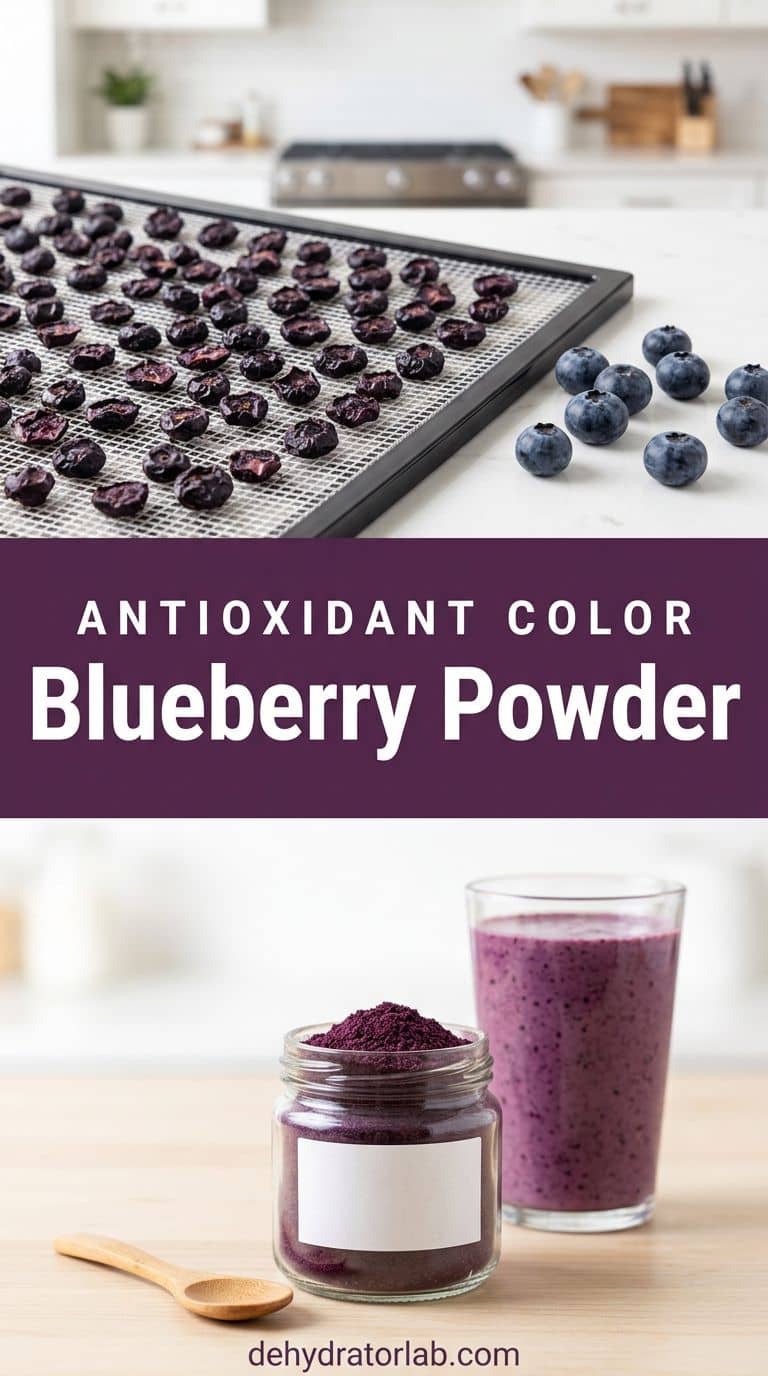
Blueberry powder brings a deep purple color and a pleasant tang. It’s a strong dye, so a little goes a long way, and 1 tablespoon turns a plain banana smoothie into something that looks like it came from a juice bar. My drying steps are in the blueberry powder guide.
Pair it with banana, almond milk, and rolled oats. Mix it with spinach powder and you get a murky purple-brown that looks odd but tastes good. If the color bothers you, keep the two apart.
My go-to glass: 1 cup (240 ml) of almond milk, 1 frozen banana, 2 tablespoons of rolled oats, and 1 tablespoon of blueberry powder.
Frozen blueberries work for the powder as well, so you can make it any month. Purple in one spoonful.
4. Spinach Powder
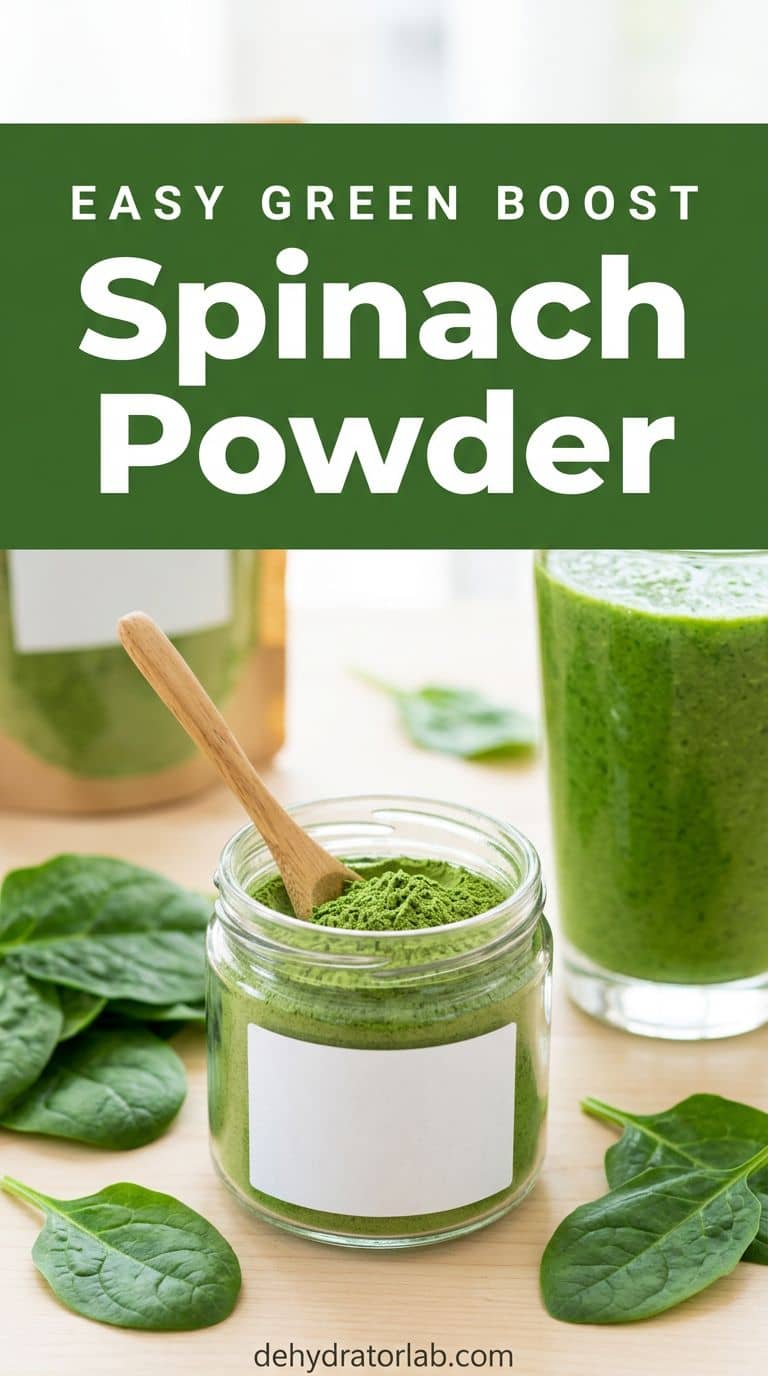
If you’re new to green powders, start here. Spinach has the mildest flavor of the leafy greens, so a teaspoon hides easily in a fruit smoothie. Work up to 1 tablespoon once you trust it. The drying and grinding are in my spinach powder guide.
Greens need a strong blend to turn smooth. A high-speed blender handles them well, but any blender works if you give it time. Spinach and beets are naturally high in oxalates, so if a doctor has told you to watch that, check with them before you make green smoothies a daily habit.
- Whisk the powder into the liquid before adding ice.
- Blend a full 45 seconds for a smooth glass.
- Pair it with banana, mango, or pineapple for a sweet cover.
A teaspoon of spinach powder is a lot less work than a bag of fresh leaves that wilts. The easiest green to hide.
5. Banana Powder
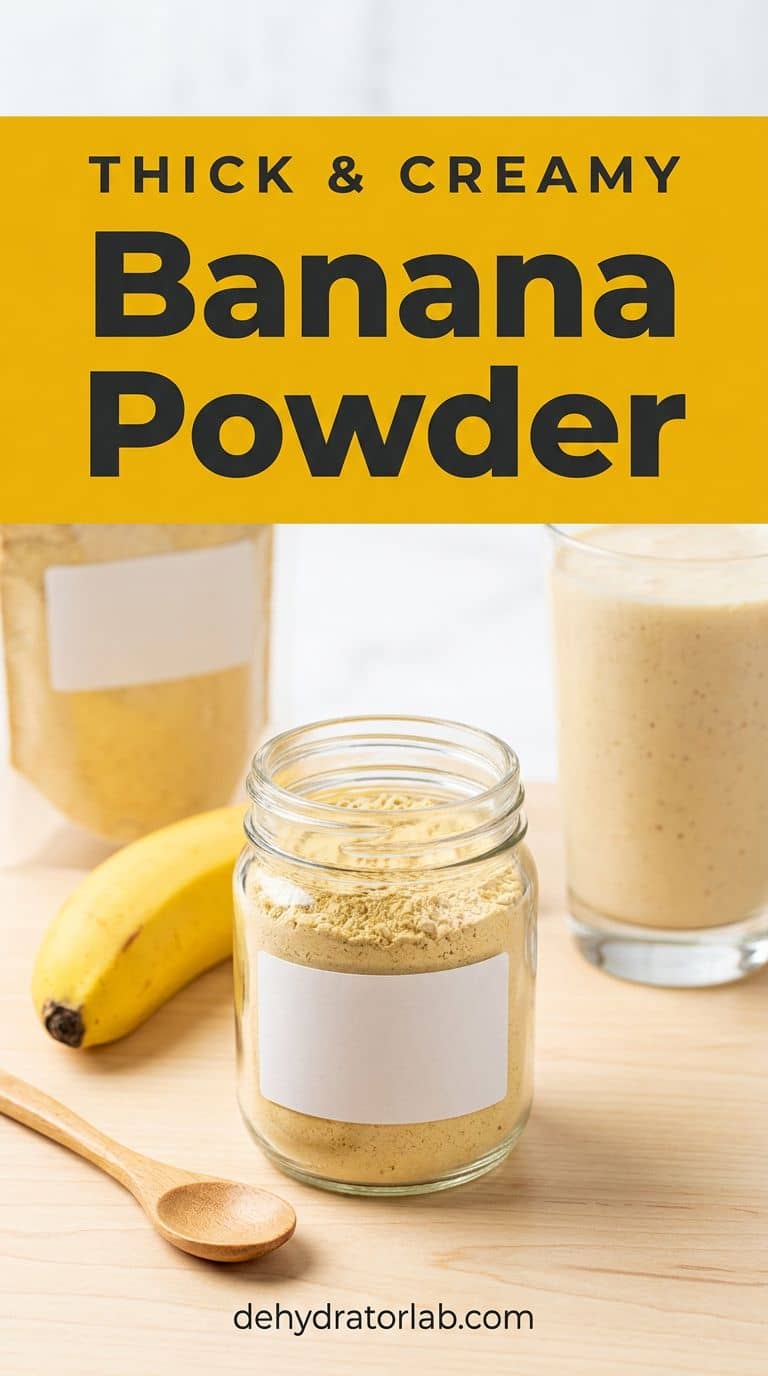
Banana powder is a thickener and a sweetener in one. A tablespoon makes a smoothie creamier and sweeter, and it saves you a frozen banana when the freezer runs out. I don’t have a separate guide for it, but my guide to dehydrating bananas covers slicing and drying.
For powder, slice thin and dry the banana until it snaps, not bends. Chewy banana won’t grind and gums up the grinder. This is my own method, and the drying time depends on slice thickness and your machine, so go by feel.
My go-to glass: 1 cup (240 ml) of oat milk, 1 tablespoon of banana powder, 1 tablespoon of peanut butter, and a few ice cubes.
Pair it with peanut butter, cocoa, or oat milk. Banana powder clumps fast in humid air, so portion it into a small jar. Snap-dry or it won’t grind.
6. Sweet Potato Powder
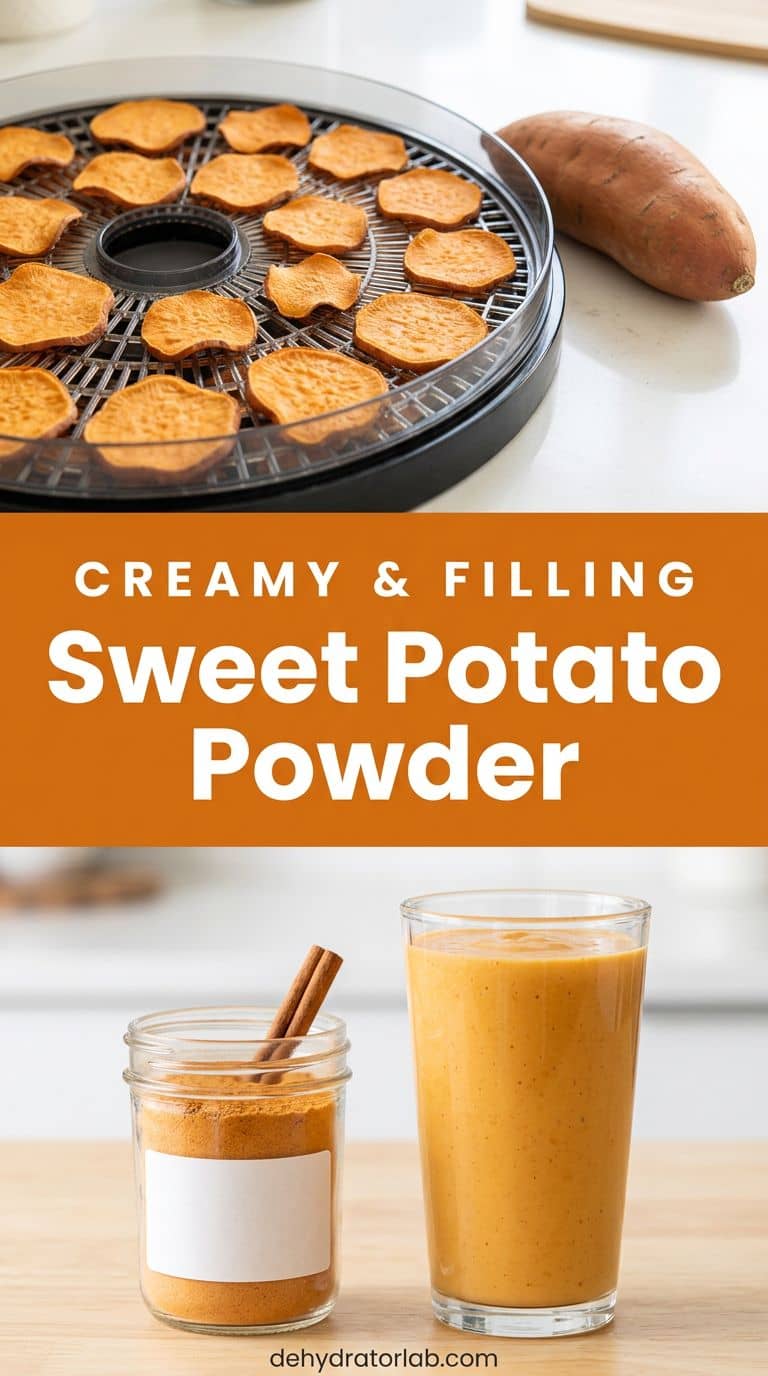
This is the creamiest booster on the list. Dried cooked sweet potato blends into a thick, almost pie-like smoothie that keeps you full. Use 1 to 2 tablespoons per glass. My sweet potato powder guide shows how to cook and dry it.
It loves cinnamon, banana, dates, and oat milk. It also thickens as it sits, so drink it soon or add a splash of milk.
- Add cinnamon and a pinch of nutmeg.
- Use milk, not water, for the creamiest texture.
- Blend it with a frozen banana for a pie-in-a-glass feel.
My go-to glass: 1 cup (240 ml) of oat milk, 1 tablespoon of sweet potato powder, 1/2 teaspoon of cinnamon, and 2 pitted dates.
It’s the one I reach for on cold mornings. Pie flavor, no oven.
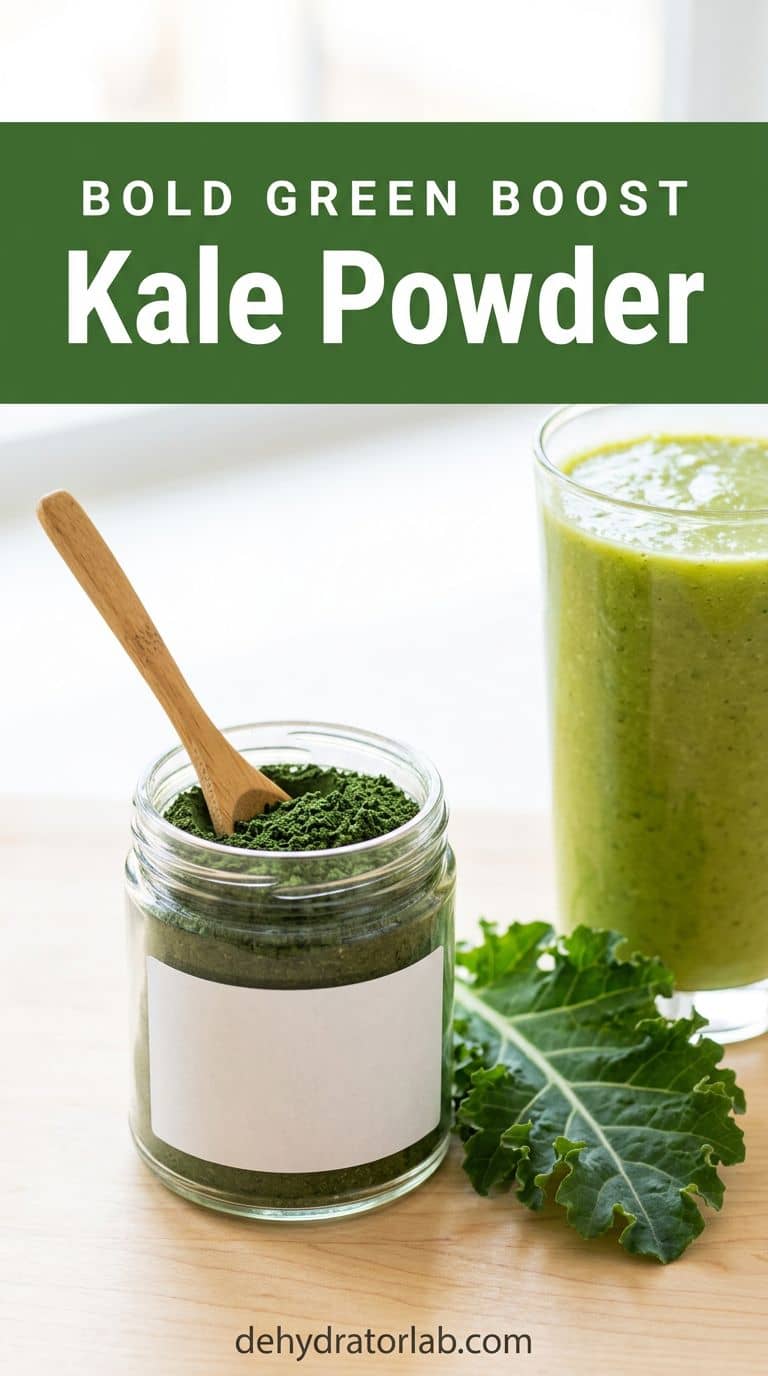
7. Kale Powder
Kale powder is stronger and more bitter than spinach, so it needs a sweeter partner. Start with 1 teaspoon and build up. Pineapple, apple, and lemon cover the bitterness best. My kale powder guide shows how to dry it so it grinds fine.
I have a full green smoothie mix with kale and pineapple in my drink mix and powder roundup, so check that if you want a ready-made blend.
My go-to glass: 1 cup (240 ml) of apple juice, 1/2 cup of frozen pineapple, 1 teaspoon of kale powder, and a squeeze of lemon.
Kale powder clumps less than fruit powder, but a fine grind matters, because coarse bits taste like leaf. Sift it if you can. Pair bitter with sweet.
8. Beet Powder
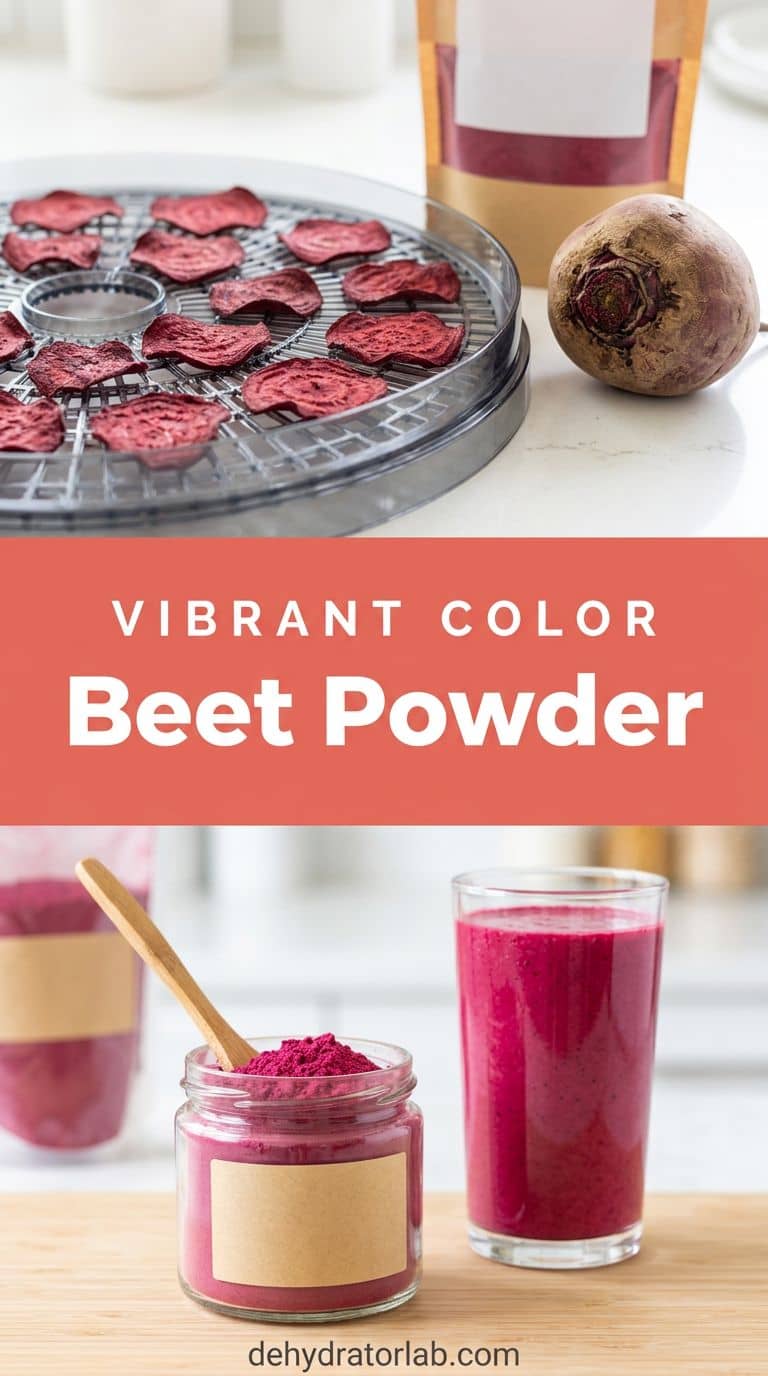
Beet powder is the loudest color on the list. Use only 1/2 to 1 teaspoon, because it turns the whole glass magenta and tastes earthy at higher amounts. The details are in my beet powder guide.
It pairs well with berries, orange juice, ginger, and even cocoa. Like spinach, beets are naturally high in oxalates, so go easy if you’ve been told to watch them.
- Start with 1/2 teaspoon.
- Add berries or orange to cover the earthy edge.
- Wipe the spoon right away, because it stains plastic.
My go-to glass: 1 cup (240 ml) of orange juice, 1/2 cup of frozen berries, 1/2 teaspoon of beet powder, and a slice of fresh ginger.
A little beet powder makes any smoothie look like it was made by a pro. A pinch goes a long way.
9. Mango Powder
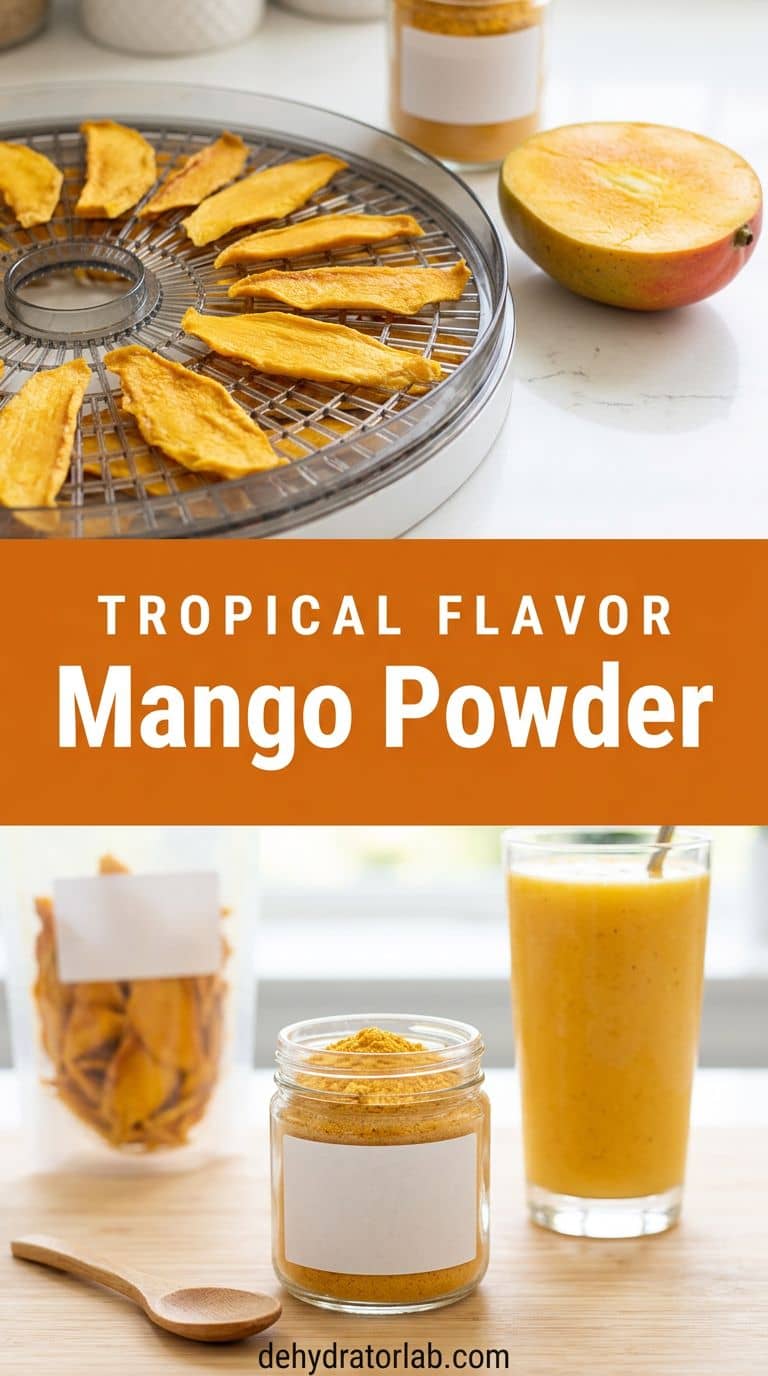
Mango powder tastes like a tropical vacation. Add 1 to 2 tablespoons to a coconut milk or pineapple smoothie and it will taste like the fruit itself. I cover whole-fruit drying in my dehydrated mango recipes, and powder is one more use for it.
Mango is sticky, so it needs to be dried until it’s crisp, not chewy. I haven’t tested exact times for powder, so test by snapping a piece. Chewy mango turns into a paste in the grinder.
My go-to glass: 3/4 cup (180 ml) of coconut milk, 1/2 cup of frozen pineapple, and 2 tablespoons of mango powder.
Because mango powder grabs moisture quickly, I keep it in a small jar with a tight lid and use it first. Dry it crisp.
Quick Reference: Smoothie Booster Doses
| Powder | Start with (per 12 oz / 350 ml) | Flavor | Best pairings | Clump risk |
|---|---|---|---|---|
| Strawberry | 1 tbsp | Sweet, jammy | Banana, vanilla yogurt | High |
| Carrot | 1 tbsp | Mild, sweet | Mango, orange, ginger | Medium |
| Blueberry | 1 tbsp | Tangy | Banana, oats, almond milk | Medium |
| Spinach | 1 tsp to 1 tbsp | Very mild | Banana, mango, pineapple | Low |
| Banana | 1 tbsp | Sweet, creamy | Peanut butter, cocoa | High |
| Sweet potato | 1–2 tbsp | Sweet, thick | Cinnamon, dates, oat milk | Medium |
| Kale | 1 tsp | Bitter | Pineapple, apple, lemon | Low |
| Beet | 1/2 to 1 tsp | Earthy | Berries, orange, ginger | Low |
| Mango | 1–2 tbsp | Tropical | Coconut milk, pineapple | High |
These are starting points from my own kitchen, not rules. A thicker blend or a stronger palate can handle more.
How to Keep Powders Smooth and Fresh
Powder only works if the food was dry to begin with. Penn State Extension describes dried vegetables as tough, brittle, or crunchy, and that’s the test I use before I grind anything. For fruit, I go a step drier than I would for snacking, because chewy pieces turn to paste.
Moisture is the enemy after that. The National Center for Home Food Preservation says dried foods can spoil if they take moisture back in storage, and it recommends clean, dry glass jars kept in a cool, dark place. It also says most dried fruits last about a year at 60°F (16°C) or six months at 80°F (27°C), and vegetables last about half as long.
- Grind in short pulses and let the dust settle before you open the lid.
- Store in small airtight glass jars, not one big one.
- Check for clumps often and use damp powder fast.
If you love the veggie side of this, my veggie-boosted fruit leather recipes are a good next step.
Personal Tips You Can Steal
I measure with a dry teaspoon and tablespoon and never a wet spoon, because one damp scoop can clump the whole jar. I whisk the powder into the milk or juice before the ice goes in, which stops the lumps that float on top.
I keep a spinach jar and a banana jar as my everyday pair, and I rotate the rest by season. I label every jar with the powder and the date. I make vegetable powders in small batches, since they don’t last as long as fruit. I add one new powder at a time, so I know exactly what changed the taste.
Final Thoughts
Smoothie powders are a small jar with a big payoff. Start with spinach and strawberry, add one new powder every week or two, and your pantry will turn into a smoothie bar.
Related reading: 8 homemade vegetable powder recipes, 10 ways to use fruit powders, and dehydrated ginger powder.
P.S. Do the 1/2 teaspoon test with beet powder first. Magenta is hard to take back. 🙂