
Ever lift the lid on a soup pot in January and wish you had a handful of green in the cupboard?
Fresh greens turn to slime in the crisper long before soup season ends. Your dehydrator fixes that, and a jar of dried leaves goes straight into the pot with no thawing. Here are six greens worth drying before the first cold snap.

As an Amazon Associate, I earn from qualifying purchases. If you make a purchase after clicking on a link I may earn a small commission at no extra cost to you if items are purchased.
In this article:
TL;DR: Key Takeaways
- 🥬 Six greens: kale, spinach, Swiss chard, collards, cabbage, and parsley, each matched to the soups it suits best.
- ♨️ Clemson says greens like chard, kale, and spinach get steam-blanched 2 to 2½ minutes (1½ in water) and dry in 8 to 10 hours.
- 🍲 Clemson also says leafy vegetables and cabbage can go straight into soup with enough water to cover, then simmer until tender.
- ⏱️ When each green goes in is my own call: tender leaves in the last few minutes, tougher ones earlier.
- 💥 Dry until brittle. Clemson says vegetables should be “crisp,” with about 10 percent moisture left.
- 📦 Clemson says dried vegetables keep six months at 60°F (16°C) and three months at 80°F (27°C), with no conditioning needed.
My 10 best vegetables to dehydrate for soups covers the roots and aromatics, and my kale powder and spinach powder guides cover the fine stuff. This list is about whole leaves and flakes, the kind you crush into a pot. I dry greens at 125–135°F (52–57°C), my usual setting for soup vegetables. Clemson gives no dehydrator temperature, so that setting is mine. The blanch times and most drying times come from Clemson Extension and NCHFP, and the amounts, the add-in times, and the simmer times are my own.
Dried leaves are light, and light things fall through standard trays. Fine mesh sheets catch the flakes, and the box below is the kind I use for greens.

- STOP SMALL FRUIT FROM FALLING – Our ultra-fine 1mm mesh structure ensures tiny berries, sliced herbs, and seeds stay on …
- SAVE 60 MINUTES ON CLEANUP – High-release silicone coating makes these 100% non-stick. Meat oils and fruit sugars slide …
- PROFESSIONAL GRADE & BPA-FREE – Made from premium food-grade silicone, certified safe for temperatures up to 450°F. Enjo…
Blanching, Brittleness, and Shelf Life
Start with clean leaves. Clemson says to use only young, tender leaves and to wash and trim them very thoroughly. I rinse mine twice, because grit survives drying and shows up in your soup.
Then comes the blanch. Clemson says blanching stops the enzyme action that causes loss of color and flavor during drying and storage, and it lists steam for 2 to 2½ minutes or water for 1½ minutes for chard, kale, and spinach. NCHFP lists water blanching at 3 minutes for collards, 2 minutes for other greens, and 1½ minutes for shredded cabbage.
Parsley is the exception. Clemson says it needs no blanching at all.
Doneness is a feel test, not a clock. Clemson says vegetables should be dried until brittle, or “crisp.” A leaf that bends is not done, and a leaf that crumbles between your fingers is. Let the batch cool, then crush it. Clemson says dried vegetables keep six months at 60°F (16°C) and three months at 80°F (27°C), and that they do not need conditioning like fruit does. For storage by food type, check how long dehydrated food lasts.
One more rule from Clemson for soaking: if you soak dried vegetables for more than two hours, refrigerate them. You won’t need to soak any of these, since they go straight into the pot. Let’s get into it.
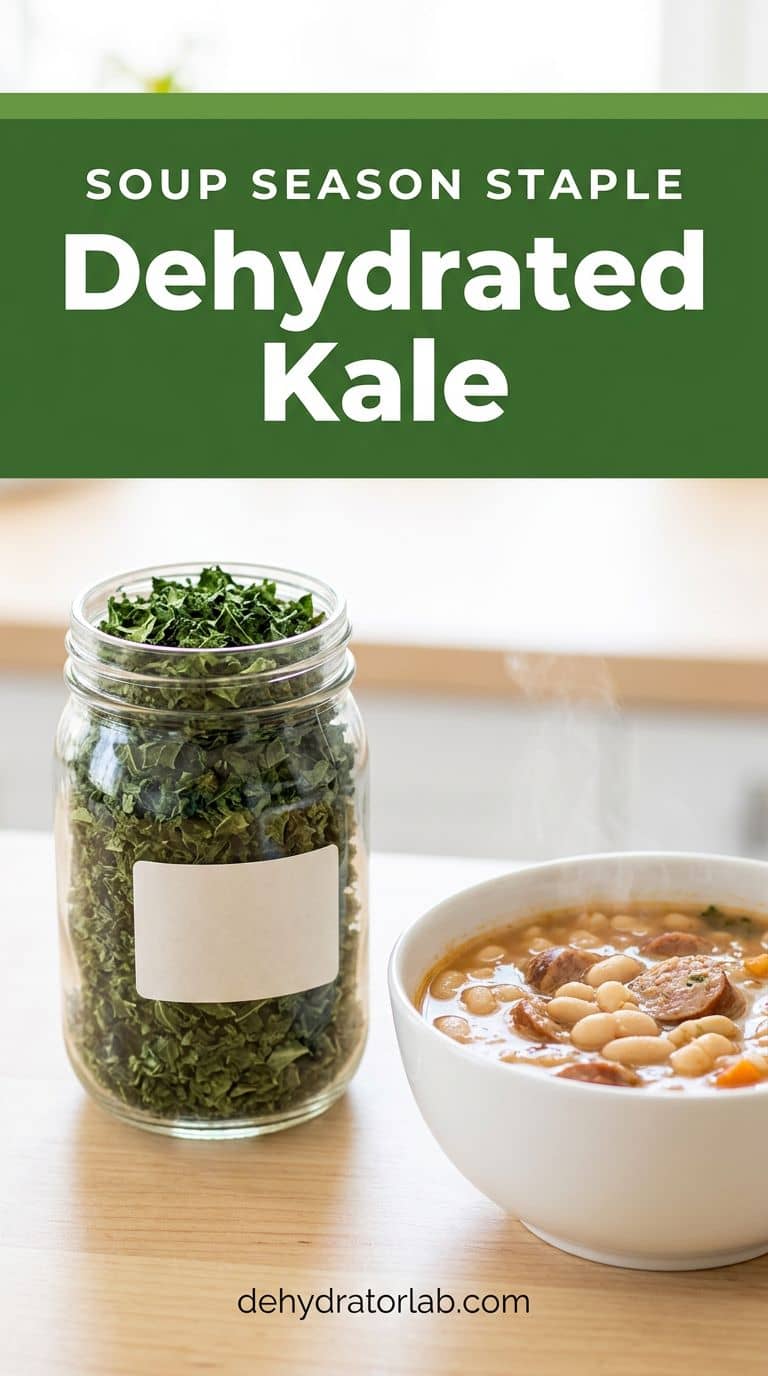
1. Kale
Kale is the green I run out of first. It holds its shape in a long simmer and doesn’t turn to mush.
Strip the ribs and tear the leaves into 1 to 2 inch (2.5 to 5 cm) pieces. Steam-blanch for 2 to 2½ minutes, pat dry, and spread on mesh-lined trays. Clemson lists 8 to 10 hours for greens, and I dry kale until it crumbles with no resistance. One bunch shrinks to roughly a cup or two of flakes in my kitchen.
For soup, I use 1/4 cup of crushed flakes per quart (1 L), added during the last 5 to 10 minutes of simmering, which is my own timing. It loves white bean and sausage soup, minestrone, and ribollita. My kale powder guide and kale chip recipes use the same prep, so you can dry extra for snacking.
Add it late, or it goes bitter. Hearty enough for beans.
2. Spinach
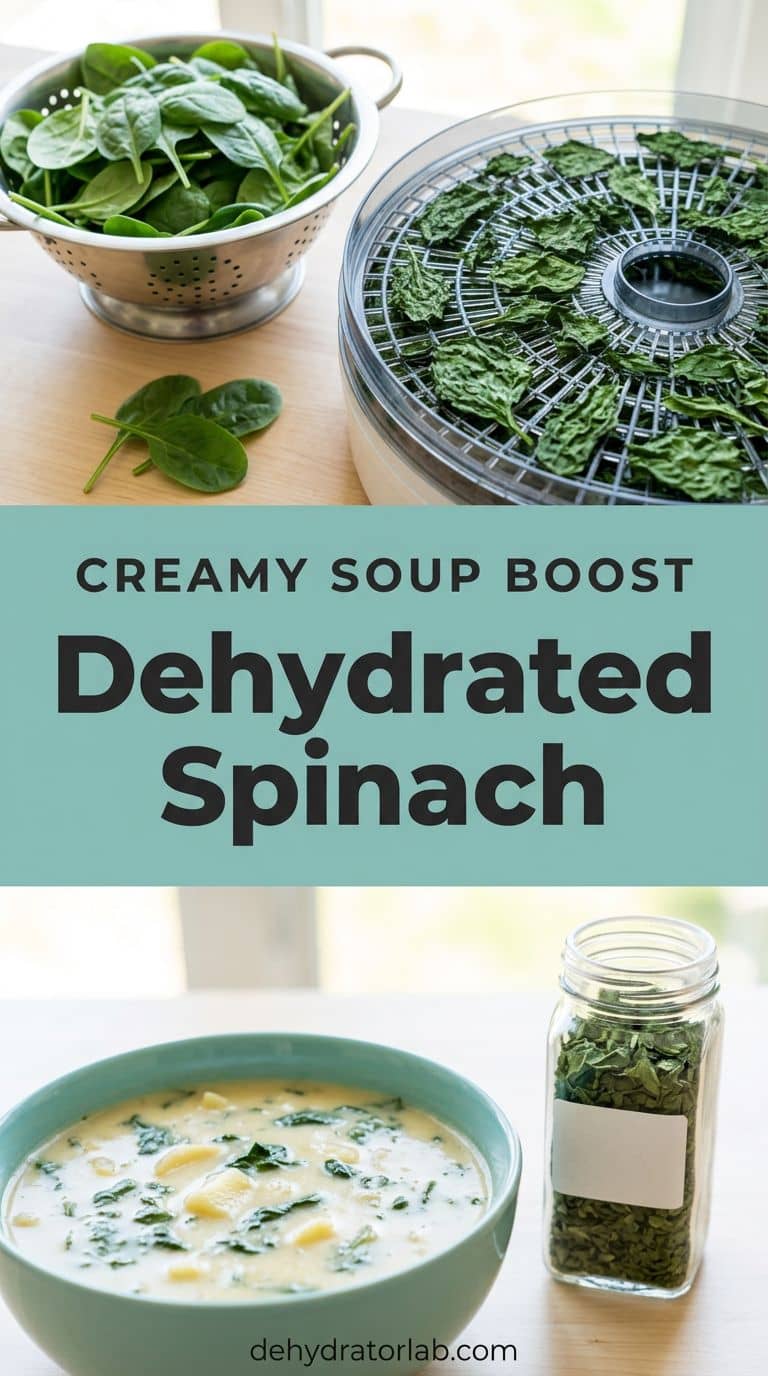
Spinach shrinks to almost nothing, which is why it’s worth drying. A giant bag becomes a small jar of green.
Use young leaves and wash them well, since spinach hides sand. Steam-blanch for 2 to 2½ minutes, squeeze out the water, and spread it thin on mesh sheets. Clemson lists 8 to 10 hours for greens, and spinach is usually done at the short end. Crush it when cool.
I use about 2 tablespoons of crumbled spinach per quart (1 L) of soup, stirred in during the last 2 to 3 minutes, which is my own timing. It fits creamy potato soup, tortellini in broth, egg-drop soup, and chicken and rice. If you want it fine instead of flaky, my spinach powder guide covers that.
It softens in seconds, so don’t walk away. Shrinks to almost nothing.
3. Swiss Chard
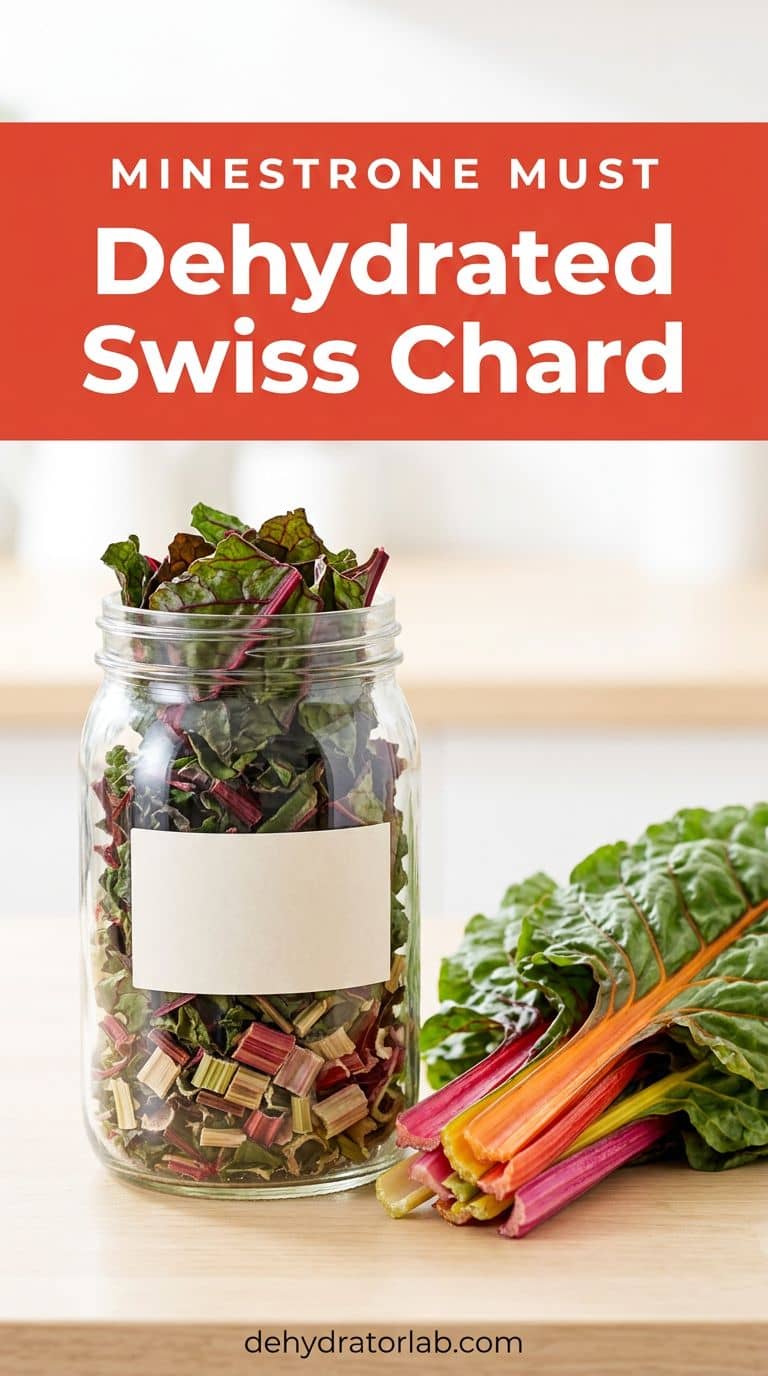
Chard is two vegetables in one: a tender leaf and a crunchy stem. Dry them separately and you get the best of both.
Cut the stems from the leaves, slice the stems into 1/4 inch (6 mm) pieces, and tear the leaves. Clemson lists chard with the other greens, so blanch both parts for 2 to 2½ minutes by steam, then dry 8 to 10 hours. Stems usually take longer, so I tray them apart and pull the leaves first. That’s my own tip.
In soup, I add the stems about 10 minutes before the end and the leaves in the last 5, using roughly 2 tablespoons of stems and 1/4 cup of crushed leaves per quart (1 L). Chard belongs in minestrone, lentil soup, and Italian wedding soup. My lentil soup mix has a spot for it, and my bean and lentil stew recipes do too.
Red or rainbow stems color the pot a little, so don’t panic. Two vegetables in one.
4. Collard Greens
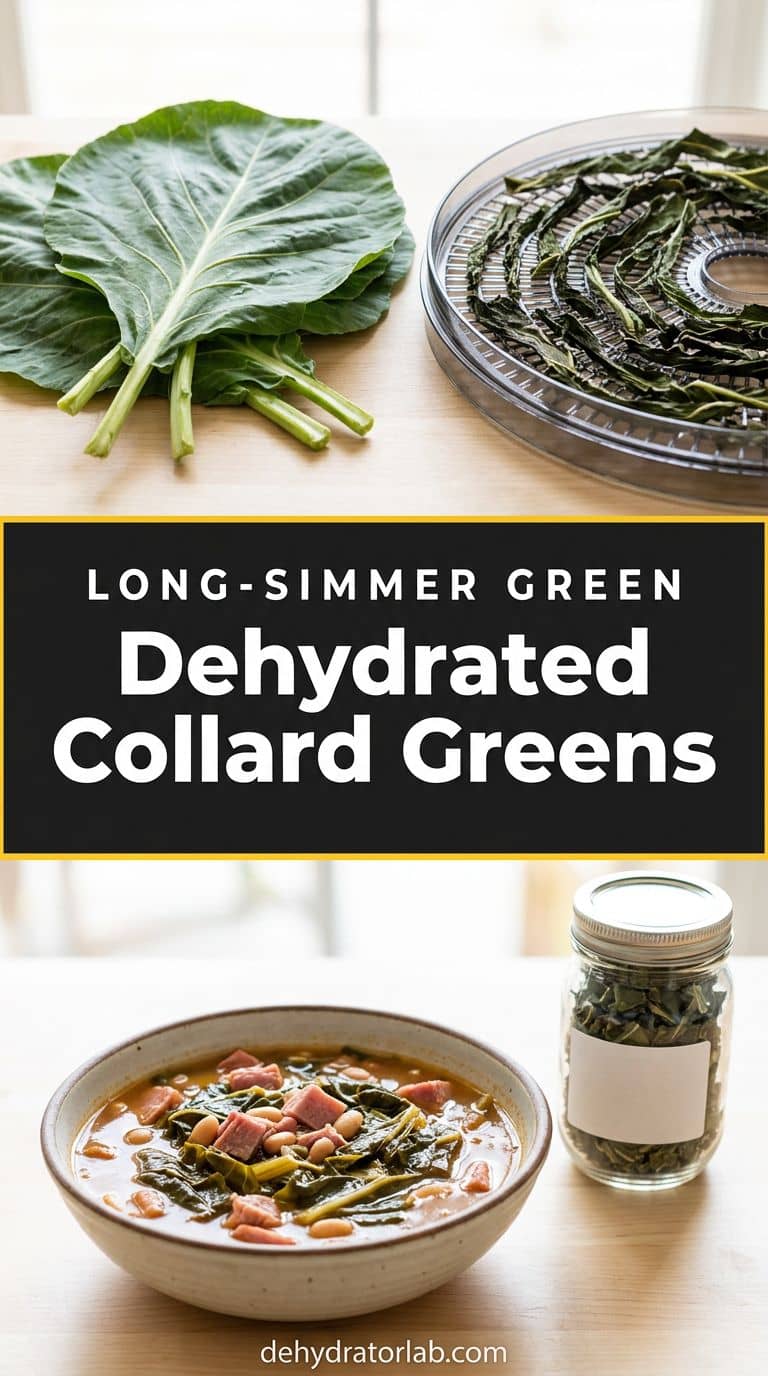
Collards are the tough guys of the list, and that’s the point. They stand up to the longest simmers.
Strip the thick ribs and cut the leaves into 1/2 inch (1.3 cm) ribbons. Collards are tougher, so NCHFP gives them a longer blanch at 3 minutes in water instead of 2. Clemson doesn’t list collards separately, so I use its 8 to 10 hours for greens as a starting point and plan for 8 to 12 on a full load.
That time is mine. Use 1/4 cup of crushed flakes per quart (1 L) and add them 15 to 20 minutes before the end, also my own call. They suit ham and bean soup, black-eyed pea stew, and smoky vegetable pots. My soup mix recipes have a few bases to try them in.
Don’t rush the simmer, because collards need it. Built for long simmers.
5. Cabbage
Cabbage is the cheap one, and it’s one of the best value jars on the shelf. It turns sweet when it simmers.
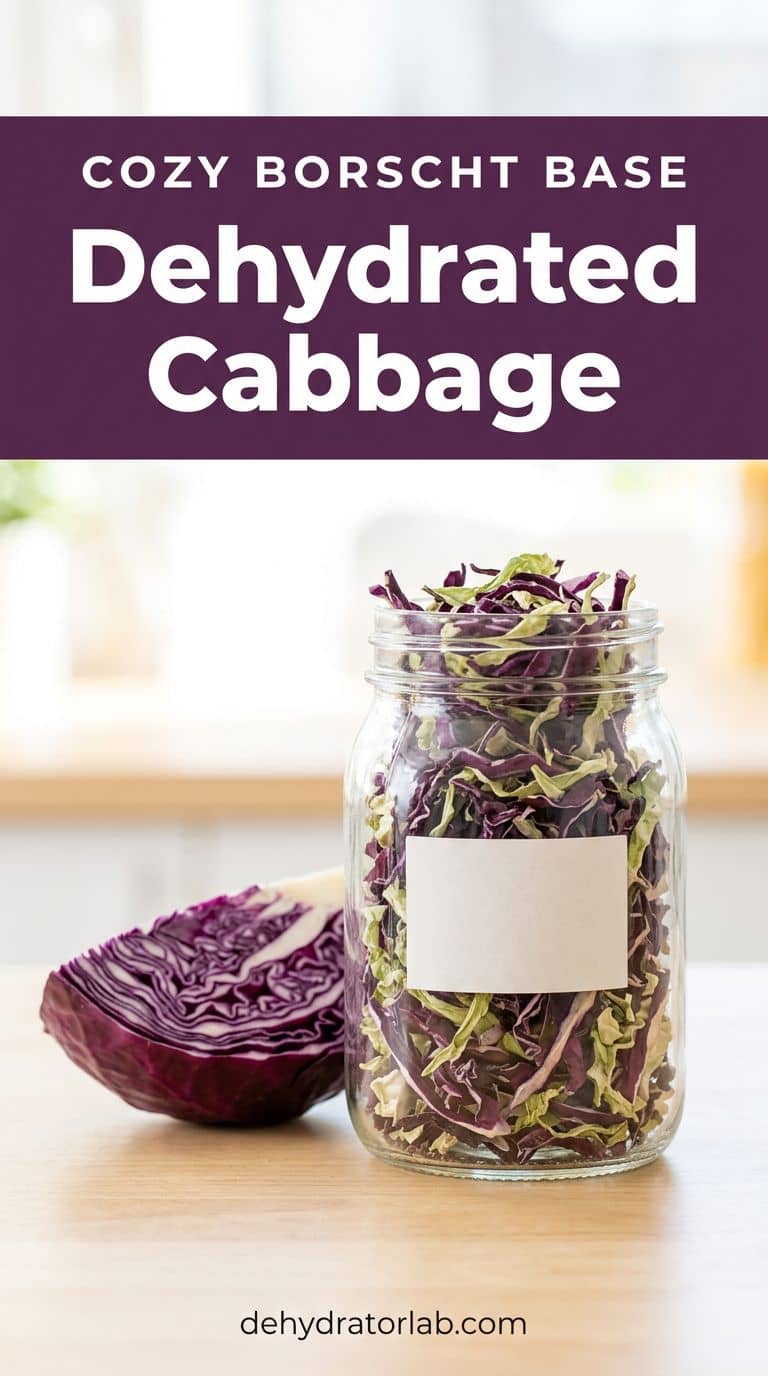
Remove the outer leaves, quarter and core the head, and cut it into strips 1/8 inch (3 mm) thick. Clemson lists steam blanching until the cabbage wilts, and NCHFP lists 1½ minutes in water for shredded cabbage. Clemson lists 10 to 12 hours of drying. Dry until the strips snap.
I use 1/3 cup of dried strips per quart (1 L), added 10 to 15 minutes before the end, which is my own timing. It fits borscht-style soup, ham and cabbage soup, and sausage and potato soup. Pair it with my beet powder for a quick borscht color. My best soup vegetables list has the carrots and potatoes to go with it.
Red cabbage works too, and it tints the broth purple. Sweet when simmered.
6. Parsley
Parsley is the finisher. It’s the last thing in the pot, and it makes a bowl taste fresh.
Wash it well, separate the clusters, and discard the long, tough stems. Clemson says parsley needs no blanching and lists 1 to 2 hours of drying, so check it early and often. It’s done when it crumbles. Dried parsley is milder than fresh, so I use about 1 tablespoon per quart (1 L) and stir it in at the very end.
That’s my own habit. It goes in everything, from chicken noodle to tomato soup. My parsley drying guide goes deeper, and my herb blends use it as a base. Don’t cook it long, or the flavor fades. Finish every pot.

Quick Reference: Six Greens at a Glance
| Green | Blanch | Drying time | When it goes in the pot (mine) |
|---|---|---|---|
| 1. Kale | Steam 2–2½ min or water 1½ min (Clemson) | 8–10 h (Clemson) | Last 5–10 min |
| 2. Spinach | Steam 2–2½ min or water 1½ min (Clemson) | 8–10 h (Clemson) | Last 2–3 min |
| 3. Swiss chard | Steam 2–2½ min or water 1½ min (Clemson) | 8–10 h, stems longer | Stems 10 min early, leaves last 5 |
| 4. Collard greens | Water 3 min (NCHFP) | 8–12 h (mine) | 15–20 min before the end |
| 5. Cabbage | Steam until wilted (Clemson) or water 1½ min (NCHFP) | 10–12 h (Clemson) | 10–15 min before the end |
| 6. Parsley | None (Clemson) | 1–2 h (Clemson) | Stirred in at the very end |
The blanch times, the drying times marked Clemson, the brittle test, and the storage times follow Clemson Extension. The collard and shredded cabbage blanch times follow NCHFP. The 125–135°F (52–57°C) setting, the collard drying time, the stem timing for chard, every amount per quart, and every when-to-add time are my own. For more soup bases, see my broth boosters and my chicken noodle soup mix.
Personal Tips You Can Steal
I wash every green twice, because grit survives drying. I dry stems and leaves on separate trays, so neither one finishes late. I crush the greens after they cool, not before, so they don’t turn to dust on the tray.
I store each green in its own airtight glass jar, which lets me match it to the soup. I write the date on every lid, because six months goes fast. I test a spoonful in a pot of soup before I commit a whole bunch to the trays.
Final Thoughts
You don’t need all six. Start with kale and parsley, since they cover the most soups, and add spinach for creamy pots. If you want to keep jars past a few months, a vacuum sealer helps, and my Mylar bag picks cover bulk storage. Still choosing a machine? My best dehydrator for vegetables guide ranks seven.
Related reading: 8 dehydrated soup mix recipes, 9 dehydrated bean and lentil recipes, 7 dehydrated soup recipes for hiking, and 13 essential dehydrated foods.
P.S. Dry a bunch of kale this weekend, and in January you will be grateful. 🙂