Ever check the price of a tin of loose-leaf herbal tea and wonder why a handful of dried flowers costs that much?
A dehydrator makes the whole aisle unnecessary. Dry the herbs yourself, blend your own ratios, and you’ll know exactly what’s in every cup. Quick note before we start: source herbs and flowers from a pesticide-free garden or a reputable food-grade supplier — never florist flowers or roadside plants, since those are often treated with chemicals that aren’t meant to be ingested. None of these blends are medicine, and if you’re pregnant, nursing, on medication, or managing a health condition, check with a doctor before adding a new herb to your routine, especially echinacea.
Let’s get your pantry stocked with tea you actually grew or dried yourself.
In this article:
TL;DR: Key Takeaways
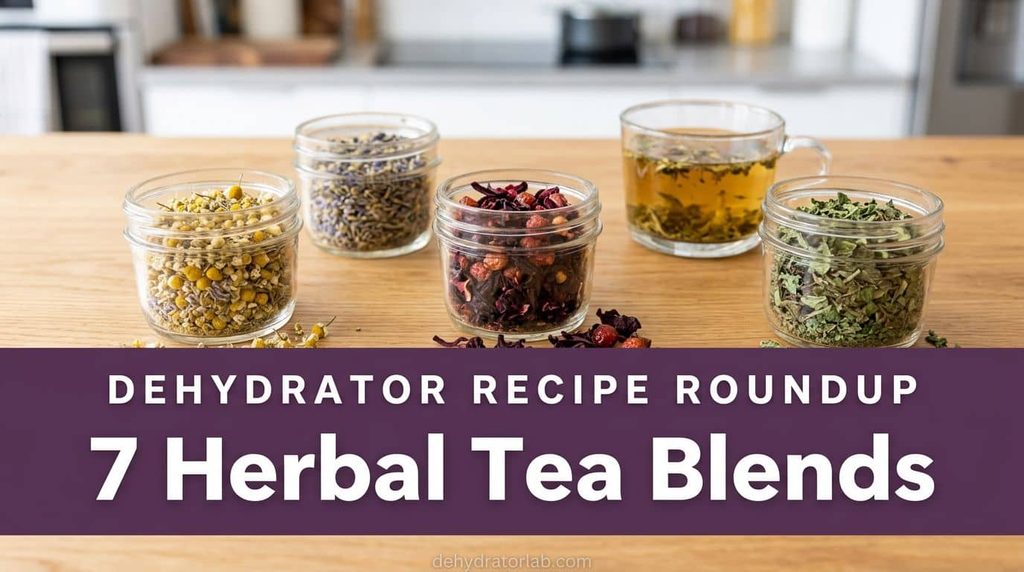
- 🌿 7 herbal tea blends built from dehydrated flowers, leaves, and roots you can dry at home.
- 🌡️ Most herbs and flowers dry at 95–105°F (35–41°C); denser roots and berries run hotter, 125–135°F (52–57°C).
- ⚠️ Source everything pesticide-free — no florist flowers, no roadside plants, no exceptions.
- 🍯 Blend ratios are a starting point, not a rulebook — adjust to taste once you’ve made a batch.
- 💊 None of these are medicine — check with a doctor before adding echinacea or any new herb if you’re pregnant, nursing, or on medication.
- 📦 Stored airtight and out of light, most blends keep their flavor for 6-12 months.
Seven blends, all built from herbs you can dry yourself. Let’s get into it.
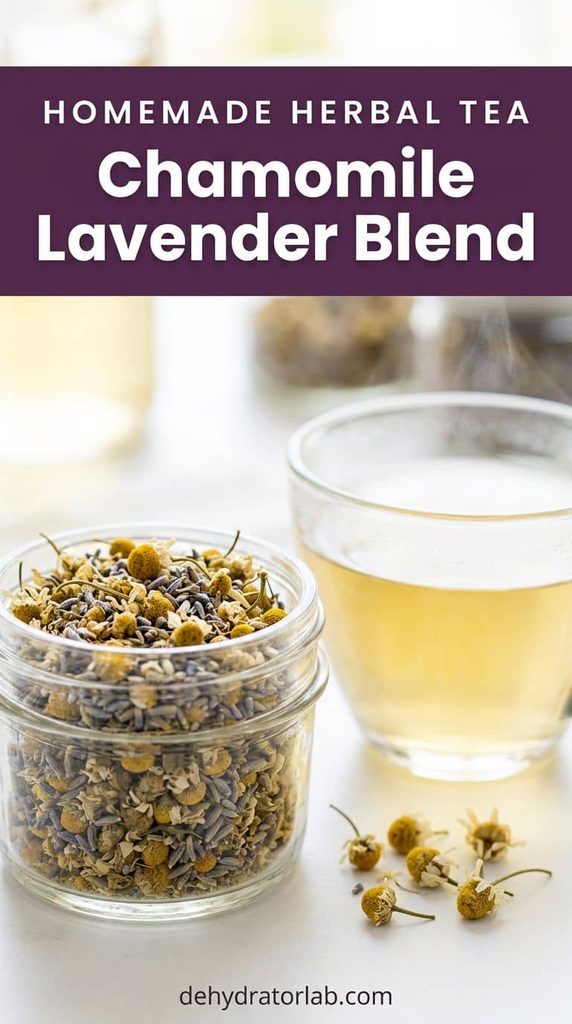
1. Chamomile Lavender Calm Blend
This is the bedtime blend — chamomile brings a soft, apple-like sweetness and lavender adds a floral note that mellows it out instead of competing with it. Dry whole chamomile flowers face-down at 95–105°F (35–41°C) for 2-4 hours, and lavender buds the same temperature for 1-3 hours since they’re smaller and dry faster.
Mix 2 parts dried chamomile to 1 part lavender buds. Steep a heaping teaspoon per cup for 5-7 minutes. My dehydrating medicinal summer flowers guide covers the full technique for both.
The blend that makes wind-down time feel intentional.
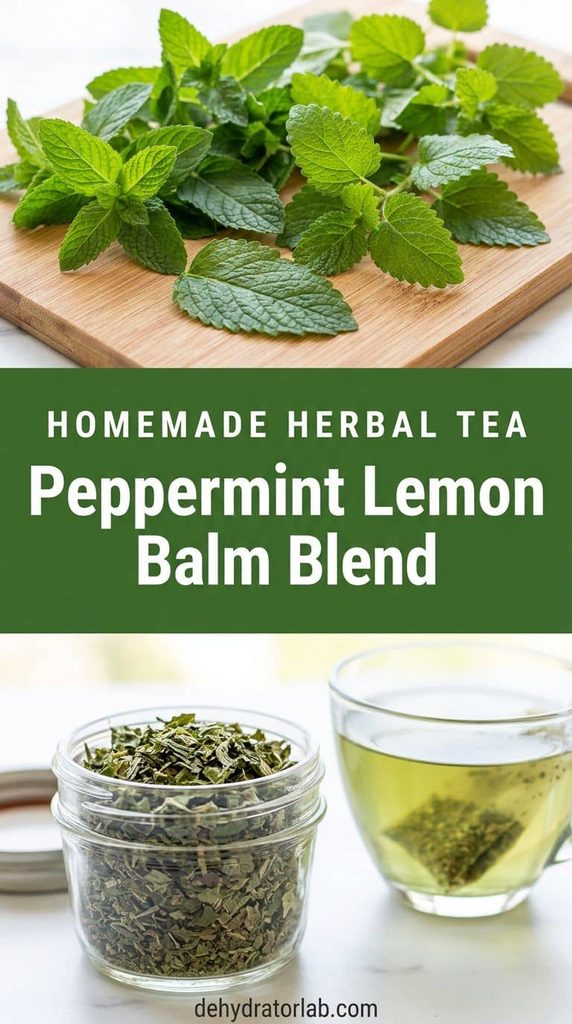
2. Peppermint Lemon Balm Digestive Blend
Ever notice how a mint tea after a big meal just feels right? Lemon balm backs that up with a light citrusy note that keeps the mint from tasting one-dimensional. Dry mint and lemon balm leaves at 95–105°F (35–41°C) for 2-4 hours until they crumble easily between your fingers.
Mix equal parts of both, crushed roughly rather than powdered so the leaves keep some texture in the cup. My how to dehydrate mint guide has the full method, and leaving stems on herbs covers when to keep stems in for tea specifically versus trimming them out.
The after-dinner cup that actually earns its reputation.
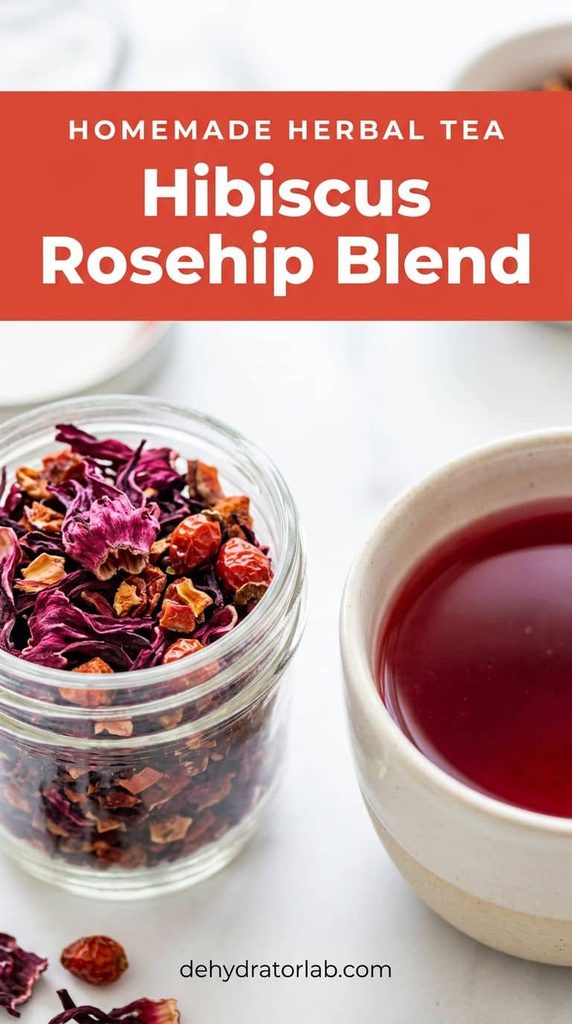
3. Hibiscus Rosehip Berry Blend
Worth noting: this is the blend that tastes like a tart berry drink, not “tea” in the usual sense — it’s the base a lot of commercial fruit teas are built on. Dry hibiscus flowers at 95–105°F (35–41°C) for 3-5 hours, and dry whole rosehips (deseeded, since the seeds and fine hairs inside are irritating) at 125–135°F (52–57°C) for 8-10 hours since they’re much denser.
Mix 2 parts hibiscus to 1 part crushed rosehips. It’s naturally tart and deep red, and holds up well as an iced tea in summer, not just a hot cup. Both are traditionally valued for their vitamin C content, though this is a flavor pick first, not a supplement.
Tart, ruby-red, and just as good over ice.
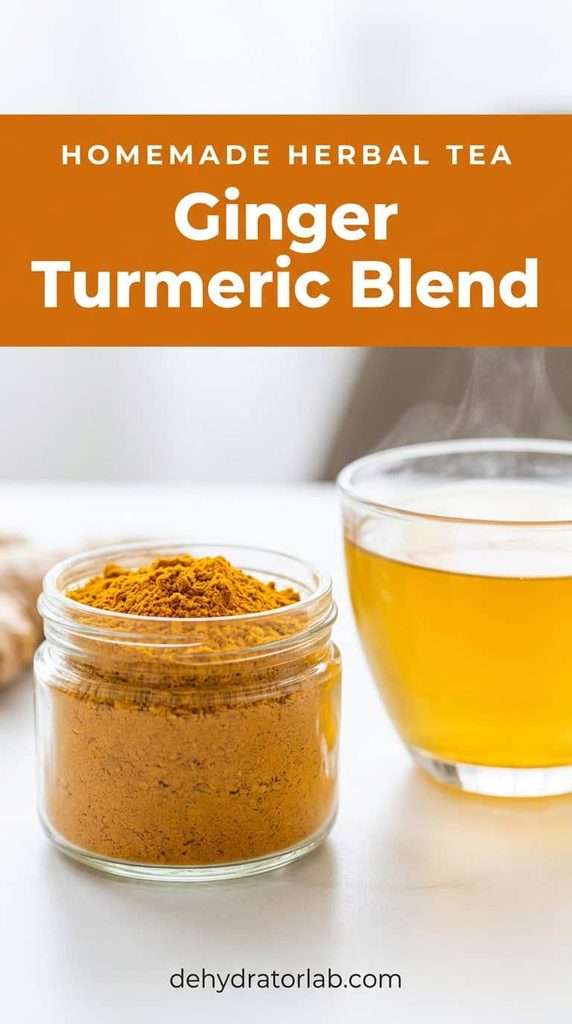
4. Ginger Turmeric Warming Blend
Be advised, this one has real bite — it’s built for a cold afternoon, not a delicate sip. Slice fresh ginger and turmeric root thin, about ⅛ inch, and dry at 125–135°F (52–57°C) for 6-10 hours until fully brittle and snappable.
Grind into a coarse powder and mix 2 parts ginger to 1 part turmeric. A pinch of black pepper is a common pairing with turmeric in cooking, so it’s worth adding here too if you like the extra warmth. My dehydrated ginger powder and dehydrated turmeric powder guides cover each one on its own.
The cup that fights back against a cold afternoon.
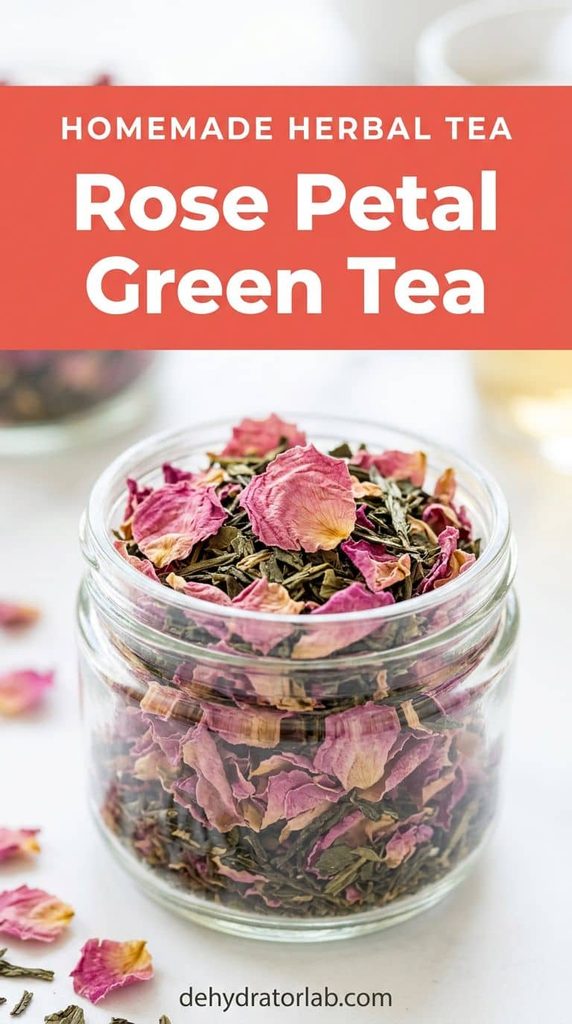
5. Rose Petal Green Tea Blend
FYI, this only works with petals you know are food-safe — most florist roses are sprayed and are never meant for a cup. Pull petals from a pesticide-free garden rose, spread in a single layer, and dry at 95–105°F (35–41°C) for 2-3 hours until crisp and papery.
Mix a small handful of dried rose petals into loose green tea leaves — about 1 part petals to 4 parts green tea, since the floral note is strong and easily overpowers a delicate green tea if you go heavier. My dehydrating medicinal summer flowers guide covers rose petals alongside other edible flowers.
A garden rose that actually earns its keep.
6. Echinacea Elderberry Immune Blend
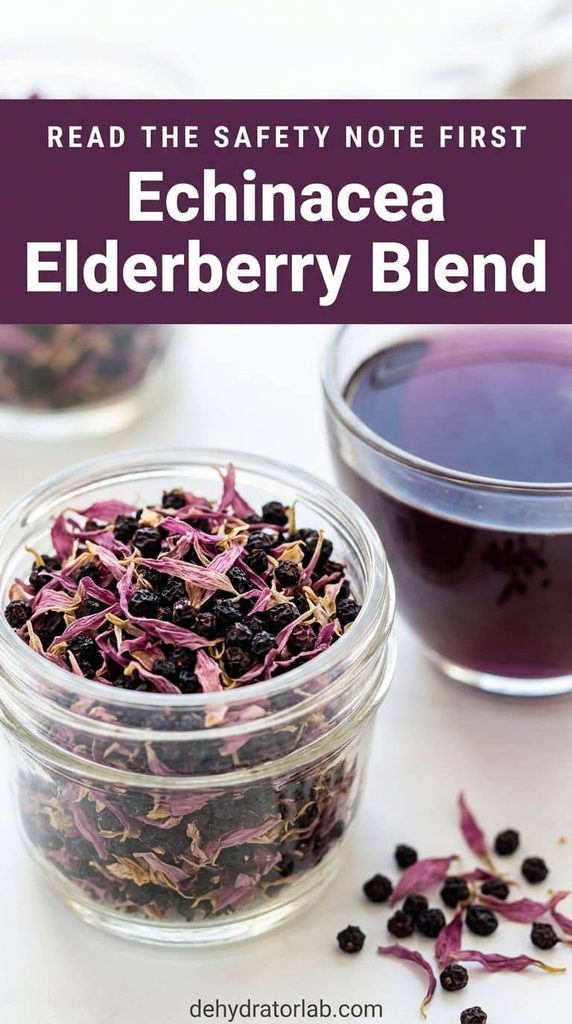
Be advised, this is the one blend on this list that needs an extra safety note: echinacea affects immune activity, so skip it if you have an autoimmune condition or take immune-suppressing medication, and check with a doctor first if you’re unsure. Only use fully ripe elderberries — raw or unripe elderberries, along with the stems and leaves, contain compounds that are toxic, so dried ripe berries only, never a home-foraged batch you can’t confidently identify.
Dry echinacea flowers and leaves at 95–105°F (35–41°C) for 3-5 hours, and dry ripe elderberries at 125–135°F (52–57°C) for 8-10 hours until fully shriveled and hard. Traditional preparation simmers dried elderberries rather than a quick steep — a gentle 10-minute simmer, then add the echinacea for the last few minutes off heat.
The one blend that’s worth reading twice before you make it.
7. Mint Lemon Verbena Citrus Blend
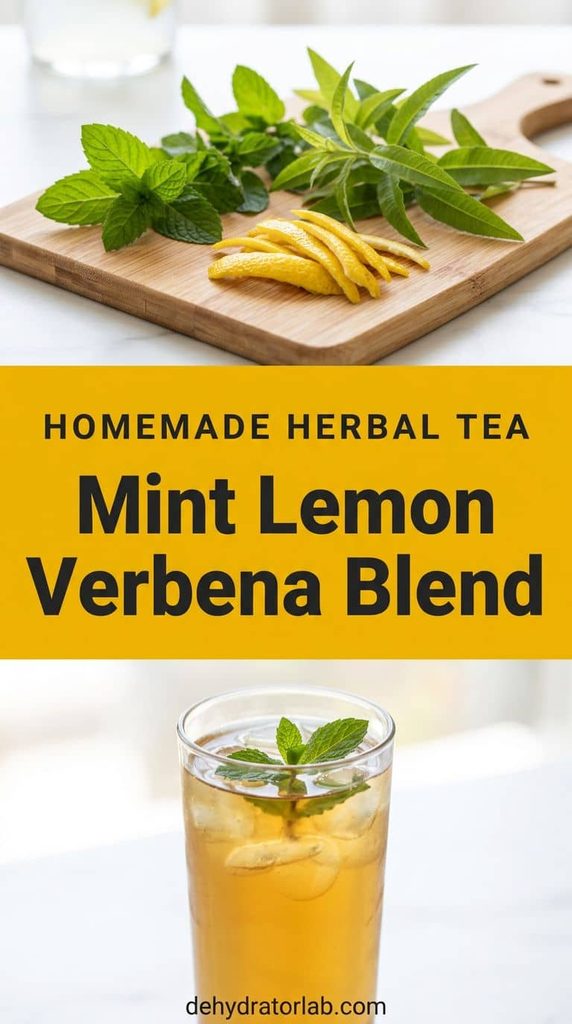
The brightest, most refreshing blend on this list, and the one that holds up best over ice. Dry mint and lemon verbena leaves at 95–105°F (35–41°C) for 2-4 hours, and dry thin strips of lemon or orange peel at 125–135°F (52–57°C) for 4-6 hours until fully brittle.
Mix equal parts mint and lemon verbena with a smaller handful of citrus peel — about 3:3:1. This one genuinely doesn’t need honey; the lemon verbena carries enough natural sweetness on its own. See my how to dehydrate mint guide and dehydrate citrus fruits guide for the peel technique.
The blend that doesn’t need honey to taste sweet.
Personal Tips You Can Steal
I label every tea jar with the blend name and the date it was dried, since two green-tinted herb blends look identical after a few months on the shelf. I always store finished blends in a dark jar or a cabinet out of direct light – sunlight fades both the color and the flavor faster than you’d expect.
I dry a bigger batch of plain mint every summer since it’s the one herb that goes into nearly every blend I make. And I taste-test every new ratio in a single cup before committing a whole jar to it – it’s a lot easier to adjust two tablespoons than a pound of dried herbs.
Final Thoughts
Seven blends, all built from herbs and flowers you can grow, buy, or forage responsibly and dry yourself. None of these replace a doctor’s advice, but they do replace a $12 tin of loose-leaf tea with something you made for pennies.
Related reading: for more on drying herbs in general, see my best dehydrator for herbs guide, and for savory seasoning blends built the same way, check out 7 homemade dehydrated herb blends.
P.S. Start with the chamomile lavender blend if this is your first batch — it’s the most forgiving ratio on the list. Happy dehydrating! 🙂