
Pumpkin powder has a seasonal-ingredient problem. It shows up for the October lattes, gets forgotten by December, and sits at the back of the pantry until next fall.
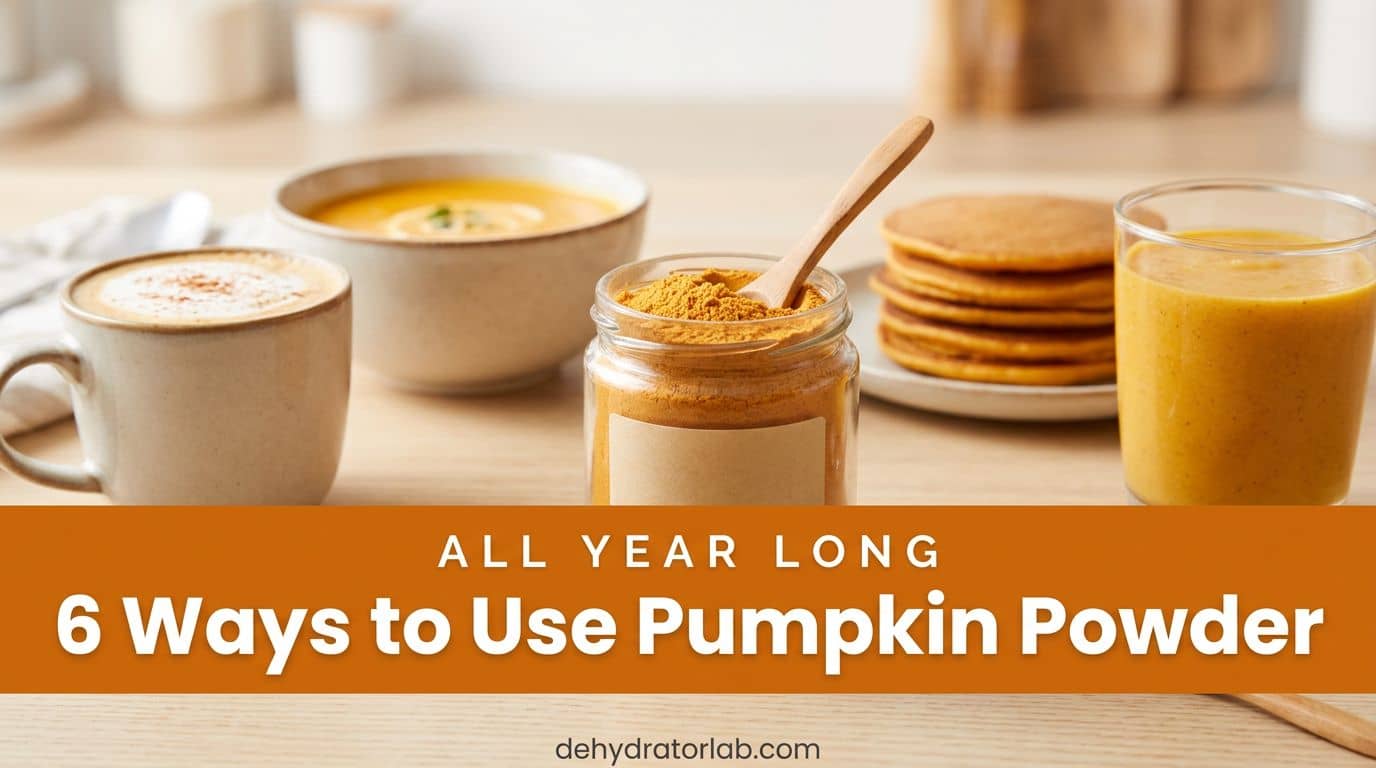
A jar of homemade pumpkin powder outlasts the foliage. It’s shelf-stable, concentrated, and works in sweet and savory cooking in every month of the year. Here are six ways to use it, one for each stretch of the calendar.
As an Amazon Associate, I earn from qualifying purchases. If you make a purchase after clicking on a link I may earn a small commission at no extra cost to you if items are purchased.
In this article:
TL;DR: Key Takeaways
- 🎃 One jar of homemade pumpkin powder covers six uses, spread across the seasons.
- ☕ A dry mix of powder, spice, and sugar turns into a pumpkin spice latte in about a minute.
- 🍲 Whisked into broth, the powder makes a creamy soup in roughly 10 minutes with no roasting day.
- 🍞 About 1/3 cup powder plus 2/3 cup warm water stands in for 1 cup of canned pumpkin.
- 🥞 Pancakes, smoothies, and mac and cheese all take just 1 to 3 tablespoons.
- 📦 Condition the powder, keep it airtight in a cool, dark spot, and it holds up for months.
Don’t have a jar yet? My pumpkin powder recipe walks through the whole process: roast a sugar pumpkin at 375°F (190°C), dry the puree at 125–135°F (52–57°C) until the sheets turn brittle, grind, and condition. Already have a jar? Keep reading.
Two storage rules before the recipes. The National Center for Home Food Preservation says to condition dried food in a sealed container, shaking it daily, and to store it somewhere cool, dry, and dark. It also notes that dried vegetables keep about half as long as dried fruit, so I make smaller batches more often and use them up.
Gear check: a Cuisinart SG-10 electric spice-and-nut grinder turns the dried sheets into fine powder in short pulses. Sift it, regrind the coarse bits, and the powder dissolves smoothly in everything below. Let’s get into it.
1. Instant Pumpkin Spice Latte Mix (Fall)
Fall has one job here: the pumpkin spice latte. The twist is mixing it dry, keeping it in a jar, and skipping the syrup pump entirely.
Stir together pumpkin powder, sugar, and pumpkin pie spice with a tiny pinch of salt, using about equal parts powder and sugar. Whisk 2 tablespoons of the mix into 1 cup of steaming milk. Start there and adjust to your sweet tooth.
Make it your own:
- Swap the sugar for maple sugar for a deeper flavor.
- Add a shot of espresso or strong coffee for the café version.
- Pack a small jar with a tag for a homemade gift.
Need ideas for packing jars? My gift basket ideas cover that. Café flavor, pantry price.

2. Ten-Minute Creamy Pumpkin Soup (Winter)
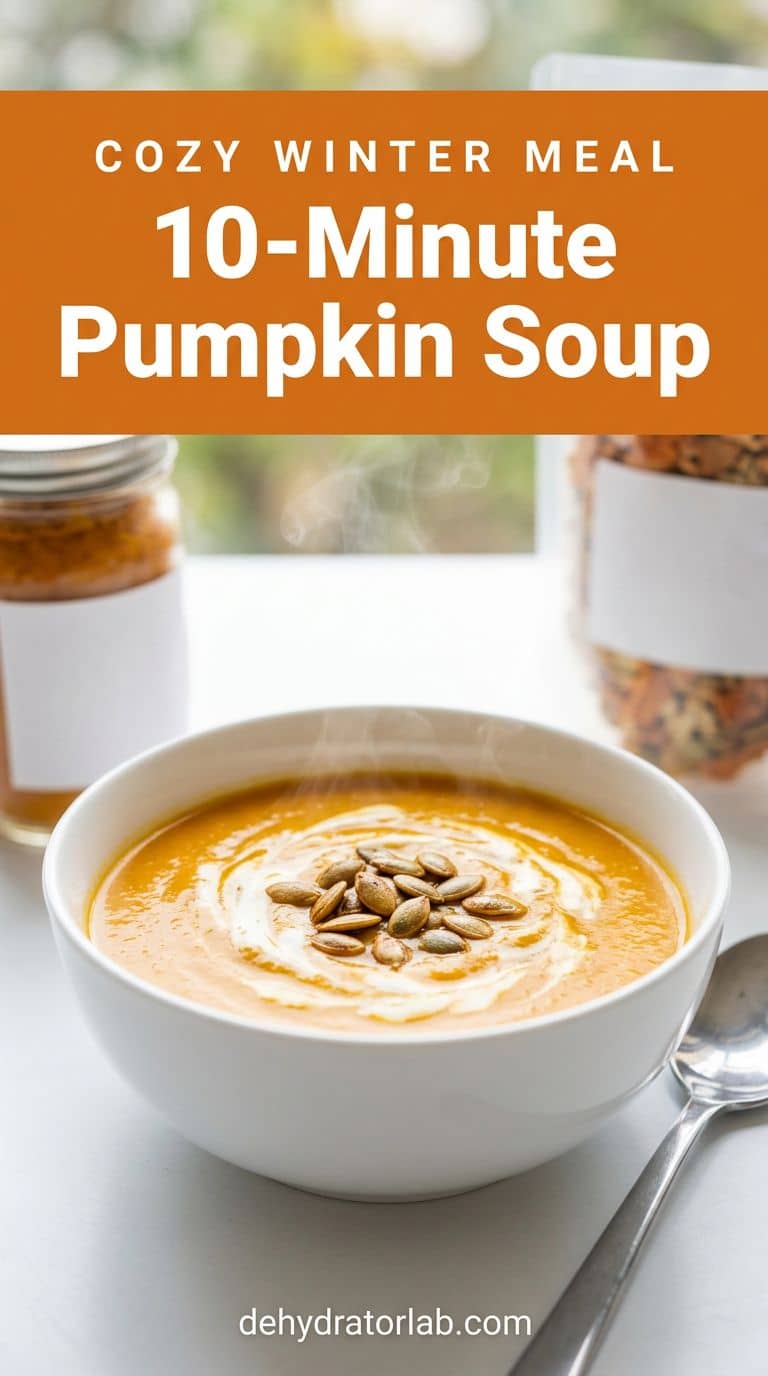
Winter calls for soup, and pumpkin powder skips the roasting day. Sauté an onion and a couple of garlic cloves, add 3 cups of broth, and plan on about 1/2 cup of powder.
Whisk the powder with a little cold broth first so it doesn’t clump, then stir it into the pot and simmer for 8 to 10 minutes while it thickens. Season with salt, pepper, and a grating of nutmeg.
Finish it with:
- Toasted seeds from my seasoned pumpkin seed recipes.
- Sage browned in butter.
- A splash of cream or coconut milk for silky body.
The powder also thickens stews: whisk in 1 tablespoon per cup of liquid. It pairs well with my dehydrated soup mix recipes and the best vegetables for homemade soups. Ten minutes, zero roasting.
3. Pumpkin Bread in Place of Canned Puree (Late Winter)
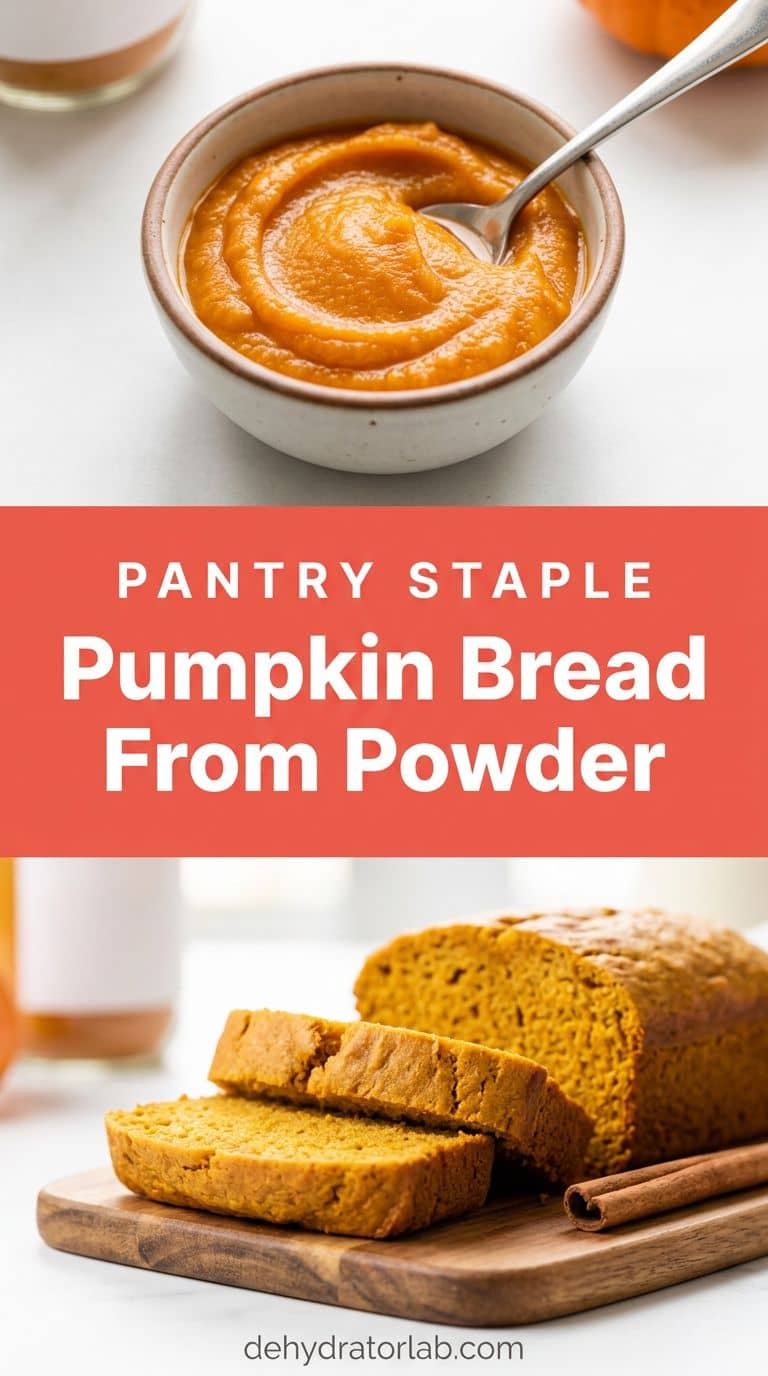
By late winter the canned pumpkin is gone, and the pumpkin bread craving isn’t. Rehydrate instead: mix about 1/3 cup of powder with 2/3 cup of warm water, let it sit for 5 to 10 minutes, and stir until it looks like thick puree.
That makes roughly 1 cup, so use it 1:1 wherever a recipe calls for canned pumpkin: bread, muffins, or a spice cake. For a lighter touch, fold 1 to 3 tablespoons of dry powder into any quick-bread batter and add a splash of extra liquid, since the powder soaks up moisture.
Homemade powder runs concentrated, so taste the rehydrated puree and adjust your spices. My base post has a full FAQ on swaps. Pumpkin bread in March, no can needed.
4. Pumpkin Pancakes and Waffles (Spring)
Spring brunch season means pancakes and waffles, and pumpkin powder dresses them up without a can opener. Whisk 1 to 3 tablespoons into your dry ingredients, then add a splash more milk, because the powder absorbs liquid.
A pinch of cinnamon and a little maple syrup in the batter finish the job. The batter turns warm orange and the flavor leans toasty and mellow.
I use the same dry-in-with-the-dry trick with strawberry in my fruit powder roundup. Baking in bulk? My dehydrated egg recipes have more baking-day ideas. Orange pancakes, zero food coloring.

5. Pumpkin Pie Smoothie (Summer)
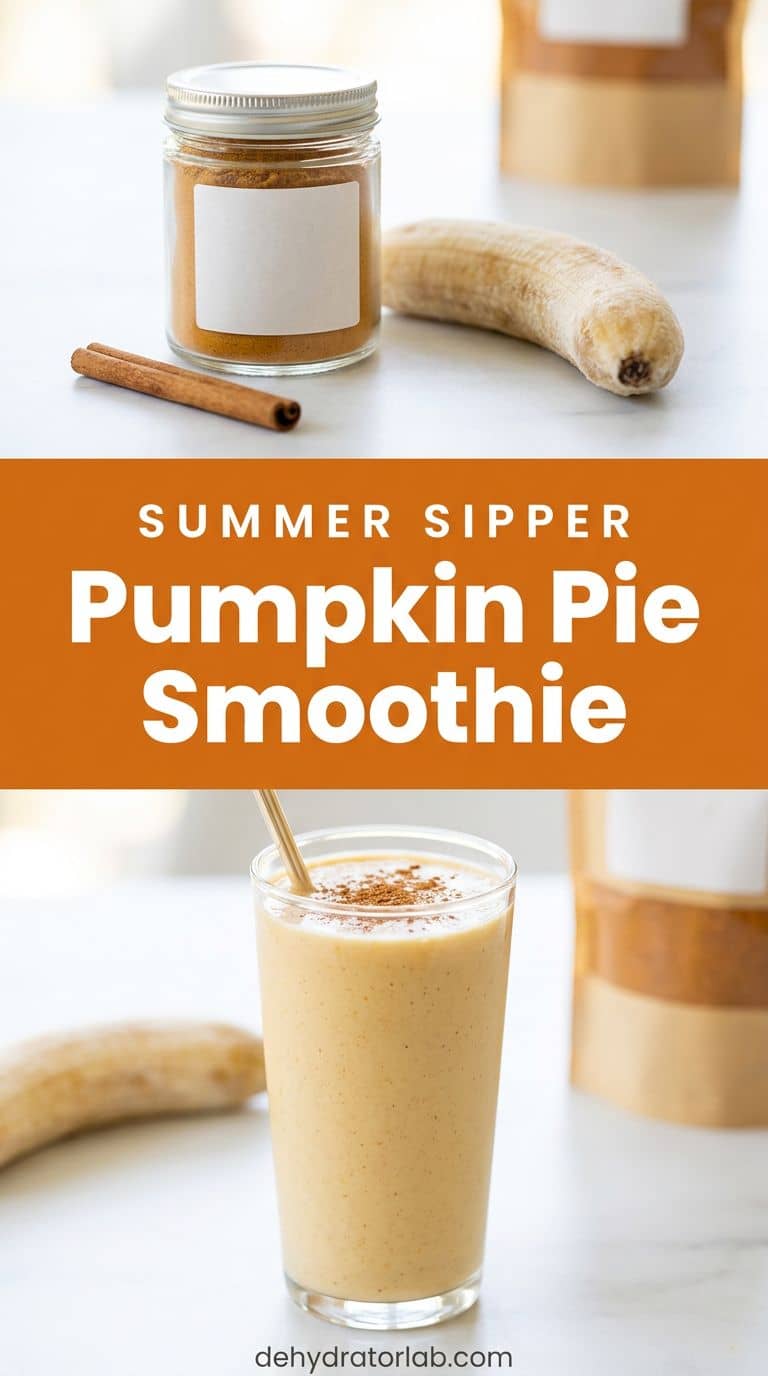
Summer isn’t pumpkin season, which is why a cold pumpkin pie smoothie feels like a small act of rebellion. Blend 1 frozen banana, 1 cup of milk, 1 tablespoon of pumpkin powder, a pinch of cinnamon, and a drizzle of maple syrup.
Put the powder in with the milk first so it dissolves before the frozen fruit goes in. Add a scoop of peanut butter powder for a nutty, protein-friendly twist.
Want it spoonable? Pour it into a bowl and top it with granola, using the ideas in my dehydrated topping recipes. Pumpkin pie in a glass.
6. Creamy Pumpkin Mac and Cheese (Any Time)
This one belongs in the weeknight rotation all year. Whisk 2 to 3 tablespoons of pumpkin powder into 2 cups of milk before you build the cheese sauce, then melt in the cheese the usual way.
The powder adds a golden color and a mellow sweetness that plays well with sharp cheddar. It also works in a quick pasta sauce: stir it into garlic, olive oil, and a ladle of pasta water for a creamy coat.
Sage, garlic, and black pepper keep it savory. If you like making your own blends, my seasoning recipes are a good place to start. Comfort food with a hidden vegetable.

Quick Reference: How Much Powder to Use
Homemade powder runs concentrated, so treat these as starting points and adjust once you know how strong your own batch is.
| Use | Starting Amount |
|---|---|
| Latte mix | 2 tablespoons of mix per 1 cup of milk |
| Soup | About 1/2 cup powder per 3 cups of broth |
| Rehydrated puree | 1/3 cup powder plus 2/3 cup warm water, about 1 cup |
| Pancake or waffle batter | 1 to 3 tablespoons per batch |
| Smoothie | 1 tablespoon per 12-oz smoothie |
| Mac and cheese sauce | 2 to 3 tablespoons per 2 cups of milk |
Personal Tips You Can Steal
I grind the dried pumpkin sheets in short pulses, because short bursts keep the grinder from warming up and clumping the powder. I sift it and regrind the coarse bits so the latte mix dissolves smoothly. I keep a small working jar on the counter and the rest sealed in a bigger jar, so the backup never meets kitchen humidity.
I shake the jar daily at first and toss anything that smells off or looks damp. I label every jar with the date, because pumpkin powder looks a lot like my sweet potato powder. I double the batch in October, when the pumpkins are cheap and my fall dehydrating list is in full swing.
Final Thoughts
Pumpkin powder works in every season once you stop treating it like a fall-only ingredient. Pick one idea from this list, start with a small jar, and work your way around the calendar.
Related reading: 10 Amazing Ways to Use Homemade Fruit Powders in Everyday Cooking, 8 Homemade Vegetable Powder Recipes to Stock Your Pantry, and 7 Creative Ways to Use Dehydrated Tomato Powder in the Kitchen.
P.S. Try the latte mix first. It takes five minutes, and it makes the jar earn its shelf space right away. 🙂