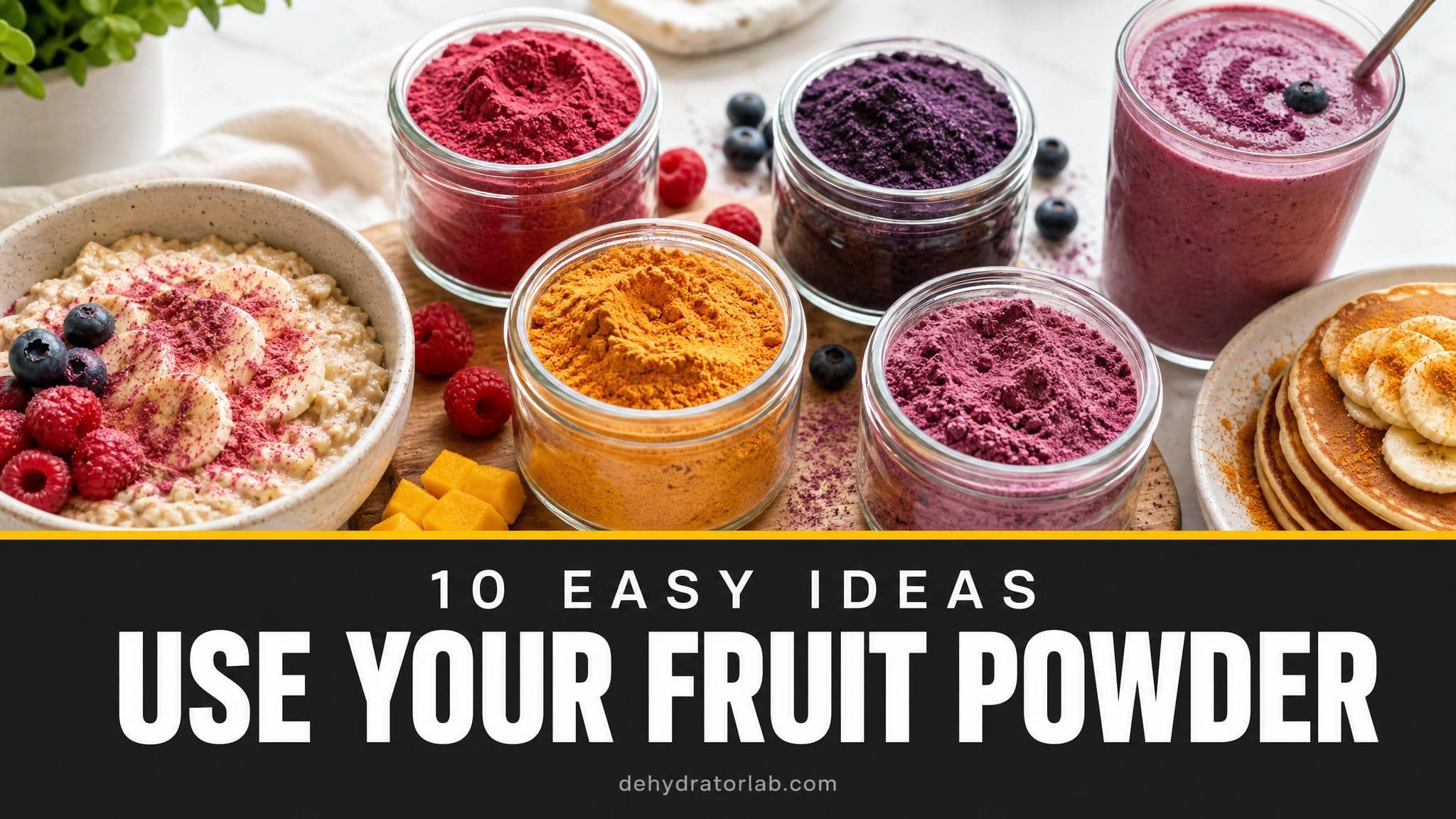
Ever check the price on a little jar of “vegetable powder seasoning” at the store and do the math on how much actual vegetable is in there? Most of it is filler. The real stuff — just dried vegetable, ground fine — costs you almost nothing if you’ve already got a dehydrator running.
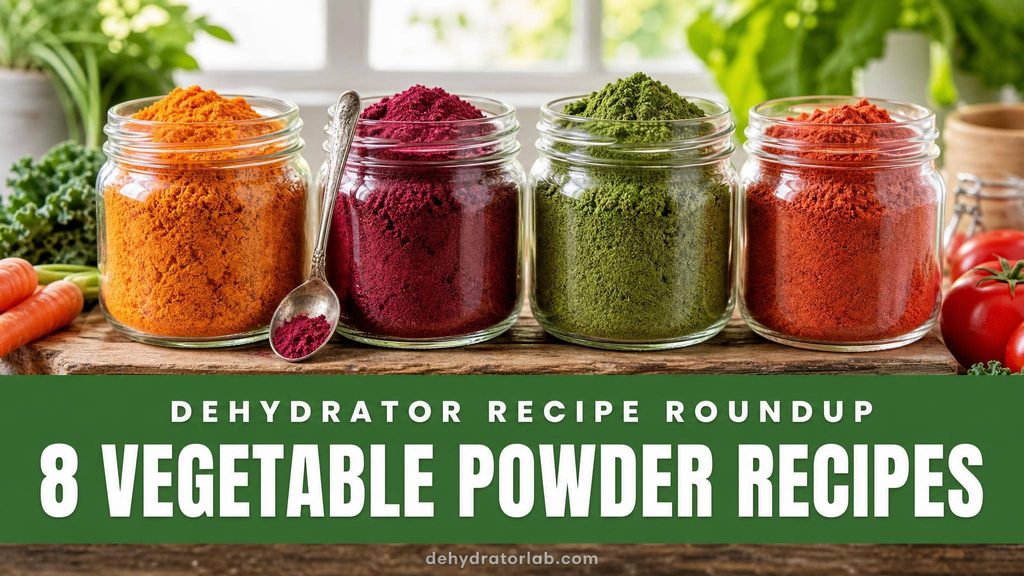
Vegetable powders are the most useful thing your dehydrator makes that you’re probably not making yet. They dissolve into sauces, hide in smoothies, and turn a half-empty spice rack into something you actually reach for. Let’s turn your extra produce into pantry gold.
As an Amazon Associate, I earn from qualifying purchases. If you make a purchase after clicking on a link I may earn a small commission at no extra cost to you if items are purchased.
In this article:
TL;DR: Key Takeaways
- 🥕 Carrot powder sneaks natural sweetness into baked goods and sauces
- 🍅 Tomato powder makes instant paste or sauce base without opening a can
- 🍄 Mushroom powder is the fastest umami upgrade in your spice cabinet
- 🌿 Kale powder hides greens in smoothies without anyone noticing
- 🧅 Shallot powder beats the jar from the store on flavor, hands down
- 🌶️ Horseradish powder brings real heat with none of the fridge-only shelf life
- ✅ All it takes is fully dried vegetables and a spice grinder
Before you start: every powder below follows the same base method. Slice the vegetable thin and even, then dry at 125–135°F (52–57°C) — the UC Master Food Preserver Program’s guidance puts most vegetables right in that range, a bit cooler than fruit.
It’s done when pieces snap instead of bend — any flexibility left means moisture left, and moisture left means a powder that clumps or molds in the jar. Let everything cool fully, then grind in a dedicated spice grinder and sift out anything coarse. Store the finished powder in airtight glass jars away from light, and it’ll hold flavor for months instead of weeks. Getting every piece to snap rather than bend comes down to even airflow, which is why the machines I recommend for vegetables dry the top tray and the bottom tray at close to the same rate.
1. Carrot Powder
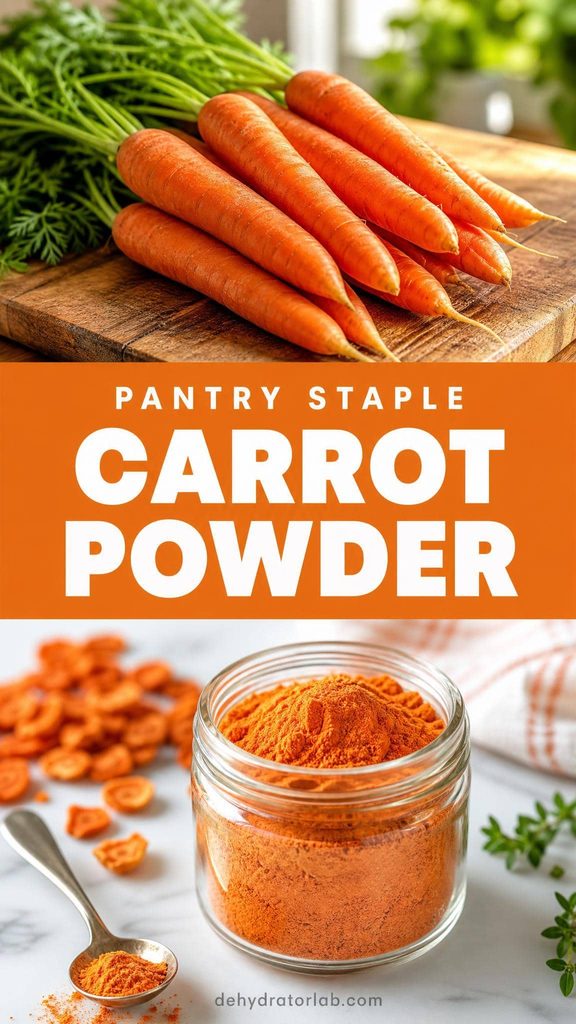
Carrot is the gateway vegetable powder — mild, naturally sweet, and about as forgiving as dehydrating gets. If you’ve never made a vegetable powder before, start here.
Stir a spoonful into muffin or pancake batter for natural sweetness and color, whisk it into soup for body without the starch, or blend it straight into a smoothie where the kids will never clock it as “vegetable.”
My full carrot powder recipe has the exact slicing and drying times. The easiest one on this list to get right the first time.
2. Beet Powder
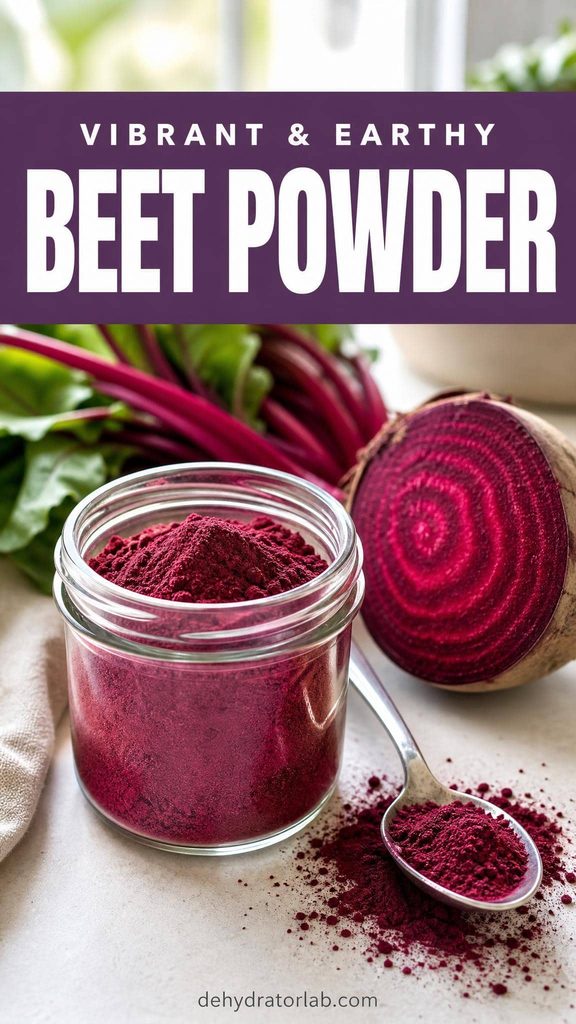
Beet powder dyes everything it touches a deep magenta-pink, which makes it as much a food coloring as a flavor booster. A pinch in pancake batter, yogurt, or a smoothie turns an ordinary breakfast into something that looks staged for a photo.
Wear gloves when you handle the raw beets before slicing, or your hands will match the powder for the rest of the day. The earthy-sweet flavor works in savory dishes too — stir a little into hummus or a vinaigrette.
My full beet powder recipe covers the prep and drying times in detail. A natural food dye that happens to taste good too.
3. Kale Powder
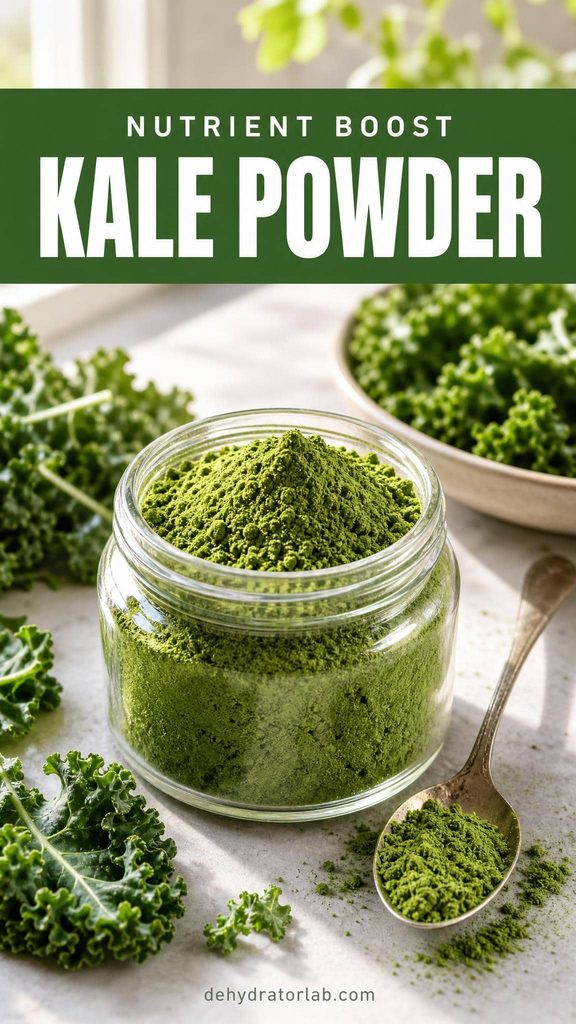
Kale powder is the sneakiest way to add greens to a meal without anyone clocking it. It disappears into smoothies, dips, and even mac and cheese, leaving behind the nutrition without the texture anyone objects to.
Dry the leaves until they crumble between your fingers with zero resistance — any leftover flex means leftover moisture, and kale powder with moisture in it clumps into a solid brick within a week.
My full kale powder recipe walks through blanching and drying step by step. The sneakiest way to eat your greens.
4. Tomato Powder
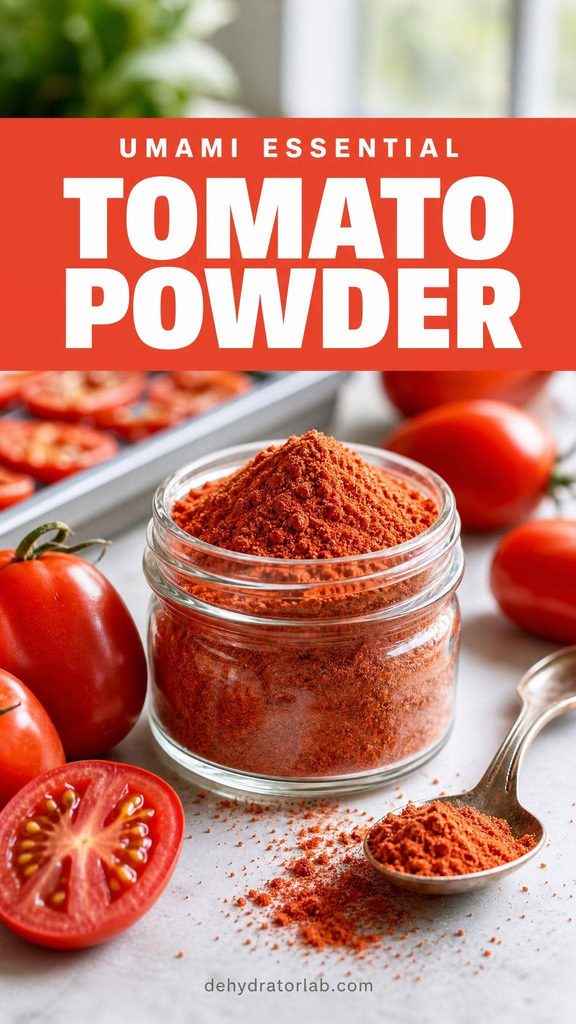
Tomato powder is the pantry fix for the night you’re halfway through a recipe and realize you’re out of tomato paste. Whisk it with a little water and you’ve got paste or a sauce base in under a minute, no can opener required.
Use ripe, meaty tomatoes — Roma or paste varieties dry faster and grind finer than juicy slicing tomatoes, which fight you the whole way through. Seed them first for a smoother powder with less bitterness.
My full tomato powder recipe covers exact ratios for reconstituting it back into paste or sauce. Never run out of tomato paste again.
5. Bell Pepper Powder
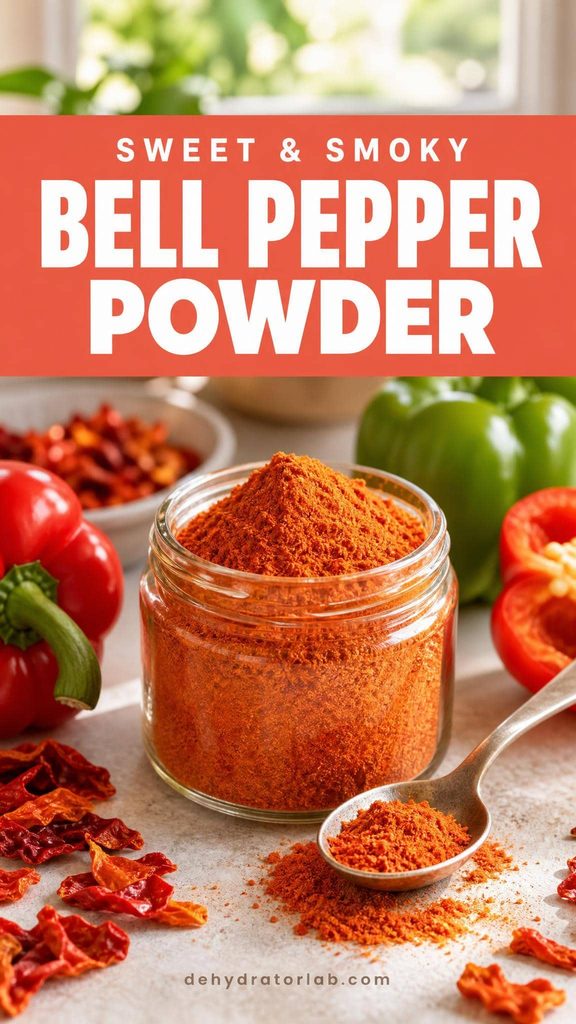
Bell pepper powder tastes like a homemade paprika, and once you’ve made a batch, the store-bought jar starts tasting like cardboard by comparison. It’s sweeter and more vivid than most commercial paprika, since you control exactly what went in.
Red peppers give you the sweetest, deepest color and flavor; green peppers dry into something more vegetal and grassy. Mix colors if you want a middle-ground blend instead of picking a side.
My full bell pepper powder recipe has the slicing and drying details. Better than store paprika, honestly.
6. Mushroom Powder
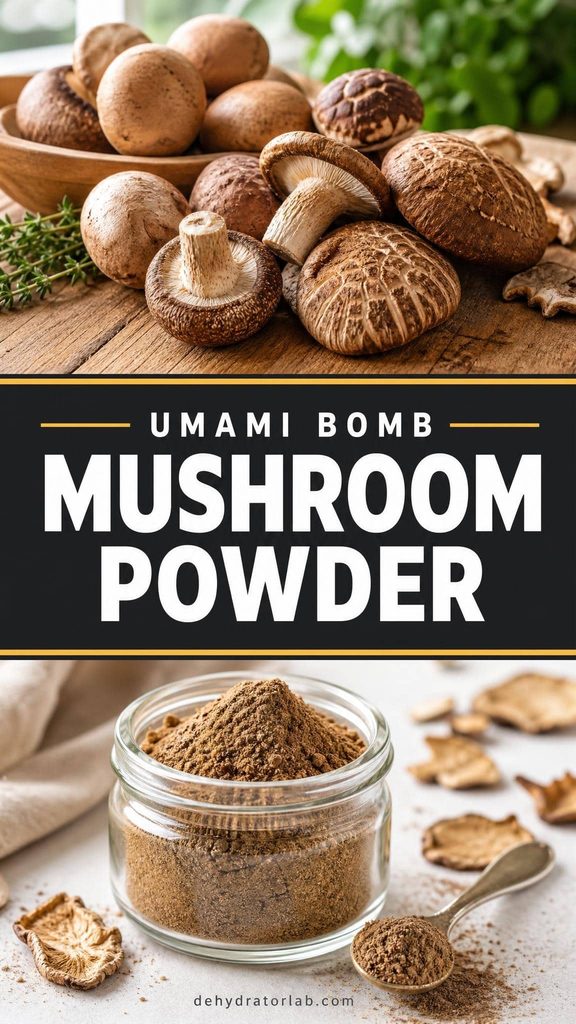
Mushroom powder is the fastest umami upgrade you can add to a dish. A spoonful in soup, gravy, or a burger blend does the work that an hour of simmering usually does, and it does it instantly.
Mix varieties — cremini, shiitake, and portobello together — for a rounder, more complex flavor than any single mushroom gives you alone. Dry until pieces are leathery-crisp all the way through before grinding, since mushrooms hide moisture in the gills longer than you’d expect.
My full mushroom powder recipe covers which varieties work best together. The umami shortcut your pantry is missing.
7. Shallot Powder
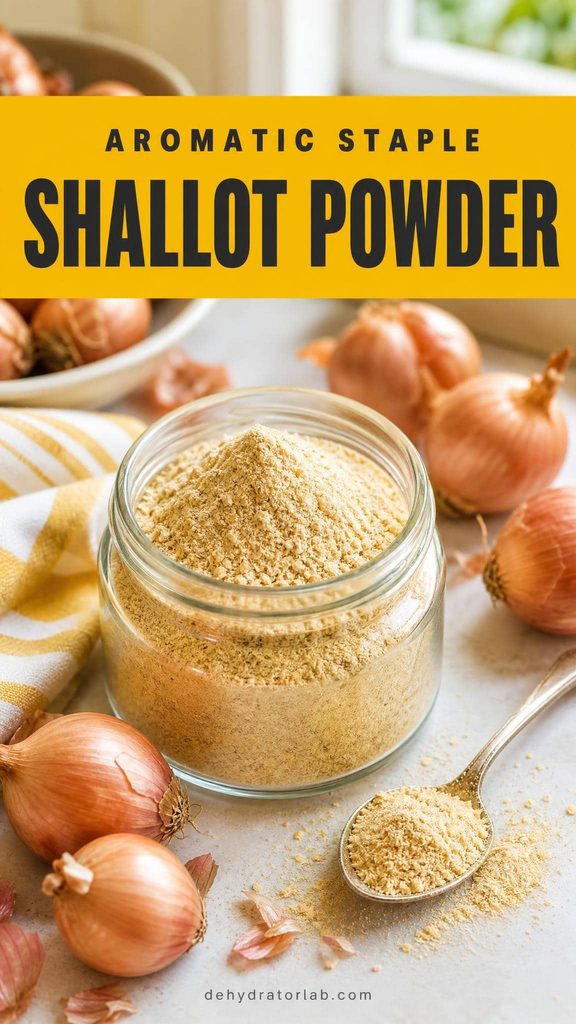
Shallot powder is milder and sweeter than onion powder, with a little more complexity that makes it worth the extra step of making your own. It’s the upgrade a vinaigrette or marinade didn’t know it needed.
Slice shallots thin and even — they carry more moisture than yellow onions, so uneven pieces mean some finish drying long before others. Give them the extra time; rushing shallots is how you end up with a powder that clumps.
My full shallot powder recipe has the slicing and timing details. Quietly better than the jar at the store.
8. Horseradish Powder
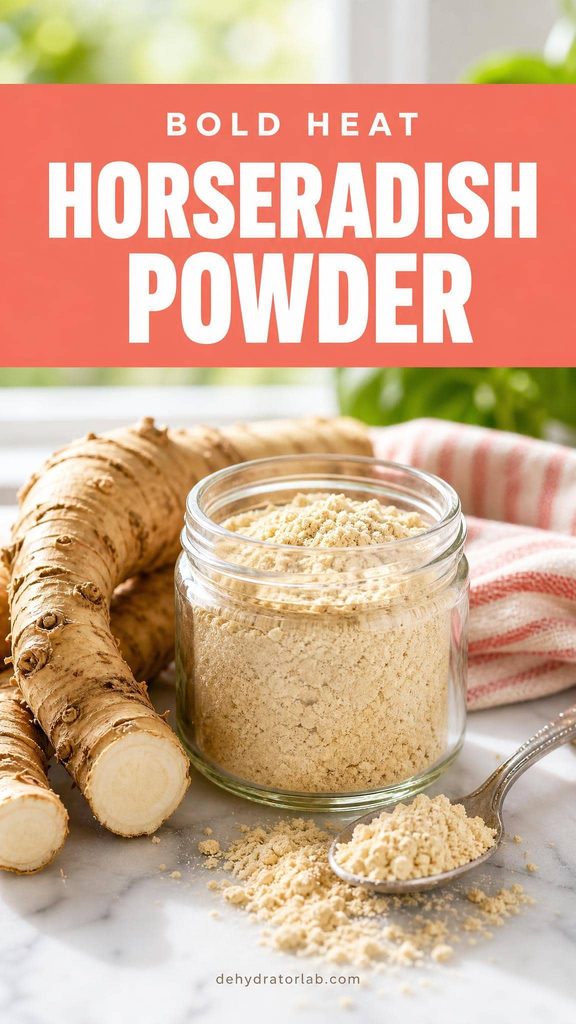
Fresh horseradish root turns bitter and loses its bite within days of grating. Dried and ground into powder, that same heat holds for months in the pantry instead of a week in the crisper drawer.
Grind it in a well-ventilated area — the same sinus-clearing compounds that make fresh horseradish sharp are still there in the dried version, just concentrated, and a closed kitchen with the grinder running will clear the room fast.
My full horseradish powder recipe covers prep and rehydrating it back into a sauce. Shelf-stable heat, zero fridge required.
Personal Tips You Can Steal
I dry every vegetable powder batch on a dedicated tray liner so flavors don’t cross over onto whatever I dehydrate next. I always let dried pieces cool completely before grinding, since warm pieces release moisture right back into the jar. I sift every batch through a fine-mesh strainer and re-grind the coarse leftovers instead of tossing them.
I label jars with the grind date, not just the vegetable name, since powders lose potency faster than whole dried pieces do. I keep my most-used powders — carrot, tomato, mushroom — in a small rack by the stove and stash the rest in a dark pantry drawer.
Final Thoughts
Vegetable powders are the lowest-effort, highest-payoff thing your dehydrator can make. Once you’ve got a shelf of them going, you’ll start reaching for your own jars before you ever think about the spice aisle again. Start with carrot or tomato if you’re new to this — both are forgiving and you’ll use them constantly.
If you want more ways to stock your pantry from the dehydrator, my dehydrated seasoning recipes roundup covers blends built from powders like these, and my 13 essential dehydrated foods guide has more pantry staples beyond just powders.
P.S. If you only make one from this list, make the tomato powder — it’s the one you’ll reach for most on a random Tuesday. Happy dehydrating! 🙂