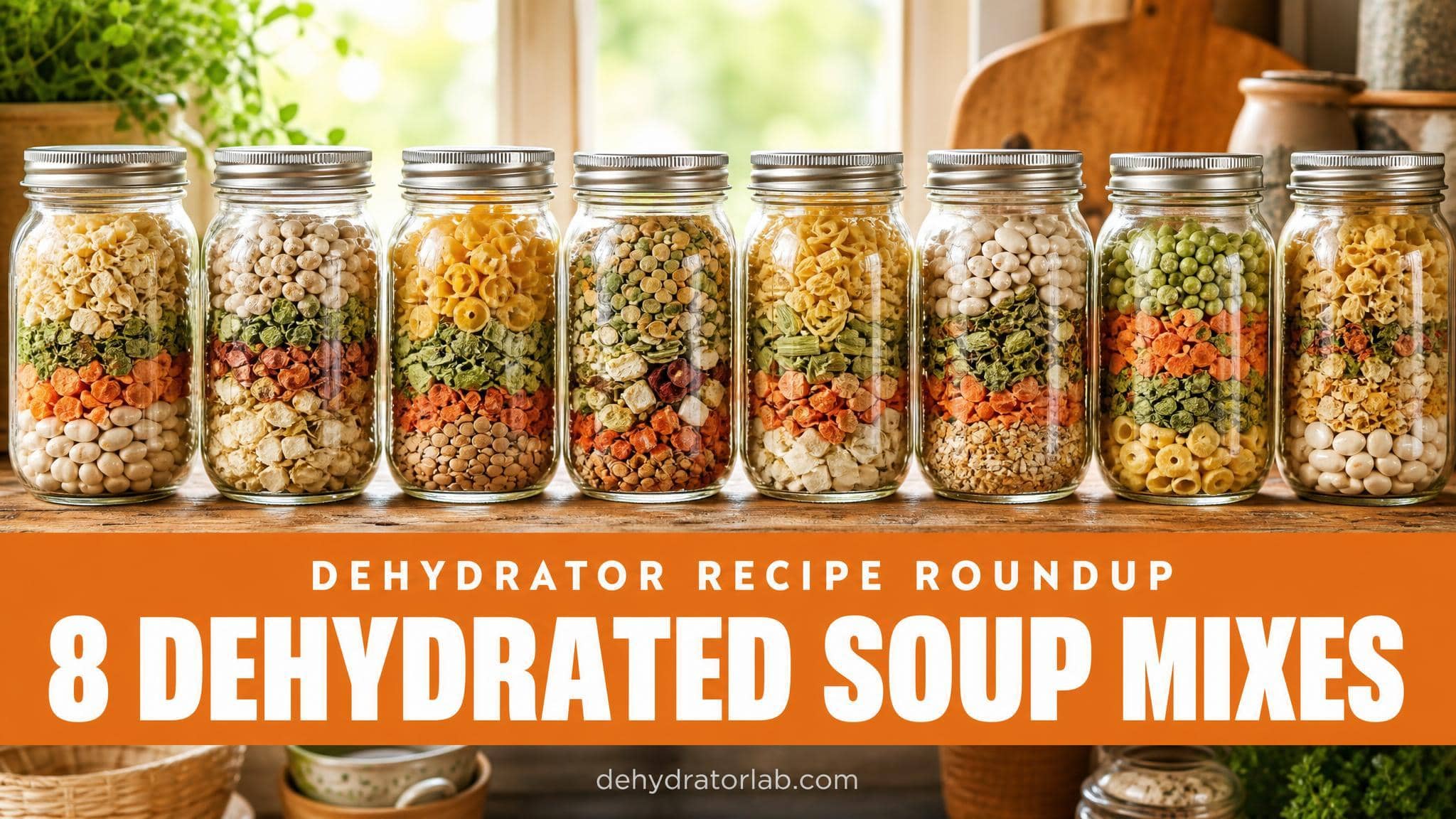
Flip over a bag of store-bought cat treats and read the ingredient list. Then ask yourself how much of it your cat actually needs.
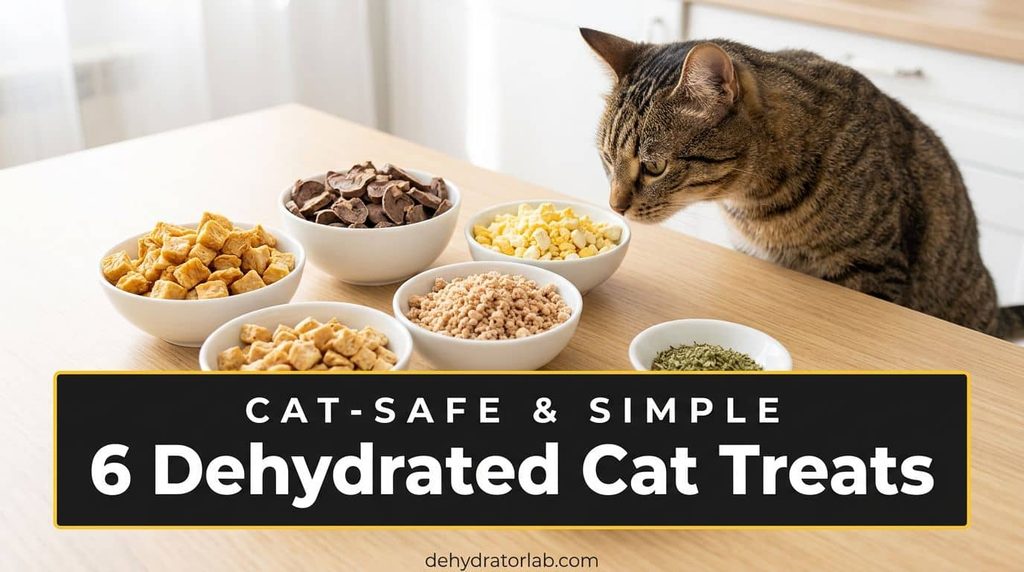
A dehydrator keeps things short. Cooked meat, one ingredient at a time, dried into bites small enough for a cat’s mouth, with no salt, no seasoning, and no mystery dust. Here are six treats worth making for the cat who runs the house.
As an Amazon Associate, I earn from qualifying purchases. If you make a purchase after clicking on a link I may earn a small commission at no extra cost to you if items are purchased.
In this article:
TL;DR: Key Takeaways
- 🐱 Six treats: plain cooked chicken, chicken hearts, sardine crisps, egg yolk crumbles, turkey crumbles, and dried catnip.
- 🍳 Every meat, fish, and egg item gets fully cooked first, because dehydrating raw food does not make it safe.
- 🌡️ Cooked proteins dry at 145–155°F (63–68°C), while catnip needs a gentler 95–115°F (35–46°C).
- 🚫 No salt, seasoning, oil, onion, or garlic, since cats are especially sensitive to onion and garlic.
- ⚖️ Treats should stay under 10% of your cat’s daily calories, so a pinch counts as a serving.
- 🩺 Ask your vet before you start, especially for kittens, seniors, and cats with health conditions.
A quick note first. I’m a dehydrator guy, not a vet, so treat this list as a starting point for a conversation with yours. The VCA Animal Hospitals cat treat guide says treats should make up no more than 10% of your cat’s daily calories, and it also advises being wary of freeze-dried or dehydrated raw treats because of bacterial risk. That’s why every recipe below starts with cooking, and why the dehydrator only dries what’s already safe.
For what stays out of the bowl, the ASPCA people-foods guide is the list I keep bookmarked. It flags onion, garlic, and chives (with cats more susceptible than dogs), chocolate, grapes and raisins, xylitol, milk and dairy, and raw meat or eggs. Cats are also obligate carnivores, so meat leads this list. Got a dog at home too? My dehydrated dog treat recipes cover that side of the house. Let’s get into it.
1. Plain Chicken Breast Cubes
This is the gateway treat. One ingredient, a texture cats tend to like, and a cube size you can control down to the pea.
Poach or bake boneless, skinless chicken breast with nothing added until it reaches 165°F (74°C) inside. Let it cool, then dice it smaller than you think you need to. Spread the cubes in a single layer and dry at 145–155°F (63–68°C) for roughly 3–5 hours, since cube size changes the clock. Break one open before you call it done, and make sure there’s no soft or damp center.
- Cook to 165°F (74°C), no oil and no salt.
- Dice small, about the size of a pea or smaller.
- Dry until firm all the way through, with no squishy centers.
My guide to chicken jerky in a dehydrator covers the human version, and for your cat you skip every marinade. Cook first, dry second.

2. Chicken Heart Chips
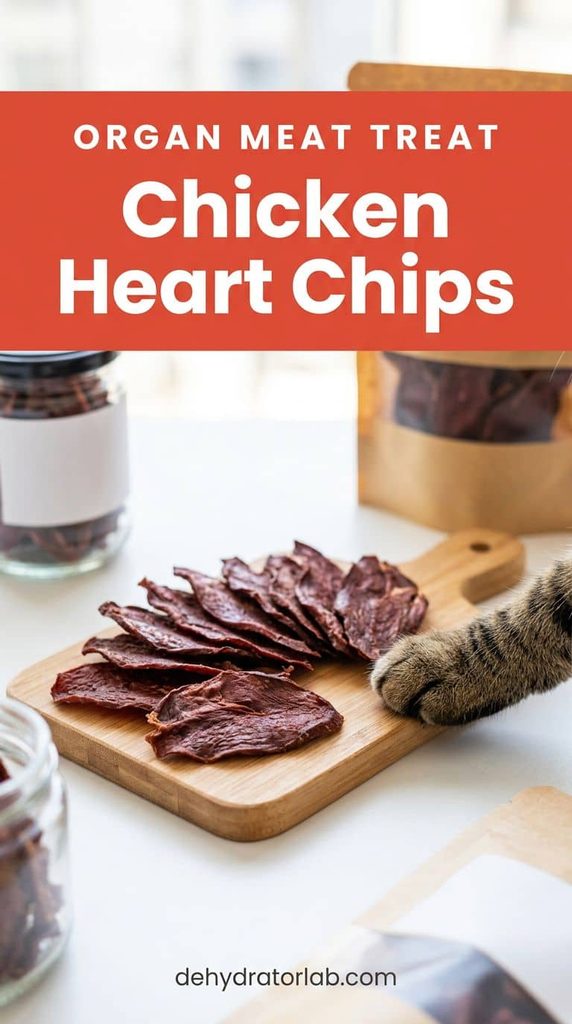
Hearts are the organ-meat treat a lot of cat owners already know. They’re lean, dense, and cut into thin slices; they dry into crisp little chips.
Trim away fat and any tough connective tissue, then simmer the hearts in plain water for 10–15 minutes until no pink remains. Cool them, slice about 1/8 inch thick, and dry at 145–155°F (63–68°C) for roughly 4–6 hours until the chips are firm and snap-dry. Because hearts vary in size, check the thickest slice, not the thinnest.
Organ meat is rich, so ask your vet how often it fits your cat’s diet, and keep servings tiny. For more unusual meat ideas on the human side, my unusual cuts jerky roundup is a good read. Thin slices, crisp chips.
3. Sardine Crisps
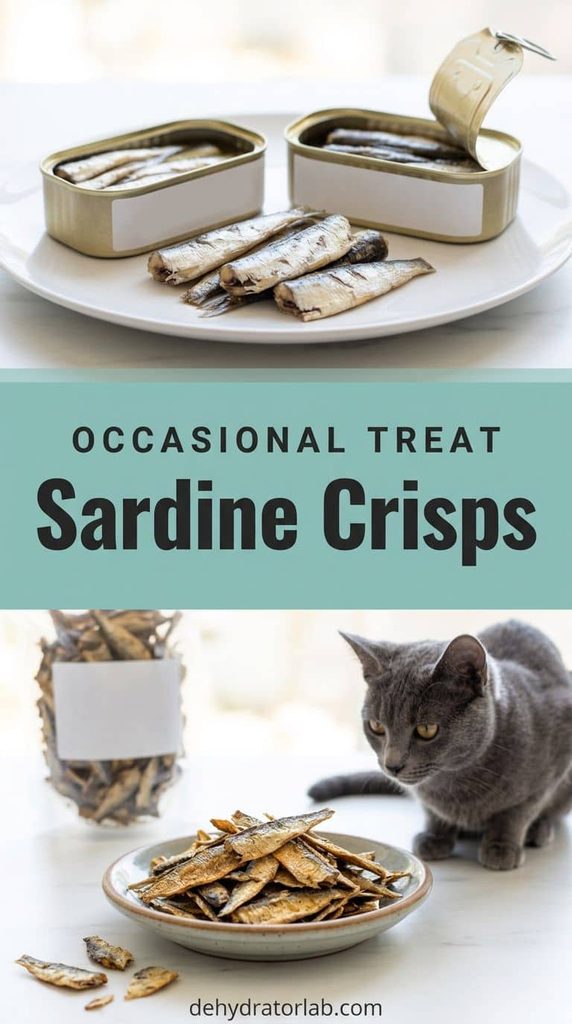
Sardines are the treat that makes your kitchen smell like a fish market. Your cat will forgive you.
Buy sardines packed in water with no salt added, and read the label for anything else. Skip oil, tomato sauce, mustard, and any flavored variety. Drain well, pat dry, and break the fish into small flakes. Dry them on a solid sheet at 145–155°F (63–68°C) for roughly 4–8 hours until they snap. Canned fish is already cooked, but a wet flake still needs to dry all the way through.
Treat these as an occasional extra, not a daily habit, and keep the pieces small. Crack a window while they dry. Water-packed, no salt added.
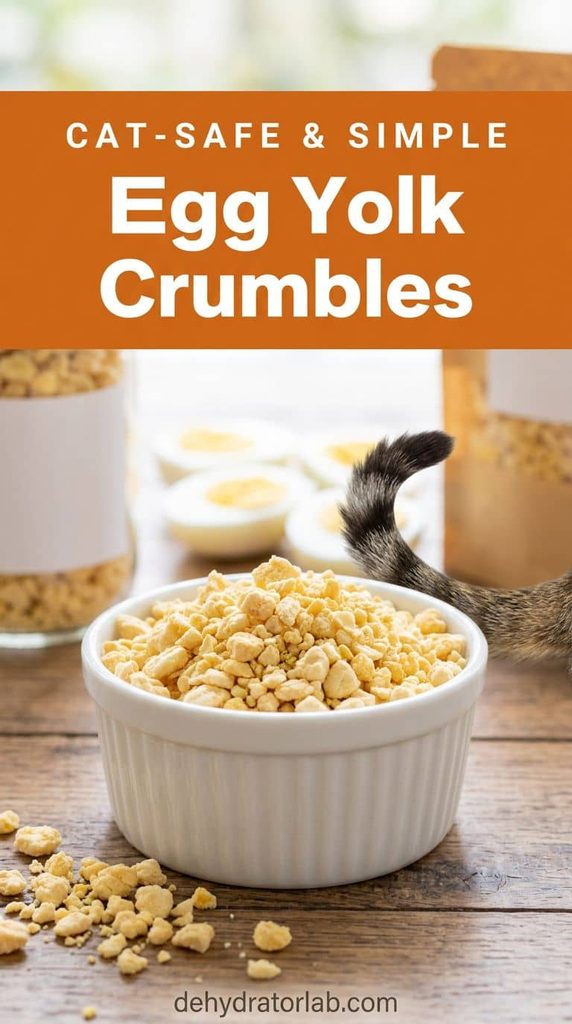
4. Egg Yolk Crumbles
Eggs are easy, cheap, and already in your fridge. The one rule is that they get fully cooked before anything else happens.
Hard-boil the eggs for 10–12 minutes, cool them, and pull out the yolks. Crumble the yolks onto a solid dehydrator sheet and spread them thin. Dry at 145–155°F (63–68°C) for roughly 4–8 hours, stirring once or twice, until the crumbs are dry and no longer soft. The ASPCA warns that raw eggs can carry bacteria, and my own dehydrated egg recipes follow the same cook-first rule.
Yolk is rich, so a pinch over regular food is plenty. Store the crumbles airtight in the fridge, and toss them if they smell off or feel damp. Fully cooked, never raw.
5. Ground Turkey Topper
Some cats turn their nose up at their regular food. A spoonful of turkey crumbles on top is the oldest trick in the book, and a dehydrator makes it shelf-ready.
Cook lean ground turkey plain in a dry pan to 165°F (74°C), breaking it into tiny crumbles as it goes. Drain it well, blot off the fat, and spread it thin on a solid sheet. Dry at 145–155°F (63–68°C) for roughly 4–6 hours, stirring now and then, until dry and crumbly. My notes on dehydrated cooked ground beef cover the same hot-water-rinse trick for stripping fat, and it works on turkey too.
For a finer sprinkle, pulse the fully dry crumbs in a Cuisinart SG-10 grinder and wash it well afterward. Grind only crumbs that snap, since any leftover fat will clump. Want to see why solid sheets matter here? My fruit leather dehydrator guide explains it. A spoonful goes a long way.

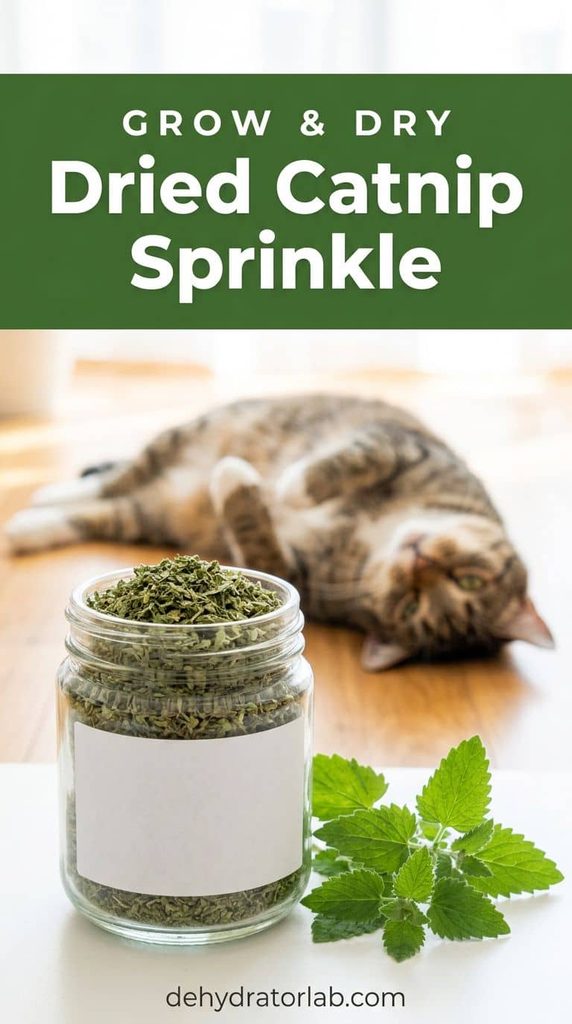
6. Dried Catnip Sprinkle
Not every treat has to be meat. Catnip is the classic cat herb, and most cats react to it by rubbing, rolling, or blissing out. Some ignore it completely, so don’t take it personally.
Grow your own, or buy a plant that hasn’t been sprayed with pesticides. Pick the leaves, rinse them if needed, and pat them completely dry. Dry at 95–115°F (35–46°C), since herb oils start cooking off above 115°F (46°C), as I explain in my best dehydrator for herbs guide. Expect roughly 2–4 hours, until the leaves crumble between your fingers.
Crumble a pinch over treats, a favorite toy, or a scratching post, and store the rest in a sealed jar away from light. Freshly dried catnip is stronger than the bag that’s been sitting on a shelf. More herb ideas live in my dehydrated herb blends, but keep those human blends away from the cat bowl. Dry it low and slow.
Quick Reference: Cook, Dry, Done
Drying times shift with piece size, tray load, and humidity, so the doneness test always beats the clock.
| Treat | Cook first | Dry at | Done when |
|---|---|---|---|
| Chicken breast cubes | Poach or bake to 165°F (74°C) | 145–155°F (63–68°C), 3–5 hours | Firm all the way through, no damp center |
| Chicken heart chips | Simmer 10–15 minutes, no pink | 145–155°F (63–68°C), 4–6 hours | Snap-dry chips |
| Sardine crisps | Already cooked (canned in water) | 145–155°F (63–68°C), 4–8 hours | Flakes snap |
| Egg yolk crumbles | Hard-boil 10–12 minutes | 145–155°F (63–68°C), 4–8 hours | Dry crumbs, no soft spots |
| Ground turkey topper | Cook to 165°F (74°C) | 145–155°F (63–68°C), 4–6 hours | Dry and crumbly |
| Dried catnip | None needed | 95–115°F (35–46°C), 2–4 hours | Leaves crumble easily |
Personal Tips You Can Steal
I cut every piece smaller than I think it needs to be, because a cat-sized bite dries faster and stores better. I keep a tray just for pet treats so nothing picks up flavor from a seasoned human batch. I give my cat one piece the first time and wait a day before making it a regular thing.
I label every jar with the date and the word “cat”, so I never grab the wrong one at 11 pm. I make small batches and refrigerate the cooked-protein treats, since fresh beats forgotten. Beginners can start with my easy dehydrating projects and my food dehydrating tips before moving on to pet treats.
Final Thoughts
A dehydrator turns plain, cooked ingredients into treats you can read at a glance. Start with the chicken cubes, keep portions tiny, and let your cat’s reaction (and your vet) tell you what stays in the rotation.
Related reading: 8 Homemade Dehydrated Dog Treat Recipes Your Pup Will Love, 10 brilliant uses for a food dehydrator, and 10 dehydrated foods to always have stocked.
P.S. Cook the chicken tonight. By tomorrow afternoon, you’ll have a jar of cubes and a cat who suddenly cares where you are. 🙂