Ever check the date on your paprika or your Italian seasoning and wonder how long it has been sitting there?
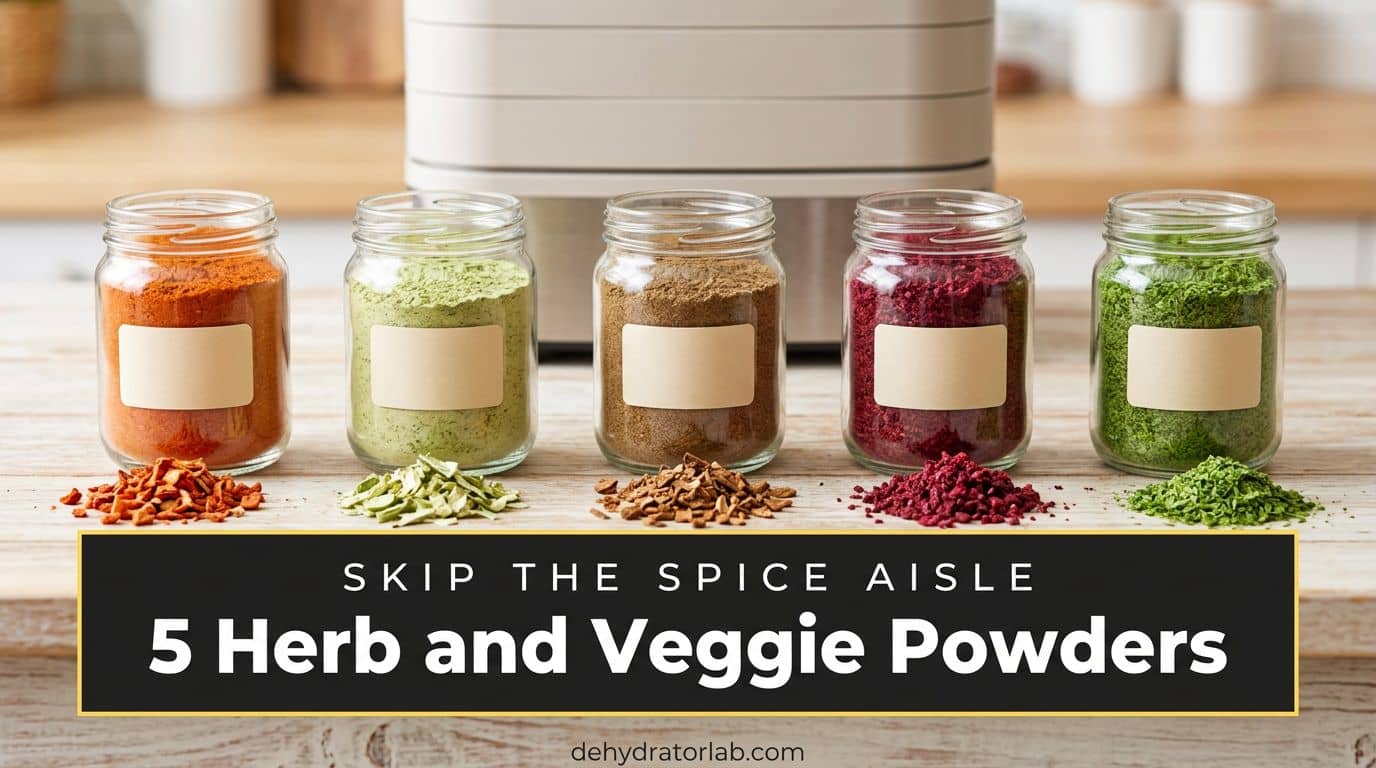
Your dehydrator can replace more of the spice aisle than you’d think. Five powders cover paprika, celery salt, bouillon, tomato paste, and a basic Italian blend. Here are five herb and veggie powders that earn a spot in your pantry.
As an Amazon Associate, I earn from qualifying purchases. If you make a purchase after clicking on a link I may earn a small commission at no extra cost to you if items are purchased.
In this article:
TL;DR: Key Takeaways
- 🌶️ Five swaps: bell pepper powder for paprika, celery powder for celery salt, mushroom powder for bouillon, tomato powder for paste, and herb powder for an Italian blend.
- 🌡️ Veggies dry at 125–135°F (52–57°C), my usual range, and herbs go cooler at 95–115°F (35–46°C), per NCHFP.
- ✅ Done means brittle. Clemson says dried vegetables should be brittle or crisp, at about 10 percent moisture.
- 🧊 Cool everything completely before you grind, because packaging warm food causes sweating.
- 🫙 Plan on about six months of best quality for veggie powders at 60°F (16°C), and three months at 80°F (27°C).
- 🧂 You control the salt, so every swap gets seasoned your way.
Every powder below follows the same base method. Slice thin and even, dry until brittle, cool completely, then grind in short pulses. Clemson Extension names onion, celery, and tomato as the most common vegetable powders.
Herbs are the exception, because NCHFP says to dry them cooler. A decent grinder helps, and I keep one just for spices. My best dehydrator for vegetables and best dehydrator for herbs guides cover which machines hold a steady low temperature.
Let’s get into it.

- Electric spice-and-nut grinder with durable stainless-steel blades
- Heavy-duty motor; push-top lid for simple on/off control
- Bowl holds 90 grams; extra storage space in lid; non-slip rubber feet
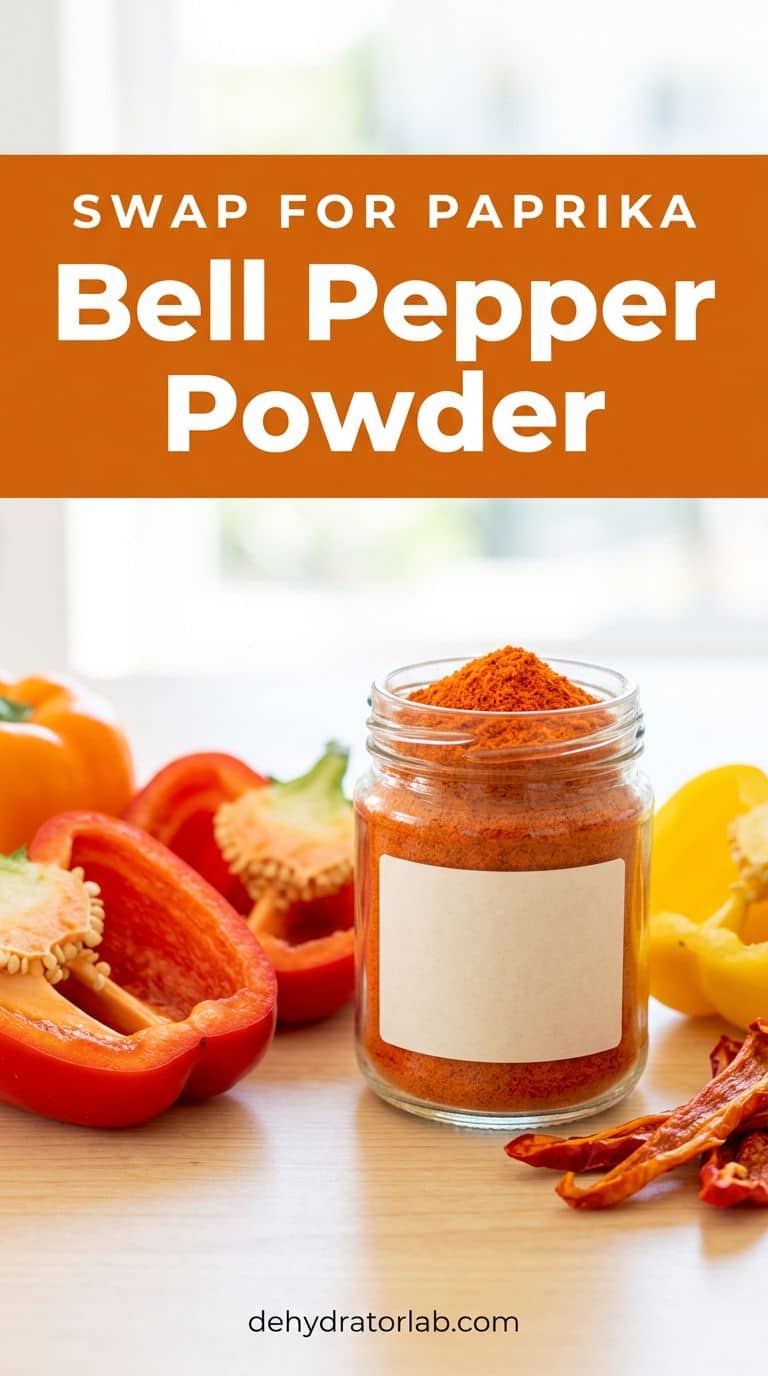
1. Bell Pepper Powder (Swap for Sweet Paprika)
Ripe red bell peppers dry into a sweet, bright powder that works where you’d use sweet paprika. It’s close, not identical. Paprika usually comes from a specific dried chile variety and is sometimes smoked, while bell pepper powder is milder and sweeter. Add a pinch of smoked paprika if you miss the smoke.
Stem and seed the peppers, and cut out the white ribs, since they dry slowly and taste bitter. Clemson cuts peppers into 3/8 inch pieces and lists 8 to 12 hours without blanching. For powder I go thinner, about 1/4 inch strips, at 125–135°F (52–57°C), and dry them until they shatter.
- Red and yellow peppers taste sweet, and green ones taste grassy.
- Strips should snap, not bend, before they go in the grinder.
- Four or five peppers make roughly 1/3 to 1/2 cup, by my own estimate.
My bell pepper powder guide has every step, and the vegetable powder roundup shows where it fits in the pantry. Sweet, not smoky.
2. Celery Powder (Swap for Celery Salt)
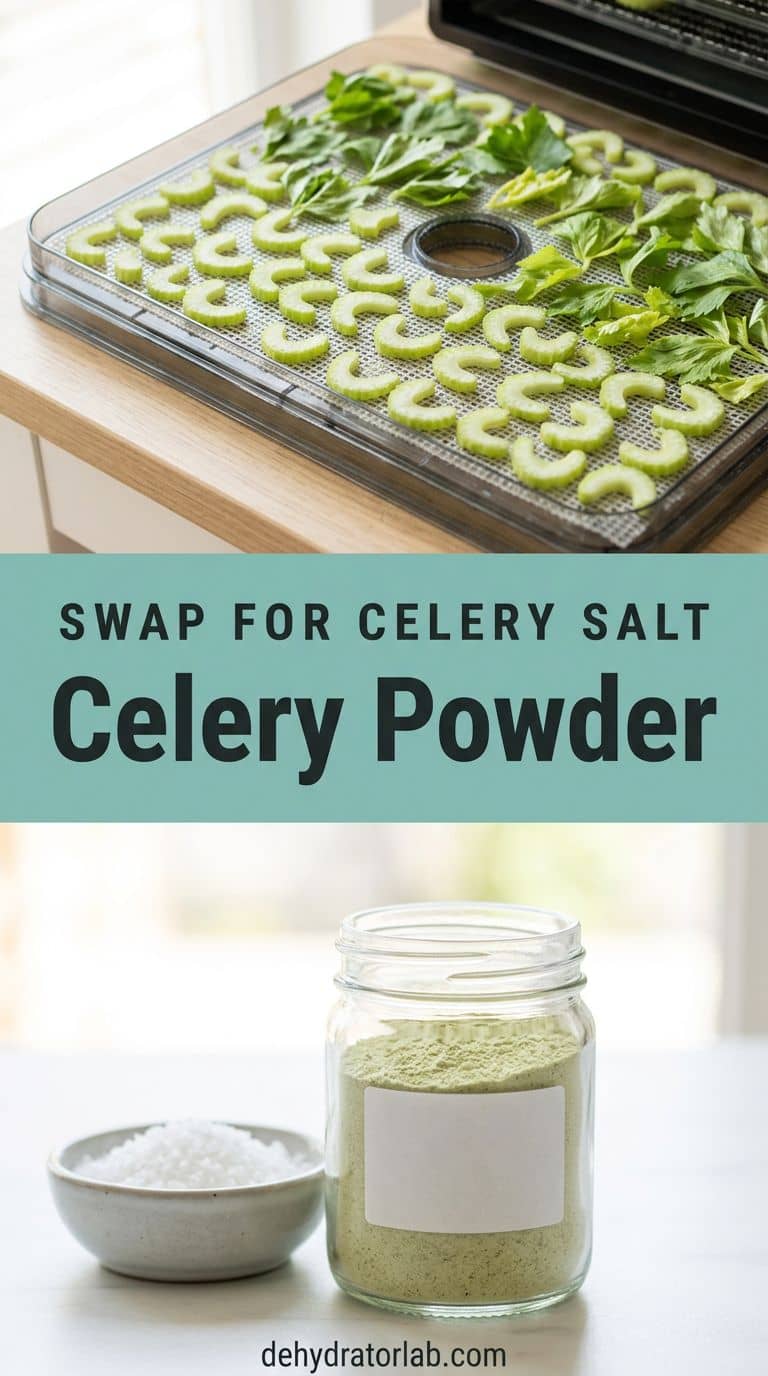
Celery salt is just salt seasoned with celery. Make your own by grinding dried celery into a powder and mixing it with fine sea salt, about 1 part powder to 2 parts salt. That ratio is my own, so adjust it to taste. You decide how salty the jar gets.
Use the ribs and the leaves, and give the leaves their own tray because they dry faster. Clemson lists celery with a short blanch and 10 to 16 hours in a dehydrator. My own guide skips the blanch and dries thin 1/8 inch slices at 125–135°F (52–57°C) for about 6 to 10 hours. Go by the snap, not the clock.
One warning. Homemade celery powder isn’t a reliable cure for jerky or bacon because the nitrate level changes from batch to batch. Use it for flavor, and use a tested curing salt when you need a real cure. My celery powder guide and celery flakes guide cover the details. Flavor, not curing.
3. Mushroom Powder (Swap for Bouillon Cubes)
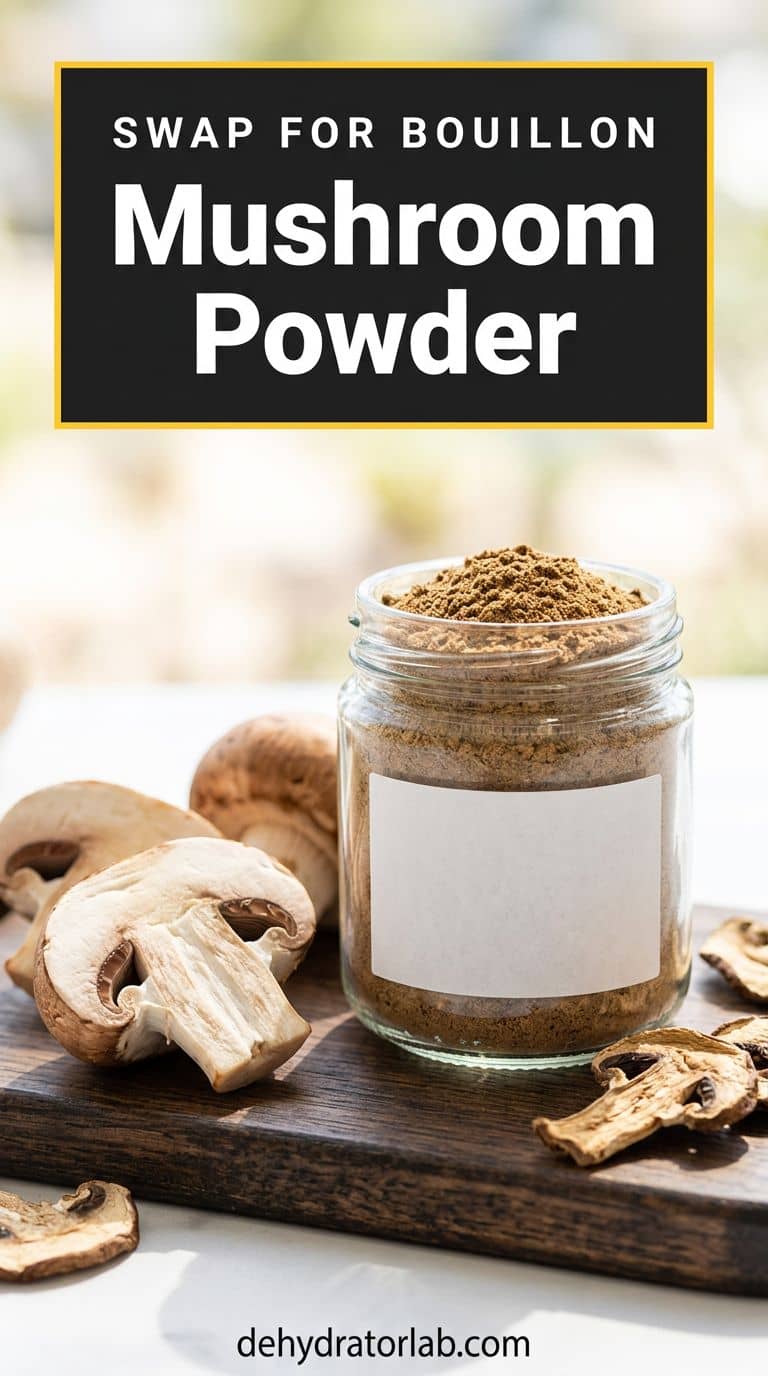
A teaspoon of mushroom powder gives a pot of soup the savory backbone you’d usually get from a bouillon cube, and you add the salt yourself. Cremini and button mushrooms make an everyday jar. A few shiitake caps in the mix make it deeper.
Brush the mushrooms clean instead of rinsing them, slice them about 1/4 inch thick, and dry at 125–135°F (52–57°C) until they snap. Clemson lists 8 to 10 hours without blanching, and my thin slices usually finish in 4 to 8. Only dry mushrooms you know are edible, because Clemson warns that drying doesn’t destroy the toxins in poisonous varieties.
For a bouillon-style mix, I start with 2 parts mushroom powder, 1 part onion powder, and salt to taste, then stir in about 1 teaspoon per quart of soup. That blend is my own starting point. My mushroom powder guide, broth ingredients list, and onion powder recipes have more ideas. Umami without the cube.
4. Tomato Powder (Swap for Tomato Paste)
Out of tomato paste halfway through a recipe? Whisk 2 parts tomato powder with 1 part hot water, and you have paste in a minute. For a sauce base, stir 1 tablespoon of powder into 1/2 cup of hot water and season from there. Both ratios come from my tomato powder guide.
Roma and other paste tomatoes dry faster and grind finer than juicy slicers. Slice about 1/4 inch thick and dry at 125–135°F (52–57°C) until brittle, which takes me roughly 8 to 12 hours. Clemson lists 10 to 18 hours for tomatoes. A pound of tomatoes makes only about 2 to 3 tablespoons of powder, so save this one for peak-season tomatoes.
My tomato powder guide covers both the raw slice and cooked puree methods, and 7 ways to use tomato powder shows where it goes after the jar is full. Paste on demand.

5. Herb Powder (Swap for an Italian Seasoning Jar)
Parsley and basil, ground fine, make a green powder that dissolves into sauces, soups, and bread dough. Use it the way you’d use a jar of Italian seasoning, a pinch at a time, and add dried oregano or garlic powder if you want a fuller blend.
Herbs need a cooler, drier setting than vegetables. NCHFP and Oregon State both say to set the dehydrator to 95–115°F (35–46°C), or up to 125°F (52°C) in humid areas, and drying takes 1 to 4 hours. Rinse gently, shake off the water, and dry until the leaves crumble and the stems snap when bent. Tiny leaves slip through trays, so a mesh silicone sheet helps.
Here’s the catch. Oregon State says crushing or grinding herbs increases the loss of aroma and flavor, and it recommends crushing just before use. So I keep the leaves whole in the jar and grind small batches. It also says dried herbs are 3 to 4 times stronger than fresh, so use 1/4 to 1/3 of the fresh amount. My guides to drying parsley and basil cover the prep, and the herb blends roundup shows how to mix. Grind small, grind often.

Quick Reference: Powders at a Glance
| Powder | Replaces | Dry at | Done when |
|---|---|---|---|
| 1. Bell pepper powder | Sweet paprika | 125–135°F (52–57°C) | Strips shatter |
| 2. Celery powder | Celery salt (mix with sea salt) | 125–135°F (52–57°C) | Snaps, no damp fibers |
| 3. Mushroom powder | Bouillon cubes | 125–135°F (52–57°C) | Slices snap cleanly |
| 4. Tomato powder | Tomato paste | 125–135°F (52–57°C) | Brittle, not leathery |
| 5. Herb powder | Italian seasoning jar | 95–115°F (35–46°C) | Leaves crumble, stems snap |
The herb temperatures, drying times, potency ratio, and crushing advice follow NCHFP and Oregon State. The brittle test, the powder list, the cooling advice, and the storage times follow Clemson. The 125–135°F range for vegetables is my usual setting, since Clemson doesn’t give one.
The celery salt, tomato paste, and sauce ratios come from my own guides, and the bouillon mix and pepper yield are my estimates. Check how long dehydrated food lasts for storage by food type.
Personal Tips You Can Steal
I dry herbs on their own tray, because they finish hours before the vegetables. I cool every batch completely before I grind it, since warm pieces release steam into the grinder. I grind in short pulses and sift out the coarse bits.
I store each powder in airtight glass jars, away from the stove. I label every jar with the powder and the date, and I use the veggie powders within about six months.
Final Thoughts
You don’t need all five at once. Start with tomato or bell pepper powder, since both are forgiving, and add the herb powder once the rest feel easy. If you’d rather make blends than single powders, my dehydrated seasoning recipes are the next step.
Related reading: best dehydrator for herbs, best dehydrator for vegetables, 8 homemade vegetable powder recipes, and onion, garlic, and shallot powders.
P.S. Make a double batch of bell pepper powder first. It disappears into rubs faster than you’d expect. 🙂