
Puree, spread, dry — that’s the whole method behind fruit leather. Only the fruit changes from here. Let’s fight over which one wins tonight.
Fruit leather is the one dehydrator recipe that never needs convincing — kids call it a treat, you know it’s just fruit. These ten flavors range from the classic combo everyone already loves to a few your family probably hasn’t tried yet. For general dos and don’ts on drying any fruit safely, the National Center for Home Food Preservation’s fruit-drying guide is worth a bookmark.

As an Amazon Associate, I earn from qualifying purchases. If you make a purchase after clicking on a link I may earn a small commission at no extra cost to you if items are purchased.
In this article:
TL;DR (Too Long; Didn’t Read): Key Takeaways
- 🍓 Ten fruit leather flavors, from classic strawberry-banana to old-school Concord grape.
- 🌡️ Most purees dry at 135°F (57°C) for 6–8 hours; thicker or juicier purees run longer.
- 🍯 A touch of honey or sugar helps a thin puree set without turning brittle.
- 📦 Roll finished leather in parchment, not plastic wrap, or it’ll stick to itself.
- 🧊 Everything keeps 2–4 weeks at room temp, months longer in the freezer.
Whatever’s soft, overripe, or about to turn in your fridge is exactly what belongs in the blender first. Purée needs somewhere flat and sealed to sit, which is why a dehydrator with solid sheets matters more for leather than tray count or wattage.
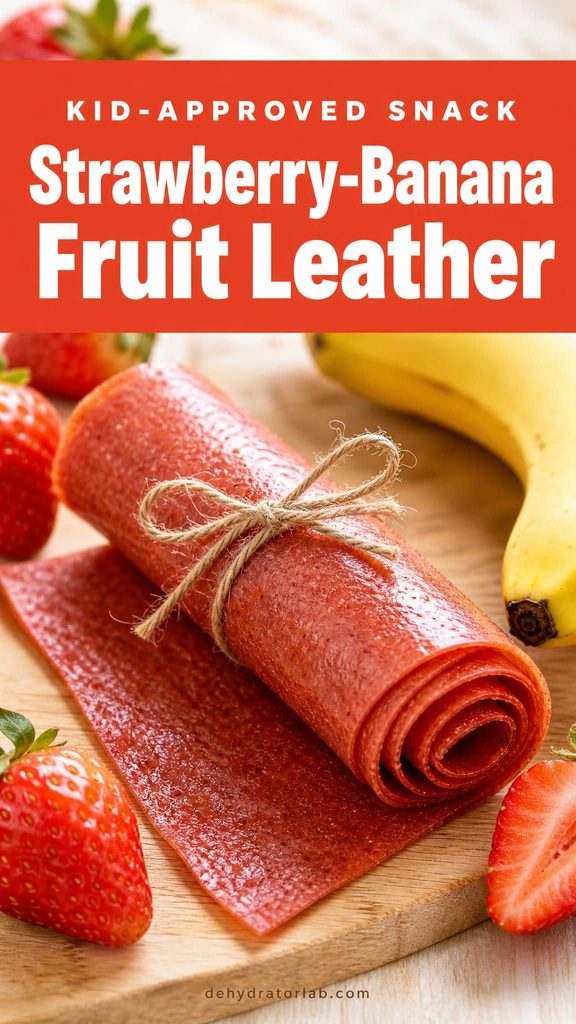
1. Classic Strawberry-Banana Fruit Leather
This is the flavor combo every kid already knows from the grocery store aisle — banana rounds out strawberry’s tartness and adds natural thickness to the puree.
- Strawberries
- Banana
- Lemon juice
Blend strawberries and banana in a high-speed blender with a splash of lemon juice until smooth, spread thin and even on a lined tray, and dry at 135°F (57°C) for 6–8 hours, checking after hour 6 for tacky, pliable, not wet in the center.
Want a faster batch some night? air fryer strawberry fruit leather covers the strawberry half solo with a shorter cook. The gateway flavor for a reason.
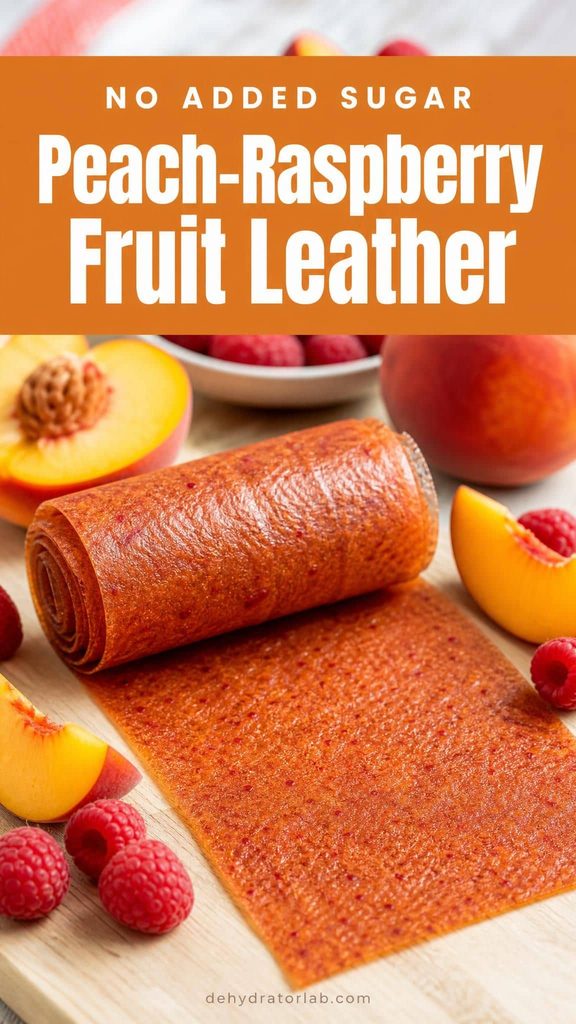
2. Peach-Raspberry Fruit Leather
Peach brings the body, raspberry brings the punch — together they dry into a leather with more depth than either fruit gives you alone.
This one already has its own full write-up on the site, ingredients, ratios, and all: how to make raspberry peach fruit leather. Two fruits, one unforgettable roll.
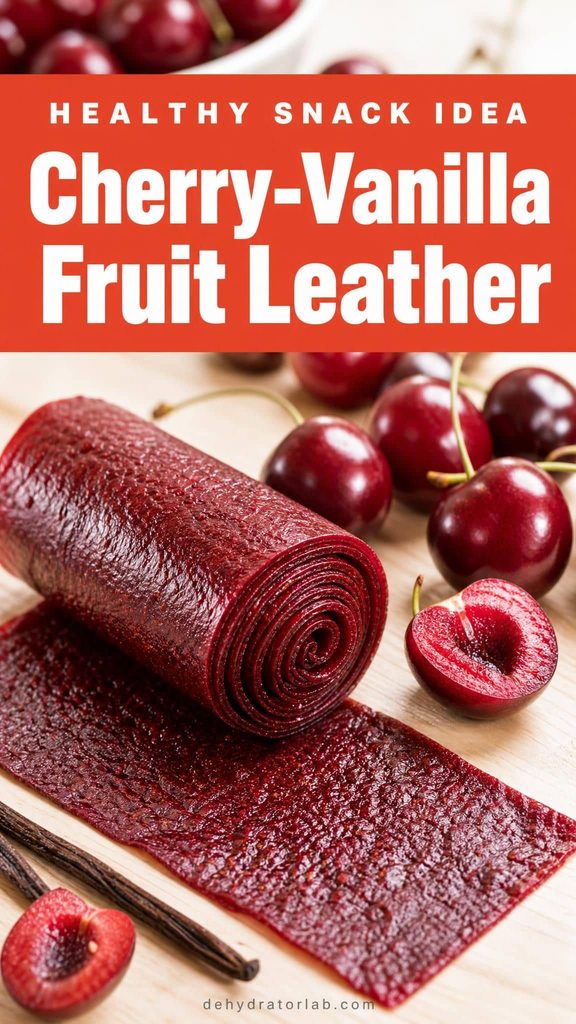
3. Cherry-Vanilla Fruit Leather
Cherries dry into something closer to a grown-up candy than a health snack, and a splash of vanilla rounds off the tartness without hiding it.
Full recipe, pitting tips, and ratios are already up at how to make cherry fruit leather. Worth the extra time pitting cherries.
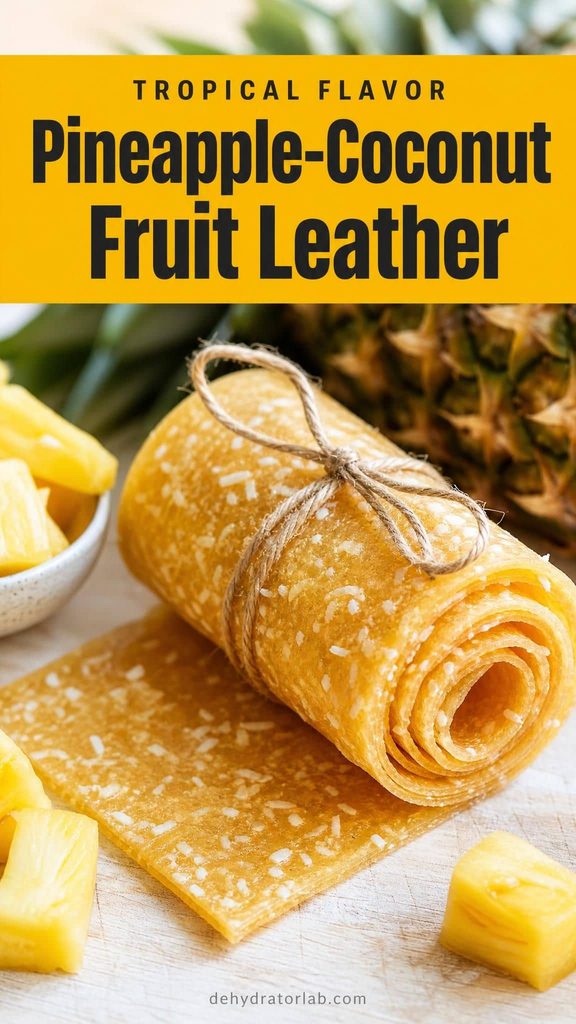
4. Pineapple-Coconut Fruit Leather
Blended pineapple and coconut dry into a leather that tastes like a piña colada without the blender cleanup every time you want a snack.
Full technique and ratios are at pineapple coconut fruit leather. One batch, whole tropical vibe.
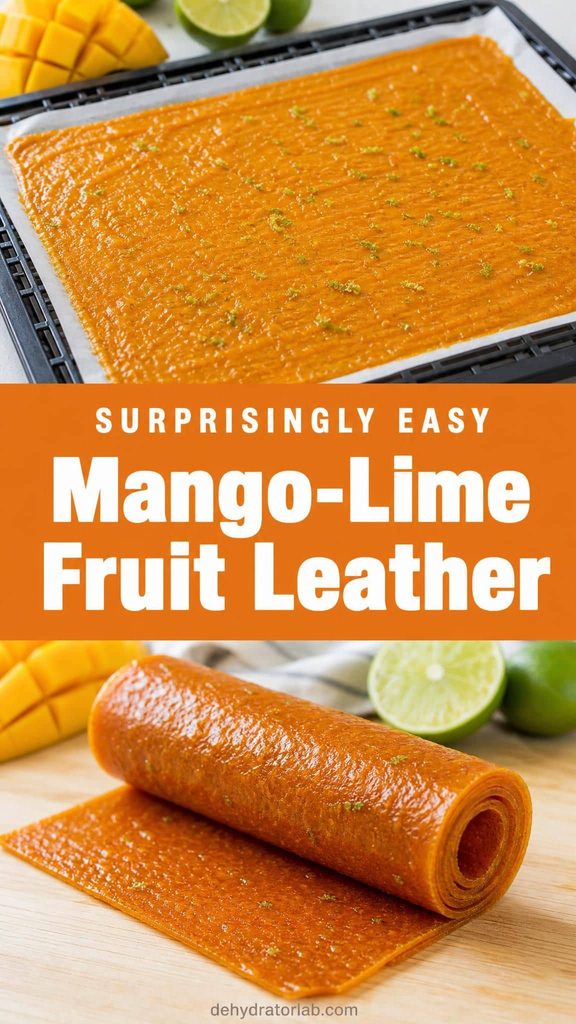
5. Mango-Lime Fruit Leather
Mango already dries into something close to candy on its own. Lime keeps it from tipping all the way into dessert territory.
- Mango
- Lime juice and zest
- Honey (optional)
Blend ripe mango with lime juice and zest until smooth — mango is dense, so add a splash of water if the blender struggles. Spread thin and dry at 135°F (57°C) for 6–8 hours, checking after hour 6.
Picking the right mango matters more here than with most fruit — how to dehydrate mango covers ripeness cues in more detail. Ripe but firm, not mushy.
6. Fig-Honey Fruit Leather
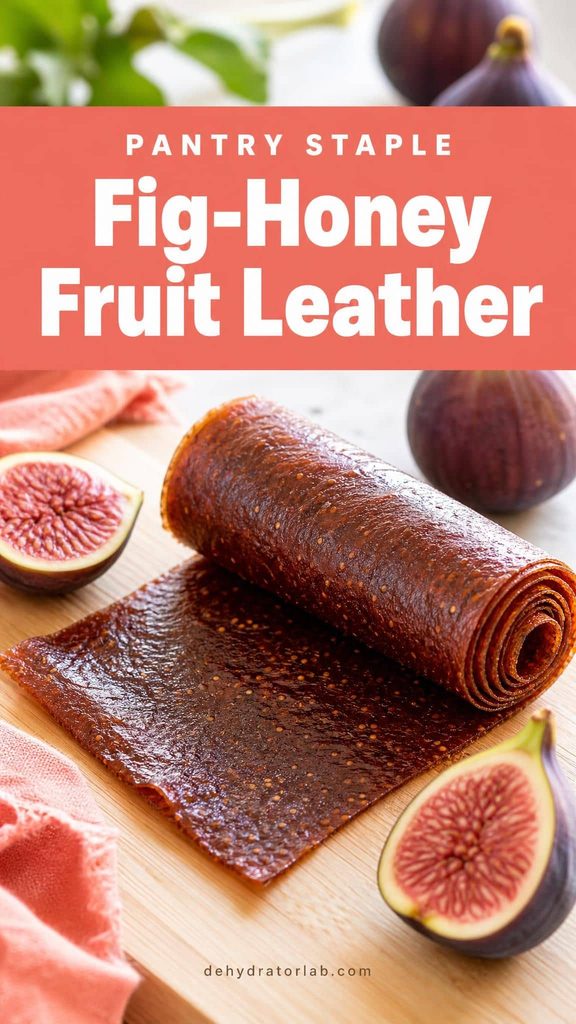
Figs bring a deep, almost jammy sweetness that most fruit can’t match, so this one needs the least added sugar of anything on the list.
- Figs
- Honey
- Lemon juice
Blend ripe figs with a light drizzle of honey and a splash of lemon juice — the honey is optional if your figs are already very ripe and sweet. Spread thin and dry at 135°F (57°C) for 6–8 hours.
If figs are new to your dehydrator lineup, air fryer fig chips is a faster way to get a feel for the fruit first. Least added sugar of the bunch.
7. Kiwi-Strawberry Fruit Leather
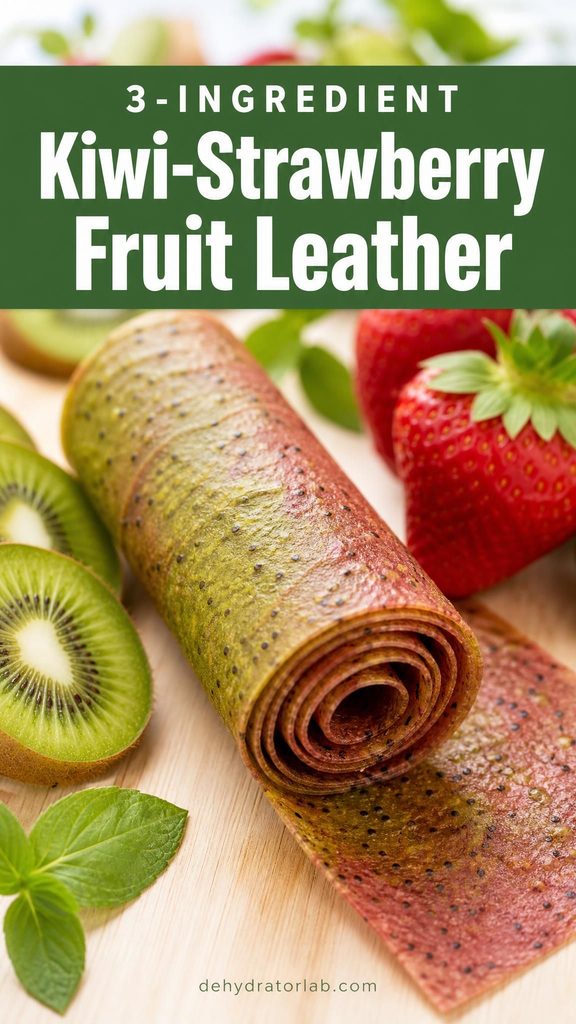
Kiwi’s tiny black seeds stay visible even blended smooth, so this leather looks as good as it tastes — and the color stays a genuine bright green-pink instead of fading to brown.
- Kiwi
- Strawberries
Blend peeled kiwi with strawberries until smooth, spread thin, and dry at 135°F (57°C) for 6–8 hours, checking after hour 6.
If you want to try kiwi on its own first, how to dehydrate kiwi in a food dehydrator covers the base fruit solo. Genuinely three ingredients, nothing hidden.
8. Pumpkin Spice Apple Fruit Leather
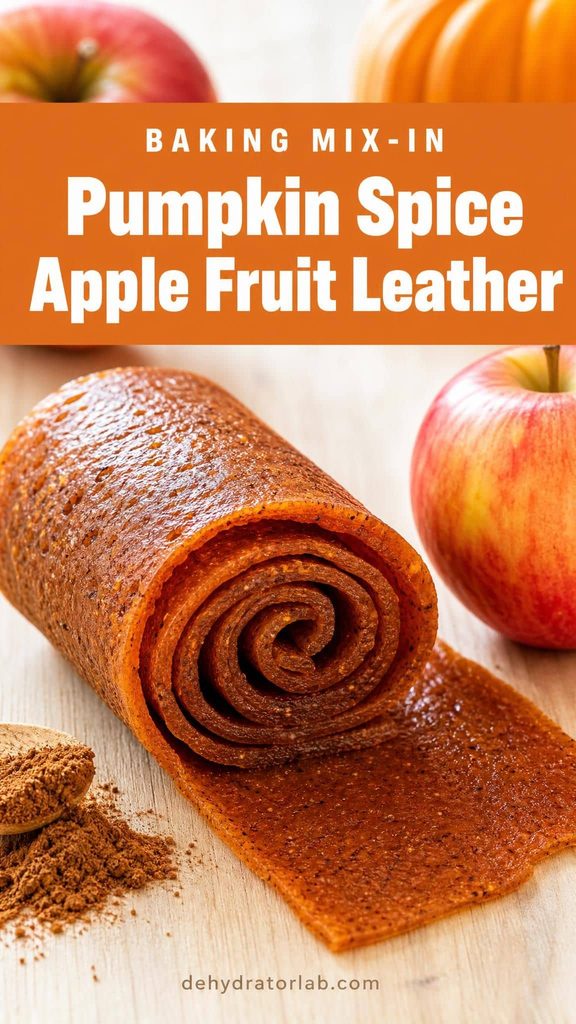
This is the fall-flavored one — pumpkin puree gives it body, applesauce keeps it from tasting like pie filling straight off the tray.
- Pumpkin puree
- Applesauce
- Pumpkin pie spice
Stir plain pumpkin puree, unsweetened applesauce, and a spoon of pumpkin pie spice together until even, spread thin, and dry at 135°F (57°C) for 8–10 hours — pumpkin runs thicker than fruit purees, so give it extra time.
If you keep a jar of dehydrated pumpkin powder on hand, whisk a spoonful with a little water instead of using canned puree. Give pumpkin extra drying time.
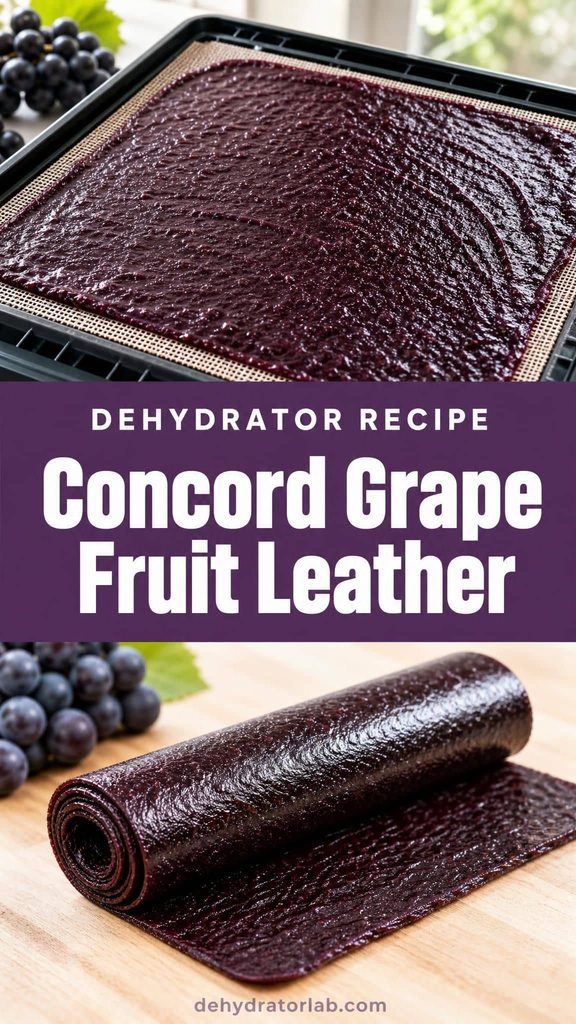
9. Concord Grape Fruit Leather (Old-School Roll-Up)
This is the throwback flavor — the deep, almost jammy taste that made fruit roll-ups a lunchbox staple in the first place, minus the corn syrup.
- Concord grapes
- Lemon juice
Cook grapes down briefly with a splash of lemon juice, then push through a fine strainer to catch the skins and seeds — Concord grapes have a lot of both, and straining is what gets you a smooth leather instead of a gritty one. Spread thin and dry at 135°F (57°C) for 6–8 hours.
Not sure Concord is what’s in your fruit bowl? how to dehydrate grapes covers telling varieties apart along with the general drying method. Strain it, or crunch through seeds.
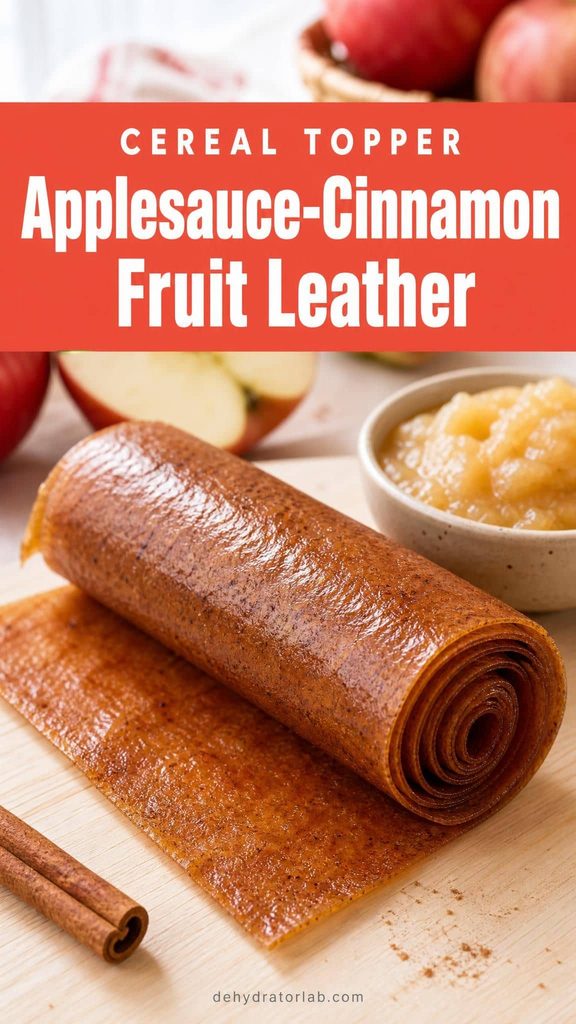
10. Classic Applesauce-Cinnamon Fruit Leather
No fruit leather list is complete without this one — it’s the recipe most people picture the second you say “fruit leather,” and it’s the easiest entry point if you’ve never rolled a batch before.
Full recipe and flavor variations are at apple cinnamon fruit leather, and if this is genuinely your first roll of any kind, how to make fruit leather in a dehydrator walks through the general method start to finish. Start here if this is your first batch ever.
Personal Tips You Can Steal
I keep a stack of silicone dehydrator sheets just for leather — parchment works too, but the silicone peels off cleaner every single time and I’m not scraping stuck fruit off my trays anymore. If you are buying your first set, my sheet comparison covers which solid ones hold purée best and how to cut them to your trays. I always run a stick-blender check on the puree before it hits the tray; any chunks left behind dry unevenly and tear the leather when you try to roll it.
I never fill a whole dehydrator with only leather trays — mixing in a couple of chip or jerky trays keeps airflow moving better than an all-liquid load. And I roll everything in parchment paper cut to size ahead of time, stacked and ready, so a finished batch takes five minutes to wrap instead of thirty.
Grapes bring real antioxidants along for the ride too — see Healthline’s rundown on grape nutrition if you want the numbers behind the old-school roll-up.
Final Thoughts
Fruit leather is forgiving — almost any fruit blends and dries into something worth eating, so don’t feel locked into exactly these ten combos. Start with whatever’s softest in your fruit bowl right now, run it on your Excalibur 3526TB or whatever you’ve got, and let the rest of the list be the excuse to buy something new next week.
P.S. Cut finished leather into strips before rolling, not after — pre-cut strips grab and go, while a whole uncut sheet turns into a wrestling match at snack time 🙂