
Whole30 snacking has a label problem. Plenty of store-bought jerky and dried fruit hide sugar, soy, or sulfites somewhere in the fine print, and that’s the moment your grocery run turns into a research project.
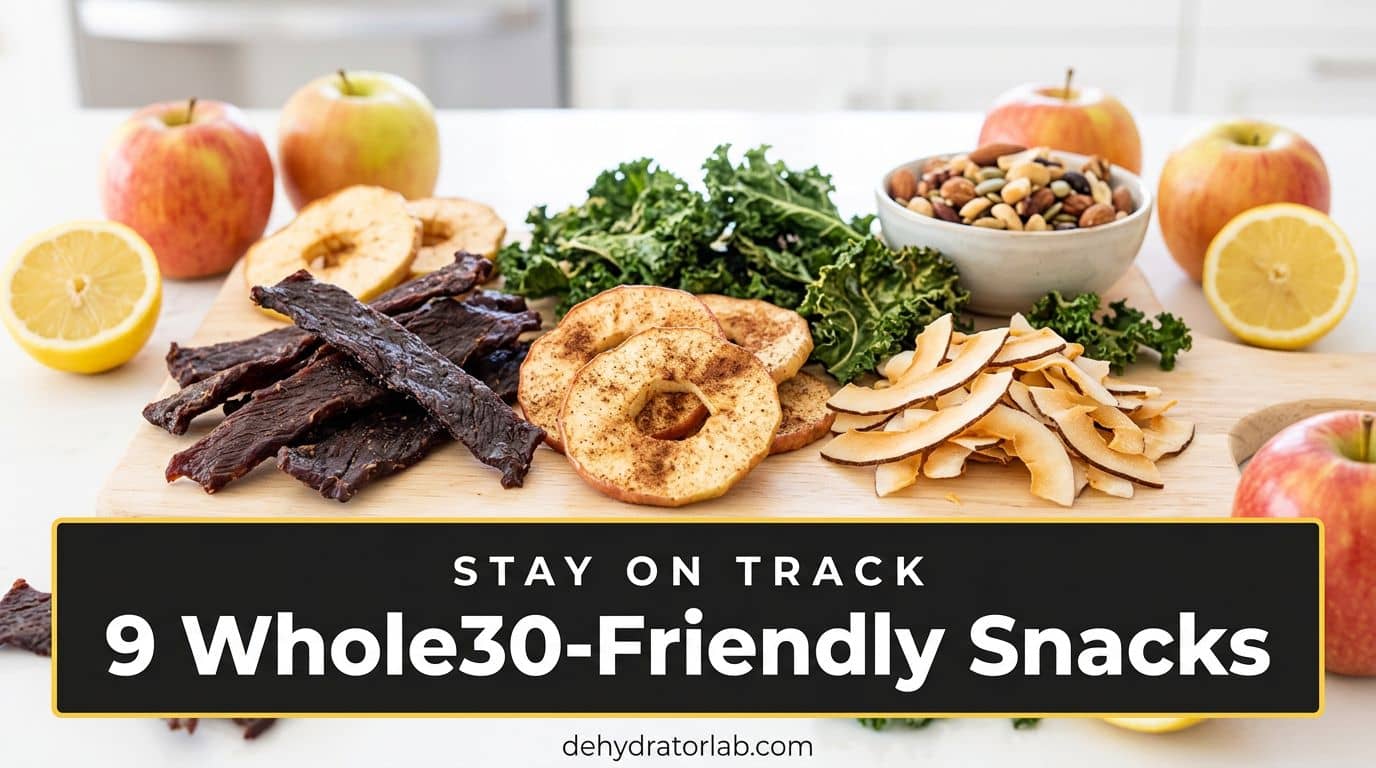
Your dehydrator fixes it. You pick the cut, the fruit, and every spice, so the ingredient list is whatever you decide it is. Here are nine snacks that fit the rules and still taste like real food.
As an Amazon Associate, I earn from qualifying purchases. If you make a purchase after clicking on a link I may earn a small commission at no extra cost to you if items are purchased.
In this article:
TL;DR: Key Takeaways
- 🥩 Beef, turkey, and mushroom jerky get their flavor from coconut aminos, citrus, and spices, never from sugar, soy sauce, or tamari.
- 🍎 Homemade dried apple, mango, and pineapple skip the added sugar and sulfites that many store-bought bags carry.
- 🥬 Kale chips and coconut chips cover the crunch craving, while potato, sweet potato, plantain, and cassava chips stay off the list.
- 🥜 Trail mix works once you drop the peanuts, since the program counts peanuts as legumes, and any sweetened fruit.
- 🌡️ Heat beef strips to 160°F (71°C) and poultry to 165°F (74°C) before drying at about 140°F (60°C).
- 📋 The program, not me, decides what’s in and out, so read the official rules before you shop.
A quick disclaimer. Whole30 belongs to its creators, and I’m a dehydrator guy, not a dietitian. What follows comes from the official Whole30 program rules, and you should read them yourself before you start. In short, the program cuts added sugar (including honey and maple syrup), grains, legumes (peanuts and all forms of soy included), dairy (ghee is the exception), alcohol, carrageenan, and added sulfites.
The rules also include the Pancake Rule. Skip recreating baked goods and treats, even with compliant ingredients, and think twice about snacks you can’t stop eating. That’s why this list has no sweet potato chips, no plantain chips, and no crackers. It’s also why I portion everything out. Let’s get into it.
1. Coconut Aminos Beef Jerky
Beef jerky is the snack most people miss first, and the bagged kind usually carries sugar and soy sauce in the marinade. Coconut aminos give you the same salty depth without breaking the rules. My air fryer paleo jerky uses the same trick.
Pick a lean cut like top round or eye of round, and trim every bit of visible fat, because fat turns rancid fast. Marinate the strips overnight in coconut aminos, garlic powder, onion powder, black pepper, smoked paprika, and a splash of rice vinegar. Read every spice label, since seasoning blends sometimes sneak in sugar.
- Slice 1/4 inch thick, against the grain for a tender bite.
- Blot the strips dry before they hit the tray.
- Dry at 140°F (60°C) until a piece cracks without snapping.
For safety, the National Center for Home Food Preservation says to bring the strips to 160°F (71°C) in the heated marinade, or finish the dried strips in a 275°F (135°C) oven for 10 minutes. Check my beef jerky roundup for flavor ideas, and skim these marinade mistakes before you mix. Heat first, then dry.

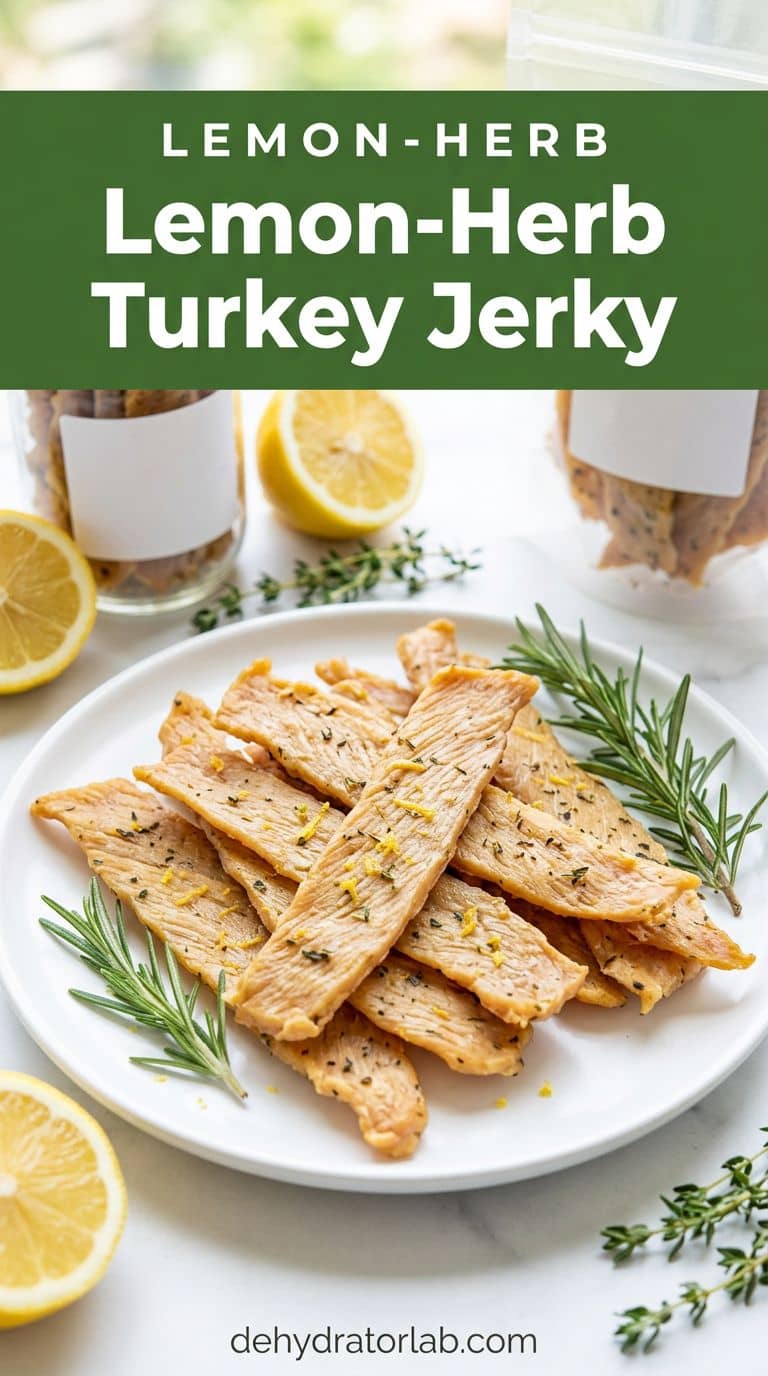
2. Lemon-Herb Turkey Jerky
Turkey makes the lightest jerky on the list. It’s lean, mild, and happy to take on whatever you throw at it, which makes it a good fit for a bright marinade with no sugar anywhere near it.
Lemon juice and zest, rosemary, thyme, garlic, black pepper, and iodized salt do all the work. Use turkey breast sliced thin, or ground turkey pressed flat. If you go the ground route, check the package for added broth or flavorings first.
Poultry needs more heat than beef, so bring it to 165°F (74°C) with a food thermometer before drying at around 140°F (60°C). My guides to turkey jerky and ground turkey jerky walk through slicing and doneness. Lemon does the heavy lifting.
3. Smoky Mushroom Jerky
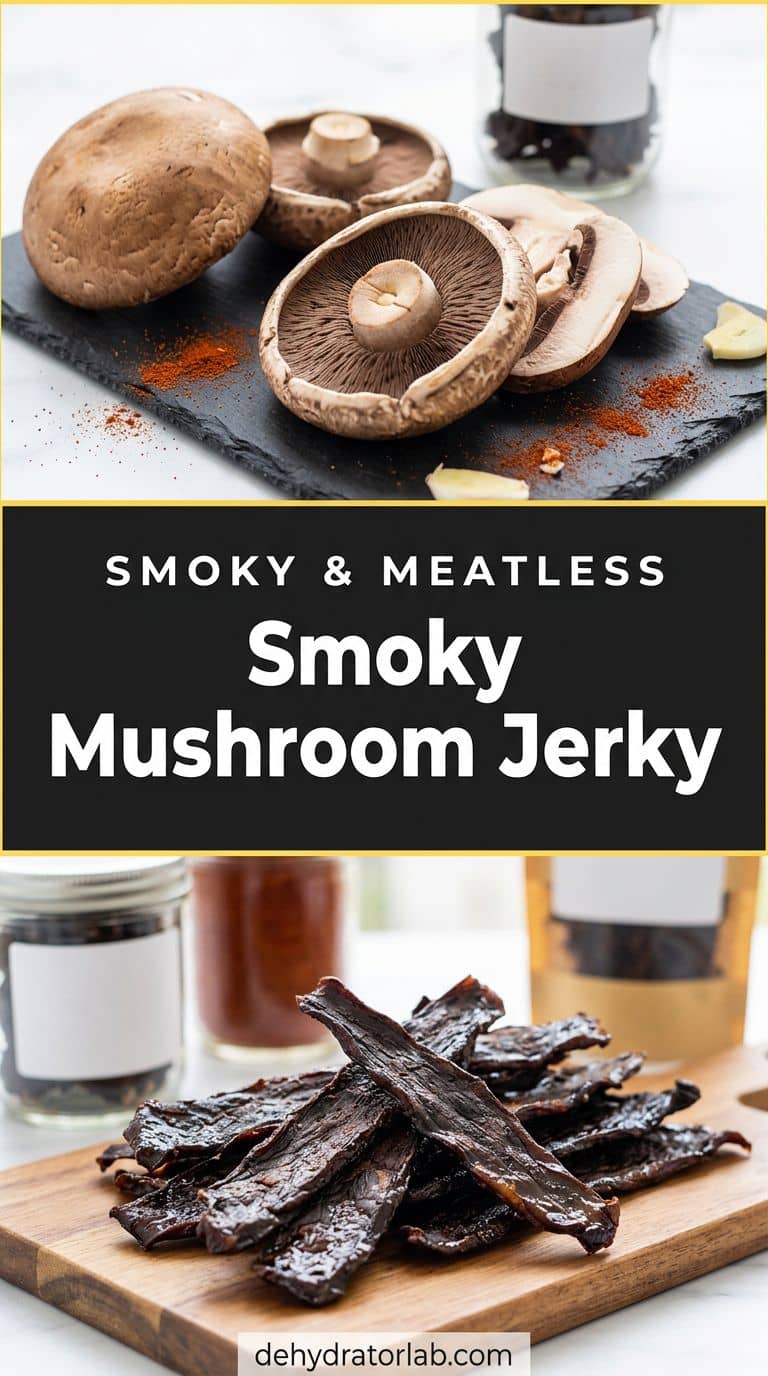
No meat? No problem. Thick-sliced portobello or king oyster mushrooms dry into a chewy, savory strip that scratches the same itch as jerky.
Toss the slices in coconut aminos, smoked paprika, garlic powder, and black pepper. Add a drop of liquid smoke only if the label lists nothing but water and smoke. Mushrooms shrink a lot, so cut them thicker than you think you should. My mushroom jerky roundup covers more flavors, and the air fryer version works when the dehydrator is busy.
Most batches finish at 135°F (57°C) in 6–9 hours. Pull a piece and let it cool before you judge it, because warm mushroom always feels softer than it will be. Thick slices, smoky flavor.
4. Cinnamon Apple Rings
Apple rings are the easiest win on this list. One fruit, one spice, and a kitchen that smells like a bakery without the baking.
Even slices decide everything here. An OXO Chef’s Mandoline 2.0 gets you uniform 1/8-inch rings in minutes, so the thin ones don’t turn to crisps while the thick ones stay damp. Core the apples, dip the rings in lemon water so they stay pale, and dust with cinnamon. No honey, no maple glaze.
- Slice 1/8 to 1/4 inch thick.
- Dust with cinnamon only, nothing sweet.
- Dry at 135°F (57°C) for 6–12 hours, depending on chewy or crisp.
Want more ways to use the rings? Try these apple dehydrating ideas or my basic guide to dehydrating apples. Rings are done when they bend without leaking juice.

5. Unsulfured Dried Mango and Pineapple
Dried mango and pineapple are the usual suspects for added sugar and sulfites, and the program names both. Make your own and the ingredient list reads: fruit.
Use ripe fresh fruit, never canned, because canned fruit swims in juice or syrup. Cut mango into 1/4-inch strips and pineapple into 1/4-inch rings with the core removed. Dry at 135°F (57°C) for 8–14 hours, and expect pineapple to run longer. My guides to pineapple rings and dehydrating fruit cover timing in more detail.
Dried fruit is concentrated, so a small handful goes a long way. I treat it as a snack, not a dessert, which fits the spirit of the Pancake Rule. More tropical ideas live in my pineapple recipe roundup. Fruit in, fruit out.

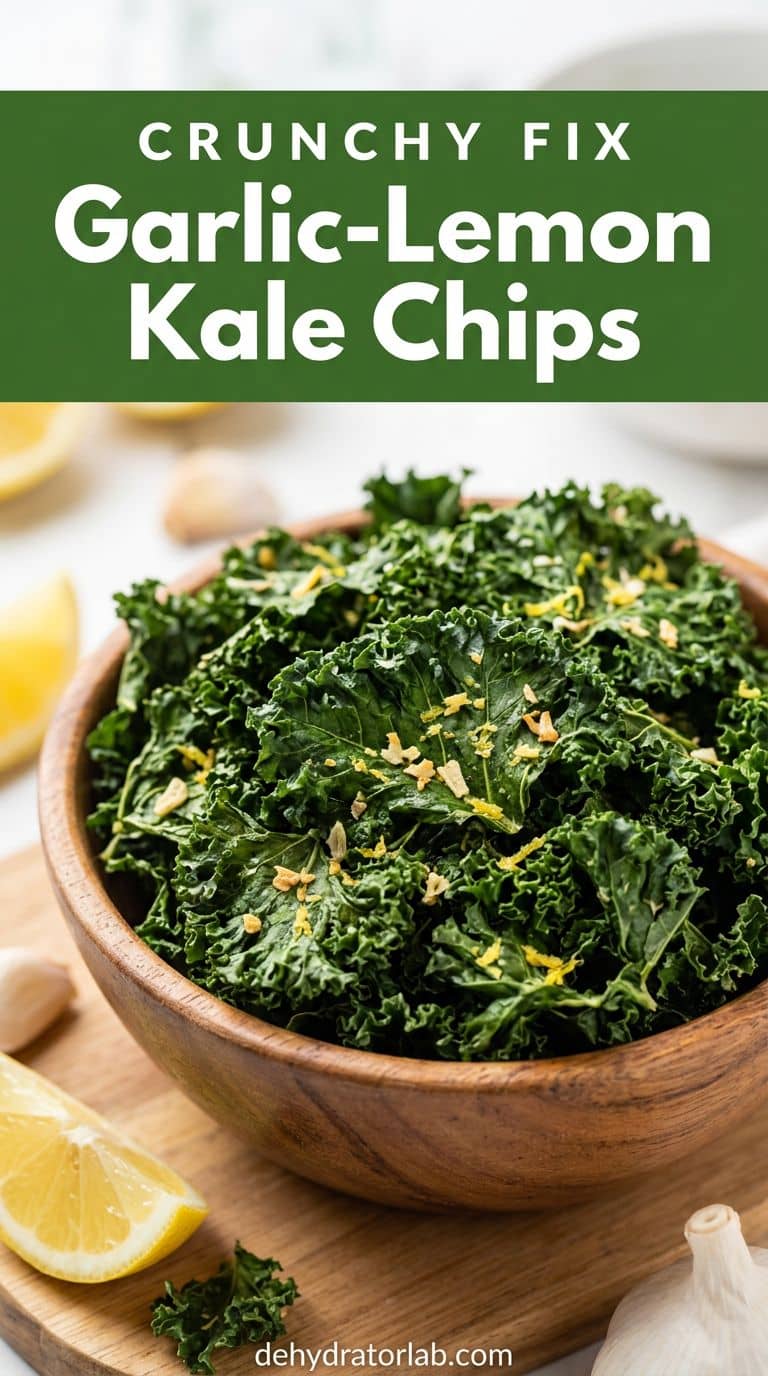
6. Garlic-Lemon Kale Chips
When you want crunch and the sweet potato chips are off the table, kale steps in. Potato, sweet potato, tortilla, plantain, taro, and cassava chips are all named as out, but a leaf with oil and salt is a different story.
Wash the kale, then dry it completely, because water on the leaves means steamed, limp chips. Tear into big pieces, massage with olive oil, garlic powder, lemon zest, and a pinch of salt, and spread in a single layer. Dry at 125–135°F (52–57°C) for 4–6 hours until the leaves crumble. Skip cashew or cheese-style coatings. My kale chip guide and crispy kale chip roundup have more seasoning ideas.
Go light on the oil, since too much makes the leaves greasy instead of crisp. Dry leaves, light oil.
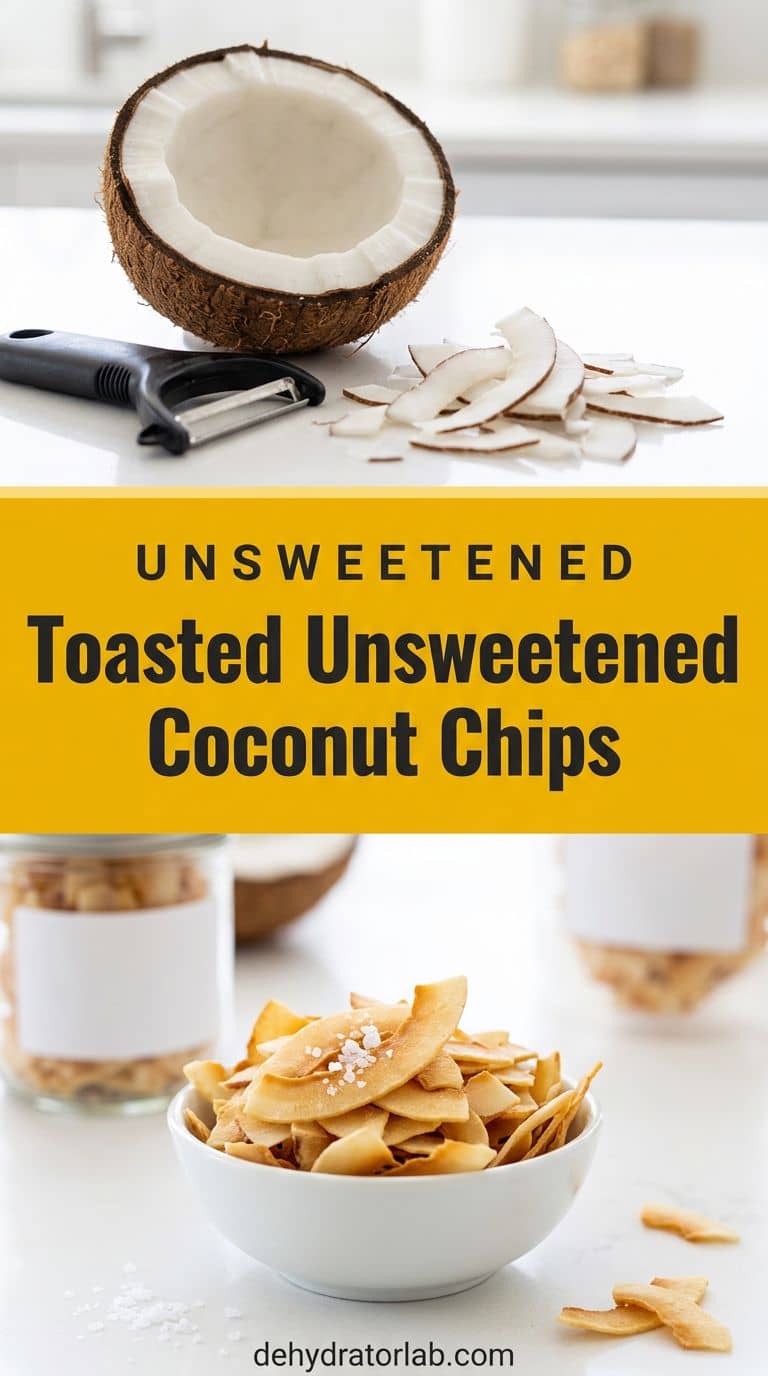
7. Toasted Unsweetened Coconut Chips
Coconut chips are crunchy, a little sweet on their own, and about as simple as a snack gets. The word that matters is unsweetened, because sweetened flakes carry sugar. Check the label for sugar and sulfites either way.
Shave fresh coconut meat thin with a vegetable peeler, toss with a pinch of iodized sea salt, and dry at 135°F (57°C) for 4–6 hours until the chips snap. If you start with store-bought unsweetened flakes, 1–2 hours at the same setting re-crisps them. For a toasted flavor, finish them in a dry skillet for a minute or two, stirring the whole time.
My guide to dehydrated coconut flakes covers the fresh-coconut prep step by step. Coconut is rich, so a handful is plenty. Unsweetened only.
8. Sugar-Free Nut and Seed Trail Mix
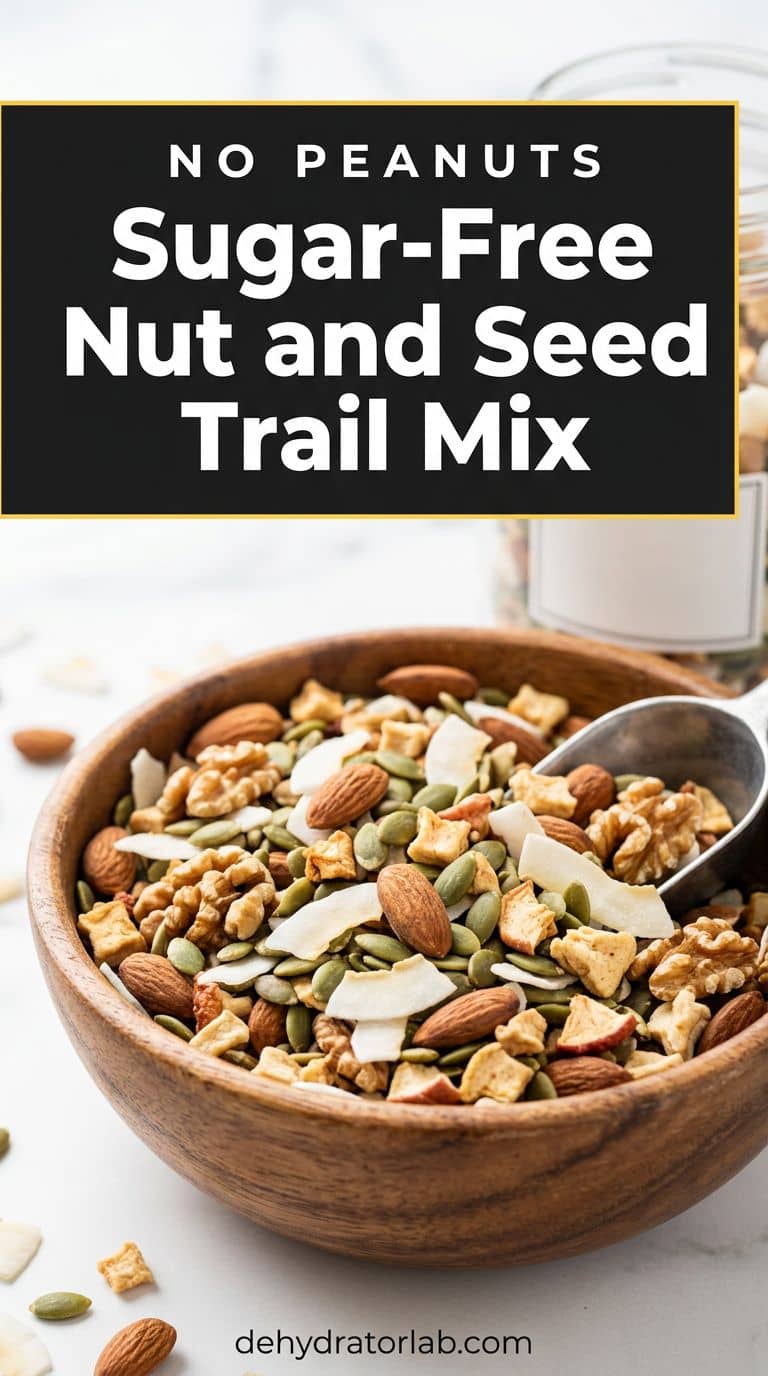
Trail mix is where good intentions go to die, because the bagged kind loves chocolate, candy, and sweetened cranberries. Build your own and it’s nuts, seeds, and fruit you dried yourself.
- Mix almonds, walnuts, and pumpkin seeds as the base.
- Add dried apple from item 4 and unsweetened coconut from item 7.
- Season with cinnamon and sea salt, and leave out the peanuts.
Peanuts count as legumes, so they’re out. Choose raw nuts, or read the label on roasted ones for peanut oil and sugar. Skip dried cranberries, which are almost always sweetened. My trail mix roundup has plenty of flavor ideas, and these seasoned pumpkin seeds make a good swap-in.
Portion the mix into small jars the day you make it. This is a classic no-brakes snack, so a jar with a limit beats an open bag.
9. Instant Bone Broth Powder Mug
This one is a snack you sip. Dry homemade bone broth into powder, and a warm mug takes about a minute. Making it yourself means you control the salt and skip anything on the banned list. I walk through the full method in my bone broth powder guide.
Pour cooled broth onto a silicone sheet with raised edges, keep the trays level, and dry at the lowest setting for 12 hours or more. Skim the fat first for a powder that stays dry and keeps longer. Grind the dried broth, and use about 1/8 cup powder to 1 cup hot water, adjusting to taste.
Store the powder in a sealed jar, and break up any clumps you spot, since clumps mean moisture. Skim first.

Quick Reference: Temps and Doneness
Times shift with slice thickness, humidity, and how full your trays are, so use the doneness test as the final word.
| Snack | Dehydrator setting | Done when |
|---|---|---|
| Beef jerky | 140°F (60°C) | Cracks without snapping when bent |
| Turkey jerky | 140°F (60°C) | Cracks without snapping; poultry heated to 165°F (74°C) first |
| Mushroom jerky | 135°F (57°C), 6–9 hours | Leathery with a little chew |
| Apple rings | 135°F (57°C), 6–12 hours | Bends without leaking juice, or snaps for crisp |
| Mango and pineapple | 135°F (57°C), 8–14 hours | Leathery and pliable, no wet spots |
| Kale chips | 125–135°F (52–57°C), 4–6 hours | Crumbles between your fingers |
| Coconut chips | 135°F (57°C), 4–6 hours | Snaps cleanly |
| Bone broth powder | Lowest setting, 12+ hours | Crunches instead of folding like leather |
Personal Tips You Can Steal
I read the label on every spice jar before I mix a marinade, because blends are where sugar hides. I run one tray of meat and one tray of fruit at a time so the flavors stay clean. I portion everything into small jars the day I dry it, since an open bag turns snacking into grazing.
I check jerky with the bend test instead of the clock, and my over-drying guide explains why. I write the date on every jar, and I keep the rules page bookmarked for the ingredients I’m not sure about. For more tray habits, my food dehydrating tips are a good start.
Final Thoughts
A dehydrator turns a restrictive month into a well-stocked one. Pick two snacks from this list, make them this weekend, and you’ll stop wandering the snack aisle hunting for labels.
Related reading: 10 Gluten-Free Dehydrated Snack Recipes You’ll Love, low-sodium jerky recipes, and 10 dehydrated foods to always have stocked.
P.S. Start the beef jerky marinade tonight. It needs the overnight soak, and tomorrow’s tray will thank you. 🙂