
A well-stocked pantry isn’t just herbs and vegetable powders — it’s the stuff that actually turns into dinner. Cooked proteins, grains, and dairy, all dried down and ready the second you add hot water.
This isn’t a repeat of the usual “dry your vegetables” advice — these ten are the meal-building blocks: protein, starch, and the stuff that turns a jar of dried ingredients into an actual dinner instead of just a garnish. Let’s build a pantry that feeds you, not just seasons your food.

As an Amazon Associate, I earn from qualifying purchases. If you make a purchase after clicking on a link I may earn a small commission at no extra cost to you if items are purchased.
In this article:
TL;DR: Key Takeaways
- 🍗 Cooked chicken, beef, and tuna all dehydrate into lightweight, shelf-stable protein
- 🫘 Beans and lentils just need to be fully cooked before they go on the tray
- 🍚 Rice and pasta rehydrate in minutes once they’re already cooked and dried
- 🥚 Eggs and cheese round out breakfast and richness without needing a fridge
- 🧂 Homemade broth powder turns kitchen scraps into instant soup base
- ✅ Everything here rehydrates with hot water in 5-20 minutes flat
Before you start: every protein here needs to be fully cooked first — dehydrating raw meat, eggs, or beans isn’t food-safe. Use lean cuts, trim visible fat, and blot the surface with a paper towel partway through drying since fat doesn’t dehydrate and can turn rancid in storage.
Dry proteins and eggs at 145–155°F (63–68°C) until brittle-dry, cheese lower and slower at 115–125°F (46–52°C) so the fat renders out gently instead of turning greasy, and rice or pasta at 135–145°F (57–63°C). Spread everything in a single layer with no overlap (silicone dehydrator sheets keep smaller pieces from falling through), cool completely, and store in airtight glass jars. Not every entry-level machine reaches 155°F, so check the top temperature on the dehydrators I recommend to beginners before you build this shelf around proteins.
1. Cooked Shredded Chicken
Poach or bake chicken breast, shred it fine, and spread it in a single layer with no clumps — thick shreds trap moisture in the center and never fully dry. Blot the surface with a paper towel around the halfway mark to pull off surface fat.
Dry at 145–155°F (63–68°C) for 6-8 hours until the shreds snap dry with zero give. Rehydrate with hot water or straight into a simmering soup for shredded chicken in minutes flat. The protein that turns any jar of dried vegetables into an actual dinner.

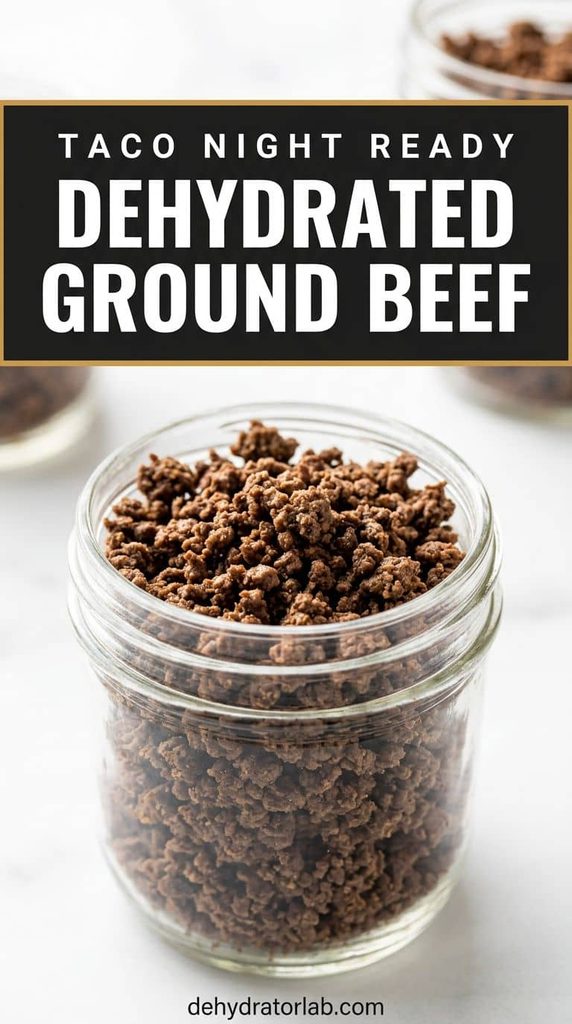
2. Cooked Ground Beef
My full dehydrated cooked ground beef recipe covers the exact method, but the short version: brown lean ground beef, drain it thoroughly, rinse with hot water to strip remaining fat, and dry until crumbly.
This is the base for taco filling, pasta sauce, or chili whenever you need dinner in a hurry. Draining the fat matters more here than with any other protein on this list — skip it and the batch goes rancid early. Taco night, chili night, any night — one jar covers it.
3. Cooked Black Beans
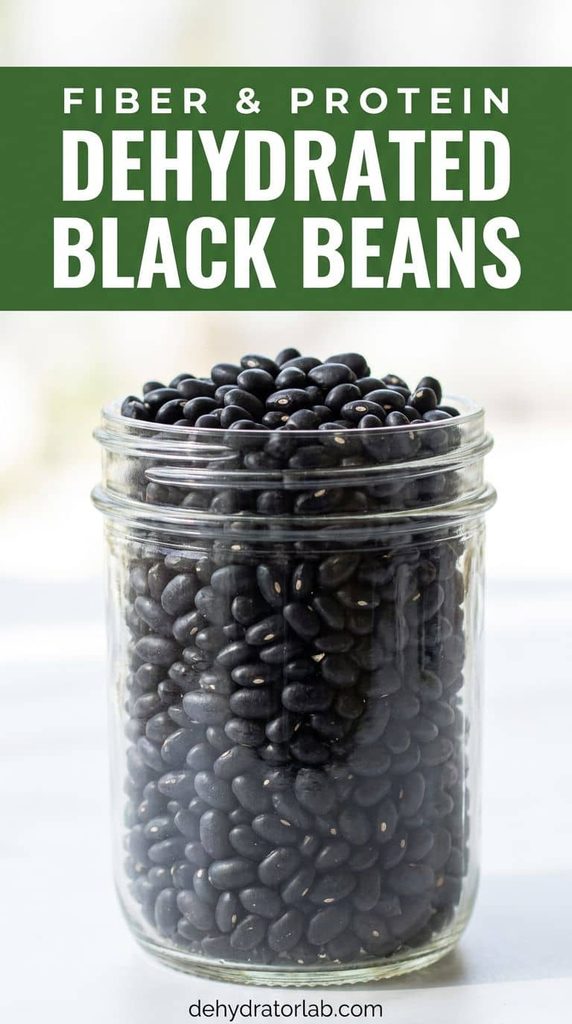
My dehydrated cooked black beans method takes fully-cooked beans (canned or from scratch) and dries them until they rattle hard in the jar — no raw dry beans allowed here, since those need a separate soak-and-boil process.
Rehydrate straight into simmering rice, soup, or a burrito filling in about 15 minutes. Fiber and protein in one shelf-stable jar. The bean that’s already done the hard part for you.
4. Cooked Lentils
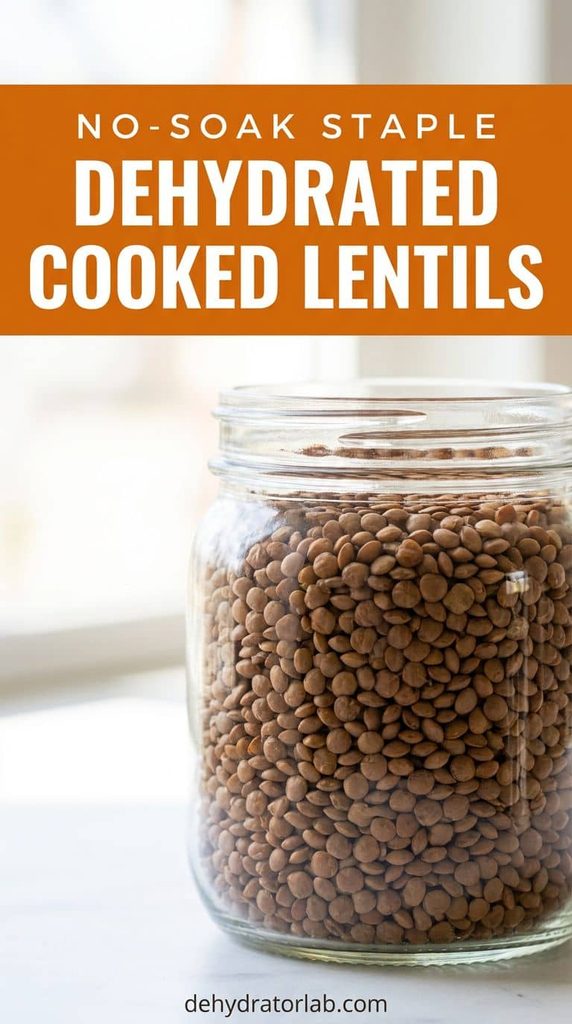
Lentils are the most forgiving legume to dehydrate — my dehydrated cooked lentils guide has the full method, but they hold their shape through the dry-and-rehydrate cycle better than almost any bean.
Dry fully-cooked lentils until hard, then rehydrate into soup, a lentil salad base, or a simple side in under 15 minutes. No soaking required beforehand, unlike raw dry lentils from the bag. The lentil that skips the soak entirely.
5. Canned Tuna
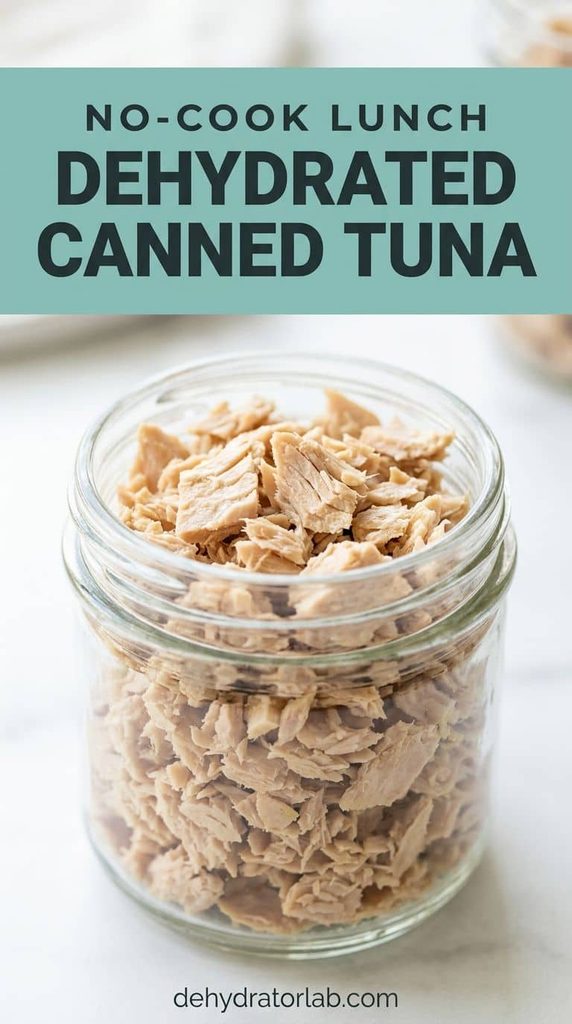
Drain canned tuna thoroughly, break it into small flakes, and follow my dehydrated canned tuna method for a lean protein that weighs almost nothing once dry.
This is the protein I reach for when the pantry needs a fast, no-cook lunch — rehydrate with a splash of water or mayo straight into tuna salad. It’s already cooked, already flaked, and shelf-stable for months. Lunch in the time it takes to boil water.
6. Cooked White Rice
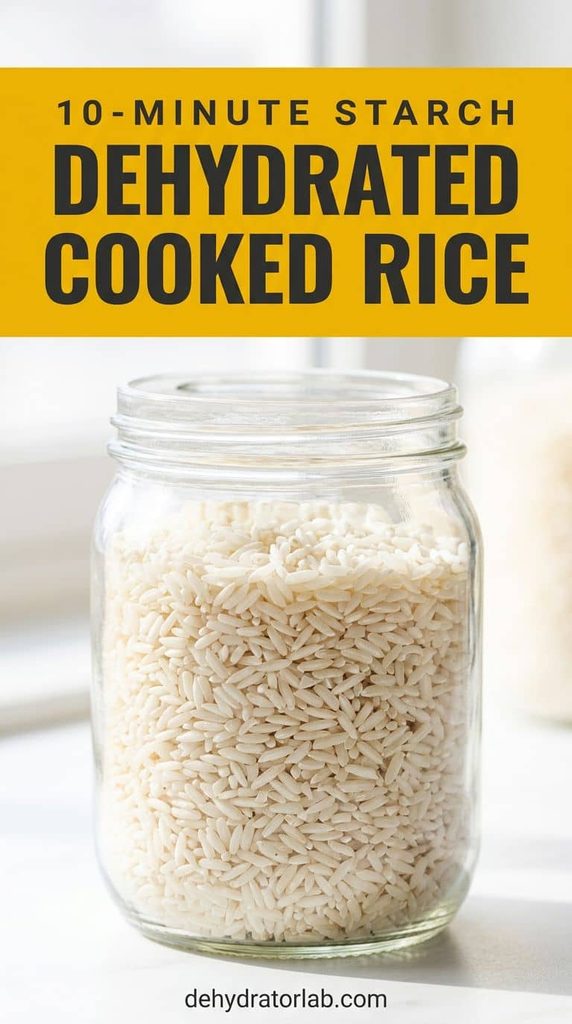
Cook rice as you normally would, spread it out to dry per my dehydrated cooked white rice method, and you’ve got a starch that rehydrates in about 10 minutes instead of the 20 it takes from raw.
Pair it with any protein above for a full meal that comes together from three jars and hot water. Rinsing the rice well before cooking keeps the grains from clumping into a solid brick once dried. The starch that makes every protein on this list into an actual meal.
7. Scrambled Eggs
Cook scrambled eggs plain (no milk or cream, which slows drying), crumble them fine, and dry per my dehydrated scrambled eggs method for a breakfast protein that doesn’t need refrigeration.
Rehydrate with warm water for a quick scramble, or fold dry crumbles straight into a breakfast burrito filling. This is the one that solves “what’s for breakfast” on busy mornings or camping trips alike. Breakfast protein that lives in a jar, not a fridge.

8. Shredded Cheese
Not every cheese dehydrates well, but low-fat hard cheeses like part-skim mozzarella or a sharp cheddar do — my dehydrating cheese guide walks through which ones work and which ones just turn into a greasy mess.
Dry low and slow, blotting oil off the surface partway through, then rehydrate a spoonful into pasta, eggs, or a rice bowl for instant richness. Store it separately from anything acidic, since cheese picks up flavors fast in a shared jar. The richness that makes pantry meals taste less like survival food.

9. Homemade Broth Powder
Simmer down leftover broth (or vegetable scraps and bones) until thick, spread it thin on a lined tray, and dry it into a brittle sheet you can crush into powder. My dehydrated seasoning recipes roundup covers the same reduce-and-dry technique for other homemade blends.
A spoonful of this powder turns plain hot water into real broth in seconds — no sodium bomb from a bouillon cube required. This is the ingredient that upgrades every rice and pasta jar on this list. Real broth flavor, zero sodium bomb.

10. Cooked Pasta
Cook small pasta shapes (elbow, orzo, or broken spaghetti) until just past al dente, rinse to stop the starch from turning gummy, and dry until brittle. My dehydrated chicken noodle soup mix uses this exact technique for the noodles inside the jar.
Rehydrate straight into a simmering broth for pasta in a fraction of the usual cook time. Small shapes rehydrate more evenly than long strands, which tend to clump. The shortcut that skips the boil-a-pot-of-water step entirely.

Personal Tips You Can Steal
I keep every protein in its own labeled jar rather than pre-mixing anything, since I never know which combination I’ll want until I’m actually cooking. I blot fat off meat and cheese at least twice during drying, not once, since the surface keeps sweating grease longer than I expect.
I never dehydrate raw meat, eggs, or beans – everything on this list gets fully cooked first, no exceptions. I keep a running list taped inside the pantry door of what’s in each jar and when it was made, since jars of dried protein all start looking the same after a few months. And I always rehydrate a small test spoonful before committing a whole meal to one jar, just to make sure a batch didn’t go stale.
Final Thoughts
Ten jars of protein, starch, and broth is enough to build real meals without a grocery run. Start with the chicken and rice if you’re new to this, then round out the shelf with beans, eggs, and cheese once you’ve got the food-safety basics down.
For the vegetable and flavor side of the pantry, my essential dehydrated foods roundup covers that half, and my dehydrated backpacking meal recipes guide shows how several of these staples come together into full dinners.
P.S. — the ground beef and rice combo is the one I rebuild the most in my own pantry. Happy dehydrating! 🙂