
Got a jar of dehydrated scallions and no idea what to do after the first sprinkle on eggs?
Those green flakes can do a lot more than garnish a bowl of soup. They flavor spreads, oils, batters, rice, and salt, and they need no chopping and no wilted bunch in the crisper. Here are five ways I put them to work.

As an Amazon Associate, I earn from qualifying purchases. If you make a purchase after clicking on a link I may earn a small commission at no extra cost to you if items are purchased.
In this article:
TL;DR: Key Takeaways
- 🧀 Five ideas: cream cheese schmear, sizzled scallion oil, savory pancakes and cornbread, egg fried rice, and finishing salt.
- 🥄 Swap 1 teaspoon of dried scallions for every 1 tablespoon of fresh, then adjust to taste.
- 💧 Wet dishes need no rehydration, while dry or quick dishes do better with a 5 to 10 minute soak in warm water.
- 🔥 Sprinkle on at the end for color, and add early when you want the flavor to spread.
- 🧂 Grind a few spoonfuls in a spice grinder for scallion powder that dissolves into butter, dips, and salt.
- 📦 Keep the jar airtight and away from the stove, and plan to use it within 6 to 9 months.
I won’t repeat how to dry them here. My guide to dehydrated scallions covers slicing, trays, and conditioning, and it gives the rule I use for swapping dried for fresh. This list is about what to do with the jar once it’s full.
A spice grinder turns the flakes into a fine powder, and that powder is what makes spreads, oils, and salt taste even. The box below is the grinder I use. I pulse in short bursts so the powder stays fluffy and never turns to paste.

- Electric spice-and-nut grinder with durable stainless-steel blades
- Heavy-duty motor; push-top lid for simple on/off control
- Bowl holds 90 grams; extra storage space in lid; non-slip rubber feet
1. Scallion Cream Cheese Schmear
This is the fastest way to use up the jar. Soften an 8 ounce (225 g) block of cream cheese and stir in 1 tablespoon of dried scallions, plus a pinch of black pepper and a pinch of salt. Dried flakes pull moisture from the cheese as they sit, so they soften on their own and you skip the soak.
Give the schmear at least 30 minutes in the fridge before you taste it. Fresh out of the bowl it can seem bland, and after a rest the scallion flavor spreads through every bite. A plain bagel is the classic partner, and it works just as well on crackers or a cucumber sandwich.
Want more bite? Add 1/2 teaspoon of onion powder from my onion, garlic, and shallot powder guide. Spread, rest, repeat.

2. Sizzled Scallion Oil for Noodles and Rice
This one tastes like it came from a restaurant. Put 1 tablespoon of dried scallions in a small heatproof bowl. Heat 1/4 cup (60 ml) of neutral oil until a pinch of flakes sizzles gently, then pour it over the bowl. The flakes fizz, bloom, and turn the oil fragrant in seconds. This is my own method, so judge the heat by sound, not by a number.
Spoon it over plain noodles with a splash of soy sauce, over steamed rice, or onto a fried egg. Pull the oil off the heat before it smokes, because burnt scallions taste bitter.
Flavored oil needs a safety note. Penn State Extension points out that herbs, garlic, and other vegetables in oil are low-acid foods, and botulism spores can grow in them at room temperature. So I make a small batch, use it that day, and keep any leftovers in the fridge for no more than a few days. That cautious rule is mine, not theirs.
- Heat the oil until the flakes sizzle, not smoke.
- Pour over the flakes in a heatproof bowl.
- Use it fresh and refrigerate the rest.

3. Savory Scallion Pancakes and Cornbread
Dried scallions work best in batters, because the liquid rehydrates them as the batter rests. For a savory skillet pancake, stir 2 tablespoons into 1 cup of flour with salt and pepper before you add the water, then pan-fry thin rounds in a little oil. This is my own shortcut and not a traditional rolled scallion pancake.
Cornbread loves them too. Add 2 tablespoons to the dry mix and bake as usual, and a corn muffin turns into something you want next to chili. A little sharp cheddar works well in either one.
Both ideas go well beside a bowl of soup, so check my dehydrated soup mix recipes for a pantry-friendly match. Let the batter rest.

4. Egg Fried Rice and Everyday Omelets
Eggs and scallions are an old pair. For fried rice, soak 1 tablespoon of flakes in warm water for 5 to 10 minutes, drain, and add them to the pan with the cold rice. Stir in the eggs last, and finish with a dry pinch for color. For an omelet or scramble, skip the soak and stir 1 teaspoon straight into the beaten eggs.
If you already keep eggs on the shelf, my dehydrated scrambled eggs guide and the dehydrated egg recipes roundup pair with this beautifully. A bag of scallions and a bag of eggs makes a full camp breakfast.
Day-old rice fries better than fresh, since it’s drier and doesn’t clump. Cold rice wins.

5. Scallion Finishing Salt
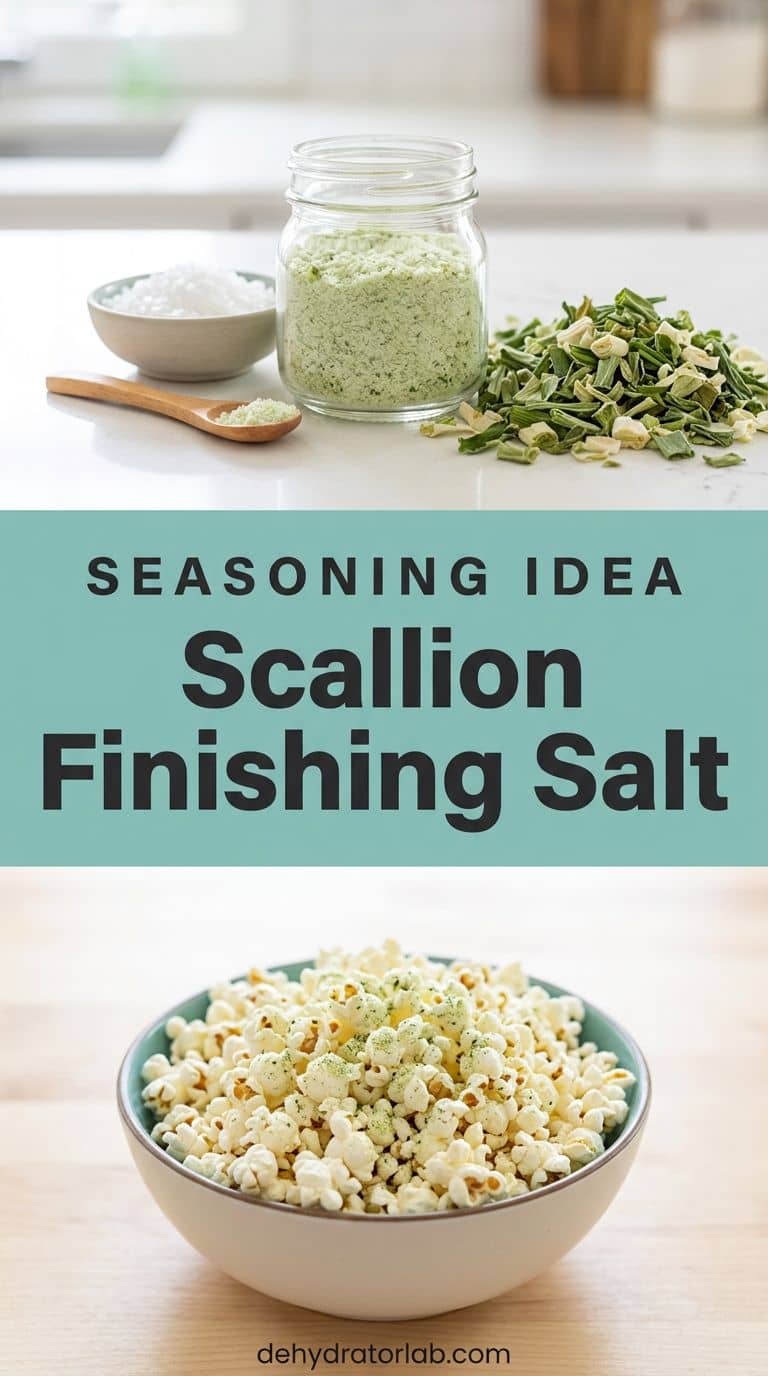
Grind 2 tablespoons of dried scallions to a fine powder, sift out any fibrous bits, and stir the powder into 1/4 cup of flaky sea salt. This is a finishing salt for popcorn, fries, roasted potatoes, avocado toast, and grilled corn. A few pinches does more than a whole shake of plain salt.
Keep it in a small jar. I use a glass jar with a tight lid, since the National Center for Home Food Preservation recommends clean, dry glass jars for dried foods because moisture is easy to spot. Salt also pulls humidity from the air, so keep the lid closed.
- Sift the powder once through a fine strainer.
- Stir it into flaky salt, not fine table salt.
- Shake it on at the end for a bright, green finish.
Want a bigger rack of homemade blends? See my dehydrated seasoning recipes and herb blends.
Quick Reference: Dried Scallion Amounts
| Use | Starting amount | Rehydrate? | How to add | Pairs with |
|---|---|---|---|---|
| Cream cheese schmear | 1 tbsp per 8 oz (225 g) cheese | No, the cheese softens them | Mix in, rest 30 minutes | Bagels, crackers |
| Sizzled oil | 1 tbsp per 1/4 cup (60 ml) oil | No, hot oil blooms them | Pour hot, use fresh | Noodles, rice, eggs |
| Pancakes and cornbread | 2 tbsp per 1 cup flour | No, the batter does it | Add to the dry mix | Soup, chili |
| Egg fried rice | 1 tbsp soaked, plus a dry pinch | Yes, 5 to 10 minutes | Cook early, garnish late | Cold rice, eggs |
| Omelets and scrambles | 1 tsp per 2 eggs | No | Stir into beaten eggs | Cheese, toast |
| Finishing salt | 2 tbsp ground per 1/4 cup salt | No | Sprinkle at the end | Popcorn, potatoes |
These are starting amounts from my own kitchen. Taste as you go, since the white parts are stronger than the greens.
When to Rehydrate and When to Skip It
My scallion guide says to soak the flakes in warm water for 5 to 10 minutes and drain them when you want them to plump up for soups, dumplings, and omelets. That’s the rule I follow. Skip the soak in anything wet or fatty, like dips, batters, and hot oil, because those liquids do the job for you.
A jar kept sealed and out of the steam of the stove stays fresh longest, and the NCHFP notes that dried foods can spoil if they take moisture back in. If the flakes clump or the jar fogs, dry them again before you use them. For more allium ideas, see my dehydrated leek slices, dehydrated onions, and shallot powder.
Personal Tips You Can Steal
I keep one jar of whole flakes and one small jar of powder, since the flakes are for garnish and the powder is for mixing. I sift the powder once, because fibrous bits never dissolve. I grind in 5-second pulses so the grinder stays cool.
I label the powder jar with the date and use it within a few months, since fine powder loses aroma sooner than flakes. I taste the schmear after the 30-minute rest, never before. I keep a spoon dedicated to the jar, so no wet utensil ever touches the flakes.
Final Thoughts
A jar of dehydrated scallions is one of the cheapest flavor upgrades in the pantry. Start with the schmear and the sizzled oil, and by the end of the week you’ll be reaching for the jar as often as the salt.
Related reading: 9 dehydrated seasoning recipes, 5 dehydrated one-pot trail meals, and 8 hot sauce, kimchi, and condiment recipes.
P.S. Dry the dark green tops too, since they work fine as flakes, and you’ll never toss a wilted bunch again. 🙂