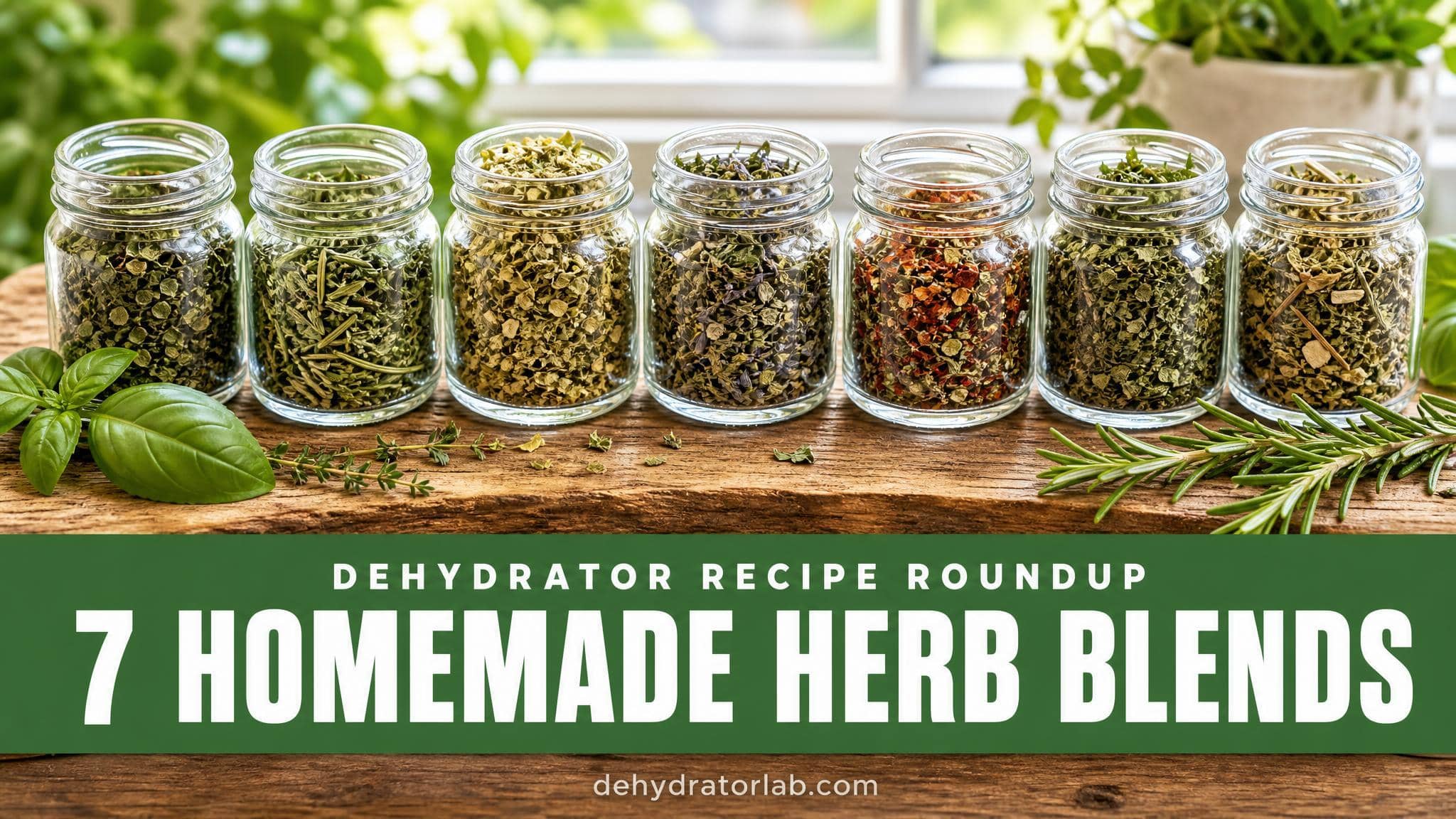
Store-bought crackers are mostly refined flour and oil dressed up with a fancy box.
I started making my own in the dehydrator after getting tired of paying five dollars for a box of crackers that’s mostly air. Seeds, vegetables, and a little patience get you something crisper, more nutrient-dense, and genuinely addictive — the kind of snack that disappears off the counter before dinner.
Let’s get your dehydrator working on something you’ll actually fight your family for.
As an Amazon Associate, I earn from qualifying purchases. If you make a purchase after clicking on a link I may earn a small commission at no extra cost to you if items are purchased.
In this article:
TL;DR: Key Takeaways
- 🌾 These 8 crackers skip refined flour entirely — seeds, vegetable pulp, and ground grains do all the binding work.
- 📏 Spread the batter about ⅛ inch thick — thicker means a soft, leathery center that never fully crisps.
- ♨️ Most of these dry at 125–135°F (52–57°C) for 6-10 hours; low and slow is what gets the shatter-crisp snap. Raw-food versions run lower still, nearer 115°F, and take considerably longer — which dehydrator suits raw food covers the machines that hold that range without drifting up.
- 🔪 Score the sheet into squares before drying — it snaps into clean pieces instead of shattering randomly.
- 🧂 Season heavier than feels right — dehydrating mutes flavor more than baking does.
- 🫙 Fully cooled and stored airtight, these keep their crunch for 2-3 weeks on the counter.
If you want the classic seed-and-rosemary base, I’ve already got a full rosemary sea salt dehydrated crackers recipe on the site. These eight are different flavors and different bases entirely — vegetable pulp, grains, and cheese, not just seeds. Let’s get into it.
1. Flax & Chia Seed Crackers
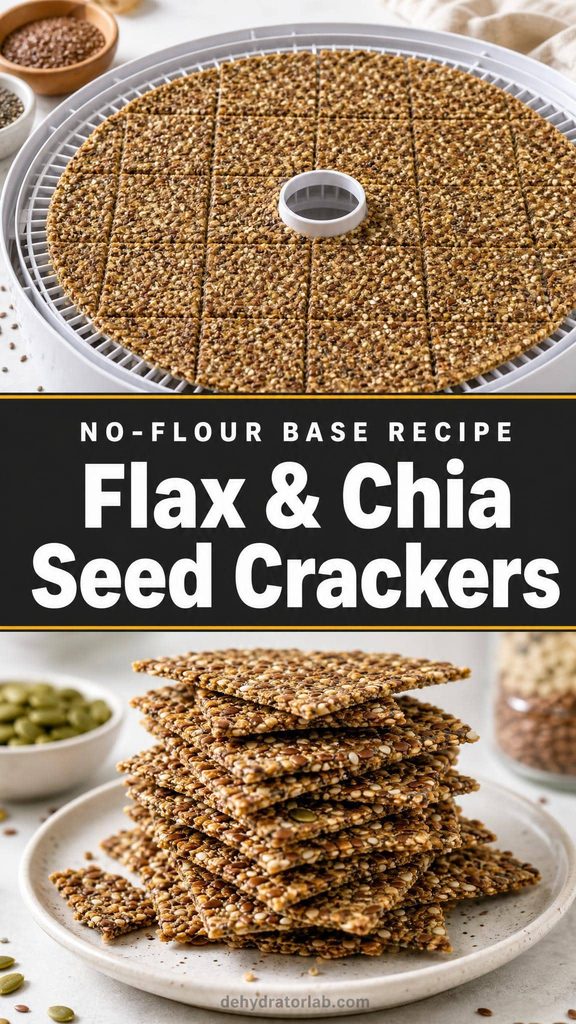
This is the plainest base on the list, and the one worth mastering first. Mix ½ cup ground flaxseed, ¼ cup whole chia seeds, ½ teaspoon salt, and ¾ cup water. Let it sit 10-15 minutes — the chia and flax gel into a spreadable batter on their own, no eggs or oil required.
Spread ⅛ inch thick, score into squares, and dehydrate at 125–135°F (52–57°C) for 6-8 hours, flipping onto mesh halfway through. Season the top boldly before drying — plain garlic powder and cracked pepper turn this base into something you’ll want on repeat. Once you’ve got the ratio down by feel, this same batter takes any add-in you throw at it, which is exactly why it’s the template the other seven recipes riff on.
The base recipe every other cracker on this list borrows from.
2. Zucchini Herb Crackers
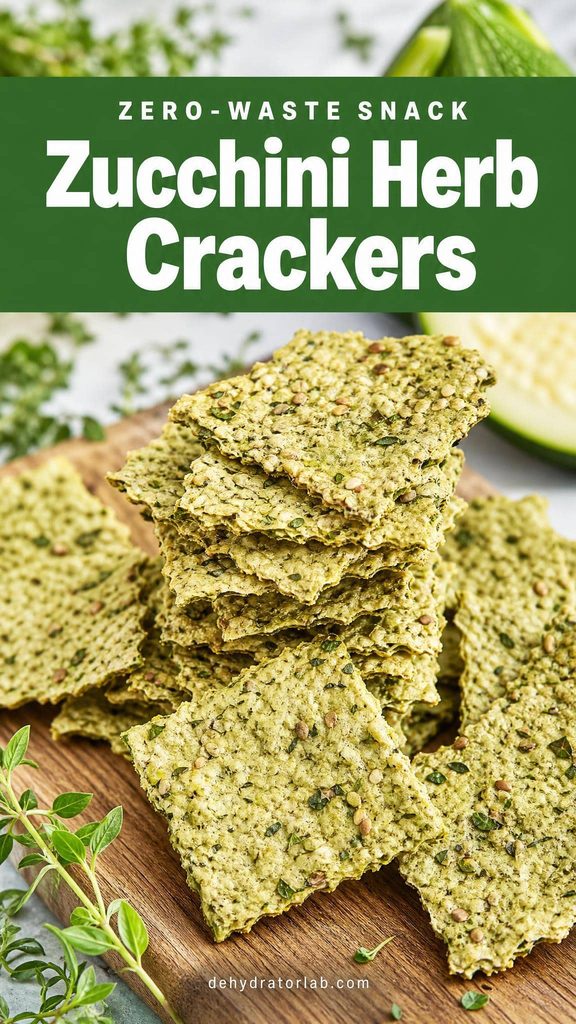
Zucchini season means more zucchini than any human can eat fresh, and this is where the surplus goes. Shred 2 cups of zucchini, squeeze out as much liquid as possible in a clean towel, then mix with ½ cup ground flaxseed, 2 tablespoons chopped fresh herbs (basil, oregano, or a mix), and ½ teaspoon salt.
Spread thin and dry at 125–135°F (52–57°C) for 8-10 hours — zucchini holds more water than seed-only batters, so give it the extra time. Squeezing out moisture beforehand is the step people skip and regret; skip it and you’ll be drying all day.
The best use for zucchini you’ve never tried.
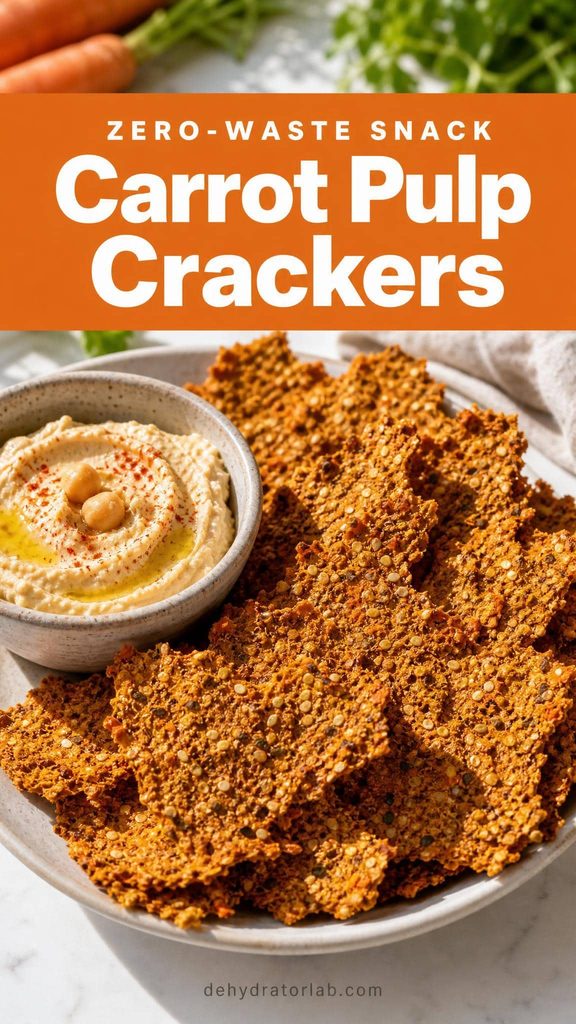
3. Carrot Pulp Crackers
FYI, if you juice regularly, this is where all that leftover pulp finally earns its keep instead of going in the compost. Combine 2 cups carrot pulp, ¼ cup ground flaxseed, 1 tablespoon sesame seeds, ½ teaspoon cumin, and ½ teaspoon salt.
Spread thin and dry at 125–135°F (52–57°C) for 8-10 hours, until snap-crisp with no give. The pulp is already fairly dry from juicing, so this batch usually finishes a little faster than a from-scratch vegetable cracker. If your juicer runs wetter than most, squeeze the pulp in a clean towel first to speed things along.
- Swap cumin for curry powder for a completely different flavor lane.
- Mix in a little beet or celery pulp if you’re juicing a variety of vegetables.
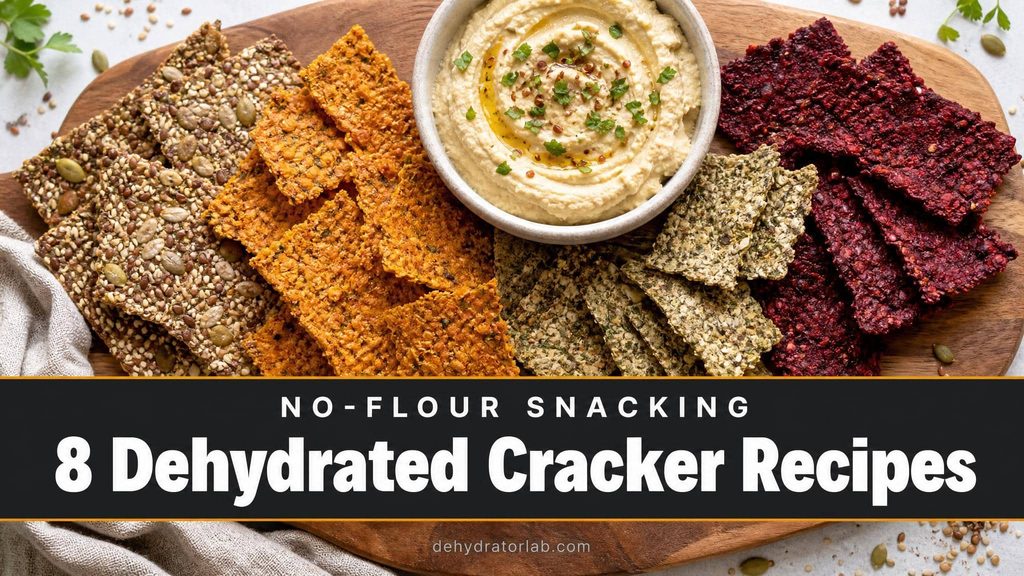
- These pair especially well with hummus — the zero-waste snack that doesn’t taste like a compromise.
4. Buckwheat Sunflower Seed Crackers
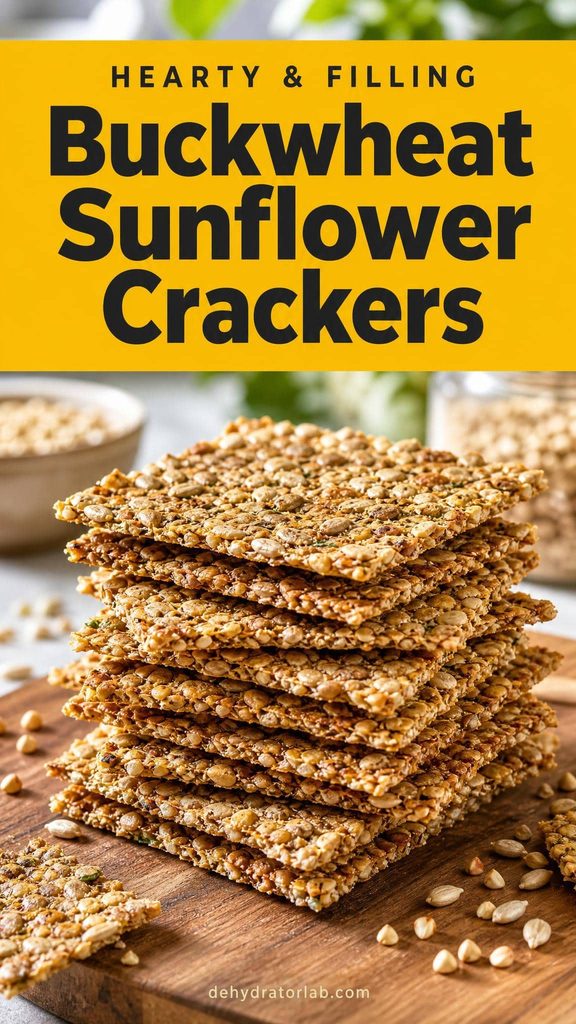
Buckwheat groats add a nutty, substantial bite that seed-only crackers don’t have. Soak 1 cup raw buckwheat groats for 6-8 hours, drain and rinse well, then pulse in a food processor with ½ cup raw sunflower seeds, 2 tablespoons ground flaxseed, ¾ teaspoon salt, and 3 tablespoons water until it forms a coarse, spreadable paste.
Spread ⅛ inch thick and dry at 125–135°F (52–57°C) for 8-10 hours, flipping halfway. Buckwheat’s mucilage (the slightly slimy coating that appears after soaking) is normal and actually helps the crackers hold together — don’t rinse it away completely. A rough chop instead of a full puree in the food processor keeps some texture in the finished cracker, which is part of what makes this one feel more like a snack than a cracker.
The heartiest, most filling cracker on this whole list.
5. Tomato Basil Crackers
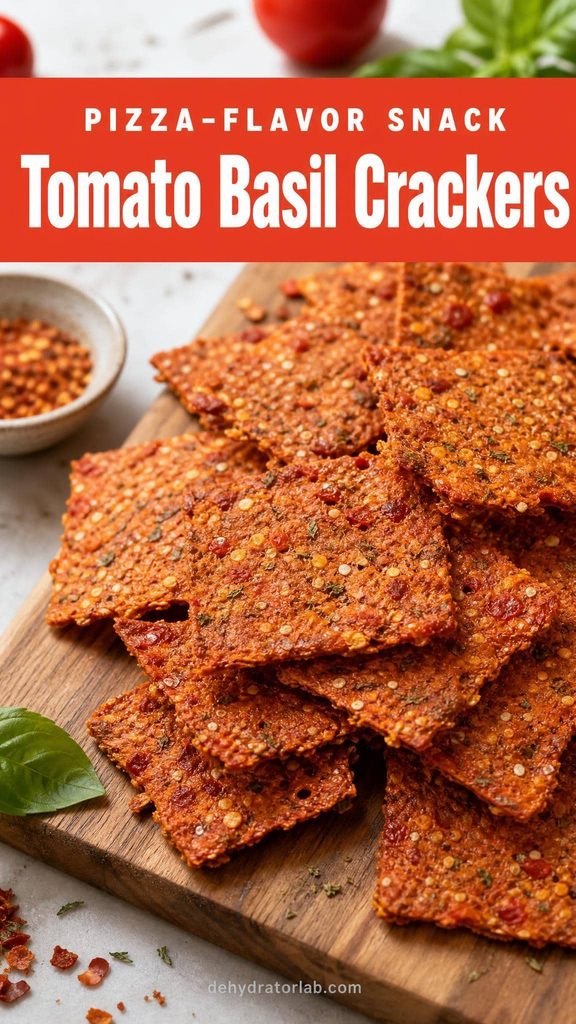
Ever wonder what happened to all the flavor in a plain water cracker? This one has the opposite problem — it’s loud, in the best way. Blend 1 cup sun-dried tomatoes (rehydrated in warm water for 10 minutes, then drained) with ½ cup ground flaxseed, 2 tablespoons chopped fresh basil, 1 clove garlic, and ½ teaspoon salt into a thick paste.
Spread thin and dry at 125–135°F (52–57°C) for 8-10 hours. This batter runs a little wetter than most on this list because of the tomato, so don’t rush the drying time even if the edges look done early.
Pizza flavor with none of the guilt.
6. Sweet Potato Crackers
A slightly sweet, snappy cracker that works just as well with peanut butter as it does with a savory dip. Mix 1 cup mashed cooked sweet potato, ⅓ cup ground flaxseed, ¼ teaspoon cinnamon, and ¼ teaspoon salt into a thick, spreadable paste.
Spread ⅛ inch thick and dry at 125–135°F (52–57°C) for 8-10 hours. Sweet potato holds a lot of moisture, so give the batch the full time and check the center of the thickest piece before calling it done.
The cracker that doubles as a not-too-sweet dessert.

7. Beet & Caraway Crackers
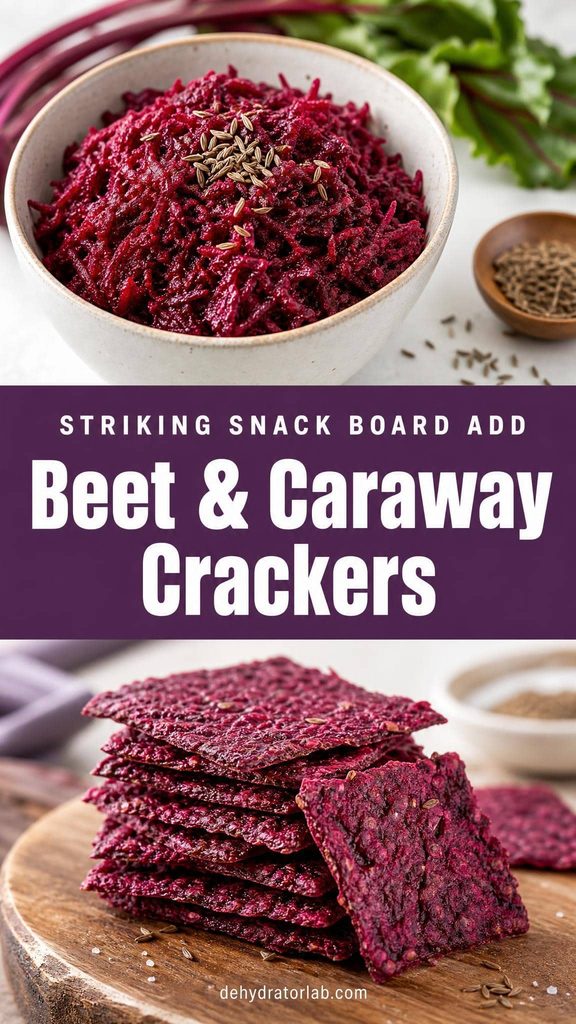
The most striking-looking cracker on this list, hands down — a deep magenta color that makes any snack board look intentional. Mix 1 cup grated raw beet, ½ cup ground flaxseed, 1 teaspoon caraway seeds, and ½ teaspoon salt with 3 tablespoons water.
Spread thin and dry at 125–135°F (52–57°C) for 8-10 hours. Beet juice stains everything it touches, so line your trays and wear an apron you don’t mind ruining a little. Grate the beet fine rather than shredding it coarse — finer pieces distribute more evenly through the batter and dry at the same rate as the rest of the sheet.
Earthy, slightly sweet, and impossible to miss on a snack board.
8. Spicy Jalapeño Cheddar Crackers
Not every cracker on this list needs to be raw and vegan — sometimes you just want cheese and heat. Mix 1 cup finely shredded sharp cheddar, ¼ cup ground flaxseed, 1 diced jalapeño (seeds removed for less heat, left in for more), and ¼ teaspoon salt.
Spread thin on a lined tray and dry at 115–120°F (46–49°C) for 8-12 hours — lower and slower than the other crackers here, since melted cheese fat needs a gentler temperature to fully dry without turning greasy.
- Blot the surface with a paper towel around hour four to pull off excess oil.
- Swap jalapeño for a milder pepper if you’re serving a crowd that doesn’t love heat.
- These are richer than the other seven, so a little goes a long way — the cracker that ends the whole batch fastest.

Is “Raw” a Real Rule, or Just a Preference?
You’ll see raw-food circles insist on drying below 115–118°F (46–48°C) to keep food “raw” and preserve enzymes. Worth knowing before you follow that number as gospel: the enzyme-preservation claim is more of a movement guideline than a settled piece of food science, and mainstream nutrition sources are split on how much it actually matters for digestion or nutrient content.
If staying strictly raw matters to you personally, drop every recipe above to 115°F and expect drying times to run 25-50% longer. If you just want a great cracker, the standard 125–135°F range in these recipes gets you there faster with no meaningful difference most people can taste.
Keeping the Crunch After They’re Done
The drying is only half the battle — a perfectly crisp batch can go soft in a single humid afternoon if it’s stored wrong. Let every batch cool completely on the counter before it goes anywhere near a container; sealing warm crackers traps steam, and that trapped moisture is what turns a satisfying snap into a sad bend.
Store in a truly airtight glass jar or container, not a zip-top bag with the air pressed out — bags flex and let humidity creep in over days. A small food-safe desiccant packet or a few grains of dry rice in a mesh sachet buys extra insurance if your kitchen runs humid. Stored right, most of these keep their crunch for 2-3 weeks at room temperature. If a batch does go soft, a 10-15 minute stint back in the dehydrator at 135°F almost always brings the snap back.
Personal Tips You Can Steal
I always score the sheet into squares with a pizza cutter before it goes in the dehydrator, never after — trying to cut a fully dried sheet just shatters it into random shards. I keep a spray bottle of water nearby for batters that firm up too much while I’m spreading them; a light mist loosens things back up without changing the final texture.
I press any topping (seeds, flaky salt, cheese) into the surface with the flat of a spatula rather than just sprinkling it, since loose toppings shake off once the cracker is fully brittle. And I always let a full batch cool completely on the counter before testing for crispness — warm crackers feel softer than they actually are.
Final Thoughts
Eight crackers is enough variety to never reach for a store-bought box again — vegetable-based, grain-based, and one cheesy exception for when you want it. Pick two or three to start, and build out the rest once you’ve got the base technique down.
For a balanced look at raw-food claims around enzymes and nutrient retention, Precision Nutrition’s guide to raw food is a solid, evidence-based read, and the National Center for Home Food Preservation’s drying guide covers general safe-drying practices across the board.
For gear, I spread every batter on the same set of silicone dehydrator sheets, blend vegetable and seed mixes in a food processor, and store the finished batches in airtight storage containers to keep the crunch through the week.
Related reading: for the classic seed-and-herb version of this snack, see rosemary sea salt dehydrated crackers, and for more vegetable-forward crunch, check out 15 dehydrated vegetable chip recipes.
P.S. Start with the flax and chia base — once you’ve got the spread-and-score technique down, every other recipe here is just a flavor swap. Happy dehydrating! 🙂