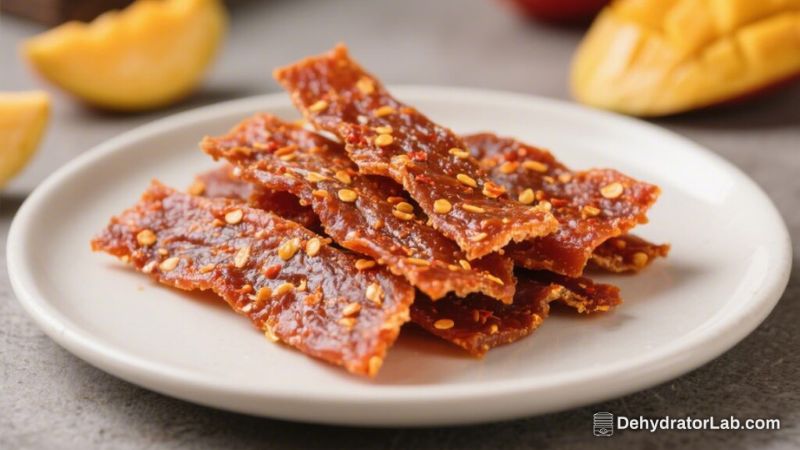
If you love snacks that balance sweet and heat, spicy mango jerky is about to be your new favorite. It’s chewy, bright, and loaded with tropical flavor, with just enough kick to keep things interesting. You don’t need fancy equipment—an oven or a dehydrator will do the job.
This recipe is simple, budget-friendly, and great for meal prep or road trips. Plus, it’s a delicious alternative to store-bought snacks packed with additives.
In this article:
🔑 TL;DR: Key Takeaways
- 🥭 Use ripe but firm mangoes — overripe fruit makes a runny puree that dries unevenly and stays tacky.
- 🌡️ Spread puree 1/8 inch thick, then dry at 135°F (57°C) for 6–10 hours in a dehydrator or 140–170°F (60–75°C) for 4–7 hours in the oven.
- ✅ Done when the sheet peels off clean and bends without cracking — tacky or tearing means it needs more time.
- 📦 Condition strips in a loosely covered jar for 24 hours, shaking once or twice, to even out moisture and prevent mold.
What Makes This Recipe So Good
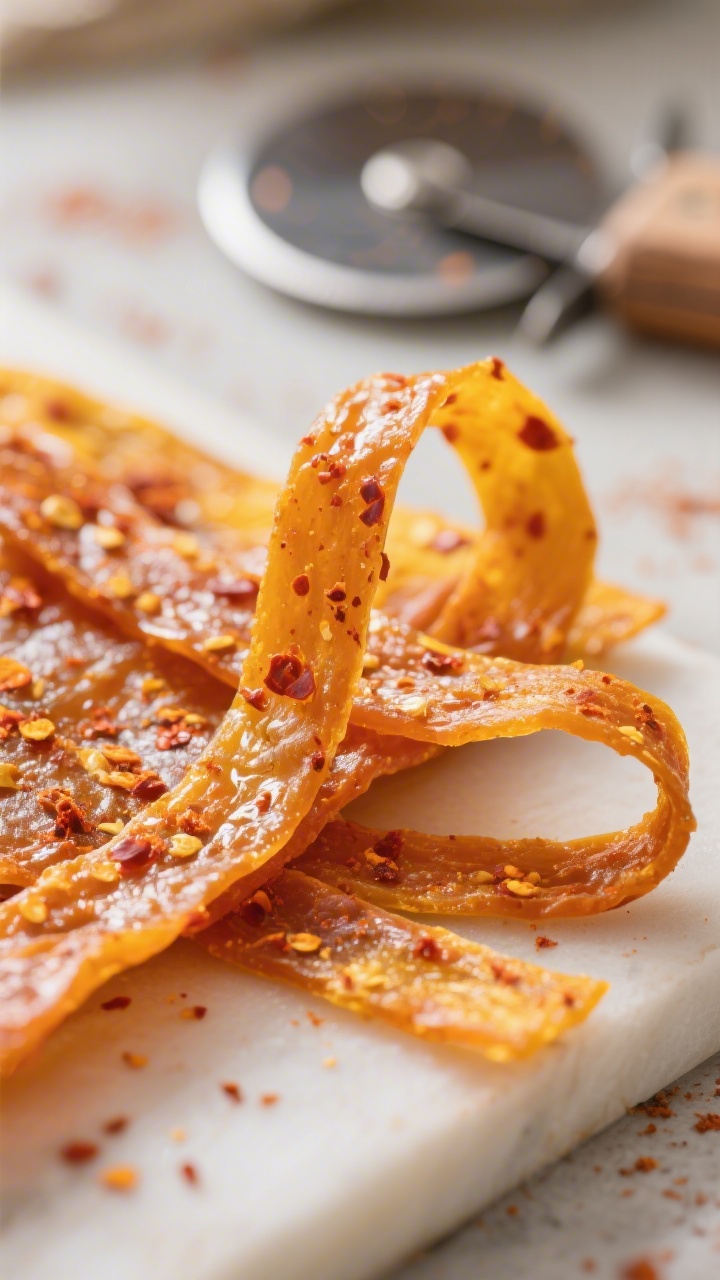
- Simple ingredients: Ripe mango, chili, lime, and a few pantry staples are all you need.
- Customizable heat: Adjust the spice level with fresh chili, cayenne, or your favorite hot sauce.
- No added junk: You control the sweetness and sodium—no preservatives or artificial flavors.
- Great texture: Proper drying gives you a satisfying, chewy bite without being tough.
- Travel-ready: Packs easily for hikes, lunchboxes, or long drives and doesn’t require refrigeration once dried.
Shopping List
- Fresh ripe mangoes (4–5 large, preferably Ataulfo or Kent)
- Fresh lime (1–2 for juice and zest)
- Honey or maple syrup (optional, 1–2 tablespoons, depending on mango sweetness)
- Chili powder (1–2 teaspoons)
- Cayenne pepper or red pepper flakes (to taste)
- Smoked paprika (optional, 1 teaspoon for depth)
- Fine sea salt (¼–½ teaspoon)
- Fresh ginger (optional, 1-inch piece, grated)
- Ground turmeric (optional, ¼ teaspoon for color and warmth)
- Neutral oil or coconut oil (1 teaspoon, optional, helps with sticking)
- Nonstick baking sheets or dehydrator trays
- Silicone mats or parchment paper
How to Make It
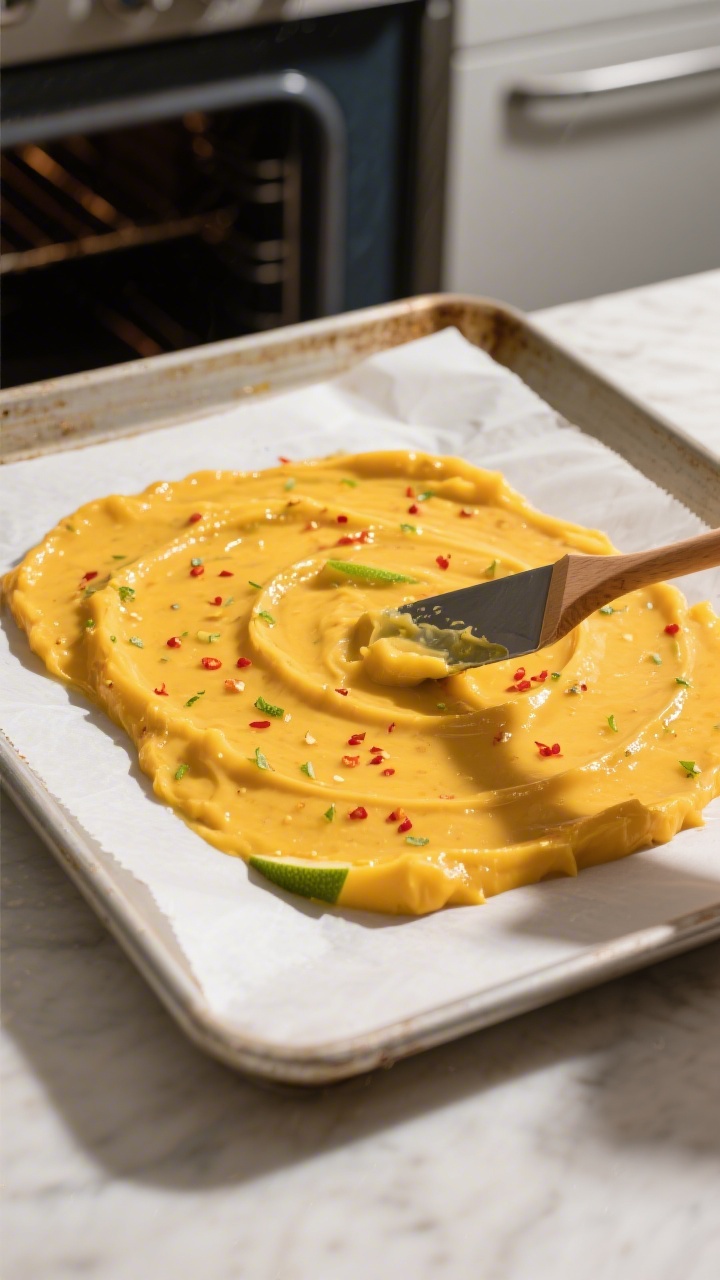
- Pick the right mangoes: Choose ripe but firm mangoes. They should be fragrant and give slightly when pressed.
Overripe fruit turns mushy and dries unevenly.
- Prep the trays: Line baking sheets or dehydrator trays with silicone mats or parchment. Lightly brush with a tiny bit of oil to prevent sticking.
- Blend the puree: Peel and pit the mangoes. Add the flesh to a blender with lime juice (about 2 tablespoons), lime zest, chili powder, a pinch of salt, and cayenne to taste.
Add honey or maple only if your mangoes aren’t sweet enough. Blend until very smooth.
- Taste and adjust: You want a bright, sweet-tart puree with a warm heat. Add more lime for tang, more chili for kick, or a touch more honey if needed.
If using, blend in ginger, smoked paprika, or turmeric.
- Spread the puree: Pour the mango puree onto prepared trays. Use an offset spatula to spread into an even layer about 1/8 inch thick. Thinner layers dry faster but can get brittle.
- Dehydrate (oven method): Set the oven to its lowest temperature, ideally 140–170°F (60–75°C).
Prop the door slightly open with a wooden spoon to allow moisture to escape. Dry for 4–7 hours, rotating trays halfway, until the surface is tack-free and flexible.
- Dehydrate (dehydrator method): Set to 135°F (57°C). Dry for 6–10 hours, checking after 5 hours.
It’s ready when it peels cleanly from the liner and bends without cracking.
- Cool and test: Let the sheet cool for 10–15 minutes. Peel a corner and check elasticity. If it tears or feels wet, keep drying in 30-minute intervals.
- Cut into jerky strips: Transfer the dried sheet to a cutting board.
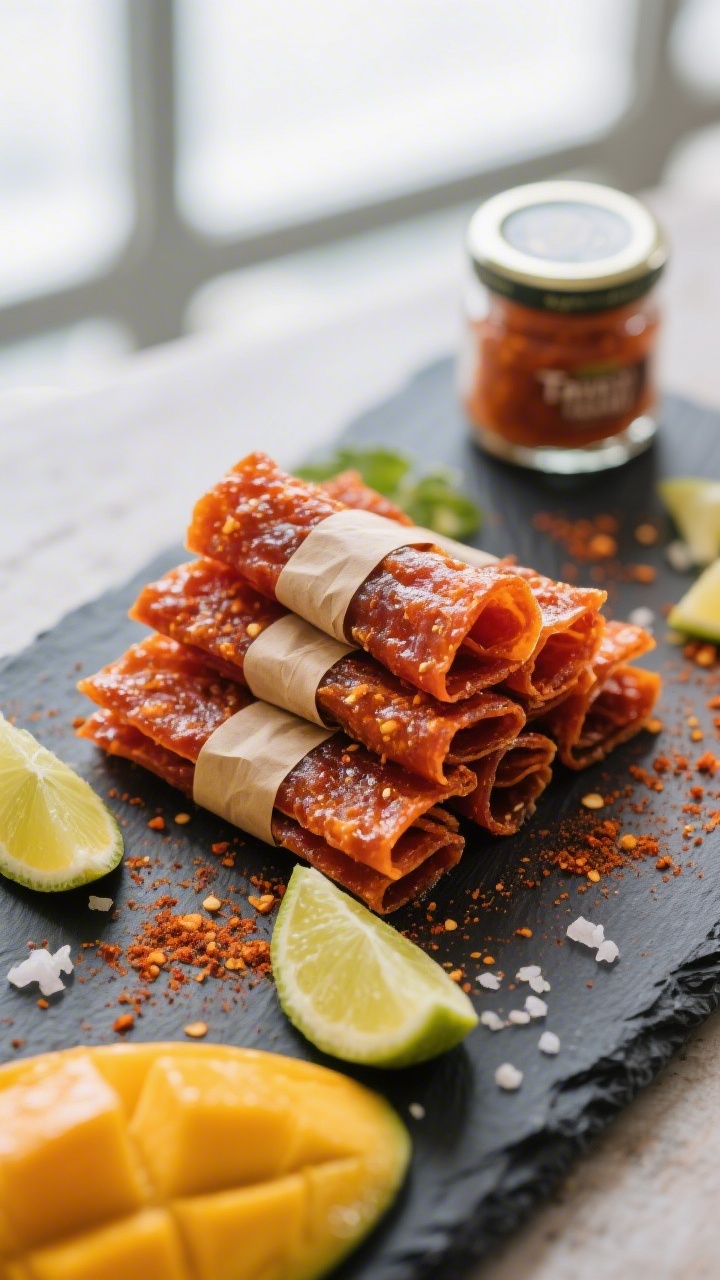
Use kitchen scissors or a pizza cutter to slice into 1-inch-wide strips. For travel, you can roll strips in parchment to prevent sticking.
- Condition the jerky: Place strips loosely in a large jar for 24 hours, shaking once or twice. This equalizes moisture and helps prevent mold.
Keeping It Fresh
Store in an airtight container at room temperature for up to 2 weeks.
For longer storage, keep in the fridge for 1–2 months or the freezer for up to 6 months. Add a small food-safe desiccant pack if you have one, which helps maintain texture.
Make sure the jerky is fully dried before storing. If you see condensation inside the container after a day, it wasn’t dry enough.
Return it to the dehydrator or oven for another 30–60 minutes.
Why This is Good for You
- Natural energy: Mango provides quick carbohydrates and fiber, great for workouts or hikes.
- Vitamin boost: Rich in vitamins A and C for immune support and healthy skin.
- Spices with benefits: Chili and ginger may support metabolism and digestion. Turmeric adds anti-inflammatory potential.
- No processed sugars: You control sweetness, avoiding corn syrups and artificial flavors found in many packaged snacks.
Common Mistakes to Avoid
- Using overripe mangoes: Too soft equals runny puree and sticky, uneven drying.
- Spreading too thick: Thick puree takes forever to dry and can stay tacky. Aim for a consistent 1/8 inch.
- Skimping on acid: Lime balances sweetness and brightens flavor.
Without it, the jerky can taste flat.
- Cranking the heat: High temperatures cook rather than dehydrate and can brown the sugars. Low and slow is key.
- Skipping conditioning: Uneven moisture invites mold. The jar step helps even it out.
Variations You Can Try
- Mango-Chile-Lime: Use Tajín or a chili-lime seasoning blend for a classic street-snack vibe.
- Pineapple-Mango Fusion: Blend in 1 cup fresh pineapple for extra tang and tropical sweetness.
- Ginger Mango Heat: Add extra grated ginger and a dash of black pepper for a warm, zesty finish.
- Smoky Mango: Increase smoked paprika and add a few drops of liquid smoke for campfire notes.
- No-Added-Sugar: Skip honey or maple entirely if your mangoes are peak-season sweet.
- Super Spicy: Blend in a small fresh serrano or habanero (seeded).
Start small—these pack serious heat.
FAQ
Can I use frozen mango?
Yes. Thaw and drain off excess liquid before blending. Frozen mango can be less sweet, so you may want a touch of honey or an extra squeeze of lime to balance flavor.
How do I know when it’s fully dried?
The surface should be smooth, not tacky, and it should peel off the liner in one piece.
When you bend it, it should flex without cracking. If it feels sticky or tears easily, keep drying.
What if I don’t have a dehydrator?
The oven works great. Set it to the lowest heat and prop the door slightly open to release moisture.
Rotate trays to dry evenly, and start checking around the 4-hour mark.
How spicy is this recipe?
You control it. Start with 1 teaspoon chili powder and a small pinch of cayenne. Taste the puree before drying and increase in small amounts until it suits you.
Can I make it without sugar?
Absolutely.
If your mangoes are ripe and sweet, you don’t need any added sweetener. The lime and spices will still make it pop.
Why is my jerky sticking to the parchment?
It likely needed more drying time, or the layer was too thick. Next time, spread thinner and brush the parchment with a tiny bit of oil.
You can also try silicone mats, which release more cleanly.
How do I prevent mold?
Dry completely, condition the jerky in a jar for a day, and store in an airtight container. If storing at room temperature, finish it within two weeks or refrigerate for longer life.
Can I use other fruits?
Yes. Strawberries, peaches, pineapple, or apricot work well.
Keep the mango base for body and adjust sweetness and lime to taste.
Personal Tips You Can Steal
I taste the puree with a spoon straight after blending, then let it sit for 10 minutes and taste again — heat from fresh chili builds as it sits, so what seems mild right off the blender can turn noticeably spicier by the time it hits the tray. When I’m cutting the dried sheet into strips, I run my scissors under warm water first; a slightly warm blade glides through the chewy sheet instead of dragging and tearing the edges.
Wrapping Up
Spicy mango jerky is a bright, chewy snack that’s easy to make and easy to love. With a few pantry spices and ripe mangoes, you can prep a batch that beats anything from the store. Keep it mild, make it fiery, or try a fun variation—this recipe is flexible.
Once you’ve made it once, it’ll become a regular in your snack rotation.
P.S. Buy mangoes when they’re on sale and overripe, and freeze the flesh in chunks — frozen mango purees down just as smooth and you’re not stuck waiting for the right ripeness window to make a batch 🙂
Spicy Mango Jerky – Sweet, Tangy, and Fiery Snack
Ingredients
- Fresh ripe mangoes (4–5 large, preferably Ataulfo or Kent)
- Fresh lime (1–2 for juice and zest)
- Honey or maple syrup (optional, 1–2 tablespoons, depending on mango sweetness)
- Chili powder (1–2 teaspoons)
- Cayenne pepper or red pepper flakes (to taste)
- Smoked paprika (optional, 1 teaspoon for depth)
- Fine sea salt (¼–½ teaspoon)
- Fresh ginger (optional, 1-inch piece, grated)
- Ground turmeric (optional, ¼ teaspoon for color and warmth)
- Neutral oil or coconut oil (1 teaspoon, optional, helps with sticking)
- Nonstick baking sheets or dehydrator trays
- Silicone mats or parchment paper
Instructions
- Pick the right mangoes: Choose ripe but firm mangoes. They should be fragrant and give slightly when pressed.Overripe fruit turns mushy and dries unevenly.
- Prep the trays: Line baking sheets or dehydrator trays with silicone mats or parchment. Lightly brush with a tiny bit of oil to prevent sticking.
- Blend the puree: Peel and pit the mangoes. Add the flesh to a blender with lime juice (about 2 tablespoons), lime zest, chili powder, a pinch of salt, and cayenne to taste.Add honey or maple only if your mangoes aren’t sweet enough. Blend until very smooth.
- Taste and adjust: You want a bright, sweet-tart puree with a warm heat. Add more lime for tang, more chili for kick, or a touch more honey if needed.If using, blend in ginger, smoked paprika, or turmeric.
- Spread the puree: Pour the mango puree onto prepared trays. Use an offset spatula to spread into an even layer about 1/8 inch thick. Thinner layers dry faster but can get brittle.
- Dehydrate (oven method): Set the oven to its lowest temperature, ideally 140–170°F (60–75°C).Prop the door slightly open with a wooden spoon to allow moisture to escape. Dry for 4–7 hours, rotating trays halfway, until the surface is tack-free and flexible.
- Dehydrate (dehydrator method): Set to 135°F (57°C). Dry for 6–10 hours, checking after 5 hours.It’s ready when it peels cleanly from the liner and bends without cracking.
- Cool and test: Let the sheet cool for 10–15 minutes. Peel a corner and check elasticity. If it tears or feels wet, keep drying in 30-minute intervals.
- Cut into jerky strips: Transfer the dried sheet to a cutting board.Use kitchen scissors or a pizza cutter to slice into 1-inch-wide strips. For travel, you can roll strips in parchment to prevent sticking.
- Condition the jerky: Place strips loosely in a large jar for 24 hours, shaking once or twice. This equalizes moisture and helps prevent mold.
Related reading: apple cinnamon fruit leather, dehydrated turmeric powder, and making beef jerky.
Printable Recipe Card
Want just the essential recipe details without scrolling through the article? Get our printable recipe card with just the ingredients and instructions.