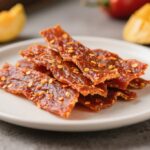
Spicy Mango Jerky - Sweet, Tangy, and Fiery Snack
Servings 8 servings
Ingredients
- Fresh ripe mangoes (4–5 large, preferably Ataulfo or Kent)
- Fresh lime (1–2 for juice and zest)
- Honey or maple syrup (optional, 1–2 tablespoons, depending on mango sweetness)
- Chili powder (1–2 teaspoons)
- Cayenne pepper or red pepper flakes (to taste)
- Smoked paprika (optional, 1 teaspoon for depth)
- Fine sea salt (¼–½ teaspoon)
- Fresh ginger (optional, 1-inch piece, grated)
- Ground turmeric (optional, ¼ teaspoon for color and warmth)
- Neutral oil or coconut oil (1 teaspoon, optional, helps with sticking)
- Nonstick baking sheets or dehydrator trays
- Silicone mats or parchment paper
Instructions
- Pick the right mangoes: Choose ripe but firm mangoes. They should be fragrant and give slightly when pressed. Overripe fruit turns mushy and dries unevenly.
- Prep the trays: Line baking sheets or dehydrator trays with silicone mats or parchment. Lightly brush with a tiny bit of oil to prevent sticking.
- Blend the puree: Peel and pit the mangoes. Add the flesh to a blender with lime juice (about 2 tablespoons), lime zest, chili powder, a pinch of salt, and cayenne to taste. Add honey or maple only if your mangoes aren’t sweet enough. Blend until very smooth.
- Taste and adjust: You want a bright, sweet-tart puree with a warm heat. Add more lime for tang, more chili for kick, or a touch more honey if needed. If using, blend in ginger, smoked paprika, or turmeric.
- Spread the puree: Pour the mango puree onto prepared trays. Use an offset spatula to spread into an even layer about 1/8 inch thick. Thinner layers dry faster but can get brittle.
- Dehydrate (oven method): Set the oven to its lowest temperature, ideally 140–170°F (60–75°C). Prop the door slightly open with a wooden spoon to allow moisture to escape. Dry for 4–7 hours, rotating trays halfway, until the surface is tack-free and flexible.
- Dehydrate (dehydrator method): Set to 135°F (57°C). Dry for 6–10 hours, checking after 5 hours. It’s ready when it peels cleanly from the liner and bends without cracking.
- Cool and test: Let the sheet cool for 10–15 minutes. Peel a corner and check elasticity. If it tears or feels wet, keep drying in 30-minute intervals.
- Cut into jerky strips: Transfer the dried sheet to a cutting board. Use kitchen scissors or a pizza cutter to slice into 1-inch-wide strips. For travel, you can roll strips in parchment to prevent sticking.
- Condition the jerky: Place strips loosely in a large jar for 24 hours, shaking once or twice. This equalizes moisture and helps prevent mold.