Ever juice three lemons for a recipe and toss the peels without a second thought?
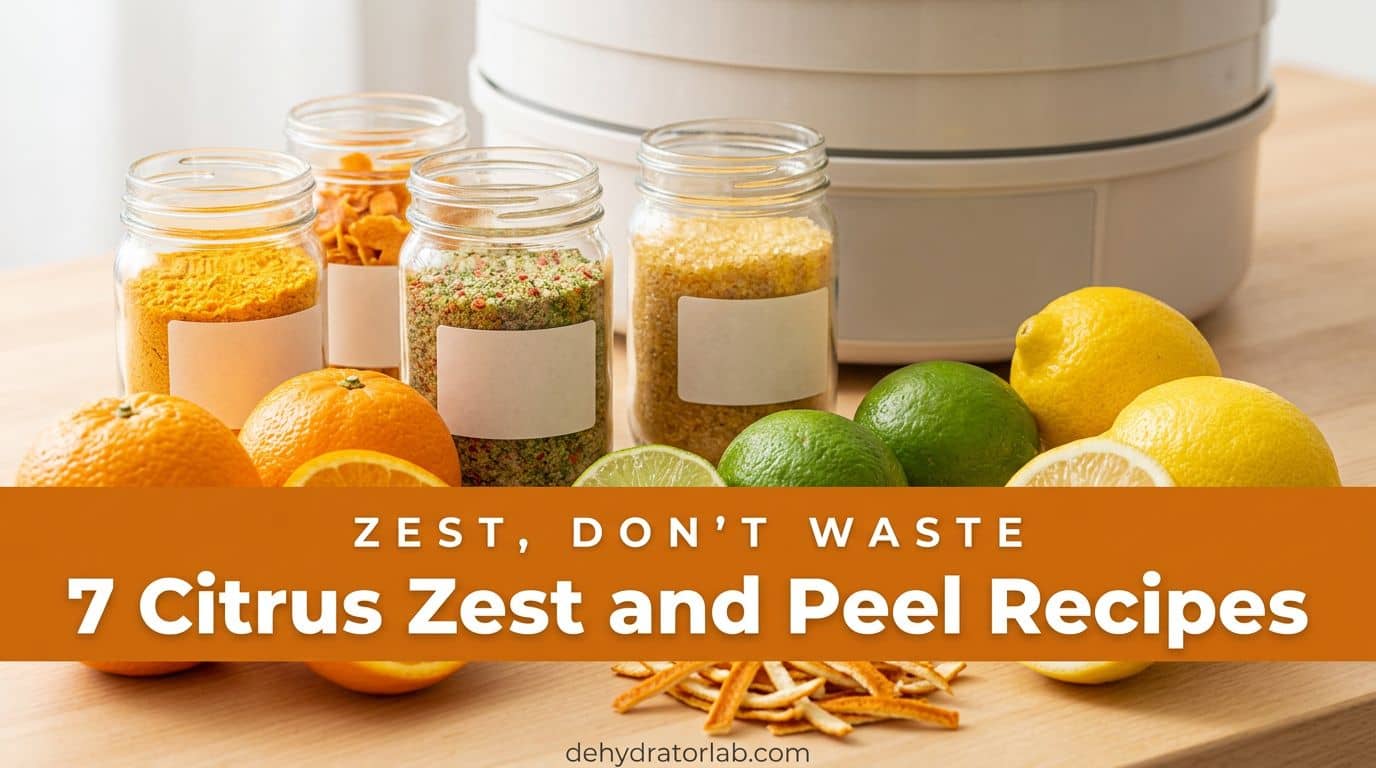
That peel holds most of the aroma in the fruit. A dehydrator turns it into powders, salts, sugars, and rubs that sit in jars for months. Here are seven citrus zest and peel recipes that put your scraps to work.
As an Amazon Associate, I earn from qualifying purchases. If you make a purchase after clicking on a link I may earn a small commission at no extra cost to you if items are purchased.
In this article:
TL;DR: Key Takeaways
- 🍊 Seven jar-ready recipes: orange peel powder, chili-lime salt, orange cinnamon sugar, a citrus rub, mandarin peel, grapefruit zest flakes, and a citrus everything topping.
- 🧽 Scrub every fruit with a produce brush under cool running water. UMN Extension says never to use soap, and wax comes off with scrubbing.
- 🌡️ Peel strips dry at 140°F (60°C) for 8 to 12 hours until crisp, per Colorado State. I dry fine grated zest lower, at 95–105°F (35–40°C).
- ✂️ Take only the colored layer, about 1/16 to 1/8 inch thick, and leave the bitter white pith behind.
- 🧊 Cool everything completely before you grind or jar it, because warm food sweats and invites mold.
- 🫙 Colorado State gives 6 to 12 months for properly stored dried citrus peel, so label every jar.
Every recipe below follows the same base method. Scrub, peel or zest, dry, cool, then grind or mix. Colorado State Extension says to thinly peel the outer 1/16 to 1/8 inch, avoid the white pith, and pick thick-skinned navel oranges, which dry better than thin-skinned types.
UMN Extension adds that you should scrub produce even if you plan to peel it. A spice grinder helps, and I keep one just for dry spices. If you want slices and wheels instead, my dehydrated citrus recipes roundup covers those, and my lemon zest guide goes deep on one fruit.
Let’s get into it.

- Electric spice-and-nut grinder with durable stainless-steel blades
- Heavy-duty motor; push-top lid for simple on/off control
- Bowl holds 90 grams; extra storage space in lid; non-slip rubber feet
1. Orange Peel Powder (for Baking and Rubs)
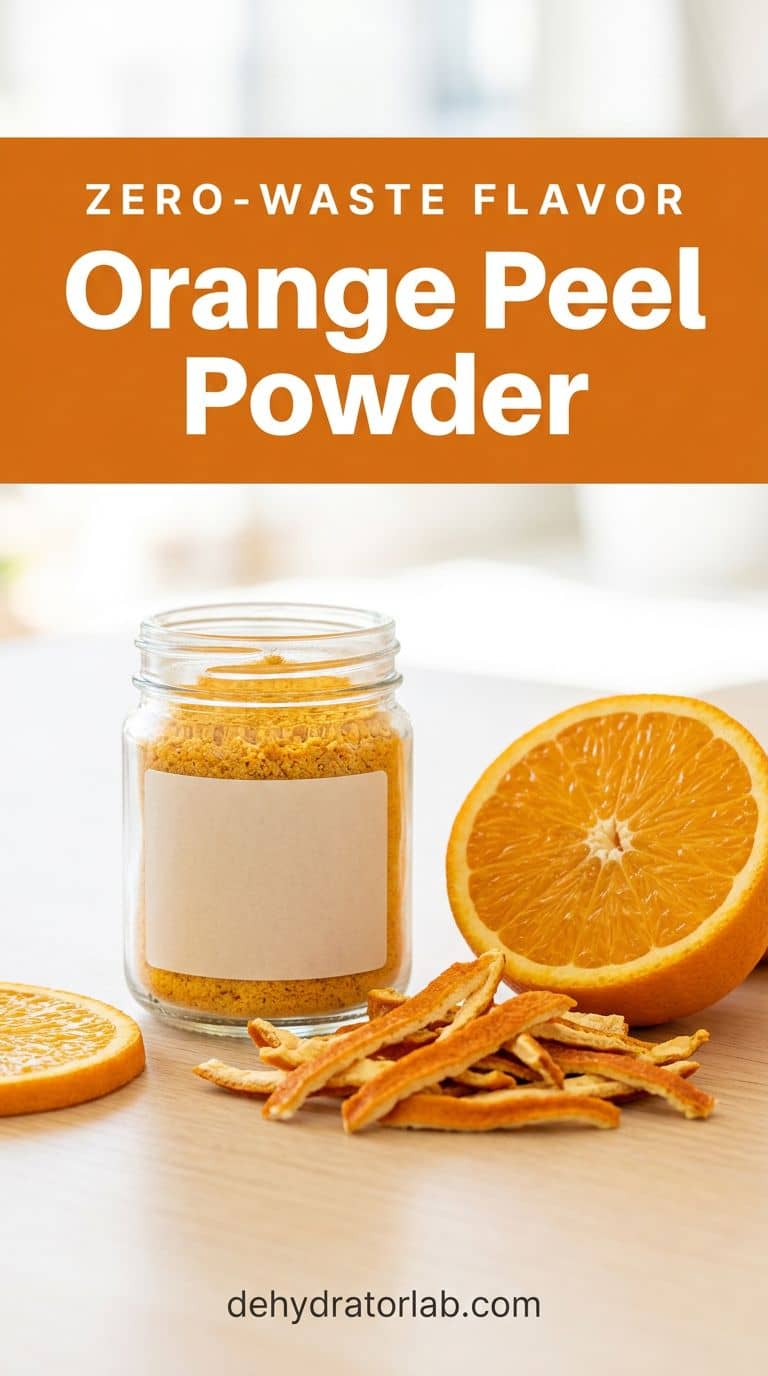
Orange peel powder is the all-rounder of this list. A pinch wakes up muffin batter, oatmeal, and spice rubs, and it costs nothing because the peel was headed for the trash.
Start with thick-skinned navel oranges and scrub them well. Peel off just the orange layer with a vegetable peeler, and dry the strips in a single layer at 140°F (60°C) for 8 to 12 hours. Colorado State says to turn the pieces every 3 to 4 hours and to watch closely near the end, because peel scorches easily. Done means crisp, so a strip snaps instead of bending.
Cool the strips completely, then grind in short pulses and sift out the coarse bits. Here is where I use it:
- Stir 1/2 teaspoon into muffin or pancake batter and add more to taste.
- Rub it into pork or chicken with salt and pepper.
- Whisk a pinch into hot cocoa for chocolate-orange comfort.
The amounts are my own rules of thumb. My food waste roundup lists peel powder as a use for juicing leftovers, and the fruit powders roundup shows more ways to use a jar. Zero waste, full flavor.
2. Chili-Lime Salt (for Fruit, Corn, and Rims)
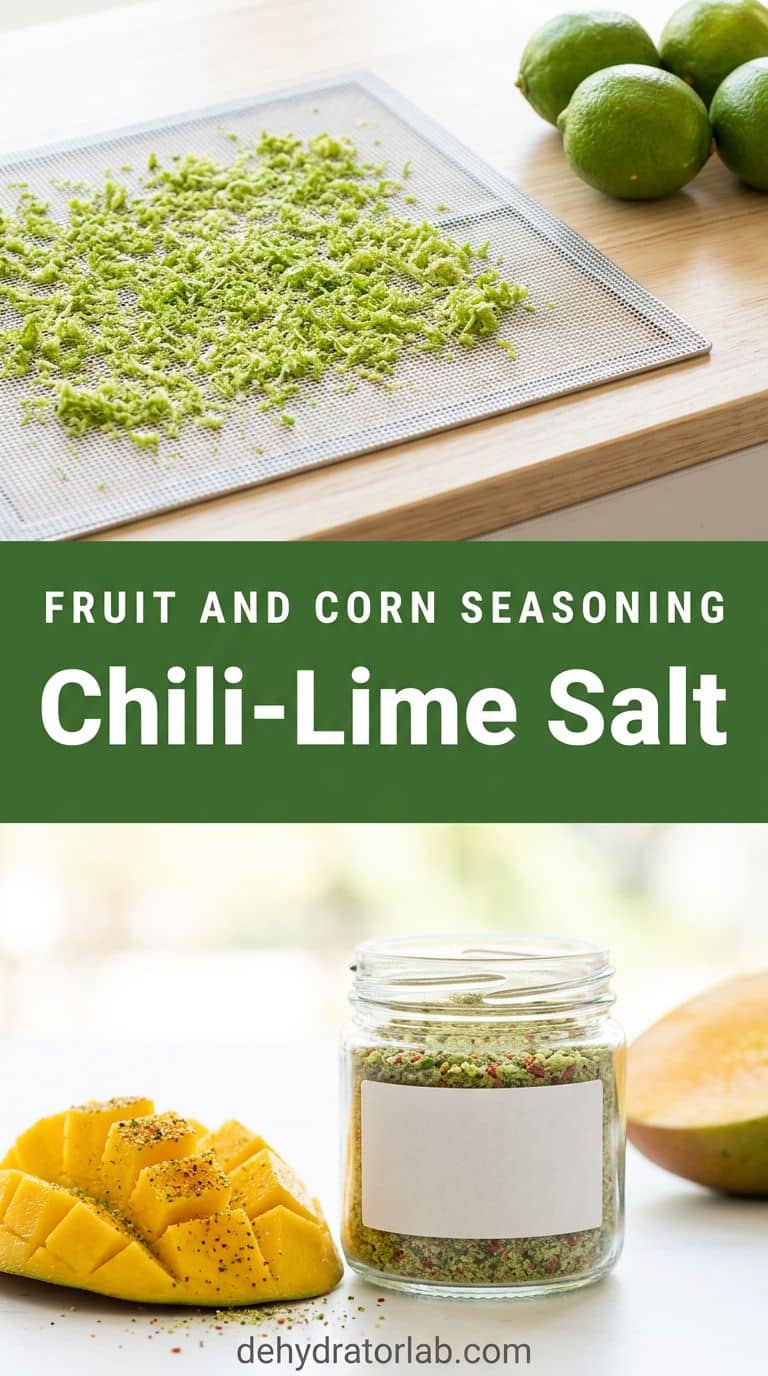
Fresh limes go from green to rubbery in a few days. Dried lime zest mixed with chili powder and salt gives you a shaker for mango, cucumber, corn, and glass rims.
Grate only the green layer of scrubbed limes and spread it thin. I dry fine zest at 95–105°F (35–40°C) for 2 to 4 hours, the setting from my lemon zest guide, because heat scorches the oils. That low setting is my own, since the extension guide covers peel strips and not grated zest. It’s done when it crumbles between your fingers.
Mix 1 tablespoon dried lime zest, 1 tablespoon chili powder, and 3 tablespoons fine salt, then shake the jar well. Those ratios are my starting point, so adjust the heat to your taste. The zest must be fully dry, or the salt clumps. My dehydrated limes guide covers the whole fruit, and my dehydrated mango recipes include spicy ones that this salt suits. Shake it on everything.
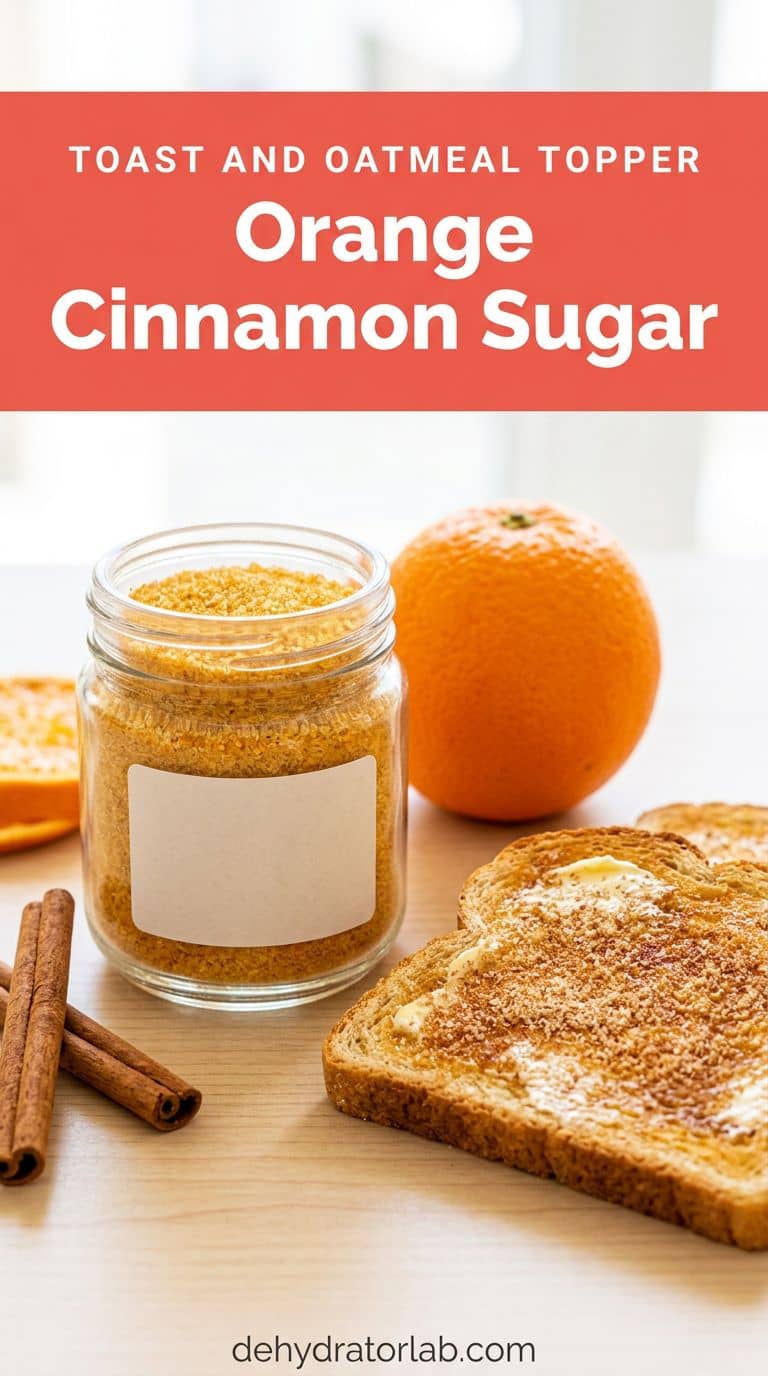
3. Orange Cinnamon Sugar (for Toast and Oatmeal)
Zest and sugar have always been friends. Dried orange zest rubbed into sugar with cinnamon makes a topping for buttered toast, oatmeal, and baked apples.
Dry grated orange zest the same way as the lime zest, thin and low, until it snaps. Then rub 1 tablespoon of it into 1/2 cup of sugar with 1 teaspoon of cinnamon. Use your fingers so the oils spread through the sugar. Those ratios are mine. Keep the zest completely dry, or the sugar turns into a brick in the jar.
For a plain lemon version, my lemon zest guide has a 1 to 2 zest-to-sugar blend. If you’d rather make candied peel, see my holiday treat recipes. Breakfast just got better.
4. All-Purpose Citrus Rub (for Chicken and Fish)
A citrus rub does the job of a squeeze of lemon without adding water. It browns well and clings to the meat, and it makes plain chicken taste planned.
Make orange or lemon peel powder as in item 1. Then mix 1 tablespoon of peel powder, 2 teaspoons paprika, 1 teaspoon garlic powder, 1 teaspoon black pepper, and 2 teaspoons salt. That blend is my own starting point, so taste and adjust. Pat the meat dry, rub it on, and cook as usual. Cook chicken to 165°F (74°C) and fish to 145°F (63°C), checked with a thermometer.
For more blends, my dehydrated seasoning recipes and onion, garlic, and shallot powders pair well with this one. Bright, not wet.

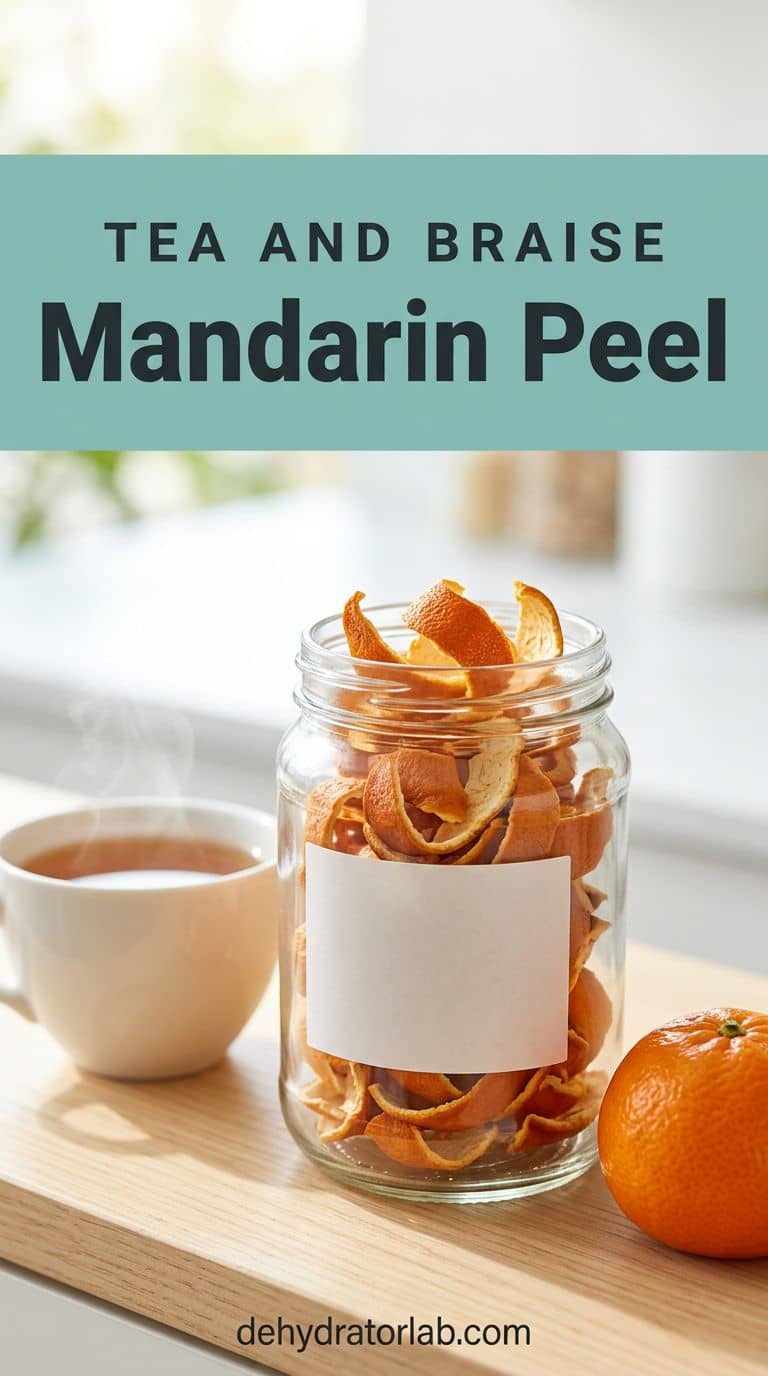
5. Mandarin Peel (for Tea and Slow Braises)
Mandarin and tangerine peels are thin and sweet-smelling, and they dry into curls that steep like tea. Colorado State lists tangerine peel among the citrus peels you can dry. Dried tangerine peel also goes into soups and slow braises in many kitchens.
Scrub the fruit, peel it in wide strips, and keep as little white pith as you can. Dry at 140°F (60°C) for 8 to 12 hours until crisp. Thin peel finishes early, so check it sooner than you think, since peel scorches near the end.
Steep 2 or 3 pieces in hot water for 5 to 10 minutes, or drop one into a pot of broth and fish it out before serving. Those are my own habits. My herbal tea blends and drink mix recipes show where peel fits in a cup. Sweet, not sharp.
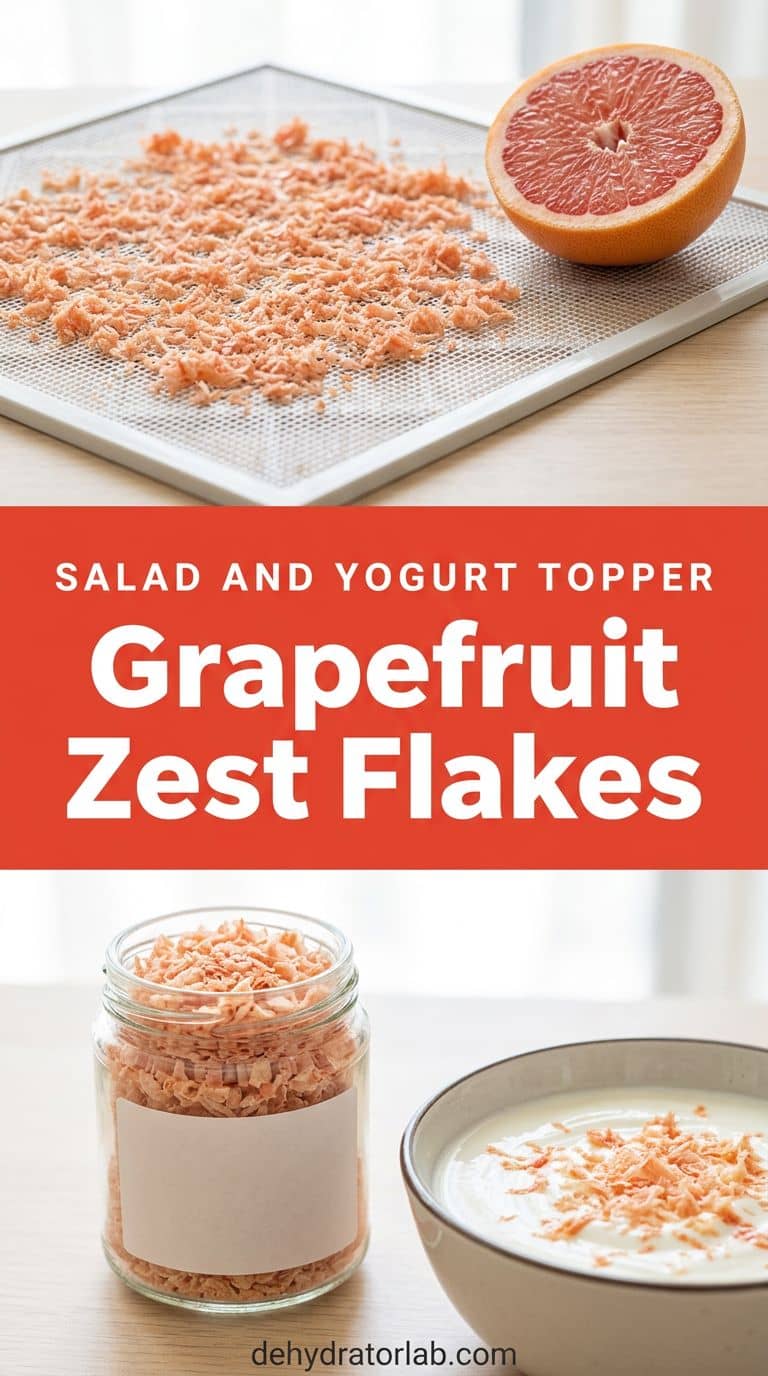
6. Grapefruit Zest Flakes (for Salads and Yogurt)
Grapefruit zest brings a bittersweet edge that orange can’t. Dried into flakes, it gives yogurt, avocado, and roasted beets a clean, grown-up finish.
Colorado State lists grapefruit peel among the peels you can dry. I stick to the zest, so I skip the bitter pith. Grate the colored layer and dry it at 95–105°F (35–40°C) for 2 to 4 hours, my own setting for fine zest. Tiny pieces slip through tray gaps, so a mesh silicone sheet helps. If a medication label warns against grapefruit, ask your pharmacist before using the peel too.
A little goes a long way, so start with a pinch. If you’d rather eat the fruit, my air fryer grapefruit slices are the quick route, and my citrus dehydrating guide covers the rest of the family. Bitter is the point.
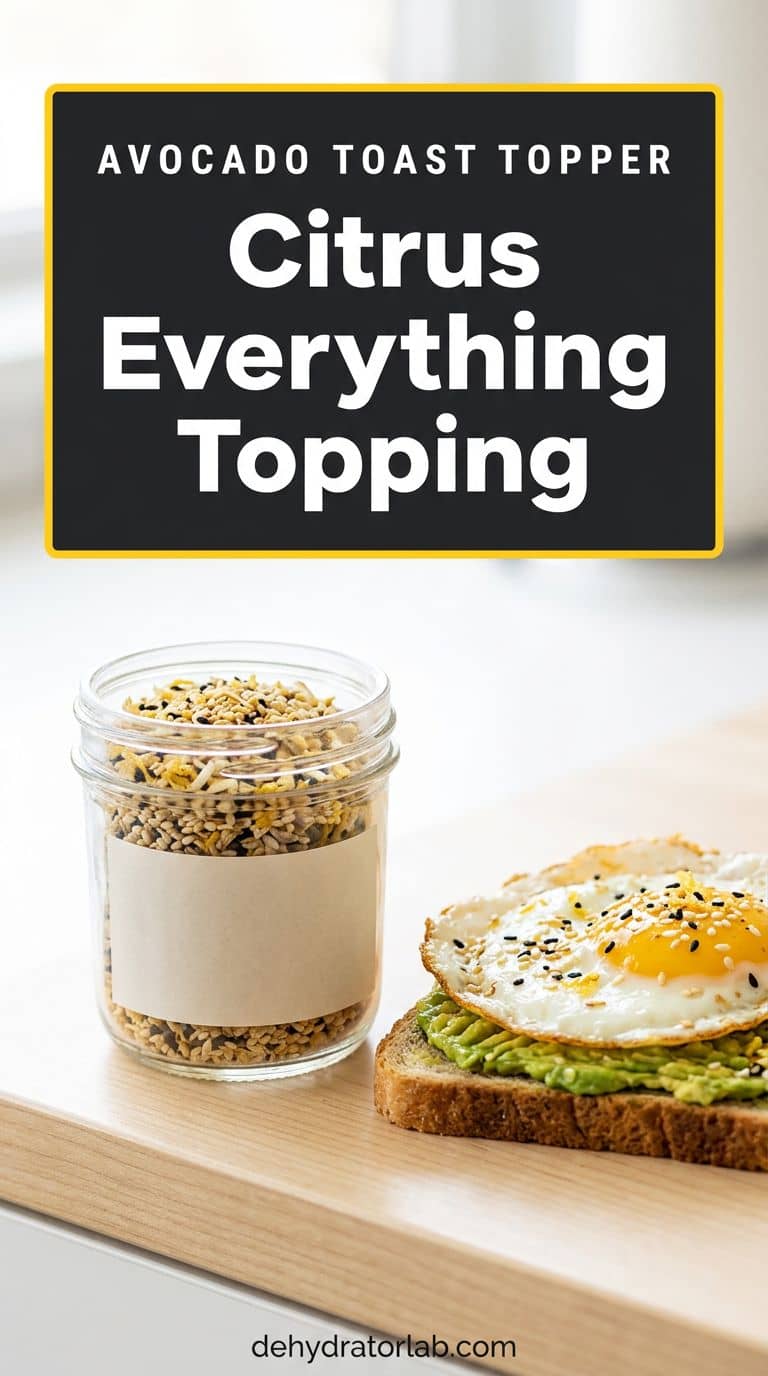
7. Citrus Everything Topping (for Avocado Toast and Eggs)
An everything-style topping gets a lift from dried lemon zest. It’s the sprinkle that makes avocado toast, fried eggs, and cottage cheese taste finished.
Dry lemon zest at 95–105°F (35–40°C) for 2 to 4 hours until it crumbles. Then mix 2 tablespoons sesame seeds, 1 tablespoon dried minced onion, 1 teaspoon garlic powder, 1 teaspoon dried lemon zest, and 1 teaspoon flaky salt. That recipe is my own, so tweak it freely. Shake the jar, and sprinkle on right before serving.
For the onion and garlic part, see my onion, garlic, and shallot powders. My leftover herb recipes add more ways to build a topping jar. Finish every plate.
Quick Reference: Citrus Recipes at a Glance
| Recipe | Peel or zest | Dry at | Best on |
|---|---|---|---|
| 1. Orange peel powder | Navel orange peel strips | 140°F (60°C), 8–12 hours | Baking, rubs |
| 2. Chili-lime salt | Lime zest | 95–105°F (35–40°C), 2–4 hours | Fruit, corn, rims |
| 3. Orange cinnamon sugar | Orange zest | 95–105°F (35–40°C), 2–4 hours | Toast, oatmeal |
| 4. Citrus rub | Orange or lemon peel powder | 140°F (60°C), 8–12 hours | Chicken, fish |
| 5. Mandarin peel | Mandarin or tangerine peel | 140°F (60°C), 8–12 hours | Tea, braises |
| 6. Grapefruit zest flakes | Grapefruit zest | 95–105°F (35–40°C), 2–4 hours | Salads, yogurt |
| 7. Citrus everything topping | Lemon zest | 95–105°F (35–40°C), 2–4 hours | Avocado toast, eggs |
The scrubbing step, the 1/16 to 1/8 inch peel depth, the 140°F (60°C) peel setting, the 8 to 12 hour time, the crisp test, and the 6 to 12 month storage window follow Colorado State Extension. The no-soap, brush-and-scrub washing advice follows UMN Extension.
The cooling advice follows NCHFP, which also says most dried fruits keep about 1 year at 60°F (16°C) and 6 months at 80°F (27°C). The lower setting for finely grated zest, every blend ratio, and every use amount are my own. A couple of my older posts list lower temperatures and shorter times for peel, and this one follows Colorado State for strips. Check how long dehydrated food lasts for storage by food type.
Personal Tips You Can Steal
I zest or peel before I juice, because a juiced lemon is slippery and hard to work. I scrub every fruit with a dedicated produce brush and dry it with a clean towel. I keep peel strips and fine zest on separate trays, since they finish hours apart.
I cool every batch completely before I grind or mix it. I store each jar in airtight glass jars away from the stove, and I label it with the recipe and the date. I grind and mix in small batches, so the aroma stays fresh.
Final Thoughts
You don’t need all seven. Start with orange peel powder, since it asks for nothing but a peeler and a patient dehydrator, then add the salts and sugars once the drying feels easy. If you want the whole-fruit side of citrus, my citrus dehydrating guide is the next stop.
Related reading: 6 dehydrated citrus recipes, dehydrated lemon zest, how to dehydrate orange slices, and how to make dehydrated limes.
P.S. Peel your next orange before you eat it, and put the strips on a tray. You’ll have a jar of powder before you finish the fruit bowl. 🙂