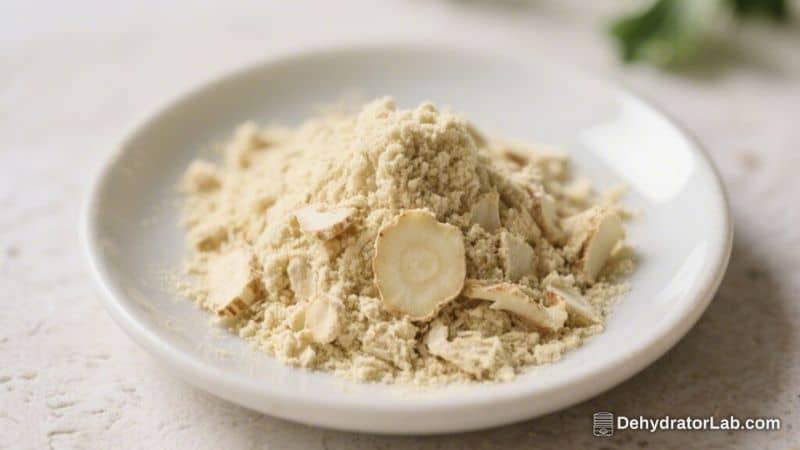
Horseradish doesn’t whisper. It clears the sinuses and wakes up bland dishes with a sharp, peppery bite. Turning it into a dry powder lets you keep that punch on hand, without the fuss of fresh roots.
This recipe is simple, practical, and perfect for anyone who loves concentrated flavor. You’ll get a clean, hot kick you can sprinkle into sauces, rubs, and dressings whenever you want. No special equipment beyond a dehydrator or oven, and the payoff is huge.
In this article:
Why This Recipe Works
Fresh horseradish root is powerful, but it spoils quickly.
Dehydrating locks in flavor and extends shelf life, giving you a ready-to-use seasoning that doesn’t need refrigeration. The powder format also blends smoothly into dry rubs and marinades, so you get consistent heat.
By peeling, grating, and drying the root at a low temperature, you preserve the compounds that make horseradish so spicy. A fine grind gives you control: a pinch adds a tingle, a teaspoon brings serious fire.
Finally, homemade powder beats many store-bought options.
You control the dry time, grind size, and quality of the root. No fillers, no mystery flavors—just pure heat.
Shopping List
- Fresh horseradish root (1–2 large roots, about 1–1.5 pounds total)
- Distilled white vinegar (optional, for stabilizing heat and color)
- Lemon juice (optional, helps with browning)
- Kosher salt (optional, for a seasoned blend)
Step-by-Step Instructions
- Choose good roots. Look for firm, heavy horseradish with smooth skin and no soft spots. Fresher roots mean stronger flavor.
- Prep your space. Work in a well-ventilated area.
Horseradish fumes can be intense—open a window, and consider wearing eye protection if you’re sensitive.
- Peel and trim. Use a vegetable peeler to remove the tough outer skin. Cut off dry or woody ends.
- Grate or slice thin. A box grater or food processor works well. Smaller pieces dry faster and more evenly.
Aim for fine shreds or very thin slices.
- Optional quick soak. Toss the grated horseradish with 1–2 tablespoons of vinegar and a squeeze of lemon juice per pound. This can help manage browning and slightly stabilize flavor. Drain well before drying.
- Load the dehydrator. Spread the horseradish in a thin, even layer on lined dehydrator trays.
Avoid clumps, which dry unevenly.
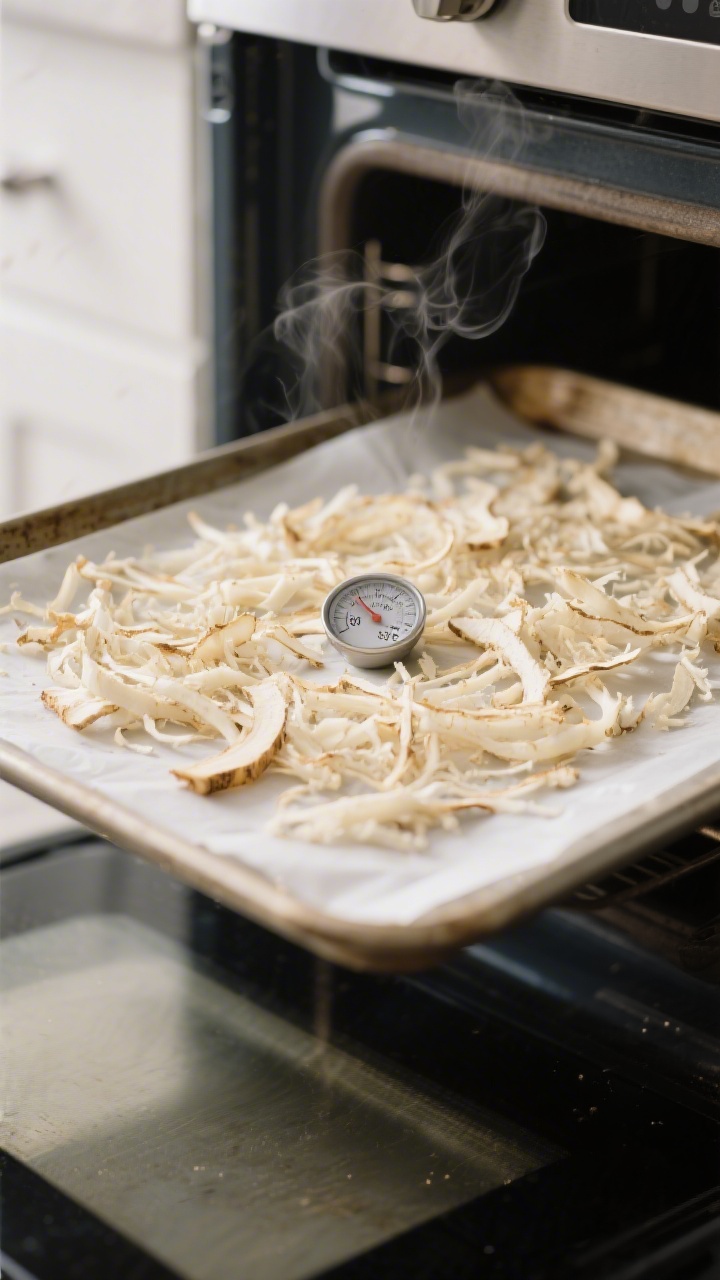
- Dehydrate low and slow. Set to 95–115°F (35–46°C). Dry for 6–10 hours, stirring once or twice. It’s done when completely brittle, not bendy.
- Oven method (if no dehydrator). Set the oven to its lowest temp (ideally 170–200°F/75–93°C).
Spread on parchment-lined sheets, prop the door open slightly for airflow, and dry for 2–4 hours, checking often.
- Cool completely. Let the dried horseradish sit at room temp for 15–20 minutes. Trapped heat can cause condensation in storage jars.
- Grind to powder. Use a spice grinder, coffee grinder dedicated to spices, or a high-speed blender. Work in short pulses until fine.
Sift and regrind larger bits if needed.
- Optional seasoning. For a ready-to-use blend, stir in a small amount of kosher salt (start with 1/4 teaspoon per tablespoon of powder). Keep some plain for recipes that already include salt.
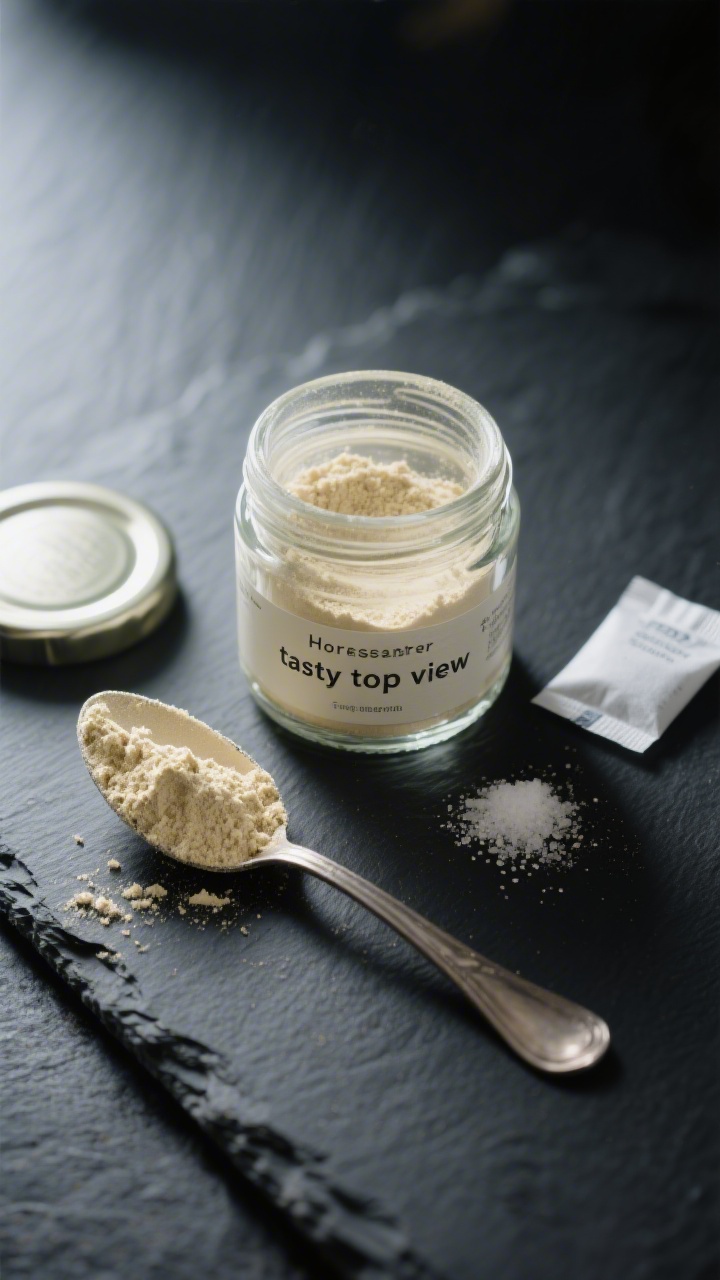
- Jar and label. Store in an airtight container, ideally a glass jar with a tight lid. Label with the date and note if salted.
Keeping It Fresh
Air and moisture are the enemies.
Use a clean, dry spoon every time, and close the jar quickly. For best results, add a food-safe desiccant packet to the jar to prevent clumping.
Keep the jar in a cool, dark place away from heat. The boldest flavor holds for about 6 months, though it remains usable for up to a year.
If the aroma fades, you can boost flavor by mixing the powder with a touch of fresh-grated horseradish in recipes.

Benefits of This Recipe
- Long shelf life: No need to keep fresh roots on hand.
- Consistent heat: A little gives you predictable punch in dry rubs and sauces.
- Less waste: Use every bit of the root, including odd-shaped pieces.
- Versatile: Mix into mayo, dressings, compound butter, or sprinkle on roasted veggies and meats.
- Budget-friendly: Buying whole roots is cheaper than small jars of specialty powders.
Pitfalls to Watch Out For
- Underdrying: If it bends instead of snaps, it will clump and spoil faster. Dry until brittle.
- High heat: Drying too hot can mute the heat. Keep temps low to preserve volatile compounds.
- Moisture in storage: Even a little steam in the jar causes caking.
Always cool before jarring.
- Cross-contamination: Coffee grinders pick up flavors. Use a dedicated spice grinder, or clean thoroughly between uses.
- Over-seasoning: If you salt the powder, remember to reduce salt elsewhere in the recipe.
Variations You Can Try
- Smoked horseradish powder: Cold-smoke the grated root for 30–60 minutes before drying, or blend finished powder with a touch of smoked salt.
- Lemon-pepper horseradish: Mix powder with finely ground lemon zest and black pepper for seafood rubs.
- Mustard-horseradish blend: Combine equal parts horseradish powder and ground mustard for a sharp, classic heat.
- Herb rub: Stir into dried dill, parsley, and garlic for a fast salmon or potato seasoning.
- Creamy dip starter: Blend powder with dried chives, onion powder, and a pinch of sugar; whisk into sour cream and mayo with a splash of vinegar.
FAQ
How spicy is dehydrated horseradish powder?
It’s assertive but manageable. Start small—1/4 teaspoon in dressings or sauces—and build to taste.
Heat intensity can vary based on the root’s freshness and drying temperature.
Can I use a food processor instead of a grater?
Yes. Use the shredding disk for even pieces. Smaller, uniform shreds dry more consistently and make a smoother powder once ground.
Do I have to add vinegar?
No.
Vinegar is optional and mainly helps with color and flavor stability. If you prefer a pure, neutral powder, skip it and dry promptly after grating.
What’s the best way to grind it finely?
A burr-style spice grinder or a small coffee grinder works best. Pulse in short bursts, shake between pulses, and sift to remove larger flakes for a silky powder.
How long does it last?
Flavor is strongest within 6 months.
Stored airtight and cool, it stays usable for up to a year. If the aroma fades, just use a bit more to reach the same heat.
Can I dehydrate in the microwave?
It’s not recommended. Microwaves heat unevenly and can scorch the horseradish, dulling the flavor and creating bitter notes.
What can I use it on?
Stir into mayo, aioli, or sour cream for a quick sauce.
Add to steak rubs, roasted vegetables, deviled eggs, Bloody Mary rims, and salad dressings. It’s great with beef, salmon, potatoes, and cabbage.
Is this the same as prepared horseradish?
No. Prepared horseradish is grated root mixed with vinegar and often salt or sugar, kept wet.
This recipe creates a dry seasoning that you can hydrate or blend into recipes as needed.
How do I turn the powder into a paste?
Mix the powder with a little cold water to form a thick paste, let it sit for 3–5 minutes to bloom, then add a splash of vinegar to lock in the heat. Adjust with salt or a pinch of sugar if you like.
Can I combine it with wasabi powder?
Sure. Many “wasabi” blends already use horseradish.
Mix to taste for sushi nights or noodle bowls, adjusting water as needed for texture.
Final Thoughts
Dehydrated horseradish powder is a small project with big payoff. It gives you sharp, clean heat in a form that’s easy to store, measure, and use. Keep a jar in your pantry and you’ll always have a quick way to wake up sauces, meats, and veggies.
Once you try it, you’ll wonder how you cooked without it.
Dehydrated Horseradish Powder – Bold, Shelf-Stable Heat for Your Kitchen
Ingredients
- Fresh horseradish root (1–2 large roots, about 1–1.5 pounds total)
- Distilled white vinegar (optional, for stabilizing heat and color)
- Lemon juice (optional, helps with browning)
- Kosher salt (optional, for a seasoned blend)
Instructions
- Choose good roots. Look for firm, heavy horseradish with smooth skin and no soft spots. Fresher roots mean stronger flavor.
- Prep your space. Work in a well-ventilated area.Horseradish fumes can be intense—open a window, and consider wearing eye protection if you’re sensitive.
- Peel and trim. Use a vegetable peeler to remove the tough outer skin. Cut off dry or woody ends.
- Grate or slice thin. A box grater or food processor works well. Smaller pieces dry faster and more evenly.Aim for fine shreds or very thin slices.
- Optional quick soak. Toss the grated horseradish with 1–2 tablespoons of vinegar and a squeeze of lemon juice per pound. This can help manage browning and slightly stabilize flavor. Drain well before drying.
- Load the dehydrator. Spread the horseradish in a thin, even layer on lined dehydrator trays.Avoid clumps, which dry unevenly.
- Dehydrate low and slow. Set to 95–115°F (35–46°C). Dry for 6–10 hours, stirring once or twice. It’s done when completely brittle, not bendy.
- Oven method (if no dehydrator). Set the oven to its lowest temp (ideally 170–200°F/75–93°C).Spread on parchment-lined sheets, prop the door open slightly for airflow, and dry for 2–4 hours, checking often.
- Cool completely. Let the dried horseradish sit at room temp for 15–20 minutes. Trapped heat can cause condensation in storage jars.
- Grind to powder. Use a spice grinder, coffee grinder dedicated to spices, or a high-speed blender. Work in short pulses until fine.Sift and regrind larger bits if needed.
- Optional seasoning. For a ready-to-use blend, stir in a small amount of kosher salt (start with 1/4 teaspoon per tablespoon of powder). Keep some plain for recipes that already include salt.
- Jar and label. Store in an airtight container, ideally a glass jar with a tight lid. Label with the date and note if salted.
Printable Recipe Card
Want just the essential recipe details without scrolling through the article? Get our printable recipe card with just the ingredients and instructions.