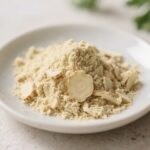
Dehydrated Horseradish Powder - Bold, Shelf-Stable Heat for Your Kitchen
Servings 24 servings
Ingredients
- Fresh horseradish root (1–2 large roots, about 1–1.5 pounds total)
- Distilled white vinegar (optional, for stabilizing heat and color)
- Lemon juice (optional, helps with browning)
- Kosher salt (optional, for a seasoned blend)
Instructions
- Choose good roots. Look for firm, heavy horseradish with smooth skin and no soft spots. Fresher roots mean stronger flavor.
- Prep your space. Work in a well-ventilated area. Horseradish fumes can be intense—open a window, and consider wearing eye protection if you’re sensitive.
- Peel and trim. Use a vegetable peeler to remove the tough outer skin. Cut off dry or woody ends.
- Grate or slice thin. A box grater or food processor works well. Smaller pieces dry faster and more evenly. Aim for fine shreds or very thin slices.
- Optional quick soak. Toss the grated horseradish with 1–2 tablespoons of vinegar and a squeeze of lemon juice per pound. This can help manage browning and slightly stabilize flavor. Drain well before drying.
- Load the dehydrator. Spread the horseradish in a thin, even layer on lined dehydrator trays. Avoid clumps, which dry unevenly.
- Dehydrate low and slow. Set to 95–115°F (35–46°C). Dry for 6–10 hours, stirring once or twice. It’s done when completely brittle, not bendy.
- Oven method (if no dehydrator). Set the oven to its lowest temp (ideally 170–200°F/75–93°C). Spread on parchment-lined sheets, prop the door open slightly for airflow, and dry for 2–4 hours, checking often.
- Cool completely. Let the dried horseradish sit at room temp for 15–20 minutes. Trapped heat can cause condensation in storage jars.
- Grind to powder. Use a spice grinder, coffee grinder dedicated to spices, or a high-speed blender. Work in short pulses until fine. Sift and regrind larger bits if needed.
- Optional seasoning. For a ready-to-use blend, stir in a small amount of kosher salt (start with 1/4 teaspoon per tablespoon of powder). Keep some plain for recipes that already include salt.
- Jar and label. Store in an airtight container, ideally a glass jar with a tight lid. Label with the date and note if salted.