
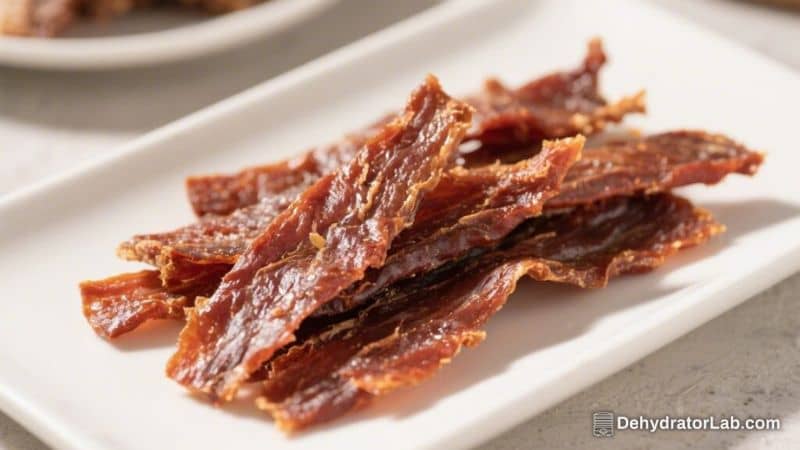
If you love jerky but want something richer and more gourmet, duck is a smart step up. The air fryer makes the whole process faster and cleaner than using an oven or dehydrator. You still get deep, savory flavor and a satisfyingly chewy texture, with less fuss and more control.
This is a great weekend project, and the results are perfect for snacking, hiking, or gifting. Once you try it, you’ll wonder why you ever stuck to beef.
In this article:
Why This Recipe Works
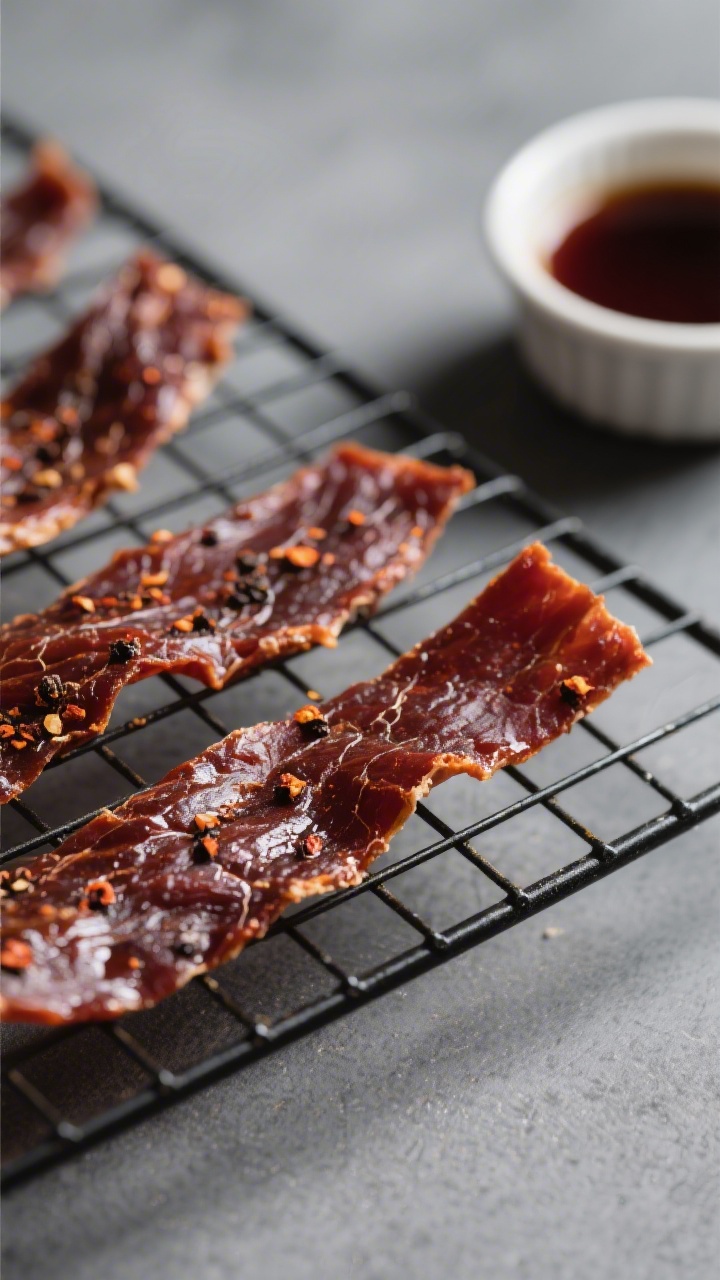
Duck breast has natural richness and a mild gamey note that takes well to bold marinades. The air fryer circulates hot air efficiently, which helps remove moisture while keeping the meat tender.
You get consistent results without hovering over a dehydrator for hours. Plus, you can scale this recipe for small or big batches. The marinade balances salt, sweet, and umami, so the flavor shines through without overpowering the duck.
Ingredients
- 2–3 duck breasts (skin removed; about 1 to 1.5 pounds total)
- 1/4 cup low-sodium soy sauce
- 1 tablespoon Worcestershire sauce
- 1 tablespoon honey (or maple syrup)
- 1 tablespoon brown sugar
- 1 teaspoon kosher salt (reduce if not using low-sodium soy)
- 1 teaspoon black pepper
- 1 teaspoon smoked paprika
- 1/2 teaspoon garlic powder
- 1/2 teaspoon onion powder
- 1/4 teaspoon cayenne pepper (optional, for heat)
- 1 tablespoon rice vinegar (or apple cider vinegar)
- 1 teaspoon liquid smoke (optional, for a smoky note)
- Oil spray (neutral, for the air fryer basket)
- Paper towels for patting dry
How to Make It
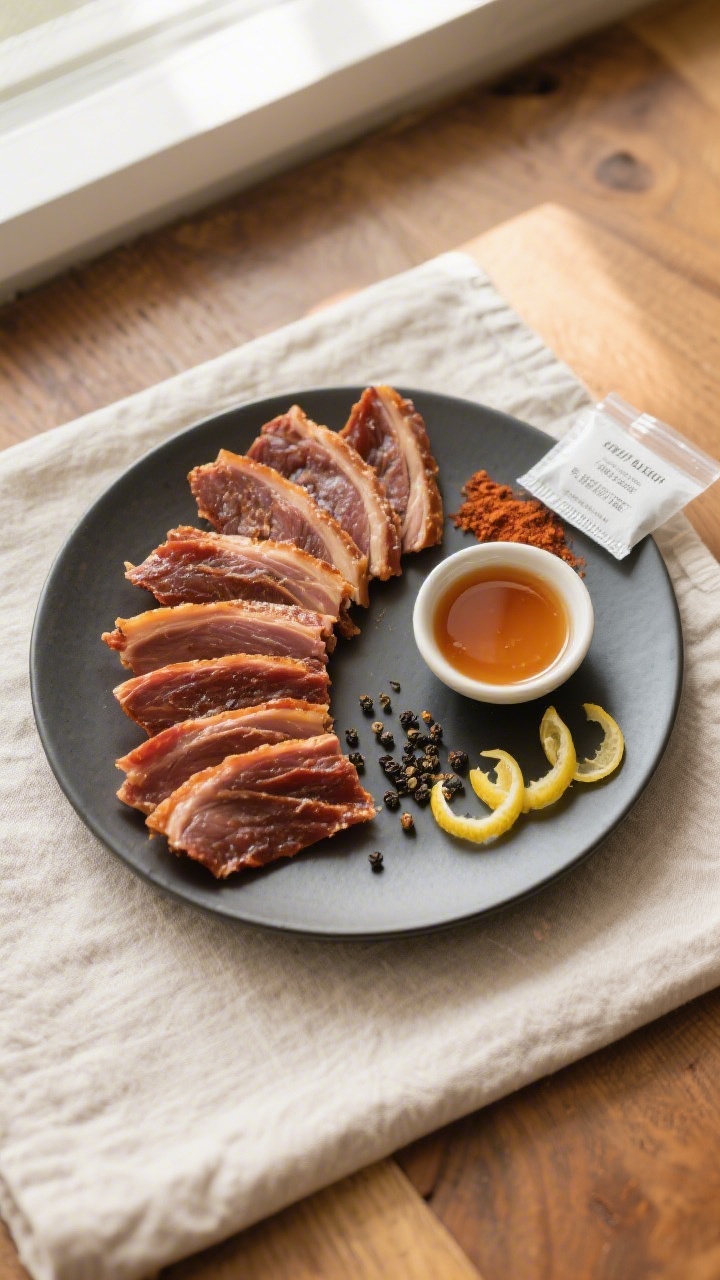
- Trim and prep the duck. Remove skin and excess fat from the duck breasts.
Place the breasts in the freezer for 20–30 minutes to firm up slightly—this makes slicing easier and cleaner.
- Slice thin and even. Using a sharp knife, slice the duck against the grain into 1/8 to 1/4-inch thick strips. Thinner strips dry faster and yield a chewier bite; thicker slices will be softer but take longer.
- Make the marinade. In a bowl, whisk soy sauce, Worcestershire, honey, brown sugar, salt, pepper, smoked paprika, garlic powder, onion powder, cayenne, vinegar, and liquid smoke.
- Marinate thoroughly. Add duck strips to a zip-top bag or container and pour in the marinade. Press out air, seal, and refrigerate for 8–12 hours, turning once or twice to coat evenly.
- Dry before air frying. Drain the marinade and pat the strips dry with paper towels.
Removing surface moisture helps the jerky dry faster and prevents steaming.
- Preheat and prep the basket. Preheat the air fryer to 180–200°F (82–93°C) if your model allows low-temp settings. Lightly spray the basket or racks with oil to prevent sticking.
- Arrange in a single layer. Lay the duck strips in one even layer with a little space between each piece. Use racks if you have them.
Crowding will slow drying and lead to uneven texture.
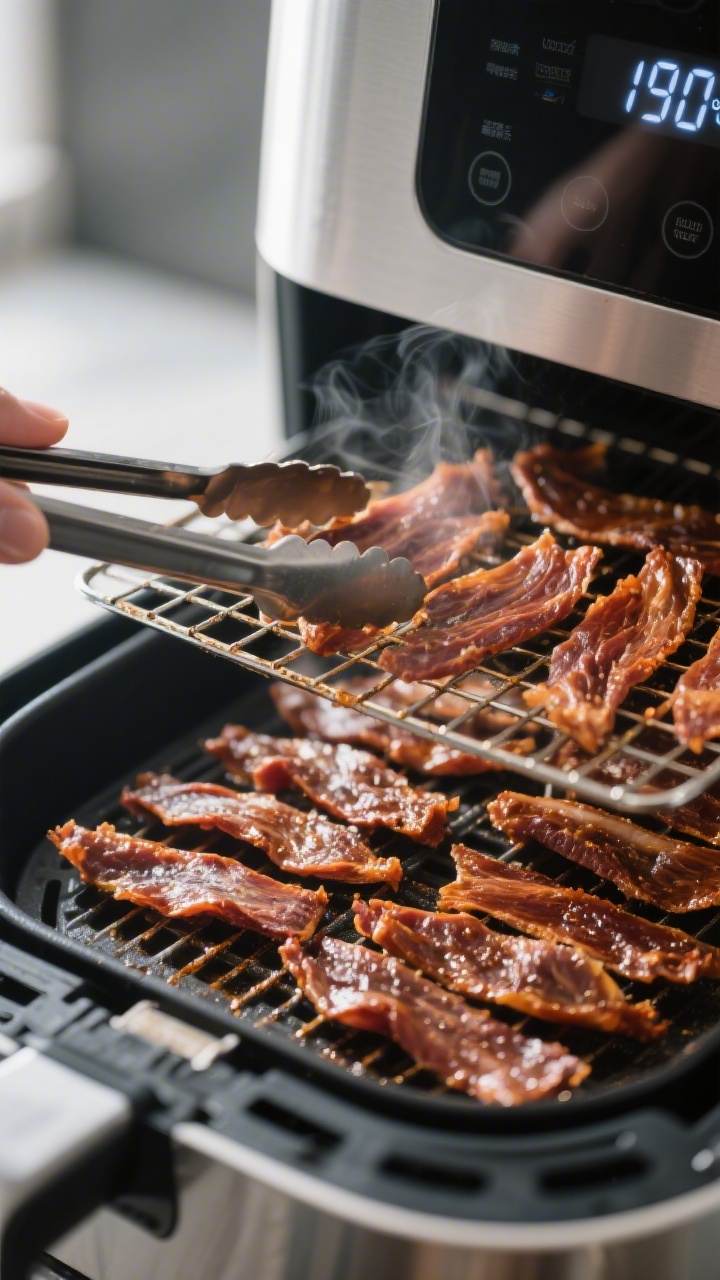
- Air fry low and slow. Cook at 180–200°F for 2–3 hours. Flip strips every 30–45 minutes and rotate racks if needed. If your air fryer’s lowest temp is higher, use 200–210°F and start checking at the 90-minute mark.
- Check doneness. The jerky is ready when it’s dry to the touch, darkened, and bends with a slight crack but doesn’t snap.
If it feels wet or spongy, continue in 15-minute increments.
- Cool and condition. Let jerky cool completely on a wire rack. For best texture, “condition” it by placing cooled jerky in a loosely covered container for 24 hours, shaking once or twice. This equalizes any remaining moisture.
Keeping It Fresh
Proper storage is key to safe, tasty jerky.
After conditioning, store in an airtight container or zip-top bag. Keep it at room temperature for up to 1 week, in the fridge for 2–3 weeks, or in the freezer for up to 3 months. For longer room-temperature storage, add a food-grade desiccant pack.
Always check for off smells, mold, or unusual softness before eating.
Benefits of This Recipe
- Faster than oven or dehydrator: The air fryer speeds up drying while staying energy-efficient.
- High protein, portable snack: Perfect for road trips, hiking, or busy days.
- Rich, gourmet flavor: Duck brings a buttery depth that stands out from standard beef jerky.
- Customizable: Adjust salt, spice, and sweetness to match your taste or dietary needs.
- Less mess: Minimal cleanup compared to oven racks or full-size dehydrators.
What Not to Do
- Don’t skip patting dry. Excess surface moisture slows drying and can cause steaming.
- Don’t crowd the basket. Overlapping strips trap moisture and lead to uneven results.
- Don’t blast it at high heat. High temps cook instead of dehydrate, making the jerky tough outside and soft inside.
- Don’t under-salt completely. Salt is part of the preservation. You can use low-sodium soy, but keep a baseline amount.
- Don’t store while warm. Trapped steam encourages condensation and spoilage.
Alternatives
- Flavor swaps: Try teriyaki (soy, mirin, ginger), black pepper maple, Korean gochujang, or chili-lime with coriander.
- Sweeteners: Use maple syrup, agave, or molasses instead of honey and brown sugar.
- Acids: Swap rice vinegar for apple cider vinegar or lemon juice for a brighter finish.
- Heat options: Replace cayenne with red pepper flakes, chipotle powder, or a touch of hot sauce.
- Cuts of duck: If you can’t find duck breast, use skinless thighs. Trim well and slice thin; expect slightly longer drying time.
- No liquid smoke: Add smoked paprika or a splash of strong brewed lapsang souchong tea for a natural smoky note.
FAQ
Do I need curing salt for duck jerky?
No, not for short-term storage.
This recipe relies on salt, sugar, and thorough drying. If you plan to store at room temperature for longer than a week, or want an added safety margin, you can add a small amount of Prague Powder #1 according to the package directions.
What temperature should I aim for if my air fryer doesn’t go below 200°F?
Use 200–210°F and start checking after 90 minutes. Flip and rotate often.
Drying may finish faster, so watch closely to avoid over-drying or cooking the meat.
How thin should I slice the duck?
Slice between 1/8 and 1/4 inch. Thinner slices dry quickly and are chewier; thicker slices stay meatier but need more time. Keep your slices consistent for even drying.
How can I tell when the jerky is done?
It should be dry and firm, with a deep color.
Bend a strip: it should flex and show small cracks but not break cleanly. If it’s still spongy or damp, continue drying in short bursts.
Can I make this recipe with other meats?
Yes. Turkey breast, goose, or lean beef work well.
Adjust drying time based on thickness and fat content, and keep the same marinade as a starting point.
Is duck jerky greasy?
It shouldn’t be if you remove the skin and excess fat and slice lean sections. Patting the meat dry and using a drip tray or rack helps reduce residual oil.
Can I reduce the sodium?
Use low-sodium soy sauce and reduce added salt by half. Keep some salt for preservation and flavor.
You can also add more vinegar, spices, or herbs to boost taste without extra sodium.
How long does it take from start to finish?
Active prep is 20–30 minutes, marinating is 8–12 hours, and drying is 2–3 hours. Plan on starting the day before you want to eat it.
Do I need to “condition” the jerky?
It’s optional but recommended. Conditioning balances residual moisture, which improves texture and helps with storage consistency, especially for thicker pieces.
What if my jerky turns out too dry?
Next time, slice slightly thicker or shorten the drying time.
You can also rehydrate slightly by sealing the jerky with a slice of fresh apple for a few hours, then remove the apple and store as usual.
Final Thoughts
Air Fryer Duck Jerky is a simple way to turn a premium protein into a bold, portable snack. With a smart marinade and low, steady heat, you get rich flavor and a clean, satisfying chew. Keep the slices even, be patient with the drying, and store it well.
Once you have the basics down, play with spices and sweetness to make it your own. This is one of those recipes that feels special but fits neatly into real-life routines.
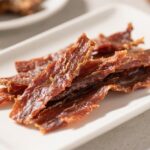
Air Fryer Duck Jerky – Tender, Savory, and Surprisingly Simple
Ingredients
- 2–3 duck breasts (skin removed; about 1 to 1.5 pounds total)
- 1/4 cup low-sodium soy sauce
- 1 tablespoon Worcestershire sauce
- 1 tablespoon honey (or maple syrup)
- 1 tablespoon brown sugar
- 1 teaspoon kosher salt (reduce if not using low-sodium soy)
- 1 teaspoon black pepper
- 1 teaspoon smoked paprika
- 1/2 teaspoon garlic powder
- 1/2 teaspoon onion powder
- 1/4 teaspoon cayenne pepper (optional, for heat)
- 1 tablespoon rice vinegar (or apple cider vinegar)
- 1 teaspoon liquid smoke (optional, for a smoky note)
- Oil spray (neutral, for the air fryer basket)
- Paper towels for patting dry
Instructions
- Trim and prep the duck. Remove skin and excess fat from the duck breasts.Place the breasts in the freezer for 20–30 minutes to firm up slightly—this makes slicing easier and cleaner.
- Slice thin and even. Using a sharp knife, slice the duck against the grain into 1/8 to 1/4-inch thick strips. Thinner strips dry faster and yield a chewier bite; thicker slices will be softer but take longer.
- Make the marinade. In a bowl, whisk soy sauce, Worcestershire, honey, brown sugar, salt, pepper, smoked paprika, garlic powder, onion powder, cayenne, vinegar, and liquid smoke.
- Marinate thoroughly. Add duck strips to a zip-top bag or container and pour in the marinade. Press out air, seal, and refrigerate for 8–12 hours, turning once or twice to coat evenly.
- Dry before air frying. Drain the marinade and pat the strips dry with paper towels.Removing surface moisture helps the jerky dry faster and prevents steaming.
- Preheat and prep the basket. Preheat the air fryer to 180–200°F (82–93°C) if your model allows low-temp settings. Lightly spray the basket or racks with oil to prevent sticking.
- Arrange in a single layer. Lay the duck strips in one even layer with a little space between each piece. Use racks if you have them.Crowding will slow drying and lead to uneven texture.
- Air fry low and slow. Cook at 180–200°F for 2–3 hours. Flip strips every 30–45 minutes and rotate racks if needed. If your air fryer’s lowest temp is higher, use 200–210°F and start checking at the 90-minute mark.
- Check doneness. The jerky is ready when it’s dry to the touch, darkened, and bends with a slight crack but doesn’t snap.If it feels wet or spongy, continue in 15-minute increments.
- Cool and condition. Let jerky cool completely on a wire rack. For best texture, “condition” it by placing cooled jerky in a loosely covered container for 24 hours, shaking once or twice. This equalizes any remaining moisture.
Printable Recipe Card
Want just the essential recipe details without scrolling through the article? Get our printable recipe card with just the ingredients and instructions.