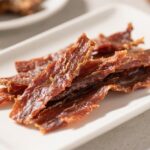
Air Fryer Duck Jerky – Tender, Savory, and Surprisingly Simple
Servings 6 servings
Ingredients
- 2–3 duck breasts (skin removed; about 1 to 1.5 pounds total)
- 1/4 cup low-sodium soy sauce
- 1 tablespoon Worcestershire sauce
- 1 tablespoon honey (or maple syrup)
- 1 tablespoon brown sugar
- 1 teaspoon kosher salt (reduce if not using low-sodium soy)
- 1 teaspoon black pepper
- 1 teaspoon smoked paprika
- 1/2 teaspoon garlic powder
- 1/2 teaspoon onion powder
- 1/4 teaspoon cayenne pepper (optional, for heat)
- 1 tablespoon rice vinegar (or apple cider vinegar)
- 1 teaspoon liquid smoke (optional, for a smoky note)
- Oil spray (neutral, for the air fryer basket)
- Paper towels for patting dry
Instructions
- Trim and prep the duck. Remove skin and excess fat from the duck breasts. Place the breasts in the freezer for 20–30 minutes to firm up slightly—this makes slicing easier and cleaner.
- Slice thin and even. Using a sharp knife, slice the duck against the grain into 1/8 to 1/4-inch thick strips. Thinner strips dry faster and yield a chewier bite; thicker slices will be softer but take longer.
- Make the marinade. In a bowl, whisk soy sauce, Worcestershire, honey, brown sugar, salt, pepper, smoked paprika, garlic powder, onion powder, cayenne, vinegar, and liquid smoke.
- Marinate thoroughly. Add duck strips to a zip-top bag or container and pour in the marinade. Press out air, seal, and refrigerate for 8–12 hours, turning once or twice to coat evenly.
- Dry before air frying. Drain the marinade and pat the strips dry with paper towels. Removing surface moisture helps the jerky dry faster and prevents steaming.
- Preheat and prep the basket. Preheat the air fryer to 180–200°F (82–93°C) if your model allows low-temp settings. Lightly spray the basket or racks with oil to prevent sticking.
- Arrange in a single layer. Lay the duck strips in one even layer with a little space between each piece. Use racks if you have them. Crowding will slow drying and lead to uneven texture.
- Air fry low and slow. Cook at 180–200°F for 2–3 hours. Flip strips every 30–45 minutes and rotate racks if needed. If your air fryer’s lowest temp is higher, use 200–210°F and start checking at the 90-minute mark.
- Check doneness. The jerky is ready when it’s dry to the touch, darkened, and bends with a slight crack but doesn’t snap. If it feels wet or spongy, continue in 15-minute increments.
- Cool and condition. Let jerky cool completely on a wire rack. For best texture, “condition” it by placing cooled jerky in a loosely covered container for 24 hours, shaking once or twice. This equalizes any remaining moisture.