Open your spice rack and check the date on the garlic powder. Go ahead, I’ll wait.
Most of us are sprinkling flavor that’s been sitting in a jar for a year or more. With a dehydrator and a spice grinder, you can make onion, garlic, and shallot powders that smell like the real thing. Here are six recipes worth a spot on your spice rack.

As an Amazon Associate, I earn from qualifying purchases. If you make a purchase after clicking on a link I may earn a small commission at no extra cost to you if items are purchased.
In this article:
TL;DR: Key Takeaways
- 🧅 Six spice rack recipes: classic onion, toasted onion, garlic, roasted garlic, shallot, and an all-in-one blend.
- 📏 Slice onions and shallots 1/8 to 1/4 inch (3–6 mm) thick, and chop garlic fine or slice it very thin.
- 🌡️ Dry at 125–135°F (52–57°C) until the pieces snap cleanly after cooling.
- 👃 Run the dehydrator outside or in the garage, because alliums smell strong.
- ❄️ Cool everything completely before you grind, or the powder clumps.
- 🏷️ Label jars with the date and use the powder within a few months for the best flavor.
Every recipe below starts the same way. Onions, shallots, and garlic need no blanching, and you dry them until they’re brittle. Clemson Extension lists 1/8 to 1/4 inch slices for onions and finely chopped garlic, and it advises against drying them indoors because of the smell. A covered porch or garage works well.
I already have full step-by-step guides for each one: how to dehydrate onions, how to dehydrate garlic, and dehydrated shallot powder. So here I focus on the spice rack angle: what each powder does best, how to vary it, and how to blend it. A good grinder helps, and it’s worth keeping one for spices only, because garlic perfumes everything.

- Electric spice-and-nut grinder with durable stainless-steel blades
- Heavy-duty motor; push-top lid for simple on/off control
- Bowl holds 90 grams; extra storage space in lid; non-slip rubber feet
1. Classic Onion Powder
This is the workhorse. Yellow onions give you a balanced, savory flavor that disappears into soups, rubs, dips, and burger mixes. Peel them, trim the ends, and slice 1/8 to 1/4 inch (3–6 mm) thick, then separate the rings so air reaches every piece.
Dry at 125–135°F (52–57°C) until the slices snap and crumble after cooling. Clemson Extension lists 3 to 9 hours, while at my temps I usually need closer to 8 to 12, so go by the snap and not the clock. Bendable pieces still hold moisture, and moisture means clumps.
- Slice evenly so everything finishes together.
- Cool a test piece for a minute, then snap it.
- Grind in short pulses and sift out the coarse bits.
Start with about 1 teaspoon of powder per cup of soup or sauce and adjust from there. Brittle, then grind.

2. Toasted Onion Powder
Toasting turns plain onion powder into something deeper and almost caramelized, which is great in burger blends, dips, and dry rubs. This one is my own trick, so treat the times as a starting point. Start with fully dried, brittle onion slices.
Spread the dry slices on a sheet pan and toast them in a 275°F (135°C) oven for 5 to 10 minutes, stirring once or twice. Pull them the second they smell nutty and look light golden, because onion goes from toasty to bitter in a hurry. Cool completely, then grind.
Keep a jar of this next to the plain stuff. Plain onion powder works in soups, while the toasted version shines in anything that wants a savory, grilled note. My dehydrated seasoning recipes are a great place to use it. Golden, not brown.

3. Garlic Powder & Granulated Garlic
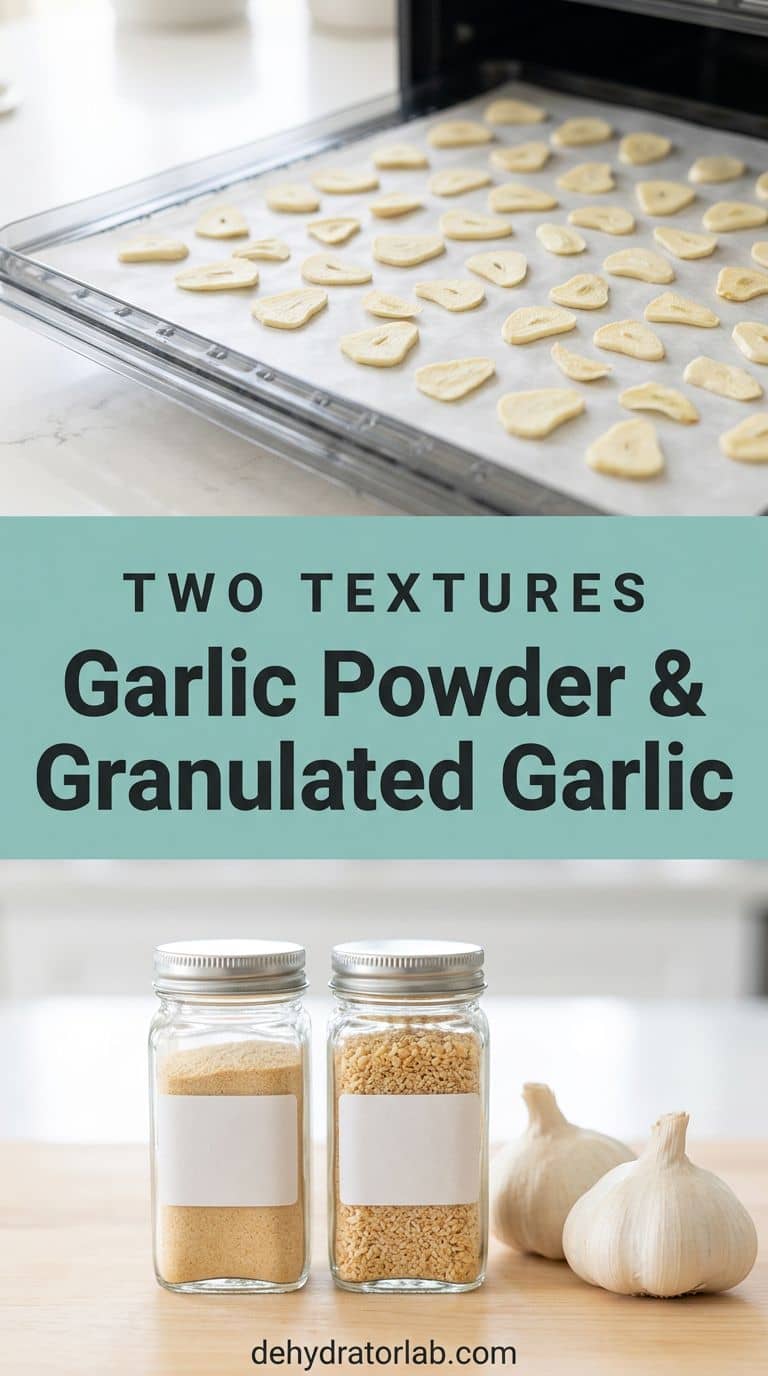
One batch of garlic gives you two textures. Fine powder dissolves into dressings, marinades, and rubs. Granulated garlic is coarser, pops on roasted potatoes, and doesn’t clump as easily in a seasoning jar.
Peel the cloves, remove any green sprouts, and either finely chop them or slice them very thin. Clemson Extension lists 6 to 8 hours for finely chopped garlic, and my garlic guide dries at 125°F (52°C) for 6 to 12 hours. Tiny pieces fall through mesh trays, so line them with silicone dehydrator sheets.
To grind, pulse the dried garlic briefly and sift. What stays on the sieve is your granulated garlic. Grind the rest finer for powder, and keep dried garlic out of oil, since garlic in oil at room temperature is a botulism risk. One batch, two textures.
4. Roasted Garlic Powder
Roasted garlic is mellow, sweet, and nothing like the sharp raw kind. Turning it into powder gives you that flavor on demand, which is why it shows up in my broth ingredients list too. This is my own method, so treat the times as estimates.
Wrap whole heads in foil with no oil, and roast at 400°F (205°C) for 35 to 45 minutes until the cloves are soft. Squeeze them out, mash them, and spread the paste about 1/8 inch (3 mm) thick on a solid dehydrator sheet. Dry at 125–135°F (52–57°C) until the sheet turns brittle, roughly 6 to 10 hours. Then break it up and grind.
Roasted garlic is a moist, low-acid food, so move it from the oven to the dehydrator the same day and never store it in oil. Roast, mash, dry, same day.

5. Shallot Powder
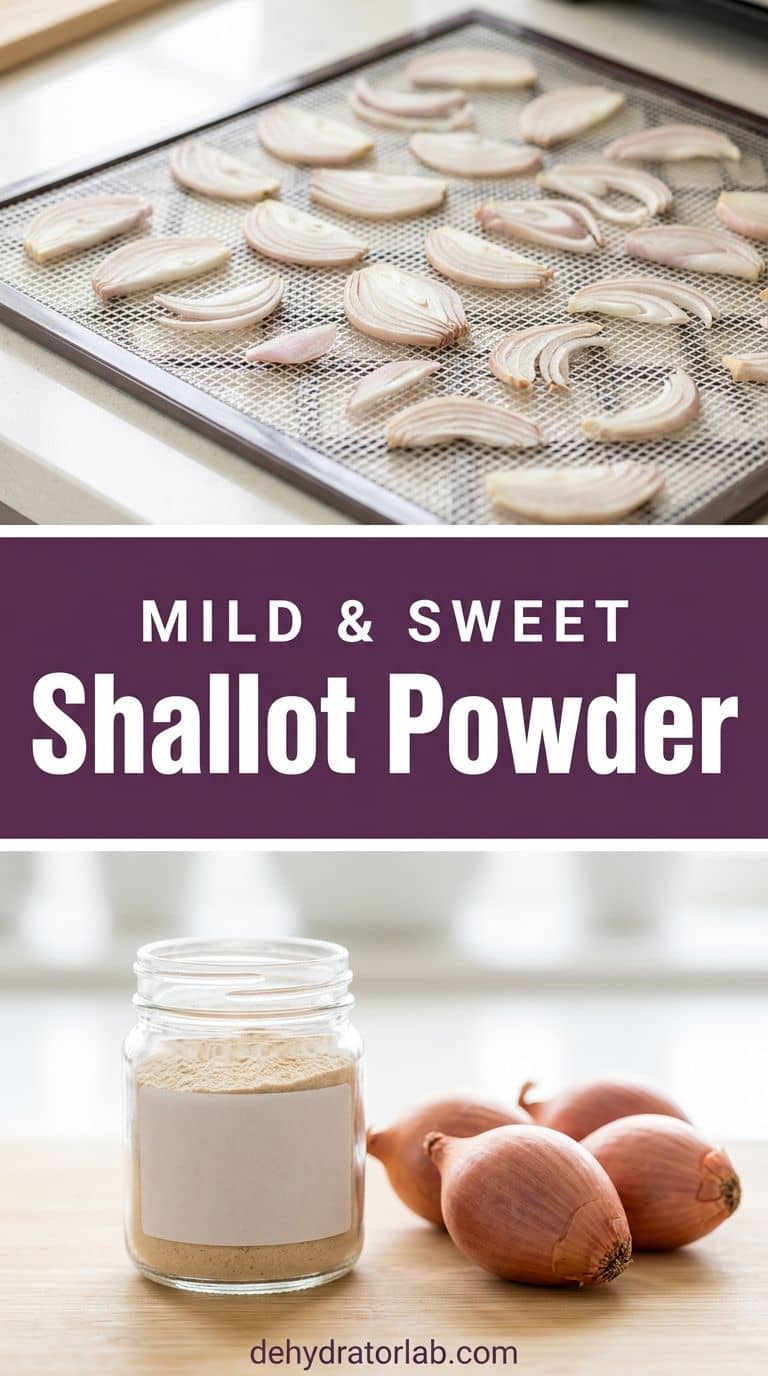
Shallot powder is milder and sweeter than onion powder, with a soft, almost floral note. It’s the secret in vinaigrettes, cream sauces, and compound butter. My full shallot powder recipe has every step, so here’s the quick version.
Slice shallots about 1/8 inch (3 mm) thick, keep the slices even, and dry at 125–135°F (52–57°C) for 6 to 10 hours. Shallots carry more moisture than yellow onions, so uneven slices mean some finish long before others. About 1 teaspoon of powder stands in for one small shallot.
Stir it into a dressing, a pan sauce, or softened butter for an easy upgrade. It also appears in my vegetable powder roundup. Quietly sweeter.
6. The Allium Trio Blend
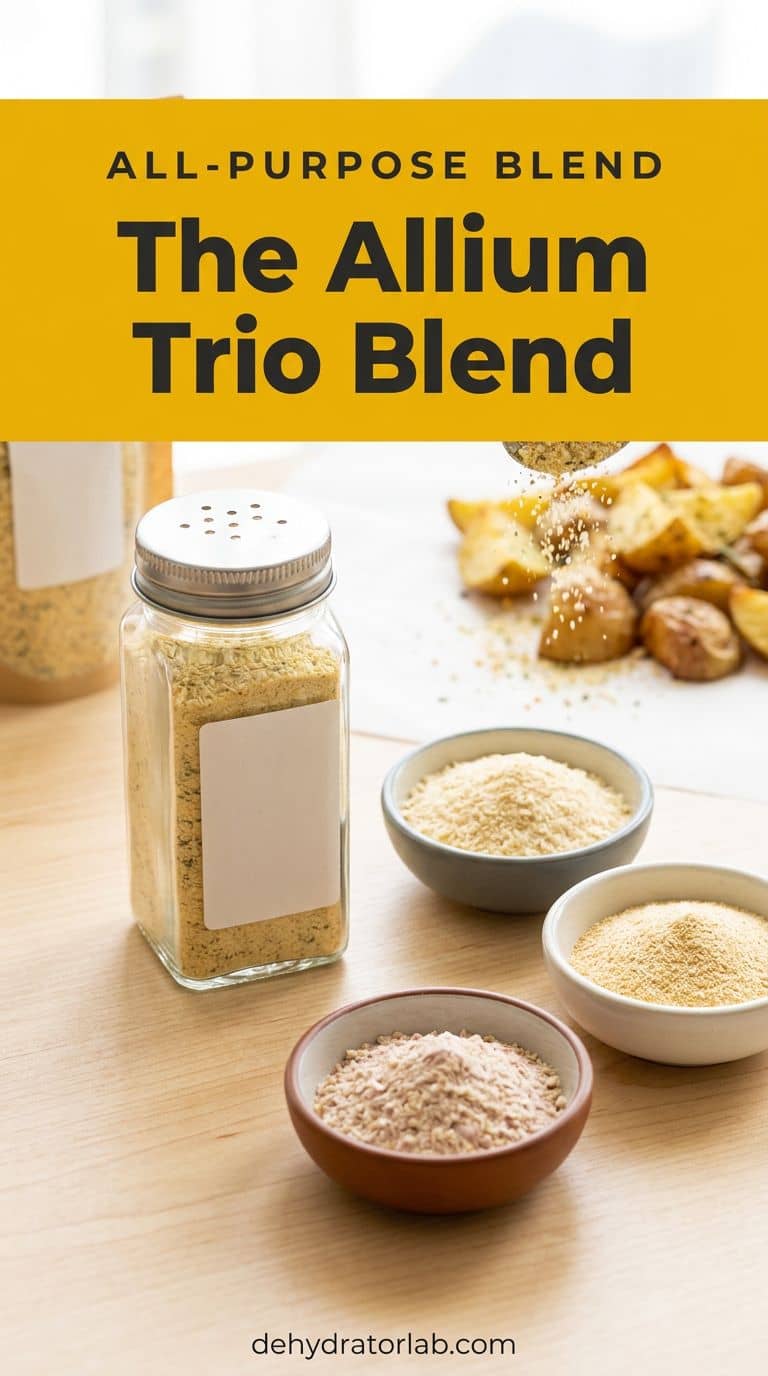
Once you have three jars, the last recipe is the one you’ll use most. It’s an all-purpose seasoning that works on eggs, roasted vegetables, chicken, and popcorn. Mix 2 parts onion powder, 1 part garlic powder, and 1 part shallot powder, and shake it well.
For a salted version, stir in 1 part fine salt for every 3 parts of the blend. Keep an unsalted jar too, so you can control the salt in soups and sauces. The shallot rounds out the sharp edges of the other two, and the blend tastes more complex than either on its own.
- Add smoked paprika for grilled meats.
- Add dried thyme or chives for a French-style mix.
- Mix small batches so the jar stays fresh.
For more blends, see my dehydrated herb blends. Label each jar with the date. Three jars, one blend.
Quick Reference: Allium Powder Settings
| Recipe | Cut | Temp | Time | Done when |
|---|---|---|---|---|
| Classic onion powder | 1/8–1/4 inch (3–6 mm) slices | 125–135°F (52–57°C) | 8–12 hours | Snaps and crumbles |
| Toasted onion powder | Dry slices, then toast | 275°F (135°C) oven | 5–10 minutes | Light golden, nutty |
| Garlic powder | Finely chopped or thin slices | 125°F (52°C) | 6–12 hours | Clean snap |
| Roasted garlic powder | Roasted paste, 1/8 inch (3 mm) | 125–135°F (52–57°C) | 6–10 hours | Brittle sheet |
| Shallot powder | 1/8 inch (3 mm) slices | 125–135°F (52–57°C) | 6–10 hours | Snaps cleanly |
| Allium trio blend | 2 onion : 1 garlic : 1 shallot | No drying needed | Mix and shake | Evenly blended |
Times are ranges. Slice thickness, humidity, and tray load always change the clock.
Personal Tips You Can Steal
I run allium batches in the garage, because the smell takes over a kitchen fast. I keep one grinder just for spices, since garlic flavor never fully leaves. I let everything cool completely before I grind, because Clemson Extension warns that packaging warm food causes sweating.
I grind in small batches and sift, then re-grind the coarse bits. I store powders in amber jars away from the stove and add a packet from my moisture absorbers vs oxygen absorbers guide if humidity runs high. Clemson says dried vegetables keep about six months at 60°F, so I only grind what I’ll use in a few months.
Final Thoughts
A shelf of homemade allium powders is one of the best upgrades a spice rack can get. Start with the classic onion, add garlic, and then branch out into the toasted and roasted versions once you’ve got the snap test down.
Related reading: 8 homemade vegetable powder recipes, 9 dehydrated seasoning recipes, and 7 homemade dehydrated herb blends.
P.S. Open the windows before you start. Your neighbors will smell dinner hours early. 🙂