
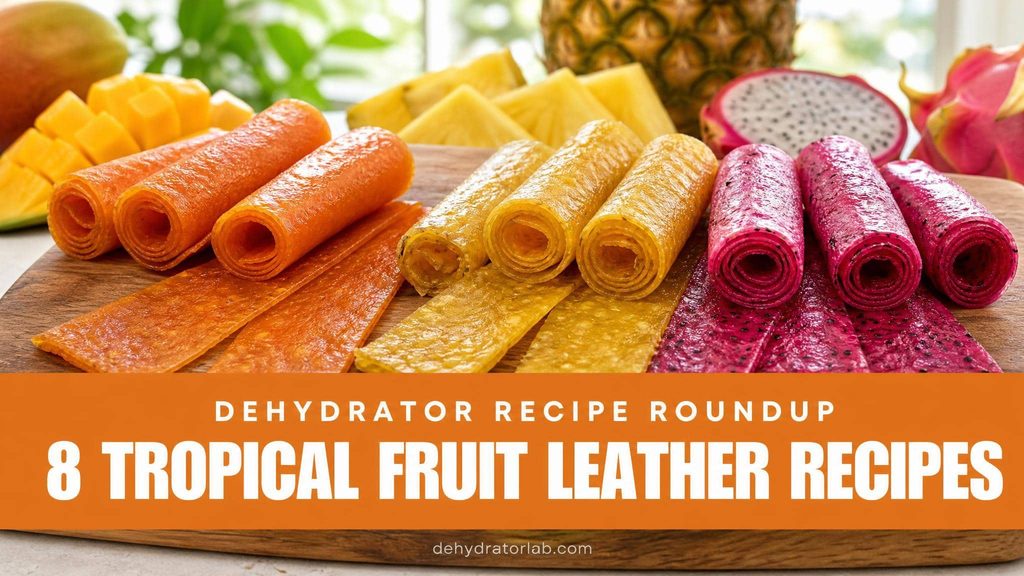
Ever bite into a store-bought fruit roll-up and wonder why it tastes like sugar with a rumor of fruit in it? Real fruit leather is just fruit — blended, spread thin, and dried until it turns into something chewy enough to fold in your pocket.
Tropical fruit takes this further than apples or berries ever could. Mango, pineapple, guava, dragon fruit — these purees dry into leather with a flavor that tastes like it should be more expensive than it is. Let’s turn your dehydrator into a tropical fruit roll-up machine.
As an Amazon Associate, I earn from qualifying purchases. If you make a purchase after clicking on a link I may earn a small commission at no extra cost to you if items are purchased.
In this article:
TL;DR: Key Takeaways
- 🥭 Eight tropical purees turn into chewy, portable leather — no added preservatives
- 🌶️ From classic mango to a spicy mango-habanero twist, there’s a heat level for everyone
- 🐉 Dragon fruit and kiwi make the most Pinterest-worthy two-tone leather on this list
- 🌿 Even savory-leaning jackfruit turns into a surprisingly good sweet leather
- 💧 A splash of lime or lemon keeps pale purees from browning
- 🌡️ Every recipe follows the same base method — one temperature range works for all eight
- ✅ All you need is a dehydrator and a blender
Before you start: every recipe below shares the same base method. Puree the fruit, spread it about 1/8 inch thick on a lined tray, and dry at 135–145°F (57–63°C) — the National Center for Home Food Preservation’s official guidance lands right at 140°F (60°C) for 6–8 hours, though tropical purees with more fiber or sugar can run longer.
For pale fruits like papaya or banana, a splash of lime or lemon juice keeps the color from browning as it dries. Done means the center doesn’t leave an indentation when you press it, and it peels cleanly off the liner. Whether that peel comes away in one piece depends largely on the sheets you have, which is the angle I used when ranking which dehydrator suits fruit leather. A set of silicone dehydrator sheets makes the whole process easier — sticky purees release clean instead of fusing to your trays.
1. Classic Mango Fruit Leather
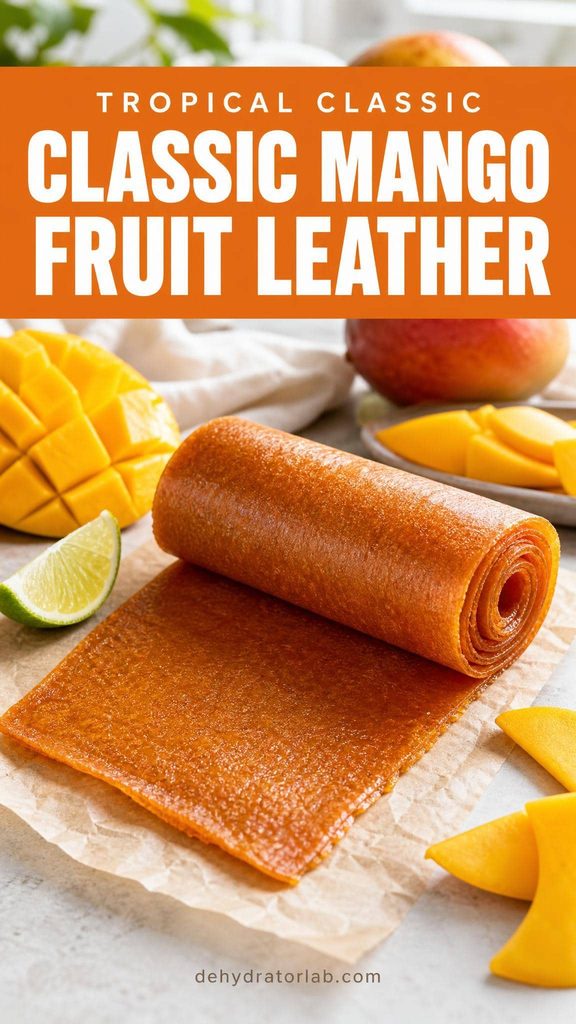
Mango is the fruit people picture first when they think “tropical,” and it’s the easiest one on this list to get right on the first try. Ripe mango purees into something so smooth it barely needs a blender pulse to get there.
Blend ripe mango chunks with a squeeze of lime juice — the acid brightens the sweetness and helps the color hold. Riper fruit means a shorter dry time and less need for added sugar; underripe mango fights you the whole way and tastes flat once dried.
If you’d rather skip the blending step entirely, my air fryer mango chips recipe is the faster, no-puree route. This is the one to make first if you’ve never done fruit leather before.
2. Pineapple Coconut Fruit Leather
Pineapple and coconut together taste like the tropical vacation you’re not currently on. Pineapple brings the tang, coconut rounds it into something creamier than a plain fruit puree has any right to be.
Pineapple is stringier than most fruit, so blend it longer than you think you need to — stray fibers turn into tough spots in the finished leather. Stir in a spoonful of coconut cream or unsweetened shredded coconut once the pineapple is smooth.
I’ve already written the full pineapple coconut fruit leather recipe with exact ratios if you want to skip the guesswork. The closest thing to a vacation you’ll get from a snack bag.

3. Papaya Lime Fruit Leather
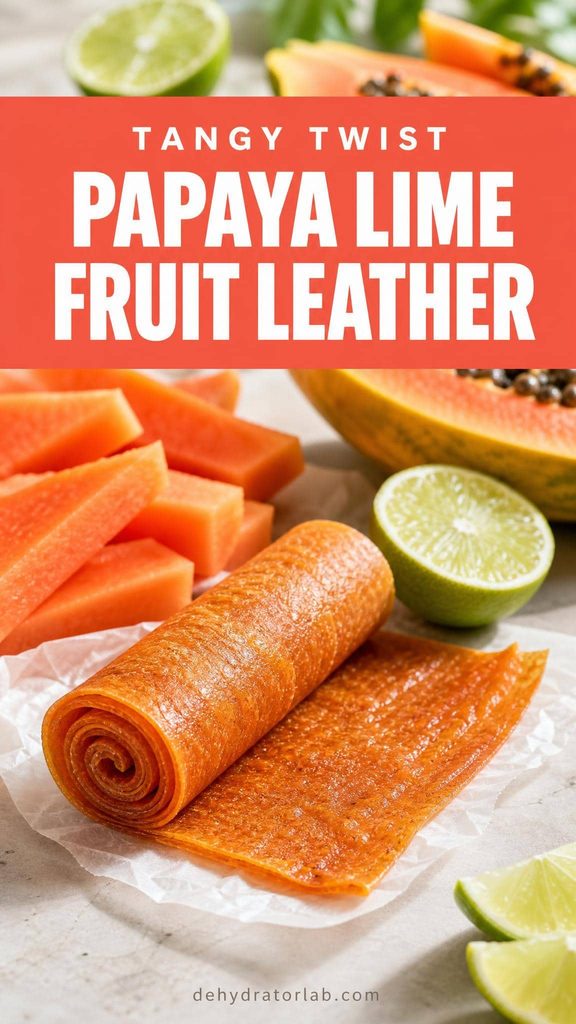
Papaya on its own is pleasant but a little shy on flavor. Lime fixes that fast — a squeeze of juice and a little zest turns a mild puree into something with actual personality.
Scoop out the seeds before blending; they’re edible but bitter and will speckle your leather with dark flecks if you leave them in. The lime juice does double duty here — it wakes up the flavor and keeps the pale orange puree from browning while it dries.
If you want a faster, no-puree version, my air fryer papaya chips recipe gets you there in a fraction of the time. A fruit leather most people have never even thought to try.
4. Passion Fruit Fruit Leather
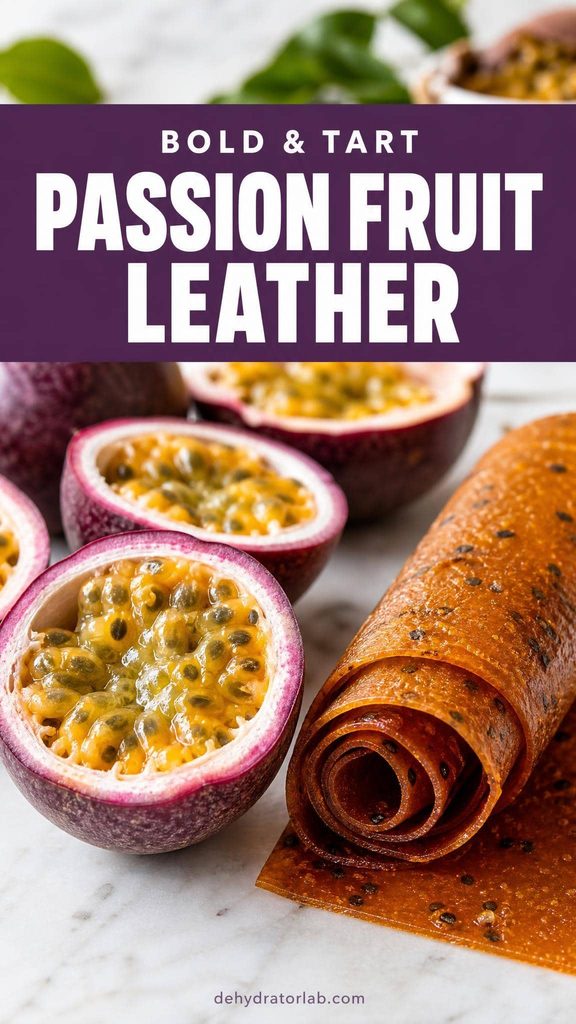
Passion fruit is the loudest flavor on this whole list — intensely tart and floral, and a little goes further than you’d expect. Used straight, it can be almost too much; blended with something milder, it turns into the best leather on the tray.
Scoop the pulp and seeds from 6-8 passion fruits, then blend half the seeds into the puree and strain out the rest — you get the tang plus a little crunch without going overboard. Pair it with banana or mango if straight passion fruit tastes too sharp on its own.
Not one for the faint of palate, but worth the pucker.
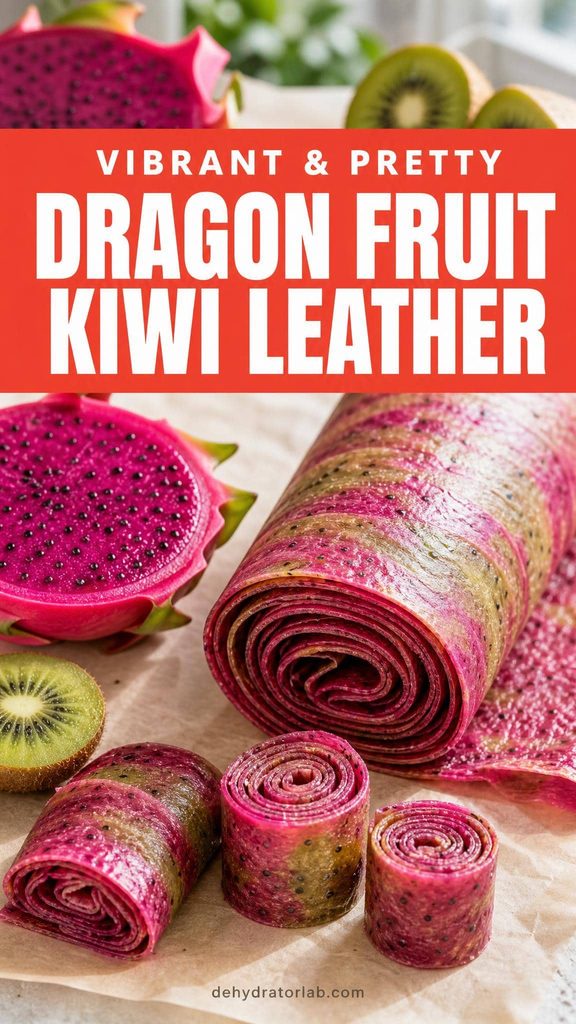
5. Dragon Fruit Kiwi Fruit Leather
Dragon fruit alone is mild — almost more texture than flavor. Pairing it with kiwi fixes that, and gives you the most eye-catching leather on this entire list in the process.
Blend the two fruits separately, then swirl the vivid pink dragon fruit puree and the bright green kiwi puree together on the tray instead of mixing them fully — you get a marbled, two-tone leather instead of a muddy in-between color.
- Use red-fleshed dragon fruit for the boldest color, not the paler white-fleshed variety
- Peel kiwi fully — the fuzzy skin doesn’t blend away
- Swirl gently with a toothpick right before the tray goes in for the cleanest marbled pattern
My air fryer dragon fruit chips and kiwi dehydrating guide cover each fruit solo if you want to try them separately first. The one that gets the most Pinterest saves.
6. Guava Fruit Leather
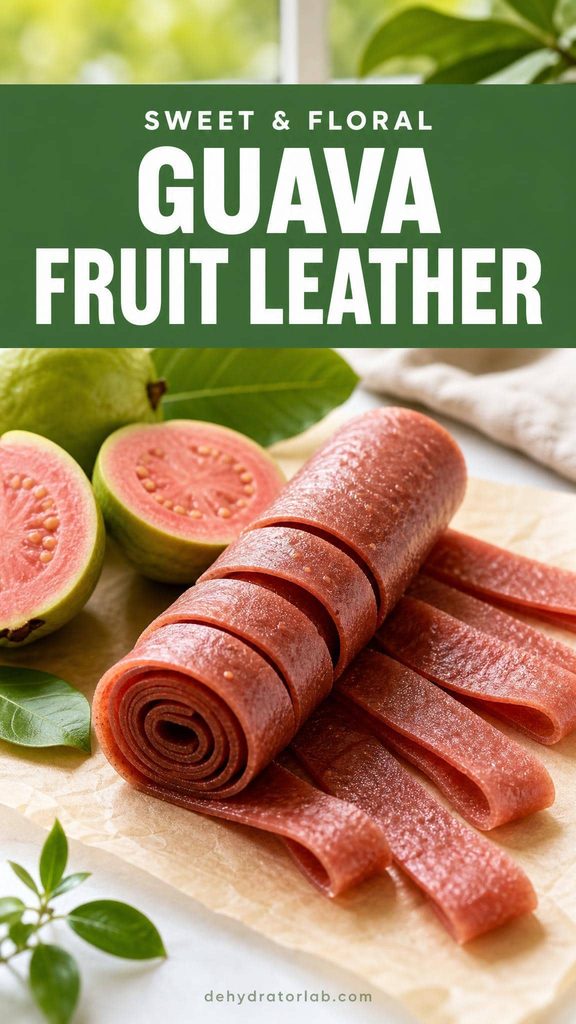
Guava is polarizing fresh — that musky, floral smell isn’t for everyone. Dried into leather, it mellows into something closer to guava candy, and even skeptics tend to come around.
Guava seeds are hard and gritty, and they don’t break down in a blender. Push the puree through a fine-mesh sieve before spreading it on the tray, or every bite ends up with an unpleasant crunch you weren’t expecting.
My air fryer guava chips recipe skips the puree step entirely if straining sounds like too much work. Strain it, or regret it.
7. Jackfruit Fruit Leather
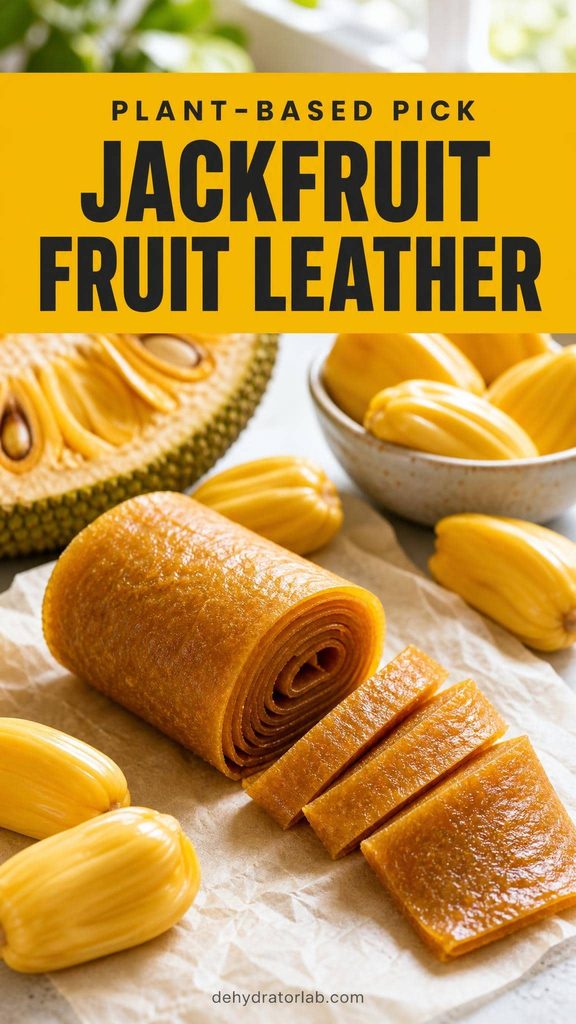
Jackfruit shows up on this site mostly as a savory jerky, but ripe jackfruit is naturally sweet — almost a mix of mango and banana — and it purees into a leather that’s chewier and more filling than most fruit on this list.
Make sure you’re using fully ripe jackfruit, fresh or canned in syrup — not the young green jackfruit used for savory jerky, which is a completely different stage of the same fruit and won’t sweeten no matter how long you dry it. Blend it well; jackfruit is fibrous and stringy going in.
If savory’s more your speed, my jackfruit jerky roundup and air fryer jackfruit jerky recipe cover that side of the fruit. Proof jackfruit isn’t just a meat substitute.
8. Mango Habanero Fruit Leather
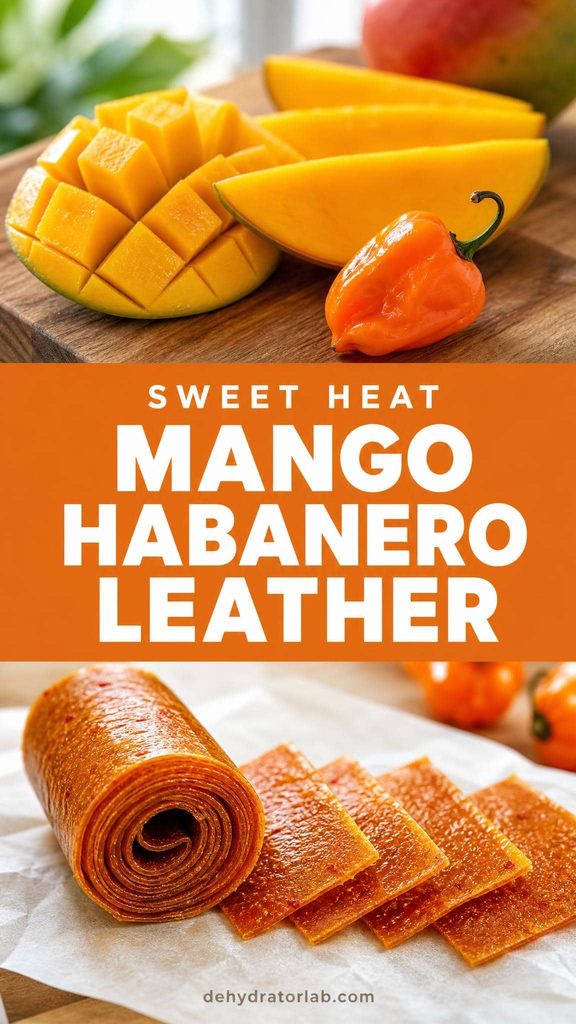
This is the mango leather from item one, turned up a notch. A whisper of habanero against sweet mango gives you a spicy-sweet finish that lingers a beat after the sweetness fades — the kind of snack adventurous eaters ask you to make again.
Start small: blend a tiny pinch of minced habanero (seeds and ribs removed) or a few drops of hot sauce into your mango puree, taste, and add more only if it’s not there yet. Heat concentrates as the leather dries, so what tastes mild going in reads spicier coming out.
If you want the savory version of this same pairing, my spicy mango jerky recipe swaps the puree for actual mango slices. Turns up the heat you’re fully in control of.
Personal Tips You Can Steal
I always weigh my fruit before pureeing so I can repeat a batch that worked without guessing at ratios next time. I never fill a tray past 1/8 inch thick, no matter how tempting it is to use up extra puree — thicker spots just mean longer dry times and a leather that’s done in some places and tacky in others.

- 8 CHROME TRAYS: Plenty of room to dry a wide variety of foods
- Compact design: smaller footprint, more drying space
- EVEN DRYING: Patented Hyperwave Pulse Technology along with the Horizontal Parallex Air Flow for even drying without tra…
I keep my trays rotated every couple of hours on my Excalibur, since even a good machine runs a little uneven from front to back. I always cut leather into strips while it’s still slightly warm — it snaps instead of tearing cleanly once it’s fully cooled. I never skip the parchment or silicone liner, even for “quick” batches, because scraping dried puree off a bare tray eats up more time than the liner would have saved.
Final Thoughts
Tropical fruit leather is one of those projects that looks fancier than the effort it actually takes. Puree, spread, dry, roll — that’s the whole process, and it works the same way whether you’re using mango or jackfruit. Start with the classic mango if you’re new to this, then work your way down toward the dragon fruit and the habanero once you’ve got the base method down.
If you want more ways to use tropical fruit in your dehydrator beyond leather, my tropical fruit recipes roundup covers chips and jerky too, and my fruit leather roundup has more everyday flavors if tropical isn’t always what you’re craving.
P.S. If you only try one from this list, make it the pineapple coconut — it’s the one that converts the most skeptics. Happy dehydrating! 🙂