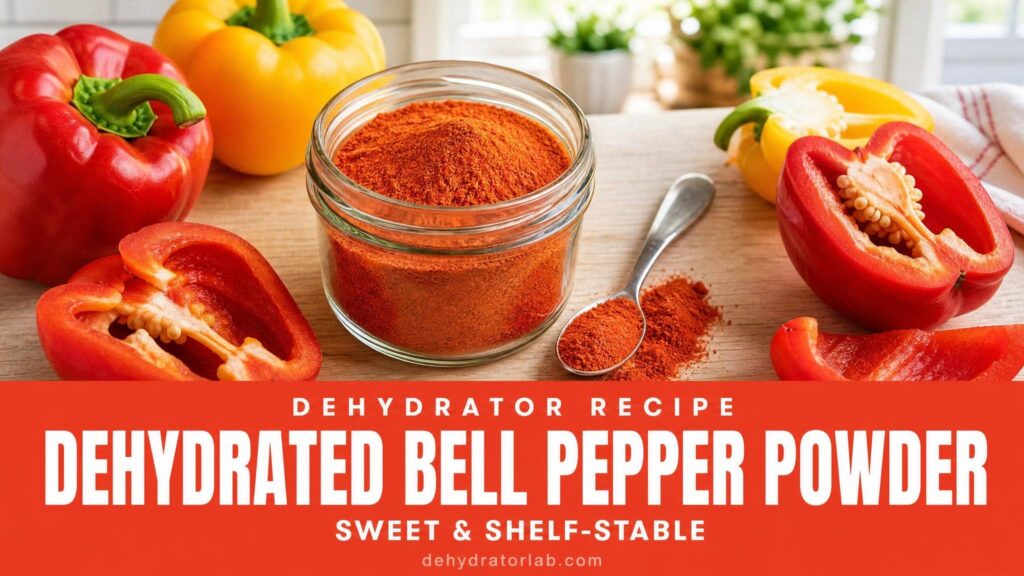
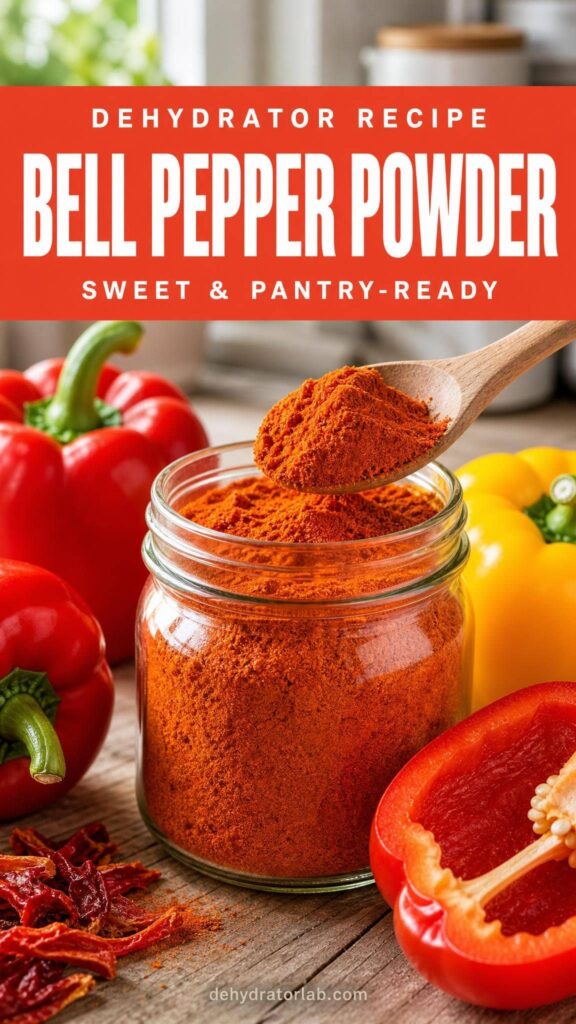
Ever buy a three-pack of bell peppers for one recipe, then watch the extras go soft and wrinkled in the crisper? Dehydrated bell pepper powder is the fix. You dry a batch down to a fine, reddish-orange powder that keeps for a year and tastes like sweet paprika’s less-smoky cousin.
It seasons everything from eggs to homemade seasoning blends without the wet bulk of fresh pepper. Ready to stop tossing wrinkled peppers and start stocking a jar that never goes bad?
In this article:
TL;DR (Too Long; Didn’t Read): Key Takeaways
- 🌶️ Red and yellow peppers give the sweetest, most vivid powder — green works too, just more grassy.
- 🔪 Slice into thin, even strips so every piece dries at the same rate.
- 🌡️ Dry at 125–135°F until strips shatter, not bend.
- ⏲️ Expect 6–12 hours depending on strip thickness and your machine.
- 🫙 Grind cool, condition for a few days, and store airtight for up to a year.
Why This Recipe Works
Bell peppers are mostly water with a thin, waxy skin, and your food dehydrator pulls that water out slowly, concentrating natural sweetness and color into a powder that punches well above the fresh volume it started as.
I make a batch whenever peppers go on sale by the bag. Once ground, it works like a milder, sweeter paprika — great for people who want the color and body of paprika without the smoke.
- No added sugar, oil, or preservatives — just peppers.
- One small jar replaces a whole bag of bell peppers in the pantry.
- Blends invisibly into rubs, sauces, and dips for real pepper sweetness.
The Best Peppers To Use
Red and yellow bell peppers are fully ripe and give the sweetest, most colorful powder. Green peppers are technically unripe and dry into a more grassy, less sweet powder — still useful, just a different flavor.
- Red peppers: the sweetest and most vivid color, closest to paprika.
- Yellow and orange peppers: sweet with a slightly milder color once ground.
- Green peppers: more vegetal and less sweet, good for savory-only blends.
Ingredients
- 4–5 bell peppers, any color, stemmed and seeded
- That’s it — no oil, no seasoning needed for a plain, versatile powder
FYI, skip the oil entirely here. Oil slows drying and shortens shelf life in the finished powder.
My Go-To Workflow (Step-By-Step)
- Wash and dry. Rinse peppers and pat them very dry. Surface moisture just adds to your drying time later.
- Remove stems and seeds. Slice off the top, halve the pepper, and scrape out the seeds and white ribs. The ribs are bitter and dry slower than the flesh.
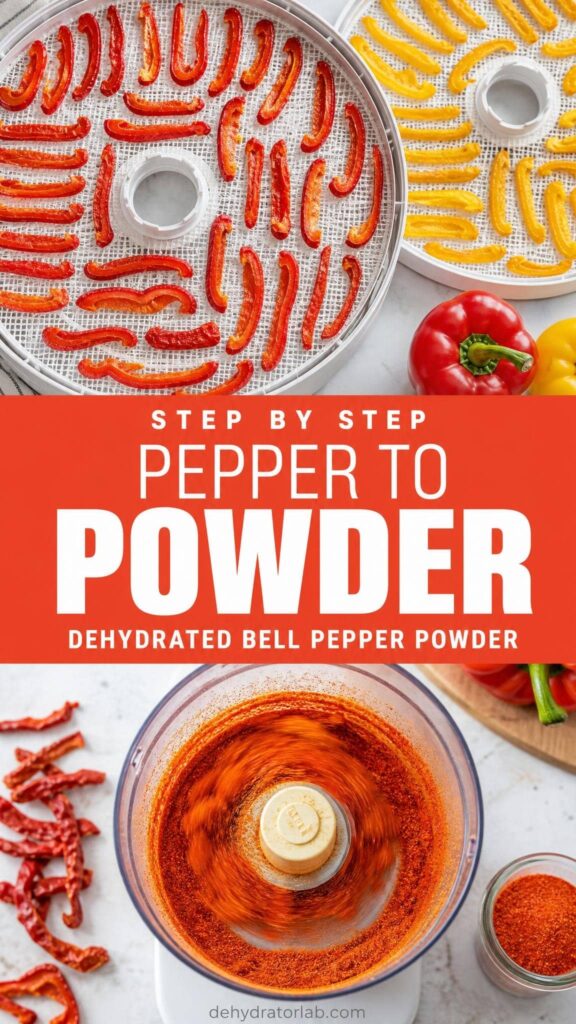
- Slice into thin strips. Cut into 1/4-inch strips or smaller. Keep every strip roughly the same thickness for even drying.
- Load your trays. Spread strips in a single layer with no overlap on a mesh liner or standard tray.
- Set your dehydrator. Run at 125–135°F (52–57°C). A home oven works on its lowest setting, propped open a crack for airflow, though it runs less even than a dedicated machine.
- Rotate your trays. Swap trays top to bottom around the halfway mark so every batch dries evenly.
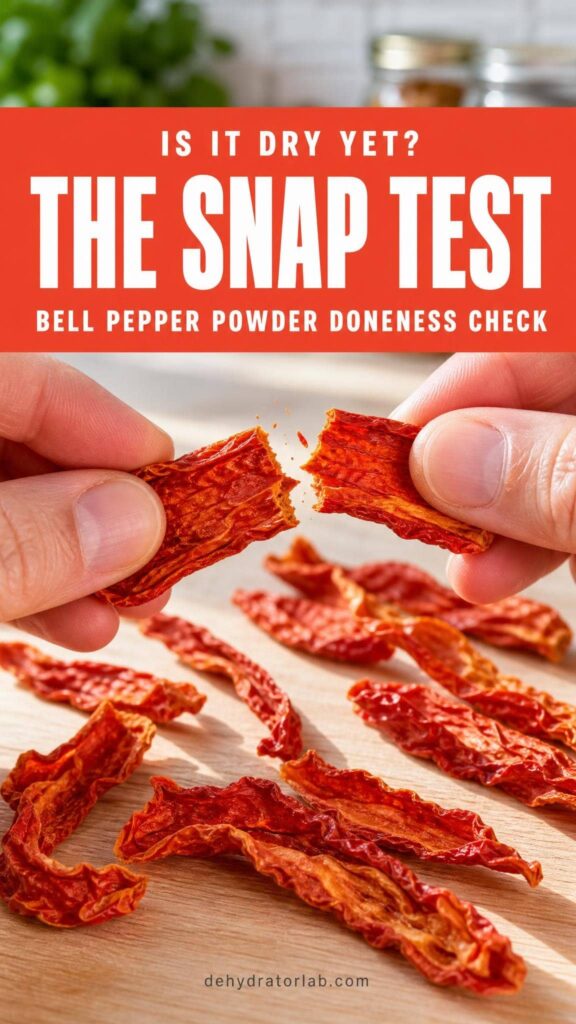
- Dry past “chip stage.” For snacking chips, you’d stop when they’re crisp but still faintly flexible. For powder, keep going until strips are fully brittle and shatter when snapped. That’s your cue they’re bone dry.
- Cool completely. Let the dried strips come down to room temperature for 20–30 minutes before grinding. Warm pieces release steam inside a sealed grinder, and that steam turns into clumps.
- Grind in short pulses. Use a spice grinder or high-speed blender and pulse rather than run continuously. Sift out any coarse bits and regrind them.
- Condition before you seal it. Fill a jar loosely no more than halfway and shake once a day for 2–3 days. Any clumping means there’s still moisture hiding — spread it back on a tray for another 30–60 minutes.
- Label and store. Write the date on the jar so future you knows exactly how old it is. Rotate oldest first.
Dehydrator Settings That Work
| Prep Style | Temperature | Typical Time |
|---|---|---|
| Thin strips (1/4-inch) | 125–135°F (52–57°C) | 6–8 hours |
| Wider strips | 125–135°F (52–57°C) | 8–10 hours |
| Diced small | 125–135°F (52–57°C) | 6–9 hours |
| Green peppers | 125–135°F (52–57°C) | 8–12 hours |
Your exact time swings with strip thickness, pepper color, humidity, and your specific machine. Check early, check often, and trust your hands over the clock.
The Dryness Test You Can Trust
Ever wonder why some batches of powder clump within a week? The secret lies in drying past “looks done” into truly bone dry. Bell peppers hold moisture in the flesh longer than the surface shows.
- Bend a strip — it should snap cleanly, not fold like leather.
- Squeeze one between your fingers — it should shatter, never feel cool or springy.
- Break one in half — no dark, wet center, all the way through to fully dry.
Storage That Actually Lasts
- Airtight or nothing: a glass jar with a tight lid or a vacuum-sealed bag keeps humidity and oxygen out.
- Cool, dark, dry: a pantry shelf works; a spot near the stove or a sunny window does not.
- Shelf life: up to a year at room temperature, longer in the freezer. Check the jar in week one for any condensation — that’s a sign it wasn’t dry enough.
Label with the date every time. Future you will say thanks when you’re rotating jars a year from now.
How To Actually Use It
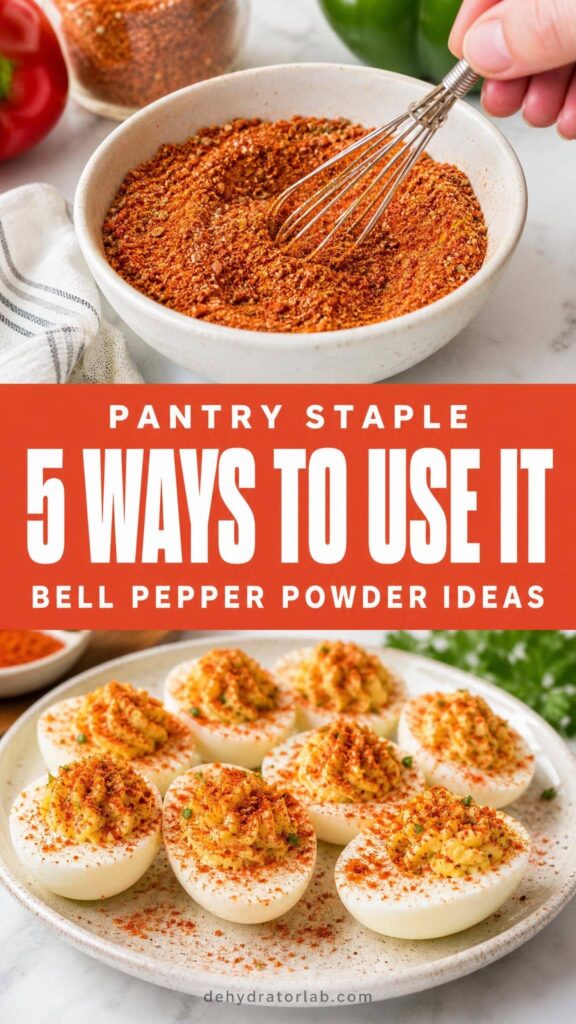
A teaspoon or two goes a long way since the powder is concentrated pepper. Use it anywhere you want color and sweetness without adding wet vegetable to a dish.
- Mix into dry rubs and spice blends for a milder, sweeter alternative to paprika.
- Stir into sauces, dips, and dressings for color and mild sweetness.
- Season eggs, popcorn, or roasted vegetables for a quick flavor boost.
Unlike whole dried peppers, powder doesn’t need rehydrating — just measure and stir it in directly.
Common Mistakes To Avoid
- Leaving the ribs in. They’re bitter and dry slower than the flesh, leaving gritty bits in the finished powder.
- Adding oil before drying. Oil slows drying and can shorten shelf life once ground.
- Grinding while warm. Warm powder traps steam in the jar, and steam turns into clumps within days.
- Skipping conditioning. A few days of shaking the jar catches hidden moisture before it becomes mold.
Frequently Asked Questions
Can I make bell pepper powder without a dehydrator?
Yes. Use your oven’s lowest setting, prop the door open slightly for airflow, and expect a similar or slightly longer time. Watch closely since ovens run less even than a dedicated machine.
Do I need to blanch the peppers first?
No. Bell peppers dehydrate well without blanching, the same way our dehydrated poblano pepper strips skip it too. Keeping it simple preserves more natural flavor.
Why is my powder clumping?
Leftover moisture is almost always the cause. Spread the powder on a tray and run it another 30–60 minutes at a low setting, cool fully, then reseal.
Is this the same as paprika?
Close, but not identical. True paprika is typically made from a specific dried chile pepper variety and sometimes smoked. Bell pepper powder is milder and sweeter, closer to sweet paprika without the smoke.
How much powder does one batch make?
Four to five bell peppers typically grinds down to about 1/3 to 1/2 cup of fine powder, since you’re removing nearly all the water weight.
Is dehydrated bell pepper powder healthy?
Bell peppers are well known for their vitamin C and antioxidant content, and drying concentrates much of that nutrition into a smaller volume. Some heat-sensitive vitamin C is reduced in the process, which is normal for any dried vegetable.
Personal Tips You Can Steal
I mix red and yellow peppers in the same batch for a rounder, sweeter flavor than either one alone. I always scrape the ribs extra clean, since any white pith left behind adds bitterness to the whole jar. I keep an unlabeled “test jar” going for a few days before committing a full batch to permanent storage, because a hidden clump early on saves the whole jar later. I grind in short pulses instead of one long blend because it keeps the powder from heating up and losing color.
Wrap-Up
Dehydrated bell pepper powder turns a bag headed for the compost into a pantry staple that quietly upgrades everything you cook. A handful of peppers, some patience in the dehydrator, and a quick grind gets you a jar of concentrated sweetness and color that outlasts anything in your crisper drawer. Pair it with dehydrated tomato powder for a quick sauce base, or stir it into dehydrated hot sauce flakes for a milder heat blend.
If you’d rather dry your peppers as strips first and decide on powder later, our guide to dehydrating bell peppers covers the whole-piece version step by step. And if you’re new to the whole process, our beginner’s guide to using a food dehydrator covers the basics before you start.
P.S. Keep a small “working jar” next to the stove and the big batch sealed in the back of the pantry. You’ll use the powder more often when it’s within arm’s reach 🙂
Want just the essential recipe details without scrolling through the article? Get our printable recipe card with just the ingredients and instructions.
Related reading: dehydrated tomato powder, dehydrated poblano pepper strips, dehydrated hot sauce flakes, and how to dehydrate bell peppers.
Printable Recipe Card
Want just the essential recipe details without scrolling through the article? Get our printable recipe card with just the ingredients and instructions.