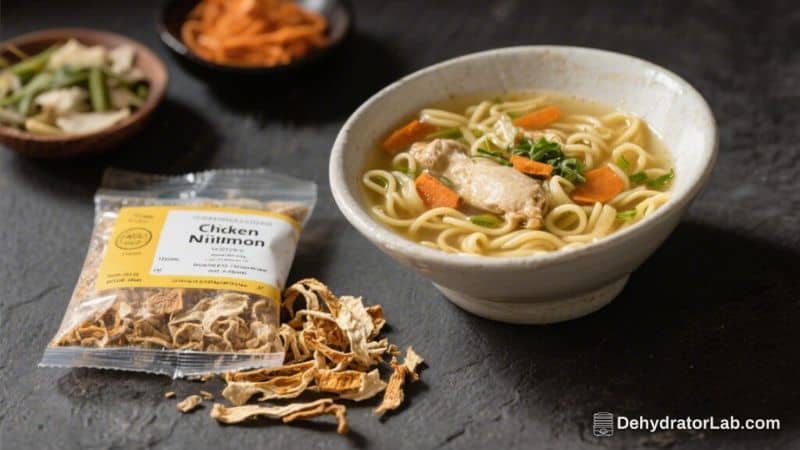
Craving a warm bowl of chicken noodle soup but don’t have time to cook from scratch? This make-ahead mix is a lifesaver. It’s simple to prep, easy to store, and turns into a comforting pot of soup in about 15 minutes. Keep a few jars in your pantry for busy nights, lunch at work, or quick meals when someone’s feeling under the weather.
You control the ingredients, the salt, and the flavor. It’s homemade convenience without any mystery additives.
In this article:
TL;DR (Too Long; Didn’t Read): Key Takeaways
- 🍜 Thin, quick-cooking noodles only — thick pasta throws off the whole ratio.
- 🫙 One quart jar = 4 servings; add 6 cups water and simmer 8–12 minutes.
- 🐔 Chicken stays optional — freeze-dried in the jar, or canned added when cooking.
- 🧂 Low-sodium bouillon lets you control the salt at serving time, not before.
- 📦 Pantry storage: 6–9 months in a cool, dry, dark spot.
Why This Mix Works
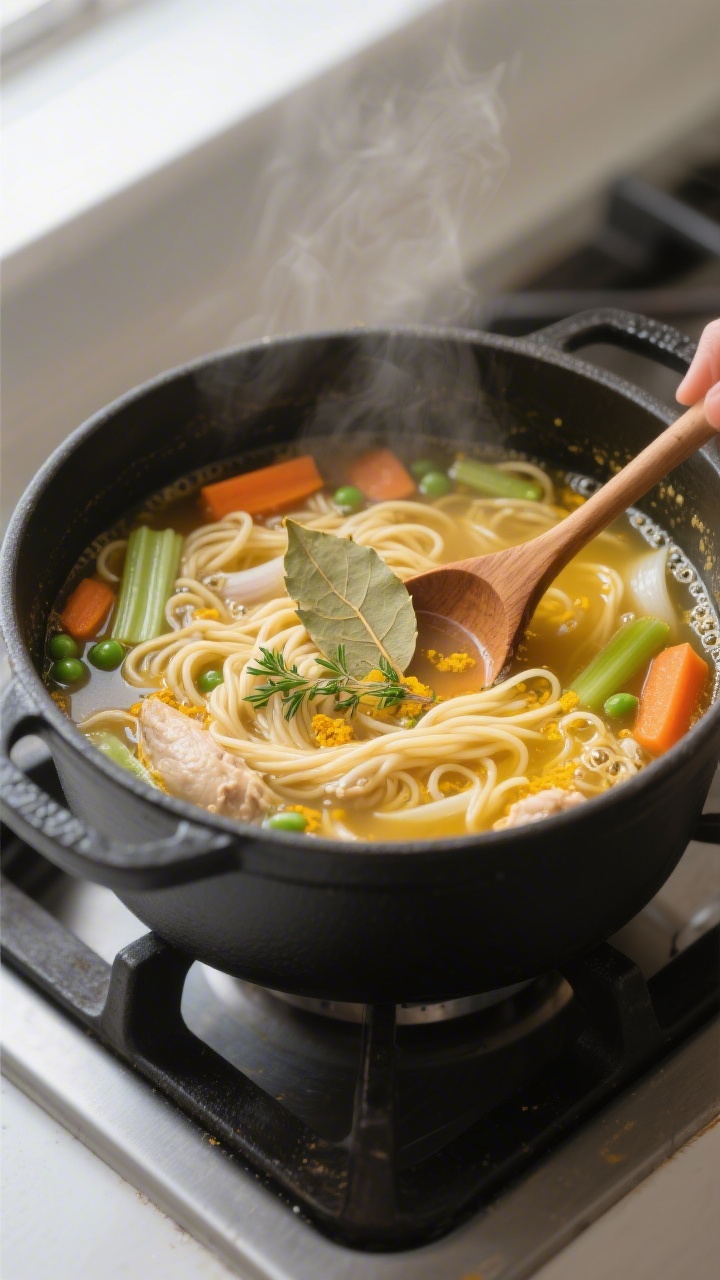
This dehydrated mix uses shelf-stable ingredients that rehydrate beautifully and cook quickly. The combination of dried vegetables, bouillon, and seasonings delivers real chicken soup flavor without simmering a stockpot for hours.
Fine noodles cook fast and thicken the broth just enough for that classic spoon-coating feel. By keeping the chicken separate (canned or freeze-dried), you get flexibility — make it vegetarian when needed or boost the protein when you want. Plus, everything stores well, so you can put it together once and eat well for months.
Shopping List
- Fine egg noodles or quick-cooking pasta (thin egg noodles, ramen-style wheat noodles without seasoning, or broken angel hair pasta)
- Low-sodium chicken bouillon powder (or chicken soup base)
- Freeze-dried or dehydrated chicken (optional; or plan to add canned chicken when cooking)
- Dehydrated vegetables (carrots, celery, onion, and peas are great picks)
- Dried herbs (parsley, thyme, and a pinch of rosemary)
- Ground turmeric (for color and warmth; optional)
- Garlic powder and onion powder
- Black pepper (freshly ground if possible)
- Bay leaves (optional, for simmering)
- Salt (only if needed — bouillon varies in saltiness)
- Lemon pepper or citric acid (optional, for brightness)
- Mason jars or airtight containers (pint or quart size, depending on batch)
- Labels (to note water amount and cook time)
My Go-To Workflow
- Choose your container size. For 4 servings, use a quart jar.
For 1–2 servings, use a pint jar. Make sure the container is completely dry and clean.
- Measure the noodles. Add 1 to 1 1/2 cups of fine egg noodles for a quart jar (about 4 servings). For a pint jar, use 1/2 to 3/4 cup.
Thin noodles cook quickly and rehydrate best.
- Add the soup base. Stir together 4 teaspoons low-sodium chicken bouillon powder, 1 teaspoon garlic powder, 1 teaspoon onion powder, 1/2 teaspoon black pepper, and 1/4 teaspoon turmeric. Pour this into the jar so it settles toward the bottom for even flavor distribution.
- Layer the vegetables. Add 1/2 cup dehydrated carrots, 1/3 cup dehydrated celery, 1/4 cup dehydrated onion, and 1/4 cup dehydrated peas. If you have mixed dehydrated veg, use about 1 1/3 cups total for a quart jar.
- Add herbs and optional brightness. Sprinkle in 2 teaspoons dried parsley, 1/2 teaspoon dried thyme, and a small pinch of crushed rosemary.
For a fresh finish later, include 1/4 teaspoon lemon pepper or a tiny pinch of citric acid.
- Include the chicken (optional). Add 1/2 to 3/4 cup freeze-dried chicken to the jar. If using canned chicken later, skip this step and plan to add the drained chicken when cooking.
- Seal and label. Close the jar tightly. Label it with: “Add 6 cups water (for quart jar).
Simmer 10–12 minutes. Optional: add 1 can (10–12 oz) chicken.” Adjust water to 3 cups for a pint jar.
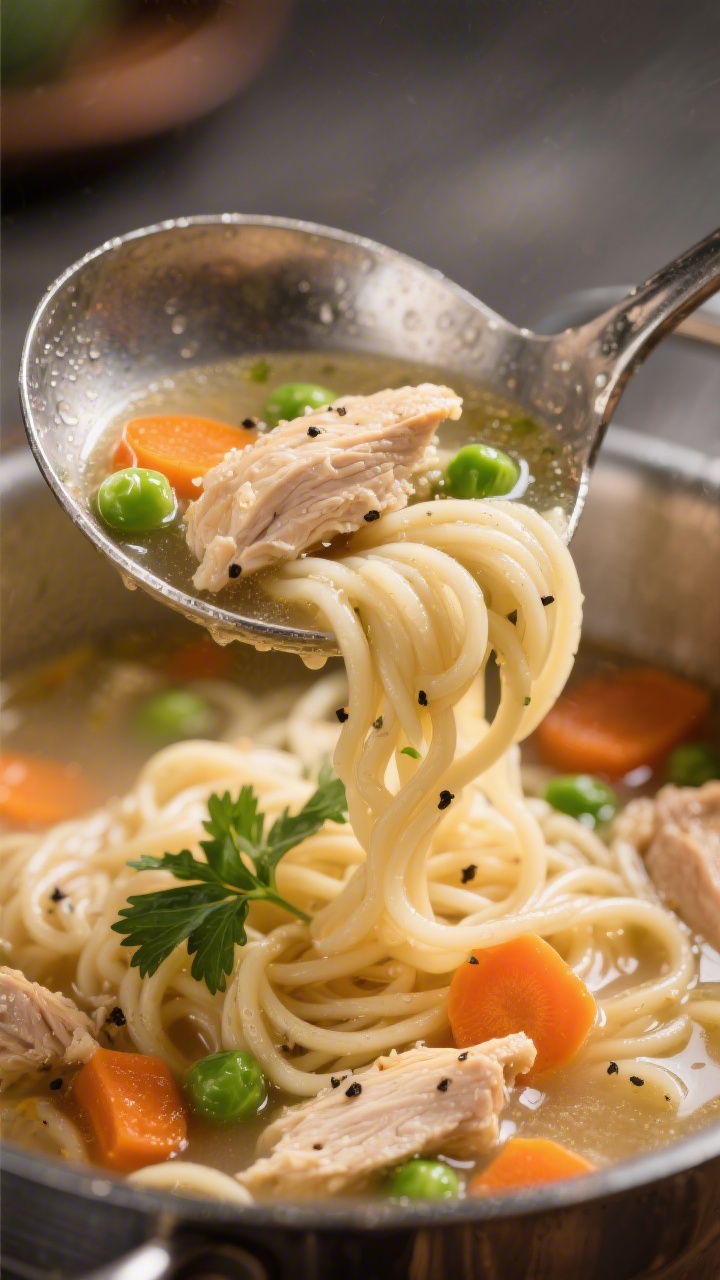
- To cook the soup. Bring the indicated amount of water to a boil in a pot. Add the entire jar’s contents.
Toss in a bay leaf if you like. Stir, reduce to a lively simmer, and cook 8–12 minutes until noodles are tender and veggies are soft. Add canned chicken in the last 3–4 minutes, if using.
Taste and adjust salt or pepper.
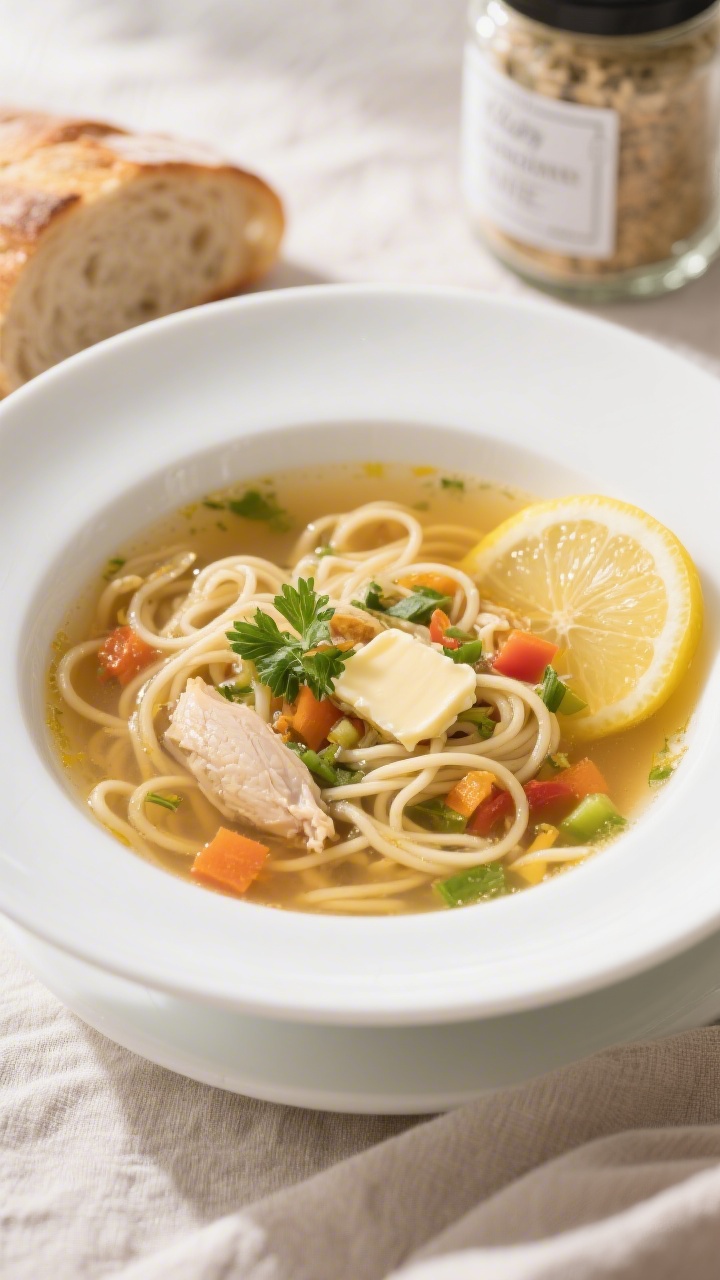
- Finish and serve. Remove the bay leaf. For extra comfort, stir in a small knob of butter or a splash of olive oil. Add a squeeze of lemon or a pinch of fresh parsley if you have it.
Serve hot.
Storage That Actually Lasts
- Pantry storage: keep jars in a cool, dry place away from sunlight for up to 6–9 months. Check dates on bouillon and dehydrated veggies; use the earliest date as your guide.
- Moisture control: make sure jars are fully dry before filling. Consider a small food-safe desiccant packet if you live in a humid climate.
- Chicken note: freeze-dried chicken stores well in the jar.
If using canned chicken, store it separately and add it when cooking.
- After cooking: refrigerate leftovers in a sealed container for up to 3 days. Noodles will continue to absorb broth; add a splash of water when reheating.
Why This Recipe Pays Off
- Fast homemade comfort: real soup in minutes, no chopping at dinner time.
- Budget-friendly: buying dehydrated vegetables and bouillon in bulk saves money and reduces waste.
- Portable and giftable: great for care packages, dorm rooms, camping, or pantry prepping.
Common Mistakes to Avoid
- Using thick pasta: large noodles or dense pasta won’t hydrate quickly and can throw off the texture. Choose thin, quick-cooking noodles.
- Over-salting: bouillon varies in sodium.
Start with low-sodium options and taste before adding extra salt.
- Skipping labels: without cook time and water amounts on the jar, it’s easy to guess wrong. Label each jar clearly.
- Undercooking vegetables: dehydrated veggies need enough time at a lively simmer. Give them the full 8–12 minutes.
- Packing a damp jar: any moisture can cause clumping or spoilage.
Ensure containers and utensils are totally dry.
Variations You Can Try
- Herby lemon: add extra parsley, a pinch of dill, and 1/2 teaspoon lemon zest powder or an extra pinch of citric acid. Finish with fresh lemon when serving.
- Spicy chicken: add 1/4 teaspoon red pepper flakes and 1/2 teaspoon smoked paprika for a gentle kick.
- Ginger-garlic: add 1/2 teaspoon ground ginger and increase garlic powder to 1 1/2 teaspoons. Finish with a splash of soy sauce when cooking.
- Creamy style: stir in a tablespoon of powdered milk or coconut milk powder to the jar.
When cooking, add a small splash of cream at the end.
- Gluten-free: use gluten-free noodles and a certified gluten-free bouillon.
- Vegetarian: swap chicken bouillon for vegetable bouillon and omit chicken. Add dehydrated mushrooms for a savory boost.
FAQ
Can I use regular pasta instead of egg noodles?
Yes, but choose thin shapes that cook quickly, like broken angel hair, thin spaghetti, or small soup pasta. Thicker pasta may need a longer simmer and more water.
How can I reduce the sodium?
Use low-sodium bouillon and don’t add extra salt until tasting the cooked soup. You can also replace part of the bouillon with salt-free seasoning blends and add a squeeze of lemon for brightness.
Do I need freeze-dried chicken?
No. You can keep the mix vegetarian and add canned chicken, rotisserie chicken, or leftover cooked chicken when simmering. Add it in the last few minutes just to warm through.
Can I make this in a thermos for on-the-go lunches?
Yes. Preheat a wide-mouth thermos with boiling water, then drain. Add the mix and fresh boiling water, seal, and let it sit 20–30 minutes. Noodles and veggies will soften; give it a stir before eating.
What’s the best way to scale the recipe?
Multiply each ingredient by the number of jars you want to make. Assemble in an assembly-line style to keep ratios consistent. Label each jar with servings and water amounts.
My soup is too thick. What should I do?
Add hot water a half cup at a time until it reaches your preferred consistency. Noodles absorb broth as they sit, so loosen with extra water when reheating.
How long will dehydrated vegetables last in the mix?
Most store-bought dehydrated vegetables last 12–18 months unopened and 6–12 months once opened if kept dry. Use the “best by” date as your guide and store in a cool, dark place.
Can I add rice instead of noodles?
You can, but use quick-cooking or parboiled rice and increase the simmer time to about 15–18 minutes. You may also need to add 1–2 extra cups of water per quart jar batch.
What if I don’t have bouillon powder?
Use a concentrated paste-style soup base and keep it in a small packet or mini container alongside the dry mix. When cooking, dissolve it in the boiling water before adding the jar contents.
Is turmeric necessary?
No, but a pinch adds warm color and subtle flavor. If you skip it, the soup will still taste great — just a bit paler.
Personal Tips You Can Steal
I build 4-5 jars at once on a Sunday, assembly-line style, because the ratios stay consistent and it saves me from repeating the same measuring five separate times. I always label the water amount on the lid, not the side, since that’s the part I actually look at mid-boil. And I keep a jar of the vegetarian version stocked separately, because it’s the one I reach for most on weeknights when I don’t feel like thinking about protein.
Wrap-Up
Dehydrated Chicken Noodle Soup Mix gives you the comfort of homemade soup with the speed of a weeknight pantry meal. It’s flexible, affordable, and easy to customize for your taste and dietary needs.
Keep a few jars on hand, and you’re never more than a few minutes away from a cozy bowl of soup. Simple ingredients, clear instructions, and reliable results — that’s the kind of kitchen win that makes life easier and a lot more delicious.
P.S. Keep a spare jar in your car or bag during cold season — a thermos and 20 minutes is all it takes 🙂
Dehydrated Chicken Noodle Soup Mix – A Cozy Make-Ahead Meal in a Jar
Ingredients
- Fine egg noodles or quick-cooking pasta (thin egg noodles, ramen-style wheat noodles without seasoning, or broken angel hair pasta)
- Low-sodium chicken bouillon powder (or chicken soup base)
- Freeze-dried or dehydrated chicken (optional; or plan to add canned chicken when cooking)
- Dehydrated vegetables (carrots, celery, onion, and peas are great picks)
- Dried herbs (parsley, thyme, and a pinch of rosemary)
- Ground turmeric (for color and warmth; optional)
- Garlic powder and onion powder
- Black pepper (freshly ground if possible)
- Bay leaves (optional, for simmering)
- Salt (only if needed—bouillon varies in saltiness)
- Lemon pepper or citric acid (optional, for brightness)
- Mason jars or airtight containers (pint or quart size, depending on batch)
- Labels (to note water amount and cook time)
Instructions
- Choose your container size. For 4 servings, use a quart jar.For 1–2 servings, use a pint jar. Make sure the container is completely dry and clean.
- Measure the noodles. Add 1 to 1 1/2 cups of fine egg noodles for a quart jar (about 4 servings). For a pint jar, use 1/2 to 3/4 cup.Thin noodles cook quickly and rehydrate best.
- Add the soup base. Stir together 4 teaspoons low-sodium chicken bouillon powder, 1 teaspoon garlic powder, 1 teaspoon onion powder, 1/2 teaspoon black pepper, and 1/4 teaspoon turmeric. Pour this into the jar so it settles toward the bottom for even flavor distribution.
- Layer the vegetables. Add 1/2 cup dehydrated carrots, 1/3 cup dehydrated celery, 1/4 cup dehydrated onion, and 1/4 cup dehydrated peas. If you have mixed dehydrated veg, use about 1 1/3 cups total for a quart jar.
- Add herbs and optional brightness. Sprinkle in 2 teaspoons dried parsley, 1/2 teaspoon dried thyme, and a small pinch of crushed rosemary.For a fresh finish later, include 1/4 teaspoon lemon pepper or a tiny pinch of citric acid.
- Include the chicken (optional). Add 1/2 to 3/4 cup freeze-dried chicken to the jar. If using canned chicken later, skip this step and plan to add the drained chicken when cooking.
- Seal and label. Close the jar tightly. Label it with: “Add 6 cups water (for quart jar).Simmer 10–12 minutes. Optional: add 1 can (10–12 oz) chicken.” Adjust water to 3 cups for a pint jar.
- To cook the soup. Bring the indicated amount of water to a boil in a pot. Add the entire jar’s contents.Toss in a bay leaf if you like. Stir, reduce to a lively simmer, and cook 8–12 minutes until noodles are tender and veggies are soft. Add canned chicken in the last 3–4 minutes, if using.Taste and adjust salt or pepper.
- Finish and serve. Remove the bay leaf. For extra comfort, stir in a small knob of butter or a splash of olive oil. Add a squeeze of lemon or a pinch of fresh parsley if you have it.Serve hot.
Related reading: dehydrated arugula powder, dehydrated hot sauce flakes, and best vacuum sealer.
Printable Recipe Card
Want just the essential recipe details without scrolling through the article? Get our printable recipe card with just the ingredients and instructions.